Questões de Concurso
Comentadas sobre interpretação de texto | reading comprehension em inglês
Foram encontradas 8.877 questões


Julgue o item subsequente.
The public school curriculum is not supposed to be
school-centered, but prioritize the expectations of the
Society and culture it is inserted in.
Teaching Teens How to Understand Their Feelings is Key to Helping Them Grow and Mature
By Good News Network

 word “them” in line 11 refers to the underlined word “teenager” in
the same line. This combination is:
word “them” in line 11 refers to the underlined word “teenager” in
the same line. This combination is: The advantages of speaking a second language.
Just a few generations ago, speaking two languages was supposed to be bad for you. Tests in America found that bilingual people had lower iqs, which seemed evidence enough. Later it became clear that those surveys were really measuring the material poverty of immigrants; members of such families were more likely to be undernourished and understimulated, not to mention the obvious fact that they often sat the tests in a language that was not their best.
THE ADVANTAGES of speaking a second language: They are hard to measure. But it is a good idea anyway. The Economist, [S. l.], 29 fev. 2020. Disponível em: https://www.economist.com/books-and-arts/2020/02/29/the-advantages-of-speaking-a-second-l anguage?ppccampaignID=&ppcadID=&ppcgclID=&utm_medium=cpc.adword.pd&utm_source=go ogle&ppccampaignID=19495686130&ppcadID=&utm_campaign=a.22brand_pmax&utm_content= conversion.direct-response.anonymous&gad_source=1&gclid=Cj0KCQjwwMqvBhCtARIsAIXsZpYd mqqFWIxtlI8jBQv7ciW5jGGVt27WugtBEvlVhS3aTAG1cr79oKoaAtTLEALw_wcB&gclsrc=aw.ds. Acesso em: 14 mar. 2024.
Qual era uma ideia equivocada sobre o bilinguismo há algumas gerações, de acordo com o trecho?
Soon, Americans are going to be able to try chicken that comes directly from chicken cells rather than, well, a chicken. The United States Department of Agriculture gave Upside Foods and Good Meat the green light to start producing and selling their lab-grown, or cultivated, chicken products in the United States. It’s going to be a while before you can buy cell-based meat in stores, though you should be able to get a taste at a restaurant sooner.
In a nutshell, lab-grown meat — or cultivated or cell-based meat — is meat that is developed from animal cells and grown, with the help of nutrients like amino acids, in massive bioreactors. When the meat is ready, companies collect it from the bioreactors and move it along the processing line. For one thing, growing meat from cells means that people can eat meat without having to slaughter animals. Upside Foods explains that cells it gathers from a fertilized chicken egg are stored in its cell bank and can be used for at least ten years. Animal cells can come from animal biopsies or even feathers, among other sources.
Good Meat announced a partnership with chef and restaurateur José Andrés to bring the item to a Washington restaurant. Good Meat may consider partnering with other restaurants or launching in retail, but a supermarket launch is way down the line. Upside Foods is planning to introduce its product at Bar Crenn, a San Francisco restaurant, but did not share a launch date yet. Eventually, the company plans to work with other restaurants and make its products available in supermarkets. For now, Upside Foods is holding a contest to allow curious customers to be among the first to try the product in the United States.
Internet: <edition.cnn.com> (adapted).
According to the preceding text, judge the following item.
The expression “In a nutshell” (first sentence of the second
paragraph) could be correctly replaced with Briefly, without
harming the original meaning of the sentence.
Soon, Americans are going to be able to try chicken that comes directly from chicken cells rather than, well, a chicken. The United States Department of Agriculture gave Upside Foods and Good Meat the green light to start producing and selling their lab-grown, or cultivated, chicken products in the United States. It’s going to be a while before you can buy cell-based meat in stores, though you should be able to get a taste at a restaurant sooner.
In a nutshell, lab-grown meat — or cultivated or cell-based meat — is meat that is developed from animal cells and grown, with the help of nutrients like amino acids, in massive bioreactors. When the meat is ready, companies collect it from the bioreactors and move it along the processing line. For one thing, growing meat from cells means that people can eat meat without having to slaughter animals. Upside Foods explains that cells it gathers from a fertilized chicken egg are stored in its cell bank and can be used for at least ten years. Animal cells can come from animal biopsies or even feathers, among other sources.
Good Meat announced a partnership with chef and restaurateur José Andrés to bring the item to a Washington restaurant. Good Meat may consider partnering with other restaurants or launching in retail, but a supermarket launch is way down the line. Upside Foods is planning to introduce its product at Bar Crenn, a San Francisco restaurant, but did not share a launch date yet. Eventually, the company plans to work with other restaurants and make its products available in supermarkets. For now, Upside Foods is holding a contest to allow curious customers to be among the first to try the product in the United States.
Internet: <edition.cnn.com> (adapted).
According to the preceding text, judge the following item.
Both Upside Foods and Good Meat are waiting for
permission to sell their cultivated chicken products.
Soon, Americans are going to be able to try chicken that comes directly from chicken cells rather than, well, a chicken. The United States Department of Agriculture gave Upside Foods and Good Meat the green light to start producing and selling their lab-grown, or cultivated, chicken products in the United States. It’s going to be a while before you can buy cell-based meat in stores, though you should be able to get a taste at a restaurant sooner.
In a nutshell, lab-grown meat — or cultivated or cell-based meat — is meat that is developed from animal cells and grown, with the help of nutrients like amino acids, in massive bioreactors. When the meat is ready, companies collect it from the bioreactors and move it along the processing line. For one thing, growing meat from cells means that people can eat meat without having to slaughter animals. Upside Foods explains that cells it gathers from a fertilized chicken egg are stored in its cell bank and can be used for at least ten years. Animal cells can come from animal biopsies or even feathers, among other sources.
Good Meat announced a partnership with chef and restaurateur José Andrés to bring the item to a Washington restaurant. Good Meat may consider partnering with other restaurants or launching in retail, but a supermarket launch is way down the line. Upside Foods is planning to introduce its product at Bar Crenn, a San Francisco restaurant, but did not share a launch date yet. Eventually, the company plans to work with other restaurants and make its products available in supermarkets. For now, Upside Foods is holding a contest to allow curious customers to be among the first to try the product in the United States.
Internet: <edition.cnn.com> (adapted).
According to the preceding text, judge the following item.
The winners of a competition will be the first people to taste
the lab-grown chicken products developed by Upside Foods
and Good Meat.
What is Validity?
by Evelina Galaczi
July 17th, 2020
The fundamental concept to keep in mind when creating any assessment is validity. Validity refers to whether a test measures what it aims to measure. For example, a valid driving test should include a practical driving component and not just a theoretical test of the rules of driving. A valid language test for university entry, for example, should include tasks that are representative of at least some aspects of what actually happens in university settings, such as listening to lectures, giving presentations, engaging in tutorials, writing essays, and reading texts.
Validity has different elements, which we are now going to look at
in turn.
Test Purpose – Why am I testing?
We can never really say that a test is valid or not valid. Instead, we can say that a test is valid for a particular purpose. There are several reasons why you might want to test your students. You could be trying to check their learning at the end of a unit, or trying to understand what they know and don't know. Or, you might want to use a test to place learners into groups based on their ability, or to provide test takers with a certificate of language proficiency. Each of these different reasons for testing represents a different test purpose.
The purpose of the test determines the type of test you're going
to produce, which in turn affects the kinds of tasks you're going
to choose, the number of test items, the length of the test, and so
on. For example, a test certifying that doctors can practise in an
English-speaking country would be different from a placement test
which aims to place those doctors into language courses.
Test Takers – Who am I testing?
It’s also vital to keep in mind who is taking your test. Is it primary
school children or teenagers or adults? Or is it airline pilots or
doctors or engineers? This is an important question because the
test has to be appropriate for the test takers it is aimed for. If your
test takers are primary school children, for instance, you might
want to give them more interactive tasks or games to test their
language ability. If you are testing listening skills, for example,
you might want to use role plays for doctors, but lectures or
monologues with university students.
Test Construct – What am I testing?
Another key point is to consider what you want to test. Before
designing a test, you need to identify the ability or skill that the test
is designed to measure – in technical terms, the ‘test construct’.
Some examples of constructs are: intelligence, personality,
anxiety, English language ability, pronunciation. To take
language assessment as an example, the test construct could be
communicative language ability, or speaking ability, or perhaps
even a construct as specific as pronunciation. The challenge is
to define the construct and find ways to elicit it and measure it;
for example, if we are testing the construct of fluency, we might
consider features such as rate of speech, number of pauses/
hesitations and the extent to which any pauses/hesitations cause
strain for a listener.
Test Tasks – How am I testing?
Once you’ve defined what you want to test, you need to decide how
you’re going to test it. The focus here is on selecting the right test
tasks for the ability (i.e. construct) you're interested in testing. All
task types have advantages and limitations and so it’s important to
use a range of tasks in order to minimize their individual limitations
and optimize the measurement of the ability you’re interested in.
The tasks in a test are like a menu of options that are available to
choose from, and you must be sure to choose the right task or the
right range of tasks for the ability you're trying to measure.
Test Reliability - How am I scoring?
Next it’s important to consider how to score your test. A test needs
to be reliable and to produce accurate scores. So, you’ll need to
make sure that the scores from a test reflect a learner's actual
ability. In deciding how to score a test, you’ll need to consider
whether the answers are going to be scored as correct or incorrect
(this might be the case for multiple–choice tasks, for example) or
whether you might use a range of marks and give partial credit,
as for example, in reading or listening comprehension questions.
In speaking and writing, you’ll also have to decide what criteria
to use (for example, grammar, vocabulary, pronunciation, essay, organisation in writing, and so on). You’ll also need to make sure
that the teachers involved in speaking or writing assessment have
received some training, so that they are marking to (more or less)
the same standard.
Test Impact - How will my test help learners?
The final – and in many ways most important – question to ask yourself is how the test is benefitting learners. Good tests engage learners in situations similar to ones that they might face outside the classroom (i.e. authentic tasks), or which provide useful feedback or help their language development by focusing on all four skills (reading, listening, writing, speaking). For example, if a test has a speaking component, this will encourage speaking practice in the classroom. And if that speaking test includes both language production (e.g. describe a picture) and interaction (e.g. discuss a topic with another student), then preparing for the test encourages the use of a wide range of speaking activities in the classroom and enhances learning.
Adapted from: https://www.cambridgeenglish.org/blog/what-is-validity. Acesso em:
15 dez. 2023.
According to the text, judge the following statement.
Without the impact of low hydropower output, global CO2
emissions from electricity generation would have decreased
in 2023, making the overall rise in energy-related emissions
significantly smaller.
According to the text, judge the following statement.
Global energy-related carbon dioxide (CO2) emissions
increased by a smaller percentage in 2023 compared to 2022.
According to the text, judge the following statement.
The text mentions up to five different sources of energy,
whether they are renewable or not.
According to the text, judge the following statement.
The words ‘shortfall’ and ‘rise’ (in the 2nd paragraph) and
‘declined’ and ‘dropped’ (in the 3rd paragraph) convey the
idea of a decrease or reduction in quantity or level.
Read Text V and answer the six questions that follow it:
Text V
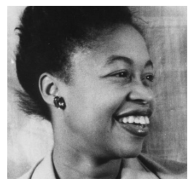
Adapted from: https://donalclancy.files.wordpress.com/2021/07/margaret-walker.jpg

From: https://www.poetryfoundation.org/poems/53463/lineage
The last line of the poem reveals the poet’s
Read Text V and answer the six questions that follow it:
Text V
Adapted from: https://donalclancy.files.wordpress.com/2021/07/margaret-walker.jpg
From: https://www.poetryfoundation.org/poems/53463/lineage
The device the first stanza uses for effect is
Read Text V and answer the six questions that follow it:
Text V
Adapted from: https://donalclancy.files.wordpress.com/2021/07/margaret-walker.jpg
From: https://www.poetryfoundation.org/poems/53463/lineage
The poet’s view of her grandmothers is one of
Read Text V and answer the six questions that follow it:
Text V
Adapted from: https://donalclancy.files.wordpress.com/2021/07/margaret-walker.jpg
From: https://www.poetryfoundation.org/poems/53463/lineage
Analyse the assertions below based on the poem:
I. The poet reflects on her ancestors’ attitude towards life.
II. The first stanza can be used as an example of resilience.
III. The poem focuses on the problem of religious difference.
Choose the correct answer:
Read Text IV and answer the three questions that follow it:
Text IV

Adapted from: https://www.facebook.com/photo/?fbid=1294646317355834&set
=a.915379355282534
The aim of this comic strip is to

 Conheça nossos planos
