Questões de Concurso
Sobre comparativo e superlativo de adjetivos | comparative and superlative em inglês
Foram encontradas 217 questões


Ano: 2026
Banca:
CETREDE
Órgão:
Prefeitura de Caridade - CE
Prova:
CETREDE - 2026 - Prefeitura de Caridade - CE - Professor de Educação Básica - Inglês |
Q3839790
Inglês
Which sentence uses the comparative and superlative
forms of the adjective "reliable" correctly and idiomatically?
Ano: 2025
Banca:
ISET
Órgão:
Prefeitura de Mirante - BA
Prova:
ISET - 2025 - Prefeitura de Mirante - BA - Professor – Letras Modernas (Inglês) |
Q4362350
Inglês
Which sentence correctly uses the comparative form of
superiority?
Ano: 2025
Banca:
Avança SP
Órgão:
Prefeitura de Cunha - SP
Prova:
Avança SP - 2025 - Prefeitura de Cunha - SP - PEB II - Professor de Inglês |
Q4096500
Inglês
Read the sentence and choose the alternative that
correctly completes it:
"Of all the students in the class, Robert is __________."
"Of all the students in the class, Robert is __________."
Ano: 2025
Banca:
Avança SP
Órgão:
Prefeitura de Cunha - SP
Prova:
Avança SP - 2025 - Prefeitura de Cunha - SP - PEB II - Professor de Inglês |
Q4096490
Inglês
Choose the correct form:
Mount Everest is the ___ mountain in the world.
Ano: 2025
Banca:
Avança SP
Órgão:
Prefeitura de Cunha - SP
Prova:
Avança SP - 2025 - Prefeitura de Cunha - SP - PEB II - Professor de Inglês |
Q4096485
Inglês
Complete the sentence with the correct superlatives:
“During our trip, we read the ______ (good) novel of the author, faced the ______ (bad) storm of the season, and reached the ______ (far) village from the city.”
“During our trip, we read the ______ (good) novel of the author, faced the ______ (bad) storm of the season, and reached the ______ (far) village from the city.”
Ano: 2025
Banca:
CONSULPAM
Órgão:
Prefeitura de Limoeiro do Norte - CE
Prova:
CONSULPAM - 2025 - Prefeitura de Limoeiro do Norte - CE - Professor de Ensino Fundamental II - Língua Estrangeira (Inglês) |
Q4092465
Inglês
Texto associado
For question, choose the best option to fill
in the blanks CORRECTLY.
“This one is the second _____ bank in Brazil.”
Ano: 2025
Banca:
Instituto IBED
Órgão:
Prefeitura de Cristalândia do Piauí - PI
Prova:
Instituto IBED - 2025 - Prefeitura de Cristalândia do Piauí - PI - Professor de Língua Inglesa |
Q3788893
Inglês
This sentence demonstrates a grammatically
correct use of the comparative form of the adjective
“difficult,” as well as the proper comparative
structure involving “than,” being appropriate when
contrasting two items. The inclusion of the definite
article "the" before "last one" does not alter the
correctness of the comparison structure.
Ano: 2025
Banca:
OBJETIVA
Órgão:
Prefeitura de Arvorezinha - RS
Prova:
OBJETIVA - 2025 - Prefeitura de Arvorezinha - RS - Professor - Inglês |
Q3279096
Inglês
Texto associado
September 7, 1991
Dear friend,
I do not like high school. The cafeteria is called the
"Nutrition Center," which is strange. There is this one girl in
my advanced English class named Susan. In middle school,
Susan was very fun to be around. She liked movies, and her
brother Frank made her tapes of this great music that she
shared with us. But over the summer she had her braces
taken off, and she got a little (1) taller and prettier and grew
breasts. Now, she acts a lot dumber in the hallways,
especially when boys are around. And I think it's sad because
Susan doesn't look as happy. To tell you the truth, she
doesn't like to admit she's in the advanced English class, and
she doesn't like to say "hi" to me in the hall anymore.
When Susan was at the guidance counselor meeting
about Michael, she said that Michael once told her that she
was the (2) prettiest girl in the whole world, braces and all.
Then, he asked her to "go with him," which was a big deal at
any school. They call it "going out" in high school. And they
kissed and talked about movies, and she missed him terribly
because he was her best friend.
It's funny, too, because boys and girls normally
weren't best friends around my school. But Michael and
Susan were. Kind of like my Aunt Helen and me. I'm sorry.
"My Aunt Helen and I." That's one thing I learned this week.
That and more consistent punctuation.
I keep quiet most of the time, and only one kid
named Sean really seemed to notice me. He waited for me
after gym class and said really immature things like how he
was going to give me a "swirlie," which is where someone
sticks your head in the toilet and flushes to make your hair
swirl around. He seemed pretty unhappy as well, and I told
him so. Then, he got mad and started hitting me, and I just
did the things my brother taught me to do. My brother is a
very good fighter.
Book: The Perks of Being a Wallflower. Stephen Chbosky.
The underlined words in the text are classified as, in
order:
Ano: 2025
Banca:
Quadrix
Órgão:
CFO
Provas:
Quadrix - 2025 - CFO - Analista de Desenvolvimento
|
Quadrix - 2025 - CFO - Analista de Infraestrutura |
Quadrix - 2025 - CFO - Analista Geral |
Quadrix - 2025 - CFO - Contador |
Q3183697
Inglês
Texto associado
Augmented reality is enhancing the patient
experience in dental procedures. Dentists can now
use AR technology to create interactive and immersive
simulations of dental treatments. Patients can visualize
the entire process, from tooth restoration to orthodontic
adjustments, before the actual procedure takes place. This
not only alleviates anxiety but also allows patients to make
informed decisions about their dental care. By incorporating
AR into their practices, dentists enhance communication,
build trust, and ensure a more comfortable experience for
their patients.
Internet:<www.myrobstowndentistry.com> (adapted).
Based on the text and general knowledge, judge the following item.
The adjective “comfortable” in “ensure a more comfortable experience” is in the superlative form.
Ano: 2025
Banca:
FUNDATEC
Órgão:
Prefeitura de Tangará da Serra - MT
Prova:
FUNDATEC - 2025 - Prefeitura de Tangará da Serra - MT - Professor dos Anos Finais - Língua Portuguesa e Estrangeira - Inglês |
Q3175675
Inglês
Texto associado

Instruction: answer question based on the following text by Humans Of New
York.
(Available at: https://www.instagram.com/p/DDnIeejPrtS/?img_index=1 – text specially adapted for this test).
Which adjective has its comparative and superlative forms in the words “better” (l. 03)
and “best” (l. 06)?
Ano: 2025
Banca:
Avança SP
Órgão:
Prefeitura de Vinhedo - SP
Prova:
Avança SP - 2025 - Prefeitura de Vinhedo - SP - Professor de Educação Básica II - Inglês |
Q3167523
Inglês
Which of the following sentences correctly uses the comparative form of the adjective "beautiful"?
Ano: 2025
Banca:
MARANATHA Assessoria
Órgão:
Prefeitura de Careaçu - MG
Prova:
MARANATHA Assessoria - 2025 - Prefeitura de Careaçu - MG - Professor de Inglês |
Q3163582
Inglês
Complete the sentence with the correct
comparative form:
"This book is ______ than the one I read last week."
"This book is ______ than the one I read last week."
Ano: 2025
Banca:
FACET Concursos
Órgão:
Prefeitura de Pedro Velho - RN
Prova:
FACET Concursos - 2025 - Prefeitura de Pedro Velho - RN - Professor de Inglês |
Q3158181
Inglês
Which of the following sentences correctly uses
an adjective in the superlative degree?
Ano: 2025
Banca:
FACET Concursos
Órgão:
Prefeitura de Pedro Velho - RN
Prova:
FACET Concursos - 2025 - Prefeitura de Pedro Velho - RN - Professor de Inglês |
Q3158174
Inglês
Which of the following sentences is correct?
Ano: 2024
Banca:
Máxima
Órgão:
Prefeitura de Santo Antônio do Grama - MG
Prova:
Máxima - 2024 - Prefeitura de Santo Antônio do Grama - MG - Professor de Inglês |
Q4208661
Inglês
Texto associado
Leia o texto e responda a questão
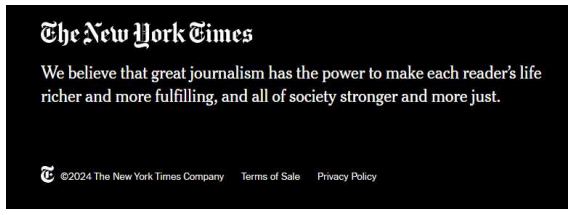
As palavras “richer – more fulfilling – stronger – more just' estão:
Ano: 2024
Banca:
CETAP
Órgão:
Prefeitura de Castanhal - PA
Prova:
CETAP - 2024 - Prefeitura de Castanhal - PA - Professor de Inglês |
Q3418942
Inglês
Marque a alternativa que apresenta a forma comparativa
corretamente.
Ano: 2024
Banca:
IESES
Órgão:
Prefeitura de São José - SC
Prova:
IESES - 2024 - Prefeitura de São José - SC - Professor - Inglês |
Q3229988
Inglês
The superlative form of the adjetive “far” is:
Ano: 2024
Banca:
Avança SP
Órgão:
Prefeitura de Paraty - RJ
Prova:
Avança SP - 2024 - Prefeitura de Paraty - RJ - Agente de Informação Turística Bilíngue |
Q3192167
Inglês
Read the following dialogue and select the option
that correctly completes the sentence.
Person A: "I'm really enjoying my time here in Brazil. The weather is so nice!"
Person B: "Yes, the weather is ______________ better in the summer."
Person A: "I'm really enjoying my time here in Brazil. The weather is so nice!"
Person B: "Yes, the weather is ______________ better in the summer."
Ano: 2024
Banca:
Avança SP
Órgão:
Prefeitura de Paraty - RJ
Prova:
Avança SP - 2024 - Prefeitura de Paraty - RJ - Jornalista |
Q3191532
Inglês
Which of the following sentences correctly uses
the comparative form of the adjective
"intelligent"?
Ano: 2024
Banca:
Avança SP
Órgão:
Prefeitura de Paraty - RJ
Prova:
Avança SP - 2024 - Prefeitura de Paraty - RJ - Jornalista |
Q3191531
Inglês
Identify the sentence that uses the superlative
form of the adjective correctly.

 Conheça nossos planos