Questões de Concurso
Sobre comparativo e superlativo de adjetivos | comparative and superlative em inglês
Foram encontradas 217 questões


Ano: 2015
Banca:
IBFC
Órgão:
SEE-MG
Prova:
IBFC - 2015 - SEE-MG - Professor de Educação Básica - Nível I - Grau A - Inglês |
Q859153
Inglês
“I've always wanted to climb the _____ mountain.
Choose the alternative that fills the blank correctly:
Q789652
Inglês
Texto associado
Atenção: Para responder à questão, considere o texto apresentado abaixo:
What Causes a Super Blood Moon?
By Daniel Victor, Sept, 25, 2015.
A rare astronomical phenomenon Sunday night will produce a moon that will appear slightly bigger  usual and have a reddish hue, an event known as a super blood moon.
usual and have a reddish hue, an event known as a super blood moon. It’s a combination of curiosities that hasn’t  since 1982, and won’t happen again
  2033. A so-called supermoon, which occurs when the moon is closest to earth in its orbit, will coincide with a lunar eclipse, leaving the moon in Earth’s shadow. Individually, the two phenomena are not uncommon, but they do not align often.
since 1982, and won’t happen again 2033. A so-called supermoon, which occurs when the moon is closest to earth in its orbit, will coincide with a lunar eclipse, leaving the moon in Earth’s shadow. Individually, the two phenomena are not uncommon, but they do not align often. Most people are unlikely to detect the larger size of the supermoon. It may appear 14 percent larger and 30 percent brighter, but the difference is subtle to the plain eye. But the reddish tint from the lunar eclipse is likely to be visible throughout much of North America, especially on the East Coast.
“You’re basically seeing all of the sunrises and sunsets across the world, all at once, being reflected off the surface of the moon,” said Dr. Sarah Noble, a program scientist at NASA.
(Adapatado de: http://www.nytimes.com/2015/09/26/science/super-blood-moon-to-make-last-appearance-until2033.html)
A alternativa que preenche corretamente a lacuna I é
Ano: 2015
Banca:
CETRO
Órgão:
AMAZUL
Provas:
CETRO - 2015 - AMAZUL - Analista em Desenvolvimento de Tecnologia Nuclear - Advogado
|
CETRO - 2015 - AMAZUL - Analista Administrativo |
CETRO - 2015 - AMAZUL - Engenheiro de Segurança do Trabalho |
CETRO - 2015 - AMAZUL - Assistente Social |
CETRO - 2015 - AMAZUL - Arquiteto |
CETRO - 2015 - AMAZUL - Contador |
CETRO - 2015 - AMAZUL - Cirurgião Dentista |
CETRO - 2015 - AMAZUL - Auditor |
CETRO - 2015 - AMAZUL - Analista de desenvolvimento de sistemas - Tecnólogo |
CETRO - 2015 - AMAZUL - Analista de Recursos Humanos |
CETRO - 2015 - AMAZUL - Tecnólogo em Logística |
CETRO - 2015 - AMAZUL - Enfermeiro do Trabalho |
CETRO - 2015 - AMAZUL - Psicologia |
Q479338
Inglês
Texto associado
Read the text below to answer the questions 11-15.
NASA Researchers Studying Advanced Nuclear Rocket Technologies
January 9, 2013
By using an innovative test facility at NASA’s Marshall Space Flight Center in Huntsville, Ala., researchers are able to use non-nuclear materials to simulate nuclear thermal rocket fuels - ones capable of propelling bold new exploration missions to the Red Planet and beyond. The Nuclear Cryogenic Propulsion Stage team is tackling a three-year project to demonstrate the viability of nuclear propulsion system technologies. A nuclear rocket engine uses a nuclear reactor to heat hydrogen to very high temperatures, which expands through a nozzle to generate thrust. Nuclear rocket engines generate higher thrust and are more than twice as efficient as conventional chemical rocket engines.
The team recently used Marshall’s Nuclear Thermal Rocket Element Environmental Simulator, or NTREES, to perform realistic, non-nuclear testing of various materials for nuclear thermal rocket fuel elements. In an actual reactor, the fuel elements would contain uranium, but no radioactive materials are used during the NTREES tests. Among the fuel options are a graphite composite and a “cermet” composite - a blend of ceramics and metals. Both materials were investigated in previous NASA and U.S. Department of Energy research efforts.
Nuclear-powered rocket concepts are not new; the United States conducted studies and significant ground testing from 1955 to 1973 to determine the viability of nuclear propulsion systems, but ceased testing when plans for a crewed Mars mission were deferred.
The NTREES facility is designed to test fuel elements and materials in hot flowing hydrogen, reaching pressures up to 1,000 pounds per square inch and temperatures of nearly 5,000 degrees Fahrenheit - conditions that simulate space-based nuclear propulsion systems to provide baseline data critical to the research team.
“This is vital testing, helping us reduce risks and costs associated with advanced propulsion technologies and ensuring excellent performance and results as we progress toward further system development and testing,” said Mike Houts, project manager for nuclear systems at Marshall.
A first-generation nuclear cryogenic propulsion system could propel human explorers to Mars more efficiently than conventional spacecraft, reducing crews’ exposure to harmful space radiation and other effects of long-term space missions. It could also transport heavy cargo and science payloads. Further development and use of a first-generation nuclear system could also provide the foundation for developing extremely advanced propulsion technologies and systems in the future - ones that could take human crews even farther into the solar system.
Building on previous, successful research and using the NTREES facility, NASA can safely and thoroughly test simulated nuclear fuel elements of various sizes, providing important test data to support the design of a future Nuclear Cryogenic Propulsion Stage. A nuclear cryogenic upper stage - its liquid- hydrogen propellant chilled to super-cold temperatures for launch - would be designed to be safe during all mission phases and would not be started until the spacecraft had reached a safe orbit and was ready to begin its journey to a distant destination. Prior to startup in a safe orbit, the nuclear system would be cold, with no fission products generated from nuclear operations, and with radiation below significant levels.
“The information we gain using this test facility will permit engineers to design rugged, efficient fuel elements and nuclear propulsion systems,” said NASA researcher Bill Emrich, who manages the NTREES facility at Marshall. “It’s our hope that it will enable us to develop a reliable, cost-effective nuclear rocket engine in the not-too-distant future."
The Nuclear Cryogenic Propulsion Stage project is part of the Advanced Exploration Systems program, which is managed by NASA’s Human Exploration and Operations Mission Directorate and includes participation by the U.S. Department of Energy. The program, which focuses on crew safety and mission operations in deep space, seeks to pioneer new approaches for rapidly developing prototype systems, demonstrating key capabilities and validating operational concepts for future vehicle development and human missions beyond Earth orbit.
Marshall researchers are partnering on the project with NASA’s Glenn Research Center in Cleveland, Ohio; NASA’s Johnson Space Center in Houston; Idaho National Laboratory in Idaho Falls; Los Alamos National Laboratory in Los Alamos, N.M.; and Oak Ridge National Laboratory in Oak Ridge, Tenn.
The Marshall Center leads development of the Space Launch System for NASA. The Science & Technology Office at Marshall strives to apply advanced concepts and capabilities to the research, development and management of a broad spectrum of NASA programs, projects and activities that fall at the very intersection of science and exploration, where every discovery and achievement furthers scientific knowledge and understanding, and supports the agency’s ambitious mission to expand humanity’s reach across the solar system. The NTREES test facility is just one of numerous cutting-edge space propulsion and science research facilities housed in the state-of- the-art Propulsion Research & Development Laboratory at Marshall, contributing to development of the Space Launch System and a variety of other NASA programs and missions.
Available in: http://www.nasa.gov
NASA Researchers Studying Advanced Nuclear Rocket Technologies
January 9, 2013
By using an innovative test facility at NASA’s Marshall Space Flight Center in Huntsville, Ala., researchers are able to use non-nuclear materials to simulate nuclear thermal rocket fuels - ones capable of propelling bold new exploration missions to the Red Planet and beyond. The Nuclear Cryogenic Propulsion Stage team is tackling a three-year project to demonstrate the viability of nuclear propulsion system technologies. A nuclear rocket engine uses a nuclear reactor to heat hydrogen to very high temperatures, which expands through a nozzle to generate thrust. Nuclear rocket engines generate higher thrust and are more than twice as efficient as conventional chemical rocket engines.
The team recently used Marshall’s Nuclear Thermal Rocket Element Environmental Simulator, or NTREES, to perform realistic, non-nuclear testing of various materials for nuclear thermal rocket fuel elements. In an actual reactor, the fuel elements would contain uranium, but no radioactive materials are used during the NTREES tests. Among the fuel options are a graphite composite and a “cermet” composite - a blend of ceramics and metals. Both materials were investigated in previous NASA and U.S. Department of Energy research efforts.
Nuclear-powered rocket concepts are not new; the United States conducted studies and significant ground testing from 1955 to 1973 to determine the viability of nuclear propulsion systems, but ceased testing when plans for a crewed Mars mission were deferred.
The NTREES facility is designed to test fuel elements and materials in hot flowing hydrogen, reaching pressures up to 1,000 pounds per square inch and temperatures of nearly 5,000 degrees Fahrenheit - conditions that simulate space-based nuclear propulsion systems to provide baseline data critical to the research team.
“This is vital testing, helping us reduce risks and costs associated with advanced propulsion technologies and ensuring excellent performance and results as we progress toward further system development and testing,” said Mike Houts, project manager for nuclear systems at Marshall.
A first-generation nuclear cryogenic propulsion system could propel human explorers to Mars more efficiently than conventional spacecraft, reducing crews’ exposure to harmful space radiation and other effects of long-term space missions. It could also transport heavy cargo and science payloads. Further development and use of a first-generation nuclear system could also provide the foundation for developing extremely advanced propulsion technologies and systems in the future - ones that could take human crews even farther into the solar system.
Building on previous, successful research and using the NTREES facility, NASA can safely and thoroughly test simulated nuclear fuel elements of various sizes, providing important test data to support the design of a future Nuclear Cryogenic Propulsion Stage. A nuclear cryogenic upper stage - its liquid- hydrogen propellant chilled to super-cold temperatures for launch - would be designed to be safe during all mission phases and would not be started until the spacecraft had reached a safe orbit and was ready to begin its journey to a distant destination. Prior to startup in a safe orbit, the nuclear system would be cold, with no fission products generated from nuclear operations, and with radiation below significant levels.
“The information we gain using this test facility will permit engineers to design rugged, efficient fuel elements and nuclear propulsion systems,” said NASA researcher Bill Emrich, who manages the NTREES facility at Marshall. “It’s our hope that it will enable us to develop a reliable, cost-effective nuclear rocket engine in the not-too-distant future."
The Nuclear Cryogenic Propulsion Stage project is part of the Advanced Exploration Systems program, which is managed by NASA’s Human Exploration and Operations Mission Directorate and includes participation by the U.S. Department of Energy. The program, which focuses on crew safety and mission operations in deep space, seeks to pioneer new approaches for rapidly developing prototype systems, demonstrating key capabilities and validating operational concepts for future vehicle development and human missions beyond Earth orbit.
Marshall researchers are partnering on the project with NASA’s Glenn Research Center in Cleveland, Ohio; NASA’s Johnson Space Center in Houston; Idaho National Laboratory in Idaho Falls; Los Alamos National Laboratory in Los Alamos, N.M.; and Oak Ridge National Laboratory in Oak Ridge, Tenn.
The Marshall Center leads development of the Space Launch System for NASA. The Science & Technology Office at Marshall strives to apply advanced concepts and capabilities to the research, development and management of a broad spectrum of NASA programs, projects and activities that fall at the very intersection of science and exploration, where every discovery and achievement furthers scientific knowledge and understanding, and supports the agency’s ambitious mission to expand humanity’s reach across the solar system. The NTREES test facility is just one of numerous cutting-edge space propulsion and science research facilities housed in the state-of- the-art Propulsion Research & Development Laboratory at Marshall, contributing to development of the Space Launch System and a variety of other NASA programs and missions.
Available in: http://www.nasa.gov
Read the following sentence taken from the text.
“Nuclear rocket engines generate higher thrust and are more than twice as efficient as conventional chemical rocket engines.”
It is correct to affirm that the adjectives in bold and underlined are, respectively,
“Nuclear rocket engines generate higher thrust and are more than twice as efficient as conventional chemical rocket engines.”
It is correct to affirm that the adjectives in bold and underlined are, respectively,
Q540968
Inglês

Considering the information in the text, mark T for the true statements and F for the false ones.
( ) highest (line 2), most basic (line 3), best work (line 16) are in the superlative form.
( ) better grades (lines 11 and 12), higher wages (line 13), more extrinsically motivated (line 18) are in the comparative of inferiority form.
( ) us (line 3) and our (line 18) are possessive pronouns.
( ) motivated (line 11) and theoretical (line 2) are adjectives.
Mark the correct sequence.
( ) highest (line 2), most basic (line 3), best work (line 16) are in the superlative form.
( ) better grades (lines 11 and 12), higher wages (line 13), more extrinsically motivated (line 18) are in the comparative of inferiority form.
( ) us (line 3) and our (line 18) are possessive pronouns.
( ) motivated (line 11) and theoretical (line 2) are adjectives.
Mark the correct sequence.
Ano: 2014
Banca:
CETRO
Órgão:
AEB
Provas:
CETRO - 2014 - AEB - Analista em C&T - Gestão Administrativa - Pleno 1
|
CETRO - 2014 - AEB - Tecnologista - Desenvolvimento Técnológico - Pleno 1 |
Q482190
Inglês
Read the paragraphs below and choose the alternative that fills in correctly and respectively the blanks with the comparative of equality, the comparative of superiority or the superlative of the given adjectives in parentheses.
This is how stars die
5,000 light years away in Centaurus, a large constellation in the southern sky, is the Boomerang Nebula, a cloud of gas being expelled from a dying star.
This cloud is one of _________ (bizarre) 1 and ___________ (mysterious) 2 objects in the universe. Here, within the gas streaming outwards, astronomers have found that the temperature drops ___________ (low) 3 nearly absolute zero.
It is, ___________ (far) 4 anyone knows, the coldest place in the universe.
It may also prove to be quite important. Because this ____________ (frigid) 5 place, and objects like it, albeit a tad ___________ (warm) 6– may help astronomers unravel a host of cosmic conundrums, from the violent yet spectacular deaths of stars and the formation of galaxies to cosmic explosions and the origin of life itself.
Death of stars, birth of life
In many respects the Boomerang Nebula is unremarkable. All stars have to die some day. When ___________ (small) 7 stars end, those about eight times _____________ (massive) 8 our own sun, they produce a similar display of gas and dust.
display of gas and dust.
This is how stars die
5,000 light years away in Centaurus, a large constellation in the southern sky, is the Boomerang Nebula, a cloud of gas being expelled from a dying star.
This cloud is one of _________ (bizarre) 1 and ___________ (mysterious) 2 objects in the universe. Here, within the gas streaming outwards, astronomers have found that the temperature drops ___________ (low) 3 nearly absolute zero.
It is, ___________ (far) 4 anyone knows, the coldest place in the universe.
It may also prove to be quite important. Because this ____________ (frigid) 5 place, and objects like it, albeit a tad ___________ (warm) 6– may help astronomers unravel a host of cosmic conundrums, from the violent yet spectacular deaths of stars and the formation of galaxies to cosmic explosions and the origin of life itself.
Death of stars, birth of life
In many respects the Boomerang Nebula is unremarkable. All stars have to die some day. When ___________ (small) 7 stars end, those about eight times _____________ (massive) 8 our own sun, they produce a similar display of gas and dust.
display of gas and dust.
Ano: 2014
Banca:
FCC
Órgão:
SEFAZ-RJ
Prova:
FCC - 2014 - SEFAZ-RJ - Auditor Fiscal da Receita Estadual - Prova 1 |
Q351449
Inglês

According to the context, the ADJECTIVE that adequately fills the blank is
Q876684
Inglês

Considering language use in the text, it’s correct to say:
Ano: 2013
Banca:
CESPE / CEBRASPE
Órgão:
SEDUC-CE
Prova:
CESPE - 2013 - SEDUC-CE - Professor Pleno I - Língua Inglesa |
Q866985
Inglês

In the clause “But over the years as I’ve gotten to know her better”
(ℓ.7), “better” is the irregular comparative form of
Q789397
Inglês

The opposite of the underlined word in ""to log onto the nearest WI-Fi" (kines 17 and 18) is
Ano: 2013
Banca:
CESPE / CEBRASPE
Órgão:
STF
Provas:
CESPE - 2013 - STF - Analista Judiciário - Área Judiciária
|
CESPE - 2013 - STF - Analista Judiciário - Área Administrativa |
CESPE - 2013 - STF - Todos os Cargos - Conhecimentos Básicos - Cargos 3 e 5 |
CESPE - 2013 - STF - Analista Judiciário - Revisor de Texto |
Q352000
Inglês
Texto associado
The aging process affects us all at different rates. Some people of fifty-three, like the esteemed author, look a mere thirty-five, with sparkling brown eyes, a handsome gait and the virility of a steam train. Others, like the author’s friend Colin, look like little middle-aged men at twenty-one with middle-aged outlooks of set ways and planned futures. In women the former condition is common but women rarely suffer from the latter, being fired with the insatiable drive of ambition for either an independent and distinguished career in a still male-dominated world, or a home and seven children by the time they are thirty followed by an independent and distinguished career as a Cheltenham councillor or a public relations agent for Jonathan Cape, in later life.
No such luck for Charles Charlesworth, who was born on the 14th of March, 1829, in Stafford. At the age of four Charles had a beard and was sexually active.
In the final three years of his life his skin wrinkled, he developed varicose veins, shortness of breath, grey hair, senile dementia and incontinence. Some time in his seventh year he fainted and never gained consciousness
The coroner returned a verdict of natural causes due to old age.
Hugh Cory. Advanced writing with english in use. Oxford University Press, p. 34.
No such luck for Charles Charlesworth, who was born on the 14th of March, 1829, in Stafford. At the age of four Charles had a beard and was sexually active.
In the final three years of his life his skin wrinkled, he developed varicose veins, shortness of breath, grey hair, senile dementia and incontinence. Some time in his seventh year he fainted and never gained consciousness
The coroner returned a verdict of natural causes due to old age.
Hugh Cory. Advanced writing with english in use. Oxford University Press, p. 34.
According to the text above,
it is rather common for women to look older than they really are.
it is rather common for women to look older than they really are.
Ano: 2013
Banca:
Makiyama
Órgão:
DETRAN-RJ
Prova:
Makiyama - 2013 - DETRAN-RJ - Assistente Técnico Administrativo |
Q344241
Inglês

“The FIFA World Cup™ is the biggest single-event sporting competition in the world and its impact on society and the environment is indisputable.”
Há, sublinhada nas sentenças a seguir, a mesma forma de superlativo adjetivo apresentada em the biggest, EXCETO na alternativa:
Há, sublinhada nas sentenças a seguir, a mesma forma de superlativo adjetivo apresentada em the biggest, EXCETO na alternativa:
Ano: 2013
Banca:
FCC
Órgão:
SEFAZ-SP
Prova:
FCC - 2013 - SEFAZ-SP - Agente Fiscal de Rendas - Gestão Tributária - Prova 1 |
Q319156
Inglês
Facebook Announces Its Third Pillar “Graph Search” That Gives You Answers, Not Links Like Google
DREW OLANOFF JOSH CONSTINE, COLLEEN TAYLOR, INGRID LUNDEN
Tuesday, January 15th, 2013
Today at Facebook’s press event, Mark Zuckerberg, CEO of Facebook, announced its latest product, called Graph Search.
Zuckerberg made it very clear that this is not web search, but completely different.
He explained the difference between web search and Graph Search. “Web search is designed to take any open-ended query and give
you links that might have answers.” Linking things together based on things that you’re interested in is a “very hard technical problem,”
according to Zuckerberg.
Graph Search is designed to take a precise query and give you an answer, rather than links that might provide the answer.” For
example, you could ask Graph Search “Who are my friends that live in San Francisco?”
Zuckerberg says that Graph Search is in “very early beta.” People, photos, places and interests are the focus for the first iteration of the
product.
Facebook Graph Search is completely personalized. Tom Stocky of the search team explains he gets unique results for a search of
“friends who like Star Wars and Harry Potter.” Then, “If anyone else does this search they get a completely different set of results. ...C...
someone had the same set of friends as me, the results would be different [because we have different relationships with our friends].”
You can also use Graph Search for recruiting. Stocky says if he was looking for people to join the team at Facebook, he could search
for NASA Ames employees who are friends with people at Facebook. “If I wanted to reach out and recruit them, I could see who their friends
are at Facebook. To refine them I can look for people who wrote they are “founders.”
Photos is another big part of Graph Search. Results are sorted by engagement so you see the ones with the most likes and comments
at the top. For example, Lars Rasmussen, Facebook engineer, searched for “photos of my friends taken at National Parks.” He got a gorgeous
page of photos from Yosemite, Machu Pichu, and other parks.
(Adapted from http://techcrunch.com/2013/01/15/facebook-announces-its-third-pillar-graph-search/)
No texto, “latest” significa
DREW OLANOFF JOSH CONSTINE, COLLEEN TAYLOR, INGRID LUNDEN
Tuesday, January 15th, 2013
Today at Facebook’s press event, Mark Zuckerberg, CEO of Facebook, announced its latest product, called Graph Search.
Zuckerberg made it very clear that this is not web search, but completely different.
He explained the difference between web search and Graph Search. “Web search is designed to take any open-ended query and give
you links that might have answers.” Linking things together based on things that you’re interested in is a “very hard technical problem,”
according to Zuckerberg.
Graph Search is designed to take a precise query and give you an answer, rather than links that might provide the answer.” For
example, you could ask Graph Search “Who are my friends that live in San Francisco?”
Zuckerberg says that Graph Search is in “very early beta.” People, photos, places and interests are the focus for the first iteration of the
product.
Facebook Graph Search is completely personalized. Tom Stocky of the search team explains he gets unique results for a search of
“friends who like Star Wars and Harry Potter.” Then, “If anyone else does this search they get a completely different set of results. ...C...
someone had the same set of friends as me, the results would be different [because we have different relationships with our friends].”
You can also use Graph Search for recruiting. Stocky says if he was looking for people to join the team at Facebook, he could search
for NASA Ames employees who are friends with people at Facebook. “If I wanted to reach out and recruit them, I could see who their friends
are at Facebook. To refine them I can look for people who wrote they are “founders.”
Photos is another big part of Graph Search. Results are sorted by engagement so you see the ones with the most likes and comments
at the top. For example, Lars Rasmussen, Facebook engineer, searched for “photos of my friends taken at National Parks.” He got a gorgeous
page of photos from Yosemite, Machu Pichu, and other parks.
(Adapted from http://techcrunch.com/2013/01/15/facebook-announces-its-third-pillar-graph-search/)
No texto, “latest” significa
Ano: 2013
Banca:
FCC
Órgão:
SEFAZ-SP
Provas:
FCC - 2013 - SEFAZ-SP - Agente Fiscal de Rendas - Gestão Tributária - Prova 1
|
FCC - 2013 - SEFAZ-SP - Agente Fiscal de Rendas - Tecnologia da Informação - Prova 1 |
Q319152
Inglês
For taxpayer advocate, a familiar refrain
By Michelle Singletary, Published: January 15, 2013
It’s not nice to tell people “I told you so.” But if anybody has the right to say that, it’s Nina E. Olson, the national taxpayer advocate.
Olson recently submitted her annual report to Congress and top on her list of things that need to be fixed is the complexity of the tax
code, which she called the most serious problem facing taxpayers.
Let’s just look at the most recent evidence of complexity run amok. The Internal Revenue Service had to delay the tax-filing season so it
could update forms and its programming to accommodate recent changes made under the American Taxpayer Relief Act. The IRS won’t start
processing individual income tax returns until Jan. 30. Yet one thing remains unchanged − the April 15 tax deadline.
Because of the new tax laws, the IRS also had to release updated income-tax withholding tables for 2013. These replace the tables
issued Dec. 31. Yes, let’s just keep making more work for the agency that is already overburdened. Not to mention the extra work for
employers, who have to use the revised information to correct the amount of Social Security tax withheld in 2013. And they have to make that
correction in order to withhold a larger Social Security tax of 6.2 percent on wages, following the expiration of the payroll tax cut in effect for
2011 and 2012.
Oh, and there was the near miss with the alternative minimum tax that could have delayed the tax filing season to late March. The AMT
was created to target high-income taxpayers who were claiming so many deductions that they owed little or no income tax. Olson and many
others have complained for years that the AMT wasn’t indexed for inflation.
“Many middle- and upper-middle-class taxpayers pay the AMT, while most wealthy taxpayers do not, and thousands of millionaires pay
..A.. income tax at all,” Olson said.
As part of the recent “fiscal cliff” deal, the AMT is now fixed, a move that the IRS was anticipating. It had already decided to program its
systems on the assumption that an AMT patch would be passed, Olson said. Had the agency not taken the risk, the time it would have taken to
update the systems “would have brought about the most chaotic filing season in memory,” she said in her report.
The tax code contains almost 4 million words. Since 2001, there have been about 4,680 changes, or an average of more than one
change a day. What else troubles Olson? Here’s what:
− Nearly 60 percent of taxpayers hire paid preparers, and another 30 percent rely on commercial software to prepare their returns.
− Many taxpayers don’t really know how their taxes are computed and what rate of tax they pay.
− The complex code makes tax fraud ..B.. to detect.
− Because the code is so complicated, it creates an impression that many taxpayers are not paying their fair share. This reduces trust
in the system and perhaps leads some people to cheat. Who wants to be the sucker in this game? So someone might not declare
all of his income, rationalizing that millionaires get to use the convoluted code to greatly reduce their tax liability.
− In fiscal year 2012, the IRS received around 125 million calls. But the agency answered only about two out of three calls from
people trying to reach a live person, and those taxpayers had to wait, on average, about 17 minutes to get through.
“I hope 2013 brings about fundamental tax simplification,” Olson pleaded in her report. She urged Congress to reassess the need for
the tax breaks we know as income exclusions, exemptions, deductions and credits. It’s all these tax advantage breaks that complicate the
code. If done right, and without reducing revenue, tax rates could be substantially lowered in exchange for ending tax breaks, she said.
(Adapted from http://js.washingtonpost.com/business/economy/for-taxpayer-advocate-a-familiar-refrain/2013/01/15/a10327ce-5f59-
11e2-b05a-605528f6b712_story.html)
A alternativa que, no contexto, preenche adequadamente a lacuna ..B.. é
By Michelle Singletary, Published: January 15, 2013
It’s not nice to tell people “I told you so.” But if anybody has the right to say that, it’s Nina E. Olson, the national taxpayer advocate.
Olson recently submitted her annual report to Congress and top on her list of things that need to be fixed is the complexity of the tax
code, which she called the most serious problem facing taxpayers.
Let’s just look at the most recent evidence of complexity run amok. The Internal Revenue Service had to delay the tax-filing season so it
could update forms and its programming to accommodate recent changes made under the American Taxpayer Relief Act. The IRS won’t start
processing individual income tax returns until Jan. 30. Yet one thing remains unchanged − the April 15 tax deadline.
Because of the new tax laws, the IRS also had to release updated income-tax withholding tables for 2013. These replace the tables
issued Dec. 31. Yes, let’s just keep making more work for the agency that is already overburdened. Not to mention the extra work for
employers, who have to use the revised information to correct the amount of Social Security tax withheld in 2013. And they have to make that
correction in order to withhold a larger Social Security tax of 6.2 percent on wages, following the expiration of the payroll tax cut in effect for
2011 and 2012.
Oh, and there was the near miss with the alternative minimum tax that could have delayed the tax filing season to late March. The AMT
was created to target high-income taxpayers who were claiming so many deductions that they owed little or no income tax. Olson and many
others have complained for years that the AMT wasn’t indexed for inflation.
“Many middle- and upper-middle-class taxpayers pay the AMT, while most wealthy taxpayers do not, and thousands of millionaires pay
..A.. income tax at all,” Olson said.
As part of the recent “fiscal cliff” deal, the AMT is now fixed, a move that the IRS was anticipating. It had already decided to program its
systems on the assumption that an AMT patch would be passed, Olson said. Had the agency not taken the risk, the time it would have taken to
update the systems “would have brought about the most chaotic filing season in memory,” she said in her report.
The tax code contains almost 4 million words. Since 2001, there have been about 4,680 changes, or an average of more than one
change a day. What else troubles Olson? Here’s what:
− Nearly 60 percent of taxpayers hire paid preparers, and another 30 percent rely on commercial software to prepare their returns.
− Many taxpayers don’t really know how their taxes are computed and what rate of tax they pay.
− The complex code makes tax fraud ..B.. to detect.
− Because the code is so complicated, it creates an impression that many taxpayers are not paying their fair share. This reduces trust
in the system and perhaps leads some people to cheat. Who wants to be the sucker in this game? So someone might not declare
all of his income, rationalizing that millionaires get to use the convoluted code to greatly reduce their tax liability.
− In fiscal year 2012, the IRS received around 125 million calls. But the agency answered only about two out of three calls from
people trying to reach a live person, and those taxpayers had to wait, on average, about 17 minutes to get through.
“I hope 2013 brings about fundamental tax simplification,” Olson pleaded in her report. She urged Congress to reassess the need for
the tax breaks we know as income exclusions, exemptions, deductions and credits. It’s all these tax advantage breaks that complicate the
code. If done right, and without reducing revenue, tax rates could be substantially lowered in exchange for ending tax breaks, she said.
(Adapted from http://js.washingtonpost.com/business/economy/for-taxpayer-advocate-a-familiar-refrain/2013/01/15/a10327ce-5f59-
11e2-b05a-605528f6b712_story.html)
A alternativa que, no contexto, preenche adequadamente a lacuna ..B.. é
Ano: 2012
Banca:
EXATUS
Órgão:
DETRAN-RJ
Prova:
EXATUS - 2012 - DETRAN-RJ - Todos os Cargos - Conhecimentos Gerais |
Q317101
Inglês
Indique a melhor alternativa para completar a sentença:
The Eiffel Tower in France _____ that one of building in Dubai.
The Eiffel Tower in France _____ that one of building in Dubai.
Ano: 2011
Banca:
CESPE / CEBRASPE
Órgão:
Correios
Prova:
CESPE - 2011 - Correios - Cargos de Nível Superior - Conhecimentos Básicos - Cargos 3, 4, 5 e 16 |
Q356072
Inglês

Based on the text, judge the following items.
The term “better” (l.18) is the opposite of worst.
The term “better” (l.18) is the opposite of worst.
Q331227
Inglês
Texto associado
READ THE TEXT IN ORDER TO ANSWER THE QUESTIONS 21 -30:

The word "wealthiest” in "the wealthiest in Latin America." (2nd paragraph) is:
Ano: 2011
Banca:
CESPE / CEBRASPE
Órgão:
SEDUC-AM
Prova:
CESPE - 2011 - SEDUC-AM - Professor - Inglês |
Q273980
Inglês
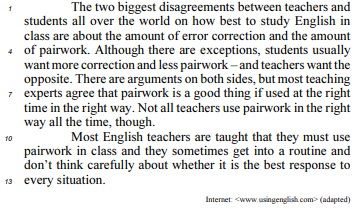
The word “biggest” (L.1) is the comparative of superiority of the adjective big.
Ano: 2011
Banca:
CESPE / CEBRASPE
Órgão:
SEDUC-AM
Prova:
CESPE - 2011 - SEDUC-AM - Professor - Inglês |
Q273951
Inglês
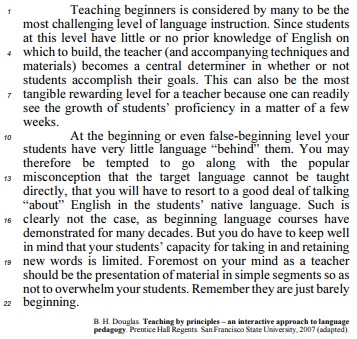
The expression “the most challenging” (L.1-2) is a comparative of superiority.
Ano: 2011
Banca:
CESPE / CEBRASPE
Órgão:
EBC
Prova:
CESPE - 2011 - EBC - Analista - Tradução - Língua Inglesa |
Q273650
Inglês
Texto associado
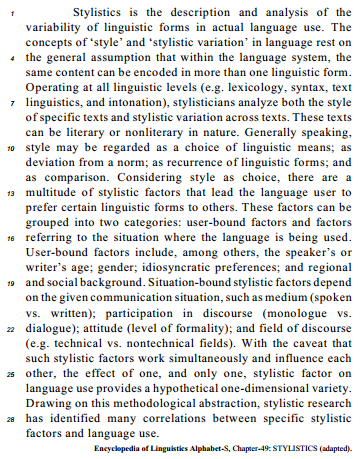
In the sentence
“Bernard is now the best student at that college.”, “the best student” is a direct object.
Ano: 2011
Banca:
CESGRANRIO
Órgão:
Transpetro
Provas:
CESGRANRIO - 2011 - Transpetro - Administrador Júnior
|
CESGRANRIO - 2011 - Transpetro - Analista de Sistemas Júnior |
CESGRANRIO - 2011 - Transpetro - Contador Júnior - Contábil |
CESGRANRIO - 2011 - Transpetro - Contador Júnior - Auditoria Interna |
CESGRANRIO - 2011 - Transpetro - Economista Júnior |
CESGRANRIO - 2011 - Transpetro - Engenheiro Júnior - Engenharia de Produção |
CESGRANRIO - 2011 - Transpetro - Médico do trabalho |
CESGRANRIO - 2011 - Transpetro - Engenheiro Júnior - Análise de Projetos de Inverstimentos |
CESGRANRIO - 2011 - Transpetro - Engenheiro Júnior - Geotécnica |
CESGRANRIO - 2011 - Transpetro - Engenheiro Júnior - Elétrica |
CESGRANRIO - 2011 - Transpetro - Engenheiro Júnior - Mecânica |
CESGRANRIO - 2011 - Transpetro - Profissional de Meio Ambiente Júnior |
CESGRANRIO - 2011 - Transpetro - Engenheiro Júnior - Processamento |
CESGRANRIO - 2011 - Transpetro - Engenheiro Júnior - Segurança |
CESGRANRIO - 2011 - Transpetro - Engenheiro Júnior - Naval |
CESGRANRIO - 2011 - Transpetro - Químico de Petróleo Júnior |
CESGRANRIO - 2011 - Transpetro - Engenheiro Júnior - Automação |
Q154628
Inglês
Texto associado
Model copes with chaos to deliver relief
Computer program helps responders transport
supplies in tough conditions
By Rachel Ehrenberg Science News, Web edition: Monday, February 21st, 2011
WASHINGTON — Getting blood or other perishable supplies to an area that’s been struck by an earthquake or hurricane isn’t as simple as asking what brown can do for you. But a new model quickly determines the best routes and means for delivering humanitarian aid, even in situations where bridges are out or airport tarmacs are clogged with planes.
The research, presented February 18 at the annual meeting of the American Association for the Advancement of Science, could help get supplies to areas which have experienced natural disasters or help prepare for efficient distribution of vaccines when the flu hits.
Efficient supply chains have long been a goal of manufacturers, but transport in fragile networks — where supply, demand and delivery routes may be in extremely rapid flux — requires a different approach, said Anna Nagurney of the University of Massachusetts Amherst, who presented the new work. Rather than considering the shortest path from one place to another to maximize profit, her system aims for the cleanest path at minimum cost, while capturing factors such as the perishability of the product and the uncertainty of supply routes. ‘You don’t know where demand is, so it’s tricky,’ said Nagurney. ‘It’s a multicriteria decision-making problem.’
By calculating the total cost associated with each link in a network, accounting for congestion and incorporating penalties for time and products that are lost, the computer model calculates the best supply chain in situations where standard routes may be disrupted.
‘Mathematical tools are essential to develop formal means to predict, and to respond to, such critical perturbations,’ said Iain Couzin of Princeton University, who uses similar computational tools to study collective animal behavior. ‘This is particularly important where response must be rapid and effective, such as during disaster scenarios … or during epidemics or breaches of national security.
’ The work can be applied to immediate, pressing situations, such as getting blood, food or medication to a disaster site, or to longer-term problems such as determining the best locations for manufacturing flu vaccines. . Retrieved April 7th, 2011.
By Rachel Ehrenberg Science News, Web edition: Monday, February 21st, 2011
WASHINGTON — Getting blood or other perishable supplies to an area that’s been struck by an earthquake or hurricane isn’t as simple as asking what brown can do for you. But a new model quickly determines the best routes and means for delivering humanitarian aid, even in situations where bridges are out or airport tarmacs are clogged with planes.
The research, presented February 18 at the annual meeting of the American Association for the Advancement of Science, could help get supplies to areas which have experienced natural disasters or help prepare for efficient distribution of vaccines when the flu hits.
Efficient supply chains have long been a goal of manufacturers, but transport in fragile networks — where supply, demand and delivery routes may be in extremely rapid flux — requires a different approach, said Anna Nagurney of the University of Massachusetts Amherst, who presented the new work. Rather than considering the shortest path from one place to another to maximize profit, her system aims for the cleanest path at minimum cost, while capturing factors such as the perishability of the product and the uncertainty of supply routes. ‘You don’t know where demand is, so it’s tricky,’ said Nagurney. ‘It’s a multicriteria decision-making problem.’
By calculating the total cost associated with each link in a network, accounting for congestion and incorporating penalties for time and products that are lost, the computer model calculates the best supply chain in situations where standard routes may be disrupted.
‘Mathematical tools are essential to develop formal means to predict, and to respond to, such critical perturbations,’ said Iain Couzin of Princeton University, who uses similar computational tools to study collective animal behavior. ‘This is particularly important where response must be rapid and effective, such as during disaster scenarios … or during epidemics or breaches of national security.
’ The work can be applied to immediate, pressing situations, such as getting blood, food or medication to a disaster site, or to longer-term problems such as determining the best locations for manufacturing flu vaccines. . Retrieved April 7th, 2011.
According to Anna Nagurney, in paragraph 3 (lines 14-26), an efficient logistics system must consider the

 Conheça nossos planos