Questões de Concurso
Sobre caso genitivo | genitive case em inglês
Foram encontradas 81 questões


Assim, analise as afirmativas a seguir:
I.A forma 's é primariamente usada para indicar posse com seres animados (pessoas e animais), como em "the student's book" (o livro do aluno) ou "the cat's tail" (o rabo do gato).
II.Embora a estrutura "of the..." (e.g., *the leg of the table*) seja a preferida para posse com objetos inanimados, o genitivo 's é comumente usado com expressões de tempo (e.g., *today's news*), medida ou em casos de personificação.
III.Para substantivos plurais regulares que já terminam em "s", a posse é indicada adicionando outro 's, formando "s's", como em "the students's pencils".
Está correto o que se afirma em:
Laszlo Krasznahorkai Is Awarded Nobel Prize in Literature
Laszlo Krasznahorkai, a Hungarian novelist known for his dystopian themes and relentless prose, with winding sentences that can run on for pages, was awarded the Nobel Prize in Literature on Thursday. The Swedish Academy, which organizes the prize, said at a news conference that Krasznahorkai had received the award “for his compelling and visionary oeuvre that, in the midst of apocalyptic terror, reaffirms the power of art.”
Krasznahorkai (pronounced CRAS-now-hoar-kay), 71, has been a perennial favorite for the Nobel. Hailed as a “master of the apocalypse” by Susan Sontag, Krasznahorkai has long been revered by fellow writers for his idiosyncratic style and bleak narratives that can often be slyly humorous.
He’s also written half a dozen screenplays in collaboration with the Hungarian movie director Bela Tarr, who has adapted several of his novels for the screen. Tarr filmed “The Melancholy of Resistance,” which is among Krasznahorkai’s best-known works, as “Werckmeister Harmonies,” in 2000. The novel, filled with vast sentences, concerns events in a small Hungarian town after a circus arrives with a huge stuffed whale in tow.
Krasznahorkai told The New York Times in 2014 that he had tried to develop an absolutely original style, adding, “I wanted to be free to stray far from my literary ancestors, and not make some new version of Kafka or Dostoyevsky or Faulkner.”
Steve Sem-Sandberg, a member of the committee that awarded the prize, praised Krasznahorkai’s “powerful, musically inspired epic style” at the news conference announcing the Nobel. “It is Krasznahorkai’s artistic gaze, which is entirely free of illusion and which sees through the fragility of the social order, combined with his unwavering belief in the power of art that has motivated the academy to award the prize,” Sem-Sandberg added.
A spokeswoman for Krasznahorkai’s German publisher said in an email on Thursday that the author was not conducting any interviews, although earlier in the day he briefly spoke to Swedish radio: “I’m very happy, thank you,” he said, adding, “I don’t know what’s coming in the future.”
Krasznahorkai was born in Gyula, a small town about 120 miles from Budapest, in 1954. His family’s Jewish roots were kept a secret — his grandfather changed the family name from Korin to Krasznahorkai to assimilate — and Krasznahorkai didn’t know about his Jewish heritage until his father told him when he was 11.
He was a musical prodigy, and worked as a professional musician for several years in his youth, playing piano in a jazz band and singing in a rock group. His father was a lawyer, and his mother worked in the social welfare ministry. Inspired by Kafka, an author he revered, he planned to study law and was fascinated by criminal psychology, but ended up studying Hungarian language and literature.
After school, Krasznahorkai undertook military service but, he has said in interviews, deserted the army after being punished for insubordination. He then took on odd jobs — including working as a miner and as a night watchman for 300 cows, a post that allowed him to read work by Dostoyevsky and Malcolm Lowry’s “Under the Volcano,” a book he called his “bible.”
When he began writing, his aim was to complete one book, then pursue a career in music. At the time he published his first short story, artists and writers were subject to censorship under Hungary’s Communist regime, and he was taken in for questioning by the police, who interrogated him about his anti-Communist views and took away his passport.
Krasznahorkai was undeterred. In 1985, he published his subversive debut novel, “Satantango,” about life in a poor, crumbling hamlet, which was a literary sensation in Hungary. “Nobody, myself included, could understand how it was possible to publish ‘Satantango’ because it’s anything but an unproblematic novel for the Communist system,” he said in a 2018 Paris Review interview.
“He doesn’t deal with grand politics, he’s dealing with the experiences of people who live within societies that are decaying and falling apart,” said the poet George Szirtes, who translated “Satantango” and several other works by Krasznahorkai. Tarr filmed an adaptation, which lasts for over seven hours, in 1994. In an interview on Thursday he recalled reading the book in one night and asking if he could turn it into a movie, only to find the author annoyed to be woken up during Easter holidays. The novel was filled with “these poor people, these miserable people,” Tarr said, but Krasznahorkai gave them a rare “dignity.”
Szirtes said that Krasznahorkai never expected his books — filled with endless clauses and sub-clauses — to catch on with a wide international audience. “The books can look daunting in some ways, simply because there is no break in them,” Szirtes said. In recent decades, Krasznahorkai has received a stream of accolades outside his home country. In 2015, he won the Man Booker International Prize, which at the time was awarded for an author’s entire body of work rather than a specific novel.
In the United States, New Directions has published a dozen of his books in translation, and more are forthcoming, including “Zsömle Is Gone,” a satire about an elderly retired electrician living in the countryside who believes he’s a descendant of Hungarian royalty. Barbara Epler, the publisher of New Directions, said one of the most striking things about Krasznahorkai’s work is his ability to weave unexpected humor into bleak stories. “What’s amazing is its anti-gravitational element — all this darkness and within it, an escalating, incredibly deadpan hilarity,” she said.
The Nobel Prize is literature’s major honor, and typically the capstone to a writer’s career. Past recipients have included the authors Saul Bellow and Toni Morrison, the playwright Harold Pinter and, in 2016, Bob Dylan. Krasznahorkai had featured among bookmakers’ favorites to win the prize for many years. He is the second Hungarian to receive the literature Nobel after Imre Kertész, a novelist and Holocaust survivor, in 2002.
While Krasznahorkai’s work has often been praised for its political overtones, he has rejected the idea that he’s writing political allegories. “I never want to write some political novels,” he told The New York Times in 2014. “My resistance against the Communist regime was not political. It was against a society.”
Krasznahorkai isn’t comfortable being cast as a social or political prognosticator. He has said he’s never felt at ease discussing his work, and doesn’t see himself as “part of literary life.” “Writing, for me, is a totally private act,” he told The Paris Review. “I’m ashamed to speak about my literature — it’s the same as if you were to ask me about my most private secrets.”
Adapted from: https://www.nytimes.com/2025/10/09/
Disponível em: https://www.google.com/imgres?imgurl=https://media.brainly.com.br/image/rs:fill/w:1200/q:75/plain/https://pt-static.zdn.net/files/d0d/4230b2ecdf9f2da5540a6bd085348958.jpg&tbnid=sRwsfzGn70RCgM&vet=1&imgrefurl=https://brainly.com.br/tarefa/40653018&d ocid=WrexQ8zVFM4y7M&w=576&h=253&itg=1&source=sh/x/im/m1/2&kgs=20bc21bdfbea7029&shem=abme,trie. Acesso em: 15 de setembro de 2024.
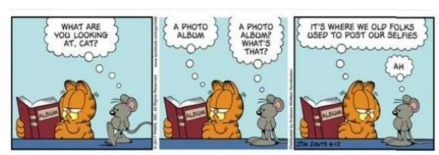
Celse-Murcia (2013) affirms that, besides possession, the genitive form can indicate:
TEXTO PARA A QUESTÃO.
SaxaVord spaceport on Unst has become UK’s first spaceport to be licensed for vertical rocket launches
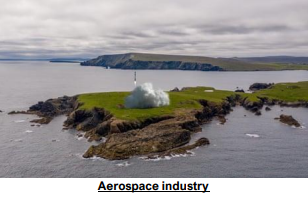
Shetland island’s remote location is giving UK space industry a boost Unst Photograph: SaxaVord UK Spaceport/ An illustration of a rocket taking off vertically from the SaxaVord spaceport on PA.
For centuries, Unst has been famous for its rich variety of wildlife, pristine beaches and unspoilt sea views. Now, the remote Shetland island is leading Britain into space.
Choose the correct option to fill in the blanks with “who,” “whom,” or “whose.”
1 - The man ____ car was parked outside the office came in to ask about the meeting.
2 - The teacher ___ you spoke to is on vacation.
3 - I have a colleague____ knows a lot about modern art.
4 - The musician_____ song won the award is very talented.
5 - The participants_____ answers were correct received certificates.

 Conheça nossos planos