Questões de Concurso
Comentadas sobre aspectos linguísticos | linguistic aspects em inglês
Foram encontradas 797 questões
Based on the ideas and linguistic aspects of the text above, judge the items below.
In the fragment “English teachers, therefore, need to appreciate the special status English has” (ℓ. 9 and 10), “appreciate” means like or enjoy.
Based on the ideas and linguistic aspects of the text above, judge the items below.
The expression “all over the world” (ℓ.2) is synonymous with worldwide.
21st Century
All the creatures,
On the beaches,
Making waves in a motion picture.
Wont you keep this,
In between us,
Search and seizure, wake up Venus.
The dollar bill will,
Mentally ill bill,
Mum and dad take your 'don't be sad' pill
[…]
Disponível em: <http://www.azlyrics.com/lyrics/redhotchilipeppers/21stcentury.html>. Acesso em: 16 fev. 2017.
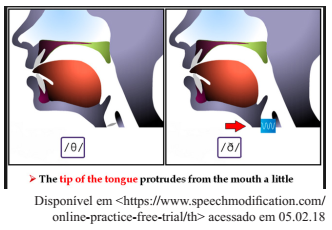
As partes destacadas têm seus símbolos fonéticos representados, respectivamente, em:
Complete the statement with the right option: “Basically, an article is an adjective. Like adjectives, articles modify nouns. English has two articles, the (definite article) and a/an (indefinite article), for example.”
The Pros and Cons of Nuclear Power
Since the disaster at the Fukushima nuclear power plant in Japan in 2011, a debate has been raging (1) the future of atomic energy. Consequently, the safety risks have been well publicized in the global media. But do the risks outweigh the damage that could be done to the planet because of our ongoing addiction to fossil fuels?
Even environmentalists don’t have the answer. They are split over nuclear (2) , and its pros and cons. Some say it is neither safe nor economical because it produces potentially (3) radioactive waste, and reactors are so costly to build. However, others believe nuclear energy is a necessary evil. They say we should continue using it until (4) energy sources, like wind turbines and solar panels, can meet global demand. Supporters also argue that nuclear energy helps cut down on carbon emissions from fossil fuels such as coal and natural gas, which are linked to global warming and pollute the environment. They say this is because nuclear reactors produce a tiny fraction of the carbon dioxide generated by burning coal.
But perhaps the biggest hurdle for atomic energy to overcome is its image problem. Despite industry claims of a strong safety record, critics remain unconvinced because each reactor annually produces up to 30 tons of nuclear waste, which can continue to be radioactive and hazardous for thousands of years. Furthermore, the Chernobyl disaster in 1986 left the public with vivid images of the impact of a nuclear meltdown, including deformed babies, mutated vegetables, and abandoned towns.
While nuclear reactors may continue to be installed in some countries for decades to come, after Fukushima others have decided to rethink their energy policies. For example, the German government has revealed plans for a “green” renewable energy plan, even though it has relied on nuclear power for up to 23 percent of its consumption in the past. It has been announced that all seventeen nuclear power plants would be phased out by 2022. The policy will also promote energy-saving measures encouraging people to insulate their homes, recycle, and reduce waste. Experts argue it could be a risky strategy because Germany doesn’t have natural gas or oil supplies, and coal supplies have been depleted.
Meanwhile, in Brazil, there is just one nuclear plant at Angra dos Reis. Nuclear power represents only three per cent of Brazil’s energy production. After sharp oil price rises in the 1970s, the country’s leaders anticipated future energy supply problems. So they concentrated on developing alternative energy sources including biofuel, hydroelectric schemes, and wind power.
This approach seems to be working because by May
2012 plans to build more nuclear reactors were shelved by Brazilian officials. The move was welcomed
by environmental lobby groups, which had feared a
potential ecological catastrophe in case of an accident. If a big country like Brazil, which is the tenth
largest energy consumer in the world, can survive and
improve its economy without much nuclear power,
maybe others can do so, too.
Find an alternative to complete the blank.
“Zoey ____ helping Drake with his homework.”
“Elephants _____ supposed to stay in the forest.”
Choose an alternative to complete the sentence.
“Hiking ________ me to feel better."
TSUNAMI VICTIM
By Charles Choi | October 25, 2017 1:00 pm
Paragraph 1 Tsunamis have claimed hundreds of thousands of lives in the
past two decades.Now a new study finds that a 6,000-year-old
skull may come from the earliest known victim of these killer
waves.
Paragraph 2 The partial human skull was discovered in 1929 buried in a
mangrove swamp outside the small town of Aitape Papua New
Guinea, about 500 miles north of Australia. Scientists originally
thought it belonged to an ancient extinct human species, Homo
erectus. However, subsequent research dated it to about 5,000
or 6,000 years in age, suggesting that it instead belonged to a
modern human.
A Rare Specimen
Paragraph 3 The skull is one of just two examples of ancient human remains
found in Papua New Guinea after more than a century of work
there. As such, archaeologists wanted to learn more about this
skull to elucidate how people settled this region.
Paragraph 4 The scientists went back to where this skull was found and
sampled the soil in which itwas discovered. They focused on
details such as sediment grain size and composition.
Paragraph 5 In the sediment, the researchers discovered a range of
microscopic organisms from the ocean known as diatoms. These
were similar to ones found in the soil after a 1998 tsunami killed
more than 2,000 people in Papua New Guinea — for instance,
their shells of silicawere broken, likely by extremely powerful
forces.
Paragraph 6 These diatom shells, combined with the chemical compositions
and the size ranges of the grains, all suggest that a tsunami
occurred when the skull was buried. The researchers suggested
the catastrophe either directly killed the person or ripped open
their grave.
Paragraph 7 Tsunamis, which are giant waves caused by earthquakes,
volcanic eruptions or underwater landslides, are some of the
deadliest natural disasters known. The 2004 tsunami in the
Indian Ocean killed more than 230,000 people, a higher death
toll than any fire or hurricane.
Paragraph 8 The site where the skull was found is currently about 7.5 miles
away from thecoast. Still, the researchers noted that back when
whoever the skull belonged to wasalive, sea levels were higher,
and the area would have been just behind the shoreline.
Paragraph 9 The waves of the tsunami that hit Papua New Guinea in 1998
reached more than 50 feet high and penetrated up to three miles
inland. “If the event we have identified resulted from a similar
process, it could have also resulted in extremely high waves,”
study co-lead author Mark Golitko, an archaeologist at the
University of Notre Dame in Indiana and the Field Museum in
Chicago.
Paragraph 10 These results show “that coastal populations have been
vulnerable to such events for thousands of years,” Golitko said.
“People have managed to live with such unpredictable and
destructive occurrences, but it highlights how vulnerable people
living near the sea can be. Given the far larger populations that
live along coastlines today, the potential impacts are far more
severenow.”
Paragraph 11 Golitko plans to return to the area over thenext few years “to
further study the frequency of such events, how the
environment changed over time, and how people have coped
with the environmental challenges of living in that environment.”
He and his colleagues detailed their findings Wednesday in the
journal PLOS O.
Retrieved and adapted from:
<http://blogs.discovermagazine.com/dbrief/2017/10/25/first-tsunami-
victim/#.WfYiYmhSzIU>
Put the sentence in the correct order.
arrive / you / to / ought / early
Which alternative is correct?
I don’t remember _________ about the accident.
Text 3
The Assistants, by Camille Perri
Chapter 1
In less than a second I was at his desk, notepad in hand. Behind me a wall of flat-screens flashed the news being broadcast by Titan and its so-called competitors. Robert had the uncanny ability to devote a small portion of his gaze to each screen simultaneously. In all he owned nine satellite television networks, one hundred seventy-five newspapers, one hundred cable channels, forty book imprints, forty television stations, and one movie studio. His total audience reached around 4.7 billion people, which came out to around three-fourths of the population of the entire globe. But the news was his baby. He was never not watching it, analyzing it, shaping it. That’s why he situated his office at Titan News headquarters, where he could keep close watch not only on his wall of flat-screens but also on his journalists. A man as powerful as Robert could have hidden himself anywhere, pulling at the strings of the world from a lounge chair in the Seychelles, unseen by his employees—but he needed to be here at the center of it all, at the hub.
Our office didn’t look like a newsroom that you’d imagine from movies or TV drama series. The floors below ours were more like that—the broadcast, print media, and digital newsrooms, each of which could have easily passed for something out of The Matrix. And there was an entire floor of flashy studios used for our non-stop news coverage and thrill-a-minute opinion shows. But our office on the fortieth floor was far less exciting, just row after row of desks and cubicles. Still, we were the brain of the whole operation, the source from which all orders trickled down. Titan’s chief editors and all of Robert’s most trusted deputies had desks on our floor so Robert could pull them into impromptus with the business leaders and celebrities he met with— and so he could foster relationships between them and the political-party representatives (yes, from both parties) who came to lobby him. I guess what I’m trying to say is, what the fortieth floor lacked in flash it made up for in influence.
(Taken from
http://www.penguinrandomhouse.com/books/317172/the-assistants-by-perri-camille/9780399172540/)
Text 3
The Assistants, by Camille Perri
Chapter 1
In less than a second I was at his desk, notepad in hand. Behind me a wall of flat-screens flashed the news being broadcast by Titan and its so-called competitors. Robert had the uncanny ability to devote a small portion of his gaze to each screen simultaneously. In all he owned nine satellite television networks, one hundred seventy-five newspapers, one hundred cable channels, forty book imprints, forty television stations, and one movie studio. His total audience reached around 4.7 billion people, which came out to around three-fourths of the population of the entire globe. But the news was his baby. He was never not watching it, analyzing it, shaping it. That’s why he situated his office at Titan News headquarters, where he could keep close watch not only on his wall of flat-screens but also on his journalists. A man as powerful as Robert could have hidden himself anywhere, pulling at the strings of the world from a lounge chair in the Seychelles, unseen by his employees—but he needed to be here at the center of it all, at the hub.
Our office didn’t look like a newsroom that you’d imagine from movies or TV drama series. The floors below ours were more like that—the broadcast, print media, and digital newsrooms, each of which could have easily passed for something out of The Matrix. And there was an entire floor of flashy studios used for our non-stop news coverage and thrill-a-minute opinion shows. But our office on the fortieth floor was far less exciting, just row after row of desks and cubicles. Still, we were the brain of the whole operation, the source from which all orders trickled down. Titan’s chief editors and all of Robert’s most trusted deputies had desks on our floor so Robert could pull them into impromptus with the business leaders and celebrities he met with— and so he could foster relationships between them and the political-party representatives (yes, from both parties) who came to lobby him. I guess what I’m trying to say is, what the fortieth floor lacked in flash it made up for in influence.
(Taken from
http://www.penguinrandomhouse.com/books/317172/the-assistants-by-perri-camille/9780399172540/)