Questões de Concurso
Comentadas sobre advérbios e conjunções | adverbs and conjunctions em inglês
Foram encontradas 628 questões
Text CB2A2
Anyone who has interacted with superbot ChatGPT or image generator DALL-E might be wondering what the future of artificial intelligence (AI) holds for humanity.
ChatGPT is an AI program that generates text in a very human-like manner when asked questions. Just ask DALL-E or similar programs to create a picture of a French bulldog driving a pink convertible and voila: you’ll see several versions in seconds.
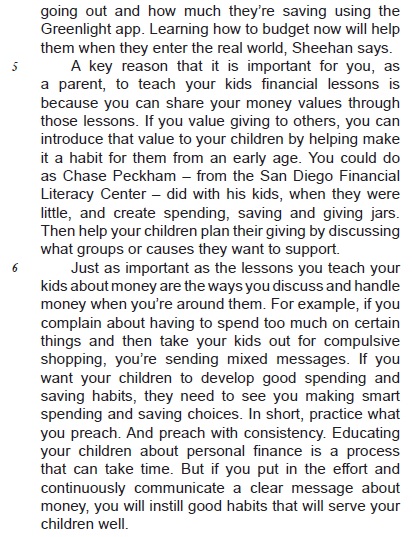
Science fiction in the mid-20th century created good-natured AI such as the computer on Star Trek helping the Enterprise crew, as well as its evil twin set on destroying its creators like HAL in Arthur C. Clarke’s famous book (or Stanley Kubrick’s 1968 film adaptation) 2001: A Space Odyssey. In 2023, however, we’re surrounded by AI that’s far more mundane than those examples. The virtual assistant in your smartphone, the airline chatbot and the robot vacuum cleaning your floors don’t seem to have any aspirations to rise above humanity and have been designed to help us.
We should be prepared for bigger things to come than games, better chatbots or photo generators. Connectivity is key: think of AI as a general-purpose innovation like electricity that powers and connects other technologies, including sensors, robots, genomic devices and 3D printers. AI’s use will only intensify and accelerate as faster computing technology is developed, along with greater sensors capturing data, often called the Internet of Things (IoT). In the future, AI will be interwoven in virtually every aspect of commercial and personal activities.
Peter Marber. Artificial Intelligence: Why Should We Care?.
Internet:
Considering the linguistic and semantic aspects of text CB2A2, judge the following item.
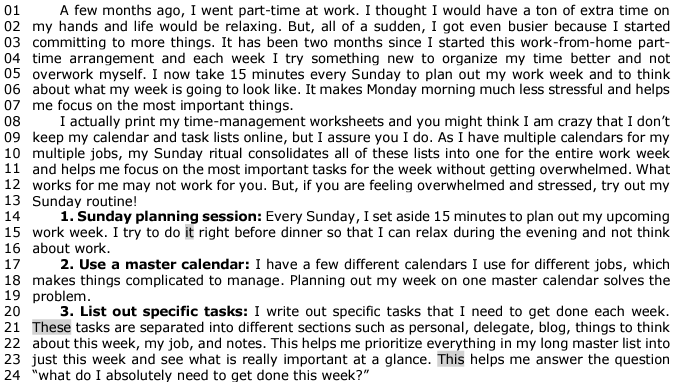
The adverb “virtually”, as used in the last sentence of text,
means nearly.
Leia o texto para responder a questão.
English as a Lingua Franca
A number of researchers have studied conversations in English as a Lingua Franca and have noted a number of somewhat surprising characteristics, including:
• Non-use of third person present simple tense -s (She look very sad).
• Interchangeable use of the relative pronouns who and which (a book who, a boy which).
• Omission of articles where they are mandatory in native-speaker English.
• Increasing of redundancy by adding “inexistent” prepositions (We have to study about…, The article treats of…).
• Pluralisation of nouns which are considered uncountable in native-speaker English (informations, staffs).
The evidence suggests that non-native speakers are not conforming to a native English standard. Indeed they seem to get along perfectly well despite the fact that they miss things out and put things in which they ‘should not do’. Not only this, but they are actually better at ‘accommodating’ - that is, negotiating shared meaning through helping each other in a more cooperative way - than, it is suggested, native speakers are when talking to second language speakers (Jenkins 2004). In other words, non-native speakers seem to be better at ELF communication than native speakers are.
(Jeremy Harmer, The practice of English language teaching. Adaptado)

Ten critical actions needed to address four major cybersecurity challenges:

Cybersecurity: An overview of cyber challenges facing the nation, and actions needed
Federal agencies and the nation’s critical infrastructure — such as energy, transportation systems, communications, and financial services — depend on Information Technology (IT) systems to carry out operations and process essential data. However, the risks to these IT systems are increasing—including insider threats from witting or unwitting employees, escalating and emerging threats from around the globe, and the emergence of new and more destructive attacks. Rapid developments in new technologies, such as artificial intelligence, the Internet of Things, and ubiquitous Internet and cellular connectivity, can also introduce security issues. Over 28,000 security incidents were reported by federal civilian agencies to the Department of Homeland Security in FY 2019.
Additionally, since many government IT systems contain vast amounts of personally identifiable information (PII), federal agencies must protect the confidentiality, integrity, and availability of this information—and effectively respond to data breaches and security incidents. Likewise, the trend in the private sector of collecting extensive and detailed information about individuals needs appropriate limits.
To highlight the importance of these issues, Government Accountability Office (GAO) has designated information security as a government-wide high-risk area since 1997. This high-risk area was expanded in 2003 to include the protection of critical cyber infrastructure and, in 2015, to include protecting the privacy of PII.
GAO has made about 3,300 recommendations to federal agencies to address cybersecurity shortcomings—and we reported that more than 750 of these had not been fully implemented as of December 2020. We designated 67 as priority, meaning that we believe they warrant priority attention from heads of key departments and agencies.
Adapted from: https://www.gao.gov/cybersecurity. Available on November 16th, 2022
Leia a frase e responda a questão subsequente.
He is quite awake.
Podemos classificar a palavra QUITE como um:
Leia a frase e responda a questão subsequente.
He is quite awake.
Podemos classificar a palavra AWAKE como um:
Leia o texto 1 para responder a questão que se segue.

I. explicativo, pois constata onde ele nasceu. II. argumentativo, pois discute o lugar de nascimento dele. III. temporal, pois marca o tempo cronológico em que ele nasceu.
Text V
Language Assessment and the new Literacy Studies
Some Final Remarks
Planning language assessment from a structuralist view of language has been a fairly easy task, since it aims at testing the correct use of grammar and lexical structures. This has been a very comfortable way to evaluate students’ performance in many regular schools or language institutes due to the stability of standardized answers. From the perspective of the new literacy studies, the comfort of teaching and assessing objective and homogeneous linguistic contents is replaced by a wider spectrum of language teaching and assessing possibilities, whose key elements turn to be difference and critique. Typical activities based on this new approach would enable students to make and negotiate meanings in a much more flexible way, corroborating the novel notion of unstable, dynamic, collaborative and distributed knowledge.
The inclusion of contents of such nature in language assessments may be, at a first glance, a very laborious process due to the fact we are simply not accustomed to that. Actually, we sometimes find ourselves deprived from the teaching skills necessary to apply a more critical teaching approach, a fact that is much the results of our positivist educational background.
Nonetheless, since the emergent digital epistemology will require subject more capable of designing and redesigning meaning critically towards a great deal of representational modes, we need to reconsider our teaching approaches, go further and seek theories that take such issues into account. By redefining the notions of language and knowledge, we, thus, assume that the new literacy studies from the last decades may offer very good insights to the field of foreign language teaching.
The re-conceptualization of language assessment according to the new literacies project presented in this paper does not intend to suggest prompt fixed answers, but it takes the risk of outlining possible activities, signaling certain changes regarding its characteristics and contents, as previously shared.
The increasing importance of the new literacy and multiliteracies studies and their fruitful theoretical insight for the rethinking of pedagogical issues invite us to review our foreign language teaching practices in a different perspective. By sharing some of our local findings, we attempt to corroborate the collaborative and distributed knowledge discussed by the literacies theory itself and hope to be contributing to the new educational demands of the emerging epistemological basis.
From: DUBOC, A.P.M. Language Assessment and the new Literacy Studies. Lenguaje
37 (1), 2009. pp. 159-178, p. 175-176.
Text I
Nurturing Multimodalism
[…]
New learning collaborations call on the teacher as learner, and the learner as teacher. The teacher is a lifelong learner; this is simply more apparent in the Information Age. In instances of best practice, collaborative learning partnerships are forged between and among teachers for strategic, bottom-up, in-house professional development. This allows teachers to share in reflective, on-going, contextualized learning, tailored to their collective knowledge. This sharing also includes the learner as teacher. ELT typically employs learner-centered activities: these can include learners sharing their knowledge of strategic digital literacies with others in the classrooms.
The digital universe, so threatening to adult notions of socially sanctioned literacies, is intuitive to children, who have been socialized into it, and for whom digital literacies are exploratory play. Adults may find new ways of communicating digitally to be quite baffling and confronting of our communicative expertise; children do not. Instant messaging systems, such as MSN, AOL, ICQ, for example, provide as natural a medium for communicating to them as telephones did for the baby-boomer generation. It is not fair for the teacher to treat Information and Communication Technologies as auxiliary communication with learners for whom it is mainstream and primary.
Learning spaces are important. Although teachers seldom have much individual say in the layout of teaching spaces, collaborative relationships may help to encourage integrated digitization, where computers are not segregated in laboratories but are interspersed throughout the school environment. In digitally infused curricula, postmodern literacies do not supplant but complement modern literacies, so that access to information is driven by purpose and content rather than by the media available.
Adapted from: LOTHERINGTON, H. From literacy to multiliteracies in ELT. In:
CUMMINS, J.; DAVISON, C. (Eds.) International Handbook of English Language
Teaching. New York: Springer, 2007, p. 820. Available at:
https://www.researchgate.net/publication/226802846_From_Literacy_to_Multiliter
acies_in_ELT
TEXTIV- Text forquestion
QUOTATION
“Another important characteristic of the [National Curricular] Parameters that should not be overlooked is their emphasis on teacher's autonomy. This emphasis can be seen clearly in the fact that no content or method is imposed upon the teachers. What one can find are suggestions and relevant information for teachers to make their own decisions, taking into consideration the context within which they work. In other words, the Parameters do not force any teacher to limit their focus on the teaching of reading, if they believe they can go further than that” (ALMEIDA, 2012, p. 334).
(Source: ALMEIDA, Ricardo Luiz Teixeira de. The teaching of English as a foreign language in the context of Brazilian regular schools: a retrospective and prospective view of policies and practices. In: Revista Brasileira de Linguística Aplicada, Belo Horizonte, v. 12, nº 2, June, 2012, p. 331-348. Available at: th https://www.scielo.br/j/rbla/a/nNz3Jtj85xmms8MnNfwRpMn/?format=pdf&lang=en. Accessed on April 20 , 2022).
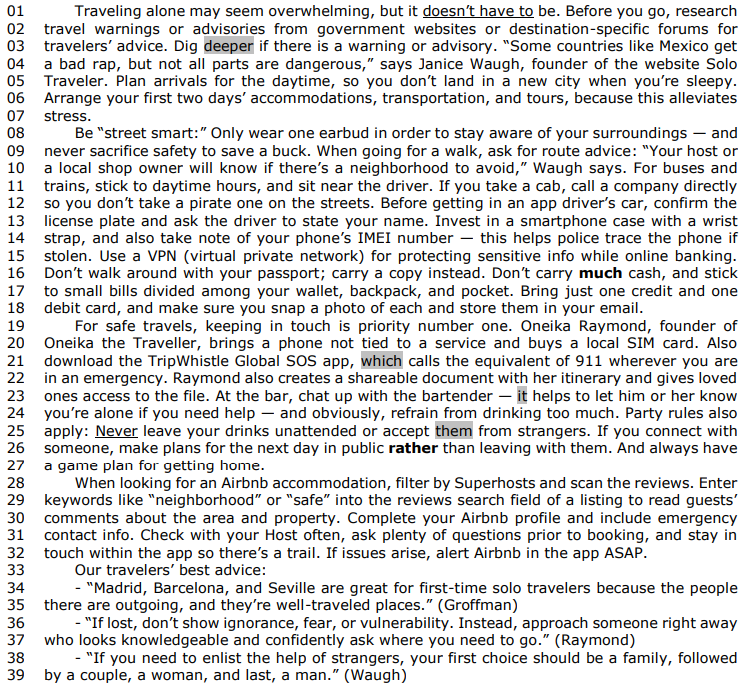
The adverb in the clause “This emphasis can be seen clearly […]” functions as a marker of:
“_________: describe or give more information about a verb, adjective or phrase.”
Which is the function of the linking word “Moreover” in the sentence below:
“Moreover he is considered to be a founder of the environmental non-profit organization.”
Some terms are used to link clauses or sentences, in order to demonstrate a condition, for example, or to make a comparison or contrast. So, choose the alternative that contains the right linking word to complete the following sentence:
We're in trouble! People don't care about nature, animals, plants, the air and the forest, ______________________, causing tragedies all around the world.