Selecionar segmento
Estude com questões de diferentes segmentos
Atenção: Isso limpará todos os campos já preenchidos no filtro!
Foram encontradas 20.349 questões
Resolva questões gratuitamente!
Junte-se a mais de 4 milhões de concurseiros!


Ano: 2014
Banca:
IBFC
Órgão:
PM-PB
Provas:
IBFC - 2014 - PM-PB - Soldado da Polícia Militar Combatente
|
IBFC - 2014 - PM-PB - Soldado do Corpo de Bombeiro Militar |
Q515416
Português
Texto associado
Texto I
Aí pelas três da tarde
(Raduan Nassar)
Nesta sala atulhada de mesas, máquinas e papéis, onde invejáveis escreventes dividiram entre si o bom-senso do mundo, aplicando-se em ideias claras apesar do ruído e do mormaço, seguros ao se pronunciarem sobre problemas que afligem o homem moderno (espécie da qual você, milenarmente cansado, talvez se sinta um tanto excluído), largue tudo de repente sob os olhares à sua volta, componha uma cara de louco quieto e perigoso, faça os gestos mais calmos quanto os tais escribas mais severos, dê um largo “ciao" ao trabalho do dia, assim como quem se despede da vida, e surpreenda pouco mais tarde, com sua presença em hora tão insólita, os que estiveram em casa ocupados na limpeza dos armários, que você não sabia antes como era conduzida. Convém não responder aos olhares interrogativos, deixando crescer, por instantes, a intensa expectativa que se instala. Mas não exagere na medida e suba sem demora ao quarto, libertando aí os pés das meias e dos sapatos, tirando a roupa do corpo como se retirasse a importância das coisas, pondo-se enfim em vestes mínimas, quem sabe até em pelo, mas sem ferir o pudor (o seu pudor bem entendido), e aceitando ao mesmo tempo, como boa verdade provisória, toda mudança de comportamento. Feito um banhista incerto, assome depois com uma nudez no trampolim do patamar e avance dois passos como se fosse beirar um salto, silenciando de vez, embaixo, o surto abafado dos comentários. Nada de grandes lances. Desça, sem pressa, degrau por degrau, sendo tolerante com o espanto (coitados!) dos pobres familiares, que cobrem a boca com a mão enquanto se comprimem ao pé da escada. Passe por eles calado, circule pela casa toda como se andasse numa praia deserta (mas sempre com a mesma cara de louco ainda não precipitado), e se achegue depois, com cuidado e ternura, junto à rede languidamente envergada entre plantas la no terraço. Largue-se nela como quem se larga na vida, e vá fundo nesse mergulho: cerre as abas da rede sobre os olhos e, com um impulso do pé ( já não importa em que apoio), goze a fantasia de se sentir embalado pelo mundo.
Aí pelas três da tarde
(Raduan Nassar)
Nesta sala atulhada de mesas, máquinas e papéis, onde invejáveis escreventes dividiram entre si o bom-senso do mundo, aplicando-se em ideias claras apesar do ruído e do mormaço, seguros ao se pronunciarem sobre problemas que afligem o homem moderno (espécie da qual você, milenarmente cansado, talvez se sinta um tanto excluído), largue tudo de repente sob os olhares à sua volta, componha uma cara de louco quieto e perigoso, faça os gestos mais calmos quanto os tais escribas mais severos, dê um largo “ciao" ao trabalho do dia, assim como quem se despede da vida, e surpreenda pouco mais tarde, com sua presença em hora tão insólita, os que estiveram em casa ocupados na limpeza dos armários, que você não sabia antes como era conduzida. Convém não responder aos olhares interrogativos, deixando crescer, por instantes, a intensa expectativa que se instala. Mas não exagere na medida e suba sem demora ao quarto, libertando aí os pés das meias e dos sapatos, tirando a roupa do corpo como se retirasse a importância das coisas, pondo-se enfim em vestes mínimas, quem sabe até em pelo, mas sem ferir o pudor (o seu pudor bem entendido), e aceitando ao mesmo tempo, como boa verdade provisória, toda mudança de comportamento. Feito um banhista incerto, assome depois com uma nudez no trampolim do patamar e avance dois passos como se fosse beirar um salto, silenciando de vez, embaixo, o surto abafado dos comentários. Nada de grandes lances. Desça, sem pressa, degrau por degrau, sendo tolerante com o espanto (coitados!) dos pobres familiares, que cobrem a boca com a mão enquanto se comprimem ao pé da escada. Passe por eles calado, circule pela casa toda como se andasse numa praia deserta (mas sempre com a mesma cara de louco ainda não precipitado), e se achegue depois, com cuidado e ternura, junto à rede languidamente envergada entre plantas la no terraço. Largue-se nela como quem se larga na vida, e vá fundo nesse mergulho: cerre as abas da rede sobre os olhos e, com um impulso do pé ( já não importa em que apoio), goze a fantasia de se sentir embalado pelo mundo.
Em “cerre as abas da rede sobre os olhos", pode ser entendido como um sinônimo para o termo em destaque a seguinte palavra:
Ano: 2014
Banca:
IBFC
Órgão:
PM-PB
Provas:
IBFC - 2014 - PM-PB - Soldado da Polícia Militar Combatente
|
IBFC - 2014 - PM-PB - Soldado do Corpo de Bombeiro Militar |
Q515415
Português
Texto associado
Texto I
Aí pelas três da tarde
(Raduan Nassar)
Nesta sala atulhada de mesas, máquinas e papéis, onde invejáveis escreventes dividiram entre si o bom-senso do mundo, aplicando-se em ideias claras apesar do ruído e do mormaço, seguros ao se pronunciarem sobre problemas que afligem o homem moderno (espécie da qual você, milenarmente cansado, talvez se sinta um tanto excluído), largue tudo de repente sob os olhares à sua volta, componha uma cara de louco quieto e perigoso, faça os gestos mais calmos quanto os tais escribas mais severos, dê um largo “ciao" ao trabalho do dia, assim como quem se despede da vida, e surpreenda pouco mais tarde, com sua presença em hora tão insólita, os que estiveram em casa ocupados na limpeza dos armários, que você não sabia antes como era conduzida. Convém não responder aos olhares interrogativos, deixando crescer, por instantes, a intensa expectativa que se instala. Mas não exagere na medida e suba sem demora ao quarto, libertando aí os pés das meias e dos sapatos, tirando a roupa do corpo como se retirasse a importância das coisas, pondo-se enfim em vestes mínimas, quem sabe até em pelo, mas sem ferir o pudor (o seu pudor bem entendido), e aceitando ao mesmo tempo, como boa verdade provisória, toda mudança de comportamento. Feito um banhista incerto, assome depois com uma nudez no trampolim do patamar e avance dois passos como se fosse beirar um salto, silenciando de vez, embaixo, o surto abafado dos comentários. Nada de grandes lances. Desça, sem pressa, degrau por degrau, sendo tolerante com o espanto (coitados!) dos pobres familiares, que cobrem a boca com a mão enquanto se comprimem ao pé da escada. Passe por eles calado, circule pela casa toda como se andasse numa praia deserta (mas sempre com a mesma cara de louco ainda não precipitado), e se achegue depois, com cuidado e ternura, junto à rede languidamente envergada entre plantas la no terraço. Largue-se nela como quem se larga na vida, e vá fundo nesse mergulho: cerre as abas da rede sobre os olhos e, com um impulso do pé ( já não importa em que apoio), goze a fantasia de se sentir embalado pelo mundo.
Aí pelas três da tarde
(Raduan Nassar)
Nesta sala atulhada de mesas, máquinas e papéis, onde invejáveis escreventes dividiram entre si o bom-senso do mundo, aplicando-se em ideias claras apesar do ruído e do mormaço, seguros ao se pronunciarem sobre problemas que afligem o homem moderno (espécie da qual você, milenarmente cansado, talvez se sinta um tanto excluído), largue tudo de repente sob os olhares à sua volta, componha uma cara de louco quieto e perigoso, faça os gestos mais calmos quanto os tais escribas mais severos, dê um largo “ciao" ao trabalho do dia, assim como quem se despede da vida, e surpreenda pouco mais tarde, com sua presença em hora tão insólita, os que estiveram em casa ocupados na limpeza dos armários, que você não sabia antes como era conduzida. Convém não responder aos olhares interrogativos, deixando crescer, por instantes, a intensa expectativa que se instala. Mas não exagere na medida e suba sem demora ao quarto, libertando aí os pés das meias e dos sapatos, tirando a roupa do corpo como se retirasse a importância das coisas, pondo-se enfim em vestes mínimas, quem sabe até em pelo, mas sem ferir o pudor (o seu pudor bem entendido), e aceitando ao mesmo tempo, como boa verdade provisória, toda mudança de comportamento. Feito um banhista incerto, assome depois com uma nudez no trampolim do patamar e avance dois passos como se fosse beirar um salto, silenciando de vez, embaixo, o surto abafado dos comentários. Nada de grandes lances. Desça, sem pressa, degrau por degrau, sendo tolerante com o espanto (coitados!) dos pobres familiares, que cobrem a boca com a mão enquanto se comprimem ao pé da escada. Passe por eles calado, circule pela casa toda como se andasse numa praia deserta (mas sempre com a mesma cara de louco ainda não precipitado), e se achegue depois, com cuidado e ternura, junto à rede languidamente envergada entre plantas la no terraço. Largue-se nela como quem se larga na vida, e vá fundo nesse mergulho: cerre as abas da rede sobre os olhos e, com um impulso do pé ( já não importa em que apoio), goze a fantasia de se sentir embalado pelo mundo.
Observe a ocorrência de crase em “largue tudo de repente sob os olhares à sua volta", seu emprego é mais bem justificado:
Ano: 2014
Banca:
IBFC
Órgão:
PM-PB
Provas:
IBFC - 2014 - PM-PB - Soldado da Polícia Militar Combatente
|
IBFC - 2014 - PM-PB - Soldado do Corpo de Bombeiro Militar |
Q515414
Português
Texto associado
Texto I
Aí pelas três da tarde
(Raduan Nassar)
Nesta sala atulhada de mesas, máquinas e papéis, onde invejáveis escreventes dividiram entre si o bom-senso do mundo, aplicando-se em ideias claras apesar do ruído e do mormaço, seguros ao se pronunciarem sobre problemas que afligem o homem moderno (espécie da qual você, milenarmente cansado, talvez se sinta um tanto excluído), largue tudo de repente sob os olhares à sua volta, componha uma cara de louco quieto e perigoso, faça os gestos mais calmos quanto os tais escribas mais severos, dê um largo “ciao" ao trabalho do dia, assim como quem se despede da vida, e surpreenda pouco mais tarde, com sua presença em hora tão insólita, os que estiveram em casa ocupados na limpeza dos armários, que você não sabia antes como era conduzida. Convém não responder aos olhares interrogativos, deixando crescer, por instantes, a intensa expectativa que se instala. Mas não exagere na medida e suba sem demora ao quarto, libertando aí os pés das meias e dos sapatos, tirando a roupa do corpo como se retirasse a importância das coisas, pondo-se enfim em vestes mínimas, quem sabe até em pelo, mas sem ferir o pudor (o seu pudor bem entendido), e aceitando ao mesmo tempo, como boa verdade provisória, toda mudança de comportamento. Feito um banhista incerto, assome depois com uma nudez no trampolim do patamar e avance dois passos como se fosse beirar um salto, silenciando de vez, embaixo, o surto abafado dos comentários. Nada de grandes lances. Desça, sem pressa, degrau por degrau, sendo tolerante com o espanto (coitados!) dos pobres familiares, que cobrem a boca com a mão enquanto se comprimem ao pé da escada. Passe por eles calado, circule pela casa toda como se andasse numa praia deserta (mas sempre com a mesma cara de louco ainda não precipitado), e se achegue depois, com cuidado e ternura, junto à rede languidamente envergada entre plantas la no terraço. Largue-se nela como quem se larga na vida, e vá fundo nesse mergulho: cerre as abas da rede sobre os olhos e, com um impulso do pé ( já não importa em que apoio), goze a fantasia de se sentir embalado pelo mundo.
Aí pelas três da tarde
(Raduan Nassar)
Nesta sala atulhada de mesas, máquinas e papéis, onde invejáveis escreventes dividiram entre si o bom-senso do mundo, aplicando-se em ideias claras apesar do ruído e do mormaço, seguros ao se pronunciarem sobre problemas que afligem o homem moderno (espécie da qual você, milenarmente cansado, talvez se sinta um tanto excluído), largue tudo de repente sob os olhares à sua volta, componha uma cara de louco quieto e perigoso, faça os gestos mais calmos quanto os tais escribas mais severos, dê um largo “ciao" ao trabalho do dia, assim como quem se despede da vida, e surpreenda pouco mais tarde, com sua presença em hora tão insólita, os que estiveram em casa ocupados na limpeza dos armários, que você não sabia antes como era conduzida. Convém não responder aos olhares interrogativos, deixando crescer, por instantes, a intensa expectativa que se instala. Mas não exagere na medida e suba sem demora ao quarto, libertando aí os pés das meias e dos sapatos, tirando a roupa do corpo como se retirasse a importância das coisas, pondo-se enfim em vestes mínimas, quem sabe até em pelo, mas sem ferir o pudor (o seu pudor bem entendido), e aceitando ao mesmo tempo, como boa verdade provisória, toda mudança de comportamento. Feito um banhista incerto, assome depois com uma nudez no trampolim do patamar e avance dois passos como se fosse beirar um salto, silenciando de vez, embaixo, o surto abafado dos comentários. Nada de grandes lances. Desça, sem pressa, degrau por degrau, sendo tolerante com o espanto (coitados!) dos pobres familiares, que cobrem a boca com a mão enquanto se comprimem ao pé da escada. Passe por eles calado, circule pela casa toda como se andasse numa praia deserta (mas sempre com a mesma cara de louco ainda não precipitado), e se achegue depois, com cuidado e ternura, junto à rede languidamente envergada entre plantas la no terraço. Largue-se nela como quem se larga na vida, e vá fundo nesse mergulho: cerre as abas da rede sobre os olhos e, com um impulso do pé ( já não importa em que apoio), goze a fantasia de se sentir embalado pelo mundo.
O autor baseia seu texto na representação de várias imagens simbólicas. Por exemplo, no trecho “dê um largo “ciao" ao trabalho do dia, assim como quem se despede da vida.", há um fragmento destacado que combina duas figuras de linguagem. São elas:
Ano: 2014
Banca:
IBFC
Órgão:
PM-PB
Provas:
IBFC - 2014 - PM-PB - Soldado da Polícia Militar Combatente
|
IBFC - 2014 - PM-PB - Soldado do Corpo de Bombeiro Militar |
Q515413
Português
Texto associado
Texto I
Aí pelas três da tarde
(Raduan Nassar)
Nesta sala atulhada de mesas, máquinas e papéis, onde invejáveis escreventes dividiram entre si o bom-senso do mundo, aplicando-se em ideias claras apesar do ruído e do mormaço, seguros ao se pronunciarem sobre problemas que afligem o homem moderno (espécie da qual você, milenarmente cansado, talvez se sinta um tanto excluído), largue tudo de repente sob os olhares à sua volta, componha uma cara de louco quieto e perigoso, faça os gestos mais calmos quanto os tais escribas mais severos, dê um largo “ciao" ao trabalho do dia, assim como quem se despede da vida, e surpreenda pouco mais tarde, com sua presença em hora tão insólita, os que estiveram em casa ocupados na limpeza dos armários, que você não sabia antes como era conduzida. Convém não responder aos olhares interrogativos, deixando crescer, por instantes, a intensa expectativa que se instala. Mas não exagere na medida e suba sem demora ao quarto, libertando aí os pés das meias e dos sapatos, tirando a roupa do corpo como se retirasse a importância das coisas, pondo-se enfim em vestes mínimas, quem sabe até em pelo, mas sem ferir o pudor (o seu pudor bem entendido), e aceitando ao mesmo tempo, como boa verdade provisória, toda mudança de comportamento. Feito um banhista incerto, assome depois com uma nudez no trampolim do patamar e avance dois passos como se fosse beirar um salto, silenciando de vez, embaixo, o surto abafado dos comentários. Nada de grandes lances. Desça, sem pressa, degrau por degrau, sendo tolerante com o espanto (coitados!) dos pobres familiares, que cobrem a boca com a mão enquanto se comprimem ao pé da escada. Passe por eles calado, circule pela casa toda como se andasse numa praia deserta (mas sempre com a mesma cara de louco ainda não precipitado), e se achegue depois, com cuidado e ternura, junto à rede languidamente envergada entre plantas la no terraço. Largue-se nela como quem se larga na vida, e vá fundo nesse mergulho: cerre as abas da rede sobre os olhos e, com um impulso do pé ( já não importa em que apoio), goze a fantasia de se sentir embalado pelo mundo.
Aí pelas três da tarde
(Raduan Nassar)
Nesta sala atulhada de mesas, máquinas e papéis, onde invejáveis escreventes dividiram entre si o bom-senso do mundo, aplicando-se em ideias claras apesar do ruído e do mormaço, seguros ao se pronunciarem sobre problemas que afligem o homem moderno (espécie da qual você, milenarmente cansado, talvez se sinta um tanto excluído), largue tudo de repente sob os olhares à sua volta, componha uma cara de louco quieto e perigoso, faça os gestos mais calmos quanto os tais escribas mais severos, dê um largo “ciao" ao trabalho do dia, assim como quem se despede da vida, e surpreenda pouco mais tarde, com sua presença em hora tão insólita, os que estiveram em casa ocupados na limpeza dos armários, que você não sabia antes como era conduzida. Convém não responder aos olhares interrogativos, deixando crescer, por instantes, a intensa expectativa que se instala. Mas não exagere na medida e suba sem demora ao quarto, libertando aí os pés das meias e dos sapatos, tirando a roupa do corpo como se retirasse a importância das coisas, pondo-se enfim em vestes mínimas, quem sabe até em pelo, mas sem ferir o pudor (o seu pudor bem entendido), e aceitando ao mesmo tempo, como boa verdade provisória, toda mudança de comportamento. Feito um banhista incerto, assome depois com uma nudez no trampolim do patamar e avance dois passos como se fosse beirar um salto, silenciando de vez, embaixo, o surto abafado dos comentários. Nada de grandes lances. Desça, sem pressa, degrau por degrau, sendo tolerante com o espanto (coitados!) dos pobres familiares, que cobrem a boca com a mão enquanto se comprimem ao pé da escada. Passe por eles calado, circule pela casa toda como se andasse numa praia deserta (mas sempre com a mesma cara de louco ainda não precipitado), e se achegue depois, com cuidado e ternura, junto à rede languidamente envergada entre plantas la no terraço. Largue-se nela como quem se larga na vida, e vá fundo nesse mergulho: cerre as abas da rede sobre os olhos e, com um impulso do pé ( já não importa em que apoio), goze a fantasia de se sentir embalado pelo mundo.
Considerando o contexto e o fragmento “os que estiveram em casa ocupados na limpeza dos armários, que você não sabia antes como era conduzida.", conclui-se o seguinte motivo pelo qual a condução da limpeza não fora conhecida pelo interlocutor:
Ano: 2014
Banca:
IBFC
Órgão:
PM-PB
Provas:
IBFC - 2014 - PM-PB - Soldado da Polícia Militar Combatente
|
IBFC - 2014 - PM-PB - Soldado do Corpo de Bombeiro Militar |
Q515412
Português
Texto associado
Texto I
Aí pelas três da tarde
(Raduan Nassar)
Nesta sala atulhada de mesas, máquinas e papéis, onde invejáveis escreventes dividiram entre si o bom-senso do mundo, aplicando-se em ideias claras apesar do ruído e do mormaço, seguros ao se pronunciarem sobre problemas que afligem o homem moderno (espécie da qual você, milenarmente cansado, talvez se sinta um tanto excluído), largue tudo de repente sob os olhares à sua volta, componha uma cara de louco quieto e perigoso, faça os gestos mais calmos quanto os tais escribas mais severos, dê um largo “ciao" ao trabalho do dia, assim como quem se despede da vida, e surpreenda pouco mais tarde, com sua presença em hora tão insólita, os que estiveram em casa ocupados na limpeza dos armários, que você não sabia antes como era conduzida. Convém não responder aos olhares interrogativos, deixando crescer, por instantes, a intensa expectativa que se instala. Mas não exagere na medida e suba sem demora ao quarto, libertando aí os pés das meias e dos sapatos, tirando a roupa do corpo como se retirasse a importância das coisas, pondo-se enfim em vestes mínimas, quem sabe até em pelo, mas sem ferir o pudor (o seu pudor bem entendido), e aceitando ao mesmo tempo, como boa verdade provisória, toda mudança de comportamento. Feito um banhista incerto, assome depois com uma nudez no trampolim do patamar e avance dois passos como se fosse beirar um salto, silenciando de vez, embaixo, o surto abafado dos comentários. Nada de grandes lances. Desça, sem pressa, degrau por degrau, sendo tolerante com o espanto (coitados!) dos pobres familiares, que cobrem a boca com a mão enquanto se comprimem ao pé da escada. Passe por eles calado, circule pela casa toda como se andasse numa praia deserta (mas sempre com a mesma cara de louco ainda não precipitado), e se achegue depois, com cuidado e ternura, junto à rede languidamente envergada entre plantas la no terraço. Largue-se nela como quem se larga na vida, e vá fundo nesse mergulho: cerre as abas da rede sobre os olhos e, com um impulso do pé ( já não importa em que apoio), goze a fantasia de se sentir embalado pelo mundo.
Aí pelas três da tarde
(Raduan Nassar)
Nesta sala atulhada de mesas, máquinas e papéis, onde invejáveis escreventes dividiram entre si o bom-senso do mundo, aplicando-se em ideias claras apesar do ruído e do mormaço, seguros ao se pronunciarem sobre problemas que afligem o homem moderno (espécie da qual você, milenarmente cansado, talvez se sinta um tanto excluído), largue tudo de repente sob os olhares à sua volta, componha uma cara de louco quieto e perigoso, faça os gestos mais calmos quanto os tais escribas mais severos, dê um largo “ciao" ao trabalho do dia, assim como quem se despede da vida, e surpreenda pouco mais tarde, com sua presença em hora tão insólita, os que estiveram em casa ocupados na limpeza dos armários, que você não sabia antes como era conduzida. Convém não responder aos olhares interrogativos, deixando crescer, por instantes, a intensa expectativa que se instala. Mas não exagere na medida e suba sem demora ao quarto, libertando aí os pés das meias e dos sapatos, tirando a roupa do corpo como se retirasse a importância das coisas, pondo-se enfim em vestes mínimas, quem sabe até em pelo, mas sem ferir o pudor (o seu pudor bem entendido), e aceitando ao mesmo tempo, como boa verdade provisória, toda mudança de comportamento. Feito um banhista incerto, assome depois com uma nudez no trampolim do patamar e avance dois passos como se fosse beirar um salto, silenciando de vez, embaixo, o surto abafado dos comentários. Nada de grandes lances. Desça, sem pressa, degrau por degrau, sendo tolerante com o espanto (coitados!) dos pobres familiares, que cobrem a boca com a mão enquanto se comprimem ao pé da escada. Passe por eles calado, circule pela casa toda como se andasse numa praia deserta (mas sempre com a mesma cara de louco ainda não precipitado), e se achegue depois, com cuidado e ternura, junto à rede languidamente envergada entre plantas la no terraço. Largue-se nela como quem se larga na vida, e vá fundo nesse mergulho: cerre as abas da rede sobre os olhos e, com um impulso do pé ( já não importa em que apoio), goze a fantasia de se sentir embalado pelo mundo.
Considerando a tipologia que caracteriza o texto em análise, é correto afirmar que se trata da:
Q512582
Inglês
Texto associado
INSTRUCTIONS – Read the following text carefully and then choose the correct alternatives that answer the question.
SOUTHERN HUMPBACK WHALE
INTRODUCTION
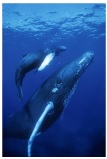
During the Australian winter, these ocean leviathans journey 3,100 miles north from their Antarctic feeding grounds to the warm tropical waters near Australia´s Whitsunday Islands. At the southern edge of the Great Barrier Reef, the 40-ton female humpbacks give birth to calves measuring 14 feet long and weighing over one ton. The Whitsundays´ sheltered bays keep the calves warm and safe from predators. During the next few months, the whales rest, sing, play and mate. The calves nurse, but the one thing the adult whales don´t do while in the tropical seas is eat. By winter´s end, adults are famished, and they head south. This life cycle is repeated throughout the Southern Hemisphere: one group migrates along the western coast of Australia, others to southern Africa and South America.
SIGHT UNSEEN
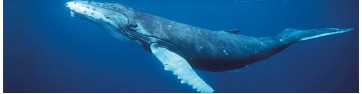
Underneath the blue Australian ocean, film crews captured the elegant rituals of southern humpbacks as they swim, sing, nurse, and play. A mother humpback whale supported her young calf from underneath, so it could breathe easier near the surface. Calves drink 130 gallons of milk a day! While baby grows fat, the mother starves for five months, her blubber stores depleting daily. Unlike the cold Antarctic waters, the seas here don´t grow rich with krill that humpbacks filer through their baleen plates. But she provides her calf with rich milk that contains some of the highest fat content of any mammal´s milk – 45 percent.
UNIQUE BEHAVIOR
Humpback males sing a unique melody, full of high-pitched chirps and whistles interspersed with deeper gurgles and moans. Each male repeats his song for hours, which likely plays a role in courtship. The song may change over time, with males singing a modified melody in consecutive years.
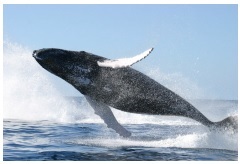
Whale-watching tours take advantage of the humpback´s playful and curious nature. They often approach boats and put on quite a show. As whales journey south along the eastern coast of Australia, many stop in sheltered Platypus Bay around Fraser Island – a World Heritage Site – where they display the charismatic behaviors loved by whale-watchers. The crystal blue waters give a perfect window to watch the whales twist, roll and swim upside down, emerging to breathe, slap their tails or pectoral fins on the water´s surface. Breaching whales jump nearly all the way out of the water. “Spyhopping" means their head emerges, and they peer at the surroundings with their large eyes.
STATUS/CONSERVATION
Commercial hunting in the 19th and 20th centuries decimated most whale species. Because they migrate close to shore and swim slowly, humpbacks became a popular whalers´ target, and were hunted down to a few hundred animals in the Southern Hemisphere. The International Whaling Commission (IWC) implemented a moratorium on harvesting all species starting in 1986, and in 1994, declared Antarctica´s Southern Ocean a whale sanctuary. Now numbering over 10,000 in the Southern Hemisphere, humpbacks have shown incredible resilience, but their numbers still remain a fraction of their historic abundance. Recovery of regional populations varies, and the World Conservation Union (IUCN) lists the humpback as vulnerable.
Humpbacks also have two Northern Hemisphere populations that number around 11,500 in the North Atlantic and 6,000 in the North Pacific. Northern humpbacks are genetically differentiated from the Southern Hemisphere population, and have dark bellies, while the southern humpbacks have all-white bellies. They don´t interbreed, because while the southern populations are mating and calving in the warm tropical seas, northern populations are near the polar Arctic.
OUTLOOK
The International Whaling Commission (IWC) allows hunting by indigenous cultures but bans hunting of humpback whales. Japan has long engaged in IWC-sanctioned “scientific whaling" of minke and other whales, and plans to start hunting humpbacks in 2007. “We are all concerned about Japan´s plans to add this species to the scientific whaling quota", says Dr. Scott Baker, a renowned cetacean conservation biologist. Iceland also just started commercial whaling in 2006.
Some Asian countries allow the sale of whale meat from incidental bycatch, and a whale´s value of $100,000 provides incentive for illegal harvest. Baker and colleagues used DNA to show that the whale meat being sold in South Korean shops did not match that reported to the IWC. Illegal harvest and sale of whale meat is occurring.
Australia and New Zealand have petitioned the IWC to create a South Pacific Sanctuary adjoining the Southern Ocean Sanctuary where whaling would be illegal. Thus far, it has not been approved by IWC.
http://dsc.discovery.com/convergence/planet-earth/...
INSTRUCTIONS – Read the following text carefully and then choose the correct alternatives that answer the question.
SOUTHERN HUMPBACK WHALE
INTRODUCTION
During the Australian winter, these ocean leviathans journey 3,100 miles north from their Antarctic feeding grounds to the warm tropical waters near Australia´s Whitsunday Islands. At the southern edge of the Great Barrier Reef, the 40-ton female humpbacks give birth to calves measuring 14 feet long and weighing over one ton. The Whitsundays´ sheltered bays keep the calves warm and safe from predators. During the next few months, the whales rest, sing, play and mate. The calves nurse, but the one thing the adult whales don´t do while in the tropical seas is eat. By winter´s end, adults are famished, and they head south. This life cycle is repeated throughout the Southern Hemisphere: one group migrates along the western coast of Australia, others to southern Africa and South America.
SIGHT UNSEEN
Underneath the blue Australian ocean, film crews captured the elegant rituals of southern humpbacks as they swim, sing, nurse, and play. A mother humpback whale supported her young calf from underneath, so it could breathe easier near the surface. Calves drink 130 gallons of milk a day! While baby grows fat, the mother starves for five months, her blubber stores depleting daily. Unlike the cold Antarctic waters, the seas here don´t grow rich with krill that humpbacks filer through their baleen plates. But she provides her calf with rich milk that contains some of the highest fat content of any mammal´s milk – 45 percent.
UNIQUE BEHAVIOR
Humpback males sing a unique melody, full of high-pitched chirps and whistles interspersed with deeper gurgles and moans. Each male repeats his song for hours, which likely plays a role in courtship. The song may change over time, with males singing a modified melody in consecutive years.
Whale-watching tours take advantage of the humpback´s playful and curious nature. They often approach boats and put on quite a show. As whales journey south along the eastern coast of Australia, many stop in sheltered Platypus Bay around Fraser Island – a World Heritage Site – where they display the charismatic behaviors loved by whale-watchers. The crystal blue waters give a perfect window to watch the whales twist, roll and swim upside down, emerging to breathe, slap their tails or pectoral fins on the water´s surface. Breaching whales jump nearly all the way out of the water. “Spyhopping" means their head emerges, and they peer at the surroundings with their large eyes.
STATUS/CONSERVATION
Commercial hunting in the 19th and 20th centuries decimated most whale species. Because they migrate close to shore and swim slowly, humpbacks became a popular whalers´ target, and were hunted down to a few hundred animals in the Southern Hemisphere. The International Whaling Commission (IWC) implemented a moratorium on harvesting all species starting in 1986, and in 1994, declared Antarctica´s Southern Ocean a whale sanctuary. Now numbering over 10,000 in the Southern Hemisphere, humpbacks have shown incredible resilience, but their numbers still remain a fraction of their historic abundance. Recovery of regional populations varies, and the World Conservation Union (IUCN) lists the humpback as vulnerable.
Humpbacks also have two Northern Hemisphere populations that number around 11,500 in the North Atlantic and 6,000 in the North Pacific. Northern humpbacks are genetically differentiated from the Southern Hemisphere population, and have dark bellies, while the southern humpbacks have all-white bellies. They don´t interbreed, because while the southern populations are mating and calving in the warm tropical seas, northern populations are near the polar Arctic.
OUTLOOK
The International Whaling Commission (IWC) allows hunting by indigenous cultures but bans hunting of humpback whales. Japan has long engaged in IWC-sanctioned “scientific whaling" of minke and other whales, and plans to start hunting humpbacks in 2007. “We are all concerned about Japan´s plans to add this species to the scientific whaling quota", says Dr. Scott Baker, a renowned cetacean conservation biologist. Iceland also just started commercial whaling in 2006.
Some Asian countries allow the sale of whale meat from incidental bycatch, and a whale´s value of $100,000 provides incentive for illegal harvest. Baker and colleagues used DNA to show that the whale meat being sold in South Korean shops did not match that reported to the IWC. Illegal harvest and sale of whale meat is occurring.
Australia and New Zealand have petitioned the IWC to create a South Pacific Sanctuary adjoining the Southern Ocean Sanctuary where whaling would be illegal. Thus far, it has not been approved by IWC.
http://dsc.discovery.com/convergence/planet-earth/...
The sentence “incidental bycatch” means that this kind of catch WASN`T:
Q512581
Inglês
Texto associado
INSTRUCTIONS – Read the following text carefully and then choose the correct alternatives that answer the question.
SOUTHERN HUMPBACK WHALE
INTRODUCTION
During the Australian winter, these ocean leviathans journey 3,100 miles north from their Antarctic feeding grounds to the warm tropical waters near Australia´s Whitsunday Islands. At the southern edge of the Great Barrier Reef, the 40-ton female humpbacks give birth to calves measuring 14 feet long and weighing over one ton. The Whitsundays´ sheltered bays keep the calves warm and safe from predators. During the next few months, the whales rest, sing, play and mate. The calves nurse, but the one thing the adult whales don´t do while in the tropical seas is eat. By winter´s end, adults are famished, and they head south. This life cycle is repeated throughout the Southern Hemisphere: one group migrates along the western coast of Australia, others to southern Africa and South America.
SIGHT UNSEEN
Underneath the blue Australian ocean, film crews captured the elegant rituals of southern humpbacks as they swim, sing, nurse, and play. A mother humpback whale supported her young calf from underneath, so it could breathe easier near the surface. Calves drink 130 gallons of milk a day! While baby grows fat, the mother starves for five months, her blubber stores depleting daily. Unlike the cold Antarctic waters, the seas here don´t grow rich with krill that humpbacks filer through their baleen plates. But she provides her calf with rich milk that contains some of the highest fat content of any mammal´s milk – 45 percent.
UNIQUE BEHAVIOR
Humpback males sing a unique melody, full of high-pitched chirps and whistles interspersed with deeper gurgles and moans. Each male repeats his song for hours, which likely plays a role in courtship. The song may change over time, with males singing a modified melody in consecutive years.
Whale-watching tours take advantage of the humpback´s playful and curious nature. They often approach boats and put on quite a show. As whales journey south along the eastern coast of Australia, many stop in sheltered Platypus Bay around Fraser Island – a World Heritage Site – where they display the charismatic behaviors loved by whale-watchers. The crystal blue waters give a perfect window to watch the whales twist, roll and swim upside down, emerging to breathe, slap their tails or pectoral fins on the water´s surface. Breaching whales jump nearly all the way out of the water. “Spyhopping" means their head emerges, and they peer at the surroundings with their large eyes.
STATUS/CONSERVATION
Commercial hunting in the 19th and 20th centuries decimated most whale species. Because they migrate close to shore and swim slowly, humpbacks became a popular whalers´ target, and were hunted down to a few hundred animals in the Southern Hemisphere. The International Whaling Commission (IWC) implemented a moratorium on harvesting all species starting in 1986, and in 1994, declared Antarctica´s Southern Ocean a whale sanctuary. Now numbering over 10,000 in the Southern Hemisphere, humpbacks have shown incredible resilience, but their numbers still remain a fraction of their historic abundance. Recovery of regional populations varies, and the World Conservation Union (IUCN) lists the humpback as vulnerable.
Humpbacks also have two Northern Hemisphere populations that number around 11,500 in the North Atlantic and 6,000 in the North Pacific. Northern humpbacks are genetically differentiated from the Southern Hemisphere population, and have dark bellies, while the southern humpbacks have all-white bellies. They don´t interbreed, because while the southern populations are mating and calving in the warm tropical seas, northern populations are near the polar Arctic.
OUTLOOK
The International Whaling Commission (IWC) allows hunting by indigenous cultures but bans hunting of humpback whales. Japan has long engaged in IWC-sanctioned “scientific whaling" of minke and other whales, and plans to start hunting humpbacks in 2007. “We are all concerned about Japan´s plans to add this species to the scientific whaling quota", says Dr. Scott Baker, a renowned cetacean conservation biologist. Iceland also just started commercial whaling in 2006.
Some Asian countries allow the sale of whale meat from incidental bycatch, and a whale´s value of $100,000 provides incentive for illegal harvest. Baker and colleagues used DNA to show that the whale meat being sold in South Korean shops did not match that reported to the IWC. Illegal harvest and sale of whale meat is occurring.
Australia and New Zealand have petitioned the IWC to create a South Pacific Sanctuary adjoining the Southern Ocean Sanctuary where whaling would be illegal. Thus far, it has not been approved by IWC.
http://dsc.discovery.com/convergence/planet-earth/...
INSTRUCTIONS – Read the following text carefully and then choose the correct alternatives that answer the question.
SOUTHERN HUMPBACK WHALE
INTRODUCTION
During the Australian winter, these ocean leviathans journey 3,100 miles north from their Antarctic feeding grounds to the warm tropical waters near Australia´s Whitsunday Islands. At the southern edge of the Great Barrier Reef, the 40-ton female humpbacks give birth to calves measuring 14 feet long and weighing over one ton. The Whitsundays´ sheltered bays keep the calves warm and safe from predators. During the next few months, the whales rest, sing, play and mate. The calves nurse, but the one thing the adult whales don´t do while in the tropical seas is eat. By winter´s end, adults are famished, and they head south. This life cycle is repeated throughout the Southern Hemisphere: one group migrates along the western coast of Australia, others to southern Africa and South America.
SIGHT UNSEEN
Underneath the blue Australian ocean, film crews captured the elegant rituals of southern humpbacks as they swim, sing, nurse, and play. A mother humpback whale supported her young calf from underneath, so it could breathe easier near the surface. Calves drink 130 gallons of milk a day! While baby grows fat, the mother starves for five months, her blubber stores depleting daily. Unlike the cold Antarctic waters, the seas here don´t grow rich with krill that humpbacks filer through their baleen plates. But she provides her calf with rich milk that contains some of the highest fat content of any mammal´s milk – 45 percent.
UNIQUE BEHAVIOR
Humpback males sing a unique melody, full of high-pitched chirps and whistles interspersed with deeper gurgles and moans. Each male repeats his song for hours, which likely plays a role in courtship. The song may change over time, with males singing a modified melody in consecutive years.
Whale-watching tours take advantage of the humpback´s playful and curious nature. They often approach boats and put on quite a show. As whales journey south along the eastern coast of Australia, many stop in sheltered Platypus Bay around Fraser Island – a World Heritage Site – where they display the charismatic behaviors loved by whale-watchers. The crystal blue waters give a perfect window to watch the whales twist, roll and swim upside down, emerging to breathe, slap their tails or pectoral fins on the water´s surface. Breaching whales jump nearly all the way out of the water. “Spyhopping" means their head emerges, and they peer at the surroundings with their large eyes.
STATUS/CONSERVATION
Commercial hunting in the 19th and 20th centuries decimated most whale species. Because they migrate close to shore and swim slowly, humpbacks became a popular whalers´ target, and were hunted down to a few hundred animals in the Southern Hemisphere. The International Whaling Commission (IWC) implemented a moratorium on harvesting all species starting in 1986, and in 1994, declared Antarctica´s Southern Ocean a whale sanctuary. Now numbering over 10,000 in the Southern Hemisphere, humpbacks have shown incredible resilience, but their numbers still remain a fraction of their historic abundance. Recovery of regional populations varies, and the World Conservation Union (IUCN) lists the humpback as vulnerable.
Humpbacks also have two Northern Hemisphere populations that number around 11,500 in the North Atlantic and 6,000 in the North Pacific. Northern humpbacks are genetically differentiated from the Southern Hemisphere population, and have dark bellies, while the southern humpbacks have all-white bellies. They don´t interbreed, because while the southern populations are mating and calving in the warm tropical seas, northern populations are near the polar Arctic.
OUTLOOK
The International Whaling Commission (IWC) allows hunting by indigenous cultures but bans hunting of humpback whales. Japan has long engaged in IWC-sanctioned “scientific whaling" of minke and other whales, and plans to start hunting humpbacks in 2007. “We are all concerned about Japan´s plans to add this species to the scientific whaling quota", says Dr. Scott Baker, a renowned cetacean conservation biologist. Iceland also just started commercial whaling in 2006.
Some Asian countries allow the sale of whale meat from incidental bycatch, and a whale´s value of $100,000 provides incentive for illegal harvest. Baker and colleagues used DNA to show that the whale meat being sold in South Korean shops did not match that reported to the IWC. Illegal harvest and sale of whale meat is occurring.
Australia and New Zealand have petitioned the IWC to create a South Pacific Sanctuary adjoining the Southern Ocean Sanctuary where whaling would be illegal. Thus far, it has not been approved by IWC.
http://dsc.discovery.com/convergence/planet-earth/...
Dr. Scott Baker is concerned that:
Q512580
Inglês
Texto associado
INSTRUCTIONS – Read the following text carefully and then choose the correct alternatives that answer the question.
SOUTHERN HUMPBACK WHALE
INTRODUCTION
During the Australian winter, these ocean leviathans journey 3,100 miles north from their Antarctic feeding grounds to the warm tropical waters near Australia´s Whitsunday Islands. At the southern edge of the Great Barrier Reef, the 40-ton female humpbacks give birth to calves measuring 14 feet long and weighing over one ton. The Whitsundays´ sheltered bays keep the calves warm and safe from predators. During the next few months, the whales rest, sing, play and mate. The calves nurse, but the one thing the adult whales don´t do while in the tropical seas is eat. By winter´s end, adults are famished, and they head south. This life cycle is repeated throughout the Southern Hemisphere: one group migrates along the western coast of Australia, others to southern Africa and South America.
SIGHT UNSEEN
Underneath the blue Australian ocean, film crews captured the elegant rituals of southern humpbacks as they swim, sing, nurse, and play. A mother humpback whale supported her young calf from underneath, so it could breathe easier near the surface. Calves drink 130 gallons of milk a day! While baby grows fat, the mother starves for five months, her blubber stores depleting daily. Unlike the cold Antarctic waters, the seas here don´t grow rich with krill that humpbacks filer through their baleen plates. But she provides her calf with rich milk that contains some of the highest fat content of any mammal´s milk – 45 percent.
UNIQUE BEHAVIOR
Humpback males sing a unique melody, full of high-pitched chirps and whistles interspersed with deeper gurgles and moans. Each male repeats his song for hours, which likely plays a role in courtship. The song may change over time, with males singing a modified melody in consecutive years.
Whale-watching tours take advantage of the humpback´s playful and curious nature. They often approach boats and put on quite a show. As whales journey south along the eastern coast of Australia, many stop in sheltered Platypus Bay around Fraser Island – a World Heritage Site – where they display the charismatic behaviors loved by whale-watchers. The crystal blue waters give a perfect window to watch the whales twist, roll and swim upside down, emerging to breathe, slap their tails or pectoral fins on the water´s surface. Breaching whales jump nearly all the way out of the water. “Spyhopping" means their head emerges, and they peer at the surroundings with their large eyes.
STATUS/CONSERVATION
Commercial hunting in the 19th and 20th centuries decimated most whale species. Because they migrate close to shore and swim slowly, humpbacks became a popular whalers´ target, and were hunted down to a few hundred animals in the Southern Hemisphere. The International Whaling Commission (IWC) implemented a moratorium on harvesting all species starting in 1986, and in 1994, declared Antarctica´s Southern Ocean a whale sanctuary. Now numbering over 10,000 in the Southern Hemisphere, humpbacks have shown incredible resilience, but their numbers still remain a fraction of their historic abundance. Recovery of regional populations varies, and the World Conservation Union (IUCN) lists the humpback as vulnerable.
Humpbacks also have two Northern Hemisphere populations that number around 11,500 in the North Atlantic and 6,000 in the North Pacific. Northern humpbacks are genetically differentiated from the Southern Hemisphere population, and have dark bellies, while the southern humpbacks have all-white bellies. They don´t interbreed, because while the southern populations are mating and calving in the warm tropical seas, northern populations are near the polar Arctic.
OUTLOOK
The International Whaling Commission (IWC) allows hunting by indigenous cultures but bans hunting of humpback whales. Japan has long engaged in IWC-sanctioned “scientific whaling" of minke and other whales, and plans to start hunting humpbacks in 2007. “We are all concerned about Japan´s plans to add this species to the scientific whaling quota", says Dr. Scott Baker, a renowned cetacean conservation biologist. Iceland also just started commercial whaling in 2006.
Some Asian countries allow the sale of whale meat from incidental bycatch, and a whale´s value of $100,000 provides incentive for illegal harvest. Baker and colleagues used DNA to show that the whale meat being sold in South Korean shops did not match that reported to the IWC. Illegal harvest and sale of whale meat is occurring.
Australia and New Zealand have petitioned the IWC to create a South Pacific Sanctuary adjoining the Southern Ocean Sanctuary where whaling would be illegal. Thus far, it has not been approved by IWC.
http://dsc.discovery.com/convergence/planet-earth/...
INSTRUCTIONS – Read the following text carefully and then choose the correct alternatives that answer the question.
SOUTHERN HUMPBACK WHALE
INTRODUCTION
During the Australian winter, these ocean leviathans journey 3,100 miles north from their Antarctic feeding grounds to the warm tropical waters near Australia´s Whitsunday Islands. At the southern edge of the Great Barrier Reef, the 40-ton female humpbacks give birth to calves measuring 14 feet long and weighing over one ton. The Whitsundays´ sheltered bays keep the calves warm and safe from predators. During the next few months, the whales rest, sing, play and mate. The calves nurse, but the one thing the adult whales don´t do while in the tropical seas is eat. By winter´s end, adults are famished, and they head south. This life cycle is repeated throughout the Southern Hemisphere: one group migrates along the western coast of Australia, others to southern Africa and South America.
SIGHT UNSEEN
Underneath the blue Australian ocean, film crews captured the elegant rituals of southern humpbacks as they swim, sing, nurse, and play. A mother humpback whale supported her young calf from underneath, so it could breathe easier near the surface. Calves drink 130 gallons of milk a day! While baby grows fat, the mother starves for five months, her blubber stores depleting daily. Unlike the cold Antarctic waters, the seas here don´t grow rich with krill that humpbacks filer through their baleen plates. But she provides her calf with rich milk that contains some of the highest fat content of any mammal´s milk – 45 percent.
UNIQUE BEHAVIOR
Humpback males sing a unique melody, full of high-pitched chirps and whistles interspersed with deeper gurgles and moans. Each male repeats his song for hours, which likely plays a role in courtship. The song may change over time, with males singing a modified melody in consecutive years.
Whale-watching tours take advantage of the humpback´s playful and curious nature. They often approach boats and put on quite a show. As whales journey south along the eastern coast of Australia, many stop in sheltered Platypus Bay around Fraser Island – a World Heritage Site – where they display the charismatic behaviors loved by whale-watchers. The crystal blue waters give a perfect window to watch the whales twist, roll and swim upside down, emerging to breathe, slap their tails or pectoral fins on the water´s surface. Breaching whales jump nearly all the way out of the water. “Spyhopping" means their head emerges, and they peer at the surroundings with their large eyes.
STATUS/CONSERVATION
Commercial hunting in the 19th and 20th centuries decimated most whale species. Because they migrate close to shore and swim slowly, humpbacks became a popular whalers´ target, and were hunted down to a few hundred animals in the Southern Hemisphere. The International Whaling Commission (IWC) implemented a moratorium on harvesting all species starting in 1986, and in 1994, declared Antarctica´s Southern Ocean a whale sanctuary. Now numbering over 10,000 in the Southern Hemisphere, humpbacks have shown incredible resilience, but their numbers still remain a fraction of their historic abundance. Recovery of regional populations varies, and the World Conservation Union (IUCN) lists the humpback as vulnerable.
Humpbacks also have two Northern Hemisphere populations that number around 11,500 in the North Atlantic and 6,000 in the North Pacific. Northern humpbacks are genetically differentiated from the Southern Hemisphere population, and have dark bellies, while the southern humpbacks have all-white bellies. They don´t interbreed, because while the southern populations are mating and calving in the warm tropical seas, northern populations are near the polar Arctic.
OUTLOOK
The International Whaling Commission (IWC) allows hunting by indigenous cultures but bans hunting of humpback whales. Japan has long engaged in IWC-sanctioned “scientific whaling" of minke and other whales, and plans to start hunting humpbacks in 2007. “We are all concerned about Japan´s plans to add this species to the scientific whaling quota", says Dr. Scott Baker, a renowned cetacean conservation biologist. Iceland also just started commercial whaling in 2006.
Some Asian countries allow the sale of whale meat from incidental bycatch, and a whale´s value of $100,000 provides incentive for illegal harvest. Baker and colleagues used DNA to show that the whale meat being sold in South Korean shops did not match that reported to the IWC. Illegal harvest and sale of whale meat is occurring.
Australia and New Zealand have petitioned the IWC to create a South Pacific Sanctuary adjoining the Southern Ocean Sanctuary where whaling would be illegal. Thus far, it has not been approved by IWC.
http://dsc.discovery.com/convergence/planet-earth/...
The reason why southern and northern whales DON´T interbreed is:
Q512579
Inglês
Texto associado
INSTRUCTIONS – Read the following text carefully and then choose the correct alternatives that answer the question.
SOUTHERN HUMPBACK WHALE
INTRODUCTION
During the Australian winter, these ocean leviathans journey 3,100 miles north from their Antarctic feeding grounds to the warm tropical waters near Australia´s Whitsunday Islands. At the southern edge of the Great Barrier Reef, the 40-ton female humpbacks give birth to calves measuring 14 feet long and weighing over one ton. The Whitsundays´ sheltered bays keep the calves warm and safe from predators. During the next few months, the whales rest, sing, play and mate. The calves nurse, but the one thing the adult whales don´t do while in the tropical seas is eat. By winter´s end, adults are famished, and they head south. This life cycle is repeated throughout the Southern Hemisphere: one group migrates along the western coast of Australia, others to southern Africa and South America.
SIGHT UNSEEN
Underneath the blue Australian ocean, film crews captured the elegant rituals of southern humpbacks as they swim, sing, nurse, and play. A mother humpback whale supported her young calf from underneath, so it could breathe easier near the surface. Calves drink 130 gallons of milk a day! While baby grows fat, the mother starves for five months, her blubber stores depleting daily. Unlike the cold Antarctic waters, the seas here don´t grow rich with krill that humpbacks filer through their baleen plates. But she provides her calf with rich milk that contains some of the highest fat content of any mammal´s milk – 45 percent.
UNIQUE BEHAVIOR
Humpback males sing a unique melody, full of high-pitched chirps and whistles interspersed with deeper gurgles and moans. Each male repeats his song for hours, which likely plays a role in courtship. The song may change over time, with males singing a modified melody in consecutive years.
Whale-watching tours take advantage of the humpback´s playful and curious nature. They often approach boats and put on quite a show. As whales journey south along the eastern coast of Australia, many stop in sheltered Platypus Bay around Fraser Island – a World Heritage Site – where they display the charismatic behaviors loved by whale-watchers. The crystal blue waters give a perfect window to watch the whales twist, roll and swim upside down, emerging to breathe, slap their tails or pectoral fins on the water´s surface. Breaching whales jump nearly all the way out of the water. “Spyhopping" means their head emerges, and they peer at the surroundings with their large eyes.
STATUS/CONSERVATION
Commercial hunting in the 19th and 20th centuries decimated most whale species. Because they migrate close to shore and swim slowly, humpbacks became a popular whalers´ target, and were hunted down to a few hundred animals in the Southern Hemisphere. The International Whaling Commission (IWC) implemented a moratorium on harvesting all species starting in 1986, and in 1994, declared Antarctica´s Southern Ocean a whale sanctuary. Now numbering over 10,000 in the Southern Hemisphere, humpbacks have shown incredible resilience, but their numbers still remain a fraction of their historic abundance. Recovery of regional populations varies, and the World Conservation Union (IUCN) lists the humpback as vulnerable.
Humpbacks also have two Northern Hemisphere populations that number around 11,500 in the North Atlantic and 6,000 in the North Pacific. Northern humpbacks are genetically differentiated from the Southern Hemisphere population, and have dark bellies, while the southern humpbacks have all-white bellies. They don´t interbreed, because while the southern populations are mating and calving in the warm tropical seas, northern populations are near the polar Arctic.
OUTLOOK
The International Whaling Commission (IWC) allows hunting by indigenous cultures but bans hunting of humpback whales. Japan has long engaged in IWC-sanctioned “scientific whaling" of minke and other whales, and plans to start hunting humpbacks in 2007. “We are all concerned about Japan´s plans to add this species to the scientific whaling quota", says Dr. Scott Baker, a renowned cetacean conservation biologist. Iceland also just started commercial whaling in 2006.
Some Asian countries allow the sale of whale meat from incidental bycatch, and a whale´s value of $100,000 provides incentive for illegal harvest. Baker and colleagues used DNA to show that the whale meat being sold in South Korean shops did not match that reported to the IWC. Illegal harvest and sale of whale meat is occurring.
Australia and New Zealand have petitioned the IWC to create a South Pacific Sanctuary adjoining the Southern Ocean Sanctuary where whaling would be illegal. Thus far, it has not been approved by IWC.
http://dsc.discovery.com/convergence/planet-earth/...
INSTRUCTIONS – Read the following text carefully and then choose the correct alternatives that answer the question.
SOUTHERN HUMPBACK WHALE
INTRODUCTION
During the Australian winter, these ocean leviathans journey 3,100 miles north from their Antarctic feeding grounds to the warm tropical waters near Australia´s Whitsunday Islands. At the southern edge of the Great Barrier Reef, the 40-ton female humpbacks give birth to calves measuring 14 feet long and weighing over one ton. The Whitsundays´ sheltered bays keep the calves warm and safe from predators. During the next few months, the whales rest, sing, play and mate. The calves nurse, but the one thing the adult whales don´t do while in the tropical seas is eat. By winter´s end, adults are famished, and they head south. This life cycle is repeated throughout the Southern Hemisphere: one group migrates along the western coast of Australia, others to southern Africa and South America.
SIGHT UNSEEN
Underneath the blue Australian ocean, film crews captured the elegant rituals of southern humpbacks as they swim, sing, nurse, and play. A mother humpback whale supported her young calf from underneath, so it could breathe easier near the surface. Calves drink 130 gallons of milk a day! While baby grows fat, the mother starves for five months, her blubber stores depleting daily. Unlike the cold Antarctic waters, the seas here don´t grow rich with krill that humpbacks filer through their baleen plates. But she provides her calf with rich milk that contains some of the highest fat content of any mammal´s milk – 45 percent.
UNIQUE BEHAVIOR
Humpback males sing a unique melody, full of high-pitched chirps and whistles interspersed with deeper gurgles and moans. Each male repeats his song for hours, which likely plays a role in courtship. The song may change over time, with males singing a modified melody in consecutive years.
Whale-watching tours take advantage of the humpback´s playful and curious nature. They often approach boats and put on quite a show. As whales journey south along the eastern coast of Australia, many stop in sheltered Platypus Bay around Fraser Island – a World Heritage Site – where they display the charismatic behaviors loved by whale-watchers. The crystal blue waters give a perfect window to watch the whales twist, roll and swim upside down, emerging to breathe, slap their tails or pectoral fins on the water´s surface. Breaching whales jump nearly all the way out of the water. “Spyhopping" means their head emerges, and they peer at the surroundings with their large eyes.
STATUS/CONSERVATION
Commercial hunting in the 19th and 20th centuries decimated most whale species. Because they migrate close to shore and swim slowly, humpbacks became a popular whalers´ target, and were hunted down to a few hundred animals in the Southern Hemisphere. The International Whaling Commission (IWC) implemented a moratorium on harvesting all species starting in 1986, and in 1994, declared Antarctica´s Southern Ocean a whale sanctuary. Now numbering over 10,000 in the Southern Hemisphere, humpbacks have shown incredible resilience, but their numbers still remain a fraction of their historic abundance. Recovery of regional populations varies, and the World Conservation Union (IUCN) lists the humpback as vulnerable.
Humpbacks also have two Northern Hemisphere populations that number around 11,500 in the North Atlantic and 6,000 in the North Pacific. Northern humpbacks are genetically differentiated from the Southern Hemisphere population, and have dark bellies, while the southern humpbacks have all-white bellies. They don´t interbreed, because while the southern populations are mating and calving in the warm tropical seas, northern populations are near the polar Arctic.
OUTLOOK
The International Whaling Commission (IWC) allows hunting by indigenous cultures but bans hunting of humpback whales. Japan has long engaged in IWC-sanctioned “scientific whaling" of minke and other whales, and plans to start hunting humpbacks in 2007. “We are all concerned about Japan´s plans to add this species to the scientific whaling quota", says Dr. Scott Baker, a renowned cetacean conservation biologist. Iceland also just started commercial whaling in 2006.
Some Asian countries allow the sale of whale meat from incidental bycatch, and a whale´s value of $100,000 provides incentive for illegal harvest. Baker and colleagues used DNA to show that the whale meat being sold in South Korean shops did not match that reported to the IWC. Illegal harvest and sale of whale meat is occurring.
Australia and New Zealand have petitioned the IWC to create a South Pacific Sanctuary adjoining the Southern Ocean Sanctuary where whaling would be illegal. Thus far, it has not been approved by IWC.
http://dsc.discovery.com/convergence/planet-earth/...
The word “harvesting” is closest is meaning to:
Q512578
Inglês
Texto associado
INSTRUCTIONS – Read the following text carefully and then choose the correct alternatives that answer the question.
SOUTHERN HUMPBACK WHALE
INTRODUCTION
During the Australian winter, these ocean leviathans journey 3,100 miles north from their Antarctic feeding grounds to the warm tropical waters near Australia´s Whitsunday Islands. At the southern edge of the Great Barrier Reef, the 40-ton female humpbacks give birth to calves measuring 14 feet long and weighing over one ton. The Whitsundays´ sheltered bays keep the calves warm and safe from predators. During the next few months, the whales rest, sing, play and mate. The calves nurse, but the one thing the adult whales don´t do while in the tropical seas is eat. By winter´s end, adults are famished, and they head south. This life cycle is repeated throughout the Southern Hemisphere: one group migrates along the western coast of Australia, others to southern Africa and South America.
SIGHT UNSEEN
Underneath the blue Australian ocean, film crews captured the elegant rituals of southern humpbacks as they swim, sing, nurse, and play. A mother humpback whale supported her young calf from underneath, so it could breathe easier near the surface. Calves drink 130 gallons of milk a day! While baby grows fat, the mother starves for five months, her blubber stores depleting daily. Unlike the cold Antarctic waters, the seas here don´t grow rich with krill that humpbacks filer through their baleen plates. But she provides her calf with rich milk that contains some of the highest fat content of any mammal´s milk – 45 percent.
UNIQUE BEHAVIOR
Humpback males sing a unique melody, full of high-pitched chirps and whistles interspersed with deeper gurgles and moans. Each male repeats his song for hours, which likely plays a role in courtship. The song may change over time, with males singing a modified melody in consecutive years.
Whale-watching tours take advantage of the humpback´s playful and curious nature. They often approach boats and put on quite a show. As whales journey south along the eastern coast of Australia, many stop in sheltered Platypus Bay around Fraser Island – a World Heritage Site – where they display the charismatic behaviors loved by whale-watchers. The crystal blue waters give a perfect window to watch the whales twist, roll and swim upside down, emerging to breathe, slap their tails or pectoral fins on the water´s surface. Breaching whales jump nearly all the way out of the water. “Spyhopping" means their head emerges, and they peer at the surroundings with their large eyes.
STATUS/CONSERVATION
Commercial hunting in the 19th and 20th centuries decimated most whale species. Because they migrate close to shore and swim slowly, humpbacks became a popular whalers´ target, and were hunted down to a few hundred animals in the Southern Hemisphere. The International Whaling Commission (IWC) implemented a moratorium on harvesting all species starting in 1986, and in 1994, declared Antarctica´s Southern Ocean a whale sanctuary. Now numbering over 10,000 in the Southern Hemisphere, humpbacks have shown incredible resilience, but their numbers still remain a fraction of their historic abundance. Recovery of regional populations varies, and the World Conservation Union (IUCN) lists the humpback as vulnerable.
Humpbacks also have two Northern Hemisphere populations that number around 11,500 in the North Atlantic and 6,000 in the North Pacific. Northern humpbacks are genetically differentiated from the Southern Hemisphere population, and have dark bellies, while the southern humpbacks have all-white bellies. They don´t interbreed, because while the southern populations are mating and calving in the warm tropical seas, northern populations are near the polar Arctic.
OUTLOOK
The International Whaling Commission (IWC) allows hunting by indigenous cultures but bans hunting of humpback whales. Japan has long engaged in IWC-sanctioned “scientific whaling" of minke and other whales, and plans to start hunting humpbacks in 2007. “We are all concerned about Japan´s plans to add this species to the scientific whaling quota", says Dr. Scott Baker, a renowned cetacean conservation biologist. Iceland also just started commercial whaling in 2006.
Some Asian countries allow the sale of whale meat from incidental bycatch, and a whale´s value of $100,000 provides incentive for illegal harvest. Baker and colleagues used DNA to show that the whale meat being sold in South Korean shops did not match that reported to the IWC. Illegal harvest and sale of whale meat is occurring.
Australia and New Zealand have petitioned the IWC to create a South Pacific Sanctuary adjoining the Southern Ocean Sanctuary where whaling would be illegal. Thus far, it has not been approved by IWC.
http://dsc.discovery.com/convergence/planet-earth/...
INSTRUCTIONS – Read the following text carefully and then choose the correct alternatives that answer the question.
SOUTHERN HUMPBACK WHALE
INTRODUCTION
During the Australian winter, these ocean leviathans journey 3,100 miles north from their Antarctic feeding grounds to the warm tropical waters near Australia´s Whitsunday Islands. At the southern edge of the Great Barrier Reef, the 40-ton female humpbacks give birth to calves measuring 14 feet long and weighing over one ton. The Whitsundays´ sheltered bays keep the calves warm and safe from predators. During the next few months, the whales rest, sing, play and mate. The calves nurse, but the one thing the adult whales don´t do while in the tropical seas is eat. By winter´s end, adults are famished, and they head south. This life cycle is repeated throughout the Southern Hemisphere: one group migrates along the western coast of Australia, others to southern Africa and South America.
SIGHT UNSEEN
Underneath the blue Australian ocean, film crews captured the elegant rituals of southern humpbacks as they swim, sing, nurse, and play. A mother humpback whale supported her young calf from underneath, so it could breathe easier near the surface. Calves drink 130 gallons of milk a day! While baby grows fat, the mother starves for five months, her blubber stores depleting daily. Unlike the cold Antarctic waters, the seas here don´t grow rich with krill that humpbacks filer through their baleen plates. But she provides her calf with rich milk that contains some of the highest fat content of any mammal´s milk – 45 percent.
UNIQUE BEHAVIOR
Humpback males sing a unique melody, full of high-pitched chirps and whistles interspersed with deeper gurgles and moans. Each male repeats his song for hours, which likely plays a role in courtship. The song may change over time, with males singing a modified melody in consecutive years.
Whale-watching tours take advantage of the humpback´s playful and curious nature. They often approach boats and put on quite a show. As whales journey south along the eastern coast of Australia, many stop in sheltered Platypus Bay around Fraser Island – a World Heritage Site – where they display the charismatic behaviors loved by whale-watchers. The crystal blue waters give a perfect window to watch the whales twist, roll and swim upside down, emerging to breathe, slap their tails or pectoral fins on the water´s surface. Breaching whales jump nearly all the way out of the water. “Spyhopping" means their head emerges, and they peer at the surroundings with their large eyes.
STATUS/CONSERVATION
Commercial hunting in the 19th and 20th centuries decimated most whale species. Because they migrate close to shore and swim slowly, humpbacks became a popular whalers´ target, and were hunted down to a few hundred animals in the Southern Hemisphere. The International Whaling Commission (IWC) implemented a moratorium on harvesting all species starting in 1986, and in 1994, declared Antarctica´s Southern Ocean a whale sanctuary. Now numbering over 10,000 in the Southern Hemisphere, humpbacks have shown incredible resilience, but their numbers still remain a fraction of their historic abundance. Recovery of regional populations varies, and the World Conservation Union (IUCN) lists the humpback as vulnerable.
Humpbacks also have two Northern Hemisphere populations that number around 11,500 in the North Atlantic and 6,000 in the North Pacific. Northern humpbacks are genetically differentiated from the Southern Hemisphere population, and have dark bellies, while the southern humpbacks have all-white bellies. They don´t interbreed, because while the southern populations are mating and calving in the warm tropical seas, northern populations are near the polar Arctic.
OUTLOOK
The International Whaling Commission (IWC) allows hunting by indigenous cultures but bans hunting of humpback whales. Japan has long engaged in IWC-sanctioned “scientific whaling" of minke and other whales, and plans to start hunting humpbacks in 2007. “We are all concerned about Japan´s plans to add this species to the scientific whaling quota", says Dr. Scott Baker, a renowned cetacean conservation biologist. Iceland also just started commercial whaling in 2006.
Some Asian countries allow the sale of whale meat from incidental bycatch, and a whale´s value of $100,000 provides incentive for illegal harvest. Baker and colleagues used DNA to show that the whale meat being sold in South Korean shops did not match that reported to the IWC. Illegal harvest and sale of whale meat is occurring.
Australia and New Zealand have petitioned the IWC to create a South Pacific Sanctuary adjoining the Southern Ocean Sanctuary where whaling would be illegal. Thus far, it has not been approved by IWC.
http://dsc.discovery.com/convergence/planet-earth/...
All the following statements are true, EXCEPT:
Q512577
Inglês
Texto associado
INSTRUCTIONS – Read the following text carefully and then choose the correct alternatives that answer the question.
SOUTHERN HUMPBACK WHALE
INTRODUCTION
During the Australian winter, these ocean leviathans journey 3,100 miles north from their Antarctic feeding grounds to the warm tropical waters near Australia´s Whitsunday Islands. At the southern edge of the Great Barrier Reef, the 40-ton female humpbacks give birth to calves measuring 14 feet long and weighing over one ton. The Whitsundays´ sheltered bays keep the calves warm and safe from predators. During the next few months, the whales rest, sing, play and mate. The calves nurse, but the one thing the adult whales don´t do while in the tropical seas is eat. By winter´s end, adults are famished, and they head south. This life cycle is repeated throughout the Southern Hemisphere: one group migrates along the western coast of Australia, others to southern Africa and South America.
SIGHT UNSEEN
Underneath the blue Australian ocean, film crews captured the elegant rituals of southern humpbacks as they swim, sing, nurse, and play. A mother humpback whale supported her young calf from underneath, so it could breathe easier near the surface. Calves drink 130 gallons of milk a day! While baby grows fat, the mother starves for five months, her blubber stores depleting daily. Unlike the cold Antarctic waters, the seas here don´t grow rich with krill that humpbacks filer through their baleen plates. But she provides her calf with rich milk that contains some of the highest fat content of any mammal´s milk – 45 percent.
UNIQUE BEHAVIOR
Humpback males sing a unique melody, full of high-pitched chirps and whistles interspersed with deeper gurgles and moans. Each male repeats his song for hours, which likely plays a role in courtship. The song may change over time, with males singing a modified melody in consecutive years.
Whale-watching tours take advantage of the humpback´s playful and curious nature. They often approach boats and put on quite a show. As whales journey south along the eastern coast of Australia, many stop in sheltered Platypus Bay around Fraser Island – a World Heritage Site – where they display the charismatic behaviors loved by whale-watchers. The crystal blue waters give a perfect window to watch the whales twist, roll and swim upside down, emerging to breathe, slap their tails or pectoral fins on the water´s surface. Breaching whales jump nearly all the way out of the water. “Spyhopping" means their head emerges, and they peer at the surroundings with their large eyes.
STATUS/CONSERVATION
Commercial hunting in the 19th and 20th centuries decimated most whale species. Because they migrate close to shore and swim slowly, humpbacks became a popular whalers´ target, and were hunted down to a few hundred animals in the Southern Hemisphere. The International Whaling Commission (IWC) implemented a moratorium on harvesting all species starting in 1986, and in 1994, declared Antarctica´s Southern Ocean a whale sanctuary. Now numbering over 10,000 in the Southern Hemisphere, humpbacks have shown incredible resilience, but their numbers still remain a fraction of their historic abundance. Recovery of regional populations varies, and the World Conservation Union (IUCN) lists the humpback as vulnerable.
Humpbacks also have two Northern Hemisphere populations that number around 11,500 in the North Atlantic and 6,000 in the North Pacific. Northern humpbacks are genetically differentiated from the Southern Hemisphere population, and have dark bellies, while the southern humpbacks have all-white bellies. They don´t interbreed, because while the southern populations are mating and calving in the warm tropical seas, northern populations are near the polar Arctic.
OUTLOOK
The International Whaling Commission (IWC) allows hunting by indigenous cultures but bans hunting of humpback whales. Japan has long engaged in IWC-sanctioned “scientific whaling" of minke and other whales, and plans to start hunting humpbacks in 2007. “We are all concerned about Japan´s plans to add this species to the scientific whaling quota", says Dr. Scott Baker, a renowned cetacean conservation biologist. Iceland also just started commercial whaling in 2006.
Some Asian countries allow the sale of whale meat from incidental bycatch, and a whale´s value of $100,000 provides incentive for illegal harvest. Baker and colleagues used DNA to show that the whale meat being sold in South Korean shops did not match that reported to the IWC. Illegal harvest and sale of whale meat is occurring.
Australia and New Zealand have petitioned the IWC to create a South Pacific Sanctuary adjoining the Southern Ocean Sanctuary where whaling would be illegal. Thus far, it has not been approved by IWC.
http://dsc.discovery.com/convergence/planet-earth/...
INSTRUCTIONS – Read the following text carefully and then choose the correct alternatives that answer the question.
SOUTHERN HUMPBACK WHALE
INTRODUCTION
During the Australian winter, these ocean leviathans journey 3,100 miles north from their Antarctic feeding grounds to the warm tropical waters near Australia´s Whitsunday Islands. At the southern edge of the Great Barrier Reef, the 40-ton female humpbacks give birth to calves measuring 14 feet long and weighing over one ton. The Whitsundays´ sheltered bays keep the calves warm and safe from predators. During the next few months, the whales rest, sing, play and mate. The calves nurse, but the one thing the adult whales don´t do while in the tropical seas is eat. By winter´s end, adults are famished, and they head south. This life cycle is repeated throughout the Southern Hemisphere: one group migrates along the western coast of Australia, others to southern Africa and South America.
SIGHT UNSEEN
Underneath the blue Australian ocean, film crews captured the elegant rituals of southern humpbacks as they swim, sing, nurse, and play. A mother humpback whale supported her young calf from underneath, so it could breathe easier near the surface. Calves drink 130 gallons of milk a day! While baby grows fat, the mother starves for five months, her blubber stores depleting daily. Unlike the cold Antarctic waters, the seas here don´t grow rich with krill that humpbacks filer through their baleen plates. But she provides her calf with rich milk that contains some of the highest fat content of any mammal´s milk – 45 percent.
UNIQUE BEHAVIOR
Humpback males sing a unique melody, full of high-pitched chirps and whistles interspersed with deeper gurgles and moans. Each male repeats his song for hours, which likely plays a role in courtship. The song may change over time, with males singing a modified melody in consecutive years.
Whale-watching tours take advantage of the humpback´s playful and curious nature. They often approach boats and put on quite a show. As whales journey south along the eastern coast of Australia, many stop in sheltered Platypus Bay around Fraser Island – a World Heritage Site – where they display the charismatic behaviors loved by whale-watchers. The crystal blue waters give a perfect window to watch the whales twist, roll and swim upside down, emerging to breathe, slap their tails or pectoral fins on the water´s surface. Breaching whales jump nearly all the way out of the water. “Spyhopping" means their head emerges, and they peer at the surroundings with their large eyes.
STATUS/CONSERVATION
Commercial hunting in the 19th and 20th centuries decimated most whale species. Because they migrate close to shore and swim slowly, humpbacks became a popular whalers´ target, and were hunted down to a few hundred animals in the Southern Hemisphere. The International Whaling Commission (IWC) implemented a moratorium on harvesting all species starting in 1986, and in 1994, declared Antarctica´s Southern Ocean a whale sanctuary. Now numbering over 10,000 in the Southern Hemisphere, humpbacks have shown incredible resilience, but their numbers still remain a fraction of their historic abundance. Recovery of regional populations varies, and the World Conservation Union (IUCN) lists the humpback as vulnerable.
Humpbacks also have two Northern Hemisphere populations that number around 11,500 in the North Atlantic and 6,000 in the North Pacific. Northern humpbacks are genetically differentiated from the Southern Hemisphere population, and have dark bellies, while the southern humpbacks have all-white bellies. They don´t interbreed, because while the southern populations are mating and calving in the warm tropical seas, northern populations are near the polar Arctic.
OUTLOOK
The International Whaling Commission (IWC) allows hunting by indigenous cultures but bans hunting of humpback whales. Japan has long engaged in IWC-sanctioned “scientific whaling" of minke and other whales, and plans to start hunting humpbacks in 2007. “We are all concerned about Japan´s plans to add this species to the scientific whaling quota", says Dr. Scott Baker, a renowned cetacean conservation biologist. Iceland also just started commercial whaling in 2006.
Some Asian countries allow the sale of whale meat from incidental bycatch, and a whale´s value of $100,000 provides incentive for illegal harvest. Baker and colleagues used DNA to show that the whale meat being sold in South Korean shops did not match that reported to the IWC. Illegal harvest and sale of whale meat is occurring.
Australia and New Zealand have petitioned the IWC to create a South Pacific Sanctuary adjoining the Southern Ocean Sanctuary where whaling would be illegal. Thus far, it has not been approved by IWC.
http://dsc.discovery.com/convergence/planet-earth/...
Male humpback whales have a unique way of:
Q512576
Inglês
Texto associado
INSTRUCTIONS – Read the following text carefully and then choose the correct alternatives that answer the question.
SOUTHERN HUMPBACK WHALE
INTRODUCTION
During the Australian winter, these ocean leviathans journey 3,100 miles north from their Antarctic feeding grounds to the warm tropical waters near Australia´s Whitsunday Islands. At the southern edge of the Great Barrier Reef, the 40-ton female humpbacks give birth to calves measuring 14 feet long and weighing over one ton. The Whitsundays´ sheltered bays keep the calves warm and safe from predators. During the next few months, the whales rest, sing, play and mate. The calves nurse, but the one thing the adult whales don´t do while in the tropical seas is eat. By winter´s end, adults are famished, and they head south. This life cycle is repeated throughout the Southern Hemisphere: one group migrates along the western coast of Australia, others to southern Africa and South America.
SIGHT UNSEEN
Underneath the blue Australian ocean, film crews captured the elegant rituals of southern humpbacks as they swim, sing, nurse, and play. A mother humpback whale supported her young calf from underneath, so it could breathe easier near the surface. Calves drink 130 gallons of milk a day! While baby grows fat, the mother starves for five months, her blubber stores depleting daily. Unlike the cold Antarctic waters, the seas here don´t grow rich with krill that humpbacks filer through their baleen plates. But she provides her calf with rich milk that contains some of the highest fat content of any mammal´s milk – 45 percent.
UNIQUE BEHAVIOR
Humpback males sing a unique melody, full of high-pitched chirps and whistles interspersed with deeper gurgles and moans. Each male repeats his song for hours, which likely plays a role in courtship. The song may change over time, with males singing a modified melody in consecutive years.
Whale-watching tours take advantage of the humpback´s playful and curious nature. They often approach boats and put on quite a show. As whales journey south along the eastern coast of Australia, many stop in sheltered Platypus Bay around Fraser Island – a World Heritage Site – where they display the charismatic behaviors loved by whale-watchers. The crystal blue waters give a perfect window to watch the whales twist, roll and swim upside down, emerging to breathe, slap their tails or pectoral fins on the water´s surface. Breaching whales jump nearly all the way out of the water. “Spyhopping" means their head emerges, and they peer at the surroundings with their large eyes.
STATUS/CONSERVATION
Commercial hunting in the 19th and 20th centuries decimated most whale species. Because they migrate close to shore and swim slowly, humpbacks became a popular whalers´ target, and were hunted down to a few hundred animals in the Southern Hemisphere. The International Whaling Commission (IWC) implemented a moratorium on harvesting all species starting in 1986, and in 1994, declared Antarctica´s Southern Ocean a whale sanctuary. Now numbering over 10,000 in the Southern Hemisphere, humpbacks have shown incredible resilience, but their numbers still remain a fraction of their historic abundance. Recovery of regional populations varies, and the World Conservation Union (IUCN) lists the humpback as vulnerable.
Humpbacks also have two Northern Hemisphere populations that number around 11,500 in the North Atlantic and 6,000 in the North Pacific. Northern humpbacks are genetically differentiated from the Southern Hemisphere population, and have dark bellies, while the southern humpbacks have all-white bellies. They don´t interbreed, because while the southern populations are mating and calving in the warm tropical seas, northern populations are near the polar Arctic.
OUTLOOK
The International Whaling Commission (IWC) allows hunting by indigenous cultures but bans hunting of humpback whales. Japan has long engaged in IWC-sanctioned “scientific whaling" of minke and other whales, and plans to start hunting humpbacks in 2007. “We are all concerned about Japan´s plans to add this species to the scientific whaling quota", says Dr. Scott Baker, a renowned cetacean conservation biologist. Iceland also just started commercial whaling in 2006.
Some Asian countries allow the sale of whale meat from incidental bycatch, and a whale´s value of $100,000 provides incentive for illegal harvest. Baker and colleagues used DNA to show that the whale meat being sold in South Korean shops did not match that reported to the IWC. Illegal harvest and sale of whale meat is occurring.
Australia and New Zealand have petitioned the IWC to create a South Pacific Sanctuary adjoining the Southern Ocean Sanctuary where whaling would be illegal. Thus far, it has not been approved by IWC.
http://dsc.discovery.com/convergence/planet-earth/...
INSTRUCTIONS – Read the following text carefully and then choose the correct alternatives that answer the question.
SOUTHERN HUMPBACK WHALE
INTRODUCTION
During the Australian winter, these ocean leviathans journey 3,100 miles north from their Antarctic feeding grounds to the warm tropical waters near Australia´s Whitsunday Islands. At the southern edge of the Great Barrier Reef, the 40-ton female humpbacks give birth to calves measuring 14 feet long and weighing over one ton. The Whitsundays´ sheltered bays keep the calves warm and safe from predators. During the next few months, the whales rest, sing, play and mate. The calves nurse, but the one thing the adult whales don´t do while in the tropical seas is eat. By winter´s end, adults are famished, and they head south. This life cycle is repeated throughout the Southern Hemisphere: one group migrates along the western coast of Australia, others to southern Africa and South America.
SIGHT UNSEEN
Underneath the blue Australian ocean, film crews captured the elegant rituals of southern humpbacks as they swim, sing, nurse, and play. A mother humpback whale supported her young calf from underneath, so it could breathe easier near the surface. Calves drink 130 gallons of milk a day! While baby grows fat, the mother starves for five months, her blubber stores depleting daily. Unlike the cold Antarctic waters, the seas here don´t grow rich with krill that humpbacks filer through their baleen plates. But she provides her calf with rich milk that contains some of the highest fat content of any mammal´s milk – 45 percent.
UNIQUE BEHAVIOR
Humpback males sing a unique melody, full of high-pitched chirps and whistles interspersed with deeper gurgles and moans. Each male repeats his song for hours, which likely plays a role in courtship. The song may change over time, with males singing a modified melody in consecutive years.
Whale-watching tours take advantage of the humpback´s playful and curious nature. They often approach boats and put on quite a show. As whales journey south along the eastern coast of Australia, many stop in sheltered Platypus Bay around Fraser Island – a World Heritage Site – where they display the charismatic behaviors loved by whale-watchers. The crystal blue waters give a perfect window to watch the whales twist, roll and swim upside down, emerging to breathe, slap their tails or pectoral fins on the water´s surface. Breaching whales jump nearly all the way out of the water. “Spyhopping" means their head emerges, and they peer at the surroundings with their large eyes.
STATUS/CONSERVATION
Commercial hunting in the 19th and 20th centuries decimated most whale species. Because they migrate close to shore and swim slowly, humpbacks became a popular whalers´ target, and were hunted down to a few hundred animals in the Southern Hemisphere. The International Whaling Commission (IWC) implemented a moratorium on harvesting all species starting in 1986, and in 1994, declared Antarctica´s Southern Ocean a whale sanctuary. Now numbering over 10,000 in the Southern Hemisphere, humpbacks have shown incredible resilience, but their numbers still remain a fraction of their historic abundance. Recovery of regional populations varies, and the World Conservation Union (IUCN) lists the humpback as vulnerable.
Humpbacks also have two Northern Hemisphere populations that number around 11,500 in the North Atlantic and 6,000 in the North Pacific. Northern humpbacks are genetically differentiated from the Southern Hemisphere population, and have dark bellies, while the southern humpbacks have all-white bellies. They don´t interbreed, because while the southern populations are mating and calving in the warm tropical seas, northern populations are near the polar Arctic.
OUTLOOK
The International Whaling Commission (IWC) allows hunting by indigenous cultures but bans hunting of humpback whales. Japan has long engaged in IWC-sanctioned “scientific whaling" of minke and other whales, and plans to start hunting humpbacks in 2007. “We are all concerned about Japan´s plans to add this species to the scientific whaling quota", says Dr. Scott Baker, a renowned cetacean conservation biologist. Iceland also just started commercial whaling in 2006.
Some Asian countries allow the sale of whale meat from incidental bycatch, and a whale´s value of $100,000 provides incentive for illegal harvest. Baker and colleagues used DNA to show that the whale meat being sold in South Korean shops did not match that reported to the IWC. Illegal harvest and sale of whale meat is occurring.
Australia and New Zealand have petitioned the IWC to create a South Pacific Sanctuary adjoining the Southern Ocean Sanctuary where whaling would be illegal. Thus far, it has not been approved by IWC.
http://dsc.discovery.com/convergence/planet-earth/...
One of the animals listed below DOESN´T belong to the same category as the humpback whale:
Q512575
Inglês
Texto associado
INSTRUCTIONS – Read the following text carefully and then choose the correct alternatives that answer the question.
SOUTHERN HUMPBACK WHALE
INTRODUCTION
During the Australian winter, these ocean leviathans journey 3,100 miles north from their Antarctic feeding grounds to the warm tropical waters near Australia´s Whitsunday Islands. At the southern edge of the Great Barrier Reef, the 40-ton female humpbacks give birth to calves measuring 14 feet long and weighing over one ton. The Whitsundays´ sheltered bays keep the calves warm and safe from predators. During the next few months, the whales rest, sing, play and mate. The calves nurse, but the one thing the adult whales don´t do while in the tropical seas is eat. By winter´s end, adults are famished, and they head south. This life cycle is repeated throughout the Southern Hemisphere: one group migrates along the western coast of Australia, others to southern Africa and South America.
SIGHT UNSEEN
Underneath the blue Australian ocean, film crews captured the elegant rituals of southern humpbacks as they swim, sing, nurse, and play. A mother humpback whale supported her young calf from underneath, so it could breathe easier near the surface. Calves drink 130 gallons of milk a day! While baby grows fat, the mother starves for five months, her blubber stores depleting daily. Unlike the cold Antarctic waters, the seas here don´t grow rich with krill that humpbacks filer through their baleen plates. But she provides her calf with rich milk that contains some of the highest fat content of any mammal´s milk – 45 percent.
UNIQUE BEHAVIOR
Humpback males sing a unique melody, full of high-pitched chirps and whistles interspersed with deeper gurgles and moans. Each male repeats his song for hours, which likely plays a role in courtship. The song may change over time, with males singing a modified melody in consecutive years.
Whale-watching tours take advantage of the humpback´s playful and curious nature. They often approach boats and put on quite a show. As whales journey south along the eastern coast of Australia, many stop in sheltered Platypus Bay around Fraser Island – a World Heritage Site – where they display the charismatic behaviors loved by whale-watchers. The crystal blue waters give a perfect window to watch the whales twist, roll and swim upside down, emerging to breathe, slap their tails or pectoral fins on the water´s surface. Breaching whales jump nearly all the way out of the water. “Spyhopping" means their head emerges, and they peer at the surroundings with their large eyes.
STATUS/CONSERVATION
Commercial hunting in the 19th and 20th centuries decimated most whale species. Because they migrate close to shore and swim slowly, humpbacks became a popular whalers´ target, and were hunted down to a few hundred animals in the Southern Hemisphere. The International Whaling Commission (IWC) implemented a moratorium on harvesting all species starting in 1986, and in 1994, declared Antarctica´s Southern Ocean a whale sanctuary. Now numbering over 10,000 in the Southern Hemisphere, humpbacks have shown incredible resilience, but their numbers still remain a fraction of their historic abundance. Recovery of regional populations varies, and the World Conservation Union (IUCN) lists the humpback as vulnerable.
Humpbacks also have two Northern Hemisphere populations that number around 11,500 in the North Atlantic and 6,000 in the North Pacific. Northern humpbacks are genetically differentiated from the Southern Hemisphere population, and have dark bellies, while the southern humpbacks have all-white bellies. They don´t interbreed, because while the southern populations are mating and calving in the warm tropical seas, northern populations are near the polar Arctic.
OUTLOOK
The International Whaling Commission (IWC) allows hunting by indigenous cultures but bans hunting of humpback whales. Japan has long engaged in IWC-sanctioned “scientific whaling" of minke and other whales, and plans to start hunting humpbacks in 2007. “We are all concerned about Japan´s plans to add this species to the scientific whaling quota", says Dr. Scott Baker, a renowned cetacean conservation biologist. Iceland also just started commercial whaling in 2006.
Some Asian countries allow the sale of whale meat from incidental bycatch, and a whale´s value of $100,000 provides incentive for illegal harvest. Baker and colleagues used DNA to show that the whale meat being sold in South Korean shops did not match that reported to the IWC. Illegal harvest and sale of whale meat is occurring.
Australia and New Zealand have petitioned the IWC to create a South Pacific Sanctuary adjoining the Southern Ocean Sanctuary where whaling would be illegal. Thus far, it has not been approved by IWC.
http://dsc.discovery.com/convergence/planet-earth/...
INSTRUCTIONS – Read the following text carefully and then choose the correct alternatives that answer the question.
SOUTHERN HUMPBACK WHALE
INTRODUCTION
During the Australian winter, these ocean leviathans journey 3,100 miles north from their Antarctic feeding grounds to the warm tropical waters near Australia´s Whitsunday Islands. At the southern edge of the Great Barrier Reef, the 40-ton female humpbacks give birth to calves measuring 14 feet long and weighing over one ton. The Whitsundays´ sheltered bays keep the calves warm and safe from predators. During the next few months, the whales rest, sing, play and mate. The calves nurse, but the one thing the adult whales don´t do while in the tropical seas is eat. By winter´s end, adults are famished, and they head south. This life cycle is repeated throughout the Southern Hemisphere: one group migrates along the western coast of Australia, others to southern Africa and South America.
SIGHT UNSEEN
Underneath the blue Australian ocean, film crews captured the elegant rituals of southern humpbacks as they swim, sing, nurse, and play. A mother humpback whale supported her young calf from underneath, so it could breathe easier near the surface. Calves drink 130 gallons of milk a day! While baby grows fat, the mother starves for five months, her blubber stores depleting daily. Unlike the cold Antarctic waters, the seas here don´t grow rich with krill that humpbacks filer through their baleen plates. But she provides her calf with rich milk that contains some of the highest fat content of any mammal´s milk – 45 percent.
UNIQUE BEHAVIOR
Humpback males sing a unique melody, full of high-pitched chirps and whistles interspersed with deeper gurgles and moans. Each male repeats his song for hours, which likely plays a role in courtship. The song may change over time, with males singing a modified melody in consecutive years.
Whale-watching tours take advantage of the humpback´s playful and curious nature. They often approach boats and put on quite a show. As whales journey south along the eastern coast of Australia, many stop in sheltered Platypus Bay around Fraser Island – a World Heritage Site – where they display the charismatic behaviors loved by whale-watchers. The crystal blue waters give a perfect window to watch the whales twist, roll and swim upside down, emerging to breathe, slap their tails or pectoral fins on the water´s surface. Breaching whales jump nearly all the way out of the water. “Spyhopping" means their head emerges, and they peer at the surroundings with their large eyes.
STATUS/CONSERVATION
Commercial hunting in the 19th and 20th centuries decimated most whale species. Because they migrate close to shore and swim slowly, humpbacks became a popular whalers´ target, and were hunted down to a few hundred animals in the Southern Hemisphere. The International Whaling Commission (IWC) implemented a moratorium on harvesting all species starting in 1986, and in 1994, declared Antarctica´s Southern Ocean a whale sanctuary. Now numbering over 10,000 in the Southern Hemisphere, humpbacks have shown incredible resilience, but their numbers still remain a fraction of their historic abundance. Recovery of regional populations varies, and the World Conservation Union (IUCN) lists the humpback as vulnerable.
Humpbacks also have two Northern Hemisphere populations that number around 11,500 in the North Atlantic and 6,000 in the North Pacific. Northern humpbacks are genetically differentiated from the Southern Hemisphere population, and have dark bellies, while the southern humpbacks have all-white bellies. They don´t interbreed, because while the southern populations are mating and calving in the warm tropical seas, northern populations are near the polar Arctic.
OUTLOOK
The International Whaling Commission (IWC) allows hunting by indigenous cultures but bans hunting of humpback whales. Japan has long engaged in IWC-sanctioned “scientific whaling" of minke and other whales, and plans to start hunting humpbacks in 2007. “We are all concerned about Japan´s plans to add this species to the scientific whaling quota", says Dr. Scott Baker, a renowned cetacean conservation biologist. Iceland also just started commercial whaling in 2006.
Some Asian countries allow the sale of whale meat from incidental bycatch, and a whale´s value of $100,000 provides incentive for illegal harvest. Baker and colleagues used DNA to show that the whale meat being sold in South Korean shops did not match that reported to the IWC. Illegal harvest and sale of whale meat is occurring.
Australia and New Zealand have petitioned the IWC to create a South Pacific Sanctuary adjoining the Southern Ocean Sanctuary where whaling would be illegal. Thus far, it has not been approved by IWC.
http://dsc.discovery.com/convergence/planet-earth/...
The word “famished” is closest is meaning to:
Q512574
Inglês
Texto associado
INSTRUCTIONS – Read the following text carefully and then choose the correct alternatives that answer the question.
SOUTHERN HUMPBACK WHALE
INTRODUCTION
During the Australian winter, these ocean leviathans journey 3,100 miles north from their Antarctic feeding grounds to the warm tropical waters near Australia´s Whitsunday Islands. At the southern edge of the Great Barrier Reef, the 40-ton female humpbacks give birth to calves measuring 14 feet long and weighing over one ton. The Whitsundays´ sheltered bays keep the calves warm and safe from predators. During the next few months, the whales rest, sing, play and mate. The calves nurse, but the one thing the adult whales don´t do while in the tropical seas is eat. By winter´s end, adults are famished, and they head south. This life cycle is repeated throughout the Southern Hemisphere: one group migrates along the western coast of Australia, others to southern Africa and South America.
SIGHT UNSEEN
Underneath the blue Australian ocean, film crews captured the elegant rituals of southern humpbacks as they swim, sing, nurse, and play. A mother humpback whale supported her young calf from underneath, so it could breathe easier near the surface. Calves drink 130 gallons of milk a day! While baby grows fat, the mother starves for five months, her blubber stores depleting daily. Unlike the cold Antarctic waters, the seas here don´t grow rich with krill that humpbacks filer through their baleen plates. But she provides her calf with rich milk that contains some of the highest fat content of any mammal´s milk – 45 percent.
UNIQUE BEHAVIOR
Humpback males sing a unique melody, full of high-pitched chirps and whistles interspersed with deeper gurgles and moans. Each male repeats his song for hours, which likely plays a role in courtship. The song may change over time, with males singing a modified melody in consecutive years.
Whale-watching tours take advantage of the humpback´s playful and curious nature. They often approach boats and put on quite a show. As whales journey south along the eastern coast of Australia, many stop in sheltered Platypus Bay around Fraser Island – a World Heritage Site – where they display the charismatic behaviors loved by whale-watchers. The crystal blue waters give a perfect window to watch the whales twist, roll and swim upside down, emerging to breathe, slap their tails or pectoral fins on the water´s surface. Breaching whales jump nearly all the way out of the water. “Spyhopping" means their head emerges, and they peer at the surroundings with their large eyes.
STATUS/CONSERVATION
Commercial hunting in the 19th and 20th centuries decimated most whale species. Because they migrate close to shore and swim slowly, humpbacks became a popular whalers´ target, and were hunted down to a few hundred animals in the Southern Hemisphere. The International Whaling Commission (IWC) implemented a moratorium on harvesting all species starting in 1986, and in 1994, declared Antarctica´s Southern Ocean a whale sanctuary. Now numbering over 10,000 in the Southern Hemisphere, humpbacks have shown incredible resilience, but their numbers still remain a fraction of their historic abundance. Recovery of regional populations varies, and the World Conservation Union (IUCN) lists the humpback as vulnerable.
Humpbacks also have two Northern Hemisphere populations that number around 11,500 in the North Atlantic and 6,000 in the North Pacific. Northern humpbacks are genetically differentiated from the Southern Hemisphere population, and have dark bellies, while the southern humpbacks have all-white bellies. They don´t interbreed, because while the southern populations are mating and calving in the warm tropical seas, northern populations are near the polar Arctic.
OUTLOOK
The International Whaling Commission (IWC) allows hunting by indigenous cultures but bans hunting of humpback whales. Japan has long engaged in IWC-sanctioned “scientific whaling" of minke and other whales, and plans to start hunting humpbacks in 2007. “We are all concerned about Japan´s plans to add this species to the scientific whaling quota", says Dr. Scott Baker, a renowned cetacean conservation biologist. Iceland also just started commercial whaling in 2006.
Some Asian countries allow the sale of whale meat from incidental bycatch, and a whale´s value of $100,000 provides incentive for illegal harvest. Baker and colleagues used DNA to show that the whale meat being sold in South Korean shops did not match that reported to the IWC. Illegal harvest and sale of whale meat is occurring.
Australia and New Zealand have petitioned the IWC to create a South Pacific Sanctuary adjoining the Southern Ocean Sanctuary where whaling would be illegal. Thus far, it has not been approved by IWC.
http://dsc.discovery.com/convergence/planet-earth/...
INSTRUCTIONS – Read the following text carefully and then choose the correct alternatives that answer the question.
SOUTHERN HUMPBACK WHALE
INTRODUCTION
During the Australian winter, these ocean leviathans journey 3,100 miles north from their Antarctic feeding grounds to the warm tropical waters near Australia´s Whitsunday Islands. At the southern edge of the Great Barrier Reef, the 40-ton female humpbacks give birth to calves measuring 14 feet long and weighing over one ton. The Whitsundays´ sheltered bays keep the calves warm and safe from predators. During the next few months, the whales rest, sing, play and mate. The calves nurse, but the one thing the adult whales don´t do while in the tropical seas is eat. By winter´s end, adults are famished, and they head south. This life cycle is repeated throughout the Southern Hemisphere: one group migrates along the western coast of Australia, others to southern Africa and South America.
SIGHT UNSEEN
Underneath the blue Australian ocean, film crews captured the elegant rituals of southern humpbacks as they swim, sing, nurse, and play. A mother humpback whale supported her young calf from underneath, so it could breathe easier near the surface. Calves drink 130 gallons of milk a day! While baby grows fat, the mother starves for five months, her blubber stores depleting daily. Unlike the cold Antarctic waters, the seas here don´t grow rich with krill that humpbacks filer through their baleen plates. But she provides her calf with rich milk that contains some of the highest fat content of any mammal´s milk – 45 percent.
UNIQUE BEHAVIOR
Humpback males sing a unique melody, full of high-pitched chirps and whistles interspersed with deeper gurgles and moans. Each male repeats his song for hours, which likely plays a role in courtship. The song may change over time, with males singing a modified melody in consecutive years.
Whale-watching tours take advantage of the humpback´s playful and curious nature. They often approach boats and put on quite a show. As whales journey south along the eastern coast of Australia, many stop in sheltered Platypus Bay around Fraser Island – a World Heritage Site – where they display the charismatic behaviors loved by whale-watchers. The crystal blue waters give a perfect window to watch the whales twist, roll and swim upside down, emerging to breathe, slap their tails or pectoral fins on the water´s surface. Breaching whales jump nearly all the way out of the water. “Spyhopping" means their head emerges, and they peer at the surroundings with their large eyes.
STATUS/CONSERVATION
Commercial hunting in the 19th and 20th centuries decimated most whale species. Because they migrate close to shore and swim slowly, humpbacks became a popular whalers´ target, and were hunted down to a few hundred animals in the Southern Hemisphere. The International Whaling Commission (IWC) implemented a moratorium on harvesting all species starting in 1986, and in 1994, declared Antarctica´s Southern Ocean a whale sanctuary. Now numbering over 10,000 in the Southern Hemisphere, humpbacks have shown incredible resilience, but their numbers still remain a fraction of their historic abundance. Recovery of regional populations varies, and the World Conservation Union (IUCN) lists the humpback as vulnerable.
Humpbacks also have two Northern Hemisphere populations that number around 11,500 in the North Atlantic and 6,000 in the North Pacific. Northern humpbacks are genetically differentiated from the Southern Hemisphere population, and have dark bellies, while the southern humpbacks have all-white bellies. They don´t interbreed, because while the southern populations are mating and calving in the warm tropical seas, northern populations are near the polar Arctic.
OUTLOOK
The International Whaling Commission (IWC) allows hunting by indigenous cultures but bans hunting of humpback whales. Japan has long engaged in IWC-sanctioned “scientific whaling" of minke and other whales, and plans to start hunting humpbacks in 2007. “We are all concerned about Japan´s plans to add this species to the scientific whaling quota", says Dr. Scott Baker, a renowned cetacean conservation biologist. Iceland also just started commercial whaling in 2006.
Some Asian countries allow the sale of whale meat from incidental bycatch, and a whale´s value of $100,000 provides incentive for illegal harvest. Baker and colleagues used DNA to show that the whale meat being sold in South Korean shops did not match that reported to the IWC. Illegal harvest and sale of whale meat is occurring.
Australia and New Zealand have petitioned the IWC to create a South Pacific Sanctuary adjoining the Southern Ocean Sanctuary where whaling would be illegal. Thus far, it has not been approved by IWC.
http://dsc.discovery.com/convergence/planet-earth/...
At the southern edge of the Great Barrier Reef, adult humpbacks whales do all this, EXCEPT:
Ano: 2014
Banca:
BIO-RIO
Órgão:
ETAM
Prova:
BIO-RIO - 2014 - ETAM - Curso de Formação de Técnicos - 1ª Semestre de 2015 |
Q508829
Inglês
Texto associado
Almost every marine organism, from the tiniest plankton to whales and polar bears, is contaminated with man-made chemicals, such as pesticides and chemicals used in common consumer products.
Some of these chemicals enter the sea through deliberate dumping. For centuries, the oceans have been a convenient dumping ground for waste generated on land. This continued until the 1970s, with dumping at sea the accepted practise for disposal of nearly.
everything, including toxic material such as pesticides, chemical weapons, and radioactive waste […]
Chemicals also enter the sea from land-based activities. Chemicals can escape into water, soil, and air during their manufacture, use, or disposal, as well as from accidental leaks or fires in products containing these chemicals. Once in the environment, they can travel for long distances in air and water, including ocean currents.
People once assumed that the ocean was so large that all pollutants would be diluted and dispersed to safe levels. But in reality, they have not disappeared - and some toxic man-made chemicals have even become more concentrated as they have entered the food chain.
Tiny animals at the bottom of the food chain, such as plankton in the oceans, absorb the chemicals as they feed. Because they do not break down easily, the chemicals accumulate in these organisms, becoming much more concentrated in their bodies than in the surrounding water or soil. These organisms are eaten by small animals, and the concentration rises again. These animals are in turn eaten by larger animals, which can travel large distances with their even further increased chemical load.
Animals higher up the food chain, such as seals, can have contamination levels millions of times higher than the water in which they live. And polar bears, which feed on seals, can have contamination levels up to 3 billion times higher than their environment.
People become contaminated either directly from household products or by eating contaminated seafood and animal fats.
Evidence is mounting that a number of man-made chemicals can cause serious health problems - including cancer, damage to the immune system, behavioural problems, and reduced
fertility.
(http://wwf.panda.org/about_our_earth/blue_planet/p...)
Almost every marine organism, from the tiniest plankton to whales and polar bears, is contaminated with man-made chemicals, such as pesticides and chemicals used in common consumer products.
Some of these chemicals enter the sea through deliberate dumping. For centuries, the oceans have been a convenient dumping ground for waste generated on land. This continued until the 1970s, with dumping at sea the accepted practise for disposal of nearly.
everything, including toxic material such as pesticides, chemical weapons, and radioactive waste […]
Chemicals also enter the sea from land-based activities. Chemicals can escape into water, soil, and air during their manufacture, use, or disposal, as well as from accidental leaks or fires in products containing these chemicals. Once in the environment, they can travel for long distances in air and water, including ocean currents.
People once assumed that the ocean was so large that all pollutants would be diluted and dispersed to safe levels. But in reality, they have not disappeared - and some toxic man-made chemicals have even become more concentrated as they have entered the food chain.
Tiny animals at the bottom of the food chain, such as plankton in the oceans, absorb the chemicals as they feed. Because they do not break down easily, the chemicals accumulate in these organisms, becoming much more concentrated in their bodies than in the surrounding water or soil. These organisms are eaten by small animals, and the concentration rises again. These animals are in turn eaten by larger animals, which can travel large distances with their even further increased chemical load.
Animals higher up the food chain, such as seals, can have contamination levels millions of times higher than the water in which they live. And polar bears, which feed on seals, can have contamination levels up to 3 billion times higher than their environment.
People become contaminated either directly from household products or by eating contaminated seafood and animal fats.
Evidence is mounting that a number of man-made chemicals can cause serious health problems - including cancer, damage to the immune system, behavioural problems, and reduced
fertility.
(http://wwf.panda.org/about_our_earth/blue_planet/p...)
A expressão sublinhada em “These animals are in turn eaten by larger animals ” responde à pergunta:
Ano: 2014
Banca:
BIO-RIO
Órgão:
ETAM
Prova:
BIO-RIO - 2014 - ETAM - Curso de Formação de Técnicos - 1ª Semestre de 2015 |
Q508828
Inglês
Texto associado
Almost every marine organism, from the tiniest plankton to whales and polar bears, is contaminated with man-made chemicals, such as pesticides and chemicals used in common consumer products.
Some of these chemicals enter the sea through deliberate dumping. For centuries, the oceans have been a convenient dumping ground for waste generated on land. This continued until the 1970s, with dumping at sea the accepted practise for disposal of nearly.
everything, including toxic material such as pesticides, chemical weapons, and radioactive waste […]
Chemicals also enter the sea from land-based activities. Chemicals can escape into water, soil, and air during their manufacture, use, or disposal, as well as from accidental leaks or fires in products containing these chemicals. Once in the environment, they can travel for long distances in air and water, including ocean currents.
People once assumed that the ocean was so large that all pollutants would be diluted and dispersed to safe levels. But in reality, they have not disappeared - and some toxic man-made chemicals have even become more concentrated as they have entered the food chain.
Tiny animals at the bottom of the food chain, such as plankton in the oceans, absorb the chemicals as they feed. Because they do not break down easily, the chemicals accumulate in these organisms, becoming much more concentrated in their bodies than in the surrounding water or soil. These organisms are eaten by small animals, and the concentration rises again. These animals are in turn eaten by larger animals, which can travel large distances with their even further increased chemical load.
Animals higher up the food chain, such as seals, can have contamination levels millions of times higher than the water in which they live. And polar bears, which feed on seals, can have contamination levels up to 3 billion times higher than their environment.
People become contaminated either directly from household products or by eating contaminated seafood and animal fats.
Evidence is mounting that a number of man-made chemicals can cause serious health problems - including cancer, damage to the immune system, behavioural problems, and reduced
fertility.
(http://wwf.panda.org/about_our_earth/blue_planet/p...)
Almost every marine organism, from the tiniest plankton to whales and polar bears, is contaminated with man-made chemicals, such as pesticides and chemicals used in common consumer products.
Some of these chemicals enter the sea through deliberate dumping. For centuries, the oceans have been a convenient dumping ground for waste generated on land. This continued until the 1970s, with dumping at sea the accepted practise for disposal of nearly.
everything, including toxic material such as pesticides, chemical weapons, and radioactive waste […]
Chemicals also enter the sea from land-based activities. Chemicals can escape into water, soil, and air during their manufacture, use, or disposal, as well as from accidental leaks or fires in products containing these chemicals. Once in the environment, they can travel for long distances in air and water, including ocean currents.
People once assumed that the ocean was so large that all pollutants would be diluted and dispersed to safe levels. But in reality, they have not disappeared - and some toxic man-made chemicals have even become more concentrated as they have entered the food chain.
Tiny animals at the bottom of the food chain, such as plankton in the oceans, absorb the chemicals as they feed. Because they do not break down easily, the chemicals accumulate in these organisms, becoming much more concentrated in their bodies than in the surrounding water or soil. These organisms are eaten by small animals, and the concentration rises again. These animals are in turn eaten by larger animals, which can travel large distances with their even further increased chemical load.
Animals higher up the food chain, such as seals, can have contamination levels millions of times higher than the water in which they live. And polar bears, which feed on seals, can have contamination levels up to 3 billion times higher than their environment.
People become contaminated either directly from household products or by eating contaminated seafood and animal fats.
Evidence is mounting that a number of man-made chemicals can cause serious health problems - including cancer, damage to the immune system, behavioural problems, and reduced
fertility.
(http://wwf.panda.org/about_our_earth/blue_planet/p...)
O verbo “can” em “they can travel” indica:
Ano: 2014
Banca:
BIO-RIO
Órgão:
ETAM
Prova:
BIO-RIO - 2014 - ETAM - Curso de Formação de Técnicos - 1ª Semestre de 2015 |
Q508827
Inglês
Texto associado
Almost every marine organism, from the tiniest plankton to whales and polar bears, is contaminated with man-made chemicals, such as pesticides and chemicals used in common consumer products.
Some of these chemicals enter the sea through deliberate dumping. For centuries, the oceans have been a convenient dumping ground for waste generated on land. This continued until the 1970s, with dumping at sea the accepted practise for disposal of nearly.
everything, including toxic material such as pesticides, chemical weapons, and radioactive waste […]
Chemicals also enter the sea from land-based activities. Chemicals can escape into water, soil, and air during their manufacture, use, or disposal, as well as from accidental leaks or fires in products containing these chemicals. Once in the environment, they can travel for long distances in air and water, including ocean currents.
People once assumed that the ocean was so large that all pollutants would be diluted and dispersed to safe levels. But in reality, they have not disappeared - and some toxic man-made chemicals have even become more concentrated as they have entered the food chain.
Tiny animals at the bottom of the food chain, such as plankton in the oceans, absorb the chemicals as they feed. Because they do not break down easily, the chemicals accumulate in these organisms, becoming much more concentrated in their bodies than in the surrounding water or soil. These organisms are eaten by small animals, and the concentration rises again. These animals are in turn eaten by larger animals, which can travel large distances with their even further increased chemical load.
Animals higher up the food chain, such as seals, can have contamination levels millions of times higher than the water in which they live. And polar bears, which feed on seals, can have contamination levels up to 3 billion times higher than their environment.
People become contaminated either directly from household products or by eating contaminated seafood and animal fats.
Evidence is mounting that a number of man-made chemicals can cause serious health problems - including cancer, damage to the immune system, behavioural problems, and reduced
fertility.
(http://wwf.panda.org/about_our_earth/blue_planet/p...)
Almost every marine organism, from the tiniest plankton to whales and polar bears, is contaminated with man-made chemicals, such as pesticides and chemicals used in common consumer products.
Some of these chemicals enter the sea through deliberate dumping. For centuries, the oceans have been a convenient dumping ground for waste generated on land. This continued until the 1970s, with dumping at sea the accepted practise for disposal of nearly.
everything, including toxic material such as pesticides, chemical weapons, and radioactive waste […]
Chemicals also enter the sea from land-based activities. Chemicals can escape into water, soil, and air during their manufacture, use, or disposal, as well as from accidental leaks or fires in products containing these chemicals. Once in the environment, they can travel for long distances in air and water, including ocean currents.
People once assumed that the ocean was so large that all pollutants would be diluted and dispersed to safe levels. But in reality, they have not disappeared - and some toxic man-made chemicals have even become more concentrated as they have entered the food chain.
Tiny animals at the bottom of the food chain, such as plankton in the oceans, absorb the chemicals as they feed. Because they do not break down easily, the chemicals accumulate in these organisms, becoming much more concentrated in their bodies than in the surrounding water or soil. These organisms are eaten by small animals, and the concentration rises again. These animals are in turn eaten by larger animals, which can travel large distances with their even further increased chemical load.
Animals higher up the food chain, such as seals, can have contamination levels millions of times higher than the water in which they live. And polar bears, which feed on seals, can have contamination levels up to 3 billion times higher than their environment.
People become contaminated either directly from household products or by eating contaminated seafood and animal fats.
Evidence is mounting that a number of man-made chemicals can cause serious health problems - including cancer, damage to the immune system, behavioural problems, and reduced
fertility.
(http://wwf.panda.org/about_our_earth/blue_planet/p...)
Com relação ao texto, assinale V para a afirmativa verdadeira e F para a falsa.
( ) A contaminação dos animais no topo da cadeia alimentar é maior do que a do meio-ambiente.
( ) Somente alguns organismos marinhos vêm sofrendo contaminação por produtos químicos.
( ) Peixes e outros frutos do mar contaminam mais o ser humano do que produtos de limpeza.
As afirmativas são, respectivamente,
( ) A contaminação dos animais no topo da cadeia alimentar é maior do que a do meio-ambiente.
( ) Somente alguns organismos marinhos vêm sofrendo contaminação por produtos químicos.
( ) Peixes e outros frutos do mar contaminam mais o ser humano do que produtos de limpeza.
As afirmativas são, respectivamente,
Ano: 2014
Banca:
BIO-RIO
Órgão:
ETAM
Prova:
BIO-RIO - 2014 - ETAM - Curso de Formação de Técnicos - 1ª Semestre de 2015 |
Q508826
Inglês
Texto associado
Almost every marine organism, from the tiniest plankton to whales and polar bears, is contaminated with man-made chemicals, such as pesticides and chemicals used in common consumer products.
Some of these chemicals enter the sea through deliberate dumping. For centuries, the oceans have been a convenient dumping ground for waste generated on land. This continued until the 1970s, with dumping at sea the accepted practise for disposal of nearly.
everything, including toxic material such as pesticides, chemical weapons, and radioactive waste […]
Chemicals also enter the sea from land-based activities. Chemicals can escape into water, soil, and air during their manufacture, use, or disposal, as well as from accidental leaks or fires in products containing these chemicals. Once in the environment, they can travel for long distances in air and water, including ocean currents.
People once assumed that the ocean was so large that all pollutants would be diluted and dispersed to safe levels. But in reality, they have not disappeared - and some toxic man-made chemicals have even become more concentrated as they have entered the food chain.
Tiny animals at the bottom of the food chain, such as plankton in the oceans, absorb the chemicals as they feed. Because they do not break down easily, the chemicals accumulate in these organisms, becoming much more concentrated in their bodies than in the surrounding water or soil. These organisms are eaten by small animals, and the concentration rises again. These animals are in turn eaten by larger animals, which can travel large distances with their even further increased chemical load.
Animals higher up the food chain, such as seals, can have contamination levels millions of times higher than the water in which they live. And polar bears, which feed on seals, can have contamination levels up to 3 billion times higher than their environment.
People become contaminated either directly from household products or by eating contaminated seafood and animal fats.
Evidence is mounting that a number of man-made chemicals can cause serious health problems - including cancer, damage to the immune system, behavioural problems, and reduced
fertility.
(http://wwf.panda.org/about_our_earth/blue_planet/p...)
Almost every marine organism, from the tiniest plankton to whales and polar bears, is contaminated with man-made chemicals, such as pesticides and chemicals used in common consumer products.
Some of these chemicals enter the sea through deliberate dumping. For centuries, the oceans have been a convenient dumping ground for waste generated on land. This continued until the 1970s, with dumping at sea the accepted practise for disposal of nearly.
everything, including toxic material such as pesticides, chemical weapons, and radioactive waste […]
Chemicals also enter the sea from land-based activities. Chemicals can escape into water, soil, and air during their manufacture, use, or disposal, as well as from accidental leaks or fires in products containing these chemicals. Once in the environment, they can travel for long distances in air and water, including ocean currents.
People once assumed that the ocean was so large that all pollutants would be diluted and dispersed to safe levels. But in reality, they have not disappeared - and some toxic man-made chemicals have even become more concentrated as they have entered the food chain.
Tiny animals at the bottom of the food chain, such as plankton in the oceans, absorb the chemicals as they feed. Because they do not break down easily, the chemicals accumulate in these organisms, becoming much more concentrated in their bodies than in the surrounding water or soil. These organisms are eaten by small animals, and the concentration rises again. These animals are in turn eaten by larger animals, which can travel large distances with their even further increased chemical load.
Animals higher up the food chain, such as seals, can have contamination levels millions of times higher than the water in which they live. And polar bears, which feed on seals, can have contamination levels up to 3 billion times higher than their environment.
People become contaminated either directly from household products or by eating contaminated seafood and animal fats.
Evidence is mounting that a number of man-made chemicals can cause serious health problems - including cancer, damage to the immune system, behavioural problems, and reduced
fertility.
(http://wwf.panda.org/about_our_earth/blue_planet/p...)
A frase “For centuries, the oceans have been a convenient dumping ground for waste generated on land” implica que o ser humano tem agido de forma:
Ano: 2014
Banca:
BIO-RIO
Órgão:
ETAM
Prova:
BIO-RIO - 2014 - ETAM - Curso de Formação de Técnicos - 1ª Semestre de 2015 |
Q508825
Inglês
Texto associado
Almost every marine organism, from the tiniest plankton to whales and polar bears, is contaminated with man-made chemicals, such as pesticides and chemicals used in common consumer products.
Some of these chemicals enter the sea through deliberate dumping. For centuries, the oceans have been a convenient dumping ground for waste generated on land. This continued until the 1970s, with dumping at sea the accepted practise for disposal of nearly.
everything, including toxic material such as pesticides, chemical weapons, and radioactive waste […]
Chemicals also enter the sea from land-based activities. Chemicals can escape into water, soil, and air during their manufacture, use, or disposal, as well as from accidental leaks or fires in products containing these chemicals. Once in the environment, they can travel for long distances in air and water, including ocean currents.
People once assumed that the ocean was so large that all pollutants would be diluted and dispersed to safe levels. But in reality, they have not disappeared - and some toxic man-made chemicals have even become more concentrated as they have entered the food chain.
Tiny animals at the bottom of the food chain, such as plankton in the oceans, absorb the chemicals as they feed. Because they do not break down easily, the chemicals accumulate in these organisms, becoming much more concentrated in their bodies than in the surrounding water or soil. These organisms are eaten by small animals, and the concentration rises again. These animals are in turn eaten by larger animals, which can travel large distances with their even further increased chemical load.
Animals higher up the food chain, such as seals, can have contamination levels millions of times higher than the water in which they live. And polar bears, which feed on seals, can have contamination levels up to 3 billion times higher than their environment.
People become contaminated either directly from household products or by eating contaminated seafood and animal fats.
Evidence is mounting that a number of man-made chemicals can cause serious health problems - including cancer, damage to the immune system, behavioural problems, and reduced
fertility.
(http://wwf.panda.org/about_our_earth/blue_planet/p...)
Almost every marine organism, from the tiniest plankton to whales and polar bears, is contaminated with man-made chemicals, such as pesticides and chemicals used in common consumer products.
Some of these chemicals enter the sea through deliberate dumping. For centuries, the oceans have been a convenient dumping ground for waste generated on land. This continued until the 1970s, with dumping at sea the accepted practise for disposal of nearly.
everything, including toxic material such as pesticides, chemical weapons, and radioactive waste […]
Chemicals also enter the sea from land-based activities. Chemicals can escape into water, soil, and air during their manufacture, use, or disposal, as well as from accidental leaks or fires in products containing these chemicals. Once in the environment, they can travel for long distances in air and water, including ocean currents.
People once assumed that the ocean was so large that all pollutants would be diluted and dispersed to safe levels. But in reality, they have not disappeared - and some toxic man-made chemicals have even become more concentrated as they have entered the food chain.
Tiny animals at the bottom of the food chain, such as plankton in the oceans, absorb the chemicals as they feed. Because they do not break down easily, the chemicals accumulate in these organisms, becoming much more concentrated in their bodies than in the surrounding water or soil. These organisms are eaten by small animals, and the concentration rises again. These animals are in turn eaten by larger animals, which can travel large distances with their even further increased chemical load.
Animals higher up the food chain, such as seals, can have contamination levels millions of times higher than the water in which they live. And polar bears, which feed on seals, can have contamination levels up to 3 billion times higher than their environment.
People become contaminated either directly from household products or by eating contaminated seafood and animal fats.
Evidence is mounting that a number of man-made chemicals can cause serious health problems - including cancer, damage to the immune system, behavioural problems, and reduced
fertility.
(http://wwf.panda.org/about_our_earth/blue_planet/p...)
O objetivo do texto é:
Ano: 2014
Banca:
BIO-RIO
Órgão:
ETAM
Prova:
BIO-RIO - 2014 - ETAM - Curso de Formação de Técnicos - 1ª Semestre de 2015 |
Q508824
Português
Texto associado
TEXTO 2
Um livro de ensino de Geografia, da autoria de Demétrio Magnoli, ensina o seguinte:
“A água é um recurso que se renova constantemente por meio do ciclo natural que envolve a atmosfera, a hidrosfera e a crosta. Mas é um recurso finito. Cerca de 97,5% de toda a água do planeta se encontra em oceanos e mares salgados. Do total de água doce, 69% encontram- se congelados em glaciares das montanhas e das altas latitudes e cerca de 30% estão em aquíferos. Os rios e lagos contêm menos de 1% do total de água doce.
A contaminação de mananciais, o uso excessivo e o desperdício do recurso essencial provocam escassez de água. Ao longo do século XX, a demanda global de água doce dobrou a cada 20 anos. Se mantidos os padrões de consumo atuais, em 2025 cerca de dois terços da população mundial experimentarão escassez moderada ou severa de água.”
Um livro de ensino de Geografia, da autoria de Demétrio Magnoli, ensina o seguinte:
“A água é um recurso que se renova constantemente por meio do ciclo natural que envolve a atmosfera, a hidrosfera e a crosta. Mas é um recurso finito. Cerca de 97,5% de toda a água do planeta se encontra em oceanos e mares salgados. Do total de água doce, 69% encontram- se congelados em glaciares das montanhas e das altas latitudes e cerca de 30% estão em aquíferos. Os rios e lagos contêm menos de 1% do total de água doce.
A contaminação de mananciais, o uso excessivo e o desperdício do recurso essencial provocam escassez de água. Ao longo do século XX, a demanda global de água doce dobrou a cada 20 anos. Se mantidos os padrões de consumo atuais, em 2025 cerca de dois terços da população mundial experimentarão escassez moderada ou severa de água.”
“A contaminação de mananciais, o uso excessivo e o desperdício do recurso essencial provocam escassez de água. Ao longo do século XX, a demanda global de água doce dobrou a cada 20 anos. Se mantidos os padrões de consumo atuais, em 2025 cerca de dois terços da população mundial experimentarão escassez moderada ou severa de água.” O segmento abaixo que mostra termos em oposição semântica é:

 Conheça nossos planos