Questões Militares
Para aspirante da polícia militar
Foram encontradas 4.651 questões
Resolva questões gratuitamente!
Junte-se a mais de 4 milhões de concurseiros!


Ensaio sobre a cegueira
E então o Congresso saltitou de alegria porque aprovou que nos próximos dez anos 10% do PIB serão destinados para a Educação.
E então os governadores e prefeitos trombetearam de satisfação porque o Congresso deixou para posterior regulamentação as formas de garantir a aplicação adequada desses recursos e a responsabilização de quem não cumprir.
E então os empresários serpentearam de júbilo porque as verbas não são, assim, propriamente para a educação pública.
E então o governo federal ululou de felicidade porque a medida é um resgate histórico de lutas pela melhoria da educação e com recursos ninguém segura esse país e esse é um país que vai pra frente e quem não gostar, ora, deixe-o.
E então as empresas de informática e de outras parafernálias de última geração para garantir ensino como nunca se viu nesse país deliciaram-se com o êxito da medida que gerará empregos e revolucionará para sempre a educação pátria.
E então muitos professores sapatearam frevos, polcas e mazurcas porque agora terão computadores e tablets, quadros digitais e outras ferramentas tecnológicas a aí sim, a educação vai deslanchar.
E então muitos pais exultaram emocionados e eufóricos porque agora as crianças receberão uniforme escolar e materiais diversos e enfim poderão aprender e tornarem-se cidadãos melhores e mais preparados.
E então muitos alunos festejaram e fizeram chacrinhas e chistes uns com os outros porque agora terão aulas em tempo integral, com muitas atividades de informática e outras atividades lúdicas e jogos e não precisarão mais ficar em casa sem fazer nada.
E então disse o mestre Saramago: “Por que foi que cegamos, Não sei, talvez um dia se chegue a conhecer a razão, Queres que te diga o que penso, Diz, Penso que não cegamos, penso que estamos cegos, Cegos que veem, Cegos, que, vendo, não veem”.
Daniel de Medeiros, 18/06/2014, http://www.gazetadopovo.com.br/blogs/educacao-no-dia-a-dia/
Ensaio sobre a cegueira
E então o Congresso saltitou de alegria porque aprovou que nos próximos dez anos 10% do PIB serão destinados para a Educação.
E então os governadores e prefeitos trombetearam de satisfação porque o Congresso deixou para posterior regulamentação as formas de garantir a aplicação adequada desses recursos e a responsabilização de quem não cumprir.
E então os empresários serpentearam de júbilo porque as verbas não são, assim, propriamente para a educação pública.
E então o governo federal ululou de felicidade porque a medida é um resgate histórico de lutas pela melhoria da educação e com recursos ninguém segura esse país e esse é um país que vai pra frente e quem não gostar, ora, deixe-o.
E então as empresas de informática e de outras parafernálias de última geração para garantir ensino como nunca se viu nesse país deliciaram-se com o êxito da medida que gerará empregos e revolucionará para sempre a educação pátria.
E então muitos professores sapatearam frevos, polcas e mazurcas porque agora terão computadores e tablets, quadros digitais e outras ferramentas tecnológicas a aí sim, a educação vai deslanchar.
E então muitos pais exultaram emocionados e eufóricos porque agora as crianças receberão uniforme escolar e materiais diversos e enfim poderão aprender e tornarem-se cidadãos melhores e mais preparados.
E então muitos alunos festejaram e fizeram chacrinhas e chistes uns com os outros porque agora terão aulas em tempo integral, com muitas atividades de informática e outras atividades lúdicas e jogos e não precisarão mais ficar em casa sem fazer nada.
E então disse o mestre Saramago: “Por que foi que cegamos, Não sei, talvez um dia se chegue a conhecer a razão, Queres que te diga o que penso, Diz, Penso que não cegamos, penso que estamos cegos, Cegos que veem, Cegos, que, vendo, não veem”.
Daniel de Medeiros, 18/06/2014, http://www.gazetadopovo.com.br/blogs/educacao-no-dia-a-dia/
O autor enfatiza a euforia de diferentes segmentos da sociedade após a aprovação pelo Congresso da destinação de mais verbas para a educação. Tendo isso em vista, considere as seguintes afirmações:
1. Com a repetição da expressão “e então”, o autor sugere o encadeamento dos fatos motivados pela deliberação do Congresso.
2. O autor destaca o efeito positivo que a destinação de 10% do PIB terá sobre a educação.
3. As citações de Saramago no título e no último parágrafo evidenciam que os segmentos da sociedade citados não se preocupam efetivamente com a qualidade da educação.
4. Uma regulamentação mais precisa do Congresso atenuaria os interesses escusos de alguns segmentos.
Assinale a alternativa correta.
Marcha a ré
Um grupo de ativistas promoverá neste sábado, em São Paulo e em outras 200 cidades, a "Marcha da Família com Deus", para fazer frente a um "golpe comunista marcado para este ano" – a ser dado, segundo eles, pelo PT e seus aliados. A passeata será uma reedição da "Marcha da Família com Deus pela Liberdade", que, no dia 19 de março de 1964, protestou contra a "ameaça comunista" e contribuiu para a queda do presidente João Goulart.
É difícil imaginar um "golpe comunista" em que os aliados são Sarney, Collor, Maluf, Renan Calheiros e outros. Mas, quando se trata dessa turma, tudo é possível. A exemplo de 1964, os ativistas vão conclamar os militares a tomar o poder, fechar os partidos, varrer a subversão e a corrupção e, com tudo saneado, nos devolver o país – ou o que sobrar dele.
Pessoalmente, acho a pauta até modesta. Eu pediria também a volta de Claudia Cardinale, Stefania Sandrelli e Vera Vianna. Dos cigarros Luiz XV e Mistura Fina e dos fósforos marca Olho. Da cuba-libre, do hi-fi e da vaca preta. Dos LPs do Tamba Trio, do Henry Mancini e do Modern Jazz Quartet. Das cuecas samba-canção, ideais para um bate-coxa, e dos penteados femininos armados com Bom Bril. Do sexo à milanesa (de noite, na praia) e das corridas de submarino. Tudo isso era 1964.
Do "Correio da Manhã", do pente Flamengo e do concretismo. Da Gillette Mono Tech, da pasta d'água e da Coca-Cola como bronzeador. Do Toddy em lata, dos tróleibus e das bicicletas Monark com pneu balão. Da Parker 21, do papel almaço e da goma arábica. Dos currículos com latim, francês e canto orfeônico. Tudo isso também era 1964.
Já os militares que a "Marcha" quer chamar de volta, não recomendo. Sob eles, a família se esgarçou, a liberdade acabou e, em pouco tempo, o próprio Deus saiu de fininho para não se comprometer.
Ruy Castro, www.folha.uol.com.br, 19 de março de 2014.
Marcha a ré
Um grupo de ativistas promoverá neste sábado, em São Paulo e em outras 200 cidades, a "Marcha da Família com Deus", para fazer frente a um "golpe comunista marcado para este ano" – a ser dado, segundo eles, pelo PT e seus aliados. A passeata será uma reedição da "Marcha da Família com Deus pela Liberdade", que, no dia 19 de março de 1964, protestou contra a "ameaça comunista" e contribuiu para a queda do presidente João Goulart.
É difícil imaginar um "golpe comunista" em que os aliados são Sarney, Collor, Maluf, Renan Calheiros e outros. Mas, quando se trata dessa turma, tudo é possível. A exemplo de 1964, os ativistas vão conclamar os militares a tomar o poder, fechar os partidos, varrer a subversão e a corrupção e, com tudo saneado, nos devolver o país – ou o que sobrar dele.
Pessoalmente, acho a pauta até modesta. Eu pediria também a volta de Claudia Cardinale, Stefania Sandrelli e Vera Vianna. Dos cigarros Luiz XV e Mistura Fina e dos fósforos marca Olho. Da cuba-libre, do hi-fi e da vaca preta. Dos LPs do Tamba Trio, do Henry Mancini e do Modern Jazz Quartet. Das cuecas samba-canção, ideais para um bate-coxa, e dos penteados femininos armados com Bom Bril. Do sexo à milanesa (de noite, na praia) e das corridas de submarino. Tudo isso era 1964.
Do "Correio da Manhã", do pente Flamengo e do concretismo. Da Gillette Mono Tech, da pasta d'água e da Coca-Cola como bronzeador. Do Toddy em lata, dos tróleibus e das bicicletas Monark com pneu balão. Da Parker 21, do papel almaço e da goma arábica. Dos currículos com latim, francês e canto orfeônico. Tudo isso também era 1964.
Já os militares que a "Marcha" quer chamar de volta, não recomendo. Sob eles, a família se esgarçou, a liberdade acabou e, em pouco tempo, o próprio Deus saiu de fininho para não se comprometer.
Ruy Castro, www.folha.uol.com.br, 19 de março de 2014.
No texto, o autor
1. destaca que, 40 anos depois, as mesmas reivindicações da marcha de 1964 ainda mobilizam a população.
2. reitera a importância de enfocar temas como “família”, “liberdade”, “Deus” em qualquer época.
3. manifesta avaliação negativa em relação aos políticos que seriam “aliados” do PT.
4. avalia como retrocesso a manifestação feita em 2014.
Assinale a alternativa correta.
Marcha a ré
Um grupo de ativistas promoverá neste sábado, em São Paulo e em outras 200 cidades, a "Marcha da Família com Deus", para fazer frente a um "golpe comunista marcado para este ano" – a ser dado, segundo eles, pelo PT e seus aliados. A passeata será uma reedição da "Marcha da Família com Deus pela Liberdade", que, no dia 19 de março de 1964, protestou contra a "ameaça comunista" e contribuiu para a queda do presidente João Goulart.
É difícil imaginar um "golpe comunista" em que os aliados são Sarney, Collor, Maluf, Renan Calheiros e outros. Mas, quando se trata dessa turma, tudo é possível. A exemplo de 1964, os ativistas vão conclamar os militares a tomar o poder, fechar os partidos, varrer a subversão e a corrupção e, com tudo saneado, nos devolver o país – ou o que sobrar dele.
Pessoalmente, acho a pauta até modesta. Eu pediria também a volta de Claudia Cardinale, Stefania Sandrelli e Vera Vianna. Dos cigarros Luiz XV e Mistura Fina e dos fósforos marca Olho. Da cuba-libre, do hi-fi e da vaca preta. Dos LPs do Tamba Trio, do Henry Mancini e do Modern Jazz Quartet. Das cuecas samba-canção, ideais para um bate-coxa, e dos penteados femininos armados com Bom Bril. Do sexo à milanesa (de noite, na praia) e das corridas de submarino. Tudo isso era 1964.
Do "Correio da Manhã", do pente Flamengo e do concretismo. Da Gillette Mono Tech, da pasta d'água e da Coca-Cola como bronzeador. Do Toddy em lata, dos tróleibus e das bicicletas Monark com pneu balão. Da Parker 21, do papel almaço e da goma arábica. Dos currículos com latim, francês e canto orfeônico. Tudo isso também era 1964.
Já os militares que a "Marcha" quer chamar de volta, não recomendo. Sob eles, a família se esgarçou, a liberdade acabou e, em pouco tempo, o próprio Deus saiu de fininho para não se comprometer.
Ruy Castro, www.folha.uol.com.br, 19 de março de 2014.
Maravilha!
Pode-se parafrasear Winston Churchill e dizer da democracia o mesmo que se diz da velhice, que, por mais lamentável que seja, é melhor que sua alternativa. A única alternativa para a velhice é a morte. Já as alternativas para a democracia são várias, uma pior do que a outra. É bom lembrá-las sempre, principalmente no horário político, quando sua irritação com a propaganda que atrasa a novela pode levá-lo a preferir outra coisa. Resista. [...] Diante disso, em vez de “que chateação”, pense “que maravilha!”. É a democracia em ação, com seus grotescos e tudo. Saboreie, saboreie.
O processo, incrivelmente, se autodepura, sobrevive aos seus absurdos e dá certo. Ou dá errado, mas pelo menos de erro em erro vamos ganhando a prática. Mesmo o que impacienta é aproveitável, e votos inconsequentes acabam consequentes. O Tiririca, não sei, mas o Romário não deu um bom deputado? Vocações políticas às vezes aparecem em quem menos se espera. E é melhor o cara poder dizer a bobagem que quiser na TV do que viver num país em que é obrigado a cuidar do que diz. Melhor ele pedir voto porque é torcedor do Flamengo ou bom filho do que ter sua perspectiva de vida decidida numa ordem do dia de quartel. Melhor você ser manipulado por marqueteiros políticos, com direito a desacreditá-los, do que pela propaganda oficial e incontestável de um poder ditatorial. [...]
Certo, às vezes as alternativas para a democracia parecem tentadoras. Ah, bons tempos em que o colégio eleitoral era minimalista: tinha um só eleitor. O general da Presidência escolhia o general que lhe sucederia, e ninguém pedia o nosso palpite. Era um processo rápido e ascético que não sujava as ruas. A escolha do poder nas monarquias absolutas também é simples e sumária, e o eleitor do rei também é um só, Deus, que também não se interessa pela nossa opinião. Ou podemos nos imaginar na Roma de Cícero, governados por uma casta de nobres, sem nenhuma obrigação cívica salvo a de aplaudi-los no fórum, só cuidando para não parecer ironia. A democracia é melhor. Mesmo que, como no caso do Brasil das alianças esquisitas, os partidos coligados em disputa lembrem uma salada mista, e ninguém saiba ao certo quem representa o quê. E onde, com o poder econômico mandando e desmandando, a atividade política termine parecendo apenas uma pantomima. Não importa, não deixa de ser – comparada com o que já foi – uma maravilha.
Luis Fernando Veríssimo, 31/08/2014, www.geledes.org.br
Maravilha!
Pode-se parafrasear Winston Churchill e dizer da democracia o mesmo que se diz da velhice, que, por mais lamentável que seja, é melhor que sua alternativa. A única alternativa para a velhice é a morte. Já as alternativas para a democracia são várias, uma pior do que a outra. É bom lembrá-las sempre, principalmente no horário político, quando sua irritação com a propaganda que atrasa a novela pode levá-lo a preferir outra coisa. Resista. [...] Diante disso, em vez de “que chateação”, pense “que maravilha!”. É a democracia em ação, com seus grotescos e tudo. Saboreie, saboreie.
O processo, incrivelmente, se autodepura, sobrevive aos seus absurdos e dá certo. Ou dá errado, mas pelo menos de erro em erro vamos ganhando a prática. Mesmo o que impacienta é aproveitável, e votos inconsequentes acabam consequentes. O Tiririca, não sei, mas o Romário não deu um bom deputado? Vocações políticas às vezes aparecem em quem menos se espera. E é melhor o cara poder dizer a bobagem que quiser na TV do que viver num país em que é obrigado a cuidar do que diz. Melhor ele pedir voto porque é torcedor do Flamengo ou bom filho do que ter sua perspectiva de vida decidida numa ordem do dia de quartel. Melhor você ser manipulado por marqueteiros políticos, com direito a desacreditá-los, do que pela propaganda oficial e incontestável de um poder ditatorial. [...]
Certo, às vezes as alternativas para a democracia parecem tentadoras. Ah, bons tempos em que o colégio eleitoral era minimalista: tinha um só eleitor. O general da Presidência escolhia o general que lhe sucederia, e ninguém pedia o nosso palpite. Era um processo rápido e ascético que não sujava as ruas. A escolha do poder nas monarquias absolutas também é simples e sumária, e o eleitor do rei também é um só, Deus, que também não se interessa pela nossa opinião. Ou podemos nos imaginar na Roma de Cícero, governados por uma casta de nobres, sem nenhuma obrigação cívica salvo a de aplaudi-los no fórum, só cuidando para não parecer ironia. A democracia é melhor. Mesmo que, como no caso do Brasil das alianças esquisitas, os partidos coligados em disputa lembrem uma salada mista, e ninguém saiba ao certo quem representa o quê. E onde, com o poder econômico mandando e desmandando, a atividade política termine parecendo apenas uma pantomima. Não importa, não deixa de ser – comparada com o que já foi – uma maravilha.
Luis Fernando Veríssimo, 31/08/2014, www.geledes.org.br
Maravilha!
Pode-se parafrasear Winston Churchill e dizer da democracia o mesmo que se diz da velhice, que, por mais lamentável que seja, é melhor que sua alternativa. A única alternativa para a velhice é a morte. Já as alternativas para a democracia são várias, uma pior do que a outra. É bom lembrá-las sempre, principalmente no horário político, quando sua irritação com a propaganda que atrasa a novela pode levá-lo a preferir outra coisa. Resista. [...] Diante disso, em vez de “que chateação”, pense “que maravilha!”. É a democracia em ação, com seus grotescos e tudo. Saboreie, saboreie.
O processo, incrivelmente, se autodepura, sobrevive aos seus absurdos e dá certo. Ou dá errado, mas pelo menos de erro em erro vamos ganhando a prática. Mesmo o que impacienta é aproveitável, e votos inconsequentes acabam consequentes. O Tiririca, não sei, mas o Romário não deu um bom deputado? Vocações políticas às vezes aparecem em quem menos se espera. E é melhor o cara poder dizer a bobagem que quiser na TV do que viver num país em que é obrigado a cuidar do que diz. Melhor ele pedir voto porque é torcedor do Flamengo ou bom filho do que ter sua perspectiva de vida decidida numa ordem do dia de quartel. Melhor você ser manipulado por marqueteiros políticos, com direito a desacreditá-los, do que pela propaganda oficial e incontestável de um poder ditatorial. [...]
Certo, às vezes as alternativas para a democracia parecem tentadoras. Ah, bons tempos em que o colégio eleitoral era minimalista: tinha um só eleitor. O general da Presidência escolhia o general que lhe sucederia, e ninguém pedia o nosso palpite. Era um processo rápido e ascético que não sujava as ruas. A escolha do poder nas monarquias absolutas também é simples e sumária, e o eleitor do rei também é um só, Deus, que também não se interessa pela nossa opinião. Ou podemos nos imaginar na Roma de Cícero, governados por uma casta de nobres, sem nenhuma obrigação cívica salvo a de aplaudi-los no fórum, só cuidando para não parecer ironia. A democracia é melhor. Mesmo que, como no caso do Brasil das alianças esquisitas, os partidos coligados em disputa lembrem uma salada mista, e ninguém saiba ao certo quem representa o quê. E onde, com o poder econômico mandando e desmandando, a atividade política termine parecendo apenas uma pantomima. Não importa, não deixa de ser – comparada com o que já foi – uma maravilha.
Luis Fernando Veríssimo, 31/08/2014, www.geledes.org.br
Ao fazer o elogio à democracia, o autor aponta, também, defeitos do regime. Tendo isso em vista, considere as seguintes afirmativas:
1. A democracia apresenta grandes incoerências internas.
2. O sistema econômico tem grande poder sobre as decisões.
3. O regime democrático tem, na sua contraparte, muitas alternativas.
4. As articulações entre os partidos são pouco claras, dada sua indefinição.
Comprovam a afirmação de que o autor tanto elogia quanto critica o regime democrático as afirmativas:
No final do século XIX e início do século XX, a Física se defrontou com vários problemas que não podiam ser explicados com as teorias e modelos aceitos até esse período. Um desses problemas consistia em explicar corretamente o fenômeno do Efeito Fotoelétrico. Sobre esse efeito, considere as seguintes afirmativas:
1. Esse efeito foi observado primeiramente por Henrich Hertz e sua explicação correta foi publicada em 1905 por Niels Bohr.
2. A explicação correta desse efeito utilizou uma ideia de Max Planck, de que a luz incidente não poderia ter energia com um valor qualquer, mas sim uma energia dada por múltiplos inteiros de uma porção elementar.
3. Segundo o modelo proposto, cada fóton, ao colidir com um elétron, transfere-lhe uma quantidade de energia proporcional a sua velocidade.
Assinale a alternativa correta.
Considere as seguintes afirmativas relacionadas aos fenômenos que ocorrem com um feixe luminoso ao incidir em superfícies espelhadas ou ao passar de um meio transparente para outro:
1. Quando um feixe luminoso passa do ar para a água, a sua frequência é alterada.
2. Um feixe luminoso pode sofrer uma reflexão interna total quando atingir um meio com índice de refração menor do que o índice de refração do meio em que ele está se propagando.
3. O fenômeno da dispersão ocorre em razão da independência entre a velocidade da onda e sua frequência.
4. O princípio de Huygens permite explicar os fenômenos da reflexão e da refração das ondas luminosas.
Assinale a alternativa correta.
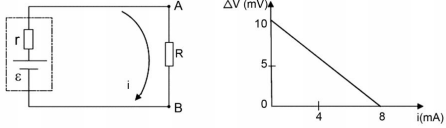
A partir do circuito e do gráfico apresentados, assinale a alternativa correta para a potência dissipada internamente na fonte quando esta fornece uma corrente de 2,0 mA.
Michael Faraday foi um cientista inglês que viveu no século XIX. Através de suas descobertas foram estabelecidas as bases do eletromagnetismo, relacionando fenômenos da eletricidade, eletroquímica e magnetismo. Suas invenções permitiram o desenvolvimento do gerador elétrico, e foi graças a seus esforços que a eletricidade tornou-se uma tecnologia de uso prático. Em sua homenagem uma das quatro leis do eletromagnetismo leva seu nome e pode ser expressa como:
ε = ΔΦ/Δt onde ε é a força eletromotriz induzida em um circuito, ∅ é o fluxo magnético através desse circuito e t é o tempo.
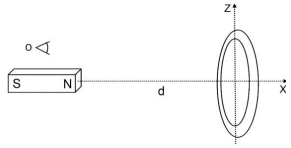
Considere a figura ao lado, que representa um ímã próximo a um anel condutor e um observador na posição O. O ímã pode se deslocar ao longo do eixo do anel e a distância entre o polo norte e o centro do anel é d. Tendo em vista essas informações, identifique as seguintes afirmativas como verdadeiras (V) ou falsas (F):
( ) Mantendo-se a distância d constante se observará o surgimento de uma corrente induzida no anel no sentido horário.
( ) Durante a aproximação do ímã à espira, observa-se o surgimento de uma corrente induzida no anel no sentido horário.
( ) Durante o afastamento do ímã em relação à espira, observa-se o surgimento de uma corrente induzida no anel no sentido horário.
( ) Girando-se o anel em torno do eixo z, observa-se o surgimento de uma corrente induzida.
Assinale a alternativa que apresenta a sequência correta, de cima para baixo.
O estudo da calorimetria e das leis da termodinâmica nos dá explicações para vários fenômenos encontrados na natureza. Considere o seguinte texto que apresenta a explicação, do ponto de vista dessas áreas da Física, para a formação das nuvens:
Quando uma porção de ar aquecido sobe, contendo água que acabou de __________ da superfície, passa a estar submetida a uma pressão cada vez __________. A rápida variação na pressão provoca uma rápida expansão do ar junto com uma redução de seu/sua __________. Essa rápida expansão é considerada __________, isto é, sem troca de calor com sua vizinhança, porque ocorre muito rapidamente. O gás em expansão __________ energia interna ao se expandir, e isso acarreta seu resfriamento até atingir uma temperatura na qual a quantidade de vapor de água é suficiente para saturar o ar naquele ponto e assim formar as nuvens.
Assinale a alternativa que preenche as lacunas corretamente.
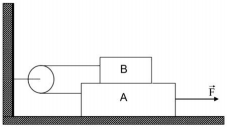
Um bloco B de massa 400 g está apoiado sobre um bloco A de massa
800 g, o qual está sobre uma superfície horizontal. Os dois blocos estão
unidos por uma corda inextensível e sem massa, que passa por uma
polia presa na parede, conforme ilustra a figura ao lado. O coeficiente
de atrito cinético entre os dois blocos e entre o bloco A e a superfície
horizontal é o mesmo e vale 0,35. Considerando a aceleração da
gravidade igual a 10 m/s2 e desprezando a massa da polia, assinale a
alternativa correta para o módulo da força  necessária para que os dois
blocos se movam com velocidade constante.
necessária para que os dois
blocos se movam com velocidade constante.
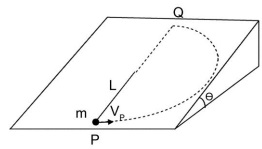
Um objeto de massa m está em movimento circular, deslizando sobre um plano inclinado. O objeto está preso em uma das extremidades de uma corda de comprimento L, cuja massa e elasticidade são desprezíveis. A outra extremidade da corda está fixada na superfície de um plano inclinado, conforme indicado na figura a seguir. O plano inclinado faz um ângulo o θ = 30° em relação ao plano horizontal. Considerando g a aceleração da gravidade e μ =1/π√3 o coeficiente de atrito cinético entre a superfície do plano inclinado e o objeto, assinale a alternativa correta para avariação da energia cinética do objeto, em módulo, ao se mover do ponto P, cuja velocidade em módulo é vP, ao ponto Q, onde sua velocidade tem módulo vQ.
Na resolução desse problema considere sen 30° = 1/2 e cos 30° = √3/2.
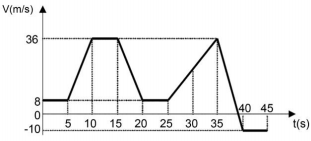
Um veículo está se movendo ao longo de uma estrada plana e retilínea. Sua velocidade em função do tempo, para um trecho do percurso, foi registrada e está mostrada no gráfico ao lado. Considerando que em t = 0 a posição do veículo s é igual a zero, assinale a alternativa correta para a sua posição ao final dos 45 s.
Taxa média anual de variação da produtividade por trabalhador ocupado na indústria de transformação (em porcentagem)
Brasil 1970/2011
1970/1980 2,4
1980/1990 -0,1
1990/2000 6,5
2000/2011 0,3
Fonte: FONSECA, R. Produtividade e crescimento da indústria brasileira.
Revista Brasileira de Comércio
Exterior, n. 112, jul.-set. 2012.
Observe a tabela acima.
Com base na tabela e nos conhecimentos de Geografia Industrial, assinale a alternativa correta.
As formas ou conjuntos de formas de relevo participam da composição das paisagens em diferentes escalas. Relevos de grandes dimensões, ao serem observados em um curto espaço de tempo, mostram aparência estática e imutável; entretanto, estão sendo permanentemente trabalhados por processos erosivos ou de posicionais, desencadeados pelas condições climáticas existentes. Esses processos, originados pelas forças exógenas, promovendo, ao longo de grandes períodos de tempo, a degradação (erosão) das áreas topograficamente elevadas e a agradação (deposição) nas áreas topograficamente baixas, conduzem a uma tendência de nivelamento da superfície terrestre. Isso só se completará caso não haja interferência das forças endógenas, que podem promover soerguimentos ou rebaixamentos terrestres. Há que se considerar, ainda, a ação conjunta das duas forças e as implicações altimétricas geradas por ocorrências de variações do nível do mar.
Adaptado de MARQUES, J.S. Ciência Geomorfológica. In: GUERRA, A. J. T.; CUNHA, S. B. (Orgs.)
Geomorfologia: uma atualização de bases e conceitos. Rio de Janeiro: Bertrand,1994, p. 23-45.
Tendo como referência o texto acima e os conhecimentos de geomorfologia, a ciência que estuda as formas do relevo, identifique as seguintes afirmativas como verdadeiras (V) ou falsas (F):
( ) O relevo é o resultado da atuação das chamadas forças endógenas e exógenas. Os processos endógenos estão associados à dinâmica das Placas Tectônicas e os exógenos relacionados à atuação climática.
( ) Durante a era Cenozoica, as formas de relevo, em grande escala, permaneceram estáveis em consequência do equilíbrio entre forças exógenas e endógenas.
( ) Os deslizamentos de terra, fluxos de lama e detritos, que ocorrem em grandes maciços rochosos, como é o caso da Serra do Mar, apesar de resultarem muitas vezes em catástrofes e danos à população, podem ser processos naturais de degradação, que participam da evolução das formas do relevo.
( ) Os processos de agradação ocorrem predominantemente no Brasil em relevo de planícies.
Assinale a alternativa que apresenta a sequência correta, de cima para baixo.
A BRF, dona das marcas Sadia e Perdigão, foi condenada a pagar indenização por dano moral coletivo de R$ 1 milhão por condições degradantes de trabalho. A condenação é resultado da ação do Ministério Público do Trabalho (MPT) em Umuarama (PR), ajuizada em 2012, após investigação que flagrou trabalhadores em condições análogas à escravidão […] No início de 2012, o MPT-PR em Umuarama constatou graves irregularidades trabalhistas na Fazenda Jaraguá, em Iporã. Os problemas iam desde jornada excessiva e condições precárias dos alojamentos, até a contaminação da água fornecida aos trabalhadores para consumo. “A situação encontrada configura trabalho degradante, já que foram desrespeitados os direitos mais básicos da legislação trabalhista, causando repulsa e indignação, o que fere o senso ético da sociedade”, afirma o procurador do Trabalho Diego Jimenez Gomes, responsável pelo caso. A BRF é uma gigante do ramo de produtos alimentícios que surgiu a partir da fusão entre Sadia e Perdigão, além de ser detentora de marcas como Batavo, Elegê e Qualy. A empresa tem 49 fábricas em todas as regiões do País e mais de 100 mil funcionários. Em 2013, a receita líquida foi R$ 30,5 bilhões e o lucro líquido consolidado foi de R$ 1,1 bilhão.
Portal Instituto Unisinos, 29 ago.2014. Disponível em: http://www.ihu.unisinos.br/noticias/534749.
Com base no texto e no conhecimento de geografia agrária, assinale a alternativa correta.

 Conheça nossos planos