Questões Militares
Para espcex
Foram encontradas 3.257 questões
Resolva questões gratuitamente!
Junte-se a mais de 4 milhões de concurseiros!


Ano: 2015
Banca:
Exército
Órgão:
EsPCEx
Prova:
Exército - 2015 - EsPCEx - Cadete do Exército - 2° Dia |
Q616968
História
Observe as ideias de três pensadores da Idade Moderna.
– Adam Smith (escocês), em sua obra A riqueza das nações, afirmava que a única fonte de riqueza era o trabalho, e não a terra.
– A ideia central da doutrina de Karl Marx (alemão) é que a “história das sociedades humanas é a história da luta de classes".
– Thomas Malthus (inglês), em sua obra Ensaio sobre o princípio da população, escreveu que a natureza impõe limites ao progresso material, já que a população cresce em progressão geométrica, enquanto a produção de alimentos aumenta em progressão aritmética.
Pode-se afirmar que
– Adam Smith (escocês), em sua obra A riqueza das nações, afirmava que a única fonte de riqueza era o trabalho, e não a terra.
– A ideia central da doutrina de Karl Marx (alemão) é que a “história das sociedades humanas é a história da luta de classes".
– Thomas Malthus (inglês), em sua obra Ensaio sobre o princípio da população, escreveu que a natureza impõe limites ao progresso material, já que a população cresce em progressão geométrica, enquanto a produção de alimentos aumenta em progressão aritmética.
Pode-se afirmar que
Ano: 2015
Banca:
Exército
Órgão:
EsPCEx
Prova:
Exército - 2015 - EsPCEx - Cadete do Exército - 2° Dia |
Q616967
História
Texto associado
Leia as afirmações abaixo referentes à colonização das Américas e assinale a única alternativa correta.
I – Os primeiros colonos tinham diversas origens e condições sociais: degredados, mulheres para serem leiloadas como esposas, órfãos, camponeses sem terra, grupos religiosos fugidos da perseguição de que eram vítimas na Europa.
II – O modelo de colonização consistia em conceder a um colono o direito de escravizar certo número de indígenas para fazê-los trabalhar na exploração de ouro, na agricultura ou em serviços domésticos.
III – Houve preferência, desde cedo, à produção agrícola de larga aceitação na Europa, como o fumo, o algodão e o anil, em grandes propriedades monocultoras e com utilização de mão de obra escrava.
IV – Era ideia entre boa parte dos colonos a visão de Calvino, para quem o ócio é pecado e enriquecer trabalhando é indício de que o indivíduo seria salvo.
V – Nos primeiros contatos, os astecas pensaram que os colonizadores eram deuses e os presentearam com ouro.
VI – Os colonos viam o trabalho como coisa para etnias consideradas inferiores.
Pode-se afirmar que
Ano: 2015
Banca:
Exército
Órgão:
EsPCEx
Prova:
Exército - 2015 - EsPCEx - Cadete do Exército - 2° Dia |
Q616963
Geografia
“Foi no contexto da Primeira Conferência das Nações Unidas sobre Meio Ambiente, realizada em 1972, em Estocolmo, que nasceu a ideia do desenvolvimento [...] sustentável [...], isto é, de se adotar um modelo de desenvolvimento econômico voltado à exploração nacional dos recursos naturais, à preservação do meio ambiente ou ao equilíbrio ecológico e ao combate às disparidades sociais entre os seres humanos e entre as nações." (ADAS, M. Panorama Geográfico do Brasil. 4. ed. São Paulo: Moderna, 2004, p. 117). Apesar da importância da temática acima apresentada, observa-se, mundialmente, que a aplicabilidade do conceito de desenvolvimento sustentável tem sido muito difícil.
Assinale a alternativa que explica a problemática apontada no texto acima.
Assinale a alternativa que explica a problemática apontada no texto acima.
Ano: 2015
Banca:
Exército
Órgão:
EsPCEx
Prova:
Exército - 2015 - EsPCEx - Cadete do Exército - 2° Dia |
Q616962
Geografia
Em um exercício militar, ao planejar um deslocamento, o comandante responsável identificou dois pontos para os quais deverá deslocar sua tropa. Estes pontos apresentam as seguintes coordenadas geográficas:
Ponto “A" - Latitude: 29° 49' 30" S - Longitude: 54° 54' 00" W Ponto “B" - Latitude: 29° 45' 00" S - Longitude: 54° 55' 30" W
Após a chegada ao ponto “A", um grupo de militares dessa tropa será deslocado para o ponto “B", tendo que seguir em que direção?
Ponto “A" - Latitude: 29° 49' 30" S - Longitude: 54° 54' 00" W Ponto “B" - Latitude: 29° 45' 00" S - Longitude: 54° 55' 30" W
Após a chegada ao ponto “A", um grupo de militares dessa tropa será deslocado para o ponto “B", tendo que seguir em que direção?
Ano: 2015
Banca:
Exército
Órgão:
EsPCEx
Prova:
Exército - 2015 - EsPCEx - Cadete do Exército - 2° Dia |
Q616961
Geografia
Em uma cidade, a distância entre as localidades X e Y é de 16 Km e entre as localidades X e Z é de 28 Km. A distância no mapa entre X e Y é de 4 cm e entre X e Z é de 7 cm. A escala desse mapa é de:
Ano: 2015
Banca:
Exército
Órgão:
EsPCEx
Prova:
Exército - 2015 - EsPCEx - Cadete do Exército - 2° Dia |
Q616960
Geografia
As chuvas torrenciais de verão, denominadas chuvas ________________________ , são caracterizadas por serem precipitações breves, mas violentas, que ocorrem na maior parte do território brasileiro. Essas chuvas estão associadas ao deslocamento da Zona de Convergência Intertropical (ZCIT) para a porção central da América do Sul entre os meses de setembro e março, fazendo com que a massa _____________________________ expanda-se para a Bolívia e Brasil central, chegando a atuar sobre São Paulo, provocando os chamados aguaceiros de verão.
Assinale a alternativa que completa corretamente as lacunas acima.
Assinale a alternativa que completa corretamente as lacunas acima.
Ano: 2015
Banca:
Exército
Órgão:
EsPCEx
Prova:
Exército - 2015 - EsPCEx - Cadete do Exército - 2° Dia |
Q616959
Geografia
Texto associado
A metropolização resulta de uma intervenção humana extensa e profunda sobre a superfície da Terra, uma vez que implica alterações significativas da paisagem e da qualidade de vida da população urbana.
Entre os impactos ambientais causados pela intervenção humana no ambiente urbano, pode-se destacar
I - a formação das ilhas de calor na periferia das grandes cidades, associada à escassez de áreas revestidas de vegetação, com consequente aumento do poder refletor da luz solar que incide no solo urbano.
II - a maior ocorrência de chuvas torrenciais nas metrópoles, em relação às áreas rurais adjacentes, devido à grande quantidade de material particulado em suspensão, favorecendo a condensação da água na atmosfera.
III - a grande poluição do ar e a consequente intensificação de problemas respiratórios, agravados pelo fenômeno climático da inversão térmica que ocorre, em geral, no inverno.
IV - o aumento do efeito estufa gerado pelo movimento do ar das zonas rurais para as zonas urbanas, elevando a temperatura nas cidades.
Assinale a alternativa que apresenta todas as afirmativas corretas
Ano: 2015
Banca:
Exército
Órgão:
EsPCEx
Prova:
Exército - 2015 - EsPCEx - Cadete do Exército - 2° Dia |
Q616958
Geografia
Texto associado

Observe o mapa a seguir, que mostra a distribuição dos domínios morfoclimáticos brasileiros, e considere as afirmativas abaixo:
I - no domínio “A” encontramos a maior parte do chamado “arco do desmatamento”, onde a vegetação vem perdendo espaço para as atividades agrícolas, causando significativos prejuízos à biodiversidade.
II - o domínio “B” caracteriza-se por solos pobres em matéria orgânica e pedregosos, porém projetos de irrigação têm viabilizado a produção de frutas, como a uva para exportação, nessa área.
III - os domínios “C” e “F” são considerados hotspots, pois são áreas prioritárias para conservação e de alta biodiversidade, as quais, por se constituírem em fronteiras agrícolas, vêm tendo sua vegetação suprimida para dar lugar às atividades pecuárias.
IV - os domínios “B” e “E” são caracterizados por vegetação herbácea associada a climas que apresentam grande período de estiagem e solos em processo de desertificação, dificultando a atividade agrícola.
V - o domínio “D” apresenta clima tropical úmido e relevo de morros arredondados, revelando intenso trabalho erosivo em estrutura cristalina.
Assinale a alternativa em que todas as afirmativas estão corretas.
Assinale a alternativa em que todas as afirmativas estão corretas.
Ano: 2015
Banca:
Exército
Órgão:
EsPCEx
Prova:
Exército - 2015 - EsPCEx - Cadete do Exército - 2° Dia |
Q616954
Matemática

Considere o seguinte procedimento: em uma circunferência de diâmetro 2R, inscreve-se um hexágono regular para, em seguida, inscrever neste polígono uma segunda circunferência. Tomando esta nova circunferência, o processo é repetido gerando uma terceira circunferência. Caso este procedimento seja repetido infinitas vezes, a soma dos raios de todas as circunferências envolvidas nesse processo é igual a:
Ano: 2015
Banca:
Exército
Órgão:
EsPCEx
Prova:
Exército - 2015 - EsPCEx - Cadete do Exército - 2° Dia |
Q616953
Matemática
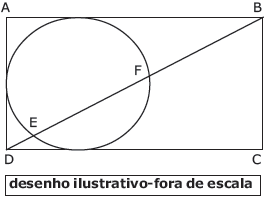
Na figura abaixo, a circunferência de raio 3 cm tangencia três lados do retângulo ABCD. Sabendo que a área deste retângulo é igual a 72 cm2, a medida do segmento EF, em cm, é igual a:
Ano: 2015
Banca:
Exército
Órgão:
EsPCEx
Prova:
Exército - 2015 - EsPCEx - Cadete do Exército - 2° Dia |
Q616952
Matemática
Um portal de igreja tem a forma de um arco de parábola, conforme figura abaixo. A medida da sua base AB é 4m e da sua altura é 5m. Um vitral foi colocado 3,2m acima da base. Qual a medida CD da base, em metros? 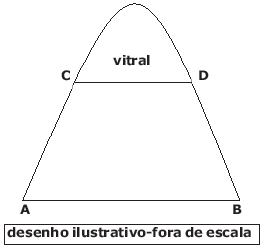
Ano: 2015
Banca:
Exército
Órgão:
EsPCEx
Prova:
Exército - 2015 - EsPCEx - Cadete do Exército - 2° Dia |
Q616951
Matemática
O gráfico que melhor representa a função real definida por 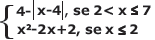 é
é
é
Ano: 2015
Banca:
Exército
Órgão:
EsPCEx
Prova:
Exército - 2015 - EsPCEx - Cadete do Exército - 2° Dia |
Q616950
Matemática
Sendo R a maior das raízes da equação  = x2, então o valor de 2R-2 é
= x2, então o valor de 2R-2 é
Ano: 2015
Banca:
Exército
Órgão:
EsPCEx
Prova:
Exército - 2015 - EsPCEx - Cadete do Exército - 2° Dia |
Q616949
Matemática
Considerando a função real definida por 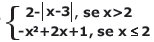 , o valor de f(0)+f(4) é
, o valor de f(0)+f(4) é
Ano: 2015
Banca:
Exército
Órgão:
EsPCEx
Prova:
Exército - 2015 - EsPCEx - Cadete do Exército - 2° Dia |
Q616948
Matemática
Um recipiente cilíndrico, cujo raio da base tem medida R, contém água até uma certa altura. Uma esfera de aço é mergulhada nesse recipiente ficando totalmente submersa, sem haver transbordamento de água. Se a altura da água subiu 9/16 R, então o raio da esfera mede
Ano: 2015
Banca:
Exército
Órgão:
EsPCEx
Prova:
Exército - 2015 - EsPCEx - Cadete do Exército - 2° Dia |
Q616947
Matemática
Da análise combinatória, pode-se afirmar que
Ano: 2015
Banca:
Exército
Órgão:
EsPCEx
Prova:
Exército - 2015 - EsPCEx - Cadete do Exército - 2° Dia |
Q616946
Matemática
João e Maria iniciam juntos uma corrida, partindo de um mesmo ponto. João corre uniformemente
8 km por hora e Maria corre 6 km na primeira hora e acelera o passo de modo a correr mais 1/2 km cada hora que se segue. Assinale a alternativa correspondente ao número de horas corridas para que Maria alcance João.
Ano: 2015
Banca:
Exército
Órgão:
EsPCEx
Prova:
Exército - 2015 - EsPCEx - Cadete do Exército - 2° Dia |
Q616945
Matemática
Considere a circunferência que passa pelos pontos (0,0), (0,6) e (4,0) em um sistema de
coordenadas cartesianas ortogonais. Sabendo que os pontos (0,6) e (4,0) pertencem a uma reta
que passa pelo centro dessa circunferência, uma das retas tangentes a essa circunferência, que
passa pelo ponto (3,-2), tem por equação
Ano: 2015
Banca:
Exército
Órgão:
EsPCEx
Prova:
Exército - 2015 - EsPCEx - Cadete do Exército - 2° Dia |
Q616944
Matemática
A solução da equação 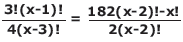 é um número natural
é um número natural
Ano: 2015
Banca:
Exército
Órgão:
EsPCEx
Prova:
Exército - 2015 - EsPCEx - Cadete do Exército - 2° Dia |
Q616943
Matemática
As medidas das arestas de um paralelepípedo retângulo são diretamente proporcionais a 3, 4
e 5 e a soma dessas medidas é igual a 48 cm. Então a medida da sua área total, em cm2, é

 Conheça nossos planos