Questões Militares Comentadas para magistério superior

Foram encontradas 385 questões

Resolva questões gratuitamente!

Junte-se a mais de 4 milhões de concurseiros!

Q1778255 Português
Tudo, menos uma estrela

    O velho jazz está sendo ceifado pela Covid-19. Depois do pianista Ellis Marsalis e do guitarrista Bucky Pizzarelli, foi a vez, na semana passada, do saxofonista Lee Konitz, ainda na ativa aos 92 anos. Os jornais deram a sua morte não por ter sido um grande músico, mas por “ter tocado com Miles Davis”, nos discos de um revolucionário noneto1 que, em 1949-50, lançou o cool jazz2 . Era um estilo com raízes na big band3 de Claude Thornhill, de onde tinham saído, além de Lee, o sax-barítono Gerry Mulligan e o arranjador Gil Evans, todos no noneto. Mas só Miles levou a fama.
    Lee foi dos poucos sax-altos nascidos no bebop4 que não tentaram copiar Charlie Parker. Suas frases longas e sem vibrato eram a antítese de Parker. E, desde então, sempre esteve na contramão do jazz, gravando discos em que tocava sozinho, ou com um trio sem piano ou com uma orquestra de 90 figuras.
    Ele era tudo, menos uma estrela do jazz. Nunca teve agente ou assessor de imprensa e, ao morrer, devia ser o único músico do mundo sem email. O incrível é que, avesso a qualquer carreira comercial, tenha gravado tanto. Levantei sua discografia e, de 1949 a 2018, contei 95 álbuns como líder. Somando-se os de que só participou, são mais setenta.

(Ruy Castro, “Tudo, menos uma estrela”. Folha de S.Paulo,
27.04.2020. Adaptado)

1 Conjunto formado por nove músicos.
2 Estilo que se caracteriza por ser, na maioria das vezes, uma música mais lenta e mais melancólica. Há mais espaços na música, ela é mais estendida, e menos notas são tocadas.
3 Indica um grande grupo instrumental associado ao jazz. Constitui-se, basicamente, de 12 a 25 músicos e contém primordialmente 4 tipos de instrumentos.
4 Representa uma das correntes mais influentes do jazz. Seu nome provém da onomatopeia feita ao imitar o som de martelos que batiam no metal na construção das ferrovias americanas, gerando uma “melodia” cheia de pequenas notas.
As informações do texto permitem concluir que Lee Konitz
Alternativas
Q1778250 Português
Assinale a alternativa em que todas as palavras estão grafadas conforme a ortografia oficial.
Alternativas
Q1778237 Português

Veja: Os professores sairão mais valorizados desta pandemia?


Alexandre Schneider: Será importante a retomada do respeito pela profissão, da autoridade do professor em sala de aula. Obviamente, quando os pais participam, a escola fica melhor. Mas a participação deles tem de ser na melhora no coletivo. Entretanto muitos atravessam a fronteira e entendem que eles têm de dizer como o professor deve exercer o seu ofício. Ou, mais grave, entendem que o professor não tem o direito de chamar a atenção de um estudante. Talvez este seja um bom momento de reflexão. Estamos vendo com os nossos filhos como é difícil colocá-los na frente de um computador ou de um tablet para as tarefas escolares.


(Alexandre Schneider. Enem deveria ser transferido para o meio do ano que

vem. Veja São Paulo, 8 de julho de 2020, p.15. Adaptado)

É correto dizer que Schneider propõe que os pais
Alternativas
Q1778231 Pedagogia
Assinale a alternativa correta a partir dos conceitos de aprendizagem e desenvolvimento para Piaget.
Alternativas
Q1778086 Inglês
   Leia os dois parágrafos a seguir para responder à questão.


   An international student who majors in engineering drops by the engineering department office and asks the secretary, “Can you tell me where the English department is?” The secretary smiles and responds, “I don’t know, actually. It’s probably somewhere in the Humanities Building. Do you have a campus map?” The student turns around and leaves. The secretary is taken aback and feels slightly uncomfortable. She wonders why the student left so abruptly.
    (...)
    People who interact with ESL students have commented that some seem to express gratitude excessively for small considerations, even to the point of embarrassing the person they are speaking. Others seem downright rude because they do not say thank you when they are expected to.

(Celce-Murcia, M. 2001.)
Harmer, J. (2007) e Celce-Murcia, M. (2001) descrevem diferentes tipos de testes, cada qual com seus objetivos. Um “achievement test”, por exemplo, será capaz de verificar
Alternativas
Q1778082 Inglês
   Leia os dois parágrafos a seguir para responder à questão.


   An international student who majors in engineering drops by the engineering department office and asks the secretary, “Can you tell me where the English department is?” The secretary smiles and responds, “I don’t know, actually. It’s probably somewhere in the Humanities Building. Do you have a campus map?” The student turns around and leaves. The secretary is taken aback and feels slightly uncomfortable. She wonders why the student left so abruptly.
    (...)
    People who interact with ESL students have commented that some seem to express gratitude excessively for small considerations, even to the point of embarrassing the person they are speaking. Others seem downright rude because they do not say thank you when they are expected to.

(Celce-Murcia, M. 2001.)
A relação entre os dois parágrafos permite perceber que o mal entendido no episódio narrado no primeiro parágrafo provavelmente foi causado por
Alternativas
Q1778074 Inglês
Read the text below and answer the question.


Thought-in-Action Links

     It is important to recognize that methods link thoughts and actions, because teaching is not entirely about one or the other. As a teacher of language, you have thoughts about your subject matter – what language is, what culture is – and about your students – who they are as learners and how it is they learn. You also have thoughts about yourself as a teacher and what you can do to help your students to learn. Many of your thoughts have been formed by your own experience as a language learner. With this awareness, you are able to examine why you do what you do and perhaps choose to think about or do things differently.
    As an example, let us relate an anecdote about a teacher with whom Diane Larsen-Freeman was working some time ago. From her study of methods in Stevick (1980), Heather (not her real name) became interested in how to work with teacher control and student initiative in her teaching. She determined that during her student teaching internship, she would exercise less control of the lesson in order to encourage her students to take more initiative, and have them impose the questions in the classroom, since so often it is the teacher who asks all the questions, not the students.
    However, she felt that the students were not taking the initiative, but she could not see what was wrong. When Diane Larsen Freeman, who was her supervisor, visited her class, she observed the following:
HEATHER: Juan, ask Anna what she is wearing.
JÜAN: What are you wearing?
ANNA: I am wearing a dress.
HEATHER: Anna, ask Muriel what she is writing.
ANNA: What are you writing?
MÜRIEL: I am writing a letter.
    This pattern continued for some time. It was clear to see that Heather had successfully avoided the common problem of the teacher asking all the questions in the class. The teacher was not asking the questions – the students were. However, Heather had not achieved her goal of encouraging student initiative.

(Larsen-Freeman, D. 2000. Adaptado) 
In the simple past and past participle, regular verbs may be pronounced in three different ways: /t/, /d/ or /id/. The verb taken from the second paragraph that is pronounced with an extra syllable /id/ in one of those forms is:
Alternativas
Q1778073 Inglês
Read the text below and answer the question.


Thought-in-Action Links

     It is important to recognize that methods link thoughts and actions, because teaching is not entirely about one or the other. As a teacher of language, you have thoughts about your subject matter – what language is, what culture is – and about your students – who they are as learners and how it is they learn. You also have thoughts about yourself as a teacher and what you can do to help your students to learn. Many of your thoughts have been formed by your own experience as a language learner. With this awareness, you are able to examine why you do what you do and perhaps choose to think about or do things differently.
    As an example, let us relate an anecdote about a teacher with whom Diane Larsen-Freeman was working some time ago. From her study of methods in Stevick (1980), Heather (not her real name) became interested in how to work with teacher control and student initiative in her teaching. She determined that during her student teaching internship, she would exercise less control of the lesson in order to encourage her students to take more initiative, and have them impose the questions in the classroom, since so often it is the teacher who asks all the questions, not the students.
    However, she felt that the students were not taking the initiative, but she could not see what was wrong. When Diane Larsen Freeman, who was her supervisor, visited her class, she observed the following:
HEATHER: Juan, ask Anna what she is wearing.
JÜAN: What are you wearing?
ANNA: I am wearing a dress.
HEATHER: Anna, ask Muriel what she is writing.
ANNA: What are you writing?
MÜRIEL: I am writing a letter.
    This pattern continued for some time. It was clear to see that Heather had successfully avoided the common problem of the teacher asking all the questions in the class. The teacher was not asking the questions – the students were. However, Heather had not achieved her goal of encouraging student initiative.

(Larsen-Freeman, D. 2000. Adaptado) 
The title of the text “Thought-in-Action Links” is an example of a noun phrase in English. It is correct to state about noun phrases that they
Alternativas
Q1778060 Inglês
   Leia o texto e responda à questão.

     The discussion of the worldliness of English (…) suggests that it is impossible to separate English from its many contexts, and therefore, that the idea that it might be possible to ‘just teach the language’ - is (…) indefensible. (…) To teach is to be caught up in an array of questions concerning curriculum, educational systems and classroom practices: (1) whose knowledges and cultures are given credence? (2) to what extent does an educational system reproduce social and cultural inequalities? And (3) what understandings of language, culture, education, authority, knowledge or communication do we assume in our teaching?

(PENNYCOOK, A. The cultural politics of English as an international language. Adaptado). 
A discussão de Pennycook sobre “just teach the language” vai ao encontro do debate sobre multiletramentos feito por Rojo e Moura em seu livro, uma vez que os autores entendem que, para ensinar na área, é preciso que o(a) professor(a)
Alternativas
Q1778058 Inglês
   Read the following extract and answer question.

     The disjunction between method as conceptualized by theorists and method as conducted by teachers is the direct consequence of the inherent limitations of the concept of method itself. First and foremost, methods are based on idealized concepts geared toward idealized contexts. Since language learning and teaching needs, wants, and situations are unpredictably numerous, no idealized method can visualize all the variables in advance in order to provide situation-specific suggestions that practicing teachers so clearly need in order to tackle the challenges they confront every day of their professional lives. As a predominantly topdown exercise, the conception and construction of methods have been largely guided by a one-size-fits-all (…) approach that assumes a common clientele with common goals.

(KUMARAVADIVELU, B. Beyond methods:
macrostrategies for language teaching. Adapted)
Kumaravadivelu states that there are over 15 methods for Second and Foreign Language (L2) teaching, which he divides into three categories, i.e. language-centered, learner-centered and learning-centered methods, as seen, respectively, in alternative:
Alternativas
Q1777821 Espanhol
Las expresiones so pena de y so pretexto de van encabezadas por la preposición so, la cual se emplea en:
Alternativas
Q1777820 Espanhol
Al referirse a la estructuración y sistematización de los elementos constitutivos de una lengua y su aplicación en contextos que permitan su formalización y decodificación, Sánchez Pérez (1998) hace alusión:
Alternativas
Q1777818 Espanhol
Lea el siguiente título de un informe.
La educación financiera ya es obligatoria por ley, pero todavía no se aplica en las secundarias.
(https://www.infobae.com/educacion/2020/02/24/la-educacion-financiera -ya-es-obligatoria-por-ley-pero-todavia-no-se-aplica-en-las-secundarias/)
La conjunción pero y el adverbio todavía que aparecen correlativos en la misma secuencia son equivalentes, respectivamente, a
Alternativas
Q1777817 Espanhol
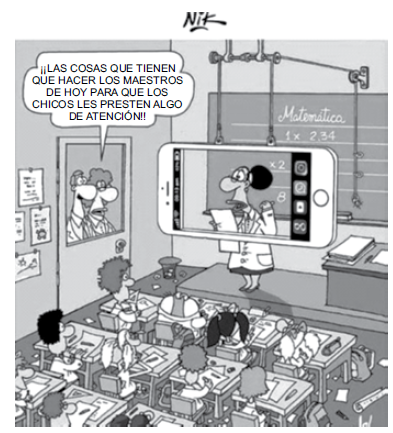
El siguiente es el titular de una noticia.
“El Gobierno reducirá a la mitad las aulas si no hay vacuna para el coronavirus.”
(https://www.vozpopuli.com/espana/Gobierno-reducira-mitad-aulas -vacuna-coronavirus-Educacion_0_1351965033.html)
Al leer el titular se entiende que
Alternativas
Q1777816 Espanhol
Lea el siguiente texto para responder la cuestion.

     Cuando eres un hablante nativo, evidentemente puedes afirmar que dominas tu lengua materna. Pero es un error común creer que, para ser verdaderamente bilingüe, tienes que haber adquirido tu segundo idioma (y otros adicionales) en la primera infancia. Los estudios sobre aprendizaje de idiomas muestran que efectivamente es más fácil hacerlo, pero también puedes llegar a ser bilingüe más adelante, en la adolescencia o en la edad adulta.
     Ciertos factores pueden contribuir al bilingüismo, como la inmigración, pero también crecer en un hogar o vecindario multicultural, o con un cuidador bilingüe. También puede adquirirse un segundo idioma en la escuela o estudiando por su cuenta.

(https://blog.lingoda.com/es/que-significa-ser-bilingue. Adaptado)
Indique cuál de las siguientes variaciones presenta una redacción equivalente a lo expresado en el fragmento “Ciertos factores pueden contribuir al bilingüismo, como la inmigración, pero también crecer en un hogar o vecindario multicultural, o con un cuidador bilingüe”.
Alternativas
Q1777815 Espanhol
Lea el siguiente texto para responder la cuestion.

     Cuando eres un hablante nativo, evidentemente puedes afirmar que dominas tu lengua materna. Pero es un error común creer que, para ser verdaderamente bilingüe, tienes que haber adquirido tu segundo idioma (y otros adicionales) en la primera infancia. Los estudios sobre aprendizaje de idiomas muestran que efectivamente es más fácil hacerlo, pero también puedes llegar a ser bilingüe más adelante, en la adolescencia o en la edad adulta.
     Ciertos factores pueden contribuir al bilingüismo, como la inmigración, pero también crecer en un hogar o vecindario multicultural, o con un cuidador bilingüe. También puede adquirirse un segundo idioma en la escuela o estudiando por su cuenta.

(https://blog.lingoda.com/es/que-significa-ser-bilingue. Adaptado)
Señale cuál es la idea central que se desarrolla en este texto.
Alternativas
Q1777814 Espanhol
Indique cuál de los siguientes pares de verbos suelen ocuparse adjuntando un pronombre átono (me, te, le, nos, os, les) antecedido de un sintagma preposicional encabezado por a.
Alternativas
Q1777813 Espanhol
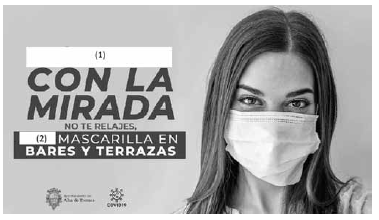
Seleccione la alternativa que complete adecuadamente los espacios (1) y (2), respectivamente.

Imagem associada para resolução da questão
(https://www.tribunasalamanca.com/noticias/alba-de-tormes-pone -en-marcha-una-campana-para-fomentar-el-uso-de-las-mascarillas -en-las-terrazas/1592068063)
Alternativas
Q1777811 Espanhol
Observe los siguientes enunciados
1. Este mes hemos gastado más de lo que deberíamos. 2. El mes pasado gastamos más de lo que deberíamos.
Al compararlos, se constata que
Alternativas
Q1777808 Espanhol
Lea el siguiente texto:
Los signos y síntomas de la anemia varían según la causa. Si la anemia es causada por una enfermedad crónica, la enfermedad puede enmascararla, de manera que la anemia podría detectarse por medio de exámenes para otra afección. Los signos y síntomas, si se presentan, podrían incluir: Fatiga • Debilidad Piel pálida o amarillenta Latidos del corazón irregulares • Dificultad para respirar Mareos o aturdimiento Dolor en el pecho • Manos y pies fríos • Dolores de cabeza
(https://www.mayoclinic.org/es-es/diseases-conditions/anemia/ symptoms-causes/syc-20351360. Adaptado)
Considerando las palabras destacadas en el texto y las divergencias léxicas entre el español y el portugués, se puede afirmar que:
Alternativas
Respostas
341: E
342: D
343: C
344: E
345: E
346: A
347: A
348: C
349: C
350: B
351: C
352: E
353: B
354: E
355: D
356: C
357: D
358: B
359: E
360: A