Questões de Vestibular
Nível médio
Foram encontradas 71.178 questões
Resolva questões gratuitamente!
Junte-se a mais de 4 milhões de concurseiros!


eia o texto para responder à questão.
5 Ways to Boost Your Resilience at Work
Since the pace and intensity of contemporary work culture are not likely to change, it’s more important than ever to build resilience skills to effectively navigate your worklife. While working as a CEO I’ve seen over and over again that the most resilient individuals aren’t the ones that don’t fail, but rather the ones that fail, learn and thrive1 because of it.
Resilience is built by attitudes, behaviors and social supports that can be adopted and cultivated by anyone. Factors that lead to resilience include optimism and the ability to stay balanced and manage difficult emotions. To build resilience skills at work it’s important to understand and manage some of the factors that cause us to feel so stressed at work. Being hyperconnected and responsive to work anytime, anywhere, can be extremely onerous.
The current and rising levels of stress in the workplace should be cause for concern, as there is a direct and adverse relationship between negative stress, wellness and productivity. Stress that causes us to experience difficulty or unhealthy strain is a major cause for concern as it directly and adversely affects personal and business success. Here are some tips on how to develop resilience and stay motivated:
Exercise mindfulness – Turn your attention to mental training practices associated with mindfulness to improve your judgment accuracy and problem solving, job performance and cognitive flexibility.
Compartmentalize your cognitive load – Create dedicated times in the day to do specific work-related activities and not others.
Take detachment2 breaks – Step away from work for even a few minutes to reset energy and attention. Balancing work activity can promote greater energy, mental clarity, creativity and focus.
Develop mental agility – Decenter stress: step back, reflect, shift perspectives, create options and choose wisely.
Cultivate compassion – Create positive work relationships, increase cooperation and collaboration, happiness and well-being to decrease stress.
(1) Thrive: prosperar, desenvolver, ter sucesso.
(2) Detachment: descolamento, distanciamento, separação.
eia o texto para responder à questão.
5 Ways to Boost Your Resilience at Work
Since the pace and intensity of contemporary work culture are not likely to change, it’s more important than ever to build resilience skills to effectively navigate your worklife. While working as a CEO I’ve seen over and over again that the most resilient individuals aren’t the ones that don’t fail, but rather the ones that fail, learn and thrive1 because of it.
Resilience is built by attitudes, behaviors and social supports that can be adopted and cultivated by anyone. Factors that lead to resilience include optimism and the ability to stay balanced and manage difficult emotions. To build resilience skills at work it’s important to understand and manage some of the factors that cause us to feel so stressed at work. Being hyperconnected and responsive to work anytime, anywhere, can be extremely onerous.
The current and rising levels of stress in the workplace should be cause for concern, as there is a direct and adverse relationship between negative stress, wellness and productivity. Stress that causes us to experience difficulty or unhealthy strain is a major cause for concern as it directly and adversely affects personal and business success. Here are some tips on how to develop resilience and stay motivated:
Exercise mindfulness – Turn your attention to mental training practices associated with mindfulness to improve your judgment accuracy and problem solving, job performance and cognitive flexibility.
Compartmentalize your cognitive load – Create dedicated times in the day to do specific work-related activities and not others.
Take detachment2 breaks – Step away from work for even a few minutes to reset energy and attention. Balancing work activity can promote greater energy, mental clarity, creativity and focus.
Develop mental agility – Decenter stress: step back, reflect, shift perspectives, create options and choose wisely.
Cultivate compassion – Create positive work relationships, increase cooperation and collaboration, happiness and well-being to decrease stress.
(1) Thrive: prosperar, desenvolver, ter sucesso.
(2) Detachment: descolamento, distanciamento, separação.
eia o texto para responder à questão.
5 Ways to Boost Your Resilience at Work
Since the pace and intensity of contemporary work culture are not likely to change, it’s more important than ever to build resilience skills to effectively navigate your worklife. While working as a CEO I’ve seen over and over again that the most resilient individuals aren’t the ones that don’t fail, but rather the ones that fail, learn and thrive1 because of it.
Resilience is built by attitudes, behaviors and social supports that can be adopted and cultivated by anyone. Factors that lead to resilience include optimism and the ability to stay balanced and manage difficult emotions. To build resilience skills at work it’s important to understand and manage some of the factors that cause us to feel so stressed at work. Being hyperconnected and responsive to work anytime, anywhere, can be extremely onerous.
The current and rising levels of stress in the workplace should be cause for concern, as there is a direct and adverse relationship between negative stress, wellness and productivity. Stress that causes us to experience difficulty or unhealthy strain is a major cause for concern as it directly and adversely affects personal and business success. Here are some tips on how to develop resilience and stay motivated:
Exercise mindfulness – Turn your attention to mental training practices associated with mindfulness to improve your judgment accuracy and problem solving, job performance and cognitive flexibility.
Compartmentalize your cognitive load – Create dedicated times in the day to do specific work-related activities and not others.
Take detachment2 breaks – Step away from work for even a few minutes to reset energy and attention. Balancing work activity can promote greater energy, mental clarity, creativity and focus.
Develop mental agility – Decenter stress: step back, reflect, shift perspectives, create options and choose wisely.
Cultivate compassion – Create positive work relationships, increase cooperation and collaboration, happiness and well-being to decrease stress.
(1) Thrive: prosperar, desenvolver, ter sucesso.
(2) Detachment: descolamento, distanciamento, separação.
eia o texto para responder à questão.
5 Ways to Boost Your Resilience at Work
Since the pace and intensity of contemporary work culture are not likely to change, it’s more important than ever to build resilience skills to effectively navigate your worklife. While working as a CEO I’ve seen over and over again that the most resilient individuals aren’t the ones that don’t fail, but rather the ones that fail, learn and thrive1 because of it.
Resilience is built by attitudes, behaviors and social supports that can be adopted and cultivated by anyone. Factors that lead to resilience include optimism and the ability to stay balanced and manage difficult emotions. To build resilience skills at work it’s important to understand and manage some of the factors that cause us to feel so stressed at work. Being hyperconnected and responsive to work anytime, anywhere, can be extremely onerous.
The current and rising levels of stress in the workplace should be cause for concern, as there is a direct and adverse relationship between negative stress, wellness and productivity. Stress that causes us to experience difficulty or unhealthy strain is a major cause for concern as it directly and adversely affects personal and business success. Here are some tips on how to develop resilience and stay motivated:
Exercise mindfulness – Turn your attention to mental training practices associated with mindfulness to improve your judgment accuracy and problem solving, job performance and cognitive flexibility.
Compartmentalize your cognitive load – Create dedicated times in the day to do specific work-related activities and not others.
Take detachment2 breaks – Step away from work for even a few minutes to reset energy and attention. Balancing work activity can promote greater energy, mental clarity, creativity and focus.
Develop mental agility – Decenter stress: step back, reflect, shift perspectives, create options and choose wisely.
Cultivate compassion – Create positive work relationships, increase cooperation and collaboration, happiness and well-being to decrease stress.
(1) Thrive: prosperar, desenvolver, ter sucesso.
(2) Detachment: descolamento, distanciamento, separação.
eia o texto para responder à questão.
5 Ways to Boost Your Resilience at Work
Since the pace and intensity of contemporary work culture are not likely to change, it’s more important than ever to build resilience skills to effectively navigate your worklife. While working as a CEO I’ve seen over and over again that the most resilient individuals aren’t the ones that don’t fail, but rather the ones that fail, learn and thrive1 because of it.
Resilience is built by attitudes, behaviors and social supports that can be adopted and cultivated by anyone. Factors that lead to resilience include optimism and the ability to stay balanced and manage difficult emotions. To build resilience skills at work it’s important to understand and manage some of the factors that cause us to feel so stressed at work. Being hyperconnected and responsive to work anytime, anywhere, can be extremely onerous.
The current and rising levels of stress in the workplace should be cause for concern, as there is a direct and adverse relationship between negative stress, wellness and productivity. Stress that causes us to experience difficulty or unhealthy strain is a major cause for concern as it directly and adversely affects personal and business success. Here are some tips on how to develop resilience and stay motivated:
Exercise mindfulness – Turn your attention to mental training practices associated with mindfulness to improve your judgment accuracy and problem solving, job performance and cognitive flexibility.
Compartmentalize your cognitive load – Create dedicated times in the day to do specific work-related activities and not others.
Take detachment2 breaks – Step away from work for even a few minutes to reset energy and attention. Balancing work activity can promote greater energy, mental clarity, creativity and focus.
Develop mental agility – Decenter stress: step back, reflect, shift perspectives, create options and choose wisely.
Cultivate compassion – Create positive work relationships, increase cooperation and collaboration, happiness and well-being to decrease stress.
(1) Thrive: prosperar, desenvolver, ter sucesso.
(2) Detachment: descolamento, distanciamento, separação.
Leia o texto e a tabela para responder à questão.
Barcarena, no nordeste do Pará, é uma cidade da Amazônia marcada por desastres ambientais. Há semanas, depois de fortes chuvas, houve um vazamento de rejeitos em uma das empresas do polo industrial, o que contaminou rios da região. No município de Barcarena já houve outros registros de crimes ambientais de contaminação.
Em 2004, a Universidade Federal do Pará (UFPA) realizou uma pesquisa que concluiu que a água consumida pela população, em 26 localidades, estava contaminada por íons de metais pesados tais como Pb2+, Cd2+ e Hg2+, descartados pelas indústrias. Amostras de água de Vila Nova, Burajuba e do Distrito Industrial apresentaram concentração de chumbo 12 vezes maior que o máximo permitido por uma resolução de 2011 do Ministério da Saúde.

Assinale a alternativa que apresenta a massa total de chumbo ingerida pelo paciente, em miligramas.
Leia o texto e a tabela para responder à questão.
Barcarena, no nordeste do Pará, é uma cidade da Amazônia marcada por desastres ambientais. Há semanas, depois de fortes chuvas, houve um vazamento de rejeitos em uma das empresas do polo industrial, o que contaminou rios da região. No município de Barcarena já houve outros registros de crimes ambientais de contaminação.
Em 2004, a Universidade Federal do Pará (UFPA) realizou uma pesquisa que concluiu que a água consumida pela população, em 26 localidades, estava contaminada por íons de metais pesados tais como Pb2+, Cd2+ e Hg2+, descartados pelas indústrias. Amostras de água de Vila Nova, Burajuba e do Distrito Industrial apresentaram concentração de chumbo 12 vezes maior que o máximo permitido por uma resolução de 2011 do Ministério da Saúde.
Os íons cádmio, , presentes na água contaminada apresentam
Leia o texto e a tabela para responder à questão.
Barcarena, no nordeste do Pará, é uma cidade da Amazônia marcada por desastres ambientais. Há semanas, depois de fortes chuvas, houve um vazamento de rejeitos em uma das empresas do polo industrial, o que contaminou rios da região. No município de Barcarena já houve outros registros de crimes ambientais de contaminação.
Em 2004, a Universidade Federal do Pará (UFPA) realizou uma pesquisa que concluiu que a água consumida pela população, em 26 localidades, estava contaminada por íons de metais pesados tais como Pb2+, Cd2+ e Hg2+, descartados pelas indústrias. Amostras de água de Vila Nova, Burajuba e do Distrito Industrial apresentaram concentração de chumbo 12 vezes maior que o máximo permitido por uma resolução de 2011 do Ministério da Saúde.
Pode-se concluir corretamente que, na combustão completa de 1 mol desse hidrocarboneto, as quantidades de matéria, e CO2 e de H2O produzidas são, em mol, respectivamente, iguais a
Leia o trecho do soneto “Como eu te amo”, de Gonçalves Dias, para responder a questão.
<https://tinyurl.com/y6uoquu5> Acesso em: 17.03.2018. Adaptado.
A condensação, passagem de uma substância do estado gasoso para o estado líquido, pode ocorrer quando vapores de um material entram em contato com uma superfície fria.
O verso que cita um fenômeno resultante da condensação
do vapor de água é o
Sob o lema “50 anos em 5”, esse plano se caracterizou pela
A Declaração estabeleceu a igualdade de todos os homens perante a lei e determinou que a liberdade, a propriedade privada, a segurança e a resistência a qualquer tipo de opressão eram direitos naturais, inalienáveis e sagrados do homem. ARARIBÁ Plus: História. 4ªed. São Paulo: Moderna, 2014. p.102
O texto se refere aos acontecimentos da
Assinale a alternativa correta sobre os contatos entre árabes e portugueses que possibilitaram essa influência.
Ao ser contratado para trabalhar em uma empresa, o Sr. Cavalcante precisa criar uma senha de acesso. Contudo, devido a normas de segurança implementadas, a senha deve conter pelo menos quatro caracteres distintos: uma letra maiúscula, uma letra minúscula, um caractere não alfanumérico e um algarismo.
Para os seus primeiros dias de trabalho, o sistema gerou, aleatoriamente, a senha
# F a 1
Sem tempo de repensar uma senha, o Sr. Cavalcante decidiu que
obrigatoriamente utilizaria apenas os caracteres: #, F, a, 1; e que nenhum desses caracteres, em sua nova senha, deveria ocupar a mesma posição da senha gerada pelo sistema.Nessas condições, o número total de senhas distintas que o Sr. Cavalcante poderá criar é
Uma empresa decide contratar três funcionários, cada qual com uma jornada de trabalho distinta.
I. O primeiro deles deve seguir uma escala de trabalho 12 × 36 — a cada 12 horas consecutivas de trabalho, o funcionário tem direito a 36 horas consecutivas de descanso.
II. O segundo, por sua vez, se enquadrará em uma escala de trabalho 18 × 36 — a cada 18 horas consecutivas de trabalho, o funcionário tem direito a 36 horas consecutivas de descanso.
III. O terceiro, e último, estará subordinado a uma escala de trabalho 24 × 48 — a cada 24 horas consecutivas de trabalho, o funcionário tem direito a 48 horas consecutivas de descanso.
Supondo que os três comecem a trabalhar ao mesmo tempo e no mesmo dia, bem como cumpram a jornada estabelecida,
respeitando inclusive as horas de descanso, eles irão iniciar o trabalho juntos novamente depois de
Ansioso para o início da prova do vestibular, um candidato, tentando se acalmar, escreveu a palavra FATEC 10 000 vezes. Colocou as letras da palavra FATEC em linha reta e enumerou a posição delas, conforme a tabela:

Assim sendo, a letra que ocupa a posição de número 2 018 e
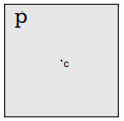
A figura apresenta a letra P e o centro de reflexão, representado pelo ponto C. Observando a letra apresentada e o centro de reflexão, a imagem obtida, após a reflexão, é
Um grupo de quatro amigos — Ana, Beto, Caio e Denise — deseja participar do vestibular da FATEC optando por cursos distintos. Considere verdadeiras as proposições:
I. Caso Ana se inscreva em Soldagem, então Beto se inscreverá para Eventos.
II. Se Denise fizer a inscrição para Polímeros, então Caio se inscreverá em Cosméticos.
III. Ana fará sua inscrição em Soldagem ou Denise em Polímeros.
Segue-se, necessariamente, que
 Conheça nossos planos