Questões de Vestibular
Nível médio
Foram encontradas 71.178 questões
Resolva questões gratuitamente!
Junte-se a mais de 4 milhões de concurseiros!


Observe a imagem e leia o texto a seguir para responder à questão.

AMARAL, Tarsila do. Os operários, 1931. Disponível em: <http://www.arteeartistas.com.br/operarios-tarsila-do-amaral/>. Acesso em: 01 out. 2018.
Mulher proletária – única fábrica que o operário tem, (fabrica filhos)
tu
na tua superprodução de máquina humana
forneces anjos para o Senhor Jesus,
forneces braços para o senhor burguês.
Mulher proletária,
o operário, teu proprietário
há de ver, há de ver:
a tua produção ao contrário das máquinas burguesas
salvar o teu proprietário.
LIMA, Jorge de. Mulher proletária. In: Antologia poética. São Paulo: José Olympio, 1978, p. 21.
Leia o texto a seguir para responder à questão.


CHAUÍ, Marilena. Convite à Filosofia. 13. ed. 2003. São Paulo: Ática. p. 90.
Leia o texto a seguir para responder à questão.
CHAUÍ, Marilena. Convite à Filosofia. 13. ed. 2003. São Paulo: Ática. p. 90.
Leia o texto a seguir para responder à questão.
CHAUÍ, Marilena. Convite à Filosofia. 13. ed. 2003. São Paulo: Ática. p. 90.
Leia o texto a seguir para responder à questão.
CHAUÍ, Marilena. Convite à Filosofia. 13. ed. 2003. São Paulo: Ática. p. 90.

Disponível em: <https://ifhistoria.wordpress.com/2014/05/18/a-semana-de-arte-moderna/>. Acesso em: 01 out. 2018.
Em termos de linguagem, verifica-se que há no anúncio a presença de formas linguísticas que comprovam que
Observe o infográfico a seguir para responder à questão.
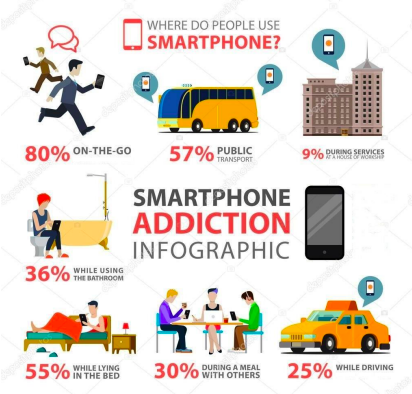 .
.
Disponível em: <https://fr.depositphotos.com/90651634/stock-illustration-smartphone-addiction-infographics-concept.html>. Acesso em: 21 set. 2018.
According to the information expressed in the image and the data, smartphones are
Leia o texto a seguir para responder à questão.
Predictions for the future of 'smart' education
Posted by Charley Rogers - January 22, 2018
A wave of new technology has been introduced into schools up and down the country changing the way
teachers deliver lessons and how students learn.
A research by Randstad Education found schools and colleges have adopted the latest tech to improve teaching and make lessons more interactive and engaging. Some of the innovations already in use include ‘gamifying’ lessons by incorporating game-like rules and tasks to increase motivation. For example, Shireland Academy in the West Midlands included Minecraft on its curriculum.
Education, the research found, will become more project-based and include more interactive content to keep up with students’ changing attitudes towards traditional media. Classrooms, it is predicted, will join the Internet of Things – a network of devices like smartwatches that connect and share data with other items and systems – and create ‘smart schools’ where the teachers, students and devices become more connected.
Pressure on teachers – 75% find their workload unmanageable – as well as rising student numbers means technology will play a larger role performing tasks to save time. Teachers are also reaping the rewards as lessons and assessments move out of the classroom and onto platforms that make it easier for them to chart progress and achieve a better work-life balance. Education experts have highlighted the importance of new techniques that help teachers do their jobs.
However, while tech will become more commonplace in the classroom, it is expected to compliment teachers and not replace them. It´s important to understand that teaching tools have come a long way since the days when teachers used to write on chalkboards and present using an overhead projector.
The research says that students today benefit from some of the most exciting technology available to schools, but it’s not just the pupils who benefit from these innovations through invigorating lessons and virtual learning. Teachers are also reaping the rewards as lessons and assessments move out of the classroom and onto platforms that make it easier for them to chart progress and achieve a better work-life balance.
Technology has arrived and the teachers and classrooms of tomorrow are here today.
Disponível em: <https://edtechnology.co.uk/Article/predictions-for-the-future-of-education>. Acesso em: 19 set. 2018. (Adaptado).
Leia o texto a seguir para responder à questão.
Predictions for the future of 'smart' education
Posted by Charley Rogers - January 22, 2018
A wave of new technology has been introduced into schools up and down the country changing the way
teachers deliver lessons and how students learn.
A research by Randstad Education found schools and colleges have adopted the latest tech to improve teaching and make lessons more interactive and engaging. Some of the innovations already in use include ‘gamifying’ lessons by incorporating game-like rules and tasks to increase motivation. For example, Shireland Academy in the West Midlands included Minecraft on its curriculum.
Education, the research found, will become more project-based and include more interactive content to keep up with students’ changing attitudes towards traditional media. Classrooms, it is predicted, will join the Internet of Things – a network of devices like smartwatches that connect and share data with other items and systems – and create ‘smart schools’ where the teachers, students and devices become more connected.
Pressure on teachers – 75% find their workload unmanageable – as well as rising student numbers means technology will play a larger role performing tasks to save time. Teachers are also reaping the rewards as lessons and assessments move out of the classroom and onto platforms that make it easier for them to chart progress and achieve a better work-life balance. Education experts have highlighted the importance of new techniques that help teachers do their jobs.
However, while tech will become more commonplace in the classroom, it is expected to compliment teachers and not replace them. It´s important to understand that teaching tools have come a long way since the days when teachers used to write on chalkboards and present using an overhead projector.
The research says that students today benefit from some of the most exciting technology available to schools, but it’s not just the pupils who benefit from these innovations through invigorating lessons and virtual learning. Teachers are also reaping the rewards as lessons and assessments move out of the classroom and onto platforms that make it easier for them to chart progress and achieve a better work-life balance.
Technology has arrived and the teachers and classrooms of tomorrow are here today.
Disponível em: <https://edtechnology.co.uk/Article/predictions-for-the-future-of-education>. Acesso em: 19 set. 2018. (Adaptado).
Leia o texto a seguir para responder à questão.
Predictions for the future of 'smart' education
Posted by Charley Rogers - January 22, 2018
A wave of new technology has been introduced into schools up and down the country changing the way
teachers deliver lessons and how students learn.
A research by Randstad Education found schools and colleges have adopted the latest tech to improve teaching and make lessons more interactive and engaging. Some of the innovations already in use include ‘gamifying’ lessons by incorporating game-like rules and tasks to increase motivation. For example, Shireland Academy in the West Midlands included Minecraft on its curriculum.
Education, the research found, will become more project-based and include more interactive content to keep up with students’ changing attitudes towards traditional media. Classrooms, it is predicted, will join the Internet of Things – a network of devices like smartwatches that connect and share data with other items and systems – and create ‘smart schools’ where the teachers, students and devices become more connected.
Pressure on teachers – 75% find their workload unmanageable – as well as rising student numbers means technology will play a larger role performing tasks to save time. Teachers are also reaping the rewards as lessons and assessments move out of the classroom and onto platforms that make it easier for them to chart progress and achieve a better work-life balance. Education experts have highlighted the importance of new techniques that help teachers do their jobs.
However, while tech will become more commonplace in the classroom, it is expected to compliment teachers and not replace them. It´s important to understand that teaching tools have come a long way since the days when teachers used to write on chalkboards and present using an overhead projector.
The research says that students today benefit from some of the most exciting technology available to schools, but it’s not just the pupils who benefit from these innovations through invigorating lessons and virtual learning. Teachers are also reaping the rewards as lessons and assessments move out of the classroom and onto platforms that make it easier for them to chart progress and achieve a better work-life balance.
Technology has arrived and the teachers and classrooms of tomorrow are here today.
Disponível em: <https://edtechnology.co.uk/Article/predictions-for-the-future-of-education>. Acesso em: 19 set. 2018. (Adaptado).
Leia o texto a seguir.
Brasília, 9 de abril de 1964. Os militares fazem publicar o primeiro ato institucional, que dá poderes excepcionais ao governo. É a ruptura com o modelo político que, bem ou mal, vinha desde 1945. Está formalmente instaurado o regime autoritário.
COUTO, R. C. História Indiscreta da Ditadura e da Abertura. Brasil 1964-1985. Rio de Janeiro: Record, 1999. p. 26.
Após a publicação do 1º ato institucional, os militares procuraram estabelecer uma fachada de legitimidade ao novo regime. Essa manobra politica resultou
Leia o texto a seguir.
A revolução permanente é uma utopia: a guerra permanente é uma realidade. 1914-1985: Primeira Guerra Mundial, Guerra do Rif, Guerra Civil Espanhola, Segunda Guerra Mundial, guerras da Indochina, da Coréia, do Vietnã, da Argélia, a chamada “Guerra Fria”.
VICENT, G; PROST, A. História da Vida Privada. São Paulo: Cia. das Letras, 1992. p. 201. v. 5.
Após a morte de Lênin houve um racha entre os líderes da Revolução Russa. Como contraposição à tese da “revolução em um só país”, a concepção de Revolução Permanente, uma proposta que pretendia transformar o processo revolucionário em ação incessante e global, foi defendida por
Leia o texto a seguir.
No decorrer da História, nenhum poeta, nenhuma personalidade literária ocupou na vida de seu povo um lugar semelhante. Ele foi o símbolo por excelência deste povo, a autoridade incontestada dos primeiros tempos de sua história e uma figura decisiva na criação de seu panteão, assim como o seu poeta preferido, o mais largamente citado.
FINLEY, Moses. T. O mundo de Ulisses. Lisboa: Presença, 1965, p. 13.
A citação expressa a importância de Homero para a cultura grega antiga. De acordo com os historiadores, Homero foi um
Em 1953, a natureza química do material genético foi descrita por dois pesquisadores, Watson e Crick. Eles propuseram que o DNA é formado pela união de nucleotídeos em duas fitas complementares enroladas sob um eixo e, assim, formando uma hélice. O esquema a seguir ilustra a fita dupla de DNA, com a exposição das ligações de hidrogênio entre os nucleotídeos das fitas complementares:
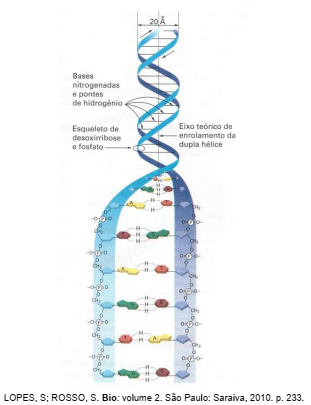
Sobre as propriedades químicas desse material genético, verifica-se que
A “ferida brava” ou “úlcera de Bauru” é uma zoonose de manifestações clínicas variadas, em expansão no Brasil, sendo o estado de Mato Grosso do Sul importante área endêmica. Avaliar a clínica, a epidemiologia e laboratorialmente pacientes é de extrema importância para o controle dessa doença.
Uma das características dessa doença é o aparecimento de feridas na pele e nas mucosas, cuja cicatrização é bastante difícil, podendo progredir para lesões mutilantes.
Essa doença é transmitida pela picada
 Conheça nossos planos