Questões de Vestibular Nível médio

Foram encontradas 71.618 questões

Resolva questões gratuitamente!

Junte-se a mais de 4 milhões de concurseiros!

Ano: 2018 Banca: ESPM Órgão: ESPM Prova: ESPM - 2018 - ESPM - Vestibular 2019/1 - RS |
Q1788991 História
A primeira vez que se mencionou o açúcar e a intenção de implantar uma produção desse gênero no Brasil foi em 1516, quando o rei D. Manuel ordenou que se distribuíssem machados, enxadas e demais ferramentas às pessoas que fossem povoar o Brasil e que se procurasse um homem prático e capaz de ali dar princípio a um engenho de açúcar. Os primeiros engenhos começaram a funcionar em Pernambuco no ano de 1535, sob a direção de Duarte Coelho. A partir daí os registros não parariam de crescer: quatro estabelecimentos em 1550; trinta em 1570, e 140 no fim do século XVI. A produção de cana alastrava-se não só numericamente como espacialmente, chegando à Paraíba, ao Rio Grande do Norte, à Bahia e até mesmo ao Pará. Mas foi em Pernambuco e na Bahia, sobretudo na região do recôncavo baiano, que a economia açucareira de fato prosperou. Tiveram início, então, os anos dourados do Brasil da cana, a produção alcançando 350 mil arrobas no final do século XVI.
(Lilia M. Schwarcz. Brasil: uma Biografia)
A partir do texto e considerando a economia açucareira e a civilização do açúcar, é correto assinalar:
Alternativas
Ano: 2018 Banca: ESPM Órgão: ESPM Prova: ESPM - 2018 - ESPM - Vestibular 2019/1 - RS |
Q1788990 História
No século XIII surgiu a Escolástica, corrente filosófica que, a partir de então, dominou o pensamento medieval.
(Rubim Santos Leão de Aquino. História das Sociedades: das Comunidades Primitivas às Sociedades Medievais)
A Escolástica:
Alternativas
Ano: 2018 Banca: ESPM Órgão: ESPM Prova: ESPM - 2018 - ESPM - Vestibular 2019/1 - RS |
Q1788989 História
Os progressos da escultura podem ser explicados, em primeiro lugar, pela própria qualidade dos materiais de que os artistas passaram a dispor. Depois de um período de aprendizado em trabalhos de madeira e de pedra branda, a escultura grega passou a usar principalmente o mármore de grãos finos e compactos. Os processos de fundição de bronze foram provavelmente importados do Egito.
(Auguste Jardé. A Grécia Antiga e a Vida Grega)
A vida grega, que reservava ao corpo um papel tão importante, era favorável ao desenvolvimento da escultura. Assinale a alternativa correta sobre a escultura na Grécia Antiga:
Alternativas
Ano: 2018 Banca: ESPM Órgão: ESPM Prova: ESPM - 2018 - ESPM - Vestibular 2019/1 - RS |
Q1788988 Inglês
    Theodor Seuss “Ted” Geisel was an American author, political cartoonist, poet, animator, book publisher, and artist, best known for authoring more than 60 children’s books under the pen name Doctor Seuss (abbreviated Dr. Seuss). As World War II began, he turned to political cartoons, drawing over 400 in two years as editorial cartoonist for the left-leaning New York City daily newspaper. He strongly supports US entry into the war. This is one of his creations from 1941:


The use of the prepositions “up” and “out” after “chewed” and "spit" change the original meanings of the verbs. With them, the new meaning:
Alternativas
Ano: 2018 Banca: ESPM Órgão: ESPM Prova: ESPM - 2018 - ESPM - Vestibular 2019/1 - RS |
Q1788987 Inglês
    Theodor Seuss “Ted” Geisel was an American author, political cartoonist, poet, animator, book publisher, and artist, best known for authoring more than 60 children’s books under the pen name Doctor Seuss (abbreviated Dr. Seuss). As World War II began, he turned to political cartoons, drawing over 400 in two years as editorial cartoonist for the left-leaning New York City daily newspaper. He strongly supports US entry into the war. This is one of his creations from 1941:


The cartoon:
Alternativas
Ano: 2018 Banca: ESPM Órgão: ESPM Prova: ESPM - 2018 - ESPM - Vestibular 2019/1 - RS |
Q1788986 Inglês

Beyonce, colorism, and why all of this needs to end


by Ernest Owens


    Yes, the Super Bowl was on fire. As one who is very critical of halftime show performances, I cannot deny that Beyoncé brought the energy and attention. All of this led to her releasing her tour dates for the Mrs. Carter Show. As excited as I was to actually buy these tickets, something turned me off. The poster.


   If you haven’t seen the photographs for Beyonce’s new world tour, you probably wouldn’t even recognize her. You will see an image of what looks like a Victorian white woman in the Elizabethan era. Her (prosthetic) blonde hair puffed and extended to reveal a face that is almost as white as snow. Lips red and her skin powdered. This is not the same bronze Beyonce that I saw rocking the stage in an all female band with her darker Destiny’s Child counterparts. I was only left with memories of previous patterns that the multi-Grammy award winning artist had done in previous years in regards to her skin. And I asked myself the question: why, Bey?

     Let’s not act like this is something new. Over the years, it seems as though Beyonce has gotten lighter as she has gotten older. No, this is not genetics and let’s not pretend her skin color in her first Destiny’s Child album cover matches that of her latest album. Whether it is that highly controversial Revlon advertisement or her own album cover art, Beyonce has consistently been called out on alterations done to her pigments.

    What does this say about our society for black women? It tells me that, an independent, confident and successful woman of color still struggles to have the confidence to fully embrace the skin she is in. If one of the most powerful women in entertainment feels she has to lighten her skin for projection, what does that say for the rest of us?

    Believe it or not, colorism, the stigma associated with skin complexion, has been an ill that has not yet been dissolved by the black community. What was first given to us by slave masters in separating the house slaves from the field ones, has now taken place in how we objectify our women and each other.

    This is pretty problematic in many ways. It’s first of all self-loathing and unnecessary for today’s times. The fact that our nation had an African-American first lady with a complexion that isn’t on the lighter side of the spectrum, nor does it try to be, shows a compelling advancement in appreciation for all women of color in many ways.

     Furthermore, the only reason why such stigma in our country continues is contributed to our own behavior that is shaped by the influential people of color around us. It devastated me when I saw that Sammy Sosa had lightened his skin. As successful as he was in a field that was not necessarily fixated on male skin complexion, it saddened me to see him do it. In many ways, it even made me reflect back on the transition of the late great Michael Jackson and what explanations he had for such a more pale white appearance.

    And why does all of this matter? Because I grew up hearing stories of young dark black girls getting their faces scrubbed with skin lightening soaps out of their free will. Tales of young women being abandoned by their mothers because they were too dark.

    If this is the reality that had more implications back in the early 20th century than it does now, please stop it. Stop trying to explain why you are dating the ebony skin girl. Stop making it seem exceptional that a girl of a darker complexion is actually attractive. Celebrities, stop putting extraneous powders and lighteners on your skin: we all know what you used to look like and we still love you. And people of color: let’s not continue to perpetuate an oppressive cycle of self-loathing of our appearance and heritage. If this can be accomplished, then perhaps even in our own race we can truly make our lives not be judged by the color of our skin but by the content of our character.


(adapted from www.huffingtonpost.com, 14/02/2013)

The pronoun “it” in the phrase “nor does it try to be”, bold faced, in paragraph 6 refers to:
Alternativas
Ano: 2018 Banca: ESPM Órgão: ESPM Prova: ESPM - 2018 - ESPM - Vestibular 2019/1 - RS |
Q1788985 Inglês

Beyonce, colorism, and why all of this needs to end


by Ernest Owens


    Yes, the Super Bowl was on fire. As one who is very critical of halftime show performances, I cannot deny that Beyoncé brought the energy and attention. All of this led to her releasing her tour dates for the Mrs. Carter Show. As excited as I was to actually buy these tickets, something turned me off. The poster.


   If you haven’t seen the photographs for Beyonce’s new world tour, you probably wouldn’t even recognize her. You will see an image of what looks like a Victorian white woman in the Elizabethan era. Her (prosthetic) blonde hair puffed and extended to reveal a face that is almost as white as snow. Lips red and her skin powdered. This is not the same bronze Beyonce that I saw rocking the stage in an all female band with her darker Destiny’s Child counterparts. I was only left with memories of previous patterns that the multi-Grammy award winning artist had done in previous years in regards to her skin. And I asked myself the question: why, Bey?

     Let’s not act like this is something new. Over the years, it seems as though Beyonce has gotten lighter as she has gotten older. No, this is not genetics and let’s not pretend her skin color in her first Destiny’s Child album cover matches that of her latest album. Whether it is that highly controversial Revlon advertisement or her own album cover art, Beyonce has consistently been called out on alterations done to her pigments.

    What does this say about our society for black women? It tells me that, an independent, confident and successful woman of color still struggles to have the confidence to fully embrace the skin she is in. If one of the most powerful women in entertainment feels she has to lighten her skin for projection, what does that say for the rest of us?

    Believe it or not, colorism, the stigma associated with skin complexion, has been an ill that has not yet been dissolved by the black community. What was first given to us by slave masters in separating the house slaves from the field ones, has now taken place in how we objectify our women and each other.

    This is pretty problematic in many ways. It’s first of all self-loathing and unnecessary for today’s times. The fact that our nation had an African-American first lady with a complexion that isn’t on the lighter side of the spectrum, nor does it try to be, shows a compelling advancement in appreciation for all women of color in many ways.

     Furthermore, the only reason why such stigma in our country continues is contributed to our own behavior that is shaped by the influential people of color around us. It devastated me when I saw that Sammy Sosa had lightened his skin. As successful as he was in a field that was not necessarily fixated on male skin complexion, it saddened me to see him do it. In many ways, it even made me reflect back on the transition of the late great Michael Jackson and what explanations he had for such a more pale white appearance.

    And why does all of this matter? Because I grew up hearing stories of young dark black girls getting their faces scrubbed with skin lightening soaps out of their free will. Tales of young women being abandoned by their mothers because they were too dark.

    If this is the reality that had more implications back in the early 20th century than it does now, please stop it. Stop trying to explain why you are dating the ebony skin girl. Stop making it seem exceptional that a girl of a darker complexion is actually attractive. Celebrities, stop putting extraneous powders and lighteners on your skin: we all know what you used to look like and we still love you. And people of color: let’s not continue to perpetuate an oppressive cycle of self-loathing of our appearance and heritage. If this can be accomplished, then perhaps even in our own race we can truly make our lives not be judged by the color of our skin but by the content of our character.


(adapted from www.huffingtonpost.com, 14/02/2013)
According the article:
Alternativas
Ano: 2018 Banca: ESPM Órgão: ESPM Prova: ESPM - 2018 - ESPM - Vestibular 2019/1 - RS |
Q1788984 Inglês

Beyonce, colorism, and why all of this needs to end


by Ernest Owens


    Yes, the Super Bowl was on fire. As one who is very critical of halftime show performances, I cannot deny that Beyoncé brought the energy and attention. All of this led to her releasing her tour dates for the Mrs. Carter Show. As excited as I was to actually buy these tickets, something turned me off. The poster.


   If you haven’t seen the photographs for Beyonce’s new world tour, you probably wouldn’t even recognize her. You will see an image of what looks like a Victorian white woman in the Elizabethan era. Her (prosthetic) blonde hair puffed and extended to reveal a face that is almost as white as snow. Lips red and her skin powdered. This is not the same bronze Beyonce that I saw rocking the stage in an all female band with her darker Destiny’s Child counterparts. I was only left with memories of previous patterns that the multi-Grammy award winning artist had done in previous years in regards to her skin. And I asked myself the question: why, Bey?

     Let’s not act like this is something new. Over the years, it seems as though Beyonce has gotten lighter as she has gotten older. No, this is not genetics and let’s not pretend her skin color in her first Destiny’s Child album cover matches that of her latest album. Whether it is that highly controversial Revlon advertisement or her own album cover art, Beyonce has consistently been called out on alterations done to her pigments.

    What does this say about our society for black women? It tells me that, an independent, confident and successful woman of color still struggles to have the confidence to fully embrace the skin she is in. If one of the most powerful women in entertainment feels she has to lighten her skin for projection, what does that say for the rest of us?

    Believe it or not, colorism, the stigma associated with skin complexion, has been an ill that has not yet been dissolved by the black community. What was first given to us by slave masters in separating the house slaves from the field ones, has now taken place in how we objectify our women and each other.

    This is pretty problematic in many ways. It’s first of all self-loathing and unnecessary for today’s times. The fact that our nation had an African-American first lady with a complexion that isn’t on the lighter side of the spectrum, nor does it try to be, shows a compelling advancement in appreciation for all women of color in many ways.

     Furthermore, the only reason why such stigma in our country continues is contributed to our own behavior that is shaped by the influential people of color around us. It devastated me when I saw that Sammy Sosa had lightened his skin. As successful as he was in a field that was not necessarily fixated on male skin complexion, it saddened me to see him do it. In many ways, it even made me reflect back on the transition of the late great Michael Jackson and what explanations he had for such a more pale white appearance.

    And why does all of this matter? Because I grew up hearing stories of young dark black girls getting their faces scrubbed with skin lightening soaps out of their free will. Tales of young women being abandoned by their mothers because they were too dark.

    If this is the reality that had more implications back in the early 20th century than it does now, please stop it. Stop trying to explain why you are dating the ebony skin girl. Stop making it seem exceptional that a girl of a darker complexion is actually attractive. Celebrities, stop putting extraneous powders and lighteners on your skin: we all know what you used to look like and we still love you. And people of color: let’s not continue to perpetuate an oppressive cycle of self-loathing of our appearance and heritage. If this can be accomplished, then perhaps even in our own race we can truly make our lives not be judged by the color of our skin but by the content of our character.


(adapted from www.huffingtonpost.com, 14/02/2013)

The author of the article criticizes the fact that the producers:
Alternativas
Ano: 2018 Banca: ESPM Órgão: ESPM Prova: ESPM - 2018 - ESPM - Vestibular 2019/1 - RS |
Q1788983 Inglês

Beyonce, colorism, and why all of this needs to end


by Ernest Owens


    Yes, the Super Bowl was on fire. As one who is very critical of halftime show performances, I cannot deny that Beyoncé brought the energy and attention. All of this led to her releasing her tour dates for the Mrs. Carter Show. As excited as I was to actually buy these tickets, something turned me off. The poster.


   If you haven’t seen the photographs for Beyonce’s new world tour, you probably wouldn’t even recognize her. You will see an image of what looks like a Victorian white woman in the Elizabethan era. Her (prosthetic) blonde hair puffed and extended to reveal a face that is almost as white as snow. Lips red and her skin powdered. This is not the same bronze Beyonce that I saw rocking the stage in an all female band with her darker Destiny’s Child counterparts. I was only left with memories of previous patterns that the multi-Grammy award winning artist had done in previous years in regards to her skin. And I asked myself the question: why, Bey?

     Let’s not act like this is something new. Over the years, it seems as though Beyonce has gotten lighter as she has gotten older. No, this is not genetics and let’s not pretend her skin color in her first Destiny’s Child album cover matches that of her latest album. Whether it is that highly controversial Revlon advertisement or her own album cover art, Beyonce has consistently been called out on alterations done to her pigments.

    What does this say about our society for black women? It tells me that, an independent, confident and successful woman of color still struggles to have the confidence to fully embrace the skin she is in. If one of the most powerful women in entertainment feels she has to lighten her skin for projection, what does that say for the rest of us?

    Believe it or not, colorism, the stigma associated with skin complexion, has been an ill that has not yet been dissolved by the black community. What was first given to us by slave masters in separating the house slaves from the field ones, has now taken place in how we objectify our women and each other.

    This is pretty problematic in many ways. It’s first of all self-loathing and unnecessary for today’s times. The fact that our nation had an African-American first lady with a complexion that isn’t on the lighter side of the spectrum, nor does it try to be, shows a compelling advancement in appreciation for all women of color in many ways.

     Furthermore, the only reason why such stigma in our country continues is contributed to our own behavior that is shaped by the influential people of color around us. It devastated me when I saw that Sammy Sosa had lightened his skin. As successful as he was in a field that was not necessarily fixated on male skin complexion, it saddened me to see him do it. In many ways, it even made me reflect back on the transition of the late great Michael Jackson and what explanations he had for such a more pale white appearance.

    And why does all of this matter? Because I grew up hearing stories of young dark black girls getting their faces scrubbed with skin lightening soaps out of their free will. Tales of young women being abandoned by their mothers because they were too dark.

    If this is the reality that had more implications back in the early 20th century than it does now, please stop it. Stop trying to explain why you are dating the ebony skin girl. Stop making it seem exceptional that a girl of a darker complexion is actually attractive. Celebrities, stop putting extraneous powders and lighteners on your skin: we all know what you used to look like and we still love you. And people of color: let’s not continue to perpetuate an oppressive cycle of self-loathing of our appearance and heritage. If this can be accomplished, then perhaps even in our own race we can truly make our lives not be judged by the color of our skin but by the content of our character.


(adapted from www.huffingtonpost.com, 14/02/2013)

The author of the article:
Alternativas
Ano: 2018 Banca: ESPM Órgão: ESPM Prova: ESPM - 2018 - ESPM - Vestibular 2019/1 - RS |
Q1788982 Inglês
How James Brown Made Black Pride a Hit

It’s been 50 years since he wrote “Say It Loud, I’m Black and I’m Proud,” a song that is still necessary.

By Randall Kennedy

   In the gym at Paul Junior High School in Washington, D.C., in the spring of 1968, not that long before the assassination of the Rev. Dr. Martin Luther King Jr., I asked a buddy whether he was interested in a certain girl. He told me that he was not because she was too dark.


   He and I were African-American. (Then we would have called ourselves Negro.) So was she. All of us supported the Civil Rights Movement and idolized Dr. King, yet I did not hold my friend’s colorstruck judgment against him. And he did not state his opinion with embarrassment. We had both internalized our society’s derogation of blackness.
    Indeed, we luxuriated in the denigration, spending hours trading silly, recycled but revealing insults: “Yo mama so black, she blend in with the chalkboard.” “Yeah, well, yo mama so black, she sweats chocolate.”
   It was precisely because of widespread colorism that James Brown’s anthem “Say It Loud, I’m Black and I’m Proud” posed a challenge, felt so exhilarating, and resonated so powerfully. It still does. Much has changed over the past half century. But, alas, the need to defend blackness against derision continues.
    Various musicians in the 1960s tapped into yearnings for black assertiveness, autonomy and solidarity. Curtis Mayfield and the Impressions sang “We’re a Winner.” Sly and the Family Stone offered “Stand.” Sam Cooke (and Aretha Franklin and Otis Redding) performed “A Change is Gonna Come.” But no entertainer equaled Brown’s vocalization of African-Americans’ newly triumphal sense of self-acceptance.
   That Brown created the song most popularly associated with the Black is Beautiful movement is ironic. He generally stayed away from protest, endorsed the presidential re-election of Richard Nixon, lavishly praised Ronald Reagan, and consistently lauded Strom Thurmond.
   His infrequent sallies into politics usually sounded in patriotic, lift-yourselfup-ism. In the song “America is My Home,” he proclaimed without embarrassment that the United States “is still the best country / And that’s without a doubt.” Alluding to his own trajectory, he challenged dissenters to name any other country in which a person could start out as a poor shoeshine boy but end up as a wealthy celebrity shaking hands with the president.
   At the very time that in “Say It Loud,” Brown seemed to be affirming Negritude, he also sported a “conk” — a distinctive hairdo that involved chemically removing kinkiness on the way to creating a bouffant of straightened hair. Many AfricanAmerican political activists, especially those with a black nationalist orientation, decried the conk as an illustration of racial self-hatred. For a brief period, Brown abandoned the conk and adopted an Afro, but that was only temporary. The conk was part of the characteristic look of “The Godfather of Soul.”
   Even though by 1968 uprisings against white supremacism had been erupting for a decade with great intensity and success — the Montgomery Bus Boycott, the Children’s’ Crusade in Birmingham, the protest against disenfranchisement in Selma — prejudice against blackness remained prevalent, including among African-Americans.
   Champions of African-American uplift in the 1960s sought to liberate blackness from the layers of contempt, fear, and hatred with which it had been smeared for centuries. Brown’s anthem poignantly reflected the psychic problem it sought to address. People secure in their status don’t feel compelled to trumpet their pride. At the same time “Say it Loud!” was a rousing instance of a reclamation that took many forms. Instead of celebrating light skin, thin lips, and “good” (i.e., straight) hair, increasing numbers of African-Americans began valorizing dark skin, thick lips and “bad” (i.e., kinky) hair.
    The reclamation of blackness in the sixties made tremendous headway quickly. By 1970 my friend would not have dared to repeat out loud what he had told me unapologetically two years before. Here, as elsewhere, however, changes wrought by the black liberation movement, though impressive, were only partial. Nearly four decades after the release of “Say It Loud,” Professors Jennifer Hochschild and Vesla Weaver, having synthesized the pertinent academic literature, declared authoritatively that compared to their lighter-skinned counterparts, dark-skinned blacks continue to be burdened by lower levels of education, income, and job status. They receive longer prison sentences and are less likely to own homes or to marry. Filmmakers, advertisers, modeling agencies, dating websites and other key gatekeepers demonstrate repeatedly the ongoing pertinence of the old saw: If you’re black get back. If you’re brown, stick around. If you’re white you’re alright.
      Intraracial colorism in Black America is often seen as a topic that should, if possible, be avoided, especially in “mixed company.” That sense of embarrassment three decades ago prompted officials at Morehouse College to demand that Spike Lee cease filming on campus once they learned that his movie was exposing, among other things, black collegiate colorism. The impulse toward avoidance remains strong.
    With racial prejudice against all African-Americans still a potent force, many would just as soon ditch the discussion of “black on black” complexional bias. Colorism, however, remains a baleful reality.
   Half a century after James Brown’s proclamation, it remains imperative to assert what should have been assumed and uncontroversial all along: that black is beautiful and as worthy of pride and care and consideration as any other hue.

(Adapted from: www.nytimes.com, 20/07/2018)
As of late 1960s, after the release of “Say It Loud, I’m Black and I’m Proud”:
Alternativas
Ano: 2018 Banca: ESPM Órgão: ESPM Prova: ESPM - 2018 - ESPM - Vestibular 2019/1 - RS |
Q1788981 Inglês
How James Brown Made Black Pride a Hit

It’s been 50 years since he wrote “Say It Loud, I’m Black and I’m Proud,” a song that is still necessary.

By Randall Kennedy

   In the gym at Paul Junior High School in Washington, D.C., in the spring of 1968, not that long before the assassination of the Rev. Dr. Martin Luther King Jr., I asked a buddy whether he was interested in a certain girl. He told me that he was not because she was too dark.


   He and I were African-American. (Then we would have called ourselves Negro.) So was she. All of us supported the Civil Rights Movement and idolized Dr. King, yet I did not hold my friend’s colorstruck judgment against him. And he did not state his opinion with embarrassment. We had both internalized our society’s derogation of blackness.
    Indeed, we luxuriated in the denigration, spending hours trading silly, recycled but revealing insults: “Yo mama so black, she blend in with the chalkboard.” “Yeah, well, yo mama so black, she sweats chocolate.”
   It was precisely because of widespread colorism that James Brown’s anthem “Say It Loud, I’m Black and I’m Proud” posed a challenge, felt so exhilarating, and resonated so powerfully. It still does. Much has changed over the past half century. But, alas, the need to defend blackness against derision continues.
    Various musicians in the 1960s tapped into yearnings for black assertiveness, autonomy and solidarity. Curtis Mayfield and the Impressions sang “We’re a Winner.” Sly and the Family Stone offered “Stand.” Sam Cooke (and Aretha Franklin and Otis Redding) performed “A Change is Gonna Come.” But no entertainer equaled Brown’s vocalization of African-Americans’ newly triumphal sense of self-acceptance.
   That Brown created the song most popularly associated with the Black is Beautiful movement is ironic. He generally stayed away from protest, endorsed the presidential re-election of Richard Nixon, lavishly praised Ronald Reagan, and consistently lauded Strom Thurmond.
   His infrequent sallies into politics usually sounded in patriotic, lift-yourselfup-ism. In the song “America is My Home,” he proclaimed without embarrassment that the United States “is still the best country / And that’s without a doubt.” Alluding to his own trajectory, he challenged dissenters to name any other country in which a person could start out as a poor shoeshine boy but end up as a wealthy celebrity shaking hands with the president.
   At the very time that in “Say It Loud,” Brown seemed to be affirming Negritude, he also sported a “conk” — a distinctive hairdo that involved chemically removing kinkiness on the way to creating a bouffant of straightened hair. Many AfricanAmerican political activists, especially those with a black nationalist orientation, decried the conk as an illustration of racial self-hatred. For a brief period, Brown abandoned the conk and adopted an Afro, but that was only temporary. The conk was part of the characteristic look of “The Godfather of Soul.”
   Even though by 1968 uprisings against white supremacism had been erupting for a decade with great intensity and success — the Montgomery Bus Boycott, the Children’s’ Crusade in Birmingham, the protest against disenfranchisement in Selma — prejudice against blackness remained prevalent, including among African-Americans.
   Champions of African-American uplift in the 1960s sought to liberate blackness from the layers of contempt, fear, and hatred with which it had been smeared for centuries. Brown’s anthem poignantly reflected the psychic problem it sought to address. People secure in their status don’t feel compelled to trumpet their pride. At the same time “Say it Loud!” was a rousing instance of a reclamation that took many forms. Instead of celebrating light skin, thin lips, and “good” (i.e., straight) hair, increasing numbers of African-Americans began valorizing dark skin, thick lips and “bad” (i.e., kinky) hair.
    The reclamation of blackness in the sixties made tremendous headway quickly. By 1970 my friend would not have dared to repeat out loud what he had told me unapologetically two years before. Here, as elsewhere, however, changes wrought by the black liberation movement, though impressive, were only partial. Nearly four decades after the release of “Say It Loud,” Professors Jennifer Hochschild and Vesla Weaver, having synthesized the pertinent academic literature, declared authoritatively that compared to their lighter-skinned counterparts, dark-skinned blacks continue to be burdened by lower levels of education, income, and job status. They receive longer prison sentences and are less likely to own homes or to marry. Filmmakers, advertisers, modeling agencies, dating websites and other key gatekeepers demonstrate repeatedly the ongoing pertinence of the old saw: If you’re black get back. If you’re brown, stick around. If you’re white you’re alright.
      Intraracial colorism in Black America is often seen as a topic that should, if possible, be avoided, especially in “mixed company.” That sense of embarrassment three decades ago prompted officials at Morehouse College to demand that Spike Lee cease filming on campus once they learned that his movie was exposing, among other things, black collegiate colorism. The impulse toward avoidance remains strong.
    With racial prejudice against all African-Americans still a potent force, many would just as soon ditch the discussion of “black on black” complexional bias. Colorism, however, remains a baleful reality.
   Half a century after James Brown’s proclamation, it remains imperative to assert what should have been assumed and uncontroversial all along: that black is beautiful and as worthy of pride and care and consideration as any other hue.

(Adapted from: www.nytimes.com, 20/07/2018)
The text mentions a certain paradox in Brown’s attitudes. This is because:
Alternativas
Ano: 2018 Banca: ESPM Órgão: ESPM Prova: ESPM - 2018 - ESPM - Vestibular 2019/1 - RS |
Q1788980 Inglês
How James Brown Made Black Pride a Hit

It’s been 50 years since he wrote “Say It Loud, I’m Black and I’m Proud,” a song that is still necessary.

By Randall Kennedy

   In the gym at Paul Junior High School in Washington, D.C., in the spring of 1968, not that long before the assassination of the Rev. Dr. Martin Luther King Jr., I asked a buddy whether he was interested in a certain girl. He told me that he was not because she was too dark.


   He and I were African-American. (Then we would have called ourselves Negro.) So was she. All of us supported the Civil Rights Movement and idolized Dr. King, yet I did not hold my friend’s colorstruck judgment against him. And he did not state his opinion with embarrassment. We had both internalized our society’s derogation of blackness.
    Indeed, we luxuriated in the denigration, spending hours trading silly, recycled but revealing insults: “Yo mama so black, she blend in with the chalkboard.” “Yeah, well, yo mama so black, she sweats chocolate.”
   It was precisely because of widespread colorism that James Brown’s anthem “Say It Loud, I’m Black and I’m Proud” posed a challenge, felt so exhilarating, and resonated so powerfully. It still does. Much has changed over the past half century. But, alas, the need to defend blackness against derision continues.
    Various musicians in the 1960s tapped into yearnings for black assertiveness, autonomy and solidarity. Curtis Mayfield and the Impressions sang “We’re a Winner.” Sly and the Family Stone offered “Stand.” Sam Cooke (and Aretha Franklin and Otis Redding) performed “A Change is Gonna Come.” But no entertainer equaled Brown’s vocalization of African-Americans’ newly triumphal sense of self-acceptance.
   That Brown created the song most popularly associated with the Black is Beautiful movement is ironic. He generally stayed away from protest, endorsed the presidential re-election of Richard Nixon, lavishly praised Ronald Reagan, and consistently lauded Strom Thurmond.
   His infrequent sallies into politics usually sounded in patriotic, lift-yourselfup-ism. In the song “America is My Home,” he proclaimed without embarrassment that the United States “is still the best country / And that’s without a doubt.” Alluding to his own trajectory, he challenged dissenters to name any other country in which a person could start out as a poor shoeshine boy but end up as a wealthy celebrity shaking hands with the president.
   At the very time that in “Say It Loud,” Brown seemed to be affirming Negritude, he also sported a “conk” — a distinctive hairdo that involved chemically removing kinkiness on the way to creating a bouffant of straightened hair. Many AfricanAmerican political activists, especially those with a black nationalist orientation, decried the conk as an illustration of racial self-hatred. For a brief period, Brown abandoned the conk and adopted an Afro, but that was only temporary. The conk was part of the characteristic look of “The Godfather of Soul.”
   Even though by 1968 uprisings against white supremacism had been erupting for a decade with great intensity and success — the Montgomery Bus Boycott, the Children’s’ Crusade in Birmingham, the protest against disenfranchisement in Selma — prejudice against blackness remained prevalent, including among African-Americans.
   Champions of African-American uplift in the 1960s sought to liberate blackness from the layers of contempt, fear, and hatred with which it had been smeared for centuries. Brown’s anthem poignantly reflected the psychic problem it sought to address. People secure in their status don’t feel compelled to trumpet their pride. At the same time “Say it Loud!” was a rousing instance of a reclamation that took many forms. Instead of celebrating light skin, thin lips, and “good” (i.e., straight) hair, increasing numbers of African-Americans began valorizing dark skin, thick lips and “bad” (i.e., kinky) hair.
    The reclamation of blackness in the sixties made tremendous headway quickly. By 1970 my friend would not have dared to repeat out loud what he had told me unapologetically two years before. Here, as elsewhere, however, changes wrought by the black liberation movement, though impressive, were only partial. Nearly four decades after the release of “Say It Loud,” Professors Jennifer Hochschild and Vesla Weaver, having synthesized the pertinent academic literature, declared authoritatively that compared to their lighter-skinned counterparts, dark-skinned blacks continue to be burdened by lower levels of education, income, and job status. They receive longer prison sentences and are less likely to own homes or to marry. Filmmakers, advertisers, modeling agencies, dating websites and other key gatekeepers demonstrate repeatedly the ongoing pertinence of the old saw: If you’re black get back. If you’re brown, stick around. If you’re white you’re alright.
      Intraracial colorism in Black America is often seen as a topic that should, if possible, be avoided, especially in “mixed company.” That sense of embarrassment three decades ago prompted officials at Morehouse College to demand that Spike Lee cease filming on campus once they learned that his movie was exposing, among other things, black collegiate colorism. The impulse toward avoidance remains strong.
    With racial prejudice against all African-Americans still a potent force, many would just as soon ditch the discussion of “black on black” complexional bias. Colorism, however, remains a baleful reality.
   Half a century after James Brown’s proclamation, it remains imperative to assert what should have been assumed and uncontroversial all along: that black is beautiful and as worthy of pride and care and consideration as any other hue.

(Adapted from: www.nytimes.com, 20/07/2018)
In the second paragraph, the boldfaced sentence: “We had both internalized our society’s derogation of blackness.” means that:
Alternativas
Ano: 2018 Banca: ESPM Órgão: ESPM Prova: ESPM - 2018 - ESPM - Vestibular 2019/1 - RS |
Q1788979 Inglês
How James Brown Made Black Pride a Hit

It’s been 50 years since he wrote “Say It Loud, I’m Black and I’m Proud,” a song that is still necessary.

By Randall Kennedy

   In the gym at Paul Junior High School in Washington, D.C., in the spring of 1968, not that long before the assassination of the Rev. Dr. Martin Luther King Jr., I asked a buddy whether he was interested in a certain girl. He told me that he was not because she was too dark.


   He and I were African-American. (Then we would have called ourselves Negro.) So was she. All of us supported the Civil Rights Movement and idolized Dr. King, yet I did not hold my friend’s colorstruck judgment against him. And he did not state his opinion with embarrassment. We had both internalized our society’s derogation of blackness.
    Indeed, we luxuriated in the denigration, spending hours trading silly, recycled but revealing insults: “Yo mama so black, she blend in with the chalkboard.” “Yeah, well, yo mama so black, she sweats chocolate.”
   It was precisely because of widespread colorism that James Brown’s anthem “Say It Loud, I’m Black and I’m Proud” posed a challenge, felt so exhilarating, and resonated so powerfully. It still does. Much has changed over the past half century. But, alas, the need to defend blackness against derision continues.
    Various musicians in the 1960s tapped into yearnings for black assertiveness, autonomy and solidarity. Curtis Mayfield and the Impressions sang “We’re a Winner.” Sly and the Family Stone offered “Stand.” Sam Cooke (and Aretha Franklin and Otis Redding) performed “A Change is Gonna Come.” But no entertainer equaled Brown’s vocalization of African-Americans’ newly triumphal sense of self-acceptance.
   That Brown created the song most popularly associated with the Black is Beautiful movement is ironic. He generally stayed away from protest, endorsed the presidential re-election of Richard Nixon, lavishly praised Ronald Reagan, and consistently lauded Strom Thurmond.
   His infrequent sallies into politics usually sounded in patriotic, lift-yourselfup-ism. In the song “America is My Home,” he proclaimed without embarrassment that the United States “is still the best country / And that’s without a doubt.” Alluding to his own trajectory, he challenged dissenters to name any other country in which a person could start out as a poor shoeshine boy but end up as a wealthy celebrity shaking hands with the president.
   At the very time that in “Say It Loud,” Brown seemed to be affirming Negritude, he also sported a “conk” — a distinctive hairdo that involved chemically removing kinkiness on the way to creating a bouffant of straightened hair. Many AfricanAmerican political activists, especially those with a black nationalist orientation, decried the conk as an illustration of racial self-hatred. For a brief period, Brown abandoned the conk and adopted an Afro, but that was only temporary. The conk was part of the characteristic look of “The Godfather of Soul.”
   Even though by 1968 uprisings against white supremacism had been erupting for a decade with great intensity and success — the Montgomery Bus Boycott, the Children’s’ Crusade in Birmingham, the protest against disenfranchisement in Selma — prejudice against blackness remained prevalent, including among African-Americans.
   Champions of African-American uplift in the 1960s sought to liberate blackness from the layers of contempt, fear, and hatred with which it had been smeared for centuries. Brown’s anthem poignantly reflected the psychic problem it sought to address. People secure in their status don’t feel compelled to trumpet their pride. At the same time “Say it Loud!” was a rousing instance of a reclamation that took many forms. Instead of celebrating light skin, thin lips, and “good” (i.e., straight) hair, increasing numbers of African-Americans began valorizing dark skin, thick lips and “bad” (i.e., kinky) hair.
    The reclamation of blackness in the sixties made tremendous headway quickly. By 1970 my friend would not have dared to repeat out loud what he had told me unapologetically two years before. Here, as elsewhere, however, changes wrought by the black liberation movement, though impressive, were only partial. Nearly four decades after the release of “Say It Loud,” Professors Jennifer Hochschild and Vesla Weaver, having synthesized the pertinent academic literature, declared authoritatively that compared to their lighter-skinned counterparts, dark-skinned blacks continue to be burdened by lower levels of education, income, and job status. They receive longer prison sentences and are less likely to own homes or to marry. Filmmakers, advertisers, modeling agencies, dating websites and other key gatekeepers demonstrate repeatedly the ongoing pertinence of the old saw: If you’re black get back. If you’re brown, stick around. If you’re white you’re alright.
      Intraracial colorism in Black America is often seen as a topic that should, if possible, be avoided, especially in “mixed company.” That sense of embarrassment three decades ago prompted officials at Morehouse College to demand that Spike Lee cease filming on campus once they learned that his movie was exposing, among other things, black collegiate colorism. The impulse toward avoidance remains strong.
    With racial prejudice against all African-Americans still a potent force, many would just as soon ditch the discussion of “black on black” complexional bias. Colorism, however, remains a baleful reality.
   Half a century after James Brown’s proclamation, it remains imperative to assert what should have been assumed and uncontroversial all along: that black is beautiful and as worthy of pride and care and consideration as any other hue.

(Adapted from: www.nytimes.com, 20/07/2018)
An important idea brought by the text is that James Brown’s song “Say It Loud, I’m Black and I’m Proud” was a milestone in the defense of:
Alternativas
Ano: 2018 Banca: ESPM Órgão: ESPM Prova: ESPM - 2018 - ESPM - Vestibular 2019/1 - RS |
Q1788978 Matemática
Considere a função f: N* → N, tal que f(x) seja o número máximo de interseções de x retas do plano. Assinale a única afirmação FALSA entre as alternativas abaixo:
Alternativas
Ano: 2018 Banca: ESPM Órgão: ESPM Prova: ESPM - 2018 - ESPM - Vestibular 2019/1 - RS |
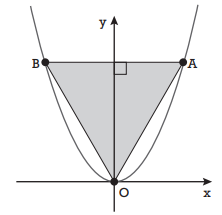
Q1788977 Matemática
No plano cartesiano abaixo estão representados o gráfico da função y = x² e o triângulo equilátero OAB.
Imagem associada para resolução da questão

A área desse triângulo mede:
Alternativas
Ano: 2018 Banca: ESPM Órgão: ESPM Prova: ESPM - 2018 - ESPM - Vestibular 2019/1 - RS |
Q1788976 Matemática
No início de 2016, 90% da população economicamente ativa de uma cidade estava em - pregada. Ao fim do primeiro semestre desse ano, 30% dos empregados deixaram seus empregos e 10% dos que estavam desempregados conseguiram emprego. Durante o segundo semestre desse ano, 20% dos trabalhadores foram demitidos ou pediram demissão, enquanto 50% dos desemprega - dos foram admitidos no mercado de trabalho. Podemos concluir que, no fim de 2016, a porcentagem de desempregados dessa cidade era próxima de:
Alternativas
Ano: 2018 Banca: ESPM Órgão: ESPM Prova: ESPM - 2018 - ESPM - Vestibular 2019/1 - RS |
Q1788975 Matemática
Seja S = (a1, a2, a3, ... , an) uma sequência de números naturais em que:
a1 = 1 a2 = 1
Imagem associada para resolução da questão, para n > 2
A soma dos 50 primeiros termos dessa sequência é igual a:
Alternativas
Ano: 2018 Banca: ESPM Órgão: ESPM Prova: ESPM - 2018 - ESPM - Vestibular 2019/1 - RS |
Q1788974 Matemática
O número 9xyz2 é o produto de 3 números pares consecutivos, onde x, y e z são algarismos ocultos. O valor da soma x + y + z é:
Alternativas
Ano: 2018 Banca: ESPM Órgão: ESPM Prova: ESPM - 2018 - ESPM - Vestibular 2019/1 - RS |
Q1788973 Matemática
Daqui a 3 anos, a idade de um pai será a soma das idades que terão sua esposa e seu filho. Quando a esposa nasceu, a idade do pai era:
Alternativas
Ano: 2018 Banca: ESPM Órgão: ESPM Prova: ESPM - 2018 - ESPM - Vestibular 2019/1 - RS |
Q1788972 Matemática
Em um escritório trabalhavam 15 pessoas. Em um certo ano o funcionário mais velho se aposentou, sendo substituído por um jovem de 20 anos. Se a média de idade dos funcionários desse escritório diminuiu 3 anos, a idade do funcionário que se aposentou era:
Alternativas
Respostas
16461: C
16462: C
16463: D
16464: B
16465: C
16466: C
16467: A
16468: D
16469: A
16470: B
16471: D
16472: E
16473: E
16474: C
16475: E
16476: C
16477: A
16478: A
16479: E
16480: D
