Foram encontradas 71.697 questões
Resolva questões gratuitamente!
Junte-se a mais de 4 milhões de concurseiros!


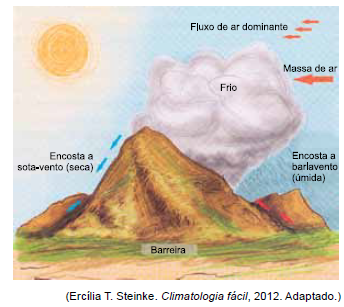
A imagem representa a chuva
O recurso problematizado no excerto corresponde à
(André L. Rosa. “Satélite Cbers-4A é testado no Inpe antes de embarcar para China”. https://g1.globo.com, 14.04.2019. Adaptado.)
No conjunto de técnicas que compõem a ciência cartográfica, o Cbers-4A integra
(Platão. A república, 1993. Adaptado.)
O texto, uma passagem da “Alegoria da Caverna”, pode estar se referindo, implicitamente, ao julgamento e execução de Sócrates na cidade de Atenas. A passagem descreve o retorno à caverna do homem que, liberto, conheceu a verdadeira realidade. Esse homem representa, metaforicamente, o filósofo na pólis como um indivíduo
(Francisco de Assis Costa. “As múltiplas faces da Amazônia”. Pesquisa Fapesp, março de 2019.)
Economista e professor da Universidade Federal de Belém, Francisco de Assis Costa descreve políticas de desenvolvimento econômico aplicadas na região amazônica. Essas políticas estavam baseadas
(Asa Briggs. Historia social de Inglaterra, 1994. Adaptado.)
A Primeira Ministra britânica aplicou no país uma política
(Philip Jenkins. Breve historia de Estados Unidos, 2017. Adaptado.)
O excerto descreve a situação histórica dos Estados Unidos, marcada pela
[...] Vai, orgulhosa, querida Mas aceita esta lição: No câmbio incerto da vida A libra sempre é o coração O amor vem por princípio, a ordem por base O progresso é que deve vir por fim Desprezaste esta lei de Augusto Comte E foste ser feliz longe de mim [...] Vai, coração que não vibra Com teu juro exorbitante Transformar mais outra libra Em dívida flutuante [...]
(www.letras.mus.br)
A letra da música, apesar do seu lirismo irônico, refere-se à história do Brasil, caracterizada, em grande parte,
O escritor Mário de Andrade fez uma viagem em comitiva à Amazônia e escreveu um diário sobre o périplo, que durou de 13 de maio a 15 de agosto de 1927. Leia alguns trechos desse diário.
Belém, 19 de maio
Depois do jantar, sem que fazer, fomos todos ao cinema
ver a fita importante que os jornais e as pessoas anunciavam,
William Fairbanks em Não percas tempo, filme horrível.
Manaus, 7 de junho.
De-noite, sem que fazer, fomos ao cinema. Levavam com
grande barulho de anúncio William Fairbanks em Não percas
tempo.
Iquitos, 25 de junho.
Me esqueci de contar: ontem, passeando, passamos
pelo cinema local que com grande estardalhaço anunciava
último dia do grande filme Não percas tempo com William
Fairbanks. É que o filme ia e vinha no navio conosco...
(Mário de Andrade. O turista aprendiz, 2002. Adaptado.)
(Perry Anderson. Linhagens do Estado absolutista, 2016.)
O excerto do livro Linhagens do Estado absolutista descreve
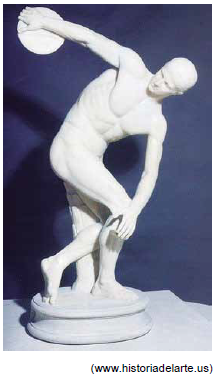
Pertencente ao Museu Nacional de Roma, o Discóbolo Lancellotti assinala
(Henri-Irénée Marrou. De la connaissance historique, 1975. Adaptado.)
Depreende-se do texto que as condições essenciais para a pesquisa histórica são
Wood wide web: trees’ social networks are mapped
Research has shown that beneath every forest and wood there is a complex underground web of roots, fungi and bacteria helping to connect trees and plants to one another. This subterranean social network, nearly 500 million years old, has become known as the “wood wide web”. Now, an international study has produced the first global map of the “mycorrhizal fungi networks” dominating this secretive world.
Using machine-learning, researchers from the Crowther Lab at ETH Zurich, Switzerland, and Stanford University in the US used the database of the Global Forest Initiative, which covers 1.2 million forest tree plots with 28,000 species, from more than 70 countries. Using millions of direct observations of trees and their symbiotic associations on the ground, the researchers could build models from the bottom up to visualise these fungal networks for the first time. Prof Thomas Crowther, one of the authors of the report, told the BBC, “It’s the first time that we’ve been able to understand the world beneath our feet, but at a global scale.”
The research reveals how important mycorrhizal networks are to limiting climate change — and how vulnerable they are to the effects of it. “Just like an Magnetic Resonance Imaging scan of the brain helps us to understand how the brain works, this global map of the fungi beneath the soil helps us to understand how global ecosystems work,” said Prof Crowther. “What we find is that certain types of microorganisms live in certain parts of the world, and by understanding that we can figure out how to restore different types of ecosystems and also how the climate is changing.” Losing chunks of the wood wide web could well increase “the feedback loop of warming temperatures and carbon emissions.”
Mycorrhizal fungi are those that form a symbiotic relationship with plants. There are two main groups of mycorrhizal fungi: arbuscular fungi (AM) that penetrate the host’s roots, and ectomycorrhizal fungi (EM) which surround the tree’s roots without penetrating them.
(Claire Marshall. www.bbc.com, 15.05.2019. Adaptado.)
Wood wide web: trees’ social networks are mapped
Research has shown that beneath every forest and wood there is a complex underground web of roots, fungi and bacteria helping to connect trees and plants to one another. This subterranean social network, nearly 500 million years old, has become known as the “wood wide web”. Now, an international study has produced the first global map of the “mycorrhizal fungi networks” dominating this secretive world.
Using machine-learning, researchers from the Crowther Lab at ETH Zurich, Switzerland, and Stanford University in the US used the database of the Global Forest Initiative, which covers 1.2 million forest tree plots with 28,000 species, from more than 70 countries. Using millions of direct observations of trees and their symbiotic associations on the ground, the researchers could build models from the bottom up to visualise these fungal networks for the first time. Prof Thomas Crowther, one of the authors of the report, told the BBC, “It’s the first time that we’ve been able to understand the world beneath our feet, but at a global scale.”
The research reveals how important mycorrhizal networks are to limiting climate change — and how vulnerable they are to the effects of it. “Just like an Magnetic Resonance Imaging scan of the brain helps us to understand how the brain works, this global map of the fungi beneath the soil helps us to understand how global ecosystems work,” said Prof Crowther. “What we find is that certain types of microorganisms live in certain parts of the world, and by understanding that we can figure out how to restore different types of ecosystems and also how the climate is changing.” Losing chunks of the wood wide web could well increase “the feedback loop of warming temperatures and carbon emissions.”
Mycorrhizal fungi are those that form a symbiotic relationship with plants. There are two main groups of mycorrhizal fungi: arbuscular fungi (AM) that penetrate the host’s roots, and ectomycorrhizal fungi (EM) which surround the tree’s roots without penetrating them.
(Claire Marshall. www.bbc.com, 15.05.2019. Adaptado.)
Wood wide web: trees’ social networks are mapped
Research has shown that beneath every forest and wood there is a complex underground web of roots, fungi and bacteria helping to connect trees and plants to one another. This subterranean social network, nearly 500 million years old, has become known as the “wood wide web”. Now, an international study has produced the first global map of the “mycorrhizal fungi networks” dominating this secretive world.
Using machine-learning, researchers from the Crowther Lab at ETH Zurich, Switzerland, and Stanford University in the US used the database of the Global Forest Initiative, which covers 1.2 million forest tree plots with 28,000 species, from more than 70 countries. Using millions of direct observations of trees and their symbiotic associations on the ground, the researchers could build models from the bottom up to visualise these fungal networks for the first time. Prof Thomas Crowther, one of the authors of the report, told the BBC, “It’s the first time that we’ve been able to understand the world beneath our feet, but at a global scale.”
The research reveals how important mycorrhizal networks are to limiting climate change — and how vulnerable they are to the effects of it. “Just like an Magnetic Resonance Imaging scan of the brain helps us to understand how the brain works, this global map of the fungi beneath the soil helps us to understand how global ecosystems work,” said Prof Crowther. “What we find is that certain types of microorganisms live in certain parts of the world, and by understanding that we can figure out how to restore different types of ecosystems and also how the climate is changing.” Losing chunks of the wood wide web could well increase “the feedback loop of warming temperatures and carbon emissions.”
Mycorrhizal fungi are those that form a symbiotic relationship with plants. There are two main groups of mycorrhizal fungi: arbuscular fungi (AM) that penetrate the host’s roots, and ectomycorrhizal fungi (EM) which surround the tree’s roots without penetrating them.
(Claire Marshall. www.bbc.com, 15.05.2019. Adaptado.)
Wood wide web: trees’ social networks are mapped
Research has shown that beneath every forest and wood there is a complex underground web of roots, fungi and bacteria helping to connect trees and plants to one another. This subterranean social network, nearly 500 million years old, has become known as the “wood wide web”. Now, an international study has produced the first global map of the “mycorrhizal fungi networks” dominating this secretive world.
Using machine-learning, researchers from the Crowther Lab at ETH Zurich, Switzerland, and Stanford University in the US used the database of the Global Forest Initiative, which covers 1.2 million forest tree plots with 28,000 species, from more than 70 countries. Using millions of direct observations of trees and their symbiotic associations on the ground, the researchers could build models from the bottom up to visualise these fungal networks for the first time. Prof Thomas Crowther, one of the authors of the report, told the BBC, “It’s the first time that we’ve been able to understand the world beneath our feet, but at a global scale.”
The research reveals how important mycorrhizal networks are to limiting climate change — and how vulnerable they are to the effects of it. “Just like an Magnetic Resonance Imaging scan of the brain helps us to understand how the brain works, this global map of the fungi beneath the soil helps us to understand how global ecosystems work,” said Prof Crowther. “What we find is that certain types of microorganisms live in certain parts of the world, and by understanding that we can figure out how to restore different types of ecosystems and also how the climate is changing.” Losing chunks of the wood wide web could well increase “the feedback loop of warming temperatures and carbon emissions.”
Mycorrhizal fungi are those that form a symbiotic relationship with plants. There are two main groups of mycorrhizal fungi: arbuscular fungi (AM) that penetrate the host’s roots, and ectomycorrhizal fungi (EM) which surround the tree’s roots without penetrating them.
(Claire Marshall. www.bbc.com, 15.05.2019. Adaptado.)
O termo sublinhado exerce a função de predicativo do sujeito em:
E assim se passava o tempo para a moça esta. Assoava o nariz na barra da combinação. Não tinha aquela coisa delicada que se chama encanto. Só eu a vejo encantadora. Só eu, seu autor, a amo. Sofro por ela. E só eu é que posso dizer assim: “que é que você me pede chorando que eu não lhe dê cantando”? Essa moça não sabia que ela era o que era, assim como um cachorro não sabe que é cachorro. Daí não se sentir infeliz. A única coisa que queria era viver. Não sabia para quê, não se indagava. Quem sabe, achava que havia uma gloriazinha em viver. Ela pensava que a pessoa é obrigada a ser feliz. Então era. Antes de nascer ela era uma ideia? Antes de nascer ela era morta? E depois de nascer ela ia morrer? Mas que fina talhada de melancia.
 Conheça nossos planos