Foram encontradas 75.429 questões

Resolva questões gratuitamente!

Junte-se a mais de 4 milhões de concurseiros!

Q2162536 Atualidades

TEXTO 1 


Dados do levantamento feito pelo TransgenderEurope (TGEU) mostram que o Brasil permaneceu pelo 13º ano consecutivo como o país que mais mata pessoas transgêneros.


Mortes de Transgêneros - Por Países de 2008 a 2021 (Números Absolutos)
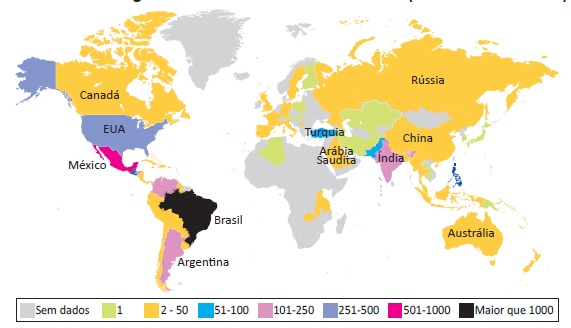
Imagem associada para resolução da questão

TRANSGENDER EUROPE (TGEU). Disponível em: https://transrespect.org. Acesso em: 5 jul. 2022 (adaptado).


TEXTO 2


De acordo com dados do Sistema de Informação de Agravos de Notificação (Sinan), do Ministério da Saúde, houve um crescimento bruto de 5% nas violências contra homossexuais e 37,1% nas violências contra bissexuais, passando de 4 855 registros em 2018 para 5 330 em 2019. No gráfico a seguir são apresentados os dados percentuais de casos notificados em 2019, de acordo com a orientação sexual das vítimas de violência.


Brasil: Perfil de Pessoas Homossexuais e Bissexuais Vítimas de Violência, por Orientação Sexual, por Faixa Etária (2019)
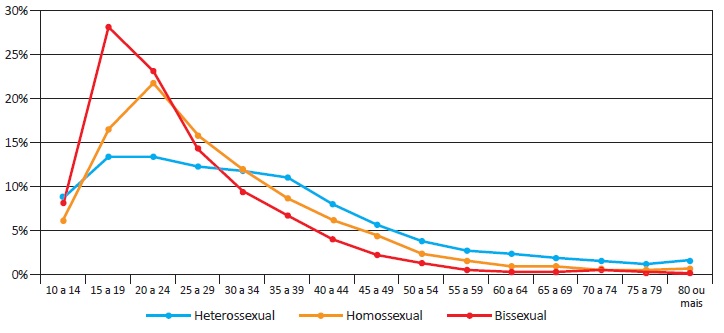
Imagem associada para resolução da questãoCERQUEIRA, D. et al. Atlas da Violência 2021 . São Paulo: FBSP/IPEA, 2021.


Considerando as informações apresentadas no mapa e no gráfico, bem como a situação social dos grupos LGBTQIAPN+, avalie as afirmações a seguir.


I. Os discursos e as práticas contra a diversidade sexual e de gênero são incompatíveis com as premissas éticas e dos direitos humanos que regem as sociedades democráticas.


II. A violência contra os grupos LGBTQIAPN+ é histórica, simbólica, psicológica e física, ocorrendo em razão de estereótipos e estigmas vigentes na sociedade e por meio de repressões e abusos.


III. A parti r dos 40 anos de idade, há uma maior incidência de violência sobre pessoas heterossexuais em relação aos outros grupos, o que indica que a vulnerabilidade independe da orientação sexual.


IV. O Brasil é o país onde se identifica o maior número de mortes de pessoas trans entre os países analisados, situação que revela a necessidade de uma política pública mais assertiva de combate aos crimes cometi dos contra os grupos LGBTQIAPN+.


É correto apenas o que se afirma em

Alternativas
Q2162535 Atualidades
TEXTO 1 A democracia representativa exige, para o seu funcionamento, um conjunto de características, as quais podem ser compreendidas como instituições. São elas: Funcionários eleitos; Eleições livres, justas e frequentes; Sufrágio inclusivo; Direito de concorrer a cargos eletivos; Liberdade de expressão; Fontes de informação diversificadas; Autonomia para as associações. Entre as categorias mencionadas, destacam-se duas como pilares do regime democrático.
Liberdade de expressão: os cidadãos têm o direito de se expressar, sem o perigo de punições severas, quanto aos assuntos políticos de uma forma geral, o que inclui a liberdade de criticar os funcionários do governo, o governo em si, o regime, a ordem socioeconômica e a ideologia dominante.
Fontes de informação diversificadas: os cidadãos têm o direito de buscar fontes de informação, alternativas, diversificadas e independentes. Ademais, a existência de fontes de informação alternativa deve ser protegida por lei.
DAHL, R. A. Sobre a democracia, EDU: UnB, 2001 (adaptado).
TEXTO 2 Embora os regimes políticos possam ser derrubados e as ideologias criticadas e destituídas de sua legitimidade, por trás de um regime e de sua ideologia há sempre um modo de pensar e de sentir, uma série de hábitos culturais, uma nebulosa de instintos obscuros e de pulsões insondáveis.
ECO, U. O Fascismo Eterno. In: Cinco escritos Morais. Editora Record: Rio de Janeiro, 2002 (adaptado).
TEXTO 3 A figura a seguir exemplifica algumas condutas que, segundo Umberto Eco, podem ser consideradas contraditórias aos princípios democráticos. Imagem associada para resolução da questão

Disponível em: https://www.facebook.com/EditoraRecord/photos. Acesso em: 18 ago. 2022 (adaptado).

Com base na concepção de regimes políticos, abordada pelos autores, avalie as afirmações a seguir.
I. A democracia é o sistema que se propõe a assegurar aos seus cidadãos uma liberdade pessoal mais ampla do que outros modelos.
II. A liberdade de expressão no sistema democrático garante que a manifestação de um agente político e de um cidadão possuam repercussões equivalentes.
III. As fake news são manifestações relacionadas à categoria de fontes de informação diversificadas e podem ser uti lizadas como estratégia para fragilizar o sistema democrático de governo.
IV. O direito à liberdade de expressão permite a emissão de opinião crítica e discursos contrários à democracia e aos direitos humanos.
É correto apenas o que se afirma em
Alternativas
Q2093172 Inglês
Food insecurity hits nearly 60% of Brazilians, study shows.

  A study from the Brazilian Research Network on Food Sovereignty and Security released Wednesday showed that 58.7% of Brazilians lived with food insecurity, which replicated data not seen since 1993. In other words, 125.2 million people are affected by this issue, while 15% of the population, or about 33 million people, go hungry on a daily basis.
 
 The document also highlighted that this phenomenon was a consequence of the country’s economic crisis and the ensuing labor market situation. The survey consisted of interviews conducted between November 2021 and April this year in 12,745 households across 577 municipalities in all states. Compared to 2018, the increase in the Brazilian population with food insecurity is 60% and since 2020 this figure grew by 7.2%.
 
  It was the second National Survey on Food Insecurity in the context of the Covid-19 pandemic in Brazil and showed that the daily victims of hunger increased from 19 to 33 million from 2021 to 2022. The most affected areas of the country are the North and Northeast, with 25.7% and 21% of the families involved, respectively. The report also revealed that 60% of households in rural areas are food insecure, with 18.6% of them in the most severe state. Hunger also affected 21.8% of the families of small agricultural producers.

  The study also focused on investigating the relationship between food and race and confirmed that access to food is not a problem for 53.2% of the households of self-declared white people, but this percentage drops to 35% in the homes of self-declared black people. In these families, the percentage of people who suffer from a lack of food on a daily basis increased from 10.4% to 18.1%. The situation worsened in households managed by black women, of which 63% showed some degree of insecurity.

   According to the survey, in 2022, one out of three Brazilians did something that caused shame, sadness or regret in order to obtain food. "We have gone back 30 years in the fight against hunger, it’s scary. But the current indignant movement is far from the indignation of 1993 with 32 million hungry people. We are inert as a society," explained Kiko Afonso, one of the members of the team to conduct the study. 

From:https://en.mercopress.com/2022/06/09/food-insecurity-hits-nearly-60-of-brazilians-study-shows. Accessed on 07/10/2022
(URCA/2022.2) Os pesquisadores descobriram em suas entrevistas que a insegurança alimentar: 
Alternativas
Q2093171 Inglês
Food insecurity hits nearly 60% of Brazilians, study shows.

  A study from the Brazilian Research Network on Food Sovereignty and Security released Wednesday showed that 58.7% of Brazilians lived with food insecurity, which replicated data not seen since 1993. In other words, 125.2 million people are affected by this issue, while 15% of the population, or about 33 million people, go hungry on a daily basis.
 
 The document also highlighted that this phenomenon was a consequence of the country’s economic crisis and the ensuing labor market situation. The survey consisted of interviews conducted between November 2021 and April this year in 12,745 households across 577 municipalities in all states. Compared to 2018, the increase in the Brazilian population with food insecurity is 60% and since 2020 this figure grew by 7.2%.
 
  It was the second National Survey on Food Insecurity in the context of the Covid-19 pandemic in Brazil and showed that the daily victims of hunger increased from 19 to 33 million from 2021 to 2022. The most affected areas of the country are the North and Northeast, with 25.7% and 21% of the families involved, respectively. The report also revealed that 60% of households in rural areas are food insecure, with 18.6% of them in the most severe state. Hunger also affected 21.8% of the families of small agricultural producers.

  The study also focused on investigating the relationship between food and race and confirmed that access to food is not a problem for 53.2% of the households of self-declared white people, but this percentage drops to 35% in the homes of self-declared black people. In these families, the percentage of people who suffer from a lack of food on a daily basis increased from 10.4% to 18.1%. The situation worsened in households managed by black women, of which 63% showed some degree of insecurity.

   According to the survey, in 2022, one out of three Brazilians did something that caused shame, sadness or regret in order to obtain food. "We have gone back 30 years in the fight against hunger, it’s scary. But the current indignant movement is far from the indignation of 1993 with 32 million hungry people. We are inert as a society," explained Kiko Afonso, one of the members of the team to conduct the study. 

From:https://en.mercopress.com/2022/06/09/food-insecurity-hits-nearly-60-of-brazilians-study-shows. Accessed on 07/10/2022
(URCA/2022.2) Quando relacionados insegurança alimentar e raça, a pesquisa concluiu que: 
Alternativas
Q2093170 Inglês
Food insecurity hits nearly 60% of Brazilians, study shows.

  A study from the Brazilian Research Network on Food Sovereignty and Security released Wednesday showed that 58.7% of Brazilians lived with food insecurity, which replicated data not seen since 1993. In other words, 125.2 million people are affected by this issue, while 15% of the population, or about 33 million people, go hungry on a daily basis.
 
 The document also highlighted that this phenomenon was a consequence of the country’s economic crisis and the ensuing labor market situation. The survey consisted of interviews conducted between November 2021 and April this year in 12,745 households across 577 municipalities in all states. Compared to 2018, the increase in the Brazilian population with food insecurity is 60% and since 2020 this figure grew by 7.2%.
 
  It was the second National Survey on Food Insecurity in the context of the Covid-19 pandemic in Brazil and showed that the daily victims of hunger increased from 19 to 33 million from 2021 to 2022. The most affected areas of the country are the North and Northeast, with 25.7% and 21% of the families involved, respectively. The report also revealed that 60% of households in rural areas are food insecure, with 18.6% of them in the most severe state. Hunger also affected 21.8% of the families of small agricultural producers.

  The study also focused on investigating the relationship between food and race and confirmed that access to food is not a problem for 53.2% of the households of self-declared white people, but this percentage drops to 35% in the homes of self-declared black people. In these families, the percentage of people who suffer from a lack of food on a daily basis increased from 10.4% to 18.1%. The situation worsened in households managed by black women, of which 63% showed some degree of insecurity.

   According to the survey, in 2022, one out of three Brazilians did something that caused shame, sadness or regret in order to obtain food. "We have gone back 30 years in the fight against hunger, it’s scary. But the current indignant movement is far from the indignation of 1993 with 32 million hungry people. We are inert as a society," explained Kiko Afonso, one of the members of the team to conduct the study. 

From:https://en.mercopress.com/2022/06/09/food-insecurity-hits-nearly-60-of-brazilians-study-shows. Accessed on 07/10/2022
(URCA/2022.2) Após ler o texto é incorreto afirmar que:
Alternativas
Q2093169 Inglês
Food insecurity hits nearly 60% of Brazilians, study shows.

  A study from the Brazilian Research Network on Food Sovereignty and Security released Wednesday showed that 58.7% of Brazilians lived with food insecurity, which replicated data not seen since 1993. In other words, 125.2 million people are affected by this issue, while 15% of the population, or about 33 million people, go hungry on a daily basis.
 
 The document also highlighted that this phenomenon was a consequence of the country’s economic crisis and the ensuing labor market situation. The survey consisted of interviews conducted between November 2021 and April this year in 12,745 households across 577 municipalities in all states. Compared to 2018, the increase in the Brazilian population with food insecurity is 60% and since 2020 this figure grew by 7.2%.
 
  It was the second National Survey on Food Insecurity in the context of the Covid-19 pandemic in Brazil and showed that the daily victims of hunger increased from 19 to 33 million from 2021 to 2022. The most affected areas of the country are the North and Northeast, with 25.7% and 21% of the families involved, respectively. The report also revealed that 60% of households in rural areas are food insecure, with 18.6% of them in the most severe state. Hunger also affected 21.8% of the families of small agricultural producers.

  The study also focused on investigating the relationship between food and race and confirmed that access to food is not a problem for 53.2% of the households of self-declared white people, but this percentage drops to 35% in the homes of self-declared black people. In these families, the percentage of people who suffer from a lack of food on a daily basis increased from 10.4% to 18.1%. The situation worsened in households managed by black women, of which 63% showed some degree of insecurity.

   According to the survey, in 2022, one out of three Brazilians did something that caused shame, sadness or regret in order to obtain food. "We have gone back 30 years in the fight against hunger, it’s scary. But the current indignant movement is far from the indignation of 1993 with 32 million hungry people. We are inert as a society," explained Kiko Afonso, one of the members of the team to conduct the study. 

From:https://en.mercopress.com/2022/06/09/food-insecurity-hits-nearly-60-of-brazilians-study-shows. Accessed on 07/10/2022
(URCA/2022.2) Quando comparado com os dados de 2018, a insegurança alimentar no Brasil aumentou em:
Alternativas
Q2093168 Inglês
Food insecurity hits nearly 60% of Brazilians, study shows.

  A study from the Brazilian Research Network on Food Sovereignty and Security released Wednesday showed that 58.7% of Brazilians lived with food insecurity, which replicated data not seen since 1993. In other words, 125.2 million people are affected by this issue, while 15% of the population, or about 33 million people, go hungry on a daily basis.
 
 The document also highlighted that this phenomenon was a consequence of the country’s economic crisis and the ensuing labor market situation. The survey consisted of interviews conducted between November 2021 and April this year in 12,745 households across 577 municipalities in all states. Compared to 2018, the increase in the Brazilian population with food insecurity is 60% and since 2020 this figure grew by 7.2%.
 
  It was the second National Survey on Food Insecurity in the context of the Covid-19 pandemic in Brazil and showed that the daily victims of hunger increased from 19 to 33 million from 2021 to 2022. The most affected areas of the country are the North and Northeast, with 25.7% and 21% of the families involved, respectively. The report also revealed that 60% of households in rural areas are food insecure, with 18.6% of them in the most severe state. Hunger also affected 21.8% of the families of small agricultural producers.

  The study also focused on investigating the relationship between food and race and confirmed that access to food is not a problem for 53.2% of the households of self-declared white people, but this percentage drops to 35% in the homes of self-declared black people. In these families, the percentage of people who suffer from a lack of food on a daily basis increased from 10.4% to 18.1%. The situation worsened in households managed by black women, of which 63% showed some degree of insecurity.

   According to the survey, in 2022, one out of three Brazilians did something that caused shame, sadness or regret in order to obtain food. "We have gone back 30 years in the fight against hunger, it’s scary. But the current indignant movement is far from the indignation of 1993 with 32 million hungry people. We are inert as a society," explained Kiko Afonso, one of the members of the team to conduct the study. 

From:https://en.mercopress.com/2022/06/09/food-insecurity-hits-nearly-60-of-brazilians-study-shows. Accessed on 07/10/2022
(URCA/2022.2) Depois de ler o texto, é possível concluir que:
Alternativas
Q2093167 Inglês
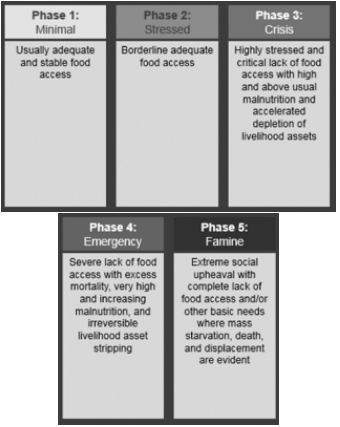
Integrated Food Security Phase Classification (IPC) & Cadre
Harmonisé (CH)

54_- 55.png (340×427)

From: https://www.ifpri.org/blog/2018-global-report-food-crises-shows-rising-food-insecurity-need-build-resilience. Accessed on
07/10/2022
(URCA/2022.2) Uma das características da Fase 5 da Classificação da Insegurança Alimentar é 
Alternativas
Q2093166 Inglês
Integrated Food Security Phase Classification (IPC) & Cadre
Harmonisé (CH)

54_- 55.png (340×427)

From: https://www.ifpri.org/blog/2018-global-report-food-crises-shows-rising-food-insecurity-need-build-resilience. Accessed on
07/10/2022
(URCA/2022.2) De acordo com as informações da Classificação da Insegurança Alimentar, os bens de subsistência não podem ser revertidos em qual das fases?
Alternativas
Q2093165 Inglês
Marching towards starvation: UN warns of hell on earth if Ukraine war
goes on (Continuation)

   Beasley added that the number of people experiencing "shock hunger" had increased from 80 million to 325 million over the same period. They are classified as living in crisis levels of food insecurity, a term he described as "marching towards starvation and you don’t know where your next meal is coming from". Beasley said that after the economic crash of 2007-09, riots and other unrest erupted in 48 countries around the world as commodity prices and inflation rose.
   "The economic factors we have today are much worse than those we saw 15 years ago," he said, adding that if the crisis was not addressed, it would result in "famine, destabilisation of nations and mass migration". "We are already seeing riots in Sri Lanka and protests in Tunisia, Pakistan and Peru, and we’ve had destabilisation take place in places like Burkina Faso, Mali, Chad," said Beasley. "This is only a sign of things to come."
   Ukraine’s agriculture ministry says more than 20m tonnes of grain that would normally be exported is trapped in the country because of Russia’s blockade of its Black Sea ports. European leaders, including the French president, Emmanuel Macron, have urged Russia to ease its blockade of Odesa, Ukraine’s main port, to allow exports of grain.
   In the long term, Beasley called on the world’s richest people to commit more of their wealth to tackling global hunger, while also urging Vladimir Putin to open up Odesa. "It is a very, very frightening time," said Beasley. "We are facing hell on earth if we do not respond immediately. The best thing we can do right now is end that damn war in Russia and Ukraine and get the port open."

Adapted from: https://www.theguardian.com/global-development/2022/jun/17/united-nations-wfp-hell-on-earth-ukraine-war-russia.
Accessed on 07/10/2022
(URCA/2022.2) O texto diz que
Alternativas
Q2093164 Inglês
Marching towards starvation: UN warns of hell on earth if Ukraine war
goes on (Continuation)

   Beasley added that the number of people experiencing "shock hunger" had increased from 80 million to 325 million over the same period. They are classified as living in crisis levels of food insecurity, a term he described as "marching towards starvation and you don’t know where your next meal is coming from". Beasley said that after the economic crash of 2007-09, riots and other unrest erupted in 48 countries around the world as commodity prices and inflation rose.
   "The economic factors we have today are much worse than those we saw 15 years ago," he said, adding that if the crisis was not addressed, it would result in "famine, destabilisation of nations and mass migration". "We are already seeing riots in Sri Lanka and protests in Tunisia, Pakistan and Peru, and we’ve had destabilisation take place in places like Burkina Faso, Mali, Chad," said Beasley. "This is only a sign of things to come."
   Ukraine’s agriculture ministry says more than 20m tonnes of grain that would normally be exported is trapped in the country because of Russia’s blockade of its Black Sea ports. European leaders, including the French president, Emmanuel Macron, have urged Russia to ease its blockade of Odesa, Ukraine’s main port, to allow exports of grain.
   In the long term, Beasley called on the world’s richest people to commit more of their wealth to tackling global hunger, while also urging Vladimir Putin to open up Odesa. "It is a very, very frightening time," said Beasley. "We are facing hell on earth if we do not respond immediately. The best thing we can do right now is end that damn war in Russia and Ukraine and get the port open."

Adapted from: https://www.theguardian.com/global-development/2022/jun/17/united-nations-wfp-hell-on-earth-ukraine-war-russia.
Accessed on 07/10/2022
(URCA/2022.2) David Beasley considera já haver sinais de desestabilização que pode acontecer com as nações a partir do que já foi visto em/na/no
Alternativas
Q2093163 Inglês
Marching towards starvation: UN warns of hell on earth if Ukraine war
goes on (Continuation)

   Beasley added that the number of people experiencing "shock hunger" had increased from 80 million to 325 million over the same period. They are classified as living in crisis levels of food insecurity, a term he described as "marching towards starvation and you don’t know where your next meal is coming from". Beasley said that after the economic crash of 2007-09, riots and other unrest erupted in 48 countries around the world as commodity prices and inflation rose.
   "The economic factors we have today are much worse than those we saw 15 years ago," he said, adding that if the crisis was not addressed, it would result in "famine, destabilisation of nations and mass migration". "We are already seeing riots in Sri Lanka and protests in Tunisia, Pakistan and Peru, and we’ve had destabilisation take place in places like Burkina Faso, Mali, Chad," said Beasley. "This is only a sign of things to come."
   Ukraine’s agriculture ministry says more than 20m tonnes of grain that would normally be exported is trapped in the country because of Russia’s blockade of its Black Sea ports. European leaders, including the French president, Emmanuel Macron, have urged Russia to ease its blockade of Odesa, Ukraine’s main port, to allow exports of grain.
   In the long term, Beasley called on the world’s richest people to commit more of their wealth to tackling global hunger, while also urging Vladimir Putin to open up Odesa. "It is a very, very frightening time," said Beasley. "We are facing hell on earth if we do not respond immediately. The best thing we can do right now is end that damn war in Russia and Ukraine and get the port open."

Adapted from: https://www.theguardian.com/global-development/2022/jun/17/united-nations-wfp-hell-on-earth-ukraine-war-russia.
Accessed on 07/10/2022
(URCA/2022.2) A solução de longo prazo apontada por David Beasley para diminuir a fome mundial foi
Alternativas
Q2093162 Inglês
Marching towards starvation: UN warns of hell on earth if Ukraine war
goes on (Continuation)

   Beasley added that the number of people experiencing "shock hunger" had increased from 80 million to 325 million over the same period. They are classified as living in crisis levels of food insecurity, a term he described as "marching towards starvation and you don’t know where your next meal is coming from". Beasley said that after the economic crash of 2007-09, riots and other unrest erupted in 48 countries around the world as commodity prices and inflation rose.
   "The economic factors we have today are much worse than those we saw 15 years ago," he said, adding that if the crisis was not addressed, it would result in "famine, destabilisation of nations and mass migration". "We are already seeing riots in Sri Lanka and protests in Tunisia, Pakistan and Peru, and we’ve had destabilisation take place in places like Burkina Faso, Mali, Chad," said Beasley. "This is only a sign of things to come."
   Ukraine’s agriculture ministry says more than 20m tonnes of grain that would normally be exported is trapped in the country because of Russia’s blockade of its Black Sea ports. European leaders, including the French president, Emmanuel Macron, have urged Russia to ease its blockade of Odesa, Ukraine’s main port, to allow exports of grain.
   In the long term, Beasley called on the world’s richest people to commit more of their wealth to tackling global hunger, while also urging Vladimir Putin to open up Odesa. "It is a very, very frightening time," said Beasley. "We are facing hell on earth if we do not respond immediately. The best thing we can do right now is end that damn war in Russia and Ukraine and get the port open."

Adapted from: https://www.theguardian.com/global-development/2022/jun/17/united-nations-wfp-hell-on-earth-ukraine-war-russia.
Accessed on 07/10/2022
(URCA/2022.2) De acordo com o texto, em vários países do mundo motins começaram a acontecer após
Alternativas
Q2093161 Inglês
’Marching towards starvation’: UN warns of hell on earth if Ukraine
war goes on

    Dozens of countries risk protests, riots and political violence this year as food prices surge around the world, the head of the food-aid branch of the United Nations has warned. Speaking in Ethiopia’s capital, Addis Ababa, on Thursday, David Beasley, director of the UN World Food Programme (WFP), said the world faced "frightening"shortages that could destabilise countries that depend on wheat exports from Ukraine and Russia.

    "Even before the Ukraine crisis, we were facing an unprecedented global food crisis because of Covid and fuel price increases," said Beasley. "Then, we thought it couldn’t get any worse, but this war has been devastating." Ukraine grows enough food every year to feed 400 million people. It produces 42% of the world’s sunflower oil, 16% of its maize and 9% of its wheat. Somalia relies on Ukraine and Russia for all of its wheat imports, while Egypt gets 80% of its grain from the two countries.

    The WFP sources 40% of the wheat for its emergency food-relief programmes from Ukraine and, after its operating costs rose by $70m (£58m) a month, it has been forced to halve rations in several countries. Citing increases in the price of shipping, fertiliser and fuel as key factors - due to Covid-19, the climate crisis and the Ukraine war - Beasley said the number of people suffering from "chronic hunger" had risen from 650 million to 810 million in the past five years.

Adapted from: https://www.theguardian.com/global-development/2022/jun/17/united-nations-wfp-hell-on-earth-ukraine-war-russia.
Accessed on 07/10/2022

(URCA/2022.2) David Beasley afirmou em Addis Ababa que o aumento no preço dos alimentos pode causar:
Alternativas
Q2093160 Inglês
’Marching towards starvation’: UN warns of hell on earth if Ukraine
war goes on

    Dozens of countries risk protests, riots and political violence this year as food prices surge around the world, the head of the food-aid branch of the United Nations has warned. Speaking in Ethiopia’s capital, Addis Ababa, on Thursday, David Beasley, director of the UN World Food Programme (WFP), said the world faced "frightening"shortages that could destabilise countries that depend on wheat exports from Ukraine and Russia.

    "Even before the Ukraine crisis, we were facing an unprecedented global food crisis because of Covid and fuel price increases," said Beasley. "Then, we thought it couldn’t get any worse, but this war has been devastating." Ukraine grows enough food every year to feed 400 million people. It produces 42% of the world’s sunflower oil, 16% of its maize and 9% of its wheat. Somalia relies on Ukraine and Russia for all of its wheat imports, while Egypt gets 80% of its grain from the two countries.

    The WFP sources 40% of the wheat for its emergency food-relief programmes from Ukraine and, after its operating costs rose by $70m (£58m) a month, it has been forced to halve rations in several countries. Citing increases in the price of shipping, fertiliser and fuel as key factors - due to Covid-19, the climate crisis and the Ukraine war - Beasley said the number of people suffering from "chronic hunger" had risen from 650 million to 810 million in the past five years.

Adapted from: https://www.theguardian.com/global-development/2022/jun/17/united-nations-wfp-hell-on-earth-ukraine-war-russia.
Accessed on 07/10/2022

(URCA/2022.2) O Programa Mundial de Alimento das Nações Unidas obtém quase metade do trigo para seus programas de emergência da/do: 
Alternativas
Q2093159 Inglês
’Marching towards starvation’: UN warns of hell on earth if Ukraine
war goes on

    Dozens of countries risk protests, riots and political violence this year as food prices surge around the world, the head of the food-aid branch of the United Nations has warned. Speaking in Ethiopia’s capital, Addis Ababa, on Thursday, David Beasley, director of the UN World Food Programme (WFP), said the world faced "frightening"shortages that could destabilise countries that depend on wheat exports from Ukraine and Russia.

    "Even before the Ukraine crisis, we were facing an unprecedented global food crisis because of Covid and fuel price increases," said Beasley. "Then, we thought it couldn’t get any worse, but this war has been devastating." Ukraine grows enough food every year to feed 400 million people. It produces 42% of the world’s sunflower oil, 16% of its maize and 9% of its wheat. Somalia relies on Ukraine and Russia for all of its wheat imports, while Egypt gets 80% of its grain from the two countries.

    The WFP sources 40% of the wheat for its emergency food-relief programmes from Ukraine and, after its operating costs rose by $70m (£58m) a month, it has been forced to halve rations in several countries. Citing increases in the price of shipping, fertiliser and fuel as key factors - due to Covid-19, the climate crisis and the Ukraine war - Beasley said the number of people suffering from "chronic hunger" had risen from 650 million to 810 million in the past five years.

Adapted from: https://www.theguardian.com/global-development/2022/jun/17/united-nations-wfp-hell-on-earth-ukraine-war-russia.
Accessed on 07/10/2022

(URCA/2022.2) Depois de ler o texto, é correto afirmar que
Alternativas
Q2093158 Inglês
’Marching towards starvation’: UN warns of hell on earth if Ukraine
war goes on

    Dozens of countries risk protests, riots and political violence this year as food prices surge around the world, the head of the food-aid branch of the United Nations has warned. Speaking in Ethiopia’s capital, Addis Ababa, on Thursday, David Beasley, director of the UN World Food Programme (WFP), said the world faced "frightening"shortages that could destabilise countries that depend on wheat exports from Ukraine and Russia.

    "Even before the Ukraine crisis, we were facing an unprecedented global food crisis because of Covid and fuel price increases," said Beasley. "Then, we thought it couldn’t get any worse, but this war has been devastating." Ukraine grows enough food every year to feed 400 million people. It produces 42% of the world’s sunflower oil, 16% of its maize and 9% of its wheat. Somalia relies on Ukraine and Russia for all of its wheat imports, while Egypt gets 80% of its grain from the two countries.

    The WFP sources 40% of the wheat for its emergency food-relief programmes from Ukraine and, after its operating costs rose by $70m (£58m) a month, it has been forced to halve rations in several countries. Citing increases in the price of shipping, fertiliser and fuel as key factors - due to Covid-19, the climate crisis and the Ukraine war - Beasley said the number of people suffering from "chronic hunger" had risen from 650 million to 810 million in the past five years.

Adapted from: https://www.theguardian.com/global-development/2022/jun/17/united-nations-wfp-hell-on-earth-ukraine-war-russia.
Accessed on 07/10/2022

(URCA/2022.2) De acordo com o texto, a crise alimentar no mundo tem como causa 
Alternativas
Q2093157 Literatura
(URCA/2022.2) Em que romance Clarice Lispector explora o modo como um escritor de classe média busca compreender a trajetória de uma jovem migrante nordestina:
Alternativas
Q2093156 Literatura
(URCA/2022.2) Assinale a obra do Século XIX cujo enredo é dominado por uma sátira aos riscos da incompreensão dos métodos da ciência:
Alternativas
Q2093155 Literatura
(URCA/2022.2) Sobre o Pré-Modernismo brasileiro, assinale a alternativa incorreta:
Alternativas
Respostas
8881: D
8882: B
8883: D
8884: A
8885: C
8886: B
8887: E
8888: B
8889: D
8890: X
8891: C
8892: A
8893: D
8894: A
8895: D
8896: A
8897: E
8898: D
8899: C
8900: A
