Selecionar segmento
Estude com questões de diferentes segmentos
Atenção: Isso limpará todos os campos já preenchidos no filtro!
Foram encontradas 71.858 questões
Resolva questões gratuitamente!
Junte-se a mais de 4 milhões de concurseiros!


Q2082134
Sociologia
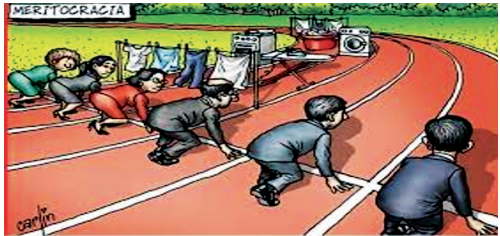
Analise a seguinte imagem sobre desigualdade de gênero e mercado de trabalho.
https://www.facebook.com/vivirconinteligenciaemocional/photos/meritocracia-y-punto-de-partida/2141736749218531
O problema social evidenciado na charge é explicado pelo conceito sociológico de
https://www.facebook.com/vivirconinteligenciaemocional/photos/meritocracia-y-punto-de-partida/2141736749218531
O problema social evidenciado na charge é explicado pelo conceito sociológico de
Q2082133
Sociologia
No Brasil, os direitos humanos são garantidos na Constituição Federal de 1988, o que pode ser considerado
um grande avanço jurídico, já que o país conta com uma história marcada por episódios de graves
desrespeitos a esses direitos, sobretudo no período do Regime Militar.
A mais recente constituição garante os direitos civis, políticos, econômicos, sociais e culturais dos nossos cidadãos. Essas garantias aparecem, por exemplo, logo no primeiro artigo, onde é estabelecido o princípio da cidadania, da dignidade da pessoa humana e os valores sociais do trabalho. Já, no artigo 5º, é estabelecido o direito à vida, à privacidade, à igualdade, à liberdade e a outros importantes direitos fundamentais, sejam eles individuais ou coletivos.
https://www.politize.com.br/direitos-humanos-no-brasil/
Ter legitimidade de direitos não significa ter ausência de conflitos sociais. Entre os regimes políticos, aquele que considera o conflito social como legítimo é conhecido como
A mais recente constituição garante os direitos civis, políticos, econômicos, sociais e culturais dos nossos cidadãos. Essas garantias aparecem, por exemplo, logo no primeiro artigo, onde é estabelecido o princípio da cidadania, da dignidade da pessoa humana e os valores sociais do trabalho. Já, no artigo 5º, é estabelecido o direito à vida, à privacidade, à igualdade, à liberdade e a outros importantes direitos fundamentais, sejam eles individuais ou coletivos.
https://www.politize.com.br/direitos-humanos-no-brasil/
Ter legitimidade de direitos não significa ter ausência de conflitos sociais. Entre os regimes políticos, aquele que considera o conflito social como legítimo é conhecido como
Q2082132
Filosofia
Analise o seguinte argumento.
Se um grande número de As foi observado sob ampla variedade de condições, e se todos esses As observados possuíam, sem exceção, a propriedade B, então todos os As têm a propriedade B.
Tome-se como exemplo para o enunciado acima o ponto de ebulição da água. Sempre que observamos a água ferver (A), isso aconteceu a 100 graus centígrados (propriedade B). Portanto, pode-se concluir que a água (A), e, qualquer água encontrada na terra, ferve a 100 graus centígrados (propriedade B).
https://filosofianaescola.com/logica/argumento-indutivo
Como é classificado esse tipo de argumento?
Q2082131
Filosofia
A naturalização da vida moral ocorre quando não notamos a origem cultural dos valores morais, do senso
moral e da consciência moral porque somos educados para eles e neles, como se fossem naturais ou
fáticos existentes em si por si mesmo. Isso acontece porque, para garantir a manutenção dos padrões
morais através do tempo e sua continuidade de geração a geração, as sociedades tendem a naturalizá-la,
isto é, a fazer com que sejam seguidos e respeitados como se fosse uma segunda natureza.
https://brainly.com.br/tarefa/1416322
Quando os valores são naturalizados em uma sociedade e perdemos a origem deles, temos dificuldade para
https://brainly.com.br/tarefa/1416322
Quando os valores são naturalizados em uma sociedade e perdemos a origem deles, temos dificuldade para
Q2082130
Filosofia
Tradicionalmente, costuma-se definir conhecimento como o modo pelo qual o sujeito se apropria do objeto
pelos sentidos e pela razão. E para compreender o mundo, a razão vai além das informações concretas e
imediatas dos sentidos.
ARANHA, Maria Lúcia de Arruda e MARTINS, Maria Helena Pires. Filosofando: introdução à filosofia. São Paulo: Moderna, 2013,
Sentidos e razão se apoderam dos objetos, respectivamente, por
ARANHA, Maria Lúcia de Arruda e MARTINS, Maria Helena Pires. Filosofando: introdução à filosofia. São Paulo: Moderna, 2013,
Sentidos e razão se apoderam dos objetos, respectivamente, por
Q2082129
Geografia
Compare as informações dos textos I e II, para responder à questão.
TEXTO I
Entre analistas ouvidos, a avaliação é de que os programas do governo para manutenção da renda e do emprego devido à crise sanitária provocada pela COVID 19, doença causada pela nova severe acute respiratory syndrome coronavirus 2 (SARS - CoV-2) tiveram impacto positivo na economia. Com especial destaque para o auxílio emergencial, tais medidas foram decisivas ao sustentarem a demanda dos consumidores, garantindo a recuperação parcial dos segmentos da indústria, do comércio e dos serviços. Esse último é o que inspira maior preocupação, sobretudo pela participação de 75,8% no PIB brasileiro. Entre março e junho de 2020, o setor acumulou queda de 14,5% no volume de receitas, segundo o IBGE. O resultado de junho, uma alta de 5% na comparação com maio, representa o primeiro crescimento após quatro retrações mensais consecutivas. Em fevereiro de 2020, mesmo fora da pandemia, houve recuo de 1%.
Carta Capital, 2020.
Para além das mudanças de renda, a PNAD Covid de julho de 2020 afere alguns comportamentos em relação à pandemia nos diferentes estratos econômicos e sociais no Brasil, conforme texto II.
TEXTO II
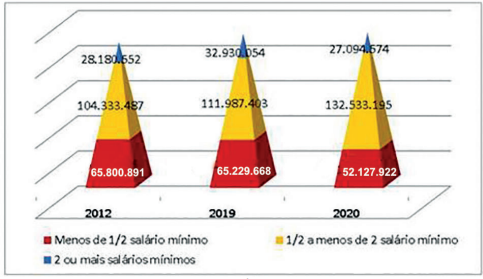
População com renda domiciliar per capita por classes agregadas de salário-mínimo até julho de 2020.
 FGV Social, 2020.
https://cps.fgv.br/destaques/fgv-social-lanca-o-estudo-qual-foi-o-impacto-imediato-da-pandemia-do-covid-sobre-classes; https://www.cartacapital.com.br/economia/auxilio-emergencial-reduz-impacto-da-pandemia-na-economia/
Comparando a população com renda domiciliar per capita entre 2012, 2019 e 2020, de acordo com o texto II, o impacto do auxílio emergencial no Brasil causou
TEXTO I
Entre analistas ouvidos, a avaliação é de que os programas do governo para manutenção da renda e do emprego devido à crise sanitária provocada pela COVID 19, doença causada pela nova severe acute respiratory syndrome coronavirus 2 (SARS - CoV-2) tiveram impacto positivo na economia. Com especial destaque para o auxílio emergencial, tais medidas foram decisivas ao sustentarem a demanda dos consumidores, garantindo a recuperação parcial dos segmentos da indústria, do comércio e dos serviços. Esse último é o que inspira maior preocupação, sobretudo pela participação de 75,8% no PIB brasileiro. Entre março e junho de 2020, o setor acumulou queda de 14,5% no volume de receitas, segundo o IBGE. O resultado de junho, uma alta de 5% na comparação com maio, representa o primeiro crescimento após quatro retrações mensais consecutivas. Em fevereiro de 2020, mesmo fora da pandemia, houve recuo de 1%.
Carta Capital, 2020.
Para além das mudanças de renda, a PNAD Covid de julho de 2020 afere alguns comportamentos em relação à pandemia nos diferentes estratos econômicos e sociais no Brasil, conforme texto II.
TEXTO II
População com renda domiciliar per capita por classes agregadas de salário-mínimo até julho de 2020.
FGV Social, 2020.
https://cps.fgv.br/destaques/fgv-social-lanca-o-estudo-qual-foi-o-impacto-imediato-da-pandemia-do-covid-sobre-classes; https://www.cartacapital.com.br/economia/auxilio-emergencial-reduz-impacto-da-pandemia-na-economia/
Comparando a população com renda domiciliar per capita entre 2012, 2019 e 2020, de acordo com o texto II, o impacto do auxílio emergencial no Brasil causou
Q2082128
Geografia
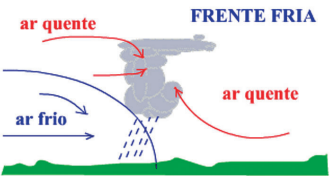
Considere as informações dos textos I e II sobre frente fria, para responder à questão.
TEXTO I
Seja no inverno ou no verão, as previsões do tempo frequentemente anunciam a chegada ou a aproximação de uma ‘frente fria’, preparando-nos para enfrentar alguns dias com temperaturas mais baixas e, de vez em quando, acompanhados de chuva. (...) Segundo especialista, a frente fria é uma zona de transição entre uma massa de ar quente e outra de ar frio, que, geralmente, se forma em regiões de grande contraste térmico. Quando a massa de ar se desloca, leva as condições de temperatura, de pressão e de umidade com as características de sua área de origem. Essas frentes alteram as condições climáticas dos lugares alcançados por elas em sua trajetória.
TEXTO II: Frente Fria
Eliza Kobayashi. Disponível em:https://novaescola.org.br/conteudo/2271/o-que-e-uma-frente-fria http://www.asalivre-es.com/curso-parapente/meteo/
Pode-se afirmar que a frente fria é uma consequência do(a)
TEXTO I
Seja no inverno ou no verão, as previsões do tempo frequentemente anunciam a chegada ou a aproximação de uma ‘frente fria’, preparando-nos para enfrentar alguns dias com temperaturas mais baixas e, de vez em quando, acompanhados de chuva. (...) Segundo especialista, a frente fria é uma zona de transição entre uma massa de ar quente e outra de ar frio, que, geralmente, se forma em regiões de grande contraste térmico. Quando a massa de ar se desloca, leva as condições de temperatura, de pressão e de umidade com as características de sua área de origem. Essas frentes alteram as condições climáticas dos lugares alcançados por elas em sua trajetória.
TEXTO II: Frente Fria
Eliza Kobayashi. Disponível em:https://novaescola.org.br/conteudo/2271/o-que-e-uma-frente-fria http://www.asalivre-es.com/curso-parapente/meteo/
Pode-se afirmar que a frente fria é uma consequência do(a)
Q2082127
Geografia
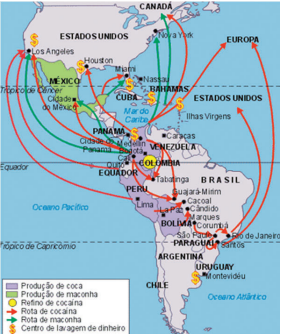
As rotas do narcotráfico organizaram-se, essencialmente, em torno de eixos centro-americanos e
caribenhos, buscando os vastos mercados norte-americano e europeu. Leia os textos a seguir para
responder à questão.
TEXTO I
Nos anos 70, a queda dos preços internacionais dos bens agrícolas tropicais estimulou a substituição dos cultivos tradicionais pela implantação de coca e de maconha. O Peru, a Bolívia, a Colômbia e o México tornaram-se grandes produtores de entorpecentes. O narcotráfico é uma importante fonte de renda e de trabalho para parte das populações desses países. Em Medellín e Cali, foram criados grandes cartéis de produção e refino de cocaína. Nos anos 80, estabeleceu-se uma aliança entre os narcotraficantes e os guerrilheiros de esquerda do Sendero Luminoso (peruano) e o M-19 (colombiano). Mais do que nunca ficava evidente a fraqueza dos governos latino-americanos, o que estimulou os EUA a enviar assessores militares para o subcontinente. EducaBrasil, 2020.
TEXTO II
 https://www.educabras.com/ensino_medio/materia/geografia/conflitos_e_crises_atuais/aulas/narcotrafico_na_america_latina
De acordo com os textos I e II, uma das causas da expansão do narcotráfico está relacionada à (às)
TEXTO I
Nos anos 70, a queda dos preços internacionais dos bens agrícolas tropicais estimulou a substituição dos cultivos tradicionais pela implantação de coca e de maconha. O Peru, a Bolívia, a Colômbia e o México tornaram-se grandes produtores de entorpecentes. O narcotráfico é uma importante fonte de renda e de trabalho para parte das populações desses países. Em Medellín e Cali, foram criados grandes cartéis de produção e refino de cocaína. Nos anos 80, estabeleceu-se uma aliança entre os narcotraficantes e os guerrilheiros de esquerda do Sendero Luminoso (peruano) e o M-19 (colombiano). Mais do que nunca ficava evidente a fraqueza dos governos latino-americanos, o que estimulou os EUA a enviar assessores militares para o subcontinente. EducaBrasil, 2020.
TEXTO II
https://www.educabras.com/ensino_medio/materia/geografia/conflitos_e_crises_atuais/aulas/narcotrafico_na_america_latina
De acordo com os textos I e II, uma das causas da expansão do narcotráfico está relacionada à (às)
Q2082126
Geografia
Leia a seguinte definição.
O mapa é a construção mais lógica e rigorosa do mundo das imagens. Há, contudo, quem pense que ele é obra, apenas, de especialistas e de acesso restrito a poucas pessoas. Por isso, ao longo da história, tem sido objeto de usos dos mais diversos, sobretudo, no campo político e militar. Não é, portanto, de estranhar que o mapa, também, serve para fazer a guerra. Porém, sua maior utilidade é para promover a paz, diminuir a discórdia e informar a todos os cidadãos indistintamente sobre a especificidade do território em que eles habitam. O mapa tem, portanto, várias dimensões e, entre elas, a que mais inibe as pessoas quanto ao seu uso e a sua leitura, é a sua dimensão técnica.
TEIXEIRA NETO, A. Cartografia, território e poder: dimensão técnica e política na utilização de mapas Boletim Goiano de Geografia, v. 26, n. 2, jul./dez., 2006.
A correta relação entre tipo de mapa, sua característica e sua utilização está, respectivamente, indicada em
O mapa é a construção mais lógica e rigorosa do mundo das imagens. Há, contudo, quem pense que ele é obra, apenas, de especialistas e de acesso restrito a poucas pessoas. Por isso, ao longo da história, tem sido objeto de usos dos mais diversos, sobretudo, no campo político e militar. Não é, portanto, de estranhar que o mapa, também, serve para fazer a guerra. Porém, sua maior utilidade é para promover a paz, diminuir a discórdia e informar a todos os cidadãos indistintamente sobre a especificidade do território em que eles habitam. O mapa tem, portanto, várias dimensões e, entre elas, a que mais inibe as pessoas quanto ao seu uso e a sua leitura, é a sua dimensão técnica.
TEIXEIRA NETO, A. Cartografia, território e poder: dimensão técnica e política na utilização de mapas Boletim Goiano de Geografia, v. 26, n. 2, jul./dez., 2006.
A correta relação entre tipo de mapa, sua característica e sua utilização está, respectivamente, indicada em
Q2082125
História
Sabeis quem traz as pragas à terra? Cativeiros injustos. Quem trouxe ao Maranhão a praga dos
Holandeses? Quem trouxe a praga das bexigas? Quem trouxe a fome e a esterilidade? Estes
cativeiros. [...] Todo o homem que deve serviço ou liberdade alheia, e podendo-a restituir,
não restitui, é certo que se condena: todos, ou quase todos os homens do Maranhão devem
serviços e liberdades alheias, e podendo restituir, não restituem; logo, todos os quase todos
se condenam.
Cleonice Berardinellí. Pretos, Índios e Judeus nos Sermões de Vieira. In. João Adolfo Hansen, Adma Muhana, Hélder Garm (Orgs). Estudos sobre Vieira - São Paulo: Ateliê Editorial. 2011.
Este Sermão do Pe. Antônio Vieira (1608-1697) faz uma crítica à escravização dos indígenas e expõe a grande demanda por essa mão de obra no Estado Colonial do Maranhão até meados do século XVIII. A assertiva que explica o cativeiro dos indígenas no Maranhão colonial é a seguinte:
Cleonice Berardinellí. Pretos, Índios e Judeus nos Sermões de Vieira. In. João Adolfo Hansen, Adma Muhana, Hélder Garm (Orgs). Estudos sobre Vieira - São Paulo: Ateliê Editorial. 2011.
Este Sermão do Pe. Antônio Vieira (1608-1697) faz uma crítica à escravização dos indígenas e expõe a grande demanda por essa mão de obra no Estado Colonial do Maranhão até meados do século XVIII. A assertiva que explica o cativeiro dos indígenas no Maranhão colonial é a seguinte:
Q2082124
História
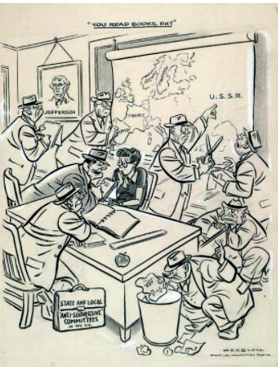 “Então você lê livros, hein?” Cartum de Herblock no Washington Post, 24/04/1949.
https://www.loc.gov/rr/print//swann/herblock/images/s03399u.jpg
O período dos anos 1950, nos Estados Unidos, é marcado pela Guerra Fria, momento que surgiu também o Macarthismo, influenciado pelas ideias do senador Joseph McCarthy. Esse período está retratado na charge.
Os elementos fundamentais dessa política dos Estados Unidos dos anos 50 são indicados na seguinte opção:
Q2082123
História
 Cúpula da Rocha. Qubbat As-Sakhrah. Jerusalém, Israel.
https://pt.wikipedia.org/wiki/C%C3%BApula_da_Rocha#/media/Ficheiro:Jerusalem-2013(2)-Temple_Mount-Dome_of_the_Rock_(SE_exposure).jpg
A Cúpula da Rocha ou Domo da Rocha, situado em Jerusalém, foi construído no século VII e é um dos lugares mais sagrados da religião islâmica. O Islamismo defende os seguintes pilares:
Q2082122
História
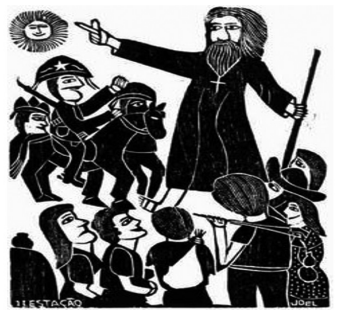
A Guerra de Canudos foi um conflito que envolveu
milhares de sertanejos pobres e o exército
republicano brasileiro, no nordeste da Bahia,
entre 1896 e 1897. A comunidade do arraial de
Bello Monte, liderada por Antônio Conselheiro
(retratado, em primeiro plano, na imagem ao
lado), representou uma nova experiência social
no sertão nordestino.
 centrosabia.org.br
Considerando a organização social de Canudos, pode-se afirmar que essa era uma sociedade
centrosabia.org.br Considerando a organização social de Canudos, pode-se afirmar que essa era uma sociedade
Q2082121
Inglês
Texto associado
TEXT II
Veggies You Can Regrow From Discarded Roots
Patrick Phillips
When it comes to cooking with healthy, fresh ingredients, we always end up facing the same issue: what to do with all of the roots we chop off of our veggies? Instead of tossing them in the trash, there’s
actually something quite useful you can do with them, and it’ll save you a good chunk of change.
Regrowing green onions has become quite popular, and it’s easy to understand why: it’s very simple and fun to check on its growth progress on a daily basis. It’s also a great way to help avoid food
waste. However, there are plenty of vegetables you can regrow for yourself at home using scraps.
Green Onion
Let’s start with the basics: green onions. These are the fastest plants to regrow and also the easiest. To do so, put the root and 1 inch of the white part in a bowl or jar, then fill it with enough water to cover
up to halfway up the white part of the onion. Change out the water every 2 to 3 days. You’ll notice it
growing within a day and after a week, you’ll have greens that you can use!
Romaine Lettuce
You can regrow romaine lettuce and also other lettuces by placing the roots of it in a jar filled with at least 1 inch of water. Leave for a few days until it begins to grow, then transfer the roots into soil to
continue growing the thriving plant.
Cabbage
You can regrow cabbage in the same way that you regrow lettuce. Simply save a stump of the cabbage with its roots and place it in 1 inch of water. Then transfer the sprouting leaves into soil.
Leeks
Since leeks are actually directly related to green onions, they can be regrown using the same method. Place the root and about 2 inches of the white part in a jar with water that reaches about halfway
up the white part. These will take a bit longer to regrow, but don’t give up! Make sure to keep changing
out the water every 2 or 3 days.
Carrot Tops
Cut a carrot at the top (the root) and place the piece, cut side-down, in a bowl of water. The leaves of the carrots will grow as opposed to the carrot itself, however, these leaves can be used in salads, be
used as a garnish, or can even be put into a pesto. Simply change the water every few days.
Celery
Celery can be regrown in the same way as the cabbage and romaine. Place the root end of the stalk in 1 inch of water. When the leaves will begin to sprout, wait about a week in order for the celery to
become stronger. Make sure you change the water every few days. Once this process is done, you can
replant the celery in soil. Celery leaves can also be used in salads.
https://www.sizzlfy.com/healthy/veggies-regrow. Slighted modified. Accessed on September the 30th
Taking into consideration the specific parts (1 to 6) of text II: Green onion, Romaine lettuce, Cabbage,
leeks, Carrot tops, and Celery, choose the correct option in which one can find a comparative of superiority.
Q2082120
Inglês
Texto associado
TEXT II
Veggies You Can Regrow From Discarded Roots
Patrick Phillips
When it comes to cooking with healthy, fresh ingredients, we always end up facing the same issue: what to do with all of the roots we chop off of our veggies? Instead of tossing them in the trash, there’s
actually something quite useful you can do with them, and it’ll save you a good chunk of change.
Regrowing green onions has become quite popular, and it’s easy to understand why: it’s very simple and fun to check on its growth progress on a daily basis. It’s also a great way to help avoid food
waste. However, there are plenty of vegetables you can regrow for yourself at home using scraps.
Green Onion
Let’s start with the basics: green onions. These are the fastest plants to regrow and also the easiest. To do so, put the root and 1 inch of the white part in a bowl or jar, then fill it with enough water to cover
up to halfway up the white part of the onion. Change out the water every 2 to 3 days. You’ll notice it
growing within a day and after a week, you’ll have greens that you can use!
Romaine Lettuce
You can regrow romaine lettuce and also other lettuces by placing the roots of it in a jar filled with at least 1 inch of water. Leave for a few days until it begins to grow, then transfer the roots into soil to
continue growing the thriving plant.
Cabbage
You can regrow cabbage in the same way that you regrow lettuce. Simply save a stump of the cabbage with its roots and place it in 1 inch of water. Then transfer the sprouting leaves into soil.
Leeks
Since leeks are actually directly related to green onions, they can be regrown using the same method. Place the root and about 2 inches of the white part in a jar with water that reaches about halfway
up the white part. These will take a bit longer to regrow, but don’t give up! Make sure to keep changing
out the water every 2 or 3 days.
Carrot Tops
Cut a carrot at the top (the root) and place the piece, cut side-down, in a bowl of water. The leaves of the carrots will grow as opposed to the carrot itself, however, these leaves can be used in salads, be
used as a garnish, or can even be put into a pesto. Simply change the water every few days.
Celery
Celery can be regrown in the same way as the cabbage and romaine. Place the root end of the stalk in 1 inch of water. When the leaves will begin to sprout, wait about a week in order for the celery to
become stronger. Make sure you change the water every few days. Once this process is done, you can
replant the celery in soil. Celery leaves can also be used in salads.
https://www.sizzlfy.com/healthy/veggies-regrow. Slighted modified. Accessed on September the 30th
The veggies which have the same way of regrowing are
Q2082119
Inglês
Texto associado
TEXT I
What Is Organic Anyway?
When you think of organic food, what words come to mind? Natural, local, ethical? In fact, the
classification of organic food is a tricky business.
Until the 19th century, nobody would have considered farming as anything other than organic.
Crops were fertilized using animal manure and compost. In the 18th and 19th centuries, however, chemists
were discovering more about chemicals. The work of German chemist Justus von Liebig, in particular, led
to the development of cheap nitrogen fertilizers. The agricultural revolution that followed, especially in
Great Britain, brought about a huge increase in crop production. This helped feed the country’s rapidly
growing urban population and reduce famine. However, not everybody was convinced of the benefits of
the new technologies.
Sir Albert Howard’s experiences in India convinced him that correct animal and crop management
in a local area produced strong pest-resistant plants that were superior to those grown with chemical
fertilizers. He saw chemical fertilizers as expensive, unnecessary, and unsustainable and studied ways to
farm productively but naturally.
Howard himself never used the word organic. It was British agriculturalist Lord Northbourne
who first referred to a farm as a single “organic whole,” describing a more balanced, sustainable style of
farming. Northbourne’s ideas, however, were not widely accepted. The following years saw an increase in
the use of fertilizers and pesticides, which allowed farmers to plant large quantities of single crops. Most
farms became industrialized single-crop producers that depended on pesticides and fertilizers. Then in
the 1970s, some people began to express their concerns about the negative effects of these methods on
soil quality and the environment. These green activists began to call for a return to more traditional styles
of farming.
At the same time, in other parts of the world modern methods were replacing traditional farming.
In Mexico, Pakistan, and India, Nobel Prize-winning agriculturalist Norman Borlaug pioneered the use of
new crops and technologies and greatly increased food production. Environmentalists criticized Borlaug’s
work, which they claimed led to reliance on a single crop, inequality, malnutrition, and the loss of natural
wildlife. While Borlaug recognized some of these claims, he argued that his principle aim was an end to
hunger, something, he pointed out, that most of his critics had never experienced.
Meanwhile in the USA and the UK, many smaller farms were trying to return to natural methods,
growing many different crops and keeping animals to fertilize the soil. Throughout the 1970s, activists
continued to promote a return to more traditional ways of living, and some people were encouraged to
try to provide their own food, both out in the countryside and using smaller urban gardens.
However, as the idea of organic food became more popular, big business began to move in. The
1980s and 1990s saw the growth of large organic farms and supermarkets, and the importation of organic
produce from abroad. At the same time, new legislation in places such as the USA and Europe has made it
extremely expensive and complicated for small producers to obtain organic certification. Ironically, many
natural local farms are not classed as organic, while much of the organic food supermarkets sell often
comes from foreign countries. This has led to criticism from environmentalists who feel that the term
organic no longer represents the ideals of organic farming.
As we move into the 21st century with a world population of seven billion people, the debate on
how we should feed ourselves shows no sign of coming to an end.
SHACKLETON, Caroline & TURNER, Nathan Paul. Money Tree: the business of organics. Cambridge University Press, 2014.
The most important argument Mr. Borlaug had to fight his critics was the fact that they had never
Q2082118
Inglês
Texto associado
TEXT I
What Is Organic Anyway?
When you think of organic food, what words come to mind? Natural, local, ethical? In fact, the
classification of organic food is a tricky business.
Until the 19th century, nobody would have considered farming as anything other than organic.
Crops were fertilized using animal manure and compost. In the 18th and 19th centuries, however, chemists
were discovering more about chemicals. The work of German chemist Justus von Liebig, in particular, led
to the development of cheap nitrogen fertilizers. The agricultural revolution that followed, especially in
Great Britain, brought about a huge increase in crop production. This helped feed the country’s rapidly
growing urban population and reduce famine. However, not everybody was convinced of the benefits of
the new technologies.
Sir Albert Howard’s experiences in India convinced him that correct animal and crop management
in a local area produced strong pest-resistant plants that were superior to those grown with chemical
fertilizers. He saw chemical fertilizers as expensive, unnecessary, and unsustainable and studied ways to
farm productively but naturally.
Howard himself never used the word organic. It was British agriculturalist Lord Northbourne
who first referred to a farm as a single “organic whole,” describing a more balanced, sustainable style of
farming. Northbourne’s ideas, however, were not widely accepted. The following years saw an increase in
the use of fertilizers and pesticides, which allowed farmers to plant large quantities of single crops. Most
farms became industrialized single-crop producers that depended on pesticides and fertilizers. Then in
the 1970s, some people began to express their concerns about the negative effects of these methods on
soil quality and the environment. These green activists began to call for a return to more traditional styles
of farming.
At the same time, in other parts of the world modern methods were replacing traditional farming.
In Mexico, Pakistan, and India, Nobel Prize-winning agriculturalist Norman Borlaug pioneered the use of
new crops and technologies and greatly increased food production. Environmentalists criticized Borlaug’s
work, which they claimed led to reliance on a single crop, inequality, malnutrition, and the loss of natural
wildlife. While Borlaug recognized some of these claims, he argued that his principle aim was an end to
hunger, something, he pointed out, that most of his critics had never experienced.
Meanwhile in the USA and the UK, many smaller farms were trying to return to natural methods,
growing many different crops and keeping animals to fertilize the soil. Throughout the 1970s, activists
continued to promote a return to more traditional ways of living, and some people were encouraged to
try to provide their own food, both out in the countryside and using smaller urban gardens.
However, as the idea of organic food became more popular, big business began to move in. The
1980s and 1990s saw the growth of large organic farms and supermarkets, and the importation of organic
produce from abroad. At the same time, new legislation in places such as the USA and Europe has made it
extremely expensive and complicated for small producers to obtain organic certification. Ironically, many
natural local farms are not classed as organic, while much of the organic food supermarkets sell often
comes from foreign countries. This has led to criticism from environmentalists who feel that the term
organic no longer represents the ideals of organic farming.
As we move into the 21st century with a world population of seven billion people, the debate on
how we should feed ourselves shows no sign of coming to an end.
SHACKLETON, Caroline & TURNER, Nathan Paul. Money Tree: the business of organics. Cambridge University Press, 2014.
Many animal and crop management procedures took place across the centuries. The option which highlights
the one taken as an organic procedure is
Q2082117
Literatura
O Surrealismo, movimento vanguardista, trazia como princípios a prevalência do automatismo psíquico em
estado puro e a expressão do pensamento de maneira automática e espontânea, gerando, na escrita literária,
imagens impulsionadas pelo inconsciente.
As poesias de Mario Quintana, não muito raro, trazem imagens que dialogam com a proposta surrealista, como se pode observar no seguinte conjunto de versos, extraído do livro de poemas Esconderijos do tempo:
As poesias de Mario Quintana, não muito raro, trazem imagens que dialogam com a proposta surrealista, como se pode observar no seguinte conjunto de versos, extraído do livro de poemas Esconderijos do tempo:
Q2082116
Português
Texto associado
Mario Quintana, poeta gaúcho, foi um dos maiores expoentes da literatura brasileira. Com estilo eclético,
estreou em 1940, desafiando os críticos literários por se ter tornado um poeta popular. Sua poesia é
compreensível sem ser banal; sua originalidade é natural; suas metáforas são claras, mas, ao mesmo
tempo, surpreendentes.
O poema Noturno citadino é a base para responder à questão.
Um cartaz luminoso ri no ar.
Ó noite, ó minha nêga
toda acesa
de letreiros!... Pena
é que a gente saiba ler... Senão
tu serias de uma beleza única
inteiramente feita
para o amor dos nossos olhos.
QUINTANA, M. Esconderijos do tempo. Rio de Janeiro: Objetiva, 2013.
O articulador argumentativo “Senão” imprime no poema um valor semântico de
Q2082115
Português
Texto associado
Mario Quintana, poeta gaúcho, foi um dos maiores expoentes da literatura brasileira. Com estilo eclético,
estreou em 1940, desafiando os críticos literários por se ter tornado um poeta popular. Sua poesia é
compreensível sem ser banal; sua originalidade é natural; suas metáforas são claras, mas, ao mesmo
tempo, surpreendentes.
O poema Noturno citadino é a base para responder à questão.
Um cartaz luminoso ri no ar.
Ó noite, ó minha nêga
toda acesa
de letreiros!... Pena
é que a gente saiba ler... Senão
tu serias de uma beleza única
inteiramente feita
para o amor dos nossos olhos.
QUINTANA, M. Esconderijos do tempo. Rio de Janeiro: Objetiva, 2013.
O sujeito lírico, para fazer entender seus sentimentos no poema, pretende criar um dialogismo imaginário
íntimo no(s)
 Conheça nossos planos