Foram encontradas 36.804 questões
Resolva questões gratuitamente!
Junte-se a mais de 4 milhões de concurseiros!


INSTRUÇÃO: Para responder à questão, analise o texto e as afirmativas que seguem.
Uma forma de gelar bebidas rapidamente consiste em preparar um recipiente com gelo e água e adicionar sal grosso ou álcool. A mistura assim produzida é denominada mistura refrigerante, pois atinge temperaturas abaixo de 0 ºC e proporciona um excelente meio de gelar as latas e garrafas colocadas dentro dele.
Sobre esse processo, afirma-se:
I. Uma mistura de gelo, água e açúcar pode ser usada como mistura refrigerante.
II. A temperatura de congelamento de uma mistura de gelo, água e areia é de cerca de 0 ºC.
III. Uma mistura de gelo, água e álcool tem duas fases e três componentes.
IV. A adição de sal grosso ao gelo com água proporciona temperaturas mais baixas do que a adição de sal fino na mesma quantidade.
De acordo com as informações acima, são corretas
apenas as afirmativas
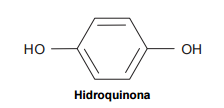
A função orgânica que caracteriza esse composto é
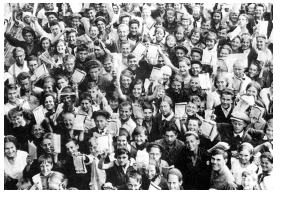
Crianças mobilizadas pelo regime agitam alegremente certificados do governo que deveriam vender para financiar projetos de desenvolvimento durante os anos de 1930. Uma das características do stalinismo foi a doutrinação ideológica das crianças desde a mais tenra idade. (In: FIGUEIRA, Divalte G. História. São Paulo: Ática, 2003, p.301) Durante o período do stalinismo, a que o texto se refere, o governo se caracterizou
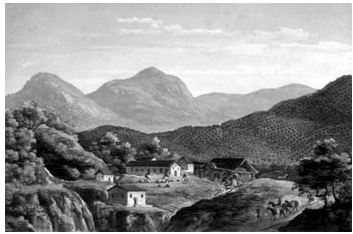
O quadro Plantação de Café (1839) do pintor Johan Jacob Steinmann teve como inspiração o território fluminense, parte que integra o domínio
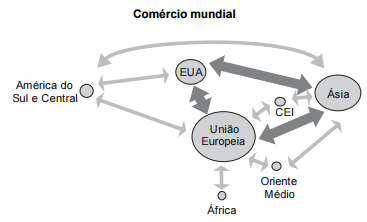
Da análise do esquema, pode-se concluir que
Born on April 15, 1452, in Vinci, Italy, Leonardo da Vinci was the son of a prominent attorney notary and a young peasant girl. Born out of wedlock, he was raised by his father, Ser Piero, and several stepmothers.
His early years were spent living on his father’s family estate in Vinci. Beyond basic reading, writing and mathematical skills, da Vinci did not receive much of a formal education. Recognizing his potential as an artist, his father sent him at the age of 14 or 15 to apprentice with sculptor and painter Andrea del Verrocchio of Florence.
He spent six years honing his technical skills, including metalworking, leather arts, carpentry, drawing and sculpting, and became a member of the Guild of Saint Luke by the age of 20. He remained with Verrocchio until he became an independent master in 1478. Around that time, he took on his first commissioned work, The Adoration of the Magi, for Florence’s San Donato, a Scopeto monastery, but departed for Milan the following year, leaving the painting unfinished. It has been in the Uffizi Gallery in Florence since 1670.
Leonardo was, and is, renowned primarily as a painter. Among his works, the Mona Lisa is the most famous and most parodied portrait and The Last Supper the most reproduced religious painting of all time, with their fame approached only by Michelangelo's The Creation of Adam. Leonardo's drawing of The Vitruvian Man, based on the correlations of ideal human proportions with geometry described by the ancient Roman architect Vitruvius, is also regarded as a cultural icon, being reproduced on items as varied as the euro coin, textbooks, and T-shirts.
Leonardo is also revered for his technological ingenuity. In the early 1490s, he began chronicling his thoughts about painting, architecture, mechanics and human anatomy. These notebooks contained wide-ranging ideas, including plans for a “flying machine,” bicycle and drawings of a fetus in the womb and the human skeleton.
His interests and intellect traversed so many disciplines that he symbolized the term “Renaissance Man”. Unfortunately, these notebooks were not published and his ideas did not advance scientific understanding in the Renaissance period.
Today, Leonardo is widely recognized as one of the most diversely talented individuals ever to have lived.
(Adapted form: http://www.livescience.com/39355-leonardo-da-vinci.html)
Born on April 15, 1452, in Vinci, Italy, Leonardo da Vinci was the son of a prominent attorney notary and a young peasant girl. Born out of wedlock, he was raised by his father, Ser Piero, and several stepmothers.
His early years were spent living on his father’s family estate in Vinci. Beyond basic reading, writing and mathematical skills, da Vinci did not receive much of a formal education. Recognizing his potential as an artist, his father sent him at the age of 14 or 15 to apprentice with sculptor and painter Andrea del Verrocchio of Florence.
He spent six years honing his technical skills, including metalworking, leather arts, carpentry, drawing and sculpting, and became a member of the Guild of Saint Luke by the age of 20. He remained with Verrocchio until he became an independent master in 1478. Around that time, he took on his first commissioned work, The Adoration of the Magi, for Florence’s San Donato, a Scopeto monastery, but departed for Milan the following year, leaving the painting unfinished. It has been in the Uffizi Gallery in Florence since 1670.
Leonardo was, and is, renowned primarily as a painter. Among his works, the Mona Lisa is the most famous and most parodied portrait and The Last Supper the most reproduced religious painting of all time, with their fame approached only by Michelangelo's The Creation of Adam. Leonardo's drawing of The Vitruvian Man, based on the correlations of ideal human proportions with geometry described by the ancient Roman architect Vitruvius, is also regarded as a cultural icon, being reproduced on items as varied as the euro coin, textbooks, and T-shirts.
Leonardo is also revered for his technological ingenuity. In the early 1490s, he began chronicling his thoughts about painting, architecture, mechanics and human anatomy. These notebooks contained wide-ranging ideas, including plans for a “flying machine,” bicycle and drawings of a fetus in the womb and the human skeleton.
His interests and intellect traversed so many disciplines that he symbolized the term “Renaissance Man”. Unfortunately, these notebooks were not published and his ideas did not advance scientific understanding in the Renaissance period.
Today, Leonardo is widely recognized as one of the most diversely talented individuals ever to have lived.
(Adapted form: http://www.livescience.com/39355-leonardo-da-vinci.html)
From the above text, one can infer that
Observe a figura abaixo e leia o texto.
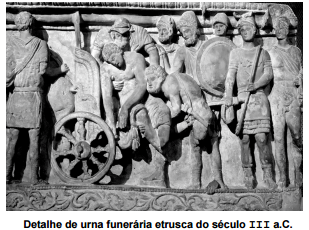
O relevo remete a um trecho da Iliada, de Homero, e mostra, com acentuado vigor dramático, o transporte do corpo do herói Heitor, amparado pelo pai, Príamo, rei de Troia.
(In: DIVALTE G. Figueira. História. São Paulo: Ática, 2003, p. 36)
Com base na figura e no texto, pode-se afirmar que a obra
 Conheça nossos planos