Foram encontradas 36.754 questões
Resolva questões gratuitamente!
Junte-se a mais de 4 milhões de concurseiros!


No bloco superior abaixo, estão listados os títulos de alguns romances, representantes do Romance de 30 no Brasil; no inferior, o enredo central desses romances.
Associe adequadamente o bloco inferior ao superior.
1 - A bagaceira, de José Américo de Almeida.
2 - O quinze, de Rachel de Queiroz.
3 - Menino de engenho, de José Lins do Rego.
4 - Os ratos, de Dyonélio Machado.
5 - Vidas secas, de Graciliano Ramos.
( ) Os retirantes sertanejos Valentim Pereira, Soledade, sua filha, e Pirunga, um agregado, buscam, durante uma terrível seca, abrigo no engenho de Dagoberto Marcão.
( ) Carlos de Melo narra suas memórias de infância na fazenda Santa Rosa, apresentando o avô, as tias e os “moleques da bagaceira”.
( ) Família de retirantes foge da seca em direção ao sul do Brasil, rumo a uma cidade grande, onde há trabalho para o pai e escola para os filhos.
( ) Funcionário público, endividado com o leiteiro, perambula pela cidade em busca do dinheiro para saldar sua dívida.
A sequência correta de preenchimento dos parênteses, de cima para baixo, é
Leia as seguintes afirmações sobre os romances Dom Casmurro, de Machado de Assis, e Diário da queda, de Michel Laub.
I - Os dois romances são narrados em primeira pessoa, como processo de compreensão do vivido.
II - Os dois narradores apresentam uma relação amorosa com esposa e filhos, reproduzindo a tradição familiar.
III- O balanço final dos narradores de cada romance demonstra grande aprendizado, a partir das experiências vividas, repleto de esperança e de otimismo.
Quais estão corretas?
Leia o trecho da crônica O vestuário feminino, de Júlia Lopes de Almeida (1862-1934).
É uma esquisitice muito comum entre senhoras intelectuais, envergarem paletó, colete e colarinho de homem, ao apresentarem-se em público, procurando confundir-se, no aspecto físico, com os homens, como se lhes não bastassem as aproximações igualitárias do espírito.
Esse desdém da mulher pela mulher faz pensar que: ou as doutoras julgam, como os homens, que a mentalidade da mulher é inferior, e que, sendo elas exceção da grande regra, pertencem mais ao sexo forte, do que do nosso, fragílimo; ou que isso revela apenas pretensão de despretensão.
Seja o que for, nem a moral nem a estética ganham nada com isso. Ao contrário; se uma mulher triunfa da má vontade dos homens e das leis, dos preconceitos do meio e da raça, todas as vezes que for chamada ao seu posto de trabalho, com tanta dor, tanta esperança, e tanto susto adquirido, deve ufanar-se em apresentar-se como mulher. Seria isso um desafio?
Não; naturalíssimo pareceria a toda a gente que uma mulher se apresentasse em público como todas as outras. [...]
Os colarinhos engomados, as camisas de peito chato, dão às mulheres uma linha pouco sinuosa, e contrafeita, porque é disfarçada. [...]
Nas cidades, sobre o asfalto das ruas ou o saibro das alamedas, não sabe a gente verdadeiramente para que razão apelar, quando vê, cingidas a corpos femininos, essas toilettes híbridas, compostas de saias de mulher, coletes e paletós de homem... Nem tampouco é fácil de perceber o motivo por que, em vez da fita macia, preferem essas senhoras especar o pescoço num colarinho lustrado a ferro, e duro como um papelão!
Considere as seguintes afirmações sobre o trecho.
I - A crônica, publicada em 1906, registra as exigências que uma sociedade patriarcal impõe a mulheres que circulam no âmbito público.
II - A crônica apresenta um chamado para que mulheres de atuação pública – espaço majoritariamente masculino – mantenham características convencionadas como femininas, em especial no vestuário.
III- A autora, ao falar do vestuário feminino, está tratando também de meio, raça e gênero, temas estruturantes do debate literário no final do século XIX, início do XX.
Quais estão corretas?
Leia as seguintes afirmações sobre os poemas “Autopsicografia” e “Isto”.
I - Em ambos os poemas, são apresentados os princípios de Pessoa para a construção da poesia, constituindo-se como “arte poética”.
II - Nos dois poemas, não há referência à figura do leitor.
III- Em ambos os poemas, o sujeito lírico admite construir sua poética inventando e falseando.
Quais estão corretas?
Leia o trecho final de O cortiço.
A negra, imóvel, cercada de escamas e tripas de peixe, com uma das mãos espalmada no chão e com a outra segurando a faca de cozinha, olhou aterrada para eles, sem pestanejar.
Os policiais, vendo que ela se não despachava, desembainharam os sabres. Bertoleza então, erguendo-se com ímpeto de anta bravia, recuou de um salto e, antes que alguém conseguisse alcançála, já de um só golpe certeiro e fundo rasgara o ventre de lado a lado.
E depois embarcou para a frente, rugindo e esfocinhando moribunda numa lameira de sangue.
João Romão fugira até ao canto mais escuro do armazém, tapando o rosto com as mãos.
Nesse momento parava à porta da rua uma carruagem. Era uma comissão de abolicionistas que vinha, de casaca, trazer-lhe respeitosamente o diploma de sócio benemérito.
Ele mandou que os conduzissem para a sala de visitas.
Considere as seguintes afirmações sobre o trecho.
I - O narrador em terceira pessoa aproxima-se de Bertoleza, assumindo seu ponto de vista para desmascarar o falso abolicionismo de João Romão; ao mesmo tempo, mantém-se distante dela ao descrevê-la com traços animalescos.
II - A morte terrível de Bertoleza destoa do andamento geral do romance, marcado pelo lirismo da narração, característica naturalista presente no texto de Aluísio Azevedo.
III- A última frase do trecho sugere que João Romão receberá a comissão a despeito do fim de Bertoleza, em uma alegoria do Brasil: abolicionista na sala de visitas, escravocrata na cozinha.
Quais estão corretas?
Sobre autores do Naturalismo brasileiro, assinale com V (verdadeiro) ou F (falso) as seguintes afirmações.
( ) Em A carne, de Júlio Ribeiro, faz-se presente a tensão entre intelectualidade e desejo sexual, em especial no corpo da protagonista Lenita.
( ) Em Bom-crioulo, de Adolfo Caminha, há o relacionamento homossexual entre o escravo fugido Amaro e o marinheiro branco Aleixo.
( ) Em O Ateneu, de Raul Pompéia, há denúncia de preconceito sofrido pelo menino negro Sérgio, no colégio interno onde estuda.
( ) Em O mulato, de Aluísio Azevedo, o casal formado pelo “mulato” Raimundo e por sua prima branca Ana Rosa é bem aceito pelos demais personagens do romance.
A sequência correta de preenchimento dos parênteses, de cima para baixo, é
No bloco superior abaixo, estão listados os movimentos literários brasileiros; no inferior, características desses movimentos.
Associe adequadamente o bloco inferior ao superior.
1 - Arcadismo
2 - Parnasianismo
3 - Simbolismo
( ) Representa um afastamento dos problemas sociais brasileiros, seguindo uma estética rígida.
( ) Surge na periferia intelectual brasileira: Minas Gerais, Santa Catarina e Rio Grande do Sul.
( ) Recupera o padrão estético clássico, fazendo ressurgir a epopeia.
( ) Busca transfigurar a condição humana, dando-lhe horizontes transcendentais.
A sequência correta de preenchimento dos parênteses, de cima para baixo, é
Leia o segmento abaixo, retirado do Sermão da Sexagésima, de Padre Antônio Vieira, e assinale a alternativa que preenche corretamente a lacuna.
Supostas estas duas demonstrações; suposto que o fruto e efeitos da palavra de Deus, não fica, nem por parte de Deus, nem por parte dos ouvintes, segue-se por consequência clara que fica por parte do pregador. E assim é. Sabeis, cristãos, por que não faz fruto a palavra de Deus? Por culpa dos pregadores. Sabeis, pregadores, por que não faz fruto a palavra de Deus? Por culpa nossa. [...] Mas como em um pregador há tantas qualidades, e em uma pregação tantas leis, e os pregadores podem ser culpados em todas, em qual consistirá esta culpa? No pregador podem-se considerar cinco circunstâncias: ........ .
A figura abaixo representa um experimento em que um ímã está sendo aproximado com velocidade V de uma bobina em repouso, ligada em série com um galvanômetro G.

A seguir, três variantes do mesmo experimento estão representadas nas figuras I, II e III.
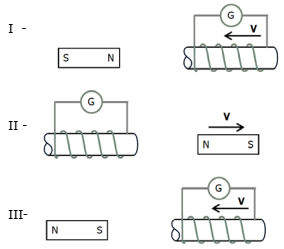
Assinale a alternativa que indica corretamente as variantes que possuem corrente elétrica induzida
igual àquela produzida no experimento original.
A velocidade máxima do vento no furacão Irma em setembro/2017 chegou a 346 km/h, o que o classifica como um furacão de categoria 5.
Segundo um modelo teórico desenvolvido no MIT (Massachuttes Institute of Thecnology), um furacão pode ser tratado como uma máquina de calor de Carnot. A tempestade extrai calor do oceano tropical quente (água como fonte de calor) e converte parte do calor em energia cinética (vento).
Nesse modelo, a velocidade máxima Vmáx pode ser obtida da equação
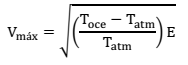
Nessa equação, Toce e Tatm são, respectivamente, a temperatura da superfície do oceano e a temperatura no nível do topo da nuvem a cerca de 12 a 18 km, ambas em K, e E corresponde à taxa de transferência de calor do oceano para a atmosfera.
Considere, no modelo, os seguintes processos.
I - Diminuição da temperatura na superfície do oceano.
II - Aumento na diferença de temperatura entre a superfície do oceano e o topo da nuvem na atmosfera.
III- Diminuição na taxa de transferência de calor.
Quais processos contribuem para o aumento
da velocidade máxima do vento em um
furacão?
Uma barra metálica de 1 m de comprimento é submetida a um processo de aquecimento e sofre uma variação de temperatura.
O gráfico abaixo representa a variação Δl, em mm, no comprimento da barra, em função da variação de temperatura ΔT, em °C.
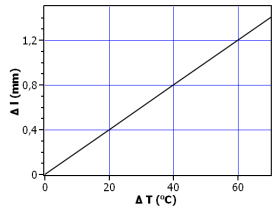
Qual é o valor do coeficiente de dilatação
térmica linear do material de que é feita a
barra, em unidades 10-6 /°C?
O cabo-de-guerra é uma atividade esportiva na qual duas equipes, A e B, puxam uma corda pelas extremidades opostas, conforme representa a figura abaixo.

Considere que a corda é puxada pela equipe A com uma força horizontal de módulo 780 N e pela equipe B com uma força horizontal de módulo 720 N. Em dado instante, a corda arrebenta.
Assinale a alternativa que preenche corretamente as lacunas do enunciado abaixo, na ordem em que aparecem.
A força resultante sobre a corda, no instante imediatamente anterior ao rompimento, tem módulo 60 N
e aponta para a ........ . Os módulos das acelerações das equipes A e B, no instante imediatamente
posterior ao rompimento da corda, são, respectivamente, ........, supondo que cada equipe tem massa
de 300 kg.
Dois objetos de massas m1 e m2 (=2m1) encontram-se na borda de uma mesa de altura h em relação ao solo, conforme representa a figura abaixo.

O objeto 1 é lentamente deslocado até começar a cair verticalmente. No instante em que o objeto 1 começa a cair, o objeto 2 é lançado horizontalmente com velocidade V0. A resistência do ar é desprezível.
Assinale a alternativa que melhor representa os gráficos de posição vertical dos objetos 1 e 2, em função do tempo. Nos gráficos, tq1 representa o tempo de queda do objeto 1. Em cada alternativa, o gráfico da esquerda representa o objeto 1 e o da direita representa o objeto 2.
T E X T
EL TIGRE, Venezuela — Thousands of workers are fleeing Venezuela’s state-owned oil company, abandoning once-coveted jobs made worthless by the worst inflation in the world. And now the hemorrhaging is threatening the nation’s chances of overcoming its long economic collapse.
Desperate oil workers and criminals are also stripping the oil company of vital equipment, vehicles, pumps and copper wiring, carrying off whatever they can to make money. The double drain — of people and hardware — is further crippling a company that has been teetering for years yet remains the country’s most important source of income.
The timing could not be worse for Venezuela’s increasingly authoritarian president, Nicolás Maduro, who was re-elected last month in a vote that has been widely condemned by leaders across the hemisphere. Prominent opposition politicians were either barred from competing in the election, imprisoned or in exile.
But while Mr. Maduro has firm control over the country, Venezuela is on its knees economically, buckled by hyperinflation and a history of mismanagement. Widespread hunger, political strife, devastating shortages of medicine and an exodus of well over a million people in recent years have turned this country, once the economic envy of many of its neighbors, into a crisis that is spilling over international borders.
If Mr. Maduro is going to find a way out of the mess, the key will be oil: virtually the only source of hard currency for a nation with the world’s largest estimated petroleum reserves. But each month Venezuela produces less of it. Offices at the state oil company are emptying out, crews in the field are at half strength, pickup trucks are stolen and vital materials vanish. All of this is adding to the severe problems at the company that were already acute because of corruption, poor maintenance, crippling debts, the loss of professionals and even a lack of spare parts.
Now workers at all levels are walking away in large numbers, sometimes literally taking pieces of the company with them, union leaders, oil executives and workers say.
A job with Petróleos de Venezuela, known as Pdvsa, used to be a ticket to the Venezuelan Dream. No more.
Inflation in Venezuela is projected to reach an astounding 13,000 percent this year, according to the International Monetary Fund. When The New York Times interviewed Mr. Navas in May, the monthly salary for a worker like him was barely enough to buy a whole chicken or two pounds of beef. But with prices going up so quickly, it buys even less now.
Junior Martínez, 28, who has worked in the oil industry for eight years, is assembling papers, including his diploma as a chemical engineer. His wife and her daughter left three months ago to earn money in Brazil. “I get 1,400,000 bolívars a week and it isn’t even enough to buy a carton of eggs or a tube of toothpaste,”Mr. Martínez said of his salary in bolívars, Venezuela’s currency.
Mr. Martínez’s father, Ovidio Martínez, 55, recalled growing up here when the oil boom began. He cried as he spoke of his son’s determination to leave the country. “You watch your children leave and you can’t stop them,” the elder Mr. Martínez said, fighting back tears. “In this country, they don’t have a future.”
In El Tigre, hundreds of people stood in line one recent morning outside a supermarket, many waiting since the evening before to buy whatever food they could.
From: www.nytimes.com/June 14, 2018. Adapted.
T E X T
EL TIGRE, Venezuela — Thousands of workers are fleeing Venezuela’s state-owned oil company, abandoning once-coveted jobs made worthless by the worst inflation in the world. And now the hemorrhaging is threatening the nation’s chances of overcoming its long economic collapse.
Desperate oil workers and criminals are also stripping the oil company of vital equipment, vehicles, pumps and copper wiring, carrying off whatever they can to make money. The double drain — of people and hardware — is further crippling a company that has been teetering for years yet remains the country’s most important source of income.
The timing could not be worse for Venezuela’s increasingly authoritarian president, Nicolás Maduro, who was re-elected last month in a vote that has been widely condemned by leaders across the hemisphere. Prominent opposition politicians were either barred from competing in the election, imprisoned or in exile.
But while Mr. Maduro has firm control over the country, Venezuela is on its knees economically, buckled by hyperinflation and a history of mismanagement. Widespread hunger, political strife, devastating shortages of medicine and an exodus of well over a million people in recent years have turned this country, once the economic envy of many of its neighbors, into a crisis that is spilling over international borders.
If Mr. Maduro is going to find a way out of the mess, the key will be oil: virtually the only source of hard currency for a nation with the world’s largest estimated petroleum reserves. But each month Venezuela produces less of it. Offices at the state oil company are emptying out, crews in the field are at half strength, pickup trucks are stolen and vital materials vanish. All of this is adding to the severe problems at the company that were already acute because of corruption, poor maintenance, crippling debts, the loss of professionals and even a lack of spare parts.
Now workers at all levels are walking away in large numbers, sometimes literally taking pieces of the company with them, union leaders, oil executives and workers say.
A job with Petróleos de Venezuela, known as Pdvsa, used to be a ticket to the Venezuelan Dream. No more.
Inflation in Venezuela is projected to reach an astounding 13,000 percent this year, according to the International Monetary Fund. When The New York Times interviewed Mr. Navas in May, the monthly salary for a worker like him was barely enough to buy a whole chicken or two pounds of beef. But with prices going up so quickly, it buys even less now.
Junior Martínez, 28, who has worked in the oil industry for eight years, is assembling papers, including his diploma as a chemical engineer. His wife and her daughter left three months ago to earn money in Brazil. “I get 1,400,000 bolívars a week and it isn’t even enough to buy a carton of eggs or a tube of toothpaste,”Mr. Martínez said of his salary in bolívars, Venezuela’s currency.
Mr. Martínez’s father, Ovidio Martínez, 55, recalled growing up here when the oil boom began. He cried as he spoke of his son’s determination to leave the country. “You watch your children leave and you can’t stop them,” the elder Mr. Martínez said, fighting back tears. “In this country, they don’t have a future.”
In El Tigre, hundreds of people stood in line one recent morning outside a supermarket, many waiting since the evening before to buy whatever food they could.
From: www.nytimes.com/June 14, 2018. Adapted.
T E X T
EL TIGRE, Venezuela — Thousands of workers are fleeing Venezuela’s state-owned oil company, abandoning once-coveted jobs made worthless by the worst inflation in the world. And now the hemorrhaging is threatening the nation’s chances of overcoming its long economic collapse.
Desperate oil workers and criminals are also stripping the oil company of vital equipment, vehicles, pumps and copper wiring, carrying off whatever they can to make money. The double drain — of people and hardware — is further crippling a company that has been teetering for years yet remains the country’s most important source of income.
The timing could not be worse for Venezuela’s increasingly authoritarian president, Nicolás Maduro, who was re-elected last month in a vote that has been widely condemned by leaders across the hemisphere. Prominent opposition politicians were either barred from competing in the election, imprisoned or in exile.
But while Mr. Maduro has firm control over the country, Venezuela is on its knees economically, buckled by hyperinflation and a history of mismanagement. Widespread hunger, political strife, devastating shortages of medicine and an exodus of well over a million people in recent years have turned this country, once the economic envy of many of its neighbors, into a crisis that is spilling over international borders.
If Mr. Maduro is going to find a way out of the mess, the key will be oil: virtually the only source of hard currency for a nation with the world’s largest estimated petroleum reserves. But each month Venezuela produces less of it. Offices at the state oil company are emptying out, crews in the field are at half strength, pickup trucks are stolen and vital materials vanish. All of this is adding to the severe problems at the company that were already acute because of corruption, poor maintenance, crippling debts, the loss of professionals and even a lack of spare parts.
Now workers at all levels are walking away in large numbers, sometimes literally taking pieces of the company with them, union leaders, oil executives and workers say.
A job with Petróleos de Venezuela, known as Pdvsa, used to be a ticket to the Venezuelan Dream. No more.
Inflation in Venezuela is projected to reach an astounding 13,000 percent this year, according to the International Monetary Fund. When The New York Times interviewed Mr. Navas in May, the monthly salary for a worker like him was barely enough to buy a whole chicken or two pounds of beef. But with prices going up so quickly, it buys even less now.
Junior Martínez, 28, who has worked in the oil industry for eight years, is assembling papers, including his diploma as a chemical engineer. His wife and her daughter left three months ago to earn money in Brazil. “I get 1,400,000 bolívars a week and it isn’t even enough to buy a carton of eggs or a tube of toothpaste,”Mr. Martínez said of his salary in bolívars, Venezuela’s currency.
Mr. Martínez’s father, Ovidio Martínez, 55, recalled growing up here when the oil boom began. He cried as he spoke of his son’s determination to leave the country. “You watch your children leave and you can’t stop them,” the elder Mr. Martínez said, fighting back tears. “In this country, they don’t have a future.”
In El Tigre, hundreds of people stood in line one recent morning outside a supermarket, many waiting since the evening before to buy whatever food they could.
From: www.nytimes.com/June 14, 2018. Adapted.
T E X T
EL TIGRE, Venezuela — Thousands of workers are fleeing Venezuela’s state-owned oil company, abandoning once-coveted jobs made worthless by the worst inflation in the world. And now the hemorrhaging is threatening the nation’s chances of overcoming its long economic collapse.
Desperate oil workers and criminals are also stripping the oil company of vital equipment, vehicles, pumps and copper wiring, carrying off whatever they can to make money. The double drain — of people and hardware — is further crippling a company that has been teetering for years yet remains the country’s most important source of income.
The timing could not be worse for Venezuela’s increasingly authoritarian president, Nicolás Maduro, who was re-elected last month in a vote that has been widely condemned by leaders across the hemisphere. Prominent opposition politicians were either barred from competing in the election, imprisoned or in exile.
But while Mr. Maduro has firm control over the country, Venezuela is on its knees economically, buckled by hyperinflation and a history of mismanagement. Widespread hunger, political strife, devastating shortages of medicine and an exodus of well over a million people in recent years have turned this country, once the economic envy of many of its neighbors, into a crisis that is spilling over international borders.
If Mr. Maduro is going to find a way out of the mess, the key will be oil: virtually the only source of hard currency for a nation with the world’s largest estimated petroleum reserves. But each month Venezuela produces less of it. Offices at the state oil company are emptying out, crews in the field are at half strength, pickup trucks are stolen and vital materials vanish. All of this is adding to the severe problems at the company that were already acute because of corruption, poor maintenance, crippling debts, the loss of professionals and even a lack of spare parts.
Now workers at all levels are walking away in large numbers, sometimes literally taking pieces of the company with them, union leaders, oil executives and workers say.
A job with Petróleos de Venezuela, known as Pdvsa, used to be a ticket to the Venezuelan Dream. No more.
Inflation in Venezuela is projected to reach an astounding 13,000 percent this year, according to the International Monetary Fund. When The New York Times interviewed Mr. Navas in May, the monthly salary for a worker like him was barely enough to buy a whole chicken or two pounds of beef. But with prices going up so quickly, it buys even less now.
Junior Martínez, 28, who has worked in the oil industry for eight years, is assembling papers, including his diploma as a chemical engineer. His wife and her daughter left three months ago to earn money in Brazil. “I get 1,400,000 bolívars a week and it isn’t even enough to buy a carton of eggs or a tube of toothpaste,”Mr. Martínez said of his salary in bolívars, Venezuela’s currency.
Mr. Martínez’s father, Ovidio Martínez, 55, recalled growing up here when the oil boom began. He cried as he spoke of his son’s determination to leave the country. “You watch your children leave and you can’t stop them,” the elder Mr. Martínez said, fighting back tears. “In this country, they don’t have a future.”
In El Tigre, hundreds of people stood in line one recent morning outside a supermarket, many waiting since the evening before to buy whatever food they could.
From: www.nytimes.com/June 14, 2018. Adapted.
T E X T
EL TIGRE, Venezuela — Thousands of workers are fleeing Venezuela’s state-owned oil company, abandoning once-coveted jobs made worthless by the worst inflation in the world. And now the hemorrhaging is threatening the nation’s chances of overcoming its long economic collapse.
Desperate oil workers and criminals are also stripping the oil company of vital equipment, vehicles, pumps and copper wiring, carrying off whatever they can to make money. The double drain — of people and hardware — is further crippling a company that has been teetering for years yet remains the country’s most important source of income.
The timing could not be worse for Venezuela’s increasingly authoritarian president, Nicolás Maduro, who was re-elected last month in a vote that has been widely condemned by leaders across the hemisphere. Prominent opposition politicians were either barred from competing in the election, imprisoned or in exile.
But while Mr. Maduro has firm control over the country, Venezuela is on its knees economically, buckled by hyperinflation and a history of mismanagement. Widespread hunger, political strife, devastating shortages of medicine and an exodus of well over a million people in recent years have turned this country, once the economic envy of many of its neighbors, into a crisis that is spilling over international borders.
If Mr. Maduro is going to find a way out of the mess, the key will be oil: virtually the only source of hard currency for a nation with the world’s largest estimated petroleum reserves. But each month Venezuela produces less of it. Offices at the state oil company are emptying out, crews in the field are at half strength, pickup trucks are stolen and vital materials vanish. All of this is adding to the severe problems at the company that were already acute because of corruption, poor maintenance, crippling debts, the loss of professionals and even a lack of spare parts.
Now workers at all levels are walking away in large numbers, sometimes literally taking pieces of the company with them, union leaders, oil executives and workers say.
A job with Petróleos de Venezuela, known as Pdvsa, used to be a ticket to the Venezuelan Dream. No more.
Inflation in Venezuela is projected to reach an astounding 13,000 percent this year, according to the International Monetary Fund. When The New York Times interviewed Mr. Navas in May, the monthly salary for a worker like him was barely enough to buy a whole chicken or two pounds of beef. But with prices going up so quickly, it buys even less now.
Junior Martínez, 28, who has worked in the oil industry for eight years, is assembling papers, including his diploma as a chemical engineer. His wife and her daughter left three months ago to earn money in Brazil. “I get 1,400,000 bolívars a week and it isn’t even enough to buy a carton of eggs or a tube of toothpaste,”Mr. Martínez said of his salary in bolívars, Venezuela’s currency.
Mr. Martínez’s father, Ovidio Martínez, 55, recalled growing up here when the oil boom began. He cried as he spoke of his son’s determination to leave the country. “You watch your children leave and you can’t stop them,” the elder Mr. Martínez said, fighting back tears. “In this country, they don’t have a future.”
In El Tigre, hundreds of people stood in line one recent morning outside a supermarket, many waiting since the evening before to buy whatever food they could.
From: www.nytimes.com/June 14, 2018. Adapted.
T E X T
EL TIGRE, Venezuela — Thousands of workers are fleeing Venezuela’s state-owned oil company, abandoning once-coveted jobs made worthless by the worst inflation in the world. And now the hemorrhaging is threatening the nation’s chances of overcoming its long economic collapse.
Desperate oil workers and criminals are also stripping the oil company of vital equipment, vehicles, pumps and copper wiring, carrying off whatever they can to make money. The double drain — of people and hardware — is further crippling a company that has been teetering for years yet remains the country’s most important source of income.
The timing could not be worse for Venezuela’s increasingly authoritarian president, Nicolás Maduro, who was re-elected last month in a vote that has been widely condemned by leaders across the hemisphere. Prominent opposition politicians were either barred from competing in the election, imprisoned or in exile.
But while Mr. Maduro has firm control over the country, Venezuela is on its knees economically, buckled by hyperinflation and a history of mismanagement. Widespread hunger, political strife, devastating shortages of medicine and an exodus of well over a million people in recent years have turned this country, once the economic envy of many of its neighbors, into a crisis that is spilling over international borders.
If Mr. Maduro is going to find a way out of the mess, the key will be oil: virtually the only source of hard currency for a nation with the world’s largest estimated petroleum reserves. But each month Venezuela produces less of it. Offices at the state oil company are emptying out, crews in the field are at half strength, pickup trucks are stolen and vital materials vanish. All of this is adding to the severe problems at the company that were already acute because of corruption, poor maintenance, crippling debts, the loss of professionals and even a lack of spare parts.
Now workers at all levels are walking away in large numbers, sometimes literally taking pieces of the company with them, union leaders, oil executives and workers say.
A job with Petróleos de Venezuela, known as Pdvsa, used to be a ticket to the Venezuelan Dream. No more.
Inflation in Venezuela is projected to reach an astounding 13,000 percent this year, according to the International Monetary Fund. When The New York Times interviewed Mr. Navas in May, the monthly salary for a worker like him was barely enough to buy a whole chicken or two pounds of beef. But with prices going up so quickly, it buys even less now.
Junior Martínez, 28, who has worked in the oil industry for eight years, is assembling papers, including his diploma as a chemical engineer. His wife and her daughter left three months ago to earn money in Brazil. “I get 1,400,000 bolívars a week and it isn’t even enough to buy a carton of eggs or a tube of toothpaste,”Mr. Martínez said of his salary in bolívars, Venezuela’s currency.
Mr. Martínez’s father, Ovidio Martínez, 55, recalled growing up here when the oil boom began. He cried as he spoke of his son’s determination to leave the country. “You watch your children leave and you can’t stop them,” the elder Mr. Martínez said, fighting back tears. “In this country, they don’t have a future.”
In El Tigre, hundreds of people stood in line one recent morning outside a supermarket, many waiting since the evening before to buy whatever food they could.
From: www.nytimes.com/June 14, 2018. Adapted.
 Conheça nossos planos