Questões de Vestibular
Comentadas
Foram encontradas 36.754 questões
Resolva questões gratuitamente!
Junte-se a mais de 4 milhões de concurseiros!


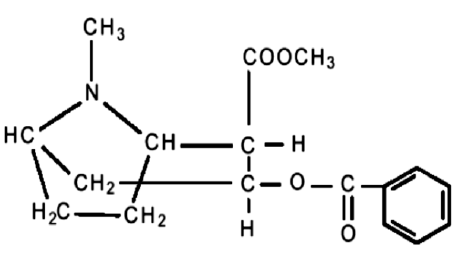 Na estrutura da cocaína apresentada acima, estão
presentes os grupos funcionais:
Na estrutura da cocaína apresentada acima, estão
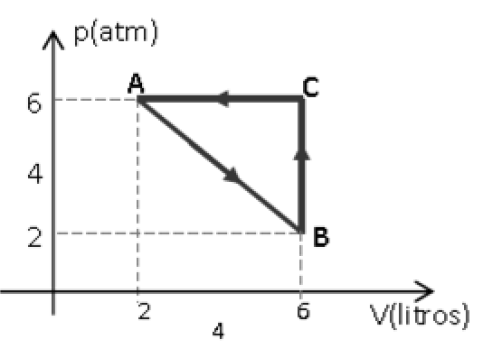
presentes os grupos funcionais: Um gás perfeito realiza o ciclo esquematizado no diagrama de trabalho no sentido ABCA. Determine o valor trabalho, em módulo, realizado no processo A → B → C.
(Dados: 1,0 atm = 105 N/m2 e 1,0 litro = 10-3 m3 ).
No circuito representado no esquema a seguir, a resistência R2 = 3. R1, a corrente que percorre, R2 é 0,3 Ampéres e a d.d.p em R é 6,0 volts.
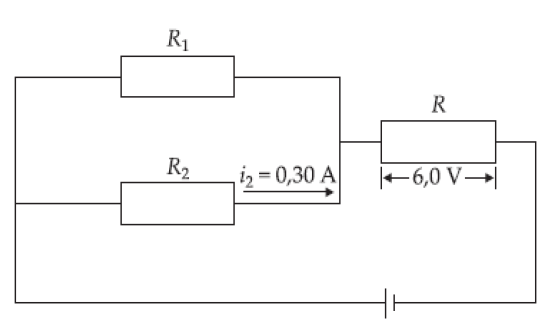
Dessa forma, o valor do resistor R, em ohms, é igual a:
PORTUGUÊS
Foi na noite de trinta e um, aberta a champanhe na quitinete de Raul, que Saul ergueu a taça e brindou à nossa amizade que nunca vai terminar. Beberam até quase cair. Na hora de deitar, trocando a roupa no banheiro, muito bêbado, Saul falou que ia dormir nu. Raul olhou para ele e disse você tem um corpo bonito. Você também, disse Saul, e baixou os olhos. Deitaram ambos nus, um na cama atrás do guarda-roupa, outro no sofá. Quase a noite inteira, um conseguia ver a brasa acesa do cigarro do outro, furando o escuro feito um demônio de olhos incendiados. Pela manhã, Saul foi embora sem se despedir para que Raul não percebesse suas fundas olheiras.
Quando janeiro começou, quase na época de tirarem férias — e tinham planejado, juntos, quem sabe Parati, Ouro Preto, Porto Seguro — ficaram surpresos naquela manhã em que o chefe de seção os chamou, perto do meio-dia. Fazia muito calor. Suarento, o chefe foi direto ao assunto. Tinha recebido algumas cartas anônimas. Recusou-se a mostrá-las. Pálidos, os dois ouviram expressões como "relação anormal e ostensiva", "desavergonhada aberração", "comportamento doentio", "psicologia deformada", sempre assinadas por Um Atento Guardião da Moral. Saul baixou os olhos desmaiados, mas Raul colocou-se em pé. Parecia muito alto quando, com uma das mãos apoiadas no ombro do amigo e a outra erguendo-se atrevida no ar, conseguiu ainda dizer a palavra nunca, antes que o chefe, entre coisas como a-reputação-de-nossa-firma ou tenho-que-zelar-pela-moral-dos-meus-funcionários, declarasse frio: os senhores estão despedidos.
Esvaziaram lentamente cada um a sua gaveta, a sala deserta na hora do almoço, sem se olharem nos olhos.O sol de verão escaldava o tampo de metal das mesas. Raul guardou no grande envelope pardo um par de olhos enormes, sem íris nem pupilas, presente de Saul, que guardou no seu grande envelope pardo, com algumas manchas de café, a letra de Tú Me Acostumbraste, escrita à mão por Raul numa tarde qualquer de agosto e com algumas manchas de café. Desceram juntos pelo elevador, em silêncio.
Mas quando saíram pela porta daquele prédio grande e antigo, parecido com uma clínica ou uma penitenciária, vistos de cima pelos colegas todos postos na janela, a camisa branca de um, a azul do outro, estavam ainda mais altos e mais altivos. Demoraram alguns minutos na frente do edifício. Depois apanharam o mesmo táxi, Raul abrindo a porta para que Saul entrasse. Ai-ai! alguém gritou da janela. Mas eles não ouviram. O táxi já tinha dobrado a esquina.
Pelas tardes poeirentas daquele resto de janeiro, quando o sol parecia a gema de um enorme ovo frito no azul sem nuvens no céu, ninguém mais conseguiu trabalhar em paz na repartição. Quase todos ali dentro tinham a nítida sensação de que seriam infelizes para sempre. E foram.
ABREU, Caio Fernando. Morangos mofados. Rio de Janeiro: Agir, 2005.
PORTUGUÊS
Foi na noite de trinta e um, aberta a champanhe na quitinete de Raul, que Saul ergueu a taça e brindou à nossa amizade que nunca vai terminar. Beberam até quase cair. Na hora de deitar, trocando a roupa no banheiro, muito bêbado, Saul falou que ia dormir nu. Raul olhou para ele e disse você tem um corpo bonito. Você também, disse Saul, e baixou os olhos. Deitaram ambos nus, um na cama atrás do guarda-roupa, outro no sofá. Quase a noite inteira, um conseguia ver a brasa acesa do cigarro do outro, furando o escuro feito um demônio de olhos incendiados. Pela manhã, Saul foi embora sem se despedir para que Raul não percebesse suas fundas olheiras.
Quando janeiro começou, quase na época de tirarem férias — e tinham planejado, juntos, quem sabe Parati, Ouro Preto, Porto Seguro — ficaram surpresos naquela manhã em que o chefe de seção os chamou, perto do meio-dia. Fazia muito calor. Suarento, o chefe foi direto ao assunto. Tinha recebido algumas cartas anônimas. Recusou-se a mostrá-las. Pálidos, os dois ouviram expressões como "relação anormal e ostensiva", "desavergonhada aberração", "comportamento doentio", "psicologia deformada", sempre assinadas por Um Atento Guardião da Moral. Saul baixou os olhos desmaiados, mas Raul colocou-se em pé. Parecia muito alto quando, com uma das mãos apoiadas no ombro do amigo e a outra erguendo-se atrevida no ar, conseguiu ainda dizer a palavra nunca, antes que o chefe, entre coisas como a-reputação-de-nossa-firma ou tenho-que-zelar-pela-moral-dos-meus-funcionários, declarasse frio: os senhores estão despedidos.
Esvaziaram lentamente cada um a sua gaveta, a sala deserta na hora do almoço, sem se olharem nos olhos.O sol de verão escaldava o tampo de metal das mesas. Raul guardou no grande envelope pardo um par de olhos enormes, sem íris nem pupilas, presente de Saul, que guardou no seu grande envelope pardo, com algumas manchas de café, a letra de Tú Me Acostumbraste, escrita à mão por Raul numa tarde qualquer de agosto e com algumas manchas de café. Desceram juntos pelo elevador, em silêncio.
Mas quando saíram pela porta daquele prédio grande e antigo, parecido com uma clínica ou uma penitenciária, vistos de cima pelos colegas todos postos na janela, a camisa branca de um, a azul do outro, estavam ainda mais altos e mais altivos. Demoraram alguns minutos na frente do edifício. Depois apanharam o mesmo táxi, Raul abrindo a porta para que Saul entrasse. Ai-ai! alguém gritou da janela. Mas eles não ouviram. O táxi já tinha dobrado a esquina.
Pelas tardes poeirentas daquele resto de janeiro, quando o sol parecia a gema de um enorme ovo frito no azul sem nuvens no céu, ninguém mais conseguiu trabalhar em paz na repartição. Quase todos ali dentro tinham a nítida sensação de que seriam infelizes para sempre. E foram.
ABREU, Caio Fernando. Morangos mofados. Rio de Janeiro: Agir, 2005.
PORTUGUÊS
Foi na noite de trinta e um, aberta a champanhe na quitinete de Raul, que Saul ergueu a taça e brindou à nossa amizade que nunca vai terminar. Beberam até quase cair. Na hora de deitar, trocando a roupa no banheiro, muito bêbado, Saul falou que ia dormir nu. Raul olhou para ele e disse você tem um corpo bonito. Você também, disse Saul, e baixou os olhos. Deitaram ambos nus, um na cama atrás do guarda-roupa, outro no sofá. Quase a noite inteira, um conseguia ver a brasa acesa do cigarro do outro, furando o escuro feito um demônio de olhos incendiados. Pela manhã, Saul foi embora sem se despedir para que Raul não percebesse suas fundas olheiras.
Quando janeiro começou, quase na época de tirarem férias — e tinham planejado, juntos, quem sabe Parati, Ouro Preto, Porto Seguro — ficaram surpresos naquela manhã em que o chefe de seção os chamou, perto do meio-dia. Fazia muito calor. Suarento, o chefe foi direto ao assunto. Tinha recebido algumas cartas anônimas. Recusou-se a mostrá-las. Pálidos, os dois ouviram expressões como "relação anormal e ostensiva", "desavergonhada aberração", "comportamento doentio", "psicologia deformada", sempre assinadas por Um Atento Guardião da Moral. Saul baixou os olhos desmaiados, mas Raul colocou-se em pé. Parecia muito alto quando, com uma das mãos apoiadas no ombro do amigo e a outra erguendo-se atrevida no ar, conseguiu ainda dizer a palavra nunca, antes que o chefe, entre coisas como a-reputação-de-nossa-firma ou tenho-que-zelar-pela-moral-dos-meus-funcionários, declarasse frio: os senhores estão despedidos.
Esvaziaram lentamente cada um a sua gaveta, a sala deserta na hora do almoço, sem se olharem nos olhos.O sol de verão escaldava o tampo de metal das mesas. Raul guardou no grande envelope pardo um par de olhos enormes, sem íris nem pupilas, presente de Saul, que guardou no seu grande envelope pardo, com algumas manchas de café, a letra de Tú Me Acostumbraste, escrita à mão por Raul numa tarde qualquer de agosto e com algumas manchas de café. Desceram juntos pelo elevador, em silêncio.
Mas quando saíram pela porta daquele prédio grande e antigo, parecido com uma clínica ou uma penitenciária, vistos de cima pelos colegas todos postos na janela, a camisa branca de um, a azul do outro, estavam ainda mais altos e mais altivos. Demoraram alguns minutos na frente do edifício. Depois apanharam o mesmo táxi, Raul abrindo a porta para que Saul entrasse. Ai-ai! alguém gritou da janela. Mas eles não ouviram. O táxi já tinha dobrado a esquina.
Pelas tardes poeirentas daquele resto de janeiro, quando o sol parecia a gema de um enorme ovo frito no azul sem nuvens no céu, ninguém mais conseguiu trabalhar em paz na repartição. Quase todos ali dentro tinham a nítida sensação de que seriam infelizes para sempre. E foram.
ABREU, Caio Fernando. Morangos mofados. Rio de Janeiro: Agir, 2005.
PORTUGUÊS
Foi na noite de trinta e um, aberta a champanhe na quitinete de Raul, que Saul ergueu a taça e brindou à nossa amizade que nunca vai terminar. Beberam até quase cair. Na hora de deitar, trocando a roupa no banheiro, muito bêbado, Saul falou que ia dormir nu. Raul olhou para ele e disse você tem um corpo bonito. Você também, disse Saul, e baixou os olhos. Deitaram ambos nus, um na cama atrás do guarda-roupa, outro no sofá. Quase a noite inteira, um conseguia ver a brasa acesa do cigarro do outro, furando o escuro feito um demônio de olhos incendiados. Pela manhã, Saul foi embora sem se despedir para que Raul não percebesse suas fundas olheiras.
Quando janeiro começou, quase na época de tirarem férias — e tinham planejado, juntos, quem sabe Parati, Ouro Preto, Porto Seguro — ficaram surpresos naquela manhã em que o chefe de seção os chamou, perto do meio-dia. Fazia muito calor. Suarento, o chefe foi direto ao assunto. Tinha recebido algumas cartas anônimas. Recusou-se a mostrá-las. Pálidos, os dois ouviram expressões como "relação anormal e ostensiva", "desavergonhada aberração", "comportamento doentio", "psicologia deformada", sempre assinadas por Um Atento Guardião da Moral. Saul baixou os olhos desmaiados, mas Raul colocou-se em pé. Parecia muito alto quando, com uma das mãos apoiadas no ombro do amigo e a outra erguendo-se atrevida no ar, conseguiu ainda dizer a palavra nunca, antes que o chefe, entre coisas como a-reputação-de-nossa-firma ou tenho-que-zelar-pela-moral-dos-meus-funcionários, declarasse frio: os senhores estão despedidos.
Esvaziaram lentamente cada um a sua gaveta, a sala deserta na hora do almoço, sem se olharem nos olhos.O sol de verão escaldava o tampo de metal das mesas. Raul guardou no grande envelope pardo um par de olhos enormes, sem íris nem pupilas, presente de Saul, que guardou no seu grande envelope pardo, com algumas manchas de café, a letra de Tú Me Acostumbraste, escrita à mão por Raul numa tarde qualquer de agosto e com algumas manchas de café. Desceram juntos pelo elevador, em silêncio.
Mas quando saíram pela porta daquele prédio grande e antigo, parecido com uma clínica ou uma penitenciária, vistos de cima pelos colegas todos postos na janela, a camisa branca de um, a azul do outro, estavam ainda mais altos e mais altivos. Demoraram alguns minutos na frente do edifício. Depois apanharam o mesmo táxi, Raul abrindo a porta para que Saul entrasse. Ai-ai! alguém gritou da janela. Mas eles não ouviram. O táxi já tinha dobrado a esquina.
Pelas tardes poeirentas daquele resto de janeiro, quando o sol parecia a gema de um enorme ovo frito no azul sem nuvens no céu, ninguém mais conseguiu trabalhar em paz na repartição. Quase todos ali dentro tinham a nítida sensação de que seriam infelizes para sempre. E foram.
ABREU, Caio Fernando. Morangos mofados. Rio de Janeiro: Agir, 2005.
O conto “Aqueles dois” narra com suspense e sutileza
a relação entre Saul e Raul, dois amigos que trabalham
na mesma repartição e cuja amizade supria suas
carências afetivas e suas angústias diante do mundo. O
texto I é a última parte do conto e também é a mais tensa
porque:
TEXT 2
The first step in establishing a cyber ethical culture is to ask the really tough questions, the answer to which may be politically incorrect. HR (Human resources), legal, security and top management need to work together to set the tone they wish to flow through gaming; other times off-site meetings will work.
The second step is to include cyber ethical components in corporate security awareness campaigns to keep employees clued in.
The last but most important step is to be ready to make changes rapidly when cyber ethics becomes a component of information security efforts. We cannot predict how they will change tomorrow or next year – but we need to be prepared.
(MARINOTTO, Demóstene. Reading on Info Tech (Inglês para Informática). São Paulo, Novatec, 2007.)
TEXT 2
The first step in establishing a cyber ethical culture is to ask the really tough questions, the answer to which may be politically incorrect. HR (Human resources), legal, security and top management need to work together to set the tone they wish to flow through gaming; other times off-site meetings will work.
The second step is to include cyber ethical components in corporate security awareness campaigns to keep employees clued in.
The last but most important step is to be ready to make changes rapidly when cyber ethics becomes a component of information security efforts. We cannot predict how they will change tomorrow or next year – but we need to be prepared.
(MARINOTTO, Demóstene. Reading on Info Tech (Inglês para Informática). São Paulo, Novatec, 2007.)
TEXT 1
These days, when our slow recovery from recession seems like a full-employment program for pessimistic pundits, it’s great to have a new book from Chris Anderson, an indefatigable cheerleader for the unlimited potential of the digital economy. Anderson, the departing editor in chief of Wired magazine, has already written two important books exploring the impact of the Web on commerce. In “The Long Tail,” he argued that companies like Amazon that faced distribution challenges arising from having large quantities of the same kind of product would thrive by “selling less of more.” Corporations didn’t have to chase blockbusters if they had a mass of small sales. In “Free: The Future of a Radical Price,” he argued that giving stuff away to attract a multitude of users might be the best way eventually to make money from loyal customers. Anderson has also helped found a Web site, Geekdad, and an aerial robotics company. From his vantage point, in the future more and more people can get involved in making things they really enjoy and can connect with others who share their passions and their products. These connections, he claims, are creating a new Industrial Revolution.
In a 2010 Wired article entitled “In the Next Industrial Revolution, Atoms Are the New Bits,” Anderson described how the massive changes in our relations with information have altered how we relate to things. Now that the power of information-sharing has been unleashed through technology and social networks, makers are able to collaborate on design and production in ways that facilitate the connection of producers to markets. By sharing information “bits” in a creative commons, entrepreneurs are making new things (reshaping “atoms”) more cheaply and quickly. The new manufacturing is a powerful economic force not because any one business becomes gigantic, but because technology makes it possible for tens of thousands of businesses to find their customers, to form their communities.
Anderson begins his new book, “Makers,” with the story of his grandfather Fred Hauser, who invented a sprinkler system. He licensed his invention to a company that turned ideas into things that could be built and sold. Although Hauser loved translating ideas into things, he needed a company with resources to make enough of his sprinklers to turn a profit. Inventing and making were separate. With the advent of the personal computer and of sophisticated but user-friendly design tools, that separation has become increasingly irrelevant. As a child, Anderson loved making things with his grandfather, and he still loves creating new stuff and getting it into the marketplace. “Makers” describes how today technology has liberated the inventor from a dependence on the big manufacturer. “The beauty of the Web is that it democratized the tools both of invention and production,” Anderson writes. “We are all designers now. It’s time to get good at it.”
(Fragment from “Makers: The New Industrial Revolution by
Chris Anderson”, by Michael S. Roth. Online since 24
November 2012.
URL:https://www.washingtonpost.com/opinions/makers-thenew-industrial-revolution)
TEXT 1
These days, when our slow recovery from recession seems like a full-employment program for pessimistic pundits, it’s great to have a new book from Chris Anderson, an indefatigable cheerleader for the unlimited potential of the digital economy. Anderson, the departing editor in chief of Wired magazine, has already written two important books exploring the impact of the Web on commerce. In “The Long Tail,” he argued that companies like Amazon that faced distribution challenges arising from having large quantities of the same kind of product would thrive by “selling less of more.” Corporations didn’t have to chase blockbusters if they had a mass of small sales. In “Free: The Future of a Radical Price,” he argued that giving stuff away to attract a multitude of users might be the best way eventually to make money from loyal customers. Anderson has also helped found a Web site, Geekdad, and an aerial robotics company. From his vantage point, in the future more and more people can get involved in making things they really enjoy and can connect with others who share their passions and their products. These connections, he claims, are creating a new Industrial Revolution.
In a 2010 Wired article entitled “In the Next Industrial Revolution, Atoms Are the New Bits,” Anderson described how the massive changes in our relations with information have altered how we relate to things. Now that the power of information-sharing has been unleashed through technology and social networks, makers are able to collaborate on design and production in ways that facilitate the connection of producers to markets. By sharing information “bits” in a creative commons, entrepreneurs are making new things (reshaping “atoms”) more cheaply and quickly. The new manufacturing is a powerful economic force not because any one business becomes gigantic, but because technology makes it possible for tens of thousands of businesses to find their customers, to form their communities.
Anderson begins his new book, “Makers,” with the story of his grandfather Fred Hauser, who invented a sprinkler system. He licensed his invention to a company that turned ideas into things that could be built and sold. Although Hauser loved translating ideas into things, he needed a company with resources to make enough of his sprinklers to turn a profit. Inventing and making were separate. With the advent of the personal computer and of sophisticated but user-friendly design tools, that separation has become increasingly irrelevant. As a child, Anderson loved making things with his grandfather, and he still loves creating new stuff and getting it into the marketplace. “Makers” describes how today technology has liberated the inventor from a dependence on the big manufacturer. “The beauty of the Web is that it democratized the tools both of invention and production,” Anderson writes. “We are all designers now. It’s time to get good at it.”
(Fragment from “Makers: The New Industrial Revolution by
Chris Anderson”, by Michael S. Roth. Online since 24
November 2012.
URL:https://www.washingtonpost.com/opinions/makers-thenew-industrial-revolution)
TEXT 1
These days, when our slow recovery from recession seems like a full-employment program for pessimistic pundits, it’s great to have a new book from Chris Anderson, an indefatigable cheerleader for the unlimited potential of the digital economy. Anderson, the departing editor in chief of Wired magazine, has already written two important books exploring the impact of the Web on commerce. In “The Long Tail,” he argued that companies like Amazon that faced distribution challenges arising from having large quantities of the same kind of product would thrive by “selling less of more.” Corporations didn’t have to chase blockbusters if they had a mass of small sales. In “Free: The Future of a Radical Price,” he argued that giving stuff away to attract a multitude of users might be the best way eventually to make money from loyal customers. Anderson has also helped found a Web site, Geekdad, and an aerial robotics company. From his vantage point, in the future more and more people can get involved in making things they really enjoy and can connect with others who share their passions and their products. These connections, he claims, are creating a new Industrial Revolution.
In a 2010 Wired article entitled “In the Next Industrial Revolution, Atoms Are the New Bits,” Anderson described how the massive changes in our relations with information have altered how we relate to things. Now that the power of information-sharing has been unleashed through technology and social networks, makers are able to collaborate on design and production in ways that facilitate the connection of producers to markets. By sharing information “bits” in a creative commons, entrepreneurs are making new things (reshaping “atoms”) more cheaply and quickly. The new manufacturing is a powerful economic force not because any one business becomes gigantic, but because technology makes it possible for tens of thousands of businesses to find their customers, to form their communities.
Anderson begins his new book, “Makers,” with the story of his grandfather Fred Hauser, who invented a sprinkler system. He licensed his invention to a company that turned ideas into things that could be built and sold. Although Hauser loved translating ideas into things, he needed a company with resources to make enough of his sprinklers to turn a profit. Inventing and making were separate. With the advent of the personal computer and of sophisticated but user-friendly design tools, that separation has become increasingly irrelevant. As a child, Anderson loved making things with his grandfather, and he still loves creating new stuff and getting it into the marketplace. “Makers” describes how today technology has liberated the inventor from a dependence on the big manufacturer. “The beauty of the Web is that it democratized the tools both of invention and production,” Anderson writes. “We are all designers now. It’s time to get good at it.”
(Fragment from “Makers: The New Industrial Revolution by
Chris Anderson”, by Michael S. Roth. Online since 24
November 2012.
URL:https://www.washingtonpost.com/opinions/makers-thenew-industrial-revolution)
TEXT 1
These days, when our slow recovery from recession seems like a full-employment program for pessimistic pundits, it’s great to have a new book from Chris Anderson, an indefatigable cheerleader for the unlimited potential of the digital economy. Anderson, the departing editor in chief of Wired magazine, has already written two important books exploring the impact of the Web on commerce. In “The Long Tail,” he argued that companies like Amazon that faced distribution challenges arising from having large quantities of the same kind of product would thrive by “selling less of more.” Corporations didn’t have to chase blockbusters if they had a mass of small sales. In “Free: The Future of a Radical Price,” he argued that giving stuff away to attract a multitude of users might be the best way eventually to make money from loyal customers. Anderson has also helped found a Web site, Geekdad, and an aerial robotics company. From his vantage point, in the future more and more people can get involved in making things they really enjoy and can connect with others who share their passions and their products. These connections, he claims, are creating a new Industrial Revolution.
In a 2010 Wired article entitled “In the Next Industrial Revolution, Atoms Are the New Bits,” Anderson described how the massive changes in our relations with information have altered how we relate to things. Now that the power of information-sharing has been unleashed through technology and social networks, makers are able to collaborate on design and production in ways that facilitate the connection of producers to markets. By sharing information “bits” in a creative commons, entrepreneurs are making new things (reshaping “atoms”) more cheaply and quickly. The new manufacturing is a powerful economic force not because any one business becomes gigantic, but because technology makes it possible for tens of thousands of businesses to find their customers, to form their communities.
Anderson begins his new book, “Makers,” with the story of his grandfather Fred Hauser, who invented a sprinkler system. He licensed his invention to a company that turned ideas into things that could be built and sold. Although Hauser loved translating ideas into things, he needed a company with resources to make enough of his sprinklers to turn a profit. Inventing and making were separate. With the advent of the personal computer and of sophisticated but user-friendly design tools, that separation has become increasingly irrelevant. As a child, Anderson loved making things with his grandfather, and he still loves creating new stuff and getting it into the marketplace. “Makers” describes how today technology has liberated the inventor from a dependence on the big manufacturer. “The beauty of the Web is that it democratized the tools both of invention and production,” Anderson writes. “We are all designers now. It’s time to get good at it.”
(Fragment from “Makers: The New Industrial Revolution by
Chris Anderson”, by Michael S. Roth. Online since 24
November 2012.
URL:https://www.washingtonpost.com/opinions/makers-thenew-industrial-revolution)
TEXT 1
These days, when our slow recovery from recession seems like a full-employment program for pessimistic pundits, it’s great to have a new book from Chris Anderson, an indefatigable cheerleader for the unlimited potential of the digital economy. Anderson, the departing editor in chief of Wired magazine, has already written two important books exploring the impact of the Web on commerce. In “The Long Tail,” he argued that companies like Amazon that faced distribution challenges arising from having large quantities of the same kind of product would thrive by “selling less of more.” Corporations didn’t have to chase blockbusters if they had a mass of small sales. In “Free: The Future of a Radical Price,” he argued that giving stuff away to attract a multitude of users might be the best way eventually to make money from loyal customers. Anderson has also helped found a Web site, Geekdad, and an aerial robotics company. From his vantage point, in the future more and more people can get involved in making things they really enjoy and can connect with others who share their passions and their products. These connections, he claims, are creating a new Industrial Revolution.
In a 2010 Wired article entitled “In the Next Industrial Revolution, Atoms Are the New Bits,” Anderson described how the massive changes in our relations with information have altered how we relate to things. Now that the power of information-sharing has been unleashed through technology and social networks, makers are able to collaborate on design and production in ways that facilitate the connection of producers to markets. By sharing information “bits” in a creative commons, entrepreneurs are making new things (reshaping “atoms”) more cheaply and quickly. The new manufacturing is a powerful economic force not because any one business becomes gigantic, but because technology makes it possible for tens of thousands of businesses to find their customers, to form their communities.
Anderson begins his new book, “Makers,” with the story of his grandfather Fred Hauser, who invented a sprinkler system. He licensed his invention to a company that turned ideas into things that could be built and sold. Although Hauser loved translating ideas into things, he needed a company with resources to make enough of his sprinklers to turn a profit. Inventing and making were separate. With the advent of the personal computer and of sophisticated but user-friendly design tools, that separation has become increasingly irrelevant. As a child, Anderson loved making things with his grandfather, and he still loves creating new stuff and getting it into the marketplace. “Makers” describes how today technology has liberated the inventor from a dependence on the big manufacturer. “The beauty of the Web is that it democratized the tools both of invention and production,” Anderson writes. “We are all designers now. It’s time to get good at it.”
(Fragment from “Makers: The New Industrial Revolution by
Chris Anderson”, by Michael S. Roth. Online since 24
November 2012.
URL:https://www.washingtonpost.com/opinions/makers-thenew-industrial-revolution)
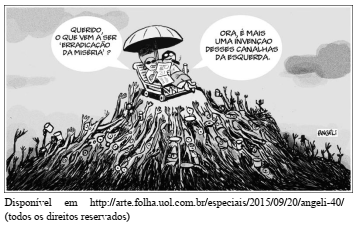
Veja a charge de Angeli, publicada em 2011 na Folha de São Paulo e assinale a alternativa que traz informações incorretas:
 Conheça nossos planos