Foram encontradas 36.754 questões
Resolva questões gratuitamente!
Junte-se a mais de 4 milhões de concurseiros!


Analise a tela Marat assassinado, pintada por Jacques-Louis David em 1793.
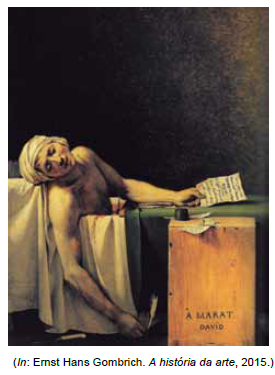
Essa pintura apresenta estilo
(Frei Vicente do Salvador, 1627. Apud Laura de Mello e Souza.
O Diabo e a Terra de Santa Cruz, 1986. Adaptado.)
O texto revela que
(Eduardo Natalino dos Santos.
Cidades pré-hispânicas do México e da América Central, 2004.)
As cidades existentes na América Central e no México no período pré-colombiano
(Georges Duby. Damas do século XII:
a lembrança das ancestrais, 1997. Adaptado.)
O texto trata de relações desenvolvidas num meio social específico, durante a Idade Média ocidental. Nele,
– São uma formosura os governantes que tu modelaste, como se fosses um estatuário, ó Sócrates! [...]
– Ora pois! Concordais que não são inteiramente utopias o que estivemos a dizer sobre a cidade e a constituição; que, embora difíceis, eram de algum modo possíveis, mas não de outra maneira que não seja a que dissemos, quando os governantes, um ou vários, forem filósofos verdadeiros, que desprezem as honrarias atuais, por as considerarem impróprias de um homem livre e destituídas de valor, mas, por outro lado, que atribuem a máxima importância à retidão e às honrarias que dela derivam, e consideram o mais alto e o mais necessário dos bens a justiça, à qual servirão e farão prosperar, organizando assim a sua cidade?
(Platão. A República, 1987.)
O texto, concluído na primeira metade do século IV a.C.,
caracteriza
Leia o texto para responder às questões
Prescriptions for fighting epidemics

Epidemics have plagued humanity since the dawn of
settled life. Yet, success in conquering them remains patchy.
Experts predict that a global one that could kill more than 300
million people would come round in the next 20 to 40 years.
What pathogen would cause it is anybody’s guess. Chances
are that it will be a virus that lurks in birds or mammals, or
one that that has not yet hatched. The scariest are both highly
lethal and spread easily among humans. Thankfully, bugs that
excel at the first tend to be weak at the other. But mutations
– ordinary business for germs – can change that in a blink.
Moreover, when humans get too close to beasts, either
wild or packed in farms, an animal disease can become a
human one.
A front-runner for global pandemics is the seasonal
influenza virus, which mutates so much that a vaccine must
be custom-made every year. The Spanish flu pandemic of
1918, which killed 50 million to 100 million people, was a
potent version of the “swine flu” that emerged in 2009. The
H5N1 “avian flu” strain, deadly in 60% of cases, came about
in the 1990s when a virus that sickened birds made the jump
to a human. Ebola, HIV and Zika took a similar route.
(www.economist.com, 08.02.2018. Adaptado.)
Leia o texto para responder às questões
Prescriptions for fighting epidemics
Epidemics have plagued humanity since the dawn of
settled life. Yet, success in conquering them remains patchy.
Experts predict that a global one that could kill more than 300
million people would come round in the next 20 to 40 years.
What pathogen would cause it is anybody’s guess. Chances
are that it will be a virus that lurks in birds or mammals, or
one that that has not yet hatched. The scariest are both highly
lethal and spread easily among humans. Thankfully, bugs that
excel at the first tend to be weak at the other. But mutations
– ordinary business for germs – can change that in a blink.
Moreover, when humans get too close to beasts, either
wild or packed in farms, an animal disease can become a
human one.
A front-runner for global pandemics is the seasonal
influenza virus, which mutates so much that a vaccine must
be custom-made every year. The Spanish flu pandemic of
1918, which killed 50 million to 100 million people, was a
potent version of the “swine flu” that emerged in 2009. The
H5N1 “avian flu” strain, deadly in 60% of cases, came about
in the 1990s when a virus that sickened birds made the jump
to a human. Ebola, HIV and Zika took a similar route.
(www.economist.com, 08.02.2018. Adaptado.)
Leia o texto para responder às questões
Prescriptions for fighting epidemics
Epidemics have plagued humanity since the dawn of
settled life. Yet, success in conquering them remains patchy.
Experts predict that a global one that could kill more than 300
million people would come round in the next 20 to 40 years.
What pathogen would cause it is anybody’s guess. Chances
are that it will be a virus that lurks in birds or mammals, or
one that that has not yet hatched. The scariest are both highly
lethal and spread easily among humans. Thankfully, bugs that
excel at the first tend to be weak at the other. But mutations
– ordinary business for germs – can change that in a blink.
Moreover, when humans get too close to beasts, either
wild or packed in farms, an animal disease can become a
human one.
A front-runner for global pandemics is the seasonal
influenza virus, which mutates so much that a vaccine must
be custom-made every year. The Spanish flu pandemic of
1918, which killed 50 million to 100 million people, was a
potent version of the “swine flu” that emerged in 2009. The
H5N1 “avian flu” strain, deadly in 60% of cases, came about
in the 1990s when a virus that sickened birds made the jump
to a human. Ebola, HIV and Zika took a similar route.
(www.economist.com, 08.02.2018. Adaptado.)
Leia o texto para responder às questões
Prescriptions for fighting epidemics
Epidemics have plagued humanity since the dawn of
settled life. Yet, success in conquering them remains patchy.
Experts predict that a global one that could kill more than 300
million people would come round in the next 20 to 40 years.
What pathogen would cause it is anybody’s guess. Chances
are that it will be a virus that lurks in birds or mammals, or
one that that has not yet hatched. The scariest are both highly
lethal and spread easily among humans. Thankfully, bugs that
excel at the first tend to be weak at the other. But mutations
– ordinary business for germs – can change that in a blink.
Moreover, when humans get too close to beasts, either
wild or packed in farms, an animal disease can become a
human one.
A front-runner for global pandemics is the seasonal
influenza virus, which mutates so much that a vaccine must
be custom-made every year. The Spanish flu pandemic of
1918, which killed 50 million to 100 million people, was a
potent version of the “swine flu” that emerged in 2009. The
H5N1 “avian flu” strain, deadly in 60% of cases, came about
in the 1990s when a virus that sickened birds made the jump
to a human. Ebola, HIV and Zika took a similar route.
(www.economist.com, 08.02.2018. Adaptado.)
Leia o texto para responder às questões
Prescriptions for fighting epidemics
Epidemics have plagued humanity since the dawn of
settled life. Yet, success in conquering them remains patchy.
Experts predict that a global one that could kill more than 300
million people would come round in the next 20 to 40 years.
What pathogen would cause it is anybody’s guess. Chances
are that it will be a virus that lurks in birds or mammals, or
one that that has not yet hatched. The scariest are both highly
lethal and spread easily among humans. Thankfully, bugs that
excel at the first tend to be weak at the other. But mutations
– ordinary business for germs – can change that in a blink.
Moreover, when humans get too close to beasts, either
wild or packed in farms, an animal disease can become a
human one.
A front-runner for global pandemics is the seasonal
influenza virus, which mutates so much that a vaccine must
be custom-made every year. The Spanish flu pandemic of
1918, which killed 50 million to 100 million people, was a
potent version of the “swine flu” that emerged in 2009. The
H5N1 “avian flu” strain, deadly in 60% of cases, came about
in the 1990s when a virus that sickened birds made the jump
to a human. Ebola, HIV and Zika took a similar route.
(www.economist.com, 08.02.2018. Adaptado.)
Leia o texto para responder às questões
Prescriptions for fighting epidemics
Epidemics have plagued humanity since the dawn of
settled life. Yet, success in conquering them remains patchy.
Experts predict that a global one that could kill more than 300
million people would come round in the next 20 to 40 years.
What pathogen would cause it is anybody’s guess. Chances
are that it will be a virus that lurks in birds or mammals, or
one that that has not yet hatched. The scariest are both highly
lethal and spread easily among humans. Thankfully, bugs that
excel at the first tend to be weak at the other. But mutations
– ordinary business for germs – can change that in a blink.
Moreover, when humans get too close to beasts, either
wild or packed in farms, an animal disease can become a
human one.
A front-runner for global pandemics is the seasonal
influenza virus, which mutates so much that a vaccine must
be custom-made every year. The Spanish flu pandemic of
1918, which killed 50 million to 100 million people, was a
potent version of the “swine flu” that emerged in 2009. The
H5N1 “avian flu” strain, deadly in 60% of cases, came about
in the 1990s when a virus that sickened birds made the jump
to a human. Ebola, HIV and Zika took a similar route.
(www.economist.com, 08.02.2018. Adaptado.)
Leia o texto para responder às questões
Prescriptions for fighting epidemics
Epidemics have plagued humanity since the dawn of
settled life. Yet, success in conquering them remains patchy.
Experts predict that a global one that could kill more than 300
million people would come round in the next 20 to 40 years.
What pathogen would cause it is anybody’s guess. Chances
are that it will be a virus that lurks in birds or mammals, or
one that that has not yet hatched. The scariest are both highly
lethal and spread easily among humans. Thankfully, bugs that
excel at the first tend to be weak at the other. But mutations
– ordinary business for germs – can change that in a blink.
Moreover, when humans get too close to beasts, either
wild or packed in farms, an animal disease can become a
human one.
A front-runner for global pandemics is the seasonal
influenza virus, which mutates so much that a vaccine must
be custom-made every year. The Spanish flu pandemic of
1918, which killed 50 million to 100 million people, was a
potent version of the “swine flu” that emerged in 2009. The
H5N1 “avian flu” strain, deadly in 60% of cases, came about
in the 1990s when a virus that sickened birds made the jump
to a human. Ebola, HIV and Zika took a similar route.
(www.economist.com, 08.02.2018. Adaptado.)

Based on the information presented by the map, one can say that, from 1731 to 1775,
Leia o trecho do artigo de Jason Farago, publicado pelo jornal The New York Times, para responder às questões
She led Latin American Art in a bold new direction

In 1928, Tarsila do Amaral painted Abaporu, a landmark work of Brazilian Modernism, in which a nude figure, half-human and half-animal, looks down at his massive, swollen foot, several times the size of his head. Abaporu inspired Tarsila’s husband at the time, the poet Oswald de Andrade, to write his celebrated “Cannibal Manifesto,” which flayed Brazil’s belletrist writers and called for an embrace of local influences – in fact, for a devouring of them. The European stereotype of native Brazilians as cannibals would be reformatted as a cultural virtue. More than a social and literary reform movement, cannibalism would form the basis for a new Brazilian nationalism, in which, as de Andrade wrote, “we made Christ to be born in Bahia.”
The unconventional nudes of A Negra, a painting produced in 1923, and Abaporu unite in Tarsila’s final great painting, Antropofagia, a marriage of two figures that is also a marriage of Old World and New. The couple sit entangled, her breast drooping over his knee, their giant feet crossed one over the other, while, behind them, a banana leaf grows as large as a cactus. The sun, high above the primordial couple, is a wedge of lemon.
(Jason Farago. www.nytimes.com, 15.02.2018. Adaptado.)
Leia o trecho do artigo de Jason Farago, publicado pelo jornal The New York Times, para responder às questões
She led Latin American Art in a bold new direction
In 1928, Tarsila do Amaral painted Abaporu, a landmark work of Brazilian Modernism, in which a nude figure, half-human and half-animal, looks down at his massive, swollen foot, several times the size of his head. Abaporu inspired Tarsila’s husband at the time, the poet Oswald de Andrade, to write his celebrated “Cannibal Manifesto,” which flayed Brazil’s belletrist writers and called for an embrace of local influences – in fact, for a devouring of them. The European stereotype of native Brazilians as cannibals would be reformatted as a cultural virtue. More than a social and literary reform movement, cannibalism would form the basis for a new Brazilian nationalism, in which, as de Andrade wrote, “we made Christ to be born in Bahia.”
The unconventional nudes of A Negra, a painting produced in 1923, and Abaporu unite in Tarsila’s final great painting, Antropofagia, a marriage of two figures that is also a marriage of Old World and New. The couple sit entangled, her breast drooping over his knee, their giant feet crossed one over the other, while, behind them, a banana leaf grows as large as a cactus. The sun, high above the primordial couple, is a wedge of lemon.
(Jason Farago. www.nytimes.com, 15.02.2018. Adaptado.)
Entre 11 de fevereiro e 03 de junho de 2018, o Museu de Arte Moderna de Nova Iorque (MoMA) abrigou a primeira exposição nos Estados Unidos dedicada à pintora brasileira Tarsila do Amaral. Leia a apresentação de uma das pinturas expostas para responder às questões
The painting Sleep (1928) is a dreamlike representation
of tropical landscape, with this major motif of her repetitive
figure that disappears in the background.
This painting is an example of Tarsila’s venture into surrealism. Elements such as repetition, random association, and dreamlike figures are typical of surrealism that we can see as main elements of this composition. She was never a truly surrealist painter, but she was totally aware of surrealism’s legacy.
(www.moma.org. Adaptado.)
Entre 11 de fevereiro e 03 de junho de 2018, o Museu de Arte Moderna de Nova Iorque (MoMA) abrigou a primeira exposição nos Estados Unidos dedicada à pintora brasileira Tarsila do Amaral. Leia a apresentação de uma das pinturas expostas para responder às questões
The painting Sleep (1928) is a dreamlike representation
of tropical landscape, with this major motif of her repetitive
figure that disappears in the background.
This painting is an example of Tarsila’s venture into surrealism. Elements such as repetition, random association, and dreamlike figures are typical of surrealism that we can see as main elements of this composition. She was never a truly surrealist painter, but she was totally aware of surrealism’s legacy.
(www.moma.org. Adaptado.)
Indo às consequências finais da posição de José de Alencar no Romantismo, esse autor adotou como base da sua obra o esforço de escrever numa língua inspirada pela fala corrente e os modismos populares, não hesitando em usar formas consideradas incorretas, desde que legitimadas pelo uso brasileiro. Com isso, foi o maior demolidor da “pureza vernácula” e do “culto da forma”.
(Antonio Candido. Iniciação à literatura brasileira, 2010. Adaptado.)
O texto refere-se a
Leia o trecho do livro A dança do universo, do físico brasileiro
Marcelo Gleiser, para responder a questão.
Algumas pessoas tornam-se heróis contra sua própria
vontade. Mesmo que elas tenham ideias realmente (ou potencialmente) revolucionárias, muitas vezes não as reconhecem como tais, ou não acreditam no seu próprio potencial.
Divididas entre enfrentar sua insegurança expondo suas
ideias à opinião dos outros, ou manter-se na defensiva, elas
preferem a segunda opção. O mundo está cheio de poemas
e teorias escondidos no porão.
Copérnico é, talvez, o mais famoso desses relutantes heróis da história da ciência. Ele foi o homem que colocou o Sol de volta no centro do Universo, ao mesmo tempo fazendo de tudo para que suas ideias não fossem difundidas, possivelmente com medo de críticas ou perseguição religiosa. Foi quem colocou o Sol de volta no centro do Universo, motivado por razões erradas. Insatisfeito com a falha do modelo de Ptolomeu, que aplicava o dogma platônico do movimento circular uniforme aos corpos celestes, Copérnico propôs que o equante fosse abandonado e que o Sol passasse a ocupar o centro do cosmo. Ao tentar fazer com que o Universo se adaptasse às ideias platônicas, ele retornou aos pitagóricos, ressuscitando a doutrina do fogo central, que levou ao modelo heliocêntrico de Aristarco dezoito séculos antes.
Seu pensamento reflete o desejo de reformular as ideias cosmológicas de seu tempo apenas para voltar ainda mais no passado; Copérnico era, sem dúvida, um revolucionário conservador. Ele jamais poderia ter imaginado que, ao olhar para o passado, estaria criando uma nova visão cósmica, que abriria novas portas para o futuro. Tivesse vivido o suficiente para ver os frutos de suas ideias, Copérnico decerto teria odiado a revolução que involuntariamente causou.
Entre 1510 e 1514, compôs um pequeno trabalho resumindo suas ideias, intitulado Commentariolus (Pequeno comentário). Embora na época fosse relativamente fácil publicar um manuscrito, Copérnico decidiu não publicar seu texto, enviando apenas algumas cópias para uma audiência seleta. Ele acreditava piamente no ideal pitagórico de discrição; apenas aqueles que eram iniciados nas complicações da matemática aplicada à astronomia tinham permissão para compartilhar sua sabedoria. Certamente essa posição elitista era muito peculiar, vinda de alguém que fora educado durante anos dentro da tradição humanista italiana. Será que Copérnico estava tentando sentir o clima intelectual da época, para ter uma ideia do quão “perigosas” eram suas ideias? Será que ele não acreditava muito nas suas próprias ideias e, portanto, queria evitar qualquer tipo de crítica? Ou será que ele estava tão imerso nos ideais pitagóricos que realmente não tinha o menor interesse em tornar populares suas ideias? As razões que possam justificar a atitude de Copérnico são, até hoje, um ponto de discussão entre os especialistas.
(A dança do universo, 2006. Adaptado.)
Leia o trecho do livro A dança do universo, do físico brasileiro
Marcelo Gleiser, para responder a questão.
Algumas pessoas tornam-se heróis contra sua própria
vontade. Mesmo que elas tenham ideias realmente (ou potencialmente) revolucionárias, muitas vezes não as reconhecem como tais, ou não acreditam no seu próprio potencial.
Divididas entre enfrentar sua insegurança expondo suas
ideias à opinião dos outros, ou manter-se na defensiva, elas
preferem a segunda opção. O mundo está cheio de poemas
e teorias escondidos no porão.
Copérnico é, talvez, o mais famoso desses relutantes heróis da história da ciência. Ele foi o homem que colocou o Sol de volta no centro do Universo, ao mesmo tempo fazendo de tudo para que suas ideias não fossem difundidas, possivelmente com medo de críticas ou perseguição religiosa. Foi quem colocou o Sol de volta no centro do Universo, motivado por razões erradas. Insatisfeito com a falha do modelo de Ptolomeu, que aplicava o dogma platônico do movimento circular uniforme aos corpos celestes, Copérnico propôs que o equante fosse abandonado e que o Sol passasse a ocupar o centro do cosmo. Ao tentar fazer com que o Universo se adaptasse às ideias platônicas, ele retornou aos pitagóricos, ressuscitando a doutrina do fogo central, que levou ao modelo heliocêntrico de Aristarco dezoito séculos antes.
Seu pensamento reflete o desejo de reformular as ideias cosmológicas de seu tempo apenas para voltar ainda mais no passado; Copérnico era, sem dúvida, um revolucionário conservador. Ele jamais poderia ter imaginado que, ao olhar para o passado, estaria criando uma nova visão cósmica, que abriria novas portas para o futuro. Tivesse vivido o suficiente para ver os frutos de suas ideias, Copérnico decerto teria odiado a revolução que involuntariamente causou.
Entre 1510 e 1514, compôs um pequeno trabalho resumindo suas ideias, intitulado Commentariolus (Pequeno comentário). Embora na época fosse relativamente fácil publicar um manuscrito, Copérnico decidiu não publicar seu texto, enviando apenas algumas cópias para uma audiência seleta. Ele acreditava piamente no ideal pitagórico de discrição; apenas aqueles que eram iniciados nas complicações da matemática aplicada à astronomia tinham permissão para compartilhar sua sabedoria. Certamente essa posição elitista era muito peculiar, vinda de alguém que fora educado durante anos dentro da tradição humanista italiana. Será que Copérnico estava tentando sentir o clima intelectual da época, para ter uma ideia do quão “perigosas” eram suas ideias? Será que ele não acreditava muito nas suas próprias ideias e, portanto, queria evitar qualquer tipo de crítica? Ou será que ele estava tão imerso nos ideais pitagóricos que realmente não tinha o menor interesse em tornar populares suas ideias? As razões que possam justificar a atitude de Copérnico são, até hoje, um ponto de discussão entre os especialistas.
(A dança do universo, 2006. Adaptado.)
“Tivesse vivido o suficiente para ver os frutos de suas ideias, Copérnico decerto teria odiado a revolução que involuntariamente causou.” (3o parágrafo)
Em relação ao trecho que o sucede, o trecho sublinhado tem
sentido de
 Conheça nossos planos