Foram encontradas 36.754 questões
Resolva questões gratuitamente!
Junte-se a mais de 4 milhões de concurseiros!


Leia o texto e considere a figura.
Um tecnólogo em Meio Ambiente e Recursos Hídricos precisa fazer um relatório sobre o estado de preservação das nascentes dos rios São Francisco, Tocantins e Paraguai, devendo, para tanto, vistoriá-las nessa ordem.
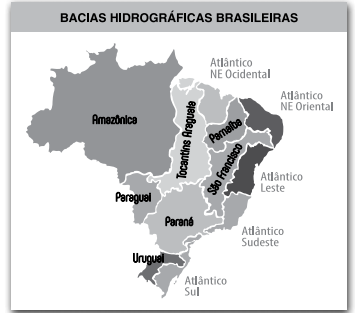
É correto afirmar que, para vistoriar essas nascentes, o tecnólogo em questão visitará, na ordem estabelecida, os estados de
Tendo em vista a legislação ambiental vigente, o tecnólogo em Gestão Ambiental contratado por uma empresa mineradora tem como uma de suas responsabilidades vistoriar a barragem de rejeitos dessa empresa.
Uma barragem de rejeitos consiste em
O estado de São Paulo contribui com aproximadamente 30% para o Produto Interno Bruto (PIB) do Brasil. O setor terciário da economia é responsável por cerca de 70% do PIB paulista.
No estado de São Paulo, esse setor se caracteriza por
A transmissão dessa moléstia ocorre por intermédio de mosquitos que habitam e circulam em
eia o texto para responder à questão.
5 Ways to Boost Your Resilience at Work
Since the pace and intensity of contemporary work culture are not likely to change, it’s more important than ever to build resilience skills to effectively navigate your worklife. While working as a CEO I’ve seen over and over again that the most resilient individuals aren’t the ones that don’t fail, but rather the ones that fail, learn and thrive1 because of it.
Resilience is built by attitudes, behaviors and social supports that can be adopted and cultivated by anyone. Factors that lead to resilience include optimism and the ability to stay balanced and manage difficult emotions. To build resilience skills at work it’s important to understand and manage some of the factors that cause us to feel so stressed at work. Being hyperconnected and responsive to work anytime, anywhere, can be extremely onerous.
The current and rising levels of stress in the workplace should be cause for concern, as there is a direct and adverse relationship between negative stress, wellness and productivity. Stress that causes us to experience difficulty or unhealthy strain is a major cause for concern as it directly and adversely affects personal and business success. Here are some tips on how to develop resilience and stay motivated:
Exercise mindfulness – Turn your attention to mental training practices associated with mindfulness to improve your judgment accuracy and problem solving, job performance and cognitive flexibility.
Compartmentalize your cognitive load – Create dedicated times in the day to do specific work-related activities and not others.
Take detachment2 breaks – Step away from work for even a few minutes to reset energy and attention. Balancing work activity can promote greater energy, mental clarity, creativity and focus.
Develop mental agility – Decenter stress: step back, reflect, shift perspectives, create options and choose wisely.
Cultivate compassion – Create positive work relationships, increase cooperation and collaboration, happiness and well-being to decrease stress.
(1) Thrive: prosperar, desenvolver, ter sucesso.
(2) Detachment: descolamento, distanciamento, separação.
eia o texto para responder à questão.
5 Ways to Boost Your Resilience at Work
Since the pace and intensity of contemporary work culture are not likely to change, it’s more important than ever to build resilience skills to effectively navigate your worklife. While working as a CEO I’ve seen over and over again that the most resilient individuals aren’t the ones that don’t fail, but rather the ones that fail, learn and thrive1 because of it.
Resilience is built by attitudes, behaviors and social supports that can be adopted and cultivated by anyone. Factors that lead to resilience include optimism and the ability to stay balanced and manage difficult emotions. To build resilience skills at work it’s important to understand and manage some of the factors that cause us to feel so stressed at work. Being hyperconnected and responsive to work anytime, anywhere, can be extremely onerous.
The current and rising levels of stress in the workplace should be cause for concern, as there is a direct and adverse relationship between negative stress, wellness and productivity. Stress that causes us to experience difficulty or unhealthy strain is a major cause for concern as it directly and adversely affects personal and business success. Here are some tips on how to develop resilience and stay motivated:
Exercise mindfulness – Turn your attention to mental training practices associated with mindfulness to improve your judgment accuracy and problem solving, job performance and cognitive flexibility.
Compartmentalize your cognitive load – Create dedicated times in the day to do specific work-related activities and not others.
Take detachment2 breaks – Step away from work for even a few minutes to reset energy and attention. Balancing work activity can promote greater energy, mental clarity, creativity and focus.
Develop mental agility – Decenter stress: step back, reflect, shift perspectives, create options and choose wisely.
Cultivate compassion – Create positive work relationships, increase cooperation and collaboration, happiness and well-being to decrease stress.
(1) Thrive: prosperar, desenvolver, ter sucesso.
(2) Detachment: descolamento, distanciamento, separação.
eia o texto para responder à questão.
5 Ways to Boost Your Resilience at Work
Since the pace and intensity of contemporary work culture are not likely to change, it’s more important than ever to build resilience skills to effectively navigate your worklife. While working as a CEO I’ve seen over and over again that the most resilient individuals aren’t the ones that don’t fail, but rather the ones that fail, learn and thrive1 because of it.
Resilience is built by attitudes, behaviors and social supports that can be adopted and cultivated by anyone. Factors that lead to resilience include optimism and the ability to stay balanced and manage difficult emotions. To build resilience skills at work it’s important to understand and manage some of the factors that cause us to feel so stressed at work. Being hyperconnected and responsive to work anytime, anywhere, can be extremely onerous.
The current and rising levels of stress in the workplace should be cause for concern, as there is a direct and adverse relationship between negative stress, wellness and productivity. Stress that causes us to experience difficulty or unhealthy strain is a major cause for concern as it directly and adversely affects personal and business success. Here are some tips on how to develop resilience and stay motivated:
Exercise mindfulness – Turn your attention to mental training practices associated with mindfulness to improve your judgment accuracy and problem solving, job performance and cognitive flexibility.
Compartmentalize your cognitive load – Create dedicated times in the day to do specific work-related activities and not others.
Take detachment2 breaks – Step away from work for even a few minutes to reset energy and attention. Balancing work activity can promote greater energy, mental clarity, creativity and focus.
Develop mental agility – Decenter stress: step back, reflect, shift perspectives, create options and choose wisely.
Cultivate compassion – Create positive work relationships, increase cooperation and collaboration, happiness and well-being to decrease stress.
(1) Thrive: prosperar, desenvolver, ter sucesso.
(2) Detachment: descolamento, distanciamento, separação.
eia o texto para responder à questão.
5 Ways to Boost Your Resilience at Work
Since the pace and intensity of contemporary work culture are not likely to change, it’s more important than ever to build resilience skills to effectively navigate your worklife. While working as a CEO I’ve seen over and over again that the most resilient individuals aren’t the ones that don’t fail, but rather the ones that fail, learn and thrive1 because of it.
Resilience is built by attitudes, behaviors and social supports that can be adopted and cultivated by anyone. Factors that lead to resilience include optimism and the ability to stay balanced and manage difficult emotions. To build resilience skills at work it’s important to understand and manage some of the factors that cause us to feel so stressed at work. Being hyperconnected and responsive to work anytime, anywhere, can be extremely onerous.
The current and rising levels of stress in the workplace should be cause for concern, as there is a direct and adverse relationship between negative stress, wellness and productivity. Stress that causes us to experience difficulty or unhealthy strain is a major cause for concern as it directly and adversely affects personal and business success. Here are some tips on how to develop resilience and stay motivated:
Exercise mindfulness – Turn your attention to mental training practices associated with mindfulness to improve your judgment accuracy and problem solving, job performance and cognitive flexibility.
Compartmentalize your cognitive load – Create dedicated times in the day to do specific work-related activities and not others.
Take detachment2 breaks – Step away from work for even a few minutes to reset energy and attention. Balancing work activity can promote greater energy, mental clarity, creativity and focus.
Develop mental agility – Decenter stress: step back, reflect, shift perspectives, create options and choose wisely.
Cultivate compassion – Create positive work relationships, increase cooperation and collaboration, happiness and well-being to decrease stress.
(1) Thrive: prosperar, desenvolver, ter sucesso.
(2) Detachment: descolamento, distanciamento, separação.
eia o texto para responder à questão.
5 Ways to Boost Your Resilience at Work
Since the pace and intensity of contemporary work culture are not likely to change, it’s more important than ever to build resilience skills to effectively navigate your worklife. While working as a CEO I’ve seen over and over again that the most resilient individuals aren’t the ones that don’t fail, but rather the ones that fail, learn and thrive1 because of it.
Resilience is built by attitudes, behaviors and social supports that can be adopted and cultivated by anyone. Factors that lead to resilience include optimism and the ability to stay balanced and manage difficult emotions. To build resilience skills at work it’s important to understand and manage some of the factors that cause us to feel so stressed at work. Being hyperconnected and responsive to work anytime, anywhere, can be extremely onerous.
The current and rising levels of stress in the workplace should be cause for concern, as there is a direct and adverse relationship between negative stress, wellness and productivity. Stress that causes us to experience difficulty or unhealthy strain is a major cause for concern as it directly and adversely affects personal and business success. Here are some tips on how to develop resilience and stay motivated:
Exercise mindfulness – Turn your attention to mental training practices associated with mindfulness to improve your judgment accuracy and problem solving, job performance and cognitive flexibility.
Compartmentalize your cognitive load – Create dedicated times in the day to do specific work-related activities and not others.
Take detachment2 breaks – Step away from work for even a few minutes to reset energy and attention. Balancing work activity can promote greater energy, mental clarity, creativity and focus.
Develop mental agility – Decenter stress: step back, reflect, shift perspectives, create options and choose wisely.
Cultivate compassion – Create positive work relationships, increase cooperation and collaboration, happiness and well-being to decrease stress.
(1) Thrive: prosperar, desenvolver, ter sucesso.
(2) Detachment: descolamento, distanciamento, separação.
Sob o lema “50 anos em 5”, esse plano se caracterizou pela
A Declaração estabeleceu a igualdade de todos os homens perante a lei e determinou que a liberdade, a propriedade privada, a segurança e a resistência a qualquer tipo de opressão eram direitos naturais, inalienáveis e sagrados do homem. ARARIBÁ Plus: História. 4ªed. São Paulo: Moderna, 2014. p.102
O texto se refere aos acontecimentos da
Assinale a alternativa correta sobre os contatos entre árabes e portugueses que possibilitaram essa influência.
Ansioso para o início da prova do vestibular, um candidato, tentando se acalmar, escreveu a palavra FATEC 10 000 vezes. Colocou as letras da palavra FATEC em linha reta e enumerou a posição delas, conforme a tabela:

Assim sendo, a letra que ocupa a posição de número 2 018 e
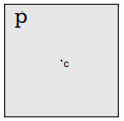
A figura apresenta a letra P e o centro de reflexão, representado pelo ponto C. Observando a letra apresentada e o centro de reflexão, a imagem obtida, após a reflexão, é
Nos últimos anos, ser resiliente tem sido essencial para enfrentar o mercado de trabalho na sociedade brasileira, como podemos notar pelos dados apresentados nos gráficos.
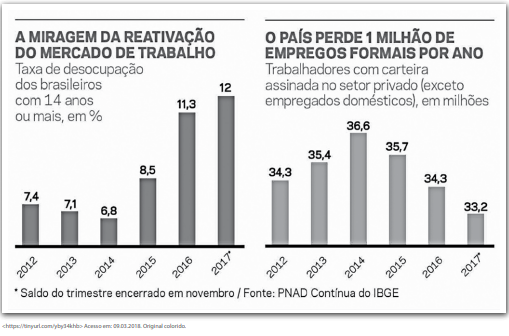
Analisando as informações apresentadas, é correto afirmar que, no período
Considere a charge.
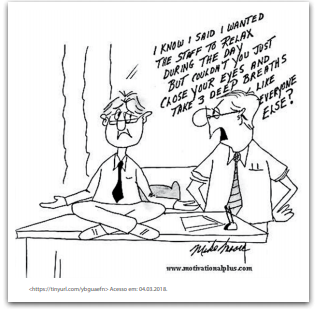
A charge, referente ao ambiente de trabalho, mostra um chefe sugerindo que seu funcionário
Esse texto está relacionado a uma concepção de saúde formalizada em 1948 pela Organização Mundial de Saúde (OMS). Segundo essa concepção, saúde consiste
Um dos desafios para a classe trabalhadora brasileira é se adaptar à Reforma Trabalhista, aprovada pelo Congresso Nacional no ano de 2017. Essa Reforma institui uma nova regra sobre o trabalho intermitente, em que o contratado
 Conheça nossos planos