Foram encontradas 36.754 questões
Resolva questões gratuitamente!
Junte-se a mais de 4 milhões de concurseiros!


Observe a charge a seguir.

A personagem Mafalda, criada no contexto da Guerra Fria, demonstra, na charge, preocupação com o destino da
humanidade diante da proliferação das armas nucleares. Nesse período, as armas nucleares foram objeto de
uma discussão internacional que resultou na assinatura do Tratado de Não Proliferação de Armas Nucleares, em
1968. Esse tratado
Leia o texto a seguir.
De posse de seu “honroso título de doutor”, alguns indivíduos incorporavam a figura do “médico distinto”, totalmente desinteressados pela função primeira da profissão, que é a de conservar a saúde e prestar assistência ao doente.
MAGALHÃES, S. M. Males do Sertão. Goiânia: Cânone Editorial, 2014. p. 180.
O texto citado discorre, no contexto da história de Goiás, sobre profissionais da medicina que angariaram prestígio social exercendo a prática médica. Nesse sentido, alguns nomes expressivos da política goiana tiveram a sua carreira influenciada pela formação em medicina, como foi o caso de:
Leia o texto a seguir.
Foi uma grande onda de protestos que teve início com manifestações estudantis para pedir reformas no setor educacional. O movimento cresceu tanto que evoluiu para uma greve geral de trabalhadores que balançou o governo do então presidente da França, Charles De Gaulle.
Disponível em:<https://mundoestranho.abril.com.br/historia/o-que-foi-o-movimento-de-maio-de-68-na-franca/> . Acesso em: 07 maio 2018.
Em 2018 os movimentos de maio de 68 completam cinquenta anos. A pressão que estudantes e trabalhadores exerceram sobre o governo francês foi tamanha que De Gaulle convocou eleições para o mês de junho. O resultado dessa manobra política foi a
Leia o texto a seguir.
A base de toda teoria médica medieval sobre paixões ou acidentes da alma encontra-se na autoridade das obras de Cláudio Galeno (130 – 200?), médico que viveu e escreveu sua extensa obra no II século, na Roma Imperial [...]. Essa teoria médica defendia a relação estreita entre corpo e alma. Assim, as paixões da alma ou ainda os acidentes (outra expressão encontrada em obras médicas) eram considerados movimentos psicossomáticos efetivos relacionados diretamente ao corpo e indiretamente à alma.
SANTOS, D. O. A. dos. Paixões da alma, melancolia e medicina (século XIII – XV). In: MACEDO, J. R. A Idade Média no Brasil. Porto Alegre: Vidráguas, 2011. p. 108 - 109.
De acordo com a medicina medieval, o órgão central dessa relação entre corpo e alma era o
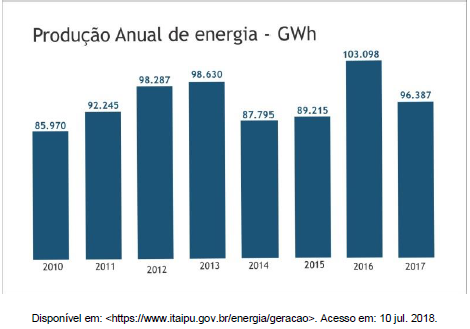
Considerando-se a energia produzida de 2010 a 2017, qual seria aproximadamente, em kg, a massa de urânio necessária para produzir a mesma quantidade de energia, em uma usina nuclear? Considere o prefixo 1G = 109
Considere um pêndulo simples constituído por um fio de comprimento L e uma massa m presa na sua
extremidade. O pêndulo é puxado lateralmente, até que forme um ângulo  com a vertical e posteriormente é
liberado do repouso.
com a vertical e posteriormente é
liberado do repouso.
Ao desconsiderar a resistência do ar, a tensão no fio no ponto mais baixo da trajetória é dada por
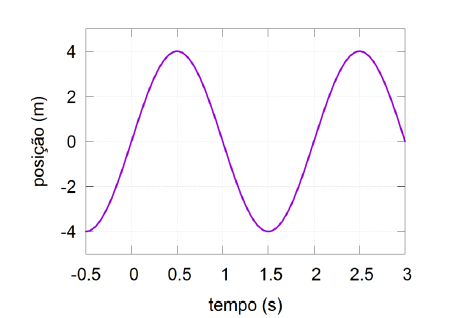
Para esse corpo, a função horária da velocidade v(t) é
Leia o soneto a seguir para responder à questão
ANJOS, Augusto dos. Budismo moderno. In: Eu e outros poemas. 30. ed. Rio de janeiro: Livraria São José, 1965. p. 84.
Leia o soneto a seguir para responder à questão
ANJOS, Augusto dos. Budismo moderno. In: Eu e outros poemas. 30. ed. Rio de janeiro: Livraria São José, 1965. p. 84.

Em termos de genealogia literária, o fragmento apresentado pertence a uma obra do gênero narrativo. Não
obstante, sua linguagem se utiliza de elementos do gênero
Thematic Discussion on Nuclear Weapons
The United States remains committed to the goal of nuclear disarmament, and to seeking to create conditions toward that end. And history makes clear that important progress can be made when security conditions allow. The easing of Cold War rivalries allowed the United States and Russia to make significant steps toward the shared dream of eventual nuclear disarmament after decades in which such movement was impossible. Disarmament success is predicated on patience, attention to detail, effective verification, and patient attention to the challenges of effecting the changes in the security environment that are necessary for progress. This last element is critical, considering the crucial role that nuclear deterrence plays in preserving and protecting international peace and security, and the potentially catastrophic consequences were deterrence’s restraining effect to be removed while it still remains necessary.
The “Treaty on the Prohibition of Nuclear Weapons” violates all these tenets. Its obligations are longstanding worded, imprecise, vaguely worded and sometimes internally contradictory, while offering only an empty shell for verification. Worse, it is fundamentally at odds with today’s security challenges. It is not simply an unproductive instrument; it is likely to be a counterproductive one, with the potential to cause lasting harm to the nonproliferation regime and to the cause of disarmament alike.
The ban treaty is based on the premise that addressing crucial international security issues is not necessary for disarmament. Ban treaty proponents would have us believe that we can do away with nuclear deterrence despite - to cite just one example - the danger posed by North Korea’s relentless pursuit of nuclear weapons and associated delivery systems, which stand in flagrant violation of international law.
Furthermore, the Treaty does not contain a credible verification mechanism, demurring on the issue almost entirely. It does run counter to decades of progress in nonproliferation verification by endorsing the International Atomic Energy Agency (IAEA) Comprehensive Safeguards Agreement as its standard for safeguarding nuclear material.
Finally, the ban treaty has the potential to do real damage to the Non Proliferation Treaty (NPT) in other ways. It exacerbates political tensions on disarmament, dividing states into overly-simplified camps of “nuclear weapons supporters” and “nuclear weapons banners,” rather than recognizing shared interests – especially on the challenges involved in creating the conditions that would make possible further disarmament progress. Reinforcing this false dichotomy and worsening the world’s polarization on disarmament will make further progress within the institutions that have been vehicles for success, such as the NPT review process, significantly more difficult.
Inspired by the NPT Preamble’s acknowledgement of the need to ease international tension and strengthen trust between States in order to facilitate disarmament, the United States stands ready to work with others on effective measures to create improved conditions for nuclear disarmament. This work is focused on overcoming technical challenges to make substantive progress when the security conditions improve. We also continue our longstanding work to support and strengthen the global nonproliferation regime against the many challenges it faces today, for who could deny that there can be no way to envision today’s nuclear weapons possessors ever putting down such tools without rock-solid assurances that no one else will take them up?
There are no shortcuts to nuclear disarmament. Unrealistic attempts to skip to the finish line have the
potential to undermine the institutions and standards we have worked so hard to build. Our collective experience
demonstrates that inclusiveness and the search for consensus can lead to progress, while polarization is a recipe
for failure. We urge all states to work with us in searching for common solutions to collective problems, pursuing a
more secure world.
Thematic Discussion on Nuclear Weapons
The United States remains committed to the goal of nuclear disarmament, and to seeking to create conditions toward that end. And history makes clear that important progress can be made when security conditions allow. The easing of Cold War rivalries allowed the United States and Russia to make significant steps toward the shared dream of eventual nuclear disarmament after decades in which such movement was impossible. Disarmament success is predicated on patience, attention to detail, effective verification, and patient attention to the challenges of effecting the changes in the security environment that are necessary for progress. This last element is critical, considering the crucial role that nuclear deterrence plays in preserving and protecting international peace and security, and the potentially catastrophic consequences were deterrence’s restraining effect to be removed while it still remains necessary.
The “Treaty on the Prohibition of Nuclear Weapons” violates all these tenets. Its obligations are longstanding worded, imprecise, vaguely worded and sometimes internally contradictory, while offering only an empty shell for verification. Worse, it is fundamentally at odds with today’s security challenges. It is not simply an unproductive instrument; it is likely to be a counterproductive one, with the potential to cause lasting harm to the nonproliferation regime and to the cause of disarmament alike.
The ban treaty is based on the premise that addressing crucial international security issues is not necessary for disarmament. Ban treaty proponents would have us believe that we can do away with nuclear deterrence despite - to cite just one example - the danger posed by North Korea’s relentless pursuit of nuclear weapons and associated delivery systems, which stand in flagrant violation of international law.
Furthermore, the Treaty does not contain a credible verification mechanism, demurring on the issue almost entirely. It does run counter to decades of progress in nonproliferation verification by endorsing the International Atomic Energy Agency (IAEA) Comprehensive Safeguards Agreement as its standard for safeguarding nuclear material.
Finally, the ban treaty has the potential to do real damage to the Non Proliferation Treaty (NPT) in other ways. It exacerbates political tensions on disarmament, dividing states into overly-simplified camps of “nuclear weapons supporters” and “nuclear weapons banners,” rather than recognizing shared interests – especially on the challenges involved in creating the conditions that would make possible further disarmament progress. Reinforcing this false dichotomy and worsening the world’s polarization on disarmament will make further progress within the institutions that have been vehicles for success, such as the NPT review process, significantly more difficult.
Inspired by the NPT Preamble’s acknowledgement of the need to ease international tension and strengthen trust between States in order to facilitate disarmament, the United States stands ready to work with others on effective measures to create improved conditions for nuclear disarmament. This work is focused on overcoming technical challenges to make substantive progress when the security conditions improve. We also continue our longstanding work to support and strengthen the global nonproliferation regime against the many challenges it faces today, for who could deny that there can be no way to envision today’s nuclear weapons possessors ever putting down such tools without rock-solid assurances that no one else will take them up?
There are no shortcuts to nuclear disarmament. Unrealistic attempts to skip to the finish line have the
potential to undermine the institutions and standards we have worked so hard to build. Our collective experience
demonstrates that inclusiveness and the search for consensus can lead to progress, while polarization is a recipe
for failure. We urge all states to work with us in searching for common solutions to collective problems, pursuing a
more secure world.
Thematic Discussion on Nuclear Weapons
The United States remains committed to the goal of nuclear disarmament, and to seeking to create conditions toward that end. And history makes clear that important progress can be made when security conditions allow. The easing of Cold War rivalries allowed the United States and Russia to make significant steps toward the shared dream of eventual nuclear disarmament after decades in which such movement was impossible. Disarmament success is predicated on patience, attention to detail, effective verification, and patient attention to the challenges of effecting the changes in the security environment that are necessary for progress. This last element is critical, considering the crucial role that nuclear deterrence plays in preserving and protecting international peace and security, and the potentially catastrophic consequences were deterrence’s restraining effect to be removed while it still remains necessary.
The “Treaty on the Prohibition of Nuclear Weapons” violates all these tenets. Its obligations are longstanding worded, imprecise, vaguely worded and sometimes internally contradictory, while offering only an empty shell for verification. Worse, it is fundamentally at odds with today’s security challenges. It is not simply an unproductive instrument; it is likely to be a counterproductive one, with the potential to cause lasting harm to the nonproliferation regime and to the cause of disarmament alike.
The ban treaty is based on the premise that addressing crucial international security issues is not necessary for disarmament. Ban treaty proponents would have us believe that we can do away with nuclear deterrence despite - to cite just one example - the danger posed by North Korea’s relentless pursuit of nuclear weapons and associated delivery systems, which stand in flagrant violation of international law.
Furthermore, the Treaty does not contain a credible verification mechanism, demurring on the issue almost entirely. It does run counter to decades of progress in nonproliferation verification by endorsing the International Atomic Energy Agency (IAEA) Comprehensive Safeguards Agreement as its standard for safeguarding nuclear material.
Finally, the ban treaty has the potential to do real damage to the Non Proliferation Treaty (NPT) in other ways. It exacerbates political tensions on disarmament, dividing states into overly-simplified camps of “nuclear weapons supporters” and “nuclear weapons banners,” rather than recognizing shared interests – especially on the challenges involved in creating the conditions that would make possible further disarmament progress. Reinforcing this false dichotomy and worsening the world’s polarization on disarmament will make further progress within the institutions that have been vehicles for success, such as the NPT review process, significantly more difficult.
Inspired by the NPT Preamble’s acknowledgement of the need to ease international tension and strengthen trust between States in order to facilitate disarmament, the United States stands ready to work with others on effective measures to create improved conditions for nuclear disarmament. This work is focused on overcoming technical challenges to make substantive progress when the security conditions improve. We also continue our longstanding work to support and strengthen the global nonproliferation regime against the many challenges it faces today, for who could deny that there can be no way to envision today’s nuclear weapons possessors ever putting down such tools without rock-solid assurances that no one else will take them up?
There are no shortcuts to nuclear disarmament. Unrealistic attempts to skip to the finish line have the
potential to undermine the institutions and standards we have worked so hard to build. Our collective experience
demonstrates that inclusiveness and the search for consensus can lead to progress, while polarization is a recipe
for failure. We urge all states to work with us in searching for common solutions to collective problems, pursuing a
more secure world.
Leia o texto a seguir para responder à questão.
Digitizing Healthcare: How Technology Is Improving Medical Care
by Tricia Hussung
A wide variety of digital innovations are revolutionizing healthcare — and technology in medicine is here to stay. How are these changes impacting the delivery of care, and what skills are needed to succeed in this bold new world? It’s no secret that, as a society, technology has become a part of our everyday lives. In fact, almost 60 percent of American adults own a smartphone, and 42 percent of that same population (American adults) owns a tablet computer. Though technology has been permeating almost every aspect of our lives, until recent years the medical field has been largely unaffected by the rapid pace of technological innovation that is characteristic of the Digital Age. However, this is changing.
This ubiquity of technology is beginning to extend into the medical field. Advances in medical technology are changing medicine by giving physicians more information — as well as better, more specific data.
New Medical Technology: Innovations
So just what are these new advances in technology? The following are just a few of the many innovations that have occurred in medical technology over the past year alone. Some of these leading technologies are still being developed, while others are slowly being introduced into mainstream medical practice.
- The modern hospital experience: Several medical technology companies are looking to update hospital stays to keep pace with the needs of modern patients. To more easily integrate changing technology, these new rooms would feature interchangeable parts that are easily adapted to the specific situation of a patient. The seamless design would have a minimal impact on facility operations while increasing patient comfort and connectivity.
- Surgery simulation: The Roswell Park Cancer Institute has partnered with the University of Buffalo’s School of Engineering and Applied Sciences to create the Robotic Surgery Simulator (RoSS). This innovation allows real-world views of surgeries while eliminating the need for a live environment to train aspiring surgeons. It gives these medical professionals the space to experiment in a simulated environment, rather than risking making mistakes on real patients.
- Cloud-based data and software: Applications like referralMD help healthcare providers create referrals digitally and reach millions of patients and providers who are in search of treatment options. The current, paper method of referrals causes almost 50 percent of patient referrals to never actually result in doctor’s visits. This present gap in care “causes patients to lose treatment (and) the healthcare facility to lose money.” Software innovations like these are part of the relatively new field of health informatics, which aims to collect, store, analyze and present health data in a digital format.
With widespread innovations like these affecting patient care practices, it is not surprising that the way medical
records and information are stored and shared is changing as well. These technological advancements are costeffective and improve the ability of medical professionals to diagnose and treat health issues of all kinds. Two of
the main changes that are revolutionizing the future of healthcare are electronic medical records and health
information exchange. Future won´t be the same for medical field. Are you ready for what is coming?
Disponível em:<https://online.king.edu/news/digitizing-healthcare-how-technology-is-improving-medical-care/>
Leia o texto a seguir para responder à questão.
Digitizing Healthcare: How Technology Is Improving Medical Care
by Tricia Hussung
A wide variety of digital innovations are revolutionizing healthcare — and technology in medicine is here to stay. How are these changes impacting the delivery of care, and what skills are needed to succeed in this bold new world? It’s no secret that, as a society, technology has become a part of our everyday lives. In fact, almost 60 percent of American adults own a smartphone, and 42 percent of that same population (American adults) owns a tablet computer. Though technology has been permeating almost every aspect of our lives, until recent years the medical field has been largely unaffected by the rapid pace of technological innovation that is characteristic of the Digital Age. However, this is changing.
This ubiquity of technology is beginning to extend into the medical field. Advances in medical technology are changing medicine by giving physicians more information — as well as better, more specific data.
New Medical Technology: Innovations
So just what are these new advances in technology? The following are just a few of the many innovations that have occurred in medical technology over the past year alone. Some of these leading technologies are still being developed, while others are slowly being introduced into mainstream medical practice.
- The modern hospital experience: Several medical technology companies are looking to update hospital stays to keep pace with the needs of modern patients. To more easily integrate changing technology, these new rooms would feature interchangeable parts that are easily adapted to the specific situation of a patient. The seamless design would have a minimal impact on facility operations while increasing patient comfort and connectivity.
- Surgery simulation: The Roswell Park Cancer Institute has partnered with the University of Buffalo’s School of Engineering and Applied Sciences to create the Robotic Surgery Simulator (RoSS). This innovation allows real-world views of surgeries while eliminating the need for a live environment to train aspiring surgeons. It gives these medical professionals the space to experiment in a simulated environment, rather than risking making mistakes on real patients.
- Cloud-based data and software: Applications like referralMD help healthcare providers create referrals digitally and reach millions of patients and providers who are in search of treatment options. The current, paper method of referrals causes almost 50 percent of patient referrals to never actually result in doctor’s visits. This present gap in care “causes patients to lose treatment (and) the healthcare facility to lose money.” Software innovations like these are part of the relatively new field of health informatics, which aims to collect, store, analyze and present health data in a digital format.
With widespread innovations like these affecting patient care practices, it is not surprising that the way medical
records and information are stored and shared is changing as well. These technological advancements are costeffective and improve the ability of medical professionals to diagnose and treat health issues of all kinds. Two of
the main changes that are revolutionizing the future of healthcare are electronic medical records and health
information exchange. Future won´t be the same for medical field. Are you ready for what is coming?
Disponível em:<https://online.king.edu/news/digitizing-healthcare-how-technology-is-improving-medical-care/>
O trecho abaixo revela alguns aspectos da noção de justiça em Platão:
A missão do verdadeiro Estado não é tornar o mais feliz possível a classe dominante da população, uma vez que tal Estado deve velar pela felicidade de todos, e isto depende de que cada indivíduo cumpra o melhor possível a sua função específica, e somente ela (JAEGER, Werner. A Paideia. São Paulo: Martins Fontes, 1995, p. 807).
Nesse Estado, proposto por Platão, quem eram aqueles destinados a governar e realizar a justiça na Polis?
 Conheça nossos planos