Questões de Vestibular
Comentadas
Foram encontradas 36.755 questões
Resolva questões gratuitamente!
Junte-se a mais de 4 milhões de concurseiros!


Instrução: A questão refere-se à
peça Hamlet e a seu autor William
Shakespeare.
No bloco superior abaixo, estão listados os nomes de algumas personagens da tragédia; no inferior, sua função no drama. Associe adequadamente o bloco inferior ao superior.
1 - Cláudio
2 - Fortimbrás
3 - Horácio
4 - Polônio
5 - Laertes
( ) Príncipe da Noruega
( ) Amigo de Hamlet
( ) Irmão de Ofélia
( ) Lorde camareiro
A sequência correta de preenchimento dos parênteses, de cima para baixo, é
Instrução: A questão refere-se à
peça Hamlet e a seu autor William
Shakespeare.
Leia as seguintes afirmações sobre William Shakespeare.
I - Shakespeare escreveu tragédias, comédias, romances e poemas.
II - Shakespeare foi o principal dramaturgo da Era Elisabetana, deixando um legado que ultrapassa a cultura inglesa.
III- Shakespeare criou personagens que se tornaram exemplos da psiquê humana, como Hamlet, Rei Lear e o casal Macbeth.
Quais estão corretas?
Na figura abaixo, O representa um objeto puntual luminoso, E representa um espelho plano e X um observador.

A imagem do objeto O está corretamente posicionada no ponto
Impulso específico é uma medida da eficiência do uso do combustível por motores a jato para produzir o necessário impulso. Ele é calculado pela razão entre os módulos do impulso produzido pelo motor e do peso do combustível usado, Pc, isto é, I/Pc.
A figura abaixo representa a força produzida por um motor a jato durante 30 s.

Sabendo que o impulso específico do motor é de 2000 s e considerando o módulo da aceleração da
gravidade igual a 10 m/s2, a massa de combustível usado nesse intervalo de tempo foi de
Na figura abaixo, um corpo de massa M desliza com velocidade constante sobre um plano inclinado que forma um ângulo θ com o plano horizontal.
Considere g o módulo da aceleração da gravidade e despreze a resistência do ar.

Assinale a alternativa que preenche corretamente as lacunas do enunciado abaixo, na ordem em que aparecem.
Quando o centro de massa do corpo desce
uma altura h, os trabalhos realizados pela
força peso e pela força de atrito entre corpo e
plano são, respectivamente, ........ e ........ .
A figura abaixo representa um sistema de coroas dentadas de uma bicicleta, que está se movendo com velocidade constante. As coroas dentadas giram sem atrito em torno de seus eixos.

A coroa dentada dianteira de raio RD é movimentada pelos pedais e está ligada à coroa traseira de raio RE pela correia de massa desprezível. FP é a força aplicada no pedal cujo comprimento é RP a partir do centro da coroa.
Nessa situação, o módulo do torque transmitido à roda traseira, através da coroa de raio RE, é
Um automóvel viaja por uma estrada retilínea com velocidade constante. A partir de dado instante, considerado como t=0, o automóvel sofre acelerações distintas em três intervalos consecutivos de tempo, conforme representado no gráfico abaixo.
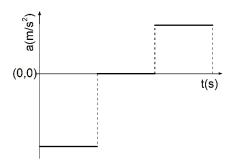
Assinale a alternativa que contém o gráfico que melhor representa o deslocamento do automóvel, nos mesmos intervalos de tempo.
Informação: nos gráficos, (0,0) representa a origem do sistema de coordenadas.
How a Canadian Chain Is Reinventing Book Selling
By Alexandra Alter
About a decade ago, Heather Reisman, the chief executive of Canada’s largest bookstore chain, was having tea with the novelist Margaret Atwood when Ms. Atwood inadvertently gave her an idea for a new product. Ms. Atwood announced that she planned to go home, put on a pair of cozy socks and curl up with a book. Ms. Reisman thought about how appealing that sounded. Not long after, her company, Indigo, developed its own brand of plush “reading socks.” They quickly became one of Indigo’s signature gift items.
“Last year, all my friends got reading socks,” said Arianna Huffington, the HuffPost cofounder and a friend of Ms. Reisman’s, who also gave the socks as gifts to employees at her organization Thrive. “Most people don’t have reading socks — not like Heather’s reading socks.”
Over the last few years, Indigo has designed dozens of other products, including beach mats, scented candles, inspirational wall art, Mason jars, crystal pillars, bento lunchboxes, herb growing kits, copper cheese knife sets, stemless champagne flutes, throw pillows and scarves.
It may seem strange for a bookstore chain to be developing and selling artisanal soup bowls and organic cotton baby onesies. But Indigo’s approach seems not only novel but crucial to its success and longevity. The superstore concept, with hulking retail spaces stocking 100,000 titles, has become increasingly hard to sustain in the era of online retail, when it’s impossible to match Amazon’s vast selection.
Indigo is experimenting with a new model, positioning itself as a “cultural department store” where customers who wander in to browse through books often end up lingering as they impulsively shop for cashmere slippers and crystal facial rollers, or a knife set to go with a new Paleo cookbook. Over the past few years, Ms. Reisman has reinvented Indigo as a Goop-like, curated lifestyle brand, with sections devoted to food, health and wellness, and home décor.
Ms. Reisman is now importing Indigo’s approach to the United States. Last year, Indigo opened its first American outpost, at a luxury mall in Millburn, N.J., and she eventually plans to open a cluster of Indigos in the Northeast. Indigo’s ascendance is all the more notable given the challenges that big bookstore chains have faced in the United States. Borders, which once had more than 650 locations, filed for bankruptcy in 2011. Barnes & Noble now operates 627 stores, down from 720 in 2010, and the company put itself up for sale last year. Lately, it has been opening smaller stores, including an 8,300-square-foot outlet in Fairfax County, Va.
“Cross-merchandising is Retail 101, and it’s hard to do in a typical bookstore,” said Peter Hildick-Smith, president of the Codex Group, which analyzes the book industry. “Indigo found a way to create an extra aura around the bookbuying experience, by creating a physical extension of what you’re reading about.”
The atmosphere is unabashedly intimate, cozy and feminine — an aesthetic choice that also makes commercial sense, given that women account for some 60 percent of book buyers. A section called “The Joy of the Table” stocks Indigobrand ceramics, glassware and acacia wood serving platters with the cookbooks. The home décor section has pillows and throws, woven baskets, vases and scented candles. There’s a subsection called “In Her Words,” which features idea-driven books and memoirs by women. An area labeled “A Room of Her Own” looks like a lush dressing room, with vegan leather purses, soft gray shawls, a velvet chair, scarves and journals alongside art, design and fashion books.
Books still account for just over 50 percent of Indigo’s sales and remain the central draw; the New Jersey store stocks around 55,000 titles. But they also serve another purpose: providing a window into consumers’ interests, hobbies, desires and anxieties, which makes it easier to develop and sell related products.
Publishing executives, who have watched with growing alarm as Barnes & Noble has struggled, have responded enthusiastically to Ms. Reisman’s strategy. “Heather pioneered and perfected the art of integrating books and nonbook products,” Markus Dohle, the chief executive of Penguin Random House, said in an email.
Ms. Reisman has made herself and her own tastes and interests central to the brand. The front of the New Jersey store features a section labeled “Heather’s Picks,” with a display table covered with dozens of titles. A sign identifies her as the chain’s “founder, C.E.O., Chief Booklover and the Heather in Heather’s Picks.” She appears regularly at author signings and store events, and has interviewed prominent authors like Malcolm Gladwell, James Comey, Sally Field, Bill Clinton and Nora Ephron.
When Ms. Reisman opened the first Indigo store in Burlington, Ontario, in 1997, she had already run her own consulting firm and later served as president of a soft drink and beverage company, Cott. Still, bookselling is an idiosyncratic industry, and many questioned whether Indigo could compete with Canada’s biggest bookseller, Chapters. Skepticism dissolved a few years later when Indigo merged with Chapters, inheriting its fleet of national stores. The company now has more than 200 outlets across Canada, including 89 “superstores.” Indigo opened its first revamped concept store in 2016.
The new approach has proved lucrative: In its 2017 fiscal year, the company’s revenue exceeded $1 billion Canadian for the first time. In its 2018 fiscal year, Indigo reported a revenue increase of nearly $60 million Canadian over the previous year, making it the most profitable year in the chain’s history.
The company’s dominance in Canada doesn’t guarantee it will thrive in the United States, where it has to compete not only with Amazon and Barnes & Noble, but with a resurgent wave of independent booksellers. After years of decline, independent stores have rebounded, with some 2,470 locations, up from 1,651 a decade ago, according to the American Booksellers Association. And Amazon has expanded into the physical retail market, with around 20 bookstores across the United States.
Ms. Reisman acknowledges that the company faces challenges as it expands southward. Still, she’s optimistic, and is already scouting locations for a second store near New York.
https://www.nytimes.com/2019/05/01
How a Canadian Chain Is Reinventing Book Selling
By Alexandra Alter
About a decade ago, Heather Reisman, the chief executive of Canada’s largest bookstore chain, was having tea with the novelist Margaret Atwood when Ms. Atwood inadvertently gave her an idea for a new product. Ms. Atwood announced that she planned to go home, put on a pair of cozy socks and curl up with a book. Ms. Reisman thought about how appealing that sounded. Not long after, her company, Indigo, developed its own brand of plush “reading socks.” They quickly became one of Indigo’s signature gift items.
“Last year, all my friends got reading socks,” said Arianna Huffington, the HuffPost cofounder and a friend of Ms. Reisman’s, who also gave the socks as gifts to employees at her organization Thrive. “Most people don’t have reading socks — not like Heather’s reading socks.”
Over the last few years, Indigo has designed dozens of other products, including beach mats, scented candles, inspirational wall art, Mason jars, crystal pillars, bento lunchboxes, herb growing kits, copper cheese knife sets, stemless champagne flutes, throw pillows and scarves.
It may seem strange for a bookstore chain to be developing and selling artisanal soup bowls and organic cotton baby onesies. But Indigo’s approach seems not only novel but crucial to its success and longevity. The superstore concept, with hulking retail spaces stocking 100,000 titles, has become increasingly hard to sustain in the era of online retail, when it’s impossible to match Amazon’s vast selection.
Indigo is experimenting with a new model, positioning itself as a “cultural department store” where customers who wander in to browse through books often end up lingering as they impulsively shop for cashmere slippers and crystal facial rollers, or a knife set to go with a new Paleo cookbook. Over the past few years, Ms. Reisman has reinvented Indigo as a Goop-like, curated lifestyle brand, with sections devoted to food, health and wellness, and home décor.
Ms. Reisman is now importing Indigo’s approach to the United States. Last year, Indigo opened its first American outpost, at a luxury mall in Millburn, N.J., and she eventually plans to open a cluster of Indigos in the Northeast. Indigo’s ascendance is all the more notable given the challenges that big bookstore chains have faced in the United States. Borders, which once had more than 650 locations, filed for bankruptcy in 2011. Barnes & Noble now operates 627 stores, down from 720 in 2010, and the company put itself up for sale last year. Lately, it has been opening smaller stores, including an 8,300-square-foot outlet in Fairfax County, Va.
“Cross-merchandising is Retail 101, and it’s hard to do in a typical bookstore,” said Peter Hildick-Smith, president of the Codex Group, which analyzes the book industry. “Indigo found a way to create an extra aura around the bookbuying experience, by creating a physical extension of what you’re reading about.”
The atmosphere is unabashedly intimate, cozy and feminine — an aesthetic choice that also makes commercial sense, given that women account for some 60 percent of book buyers. A section called “The Joy of the Table” stocks Indigobrand ceramics, glassware and acacia wood serving platters with the cookbooks. The home décor section has pillows and throws, woven baskets, vases and scented candles. There’s a subsection called “In Her Words,” which features idea-driven books and memoirs by women. An area labeled “A Room of Her Own” looks like a lush dressing room, with vegan leather purses, soft gray shawls, a velvet chair, scarves and journals alongside art, design and fashion books.
Books still account for just over 50 percent of Indigo’s sales and remain the central draw; the New Jersey store stocks around 55,000 titles. But they also serve another purpose: providing a window into consumers’ interests, hobbies, desires and anxieties, which makes it easier to develop and sell related products.
Publishing executives, who have watched with growing alarm as Barnes & Noble has struggled, have responded enthusiastically to Ms. Reisman’s strategy. “Heather pioneered and perfected the art of integrating books and nonbook products,” Markus Dohle, the chief executive of Penguin Random House, said in an email.
Ms. Reisman has made herself and her own tastes and interests central to the brand. The front of the New Jersey store features a section labeled “Heather’s Picks,” with a display table covered with dozens of titles. A sign identifies her as the chain’s “founder, C.E.O., Chief Booklover and the Heather in Heather’s Picks.” She appears regularly at author signings and store events, and has interviewed prominent authors like Malcolm Gladwell, James Comey, Sally Field, Bill Clinton and Nora Ephron.
When Ms. Reisman opened the first Indigo store in Burlington, Ontario, in 1997, she had already run her own consulting firm and later served as president of a soft drink and beverage company, Cott. Still, bookselling is an idiosyncratic industry, and many questioned whether Indigo could compete with Canada’s biggest bookseller, Chapters. Skepticism dissolved a few years later when Indigo merged with Chapters, inheriting its fleet of national stores. The company now has more than 200 outlets across Canada, including 89 “superstores.” Indigo opened its first revamped concept store in 2016.
The new approach has proved lucrative: In its 2017 fiscal year, the company’s revenue exceeded $1 billion Canadian for the first time. In its 2018 fiscal year, Indigo reported a revenue increase of nearly $60 million Canadian over the previous year, making it the most profitable year in the chain’s history.
The company’s dominance in Canada doesn’t guarantee it will thrive in the United States, where it has to compete not only with Amazon and Barnes & Noble, but with a resurgent wave of independent booksellers. After years of decline, independent stores have rebounded, with some 2,470 locations, up from 1,651 a decade ago, according to the American Booksellers Association. And Amazon has expanded into the physical retail market, with around 20 bookstores across the United States.
Ms. Reisman acknowledges that the company faces challenges as it expands southward. Still, she’s optimistic, and is already scouting locations for a second store near New York.
https://www.nytimes.com/2019/05/01
How a Canadian Chain Is Reinventing Book Selling
By Alexandra Alter
About a decade ago, Heather Reisman, the chief executive of Canada’s largest bookstore chain, was having tea with the novelist Margaret Atwood when Ms. Atwood inadvertently gave her an idea for a new product. Ms. Atwood announced that she planned to go home, put on a pair of cozy socks and curl up with a book. Ms. Reisman thought about how appealing that sounded. Not long after, her company, Indigo, developed its own brand of plush “reading socks.” They quickly became one of Indigo’s signature gift items.
“Last year, all my friends got reading socks,” said Arianna Huffington, the HuffPost cofounder and a friend of Ms. Reisman’s, who also gave the socks as gifts to employees at her organization Thrive. “Most people don’t have reading socks — not like Heather’s reading socks.”
Over the last few years, Indigo has designed dozens of other products, including beach mats, scented candles, inspirational wall art, Mason jars, crystal pillars, bento lunchboxes, herb growing kits, copper cheese knife sets, stemless champagne flutes, throw pillows and scarves.
It may seem strange for a bookstore chain to be developing and selling artisanal soup bowls and organic cotton baby onesies. But Indigo’s approach seems not only novel but crucial to its success and longevity. The superstore concept, with hulking retail spaces stocking 100,000 titles, has become increasingly hard to sustain in the era of online retail, when it’s impossible to match Amazon’s vast selection.
Indigo is experimenting with a new model, positioning itself as a “cultural department store” where customers who wander in to browse through books often end up lingering as they impulsively shop for cashmere slippers and crystal facial rollers, or a knife set to go with a new Paleo cookbook. Over the past few years, Ms. Reisman has reinvented Indigo as a Goop-like, curated lifestyle brand, with sections devoted to food, health and wellness, and home décor.
Ms. Reisman is now importing Indigo’s approach to the United States. Last year, Indigo opened its first American outpost, at a luxury mall in Millburn, N.J., and she eventually plans to open a cluster of Indigos in the Northeast. Indigo’s ascendance is all the more notable given the challenges that big bookstore chains have faced in the United States. Borders, which once had more than 650 locations, filed for bankruptcy in 2011. Barnes & Noble now operates 627 stores, down from 720 in 2010, and the company put itself up for sale last year. Lately, it has been opening smaller stores, including an 8,300-square-foot outlet in Fairfax County, Va.
“Cross-merchandising is Retail 101, and it’s hard to do in a typical bookstore,” said Peter Hildick-Smith, president of the Codex Group, which analyzes the book industry. “Indigo found a way to create an extra aura around the bookbuying experience, by creating a physical extension of what you’re reading about.”
The atmosphere is unabashedly intimate, cozy and feminine — an aesthetic choice that also makes commercial sense, given that women account for some 60 percent of book buyers. A section called “The Joy of the Table” stocks Indigobrand ceramics, glassware and acacia wood serving platters with the cookbooks. The home décor section has pillows and throws, woven baskets, vases and scented candles. There’s a subsection called “In Her Words,” which features idea-driven books and memoirs by women. An area labeled “A Room of Her Own” looks like a lush dressing room, with vegan leather purses, soft gray shawls, a velvet chair, scarves and journals alongside art, design and fashion books.
Books still account for just over 50 percent of Indigo’s sales and remain the central draw; the New Jersey store stocks around 55,000 titles. But they also serve another purpose: providing a window into consumers’ interests, hobbies, desires and anxieties, which makes it easier to develop and sell related products.
Publishing executives, who have watched with growing alarm as Barnes & Noble has struggled, have responded enthusiastically to Ms. Reisman’s strategy. “Heather pioneered and perfected the art of integrating books and nonbook products,” Markus Dohle, the chief executive of Penguin Random House, said in an email.
Ms. Reisman has made herself and her own tastes and interests central to the brand. The front of the New Jersey store features a section labeled “Heather’s Picks,” with a display table covered with dozens of titles. A sign identifies her as the chain’s “founder, C.E.O., Chief Booklover and the Heather in Heather’s Picks.” She appears regularly at author signings and store events, and has interviewed prominent authors like Malcolm Gladwell, James Comey, Sally Field, Bill Clinton and Nora Ephron.
When Ms. Reisman opened the first Indigo store in Burlington, Ontario, in 1997, she had already run her own consulting firm and later served as president of a soft drink and beverage company, Cott. Still, bookselling is an idiosyncratic industry, and many questioned whether Indigo could compete with Canada’s biggest bookseller, Chapters. Skepticism dissolved a few years later when Indigo merged with Chapters, inheriting its fleet of national stores. The company now has more than 200 outlets across Canada, including 89 “superstores.” Indigo opened its first revamped concept store in 2016.
The new approach has proved lucrative: In its 2017 fiscal year, the company’s revenue exceeded $1 billion Canadian for the first time. In its 2018 fiscal year, Indigo reported a revenue increase of nearly $60 million Canadian over the previous year, making it the most profitable year in the chain’s history.
The company’s dominance in Canada doesn’t guarantee it will thrive in the United States, where it has to compete not only with Amazon and Barnes & Noble, but with a resurgent wave of independent booksellers. After years of decline, independent stores have rebounded, with some 2,470 locations, up from 1,651 a decade ago, according to the American Booksellers Association. And Amazon has expanded into the physical retail market, with around 20 bookstores across the United States.
Ms. Reisman acknowledges that the company faces challenges as it expands southward. Still, she’s optimistic, and is already scouting locations for a second store near New York.
https://www.nytimes.com/2019/05/01
How a Canadian Chain Is Reinventing Book Selling
By Alexandra Alter
About a decade ago, Heather Reisman, the chief executive of Canada’s largest bookstore chain, was having tea with the novelist Margaret Atwood when Ms. Atwood inadvertently gave her an idea for a new product. Ms. Atwood announced that she planned to go home, put on a pair of cozy socks and curl up with a book. Ms. Reisman thought about how appealing that sounded. Not long after, her company, Indigo, developed its own brand of plush “reading socks.” They quickly became one of Indigo’s signature gift items.
“Last year, all my friends got reading socks,” said Arianna Huffington, the HuffPost cofounder and a friend of Ms. Reisman’s, who also gave the socks as gifts to employees at her organization Thrive. “Most people don’t have reading socks — not like Heather’s reading socks.”
Over the last few years, Indigo has designed dozens of other products, including beach mats, scented candles, inspirational wall art, Mason jars, crystal pillars, bento lunchboxes, herb growing kits, copper cheese knife sets, stemless champagne flutes, throw pillows and scarves.
It may seem strange for a bookstore chain to be developing and selling artisanal soup bowls and organic cotton baby onesies. But Indigo’s approach seems not only novel but crucial to its success and longevity. The superstore concept, with hulking retail spaces stocking 100,000 titles, has become increasingly hard to sustain in the era of online retail, when it’s impossible to match Amazon’s vast selection.
Indigo is experimenting with a new model, positioning itself as a “cultural department store” where customers who wander in to browse through books often end up lingering as they impulsively shop for cashmere slippers and crystal facial rollers, or a knife set to go with a new Paleo cookbook. Over the past few years, Ms. Reisman has reinvented Indigo as a Goop-like, curated lifestyle brand, with sections devoted to food, health and wellness, and home décor.
Ms. Reisman is now importing Indigo’s approach to the United States. Last year, Indigo opened its first American outpost, at a luxury mall in Millburn, N.J., and she eventually plans to open a cluster of Indigos in the Northeast. Indigo’s ascendance is all the more notable given the challenges that big bookstore chains have faced in the United States. Borders, which once had more than 650 locations, filed for bankruptcy in 2011. Barnes & Noble now operates 627 stores, down from 720 in 2010, and the company put itself up for sale last year. Lately, it has been opening smaller stores, including an 8,300-square-foot outlet in Fairfax County, Va.
“Cross-merchandising is Retail 101, and it’s hard to do in a typical bookstore,” said Peter Hildick-Smith, president of the Codex Group, which analyzes the book industry. “Indigo found a way to create an extra aura around the bookbuying experience, by creating a physical extension of what you’re reading about.”
The atmosphere is unabashedly intimate, cozy and feminine — an aesthetic choice that also makes commercial sense, given that women account for some 60 percent of book buyers. A section called “The Joy of the Table” stocks Indigobrand ceramics, glassware and acacia wood serving platters with the cookbooks. The home décor section has pillows and throws, woven baskets, vases and scented candles. There’s a subsection called “In Her Words,” which features idea-driven books and memoirs by women. An area labeled “A Room of Her Own” looks like a lush dressing room, with vegan leather purses, soft gray shawls, a velvet chair, scarves and journals alongside art, design and fashion books.
Books still account for just over 50 percent of Indigo’s sales and remain the central draw; the New Jersey store stocks around 55,000 titles. But they also serve another purpose: providing a window into consumers’ interests, hobbies, desires and anxieties, which makes it easier to develop and sell related products.
Publishing executives, who have watched with growing alarm as Barnes & Noble has struggled, have responded enthusiastically to Ms. Reisman’s strategy. “Heather pioneered and perfected the art of integrating books and nonbook products,” Markus Dohle, the chief executive of Penguin Random House, said in an email.
Ms. Reisman has made herself and her own tastes and interests central to the brand. The front of the New Jersey store features a section labeled “Heather’s Picks,” with a display table covered with dozens of titles. A sign identifies her as the chain’s “founder, C.E.O., Chief Booklover and the Heather in Heather’s Picks.” She appears regularly at author signings and store events, and has interviewed prominent authors like Malcolm Gladwell, James Comey, Sally Field, Bill Clinton and Nora Ephron.
When Ms. Reisman opened the first Indigo store in Burlington, Ontario, in 1997, she had already run her own consulting firm and later served as president of a soft drink and beverage company, Cott. Still, bookselling is an idiosyncratic industry, and many questioned whether Indigo could compete with Canada’s biggest bookseller, Chapters. Skepticism dissolved a few years later when Indigo merged with Chapters, inheriting its fleet of national stores. The company now has more than 200 outlets across Canada, including 89 “superstores.” Indigo opened its first revamped concept store in 2016.
The new approach has proved lucrative: In its 2017 fiscal year, the company’s revenue exceeded $1 billion Canadian for the first time. In its 2018 fiscal year, Indigo reported a revenue increase of nearly $60 million Canadian over the previous year, making it the most profitable year in the chain’s history.
The company’s dominance in Canada doesn’t guarantee it will thrive in the United States, where it has to compete not only with Amazon and Barnes & Noble, but with a resurgent wave of independent booksellers. After years of decline, independent stores have rebounded, with some 2,470 locations, up from 1,651 a decade ago, according to the American Booksellers Association. And Amazon has expanded into the physical retail market, with around 20 bookstores across the United States.
Ms. Reisman acknowledges that the company faces challenges as it expands southward. Still, she’s optimistic, and is already scouting locations for a second store near New York.
https://www.nytimes.com/2019/05/01
How a Canadian Chain Is Reinventing Book Selling
By Alexandra Alter
About a decade ago, Heather Reisman, the chief executive of Canada’s largest bookstore chain, was having tea with the novelist Margaret Atwood when Ms. Atwood inadvertently gave her an idea for a new product. Ms. Atwood announced that she planned to go home, put on a pair of cozy socks and curl up with a book. Ms. Reisman thought about how appealing that sounded. Not long after, her company, Indigo, developed its own brand of plush “reading socks.” They quickly became one of Indigo’s signature gift items.
“Last year, all my friends got reading socks,” said Arianna Huffington, the HuffPost cofounder and a friend of Ms. Reisman’s, who also gave the socks as gifts to employees at her organization Thrive. “Most people don’t have reading socks — not like Heather’s reading socks.”
Over the last few years, Indigo has designed dozens of other products, including beach mats, scented candles, inspirational wall art, Mason jars, crystal pillars, bento lunchboxes, herb growing kits, copper cheese knife sets, stemless champagne flutes, throw pillows and scarves.
It may seem strange for a bookstore chain to be developing and selling artisanal soup bowls and organic cotton baby onesies. But Indigo’s approach seems not only novel but crucial to its success and longevity. The superstore concept, with hulking retail spaces stocking 100,000 titles, has become increasingly hard to sustain in the era of online retail, when it’s impossible to match Amazon’s vast selection.
Indigo is experimenting with a new model, positioning itself as a “cultural department store” where customers who wander in to browse through books often end up lingering as they impulsively shop for cashmere slippers and crystal facial rollers, or a knife set to go with a new Paleo cookbook. Over the past few years, Ms. Reisman has reinvented Indigo as a Goop-like, curated lifestyle brand, with sections devoted to food, health and wellness, and home décor.
Ms. Reisman is now importing Indigo’s approach to the United States. Last year, Indigo opened its first American outpost, at a luxury mall in Millburn, N.J., and she eventually plans to open a cluster of Indigos in the Northeast. Indigo’s ascendance is all the more notable given the challenges that big bookstore chains have faced in the United States. Borders, which once had more than 650 locations, filed for bankruptcy in 2011. Barnes & Noble now operates 627 stores, down from 720 in 2010, and the company put itself up for sale last year. Lately, it has been opening smaller stores, including an 8,300-square-foot outlet in Fairfax County, Va.
“Cross-merchandising is Retail 101, and it’s hard to do in a typical bookstore,” said Peter Hildick-Smith, president of the Codex Group, which analyzes the book industry. “Indigo found a way to create an extra aura around the bookbuying experience, by creating a physical extension of what you’re reading about.”
The atmosphere is unabashedly intimate, cozy and feminine — an aesthetic choice that also makes commercial sense, given that women account for some 60 percent of book buyers. A section called “The Joy of the Table” stocks Indigobrand ceramics, glassware and acacia wood serving platters with the cookbooks. The home décor section has pillows and throws, woven baskets, vases and scented candles. There’s a subsection called “In Her Words,” which features idea-driven books and memoirs by women. An area labeled “A Room of Her Own” looks like a lush dressing room, with vegan leather purses, soft gray shawls, a velvet chair, scarves and journals alongside art, design and fashion books.
Books still account for just over 50 percent of Indigo’s sales and remain the central draw; the New Jersey store stocks around 55,000 titles. But they also serve another purpose: providing a window into consumers’ interests, hobbies, desires and anxieties, which makes it easier to develop and sell related products.
Publishing executives, who have watched with growing alarm as Barnes & Noble has struggled, have responded enthusiastically to Ms. Reisman’s strategy. “Heather pioneered and perfected the art of integrating books and nonbook products,” Markus Dohle, the chief executive of Penguin Random House, said in an email.
Ms. Reisman has made herself and her own tastes and interests central to the brand. The front of the New Jersey store features a section labeled “Heather’s Picks,” with a display table covered with dozens of titles. A sign identifies her as the chain’s “founder, C.E.O., Chief Booklover and the Heather in Heather’s Picks.” She appears regularly at author signings and store events, and has interviewed prominent authors like Malcolm Gladwell, James Comey, Sally Field, Bill Clinton and Nora Ephron.
When Ms. Reisman opened the first Indigo store in Burlington, Ontario, in 1997, she had already run her own consulting firm and later served as president of a soft drink and beverage company, Cott. Still, bookselling is an idiosyncratic industry, and many questioned whether Indigo could compete with Canada’s biggest bookseller, Chapters. Skepticism dissolved a few years later when Indigo merged with Chapters, inheriting its fleet of national stores. The company now has more than 200 outlets across Canada, including 89 “superstores.” Indigo opened its first revamped concept store in 2016.
The new approach has proved lucrative: In its 2017 fiscal year, the company’s revenue exceeded $1 billion Canadian for the first time. In its 2018 fiscal year, Indigo reported a revenue increase of nearly $60 million Canadian over the previous year, making it the most profitable year in the chain’s history.
The company’s dominance in Canada doesn’t guarantee it will thrive in the United States, where it has to compete not only with Amazon and Barnes & Noble, but with a resurgent wave of independent booksellers. After years of decline, independent stores have rebounded, with some 2,470 locations, up from 1,651 a decade ago, according to the American Booksellers Association. And Amazon has expanded into the physical retail market, with around 20 bookstores across the United States.
Ms. Reisman acknowledges that the company faces challenges as it expands southward. Still, she’s optimistic, and is already scouting locations for a second store near New York.
https://www.nytimes.com/2019/05/01
How a Canadian Chain Is Reinventing Book Selling
By Alexandra Alter
About a decade ago, Heather Reisman, the chief executive of Canada’s largest bookstore chain, was having tea with the novelist Margaret Atwood when Ms. Atwood inadvertently gave her an idea for a new product. Ms. Atwood announced that she planned to go home, put on a pair of cozy socks and curl up with a book. Ms. Reisman thought about how appealing that sounded. Not long after, her company, Indigo, developed its own brand of plush “reading socks.” They quickly became one of Indigo’s signature gift items.
“Last year, all my friends got reading socks,” said Arianna Huffington, the HuffPost cofounder and a friend of Ms. Reisman’s, who also gave the socks as gifts to employees at her organization Thrive. “Most people don’t have reading socks — not like Heather’s reading socks.”
Over the last few years, Indigo has designed dozens of other products, including beach mats, scented candles, inspirational wall art, Mason jars, crystal pillars, bento lunchboxes, herb growing kits, copper cheese knife sets, stemless champagne flutes, throw pillows and scarves.
It may seem strange for a bookstore chain to be developing and selling artisanal soup bowls and organic cotton baby onesies. But Indigo’s approach seems not only novel but crucial to its success and longevity. The superstore concept, with hulking retail spaces stocking 100,000 titles, has become increasingly hard to sustain in the era of online retail, when it’s impossible to match Amazon’s vast selection.
Indigo is experimenting with a new model, positioning itself as a “cultural department store” where customers who wander in to browse through books often end up lingering as they impulsively shop for cashmere slippers and crystal facial rollers, or a knife set to go with a new Paleo cookbook. Over the past few years, Ms. Reisman has reinvented Indigo as a Goop-like, curated lifestyle brand, with sections devoted to food, health and wellness, and home décor.
Ms. Reisman is now importing Indigo’s approach to the United States. Last year, Indigo opened its first American outpost, at a luxury mall in Millburn, N.J., and she eventually plans to open a cluster of Indigos in the Northeast. Indigo’s ascendance is all the more notable given the challenges that big bookstore chains have faced in the United States. Borders, which once had more than 650 locations, filed for bankruptcy in 2011. Barnes & Noble now operates 627 stores, down from 720 in 2010, and the company put itself up for sale last year. Lately, it has been opening smaller stores, including an 8,300-square-foot outlet in Fairfax County, Va.
“Cross-merchandising is Retail 101, and it’s hard to do in a typical bookstore,” said Peter Hildick-Smith, president of the Codex Group, which analyzes the book industry. “Indigo found a way to create an extra aura around the bookbuying experience, by creating a physical extension of what you’re reading about.”
The atmosphere is unabashedly intimate, cozy and feminine — an aesthetic choice that also makes commercial sense, given that women account for some 60 percent of book buyers. A section called “The Joy of the Table” stocks Indigobrand ceramics, glassware and acacia wood serving platters with the cookbooks. The home décor section has pillows and throws, woven baskets, vases and scented candles. There’s a subsection called “In Her Words,” which features idea-driven books and memoirs by women. An area labeled “A Room of Her Own” looks like a lush dressing room, with vegan leather purses, soft gray shawls, a velvet chair, scarves and journals alongside art, design and fashion books.
Books still account for just over 50 percent of Indigo’s sales and remain the central draw; the New Jersey store stocks around 55,000 titles. But they also serve another purpose: providing a window into consumers’ interests, hobbies, desires and anxieties, which makes it easier to develop and sell related products.
Publishing executives, who have watched with growing alarm as Barnes & Noble has struggled, have responded enthusiastically to Ms. Reisman’s strategy. “Heather pioneered and perfected the art of integrating books and nonbook products,” Markus Dohle, the chief executive of Penguin Random House, said in an email.
Ms. Reisman has made herself and her own tastes and interests central to the brand. The front of the New Jersey store features a section labeled “Heather’s Picks,” with a display table covered with dozens of titles. A sign identifies her as the chain’s “founder, C.E.O., Chief Booklover and the Heather in Heather’s Picks.” She appears regularly at author signings and store events, and has interviewed prominent authors like Malcolm Gladwell, James Comey, Sally Field, Bill Clinton and Nora Ephron.
When Ms. Reisman opened the first Indigo store in Burlington, Ontario, in 1997, she had already run her own consulting firm and later served as president of a soft drink and beverage company, Cott. Still, bookselling is an idiosyncratic industry, and many questioned whether Indigo could compete with Canada’s biggest bookseller, Chapters. Skepticism dissolved a few years later when Indigo merged with Chapters, inheriting its fleet of national stores. The company now has more than 200 outlets across Canada, including 89 “superstores.” Indigo opened its first revamped concept store in 2016.
The new approach has proved lucrative: In its 2017 fiscal year, the company’s revenue exceeded $1 billion Canadian for the first time. In its 2018 fiscal year, Indigo reported a revenue increase of nearly $60 million Canadian over the previous year, making it the most profitable year in the chain’s history.
The company’s dominance in Canada doesn’t guarantee it will thrive in the United States, where it has to compete not only with Amazon and Barnes & Noble, but with a resurgent wave of independent booksellers. After years of decline, independent stores have rebounded, with some 2,470 locations, up from 1,651 a decade ago, according to the American Booksellers Association. And Amazon has expanded into the physical retail market, with around 20 bookstores across the United States.
Ms. Reisman acknowledges that the company faces challenges as it expands southward. Still, she’s optimistic, and is already scouting locations for a second store near New York.
https://www.nytimes.com/2019/05/01
How a Canadian Chain Is Reinventing Book Selling
By Alexandra Alter
About a decade ago, Heather Reisman, the chief executive of Canada’s largest bookstore chain, was having tea with the novelist Margaret Atwood when Ms. Atwood inadvertently gave her an idea for a new product. Ms. Atwood announced that she planned to go home, put on a pair of cozy socks and curl up with a book. Ms. Reisman thought about how appealing that sounded. Not long after, her company, Indigo, developed its own brand of plush “reading socks.” They quickly became one of Indigo’s signature gift items.
“Last year, all my friends got reading socks,” said Arianna Huffington, the HuffPost cofounder and a friend of Ms. Reisman’s, who also gave the socks as gifts to employees at her organization Thrive. “Most people don’t have reading socks — not like Heather’s reading socks.”
Over the last few years, Indigo has designed dozens of other products, including beach mats, scented candles, inspirational wall art, Mason jars, crystal pillars, bento lunchboxes, herb growing kits, copper cheese knife sets, stemless champagne flutes, throw pillows and scarves.
It may seem strange for a bookstore chain to be developing and selling artisanal soup bowls and organic cotton baby onesies. But Indigo’s approach seems not only novel but crucial to its success and longevity. The superstore concept, with hulking retail spaces stocking 100,000 titles, has become increasingly hard to sustain in the era of online retail, when it’s impossible to match Amazon’s vast selection.
Indigo is experimenting with a new model, positioning itself as a “cultural department store” where customers who wander in to browse through books often end up lingering as they impulsively shop for cashmere slippers and crystal facial rollers, or a knife set to go with a new Paleo cookbook. Over the past few years, Ms. Reisman has reinvented Indigo as a Goop-like, curated lifestyle brand, with sections devoted to food, health and wellness, and home décor.
Ms. Reisman is now importing Indigo’s approach to the United States. Last year, Indigo opened its first American outpost, at a luxury mall in Millburn, N.J., and she eventually plans to open a cluster of Indigos in the Northeast. Indigo’s ascendance is all the more notable given the challenges that big bookstore chains have faced in the United States. Borders, which once had more than 650 locations, filed for bankruptcy in 2011. Barnes & Noble now operates 627 stores, down from 720 in 2010, and the company put itself up for sale last year. Lately, it has been opening smaller stores, including an 8,300-square-foot outlet in Fairfax County, Va.
“Cross-merchandising is Retail 101, and it’s hard to do in a typical bookstore,” said Peter Hildick-Smith, president of the Codex Group, which analyzes the book industry. “Indigo found a way to create an extra aura around the bookbuying experience, by creating a physical extension of what you’re reading about.”
The atmosphere is unabashedly intimate, cozy and feminine — an aesthetic choice that also makes commercial sense, given that women account for some 60 percent of book buyers. A section called “The Joy of the Table” stocks Indigobrand ceramics, glassware and acacia wood serving platters with the cookbooks. The home décor section has pillows and throws, woven baskets, vases and scented candles. There’s a subsection called “In Her Words,” which features idea-driven books and memoirs by women. An area labeled “A Room of Her Own” looks like a lush dressing room, with vegan leather purses, soft gray shawls, a velvet chair, scarves and journals alongside art, design and fashion books.
Books still account for just over 50 percent of Indigo’s sales and remain the central draw; the New Jersey store stocks around 55,000 titles. But they also serve another purpose: providing a window into consumers’ interests, hobbies, desires and anxieties, which makes it easier to develop and sell related products.
Publishing executives, who have watched with growing alarm as Barnes & Noble has struggled, have responded enthusiastically to Ms. Reisman’s strategy. “Heather pioneered and perfected the art of integrating books and nonbook products,” Markus Dohle, the chief executive of Penguin Random House, said in an email.
Ms. Reisman has made herself and her own tastes and interests central to the brand. The front of the New Jersey store features a section labeled “Heather’s Picks,” with a display table covered with dozens of titles. A sign identifies her as the chain’s “founder, C.E.O., Chief Booklover and the Heather in Heather’s Picks.” She appears regularly at author signings and store events, and has interviewed prominent authors like Malcolm Gladwell, James Comey, Sally Field, Bill Clinton and Nora Ephron.
When Ms. Reisman opened the first Indigo store in Burlington, Ontario, in 1997, she had already run her own consulting firm and later served as president of a soft drink and beverage company, Cott. Still, bookselling is an idiosyncratic industry, and many questioned whether Indigo could compete with Canada’s biggest bookseller, Chapters. Skepticism dissolved a few years later when Indigo merged with Chapters, inheriting its fleet of national stores. The company now has more than 200 outlets across Canada, including 89 “superstores.” Indigo opened its first revamped concept store in 2016.
The new approach has proved lucrative: In its 2017 fiscal year, the company’s revenue exceeded $1 billion Canadian for the first time. In its 2018 fiscal year, Indigo reported a revenue increase of nearly $60 million Canadian over the previous year, making it the most profitable year in the chain’s history.
The company’s dominance in Canada doesn’t guarantee it will thrive in the United States, where it has to compete not only with Amazon and Barnes & Noble, but with a resurgent wave of independent booksellers. After years of decline, independent stores have rebounded, with some 2,470 locations, up from 1,651 a decade ago, according to the American Booksellers Association. And Amazon has expanded into the physical retail market, with around 20 bookstores across the United States.
Ms. Reisman acknowledges that the company faces challenges as it expands southward. Still, she’s optimistic, and is already scouting locations for a second store near New York.
https://www.nytimes.com/2019/05/01
How a Canadian Chain Is Reinventing Book Selling
By Alexandra Alter
About a decade ago, Heather Reisman, the chief executive of Canada’s largest bookstore chain, was having tea with the novelist Margaret Atwood when Ms. Atwood inadvertently gave her an idea for a new product. Ms. Atwood announced that she planned to go home, put on a pair of cozy socks and curl up with a book. Ms. Reisman thought about how appealing that sounded. Not long after, her company, Indigo, developed its own brand of plush “reading socks.” They quickly became one of Indigo’s signature gift items.
“Last year, all my friends got reading socks,” said Arianna Huffington, the HuffPost cofounder and a friend of Ms. Reisman’s, who also gave the socks as gifts to employees at her organization Thrive. “Most people don’t have reading socks — not like Heather’s reading socks.”
Over the last few years, Indigo has designed dozens of other products, including beach mats, scented candles, inspirational wall art, Mason jars, crystal pillars, bento lunchboxes, herb growing kits, copper cheese knife sets, stemless champagne flutes, throw pillows and scarves.
It may seem strange for a bookstore chain to be developing and selling artisanal soup bowls and organic cotton baby onesies. But Indigo’s approach seems not only novel but crucial to its success and longevity. The superstore concept, with hulking retail spaces stocking 100,000 titles, has become increasingly hard to sustain in the era of online retail, when it’s impossible to match Amazon’s vast selection.
Indigo is experimenting with a new model, positioning itself as a “cultural department store” where customers who wander in to browse through books often end up lingering as they impulsively shop for cashmere slippers and crystal facial rollers, or a knife set to go with a new Paleo cookbook. Over the past few years, Ms. Reisman has reinvented Indigo as a Goop-like, curated lifestyle brand, with sections devoted to food, health and wellness, and home décor.
Ms. Reisman is now importing Indigo’s approach to the United States. Last year, Indigo opened its first American outpost, at a luxury mall in Millburn, N.J., and she eventually plans to open a cluster of Indigos in the Northeast. Indigo’s ascendance is all the more notable given the challenges that big bookstore chains have faced in the United States. Borders, which once had more than 650 locations, filed for bankruptcy in 2011. Barnes & Noble now operates 627 stores, down from 720 in 2010, and the company put itself up for sale last year. Lately, it has been opening smaller stores, including an 8,300-square-foot outlet in Fairfax County, Va.
“Cross-merchandising is Retail 101, and it’s hard to do in a typical bookstore,” said Peter Hildick-Smith, president of the Codex Group, which analyzes the book industry. “Indigo found a way to create an extra aura around the bookbuying experience, by creating a physical extension of what you’re reading about.”
The atmosphere is unabashedly intimate, cozy and feminine — an aesthetic choice that also makes commercial sense, given that women account for some 60 percent of book buyers. A section called “The Joy of the Table” stocks Indigobrand ceramics, glassware and acacia wood serving platters with the cookbooks. The home décor section has pillows and throws, woven baskets, vases and scented candles. There’s a subsection called “In Her Words,” which features idea-driven books and memoirs by women. An area labeled “A Room of Her Own” looks like a lush dressing room, with vegan leather purses, soft gray shawls, a velvet chair, scarves and journals alongside art, design and fashion books.
Books still account for just over 50 percent of Indigo’s sales and remain the central draw; the New Jersey store stocks around 55,000 titles. But they also serve another purpose: providing a window into consumers’ interests, hobbies, desires and anxieties, which makes it easier to develop and sell related products.
Publishing executives, who have watched with growing alarm as Barnes & Noble has struggled, have responded enthusiastically to Ms. Reisman’s strategy. “Heather pioneered and perfected the art of integrating books and nonbook products,” Markus Dohle, the chief executive of Penguin Random House, said in an email.
Ms. Reisman has made herself and her own tastes and interests central to the brand. The front of the New Jersey store features a section labeled “Heather’s Picks,” with a display table covered with dozens of titles. A sign identifies her as the chain’s “founder, C.E.O., Chief Booklover and the Heather in Heather’s Picks.” She appears regularly at author signings and store events, and has interviewed prominent authors like Malcolm Gladwell, James Comey, Sally Field, Bill Clinton and Nora Ephron.
When Ms. Reisman opened the first Indigo store in Burlington, Ontario, in 1997, she had already run her own consulting firm and later served as president of a soft drink and beverage company, Cott. Still, bookselling is an idiosyncratic industry, and many questioned whether Indigo could compete with Canada’s biggest bookseller, Chapters. Skepticism dissolved a few years later when Indigo merged with Chapters, inheriting its fleet of national stores. The company now has more than 200 outlets across Canada, including 89 “superstores.” Indigo opened its first revamped concept store in 2016.
The new approach has proved lucrative: In its 2017 fiscal year, the company’s revenue exceeded $1 billion Canadian for the first time. In its 2018 fiscal year, Indigo reported a revenue increase of nearly $60 million Canadian over the previous year, making it the most profitable year in the chain’s history.
The company’s dominance in Canada doesn’t guarantee it will thrive in the United States, where it has to compete not only with Amazon and Barnes & Noble, but with a resurgent wave of independent booksellers. After years of decline, independent stores have rebounded, with some 2,470 locations, up from 1,651 a decade ago, according to the American Booksellers Association. And Amazon has expanded into the physical retail market, with around 20 bookstores across the United States.
Ms. Reisman acknowledges that the company faces challenges as it expands southward. Still, she’s optimistic, and is already scouting locations for a second store near New York.
https://www.nytimes.com/2019/05/01
Conforme os dados apresentados pelo texto, é correto afirmar que
Para Weber, “Estado é uma comunidade humana que pretende, com êxito, o monopólio do uso legítimo da força física dentro de um determinado território. Especificamente, no momento presente, o direito de usar a força física é atribuído a outras instituições ou pessoas apenas na medida em que o Estado o permite. O Estado é considerado como a única fonte do ‘direito’ de usar a violência”.
WEBER, Max. Ensaios de Sociologia.
Rio de Janeiro: Editora Guanabara, 1982, p.98.
Sobre o conceito de Estado moderno, de acordo com Max Weber, é correto afirmar que
Os meios de comunicação estão revolucionando as relações sociais, os hábitos cotidianos e os costumes das pessoas. Com a massificação das novas tecnologias da informação, a exemplo do celular, da internet, também está revolucionando as ideias sobre vigilância e controle das pessoas, em que a sociedade passa a ser um “Big Brother”.
OLIVEIRA, L. F. de.; COSTA, R. C. R. da. Sociologia para jovens no século XXI. 3.ed. – Rio de Janeiro: Imperial Novo Milênio, 2013, p. 255.
Considerando os tempos atuais, marcados pelo avanço de novas tecnologias de comunicação, é correto afirmar que a expressão Big Brother, utilizada no trecho acima,
Os sociólogos definem a desigualdade de gênero como a diferença de status, poder e prestígio que as mulheres e os homens apresentam nos grupos, nas coletividades e nas sociedades.
GIDDENS, Anthony. Sociologia. 4. Ed. Porto Alegre, Artmed, 2005, p. 107.
Em relação aos efeitos da desigualdade de gênero nas sociedades, assinale a afirmação verdadeira.
Anthony Giddens, sociólogo inglês, refere-se a “um mundo em mudanças”, com reflexos sociais, econômicos e culturais em larga escala, tanto mundial como local. Assim afirma Giddens: “O mundo em que vivemos hoje nos faz muito mais interdependentes, mesmo a milhares de quilômetros de distância, do que jamais fomos”.
GIDDENS, Anthony. Sociologia. 4. Ed. Porto Alegre, Artmed, 2005, p. 60.
As atuais mudanças que aproximam o local e o global são bastante novas na história da sociedade. Considerando esse aspecto, assinale a afirmação verdadeira.
 Conheça nossos planos