Foram encontradas 36.755 questões
Resolva questões gratuitamente!
Junte-se a mais de 4 milhões de concurseiros!


Portanto, a escala numérica desse mapa é
A inversão do sentido dos rios amazônicos, mencionada no texto, ocorreu em consequência
No entanto, a cobertura vacinal no Brasil está em queda. Números do PNI analisados pela BBC Brasil, em 2017, mostram que o governo tem tido cada vez mais dificuldades em bater a meta de vacinar a maior parte da população. Um exemplo é a poliomielite: a doença, responsável pela paralisia infantil, está erradicada no País desde 1990.
Para o governo, é cedo para dizer se há tendência de queda real ou se são oscilações por mudanças em curso no sistema de notificação; porém, os números já preocupam. “Ainda é muito precoce para dizer se há oscilação real, mas estamos preocupados, sim. O sinal amarelo acendeu,” afirma a coordenadora do PNI.
O que o governo mais teme é que a redução de pessoas vacinadas crie bolsões de indivíduos suscetíveis a doenças antigas e controladas no País. <https://tinyurl.com/y8ur2re7> Acesso em: 10.10.2019. Adaptado.
Uma consequência do problema abordado é
Considere o gráfico de velocidade vertical por tempo
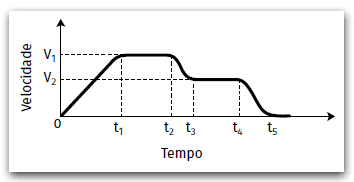
Considerando-se um sistema de referência ideal orientado de cima para baixo, podemos associar o gráfico ao movimento
aproximado de
Leia o texto para responder a questão.
Minority ethnic Britons face ‘shocking’ job discrimination
Haroon Siddique
Thu 17 Jan 2019 17.00 GMT Last modified on Fri 18 Jan 2019 00.50 GMT
A study by experts based at the Centre for Social Investigation at Nuffield College, University of Oxford, found applicants from minority ethnic backgrounds had to send 80% more applications to get a positive response from an employer than a white person of British origin.
A linked study by the same researchers, comparing their results with similar field experiments dating back to 1969, found discrimination against black Britons and those of south Asian origin – particularly Pakistanis – unchanged over almost 50 years.
The research, part of a larger cross-national project funded by the European Union and shared exclusively with the Guardian before its official launch, prompted concerns that race relations legislation had failed.
It echoes findings published as part of the Guardian’s Bias in Britain series that people from minority ethnic backgrounds face discrimination when seeking a room to rent. In a snapshot survey of online flatshare ads the Guardian found that an applicant called Muhammad was significantly less likely to receive a positive response than an applicant called David.
Prof Anthony Heath, co-author and emeritus fellow of Nuffield College, said: “The absence of any real decline in discrimination against black British and people of Pakistani background is a disturbing finding, which calls into question the effectiveness of previous policies. Ethnic inequality remains a burning injustice and there needs to be a radical rethink about how to tackle it.”
Dr Zubaida Haque, the deputy director of the race equality thinktank Runnymede, described the findings as shocking. They demonstrated that “it’s not just covert racism or unconscious bias that we need to worry about; it’s overt and conscious racism, where applicants are getting shortlisted on the basis of their ethnicity and/or name”, she said.
“It’s clear that race relations legislation is not sufficient to hold employers to account. There are no real consequences for employers of racially discriminating in subtle ways, but for BME* applicants or employees it means higher unemployment, lower wages, poorer conditions and less security in work and life.”
Leia o texto para responder a questão.
Minority ethnic Britons face ‘shocking’ job discrimination
Haroon Siddique
Thu 17 Jan 2019 17.00 GMT Last modified on Fri 18 Jan 2019 00.50 GMT
A study by experts based at the Centre for Social Investigation at Nuffield College, University of Oxford, found applicants from minority ethnic backgrounds had to send 80% more applications to get a positive response from an employer than a white person of British origin.
A linked study by the same researchers, comparing their results with similar field experiments dating back to 1969, found discrimination against black Britons and those of south Asian origin – particularly Pakistanis – unchanged over almost 50 years.
The research, part of a larger cross-national project funded by the European Union and shared exclusively with the Guardian before its official launch, prompted concerns that race relations legislation had failed.
It echoes findings published as part of the Guardian’s Bias in Britain series that people from minority ethnic backgrounds face discrimination when seeking a room to rent. In a snapshot survey of online flatshare ads the Guardian found that an applicant called Muhammad was significantly less likely to receive a positive response than an applicant called David.
Prof Anthony Heath, co-author and emeritus fellow of Nuffield College, said: “The absence of any real decline in discrimination against black British and people of Pakistani background is a disturbing finding, which calls into question the effectiveness of previous policies. Ethnic inequality remains a burning injustice and there needs to be a radical rethink about how to tackle it.”
Dr Zubaida Haque, the deputy director of the race equality thinktank Runnymede, described the findings as shocking. They demonstrated that “it’s not just covert racism or unconscious bias that we need to worry about; it’s overt and conscious racism, where applicants are getting shortlisted on the basis of their ethnicity and/or name”, she said.
“It’s clear that race relations legislation is not sufficient to hold employers to account. There are no real consequences for employers of racially discriminating in subtle ways, but for BME* applicants or employees it means higher unemployment, lower wages, poorer conditions and less security in work and life.”
Leia o texto para responder a questão.
Minority ethnic Britons face ‘shocking’ job discrimination
Haroon Siddique
Thu 17 Jan 2019 17.00 GMT Last modified on Fri 18 Jan 2019 00.50 GMT
A study by experts based at the Centre for Social Investigation at Nuffield College, University of Oxford, found applicants from minority ethnic backgrounds had to send 80% more applications to get a positive response from an employer than a white person of British origin.
A linked study by the same researchers, comparing their results with similar field experiments dating back to 1969, found discrimination against black Britons and those of south Asian origin – particularly Pakistanis – unchanged over almost 50 years.
The research, part of a larger cross-national project funded by the European Union and shared exclusively with the Guardian before its official launch, prompted concerns that race relations legislation had failed.
It echoes findings published as part of the Guardian’s Bias in Britain series that people from minority ethnic backgrounds face discrimination when seeking a room to rent. In a snapshot survey of online flatshare ads the Guardian found that an applicant called Muhammad was significantly less likely to receive a positive response than an applicant called David.
Prof Anthony Heath, co-author and emeritus fellow of Nuffield College, said: “The absence of any real decline in discrimination against black British and people of Pakistani background is a disturbing finding, which calls into question the effectiveness of previous policies. Ethnic inequality remains a burning injustice and there needs to be a radical rethink about how to tackle it.”
Dr Zubaida Haque, the deputy director of the race equality thinktank Runnymede, described the findings as shocking. They demonstrated that “it’s not just covert racism or unconscious bias that we need to worry about; it’s overt and conscious racism, where applicants are getting shortlisted on the basis of their ethnicity and/or name”, she said.
“It’s clear that race relations legislation is not sufficient to hold employers to account. There are no real consequences for employers of racially discriminating in subtle ways, but for BME* applicants or employees it means higher unemployment, lower wages, poorer conditions and less security in work and life.”
Leia o texto para responder a questão.
Minority ethnic Britons face ‘shocking’ job discrimination
Haroon Siddique
Thu 17 Jan 2019 17.00 GMT Last modified on Fri 18 Jan 2019 00.50 GMT
A study by experts based at the Centre for Social Investigation at Nuffield College, University of Oxford, found applicants from minority ethnic backgrounds had to send 80% more applications to get a positive response from an employer than a white person of British origin.
A linked study by the same researchers, comparing their results with similar field experiments dating back to 1969, found discrimination against black Britons and those of south Asian origin – particularly Pakistanis – unchanged over almost 50 years.
The research, part of a larger cross-national project funded by the European Union and shared exclusively with the Guardian before its official launch, prompted concerns that race relations legislation had failed.
It echoes findings published as part of the Guardian’s Bias in Britain series that people from minority ethnic backgrounds face discrimination when seeking a room to rent. In a snapshot survey of online flatshare ads the Guardian found that an applicant called Muhammad was significantly less likely to receive a positive response than an applicant called David.
Prof Anthony Heath, co-author and emeritus fellow of Nuffield College, said: “The absence of any real decline in discrimination against black British and people of Pakistani background is a disturbing finding, which calls into question the effectiveness of previous policies. Ethnic inequality remains a burning injustice and there needs to be a radical rethink about how to tackle it.”
Dr Zubaida Haque, the deputy director of the race equality thinktank Runnymede, described the findings as shocking. They demonstrated that “it’s not just covert racism or unconscious bias that we need to worry about; it’s overt and conscious racism, where applicants are getting shortlisted on the basis of their ethnicity and/or name”, she said.
“It’s clear that race relations legislation is not sufficient to hold employers to account. There are no real consequences for employers of racially discriminating in subtle ways, but for BME* applicants or employees it means higher unemployment, lower wages, poorer conditions and less security in work and life.”
Leia o texto para responder a questão.
Minority ethnic Britons face ‘shocking’ job discrimination
Haroon Siddique
Thu 17 Jan 2019 17.00 GMT Last modified on Fri 18 Jan 2019 00.50 GMT
A study by experts based at the Centre for Social Investigation at Nuffield College, University of Oxford, found applicants from minority ethnic backgrounds had to send 80% more applications to get a positive response from an employer than a white person of British origin.
A linked study by the same researchers, comparing their results with similar field experiments dating back to 1969, found discrimination against black Britons and those of south Asian origin – particularly Pakistanis – unchanged over almost 50 years.
The research, part of a larger cross-national project funded by the European Union and shared exclusively with the Guardian before its official launch, prompted concerns that race relations legislation had failed.
It echoes findings published as part of the Guardian’s Bias in Britain series that people from minority ethnic backgrounds face discrimination when seeking a room to rent. In a snapshot survey of online flatshare ads the Guardian found that an applicant called Muhammad was significantly less likely to receive a positive response than an applicant called David.
Prof Anthony Heath, co-author and emeritus fellow of Nuffield College, said: “The absence of any real decline in discrimination against black British and people of Pakistani background is a disturbing finding, which calls into question the effectiveness of previous policies. Ethnic inequality remains a burning injustice and there needs to be a radical rethink about how to tackle it.”
Dr Zubaida Haque, the deputy director of the race equality thinktank Runnymede, described the findings as shocking. They demonstrated that “it’s not just covert racism or unconscious bias that we need to worry about; it’s overt and conscious racism, where applicants are getting shortlisted on the basis of their ethnicity and/or name”, she said.
“It’s clear that race relations legislation is not sufficient to hold employers to account. There are no real consequences for employers of racially discriminating in subtle ways, but for BME* applicants or employees it means higher unemployment, lower wages, poorer conditions and less security in work and life.”


É chamada de “fria” porque não houve um confronto direto entre as duas superpotências, mas houve enfrentamento indireto em diferentes conflitos regionais, tais como:
<https://tinyurl.com/y5sq4pkp> Acesso em: 15.10.2019. Adaptado.
Segundo o texto,
<https://tinyurl.com/y4z6b4j7> Acesso em: 15.10.2019. Adaptado
Assinale a alternativa que apresenta, corretamente, a conferência a que o texto se refere e o processo histórico que se iniciou a partir dela.
<https://tinyurl.com/y6q37ysu> Acesso em: 15.10.2019. Adaptado.
Assinale a alternativa que apresenta, corretamente, algumas das causas do fracasso do sistema descrito no texto.
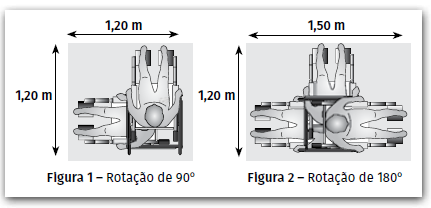
De acordo com as dimensões apresentadas nas figuras, para que uma pessoa em cadeira de rodas possa efetuar uma manobra de 360º, ela precisa de um espaço mínimo equivalente a um círculo, centrado no eixo de rotação da cadeira, de raio igual a
A equação química que representa a reação que ocorre na fermentação alcoólica da glicose é
C6H12O6(aq) → 2 C2H6O(aq) + 2 CO2(g) ΔrH = ?
Assinale a alternativa que apresenta o valor correto da entalpia padrão da reação (ΔrH) de fermentação da glicose, em kJ/mol.
Entalpias de formação em kJ/mol
Substância ΔfH C6H12O6(aq) – 1 277 C2H6O (aq) – 278 CO2(g) – 394
Assinale a alternativa que associa correta e respectivamente os nomes das enzimas bacterianas e do processo específico referidos no texto.
<https://tinyurl.com/y6kgyeqz>Acesso em: 10.10.2019. Adaptado.
De acordo com o texto, o precariado é um grupo de pessoas que
Leia a charge.
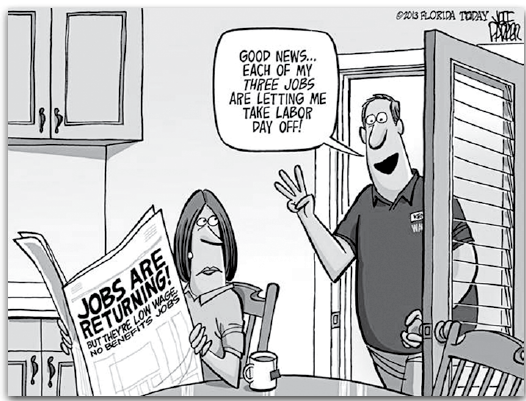
<https://tinyurl.com/y3lrke6a> Acesso em: 08.10.2019. Original colorido.
A ironia da charge se constrói no fato de
 Conheça nossos planos