Questões de Vestibular
Comentadas
Foram encontradas 36.751 questões
Resolva questões gratuitamente!
Junte-se a mais de 4 milhões de concurseiros!


Leia o texto a seguir.
Nasce daí o debate: se é melhor ser amado que temido ou o inverso. Dizem que o ideal seria viver-se em ambas as condições, mas, visto que é difícil acordá-las entre si, muito mais seguro é fazer-se temido que amado, quando se tem de renunciar a uma das duas.
MAQUIAVEL, N. O Príncipe. Porto Alegre: L&PM Pocket, 2008. p. 80.
A famosa citação de O Príncipe explica a estratégia de funcionamento das monarquias absolutistas, nas quais o rei
Leia o texto a seguir.
Eu digo que o Departamento de Estado, um dos mais importantes de nossos ministérios, está completamente infectado de comunistas. Eu conheço, eu tenho em minhas mãos casos de 57 indivíduos que são membros do Partido Comunista, ou que ao menos são simpatizantes; apesar disso, eles continuam a praticar a nossa política externa.
Anais do Congresso americano. In: TASINAFO, C. L.; FREITAS NETO, J. A. de. História Geral e do Brasil. São Paulo: Habra, 2006. p. 724.
O texto é um trecho de um discurso do senador americano Joseph McCarthy, que acusou inúmeras pessoas de serem comunistas e de praticarem atividades antiamericanas. Sua atuação encontrou apoio em parte do Congresso, que aprovou a Lei McCarran, que
Leia o texto a seguir.
Análises recentes das sucessões presidenciais na Primeira República (1889-1930) mostram que a famosa aliança entre Minas Gerais e São Paulo, chamada de política do “café-com-leite”, não controlou de forma exclusiva o regime republicano. Havia outros quatro estados, pelo menos, com acentuada importância no cenário político: Rio Grande do Sul, Rio de Janeiro, Bahia e Pernambuco.
VISCARDI, C. M. R. Aliança café com política. Revista Nossa História. São Paulo, ano 2, n. 19, p. 37, maio 2005.
O questionamento da chamada “política do café-com leite” foi decisivo para a eclosão da
Leia o texto a seguir. A tradição continua a ser o único fundamento para imaginarmos que houve a Guerra de Tróia, e os motivos de uma expedição ultramarina tão complicada ainda precisam ser explicados.
FINLEY, M. Aspectos da Antiguidade. São Paulo: Martins Fontes, 1991. p. 37.
De acordo com a tradição mítica, o episódio responsável por fazer eclodir a Guerra de Tróia foi
Deus deseja que a tua doçura Que também é a dele Se revele, mais pura, na tua pele E que eu pouse a tua mão sobre o teu colo Lua na noite escura E a brancura do pólo se descongele Essa pele de criança Essa rima pra esperança Tão antiga e nova Que põe tudo à prova Esse repouso, essa dança Que me impele, que me lança No meio da vida Pra uma outra trova Pele, pétala calma Pele, parte mais clara da alma Que o mistério se desvele E outra vez mistério seja Sobre tua pele É o que Deus deseja Tua pele luminosa Madrepérola animada Mensagem da rosa, enfim decifrada
(Caetano Veloso)
Ao ler a letra dessa música, percebe-se referência a um órgão do corpo humano. Para amenizar rugas e vincas nesse órgão, substâncias como colágeno, silicone e outras são aplicadas de acordo com recomendação médica na:
A porta giratória de um banco é composta por dois retângulos perpendiculares entre si, que se interceptam no eixo do cilindro gerado pela rotação desses retângulos. O desenho a seguir ilustra a área do piso ocupada pela porta giratória.

Sabendo-se que o diâmetro dessa área é 1,60m e que a altura da porta é 2,30m, o volume do cilindro ocupado pela porta giratória ao girar é igual a
Observe a tirinha a seguir.
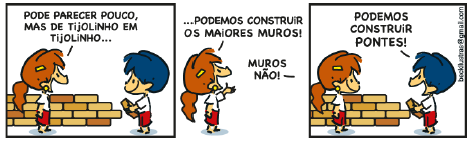
Disponível em: https://tirasarmandinho.tumblr.com/. Acesso em: 30 ago. 2019.
O sentido global da tirinha é constituído a partir de uma relação
Observe o infográfico a seguir para responder à questão.
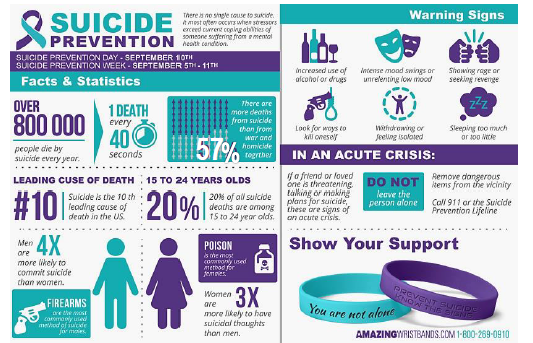
Disponível: https://morgan6062.com/2018/06/09/suicide-prevention-hotlines/. Acesso em: 08 out. 2019
According the information expressed in the image and data, Suicide Prevention, we verify that
Leia o texto a seguir para responder à questão.
Forest fires: the good and the bad
Every year it seems like there’s another disastrous wildfire in the American West. In 2018, nearly 9 million acres were burned in the US alone. Uncontrolled fires often started accidentally by people, rampage and decimate forests. F
or most people, a forest fire is synonymous with disaster. But there are some kinds of forest fires that actually benefit the environment.
A controlled burn is a wildfire that people set intentionally for a specific purpose. Well-thought-out and wellmanaged controlled burns can be incredibly beneficial for forest management—in part because they can help stop an out-of-control wildfire. The technique is called backburning, and it involves setting a controlled fire in the path of the approaching wildfire. All the flammable material is burnt up and extinguished. When the wildfire approaches, there’s no more fuel left for it to keep going, and it dies out.
Controlled burns are also used to prevent forest fires. Even before human involvement, natural, low-intensity wildfires occurred every few years to burn up fuel, plant debris, and dead trees, making way for young, healthy trees and vegetation to thrive. That new growth in turn supports forest wildlife. Forest managers are now replicating this natural strategy when appropriate, starting manageable, slow-burning fires to make room for new life that will help keep the forest healthy in the long term.
The same method is one of WWF’s strategies for maintaining grassland habitats in the Northern Great Plains. Working with partners such as the U.S. Fish and Wildlife Service, WWF has intentionally burned hundreds of acres of prairie land to revitalize these key habitats. The fire burns off tall, aggressive vegetation that isn’t as hospitable to wildlife, and makes room for new growth that attracts bison, birds, and prairie dogs.
This doesn’t mean all intentional wildfires are good – far from it. Many of the fires intentionally set for agriculture and land clearing are at best ill-advised, and at worst devastating. Slash and burn fires are set every day to destroy large sections of forests. Of course, these forests don’t just remove trees; they kill and displace wildlife, alter water cycles and soil fertility, and endanger the lives and livelihoods of local communities. They also can rage out of control. In 1997, fires set intentionally to clear forests in Indonesia escalated into one of the largest wildfires in recorded history. Hundreds of people died; millions of acres burned; already at-risk species like orangutans perished by the hundreds; and a smoke and ash haze hung over southeast Asia for months, reducing visibility and causing acute health conditions.
That’s exactly why WWF helps governments around the world crack down on slash and burn deforestation. WWF also works with farmers and companies to stop unnecessary agricultural burns. And when our scientists think fire could be the best solution for revitalizing wild areas, we bring the right experts to the table to study the situation and come up with a plan.
All fire is risky. To minimize that risk as much as possible, controlled burns must be well-considered, wellplanned, and ignited and maintained by trained professionals. The bottom line? Fire can be a tool for conservation, but only when used the right way.
Disponível em: https://www.worldwildlife.org/stories/forest-fires-the-good-and-the-bad. Acesso em: 08 out. 2019
Leia o texto a seguir para responder à questão.
Forest fires: the good and the bad
Every year it seems like there’s another disastrous wildfire in the American West. In 2018, nearly 9 million acres were burned in the US alone. Uncontrolled fires often started accidentally by people, rampage and decimate forests. F
or most people, a forest fire is synonymous with disaster. But there are some kinds of forest fires that actually benefit the environment.
A controlled burn is a wildfire that people set intentionally for a specific purpose. Well-thought-out and wellmanaged controlled burns can be incredibly beneficial for forest management—in part because they can help stop an out-of-control wildfire. The technique is called backburning, and it involves setting a controlled fire in the path of the approaching wildfire. All the flammable material is burnt up and extinguished. When the wildfire approaches, there’s no more fuel left for it to keep going, and it dies out.
Controlled burns are also used to prevent forest fires. Even before human involvement, natural, low-intensity wildfires occurred every few years to burn up fuel, plant debris, and dead trees, making way for young, healthy trees and vegetation to thrive. That new growth in turn supports forest wildlife. Forest managers are now replicating this natural strategy when appropriate, starting manageable, slow-burning fires to make room for new life that will help keep the forest healthy in the long term.
The same method is one of WWF’s strategies for maintaining grassland habitats in the Northern Great Plains. Working with partners such as the U.S. Fish and Wildlife Service, WWF has intentionally burned hundreds of acres of prairie land to revitalize these key habitats. The fire burns off tall, aggressive vegetation that isn’t as hospitable to wildlife, and makes room for new growth that attracts bison, birds, and prairie dogs.
This doesn’t mean all intentional wildfires are good – far from it. Many of the fires intentionally set for agriculture and land clearing are at best ill-advised, and at worst devastating. Slash and burn fires are set every day to destroy large sections of forests. Of course, these forests don’t just remove trees; they kill and displace wildlife, alter water cycles and soil fertility, and endanger the lives and livelihoods of local communities. They also can rage out of control. In 1997, fires set intentionally to clear forests in Indonesia escalated into one of the largest wildfires in recorded history. Hundreds of people died; millions of acres burned; already at-risk species like orangutans perished by the hundreds; and a smoke and ash haze hung over southeast Asia for months, reducing visibility and causing acute health conditions.
That’s exactly why WWF helps governments around the world crack down on slash and burn deforestation. WWF also works with farmers and companies to stop unnecessary agricultural burns. And when our scientists think fire could be the best solution for revitalizing wild areas, we bring the right experts to the table to study the situation and come up with a plan.
All fire is risky. To minimize that risk as much as possible, controlled burns must be well-considered, wellplanned, and ignited and maintained by trained professionals. The bottom line? Fire can be a tool for conservation, but only when used the right way.
Disponível em: https://www.worldwildlife.org/stories/forest-fires-the-good-and-the-bad. Acesso em: 08 out. 2019
Leia o texto a seguir para responder à questão.
Forest fires: the good and the bad
Every year it seems like there’s another disastrous wildfire in the American West. In 2018, nearly 9 million acres were burned in the US alone. Uncontrolled fires often started accidentally by people, rampage and decimate forests. F
or most people, a forest fire is synonymous with disaster. But there are some kinds of forest fires that actually benefit the environment.
A controlled burn is a wildfire that people set intentionally for a specific purpose. Well-thought-out and wellmanaged controlled burns can be incredibly beneficial for forest management—in part because they can help stop an out-of-control wildfire. The technique is called backburning, and it involves setting a controlled fire in the path of the approaching wildfire. All the flammable material is burnt up and extinguished. When the wildfire approaches, there’s no more fuel left for it to keep going, and it dies out.
Controlled burns are also used to prevent forest fires. Even before human involvement, natural, low-intensity wildfires occurred every few years to burn up fuel, plant debris, and dead trees, making way for young, healthy trees and vegetation to thrive. That new growth in turn supports forest wildlife. Forest managers are now replicating this natural strategy when appropriate, starting manageable, slow-burning fires to make room for new life that will help keep the forest healthy in the long term.
The same method is one of WWF’s strategies for maintaining grassland habitats in the Northern Great Plains. Working with partners such as the U.S. Fish and Wildlife Service, WWF has intentionally burned hundreds of acres of prairie land to revitalize these key habitats. The fire burns off tall, aggressive vegetation that isn’t as hospitable to wildlife, and makes room for new growth that attracts bison, birds, and prairie dogs.
This doesn’t mean all intentional wildfires are good – far from it. Many of the fires intentionally set for agriculture and land clearing are at best ill-advised, and at worst devastating. Slash and burn fires are set every day to destroy large sections of forests. Of course, these forests don’t just remove trees; they kill and displace wildlife, alter water cycles and soil fertility, and endanger the lives and livelihoods of local communities. They also can rage out of control. In 1997, fires set intentionally to clear forests in Indonesia escalated into one of the largest wildfires in recorded history. Hundreds of people died; millions of acres burned; already at-risk species like orangutans perished by the hundreds; and a smoke and ash haze hung over southeast Asia for months, reducing visibility and causing acute health conditions.
That’s exactly why WWF helps governments around the world crack down on slash and burn deforestation. WWF also works with farmers and companies to stop unnecessary agricultural burns. And when our scientists think fire could be the best solution for revitalizing wild areas, we bring the right experts to the table to study the situation and come up with a plan.
All fire is risky. To minimize that risk as much as possible, controlled burns must be well-considered, wellplanned, and ignited and maintained by trained professionals. The bottom line? Fire can be a tool for conservation, but only when used the right way.
Disponível em: https://www.worldwildlife.org/stories/forest-fires-the-good-and-the-bad. Acesso em: 08 out. 2019

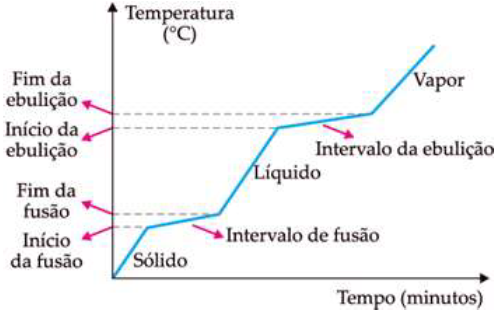
O gráfico indica a mudança de estado físico, por alteração na temperatura, de uma liga metálica de ouro/cobre. A análise gráfica permite concluir que
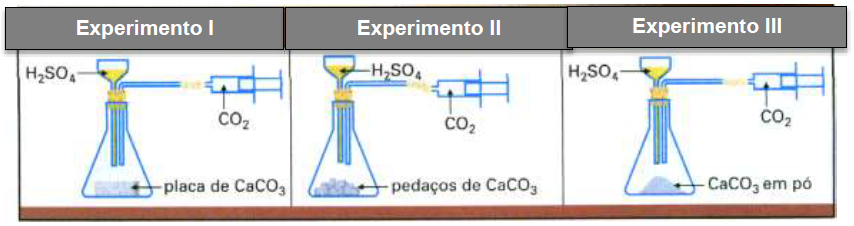 http://www.marco.eng.br/cinetica/trabalhodealunos/CineticaBasica/Figuras/influ
encia/infl001.gif. Acesso em 12.fev.2019.
http://www.marco.eng.br/cinetica/trabalhodealunos/CineticaBasica/Figuras/influ
encia/infl001.gif. Acesso em 12.fev.2019. Os experimentos ilustrados utilizaram, nas três situações, quantidades iguais de massa de carbonato de cálcio e mesma concentração e volumes de ácido sulfúrico. Na seringa, foi coletado o gás carbônico como um dos produtos dessa reação.
A partir desses experimentos, deduz-se que, após reação total nos três casos,
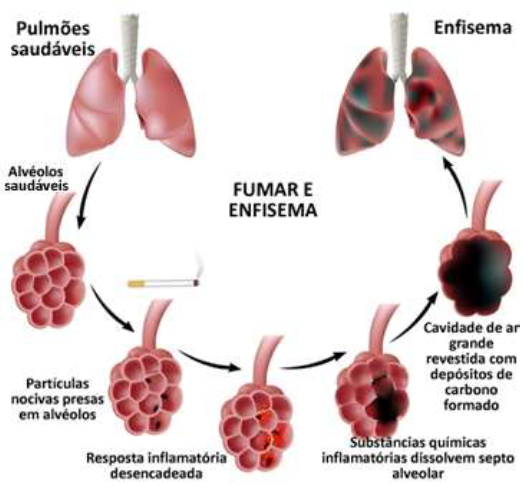
A figura ilustra os efeitos do uso contínuo do cigarro que contém vários materiais, dentre eles: o monóxido de carbono (CO), que possui alta afinidade com a hemoglobina do sangue; a amônia (NH3), que auxilia na liberação da nicotina; o alcatrão, um resíduo negro composto por centenas de substâncias químicas que ficam impregnadas nos pulmões e a nicotina, essa última representada pela fórmula estrutural abaixo, que eleva a pressão arterial e causa dependência química e doenças pulmonares.
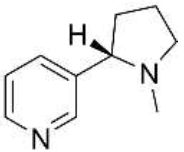
Um estudante, a partir da análise da figura e das informações acima, concluiu que
No dia 11 de fevereiro, comemora-se o Dia Internacional das Mulheres e Meninas na
Ciência, data estabelecida pela Assembleia Geral da ONU em reconhecimento ao trabalho feminino
para o desenvolvimento científico. Dentre tantas mulheres que contribuíram para a ciência no século
XX, a física nuclear austríaca Lise Meitner (1878-1968) se destacou por suas descobertas e pela
Teoria da Fissão Nuclear, sendo, inclusive, considerada a mãe da era atômica.
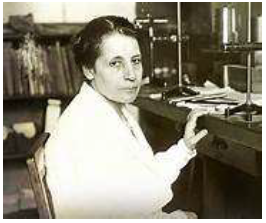 https://www.thefamouspeople.com/profiles/images/lise-meitner-3.jpg. Acesso em 02.fev.2019.
 A teoria que deu o título de mãe da era atômica à Lise Meitner consiste no
 Conheça nossos planos