Selecionar segmento
Estude com questões de diferentes segmentos
Atenção: Isso limpará todos os campos já preenchidos no filtro!
Foram encontradas 36.751 questões
Resolva questões gratuitamente!
Junte-se a mais de 4 milhões de concurseiros!


Q1303670
Literatura
Leia atentamente o fragmento abaixo, retirado do soneto “O incêndio de Roma”, de
Olavo Bilac, e assinale a alternativa CORRETA.
“Nero, com o manto grego ondeando ao ombro, assoma entre os libertos, e ébrio, engrinaldada a fronte, lira em punho, celebra a destruição de Roma”.
“Nero, com o manto grego ondeando ao ombro, assoma entre os libertos, e ébrio, engrinaldada a fronte, lira em punho, celebra a destruição de Roma”.
Q1303662
Inglês
According to the text:
Q1303661
Inglês
In the sentence “A detailed analysis of the show’s content in its first and second years
reveals that 80 percent of the program was dedicated to those goals, with the rest meant
to entertain (…)”, those goals refer to:
Q1303660
Inglês
Mark the CORRECT alternative according to the text.
Ano: 2019
Banca:
UEG
Órgão:
UEG
Prova:
UEG - 2019 - UEG - Vestibular - Caderno de Provas Inglês - á Distância |
Q1303285
Sociologia
As mudanças sociais desenvolvidas com o advento da sociedade capitalista suscitaram reflexões de diversos
pensadores sobre os problemas enfrentados pelas populações das cidades. Essas reflexões foram fundamentais
para o surgimento da sociologia. No interior da temática da mudança social, verifica-se que:
Ano: 2019
Banca:
UEG
Órgão:
UEG
Prova:
UEG - 2019 - UEG - Vestibular - Caderno de Provas Inglês - á Distância |
Q1303284
Sociologia
Um dos temas fundamentais da sociologia é a socialização, que remete à relação entre indivíduo e sociedade e
às formas pelas quais os indivíduos são inseridos no convívio social. Entre as variadas concepções sobre
socialização, tem-se o seguinte:
Ano: 2019
Banca:
UEG
Órgão:
UEG
Prova:
UEG - 2019 - UEG - Vestibular - Caderno de Provas Inglês - á Distância |
Q1303283
Filosofia
A questão da verdade é uma das mais antigas questões filosóficas e as mais variadas concepções foram
desenvolvidas ao seu respeito, como o ceticismo, o relativismo, o dogmatismo, dentre outras. Uma das
concepções mais polêmicas acerca da verdade é a do filósofo Nietzsche, para quem ela é
Ano: 2019
Banca:
UEG
Órgão:
UEG
Prova:
UEG - 2019 - UEG - Vestibular - Caderno de Provas Inglês - á Distância |
Q1303282
Filosofia
Uma das questões fundamentais da filosofia é a natureza humana, tema abordado pela “antropologia filosófica”.
A ideia de natureza humana emerge na filosofia antiga e ganha desdobramentos na filosofia moderna. Diversas
concepções de natureza humana foram produzidas, tais como as de Hobbes e Rousseau, duas das mais
conhecidas. Outra concepção de natureza humana é a de Karl Marx, segundo a qual o ser humano é
Ano: 2019
Banca:
UEG
Órgão:
UEG
Prova:
UEG - 2019 - UEG - Vestibular - Caderno de Provas Inglês - á Distância |
Q1303281
Geografia
Os climogramas são gráficos que trazem representados elementos meteorológicos de uma determinada
localidade. É comum a representação das médias de precipitação e temperatura, que são elementos importantes
na definição do tipo climático da área representada, como, por exemplo, o climograma a seguir.
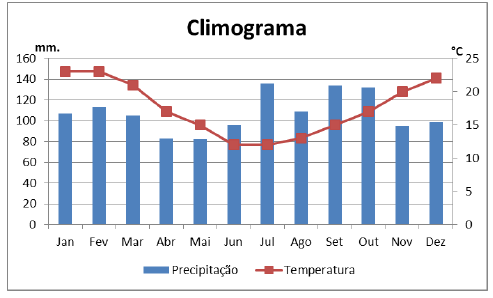 Com base nessas informações, infere-se que o climograma apresentado refere-se à cidade de:
Com base nessas informações, infere-se que o climograma apresentado refere-se à cidade de:
Ano: 2019
Banca:
UEG
Órgão:
UEG
Prova:
UEG - 2019 - UEG - Vestibular - Caderno de Provas Inglês - á Distância |
Q1303280
Geografia
Ao longo da história do Brasil, as populações se deslocam ou migram de um lugar para o outro. Várias são as
motivações para tais deslocamentos, como a busca por emprego, por assistência médica ou por educação. Uma
das migrações mais intensas ocorridas no Brasil ficou conhecida como êxodo rural. Sobre o êxodo rural, verifica-se que
Ano: 2019
Banca:
UEG
Órgão:
UEG
Prova:
UEG - 2019 - UEG - Vestibular - Caderno de Provas Inglês - á Distância |
Q1303279
Geografia
Ao longo do tempo, à medida que eram realizados levantamentos sobre as características naturais, econômicas
e sociais do Brasil, foram estabelecidos agrupamentos territoriais ou regionalizações para os municípios e
estados brasileiros. Assim, não apenas foi possível mostrar os conhecimentos até então obtidos, mas também
pensar sobre o país. Algumas dessas regionalizações podem ser conferidas nos mapas 1, 2 e 3 a seguir.
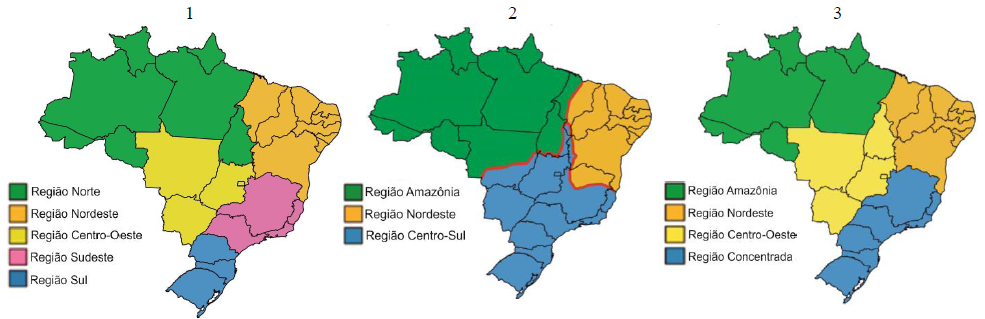 Disponível em: http://repositorio.ipea.gov.br/bitstream/11058/8911/1/Regi%C3%A3o%20e%20regionaliza%C3%A7%C3%A3o.pdf. Acesso em: 15 jul. 2019.
Conforme os mapas 1, 2 e 3 apresentados têm-se:
Disponível em: http://repositorio.ipea.gov.br/bitstream/11058/8911/1/Regi%C3%A3o%20e%20regionaliza%C3%A7%C3%A3o.pdf. Acesso em: 15 jul. 2019.
Conforme os mapas 1, 2 e 3 apresentados têm-se:
Ano: 2019
Banca:
UEG
Órgão:
UEG
Prova:
UEG - 2019 - UEG - Vestibular - Caderno de Provas Inglês - á Distância |
Q1303277
História
Leia o texto a seguir.
A competição entre as superpotências continuava, principalmente no que diz respeito às corridas armamentista e espacial, sendo esta última uma forma estrondosa de propaganda e de mostrar superioridade perante o mundo.
TASINAFO, C. R.; FREITAS NETO, J. A. História Geral e do Brasil. São Paulo: Harbra, 2006. p. 753.
Em 2019, completaram cinquenta anos da chegada do homem à Lua, ocorrida em 20 de julho de 1969. Esse feito só foi possível graças ao trabalho do cientista que desenvolveu o foguete V-2 para Hitler e que, depois, passou a trabalhar nos projetos espaciais americanos. Seu nome era
A competição entre as superpotências continuava, principalmente no que diz respeito às corridas armamentista e espacial, sendo esta última uma forma estrondosa de propaganda e de mostrar superioridade perante o mundo.
TASINAFO, C. R.; FREITAS NETO, J. A. História Geral e do Brasil. São Paulo: Harbra, 2006. p. 753.
Em 2019, completaram cinquenta anos da chegada do homem à Lua, ocorrida em 20 de julho de 1969. Esse feito só foi possível graças ao trabalho do cientista que desenvolveu o foguete V-2 para Hitler e que, depois, passou a trabalhar nos projetos espaciais americanos. Seu nome era
Ano: 2019
Banca:
UEG
Órgão:
UEG
Prova:
UEG - 2019 - UEG - Vestibular - Caderno de Provas Inglês - á Distância |
Q1303276
História
Leia o texto a seguir.
A primavera se assume como uma metáfora de um despertar social, da travessia para o “jardim democrático”. Entretanto, como a própria metáfora, ela é uma ilusão: para que se chegue à estação da primavera é preciso enfrentar as intempéries do inverno; e depois cultivar boas sementes para que floresçam na primavera. MATOS, Pedro. Da primavera ao inferno árabe. 9 abr. 2015. Disponível em: www.pordentrodaafrica.com/noticias/da-primavera-ao-infernoarabe-por-pedro-matos. Acesso em: 02 ago. 2019.
O texto citado analisa o uso metafórico das flores da primavera na caracterização dos eventos políticos. Um desses eventos que defendia um socialismo humanizado, estimulando a criatividade científica e artística, foi reprimido pelos tanques soviéticos. Esse movimento foi a
A primavera se assume como uma metáfora de um despertar social, da travessia para o “jardim democrático”. Entretanto, como a própria metáfora, ela é uma ilusão: para que se chegue à estação da primavera é preciso enfrentar as intempéries do inverno; e depois cultivar boas sementes para que floresçam na primavera. MATOS, Pedro. Da primavera ao inferno árabe. 9 abr. 2015. Disponível em: www.pordentrodaafrica.com/noticias/da-primavera-ao-infernoarabe-por-pedro-matos. Acesso em: 02 ago. 2019.
O texto citado analisa o uso metafórico das flores da primavera na caracterização dos eventos políticos. Um desses eventos que defendia um socialismo humanizado, estimulando a criatividade científica e artística, foi reprimido pelos tanques soviéticos. Esse movimento foi a
Ano: 2019
Banca:
UEG
Órgão:
UEG
Prova:
UEG - 2019 - UEG - Vestibular - Caderno de Provas Inglês - á Distância |
Q1303275
História
Leia o texto a seguir.
Deus oferece a África à Europa. Peguem-na, não pelos canhões, mas pela charrua; não pela espada, mas pelo comércio; não pela batalha, mas pela fraternidade. Espalhem aquilo que lhes sobre nessa África, e da mesma forma, resolvam as questões sociais, transformem proletários em proprietários.
Discurso de Victor Hugo em 18 de maio de 1879. In: FREITAS NETO, José Alves de; TASINAFO, Célio Ricardo. História Geral e do Brasil. São Paulo: Harbra, 2006. p. 533.
No texto citado, o importante intelectual francês, Victor Hugo, corrobora a ideia de que a colonização do continente africano deveria ser uma
Deus oferece a África à Europa. Peguem-na, não pelos canhões, mas pela charrua; não pela espada, mas pelo comércio; não pela batalha, mas pela fraternidade. Espalhem aquilo que lhes sobre nessa África, e da mesma forma, resolvam as questões sociais, transformem proletários em proprietários.
Discurso de Victor Hugo em 18 de maio de 1879. In: FREITAS NETO, José Alves de; TASINAFO, Célio Ricardo. História Geral e do Brasil. São Paulo: Harbra, 2006. p. 533.
No texto citado, o importante intelectual francês, Victor Hugo, corrobora a ideia de que a colonização do continente africano deveria ser uma
Ano: 2019
Banca:
UEG
Órgão:
UEG
Prova:
UEG - 2019 - UEG - Vestibular - Caderno de Provas Inglês - á Distância |
Q1303274
História
Leia o texto a seguir.
E o senhor rei da Inglaterra, para sua ciência, se por acaso eu encontrar seus seguidores em França, eu os colocarei para fora, e se eles não obedecerem, eu os condenarei à morte. Eu os conduzirei, em nome de Deus, o Senhor dos Céus, homem por homem para fora da França.
WALLBANK, T. W. History and Life. Illinois: Scott, Foresman, 1993. p. 154. (Tradução própria).
Esse é o trecho de uma carta enviada em 1431 por Joana D’Arc para o rei da Inglaterra e para o duque de Bedfor, autoproclamado regente inglês na França. Esse episódio está contextualizado no processo histórico conhecido como
E o senhor rei da Inglaterra, para sua ciência, se por acaso eu encontrar seus seguidores em França, eu os colocarei para fora, e se eles não obedecerem, eu os condenarei à morte. Eu os conduzirei, em nome de Deus, o Senhor dos Céus, homem por homem para fora da França.
WALLBANK, T. W. History and Life. Illinois: Scott, Foresman, 1993. p. 154. (Tradução própria).
Esse é o trecho de uma carta enviada em 1431 por Joana D’Arc para o rei da Inglaterra e para o duque de Bedfor, autoproclamado regente inglês na França. Esse episódio está contextualizado no processo histórico conhecido como
Ano: 2019
Banca:
UEG
Órgão:
UEG
Prova:
UEG - 2019 - UEG - Vestibular - Caderno de Provas Inglês - á Distância |
Q1303270
Química
Carbonato de cálcio sólido reage com ácido fosfórico em solução aquosa produzindo dióxido de carbono, água e
o respectivo sal. As fórmulas químicas dos produtos dessa reação são:
Ano: 2019
Banca:
UEG
Órgão:
UEG
Prova:
UEG - 2019 - UEG - Vestibular - Caderno de Provas Inglês - á Distância |
Q1303266
Biologia
Em 1946, o pesquisador Wendell Stanley (1904-1971) foi laureado com o prêmio Nobel de Química pelo mérito
de ter isolado pela primeira vez o vírus do mosaico do tabaco (TMV). Ele elucidou o fato de o TMV ser
cristalizado como forma inanimada até que uma planta de tabaco seja infectada. Sobre os desenvolvimentos
conceituais da virologia após as descobertas de Stanley, tem-se o seguinte:
Ano: 2019
Banca:
UEG
Órgão:
UEG
Prova:
UEG - 2019 - UEG - Vestibular - Caderno de Provas Inglês - á Distância |
Q1303262
Física
A figura a seguir apresenta um circuito simples, composto por uma bateria com uma fem de 12,0 V, e resistência
interna elétrica r, de 1,0Ω. O conjunto está conectado a um resistor R de 7,0 Ω.
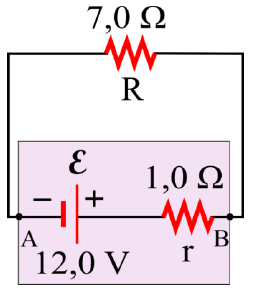
Considerando o circuito apresentado, verifica-se que
Considerando o circuito apresentado, verifica-se que
Ano: 2019
Banca:
UEG
Órgão:
UEG
Prova:
UEG - 2019 - UEG - Vestibular - Caderno de Provas Inglês - á Distância |
Q1303248
Inglês
Texto associado
Leia o texto e responda à questão.
This is how the way the world measures success in education is changing
Since 2000 when the Organization for Economic Co-operation and Development (OECD) launched a global
academic benchmark for measuring student outcomes by testing 15-year-olds, many global education systems
have been impacted by what sometimes looks and feels like a race to rank high.
When the OECD launched the Programme for International Student Assessment — PISA — the idea was to enable countries to make cross-national comparisons of student achievement using a common/standard metric to increase human capital. In other words, higher academic achievement should corelate with earnings in the future and a country’s standard of living. As PISA states, it publishes the results of the test a year after the students are tested to help governments shape their education policies.
As PISA has developed, through seven global testing rounds every three years, with the first in 2000 and the most recent in 2018, for some it has gained a reputation as the “Olympics of education” given the widespread attention that country rankings receive following the release of results.
Now, partly in the face of criticisms, PISA is looking at expanding how and what it tests. As this process unfolds, policy-makers must remember that the social consequences of a test are just as important as the test’s content. Putting a new face on PISA will undoubtedly present various opportunities and challenges.
To date, PISA has been restricted to what is generally called the “cognitive” side of learning, focusing on reading, mathematics and scientific literacy. In addition to test questions, students and school principals fill out questionnaires to provide contextual information on student and school environment characteristics that can be associated with more or less favourable performance.
Countries that excel in PISA tests, such as Finland, a country with less than six million people, have become regarded by policy-makers as a “global reference society” — an ideal to aspire to — due to their high performance in PISA rankings.
Asian countries or jurisdictions like Singapore, Hong Kong (China) and Japan tend to consistently achieve exceptional PISA performances and hence get a lot of attention from other countries wishing to emulate their success via borrowing policy. For example, England flew teachers out to China to study mathematics teaching.
In the next administration in 2021, PISA will tackle creative thinking, trying to find ways to assess, and have students assess, flexibility in thinking and habits of creativity such as being inquisitive and persistent. The PISA team is also developing a way of testing students’ digital learning, which should be ready in time for the 2024 assessment.
However, it should be remembered that education policies from high achieving nations don’t migrate across international boundaries without consideration given to national and cultural contexts. Rather, innovations and changes in education require teachers to have the time and opportunity to re-educate themselves in relation to more recent insights in what it means to get the best out of children.
When the OECD launched the Programme for International Student Assessment — PISA — the idea was to enable countries to make cross-national comparisons of student achievement using a common/standard metric to increase human capital. In other words, higher academic achievement should corelate with earnings in the future and a country’s standard of living. As PISA states, it publishes the results of the test a year after the students are tested to help governments shape their education policies.
As PISA has developed, through seven global testing rounds every three years, with the first in 2000 and the most recent in 2018, for some it has gained a reputation as the “Olympics of education” given the widespread attention that country rankings receive following the release of results.
Now, partly in the face of criticisms, PISA is looking at expanding how and what it tests. As this process unfolds, policy-makers must remember that the social consequences of a test are just as important as the test’s content. Putting a new face on PISA will undoubtedly present various opportunities and challenges.
To date, PISA has been restricted to what is generally called the “cognitive” side of learning, focusing on reading, mathematics and scientific literacy. In addition to test questions, students and school principals fill out questionnaires to provide contextual information on student and school environment characteristics that can be associated with more or less favourable performance.
Countries that excel in PISA tests, such as Finland, a country with less than six million people, have become regarded by policy-makers as a “global reference society” — an ideal to aspire to — due to their high performance in PISA rankings.
Asian countries or jurisdictions like Singapore, Hong Kong (China) and Japan tend to consistently achieve exceptional PISA performances and hence get a lot of attention from other countries wishing to emulate their success via borrowing policy. For example, England flew teachers out to China to study mathematics teaching.
In the next administration in 2021, PISA will tackle creative thinking, trying to find ways to assess, and have students assess, flexibility in thinking and habits of creativity such as being inquisitive and persistent. The PISA team is also developing a way of testing students’ digital learning, which should be ready in time for the 2024 assessment.
However, it should be remembered that education policies from high achieving nations don’t migrate across international boundaries without consideration given to national and cultural contexts. Rather, innovations and changes in education require teachers to have the time and opportunity to re-educate themselves in relation to more recent insights in what it means to get the best out of children.
The OECD will need to respond to previous critiques and provide greater transparency around newer test
instruments and the choices made to arrive at rankings. The latter is no small challenge since the future focus of
PISA is based on topics which seem more difficult to evaluate than math, science or reading skills.
Disponível em: https://www.weforum.org/agenda/2019/04/new-global-testing-standards-will-force-countries-to-revisit-academic-rankings/. Acesso em: 25 jun.
2019. (Adaptado).
Considerando-se os aspectos linguísticos e estruturais presentes no texto, constata-se que
Ano: 2019
Banca:
UEG
Órgão:
UEG
Prova:
UEG - 2019 - UEG - Vestibular - Caderno de Provas Inglês - á Distância |
Q1303247
Inglês
Texto associado
Leia o texto e responda à questão.
This is how the way the world measures success in education is changing
Since 2000 when the Organization for Economic Co-operation and Development (OECD) launched a global
academic benchmark for measuring student outcomes by testing 15-year-olds, many global education systems
have been impacted by what sometimes looks and feels like a race to rank high.
When the OECD launched the Programme for International Student Assessment — PISA — the idea was to enable countries to make cross-national comparisons of student achievement using a common/standard metric to increase human capital. In other words, higher academic achievement should corelate with earnings in the future and a country’s standard of living. As PISA states, it publishes the results of the test a year after the students are tested to help governments shape their education policies.
As PISA has developed, through seven global testing rounds every three years, with the first in 2000 and the most recent in 2018, for some it has gained a reputation as the “Olympics of education” given the widespread attention that country rankings receive following the release of results.
Now, partly in the face of criticisms, PISA is looking at expanding how and what it tests. As this process unfolds, policy-makers must remember that the social consequences of a test are just as important as the test’s content. Putting a new face on PISA will undoubtedly present various opportunities and challenges.
To date, PISA has been restricted to what is generally called the “cognitive” side of learning, focusing on reading, mathematics and scientific literacy. In addition to test questions, students and school principals fill out questionnaires to provide contextual information on student and school environment characteristics that can be associated with more or less favourable performance.
Countries that excel in PISA tests, such as Finland, a country with less than six million people, have become regarded by policy-makers as a “global reference society” — an ideal to aspire to — due to their high performance in PISA rankings.
Asian countries or jurisdictions like Singapore, Hong Kong (China) and Japan tend to consistently achieve exceptional PISA performances and hence get a lot of attention from other countries wishing to emulate their success via borrowing policy. For example, England flew teachers out to China to study mathematics teaching.
In the next administration in 2021, PISA will tackle creative thinking, trying to find ways to assess, and have students assess, flexibility in thinking and habits of creativity such as being inquisitive and persistent. The PISA team is also developing a way of testing students’ digital learning, which should be ready in time for the 2024 assessment.
However, it should be remembered that education policies from high achieving nations don’t migrate across international boundaries without consideration given to national and cultural contexts. Rather, innovations and changes in education require teachers to have the time and opportunity to re-educate themselves in relation to more recent insights in what it means to get the best out of children.
When the OECD launched the Programme for International Student Assessment — PISA — the idea was to enable countries to make cross-national comparisons of student achievement using a common/standard metric to increase human capital. In other words, higher academic achievement should corelate with earnings in the future and a country’s standard of living. As PISA states, it publishes the results of the test a year after the students are tested to help governments shape their education policies.
As PISA has developed, through seven global testing rounds every three years, with the first in 2000 and the most recent in 2018, for some it has gained a reputation as the “Olympics of education” given the widespread attention that country rankings receive following the release of results.
Now, partly in the face of criticisms, PISA is looking at expanding how and what it tests. As this process unfolds, policy-makers must remember that the social consequences of a test are just as important as the test’s content. Putting a new face on PISA will undoubtedly present various opportunities and challenges.
To date, PISA has been restricted to what is generally called the “cognitive” side of learning, focusing on reading, mathematics and scientific literacy. In addition to test questions, students and school principals fill out questionnaires to provide contextual information on student and school environment characteristics that can be associated with more or less favourable performance.
Countries that excel in PISA tests, such as Finland, a country with less than six million people, have become regarded by policy-makers as a “global reference society” — an ideal to aspire to — due to their high performance in PISA rankings.
Asian countries or jurisdictions like Singapore, Hong Kong (China) and Japan tend to consistently achieve exceptional PISA performances and hence get a lot of attention from other countries wishing to emulate their success via borrowing policy. For example, England flew teachers out to China to study mathematics teaching.
In the next administration in 2021, PISA will tackle creative thinking, trying to find ways to assess, and have students assess, flexibility in thinking and habits of creativity such as being inquisitive and persistent. The PISA team is also developing a way of testing students’ digital learning, which should be ready in time for the 2024 assessment.
However, it should be remembered that education policies from high achieving nations don’t migrate across international boundaries without consideration given to national and cultural contexts. Rather, innovations and changes in education require teachers to have the time and opportunity to re-educate themselves in relation to more recent insights in what it means to get the best out of children.
The OECD will need to respond to previous critiques and provide greater transparency around newer test
instruments and the choices made to arrive at rankings. The latter is no small challenge since the future focus of
PISA is based on topics which seem more difficult to evaluate than math, science or reading skills.
Disponível em: https://www.weforum.org/agenda/2019/04/new-global-testing-standards-will-force-countries-to-revisit-academic-rankings/. Acesso em: 25 jun.
2019. (Adaptado).
Considerando-se os aspectos semânticos presentes no texto, verifica-se que a construção
 Conheça nossos planos