Foram encontradas 36.666 questões

Resolva questões gratuitamente!

Junte-se a mais de 4 milhões de concurseiros!

Ano: 2019 Banca: Universidade Presbiteriana Mackenzie Órgão: MACKENZIE Prova: Universidade Presbiteriana Mackenzie - 2019 - MACKENZIE - Vestibular Mackenzie - Grupos I, IV, V e VI |
Q1793353 Química
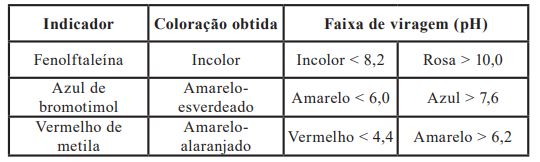
Uma amostra desconhecida de uma substância incolor foi submetida a testes de laboratório com indicadores ácido-base, apresentando o seguinte resultado.
Imagem associada para resolução da questão
De acordo com o resultado obtido experimentalmente, pode-se seguramente afirmar que a faixa de pOH da amostra desconhecida, de acordo com a coloração obtida, encontra-se entre

Alternativas
Ano: 2019 Banca: Universidade Presbiteriana Mackenzie Órgão: MACKENZIE Prova: Universidade Presbiteriana Mackenzie - 2019 - MACKENZIE - Vestibular Mackenzie - Grupos I, IV, V e VI |
Q1793346 Geografia
“Fenômeno atmosférico-oceânico que é caracterizado por um aquecimento anormal das águas superficiais no oceano Pacífico Tropical e que pode afetar o clima regional e global, mudando os padrões de vento a nível mundial, afetando assim os regimes de chuva em regiões tropicais e de latitudes médias.” Fonte: http://enos.cptec.inpe.br/ (Último acesso- 29/09/2019)
O fenômeno atmosférico descrito no texto é denominado:
Alternativas
Ano: 2019 Banca: Universidade Presbiteriana Mackenzie Órgão: MACKENZIE Prova: Universidade Presbiteriana Mackenzie - 2019 - MACKENZIE - Vestibular Mackenzie - Grupos I, IV, V e VI |
Q1793344 Geografia
QUADRO SINÓTICO DOS PRINCIPAIS BIOMAS DO PLANETA E SUAS RESPECTIVAS CARACTERÍSTICAS
Disponível em: http://www.ib.usp.br

Após analisar o quadro, selecione a alternativa que apresenta as informações que completam corretamente os números I, II, III e IV, respectivamente.
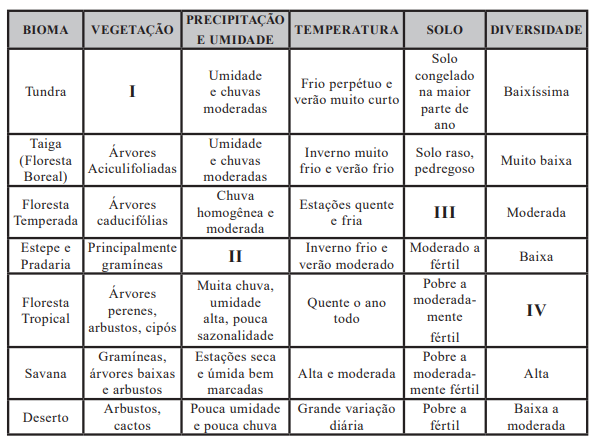
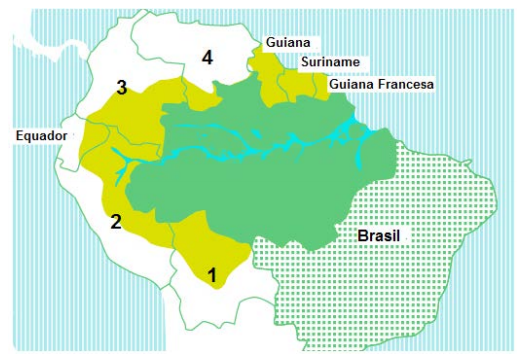
Imagem associada para resolução da questão
Alternativas
Ano: 2019 Banca: Universidade Presbiteriana Mackenzie Órgão: MACKENZIE Prova: Universidade Presbiteriana Mackenzie - 2019 - MACKENZIE - Vestibular Mackenzie - Grupos I, IV, V e VI |
Q1793341 Geografia
Leia o texto e observe o mapa. A Região Amazônica é tema incontornável nos debates internacionais contemporâneos sobre recursos naturais, desenvolvimento sustentável, mudança do clima e biodiversidade. Com população de aproximadamente 38 milhões de pessoas, a Amazônia ocupa 40% do território sulamericano e abriga a maior floresta megadiversa do mundo, habitat de 20% de todas as espécies de fauna e flora existentes. A Bacia Amazônica contém cerca de 20% da água doce da superfície do planeta. O Ciclo Hidrológico Amazônico alimenta um complexo sistema de aquíferos e águas subterrâneas, que pode abranger uma área de quase 4 milhões de km2. Por sua importância estratégica, a Amazônia apresenta aos países que fazem parte deste ecossistema grandes desafios e ainda maiores oportunidades. A conveniência de conjugar esforços para o desenvolvimento harmônico da Amazônia, com equilíbrio entre desenvolvimento econômico e preservação do meio ambiente, constitui princípio fundador da Organização do Tratado de Cooperação Amazônica (OTCA), bloco socioambiental formado pelos Estados que partilham o território Amazônico [...].
a0d5c3d7a2bc5b730325.png (519×357)
Adap. <http://jornal.usp.br/wp-content/uploads/20170209_00_floresta_amazonica.jpg> Acesso em 29 set. 2019.

Os países sul-americanos 1, 2, 3 e 4, por onde se estendem áreas da “Amazônia Internacional”, apresentadas no mapa, são, respectivamente,    
Alternativas
Ano: 2019 Banca: Universidade Presbiteriana Mackenzie Órgão: MACKENZIE Prova: Universidade Presbiteriana Mackenzie - 2019 - MACKENZIE - Vestibular Mackenzie - Grupos I, IV, V e VI |
Q1793340 Atualidades

Leia o fragmento de reportagem e observe o mapa.

EUA derrubam drone iraniano no Estreito de Ormuz

Os Estados Unidos derrubaram [...] um avião não tripulado iraniano no Estreito de Ormuz, no momento em que ele se aproximava de um navio americano, informou o presidente Donald Trump.

[...] A derrubada da aeronave ocorre em um momento de tensões crescentes na região do Golfo entre os Estados Unidos e o Irã.

[...] A tensão entre Teerã e Washington tem crescido desde que Trump se retirou unilateralmente do acordo nuclear de 2015 com o Irã e voltou a aplicar sanções à República Islâmica.

As hostilidades aumentaram após o Irã derrubar, no dia 20 de junho, um drone americano nas sensíveis águas do Golfo, em meio a uma série de ataques contra petroleiros que Washington atribuiu a Teerã.

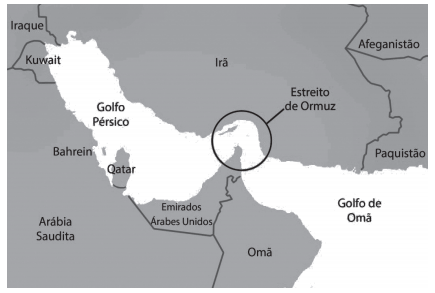
Imagem associada para resolução da questão

Imagem associada para resolução da questão

Imagem associada para resolução da questão

A respeito do Estreito de Ormuz e dos conflitos relacionados a ele, considere as seguintes proposições:

I. O Estreito de Ormuz faz parte de uma das principais rotas mundiais de comércio de petróleo; por isso, qualquer instabilidade político-militar na área onde ele se encontra pode influenciar no preço da gasolina e, consequentemente, na economia de grande parte do mundo.

II. Os Estados Unidos defendem a existência de uma coalizão militar internacional para proteger as águas do Estreito de Ormuz, garantindo a liberdade de navegação na região onde ele se encontra.

III. Apesar das constantes ameaças do Irã, que reivindica o controle do Estreito de Ormuz, em parceria com os Emirados Árabes Unidos, nenhum navio petroleiro foi atacado em suas proximidades (nem mesmo em águas internacionais do Golfo de Omã), o que contribuiu para a estabilidade do preço do petróleo nos últimos cinco anos.


É correto o que se afirma em

Alternativas
Ano: 2019 Banca: Universidade Presbiteriana Mackenzie Órgão: MACKENZIE Prova: Universidade Presbiteriana Mackenzie - 2019 - MACKENZIE - Vestibular Mackenzie - Grupos I, IV, V e VI |
Q1793332 Inglês

Read the text below to answer question:


Woman in India admits poisoning six family members with cyanide

Murders took place over 14-year period and each victim ate a meal prepared by the killer

A woman in the southern Indian state of Kerala has confessed to poisoning six members of her family over a 14-year period by adding cyanide to their food.
Police began investigating earlier this year when the brother-in-law of 47-year-old suspect Jolly Thomas became suspicious that she may have forged his parents’ will. 
Authorities discovered that Thomas had been at the scene of all six deaths, and that each death had occurred after eating a meal she had prepared. Up to that point the deaths had not been treated as suspicious because of the timeframe.
Thomas, a popular member of the community in Kozhikode, was allegedly motivated by wanting control of the family finances and property, police said.
According to police, the first poisoning was of Thomas’s mother-in-law, who died in 2002 after eating mutton soup. In 2008, her-father-in-law died, followed by her husband in 2011, who police said died after eating rice and curry. An autopsy conducted on his body at the time confirmed poisonous substances in his stomach, but police treated his death as suicide.
Thomas’s husband’s uncle was then allegedly given coffee laced with cyanide as punishment for insisting that a postmortem be carried out on his nephew.
In 2014, police said Thomas killed the two-year-old daughter of her dead husband’s cousin, Scaria Shaju. The cousin’s wife was then killed in 2016. A year later Thomas and Shaju married.
Shaju told police he had no idea that Thomas was behind his wife and daughter’s death, but he has been arrested along with a third person.
On Friday, police exhumed remains from the local cemetery and said that they confirmed cyanide poisoning in each of the deaths. On Monday, they said Thomas confessed to all the murders.

SOURCE: https://www.theguardian.com/world/2019/oct/07/woman-in-india-admitspoisoning-six-family-members-with-cyanide access on Oct. 7th, 2019.

Consider this excerpt and answer: “Authorities discovered that Thomas had been at the scene of all six deaths, and that each death had occurred after eating a meal she had prepared.” This suggests that:
Alternativas
Ano: 2019 Banca: Universidade Presbiteriana Mackenzie Órgão: MACKENZIE Prova: Universidade Presbiteriana Mackenzie - 2019 - MACKENZIE - Vestibular Mackenzie - Grupos I, IV, V e VI |
Q1793331 Inglês

Read the text below to answer question:


Woman in India admits poisoning six family members with cyanide

Murders took place over 14-year period and each victim ate a meal prepared by the killer


A woman in the southern Indian state of Kerala has confessed to poisoning six members of her family over a 14-year period by adding cyanide to their food.
Police began investigating earlier this year when the brother-in-law of 47-year-old suspect Jolly Thomas became suspicious that she may have forged his parents’ will. 
Authorities discovered that Thomas had been at the scene of all six deaths, and that each death had occurred after eating a meal she had prepared. Up to that point the deaths had not been treated as suspicious because of the timeframe.
Thomas, a popular member of the community in Kozhikode, was allegedly motivated by wanting control of the family finances and property, police said.
According to police, the first poisoning was of Thomas’s mother-in-law, who died in 2002 after eating mutton soup. In 2008, her-father-in-law died, followed by her husband in 2011, who police said died after eating rice and curry. An autopsy conducted on his body at the time confirmed poisonous substances in his stomach, but police treated his death as suicide.
Thomas’s husband’s uncle was then allegedly given coffee laced with cyanide as punishment for insisting that a postmortem be carried out on his nephew.
In 2014, police said Thomas killed the two-year-old daughter of her dead husband’s cousin, Scaria Shaju. The cousin’s wife was then killed in 2016. A year later Thomas and Shaju married.
Shaju told police he had no idea that Thomas was behind his wife and daughter’s death, but he has been arrested along with a third person.
On Friday, police exhumed remains from the local cemetery and said that they confirmed cyanide poisoning in each of the deaths. On Monday, they said Thomas confessed to all the murders.

SOURCE: https://www.theguardian.com/world/2019/oct/07/woman-in-india-admitspoisoning-six-family-members-with-cyanide access on Oct. 7th, 2019.

Select the WRONG alternative, according to the text:
Alternativas
Ano: 2019 Banca: Universidade Presbiteriana Mackenzie Órgão: MACKENZIE Prova: Universidade Presbiteriana Mackenzie - 2019 - MACKENZIE - Vestibular Mackenzie - Grupos I, IV, V e VI |
Q1793329 Inglês
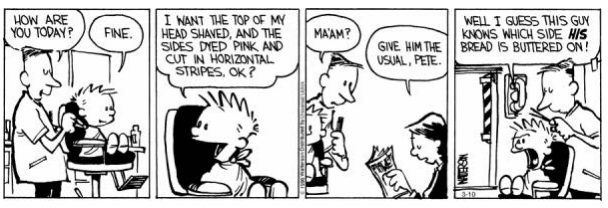
Read the following strip and answer question:
667bea06eda5e7b2440f.png (608×208)
Imagem associada para resolução da questão
SOURCE: http://www.englishact.com.br/2018/04/calvin-and-hobbes-comic-strips.html access on Oct 7th, 2019.
From the strip we can infer that:
Alternativas
Ano: 2019 Banca: Universidade Presbiteriana Mackenzie Órgão: MACKENZIE Prova: Universidade Presbiteriana Mackenzie - 2019 - MACKENZIE - Vestibular Mackenzie - Grupos I, IV, V e VI |
Q1793328 Inglês

Read the text and asnwer questions:

HOME

They rose up like men. We saw them. Like men they stood.

We shouldn’t have been anywhere near that place. Like most farmland outside Lotus, Georgia, this here one had plenty scary warning signs. The threats hung from wire mesh fences with wooden stakes every fifty or so feet. But when we saw a crawl space that some animal had dug—a coyote maybe, or a coon dog—we couldn’t resist. Just kids we were. The grass was shoulder high for her and waist high for me so, looking out for snakes, we crawled through it on our bellies. The reward was worth the harm grass juice and clouds of gnats did to our eyes, because there right in front of us, about fifty yards off, they stood like men. Their raised hooves crashing and striking, their manes tossing back from wild white eyes. They bit each other like dogs but when they stood, reared up on their hind legs, their forelegs around the withers of the other, we held our breath in wonder. One was rust-colored, the other deep black, both sunny with sweat. The neighs were not as frightening as the silence following a kick of hind legs into the lifted lips of the opponent. Nearby, colts and mares, indifferent, nibbled grass or looked away. Then it stopped. The rust-colored one dropped his head and pawed the ground while the winner loped off in an arc, nudging the mares before him.

As we elbowed back through the grass looking for the dug-out place, avoiding the line of parked trucks beyond, we lost our way. Although it took forever to re-sight the fence, neither of us panicked until we heard voices, urgent but low. I grabbed her arm and put a finger to my lips. Never lifting our heads, just peeping through the grass, we saw them pull a body from a wheelbarrow and throw it into a hole already waiting. One foot stuck up over the edge and quivered, as though it could get out, as though with a little effort it could break through the dirt being shoveled in. We could not see the faces of the men doing the burying, only their trousers; but we saw the edge of a spade drive the jerking foot down to join the rest of itself. When she saw that black foot with its creamy pink and mud-streaked sole being whacked into the grave, her whole body began to shake. I hugged her shoulders tight and tried to pull her trembling into my own bones because, as a brother four years older, I thought I could handle it. The men were long gone and the moon was a cantaloupe by the time we felt safe enough to disturb even one blade of grass and move on our stomachs, searching for the scooped-out part under the fence. When we got home we expected to be whipped or at least scolded for staying out so late, but the grown-ups did not notice us. Some disturbance had their attention.

Since you’re set on telling my story, whatever you think and whatever you write down, know this: I really forgot about the burial. I only remembered the horses. They were so beautiful. So brutal. And they stood like men.

SOURCE: Excerpted from MORRISON, Toni. Home (2012), Harmondsworth: Penguin, 2012.

The words in the box below have been undelined in the text. Choose the option that indicates the correct synonym for each of the words in the order they appear in the text:
grabbed quivered whacked scolded
Alternativas
Ano: 2019 Banca: Universidade Presbiteriana Mackenzie Órgão: MACKENZIE Prova: Universidade Presbiteriana Mackenzie - 2019 - MACKENZIE - Vestibular Mackenzie - Grupos I, IV, V e VI |
Q1793327 Inglês

Read the text and asnwer questions:

HOME

They rose up like men. We saw them. Like men they stood.

We shouldn’t have been anywhere near that place. Like most farmland outside Lotus, Georgia, this here one had plenty scary warning signs. The threats hung from wire mesh fences with wooden stakes every fifty or so feet. But when we saw a crawl space that some animal had dug—a coyote maybe, or a coon dog—we couldn’t resist. Just kids we were. The grass was shoulder high for her and waist high for me so, looking out for snakes, we crawled through it on our bellies. The reward was worth the harm grass juice and clouds of gnats did to our eyes, because there right in front of us, about fifty yards off, they stood like men. Their raised hooves crashing and striking, their manes tossing back from wild white eyes. They bit each other like dogs but when they stood, reared up on their hind legs, their forelegs around the withers of the other, we held our breath in wonder. One was rust-colored, the other deep black, both sunny with sweat. The neighs were not as frightening as the silence following a kick of hind legs into the lifted lips of the opponent. Nearby, colts and mares, indifferent, nibbled grass or looked away. Then it stopped. The rust-colored one dropped his head and pawed the ground while the winner loped off in an arc, nudging the mares before him.

As we elbowed back through the grass looking for the dug-out place, avoiding the line of parked trucks beyond, we lost our way. Although it took forever to re-sight the fence, neither of us panicked until we heard voices, urgent but low. I grabbed her arm and put a finger to my lips. Never lifting our heads, just peeping through the grass, we saw them pull a body from a wheelbarrow and throw it into a hole already waiting. One foot stuck up over the edge and quivered, as though it could get out, as though with a little effort it could break through the dirt being shoveled in. We could not see the faces of the men doing the burying, only their trousers; but we saw the edge of a spade drive the jerking foot down to join the rest of itself. When she saw that black foot with its creamy pink and mud-streaked sole being whacked into the grave, her whole body began to shake. I hugged her shoulders tight and tried to pull her trembling into my own bones because, as a brother four years older, I thought I could handle it. The men were long gone and the moon was a cantaloupe by the time we felt safe enough to disturb even one blade of grass and move on our stomachs, searching for the scooped-out part under the fence. When we got home we expected to be whipped or at least scolded for staying out so late, but the grown-ups did not notice us. Some disturbance had their attention.

Since you’re set on telling my story, whatever you think and whatever you write down, know this: I really forgot about the burial. I only remembered the horses. They were so beautiful. So brutal. And they stood like men.

SOURCE: Excerpted from MORRISON, Toni. Home (2012), Harmondsworth: Penguin, 2012.

In the excerpt: “The grass was shoulder high for her and waist high for me so, looking out for snakes, we crawled through it on our bellies.” We can understand that:
Alternativas
Ano: 2019 Banca: Universidade Presbiteriana Mackenzie Órgão: MACKENZIE Prova: Universidade Presbiteriana Mackenzie - 2019 - MACKENZIE - Vestibular Mackenzie - Grupos I, IV, V e VI |
Q1793326 Inglês

Read the text and asnwer questions:

HOME

They rose up like men. We saw them. Like men they stood.

We shouldn’t have been anywhere near that place. Like most farmland outside Lotus, Georgia, this here one had plenty scary warning signs. The threats hung from wire mesh fences with wooden stakes every fifty or so feet. But when we saw a crawl space that some animal had dug—a coyote maybe, or a coon dog—we couldn’t resist. Just kids we were. The grass was shoulder high for her and waist high for me so, looking out for snakes, we crawled through it on our bellies. The reward was worth the harm grass juice and clouds of gnats did to our eyes, because there right in front of us, about fifty yards off, they stood like men. Their raised hooves crashing and striking, their manes tossing back from wild white eyes. They bit each other like dogs but when they stood, reared up on their hind legs, their forelegs around the withers of the other, we held our breath in wonder. One was rust-colored, the other deep black, both sunny with sweat. The neighs were not as frightening as the silence following a kick of hind legs into the lifted lips of the opponent. Nearby, colts and mares, indifferent, nibbled grass or looked away. Then it stopped. The rust-colored one dropped his head and pawed the ground while the winner loped off in an arc, nudging the mares before him.

As we elbowed back through the grass looking for the dug-out place, avoiding the line of parked trucks beyond, we lost our way. Although it took forever to re-sight the fence, neither of us panicked until we heard voices, urgent but low. I grabbed her arm and put a finger to my lips. Never lifting our heads, just peeping through the grass, we saw them pull a body from a wheelbarrow and throw it into a hole already waiting. One foot stuck up over the edge and quivered, as though it could get out, as though with a little effort it could break through the dirt being shoveled in. We could not see the faces of the men doing the burying, only their trousers; but we saw the edge of a spade drive the jerking foot down to join the rest of itself. When she saw that black foot with its creamy pink and mud-streaked sole being whacked into the grave, her whole body began to shake. I hugged her shoulders tight and tried to pull her trembling into my own bones because, as a brother four years older, I thought I could handle it. The men were long gone and the moon was a cantaloupe by the time we felt safe enough to disturb even one blade of grass and move on our stomachs, searching for the scooped-out part under the fence. When we got home we expected to be whipped or at least scolded for staying out so late, but the grown-ups did not notice us. Some disturbance had their attention.

Since you’re set on telling my story, whatever you think and whatever you write down, know this: I really forgot about the burial. I only remembered the horses. They were so beautiful. So brutal. And they stood like men.

SOURCE: Excerpted from MORRISON, Toni. Home (2012), Harmondsworth: Penguin, 2012.

Considering the text, answer the question: Who were they in: “Like men they stood.” (1st line)
Alternativas
Ano: 2019 Banca: Instituto Consulplan Órgão: FIMCA Prova: Instituto Consulplan - 2019 - FIMCA - Vestibular de Medicina - Edital nº 01/ 2020 |
Q1790468 Inglês
Science Education in the United States of America

(Audrey B. Champagne.)

    Science education in the United States of America is in the midst of an unprecedented reform movement-unprecedented because the movement is driven by national standards developed with support from the federal government. The standards for science education are redefining the character of science education from kindergarten to the postgraduate education of scientists and science teachers. Unlike the education in most countries of the world, education of students in kindergarten through grade twelve in the United States is not the responsibility of the federal government but is controlled by the individual states. States have the right to regulate all elements of the curriculum-the content all students are expected to learn, the structural organization of programs across all grades, the structural organization of the yearly curriculum in each subject, teaching methods, and textbooks. Historically, and even now, the states jealously guard all their rights and resist efforts by the federal government to exercise control over matters that are the responsibility of the states. The federal government's involvement in education has been to identify matters of national priority and to provide funds and other resources to the states to meet the national priorities. So, for instance, in the late 1960s and early 1970s, when the United States felt that its perceived preeminence in scientific research and its national safety were threatened, science education was identified as a national priority. The primary purpose of the federal government's initiatives was to encourage and upgrade the science education of young people who would become practicing scientists. This effort was not perceived by the states as an erosion of their rights because it was a response to a threat to the nation and was targeted on the science education of a relatively few students. The current situation is quite different.
    The federal government's underwriting of the development of national standards for education has the potential for shifting the control of the curriculum from the states to the federal government. This initiative, supported by the National Association of Governors, is the result of the concern of political, business and industrial leaders with the poor quality of education across the nation and with the effect this poor quality has on the U.S. position in the world economy. The goal of the standards movement from the prospective of political, business, and industrial leaders is to strengthen education so that the schools will produce graduates with the knowledge and skills required of them to be productive in the workplace.
   The pedagogy and attitudes of many teachers and professors alike has been that science is for the few. So little concern or effort was applied to make science interesting or to make learning it easy. Consequently, only highly motivated and highly intelligent students survived science courses. Thus it appears education in the natural sciences develops individuals who reason well, are critical thinkers, are creative problem solvers-in short, are intelligent. But, we must ask, does education in the natural sciences produce smarter people or do smart people survive science as it is taught? While historically the answer to the question may well have been survival, the national standards are based on the beliefs that science is for all and can produce smarter people.

(Available: https://files.eric.ed.gov/fulltext/EJ608194.pdf. Adapted.)
Analyse the items usage in the text. Mark the one which is a modifier.
Alternativas
Ano: 2019 Banca: Instituto Consulplan Órgão: FIMCA Prova: Instituto Consulplan - 2019 - FIMCA - Vestibular de Medicina - Edital nº 01/ 2020 |
Q1790467 Inglês
Science Education in the United States of America

(Audrey B. Champagne.)

    Science education in the United States of America is in the midst of an unprecedented reform movement-unprecedented because the movement is driven by national standards developed with support from the federal government. The standards for science education are redefining the character of science education from kindergarten to the postgraduate education of scientists and science teachers. Unlike the education in most countries of the world, education of students in kindergarten through grade twelve in the United States is not the responsibility of the federal government but is controlled by the individual states. States have the right to regulate all elements of the curriculum-the content all students are expected to learn, the structural organization of programs across all grades, the structural organization of the yearly curriculum in each subject, teaching methods, and textbooks. Historically, and even now, the states jealously guard all their rights and resist efforts by the federal government to exercise control over matters that are the responsibility of the states. The federal government's involvement in education has been to identify matters of national priority and to provide funds and other resources to the states to meet the national priorities. So, for instance, in the late 1960s and early 1970s, when the United States felt that its perceived preeminence in scientific research and its national safety were threatened, science education was identified as a national priority. The primary purpose of the federal government's initiatives was to encourage and upgrade the science education of young people who would become practicing scientists. This effort was not perceived by the states as an erosion of their rights because it was a response to a threat to the nation and was targeted on the science education of a relatively few students. The current situation is quite different.
    The federal government's underwriting of the development of national standards for education has the potential for shifting the control of the curriculum from the states to the federal government. This initiative, supported by the National Association of Governors, is the result of the concern of political, business and industrial leaders with the poor quality of education across the nation and with the effect this poor quality has on the U.S. position in the world economy. The goal of the standards movement from the prospective of political, business, and industrial leaders is to strengthen education so that the schools will produce graduates with the knowledge and skills required of them to be productive in the workplace.
   The pedagogy and attitudes of many teachers and professors alike has been that science is for the few. So little concern or effort was applied to make science interesting or to make learning it easy. Consequently, only highly motivated and highly intelligent students survived science courses. Thus it appears education in the natural sciences develops individuals who reason well, are critical thinkers, are creative problem solvers-in short, are intelligent. But, we must ask, does education in the natural sciences produce smarter people or do smart people survive science as it is taught? While historically the answer to the question may well have been survival, the national standards are based on the beliefs that science is for all and can produce smarter people.

(Available: https://files.eric.ed.gov/fulltext/EJ608194.pdf. Adapted.)
For Instance (L22) sets:
Alternativas
Ano: 2019 Banca: Instituto Consulplan Órgão: FIMCA Prova: Instituto Consulplan - 2019 - FIMCA - Vestibular de Medicina - Edital nº 01/ 2020 |
Q1790466 Inglês
Science Education in the United States of America

(Audrey B. Champagne.)

    Science education in the United States of America is in the midst of an unprecedented reform movement-unprecedented because the movement is driven by national standards developed with support from the federal government. The standards for science education are redefining the character of science education from kindergarten to the postgraduate education of scientists and science teachers. Unlike the education in most countries of the world, education of students in kindergarten through grade twelve in the United States is not the responsibility of the federal government but is controlled by the individual states. States have the right to regulate all elements of the curriculum-the content all students are expected to learn, the structural organization of programs across all grades, the structural organization of the yearly curriculum in each subject, teaching methods, and textbooks. Historically, and even now, the states jealously guard all their rights and resist efforts by the federal government to exercise control over matters that are the responsibility of the states. The federal government's involvement in education has been to identify matters of national priority and to provide funds and other resources to the states to meet the national priorities. So, for instance, in the late 1960s and early 1970s, when the United States felt that its perceived preeminence in scientific research and its national safety were threatened, science education was identified as a national priority. The primary purpose of the federal government's initiatives was to encourage and upgrade the science education of young people who would become practicing scientists. This effort was not perceived by the states as an erosion of their rights because it was a response to a threat to the nation and was targeted on the science education of a relatively few students. The current situation is quite different.
    The federal government's underwriting of the development of national standards for education has the potential for shifting the control of the curriculum from the states to the federal government. This initiative, supported by the National Association of Governors, is the result of the concern of political, business and industrial leaders with the poor quality of education across the nation and with the effect this poor quality has on the U.S. position in the world economy. The goal of the standards movement from the prospective of political, business, and industrial leaders is to strengthen education so that the schools will produce graduates with the knowledge and skills required of them to be productive in the workplace.
   The pedagogy and attitudes of many teachers and professors alike has been that science is for the few. So little concern or effort was applied to make science interesting or to make learning it easy. Consequently, only highly motivated and highly intelligent students survived science courses. Thus it appears education in the natural sciences develops individuals who reason well, are critical thinkers, are creative problem solvers-in short, are intelligent. But, we must ask, does education in the natural sciences produce smarter people or do smart people survive science as it is taught? While historically the answer to the question may well have been survival, the national standards are based on the beliefs that science is for all and can produce smarter people.

(Available: https://files.eric.ed.gov/fulltext/EJ608194.pdf. Adapted.)
The goal of the standards movement is to:
Alternativas
Ano: 2019 Banca: Instituto Consulplan Órgão: FIMCA Prova: Instituto Consulplan - 2019 - FIMCA - Vestibular de Medicina - Edital nº 01/ 2020 |
Q1790465 Inglês
Science Education in the United States of America

(Audrey B. Champagne.)

    Science education in the United States of America is in the midst of an unprecedented reform movement-unprecedented because the movement is driven by national standards developed with support from the federal government. The standards for science education are redefining the character of science education from kindergarten to the postgraduate education of scientists and science teachers. Unlike the education in most countries of the world, education of students in kindergarten through grade twelve in the United States is not the responsibility of the federal government but is controlled by the individual states. States have the right to regulate all elements of the curriculum-the content all students are expected to learn, the structural organization of programs across all grades, the structural organization of the yearly curriculum in each subject, teaching methods, and textbooks. Historically, and even now, the states jealously guard all their rights and resist efforts by the federal government to exercise control over matters that are the responsibility of the states. The federal government's involvement in education has been to identify matters of national priority and to provide funds and other resources to the states to meet the national priorities. So, for instance, in the late 1960s and early 1970s, when the United States felt that its perceived preeminence in scientific research and its national safety were threatened, science education was identified as a national priority. The primary purpose of the federal government's initiatives was to encourage and upgrade the science education of young people who would become practicing scientists. This effort was not perceived by the states as an erosion of their rights because it was a response to a threat to the nation and was targeted on the science education of a relatively few students. The current situation is quite different.
    The federal government's underwriting of the development of national standards for education has the potential for shifting the control of the curriculum from the states to the federal government. This initiative, supported by the National Association of Governors, is the result of the concern of political, business and industrial leaders with the poor quality of education across the nation and with the effect this poor quality has on the U.S. position in the world economy. The goal of the standards movement from the prospective of political, business, and industrial leaders is to strengthen education so that the schools will produce graduates with the knowledge and skills required of them to be productive in the workplace.
   The pedagogy and attitudes of many teachers and professors alike has been that science is for the few. So little concern or effort was applied to make science interesting or to make learning it easy. Consequently, only highly motivated and highly intelligent students survived science courses. Thus it appears education in the natural sciences develops individuals who reason well, are critical thinkers, are creative problem solvers-in short, are intelligent. But, we must ask, does education in the natural sciences produce smarter people or do smart people survive science as it is taught? While historically the answer to the question may well have been survival, the national standards are based on the beliefs that science is for all and can produce smarter people.

(Available: https://files.eric.ed.gov/fulltext/EJ608194.pdf. Adapted.)
“Meet” (L22) does NOT mean:
Alternativas
Ano: 2019 Banca: Instituto Consulplan Órgão: FIMCA Prova: Instituto Consulplan - 2019 - FIMCA - Vestibular de Medicina - Edital nº 01/ 2020 |
Q1790464 Inglês
Science Education in the United States of America

(Audrey B. Champagne.)

    Science education in the United States of America is in the midst of an unprecedented reform movement-unprecedented because the movement is driven by national standards developed with support from the federal government. The standards for science education are redefining the character of science education from kindergarten to the postgraduate education of scientists and science teachers. Unlike the education in most countries of the world, education of students in kindergarten through grade twelve in the United States is not the responsibility of the federal government but is controlled by the individual states. States have the right to regulate all elements of the curriculum-the content all students are expected to learn, the structural organization of programs across all grades, the structural organization of the yearly curriculum in each subject, teaching methods, and textbooks. Historically, and even now, the states jealously guard all their rights and resist efforts by the federal government to exercise control over matters that are the responsibility of the states. The federal government's involvement in education has been to identify matters of national priority and to provide funds and other resources to the states to meet the national priorities. So, for instance, in the late 1960s and early 1970s, when the United States felt that its perceived preeminence in scientific research and its national safety were threatened, science education was identified as a national priority. The primary purpose of the federal government's initiatives was to encourage and upgrade the science education of young people who would become practicing scientists. This effort was not perceived by the states as an erosion of their rights because it was a response to a threat to the nation and was targeted on the science education of a relatively few students. The current situation is quite different.
    The federal government's underwriting of the development of national standards for education has the potential for shifting the control of the curriculum from the states to the federal government. This initiative, supported by the National Association of Governors, is the result of the concern of political, business and industrial leaders with the poor quality of education across the nation and with the effect this poor quality has on the U.S. position in the world economy. The goal of the standards movement from the prospective of political, business, and industrial leaders is to strengthen education so that the schools will produce graduates with the knowledge and skills required of them to be productive in the workplace.
   The pedagogy and attitudes of many teachers and professors alike has been that science is for the few. So little concern or effort was applied to make science interesting or to make learning it easy. Consequently, only highly motivated and highly intelligent students survived science courses. Thus it appears education in the natural sciences develops individuals who reason well, are critical thinkers, are creative problem solvers-in short, are intelligent. But, we must ask, does education in the natural sciences produce smarter people or do smart people survive science as it is taught? While historically the answer to the question may well have been survival, the national standards are based on the beliefs that science is for all and can produce smarter people.

(Available: https://files.eric.ed.gov/fulltext/EJ608194.pdf. Adapted.)
The text states that:
Alternativas
Ano: 2019 Banca: Instituto Consulplan Órgão: FIMCA Prova: Instituto Consulplan - 2019 - FIMCA - Vestibular de Medicina - Edital nº 01/ 2020 |
Q1790463 Inglês
Science Education in the United States of America

(Audrey B. Champagne.)

    Science education in the United States of America is in the midst of an unprecedented reform movement-unprecedented because the movement is driven by national standards developed with support from the federal government. The standards for science education are redefining the character of science education from kindergarten to the postgraduate education of scientists and science teachers. Unlike the education in most countries of the world, education of students in kindergarten through grade twelve in the United States is not the responsibility of the federal government but is controlled by the individual states. States have the right to regulate all elements of the curriculum-the content all students are expected to learn, the structural organization of programs across all grades, the structural organization of the yearly curriculum in each subject, teaching methods, and textbooks. Historically, and even now, the states jealously guard all their rights and resist efforts by the federal government to exercise control over matters that are the responsibility of the states. The federal government's involvement in education has been to identify matters of national priority and to provide funds and other resources to the states to meet the national priorities. So, for instance, in the late 1960s and early 1970s, when the United States felt that its perceived preeminence in scientific research and its national safety were threatened, science education was identified as a national priority. The primary purpose of the federal government's initiatives was to encourage and upgrade the science education of young people who would become practicing scientists. This effort was not perceived by the states as an erosion of their rights because it was a response to a threat to the nation and was targeted on the science education of a relatively few students. The current situation is quite different.
    The federal government's underwriting of the development of national standards for education has the potential for shifting the control of the curriculum from the states to the federal government. This initiative, supported by the National Association of Governors, is the result of the concern of political, business and industrial leaders with the poor quality of education across the nation and with the effect this poor quality has on the U.S. position in the world economy. The goal of the standards movement from the prospective of political, business, and industrial leaders is to strengthen education so that the schools will produce graduates with the knowledge and skills required of them to be productive in the workplace.
   The pedagogy and attitudes of many teachers and professors alike has been that science is for the few. So little concern or effort was applied to make science interesting or to make learning it easy. Consequently, only highly motivated and highly intelligent students survived science courses. Thus it appears education in the natural sciences develops individuals who reason well, are critical thinkers, are creative problem solvers-in short, are intelligent. But, we must ask, does education in the natural sciences produce smarter people or do smart people survive science as it is taught? While historically the answer to the question may well have been survival, the national standards are based on the beliefs that science is for all and can produce smarter people.

(Available: https://files.eric.ed.gov/fulltext/EJ608194.pdf. Adapted.)
“Thus” (L52) introduces a/an:
Alternativas
Ano: 2019 Banca: Instituto Consulplan Órgão: FIMCA Prova: Instituto Consulplan - 2019 - FIMCA - Vestibular de Medicina - Edital nº 01/ 2020 |
Q1790444 Biologia
“O sistema nervoso simpático altera as atividades dos órgãos com a liberação da ____________, ocasionando a dilatação das pupilas, o aumento da atividade cardíaca e da pressão arterial, a elevação do ritmo respiratório, dentre outras. O sistema nervoso parassimpático atua de maneira contrária, pois libera ______________. Os dois sistemas atuam sobre os mesmos órgãos apresentando ações antagônicas.” Assinale a alternativa que completa correta e sequencialmente a afirmativa anterior.
Alternativas
Ano: 2019 Banca: Instituto Consulplan Órgão: FIMCA Prova: Instituto Consulplan - 2019 - FIMCA - Vestibular de Medicina - Edital nº 01/ 2020 |
Q1790443 Biologia
Numa savana africana há vários seres vivos que compartilham o mesmo habitat. O capim, que é fotossintetizante, alimenta as zebras, os búfalos, as formigas, dentre outros. A zebra e o búfalo, por sua vez, servem de alimento para os leões e abutres. Os abutres, ao morrerem, serão devorados por bactérias e fungos. A partir destas informações, assinale a afirmativa correta.
Alternativas
Ano: 2019 Banca: Instituto Consulplan Órgão: FIMCA Prova: Instituto Consulplan - 2019 - FIMCA - Vestibular de Medicina - Edital nº 01/ 2020 |
Q1790442 Biologia
Relacione adequadamente os órgãos e os sistemas do organismo humano aos folhetos embrionários que lhes deram origem. (Considere que alguns números poderão ser utilizados mais de uma vez e outros poderão não ser usados.)
1. Endoderma. 2. Ectoderma. 3. Mesoderma.
( ) Derme. ( ) Epiderme e anexos (pelos, unhas e glândulas). ( ) Revestimento do tubo digestório. ( ) Fígado e pâncreas. ( ) Encéfalo, medula e nervos.
A sequência está correta em
Alternativas
Respostas
6601: A
6602: B
6603: B
6604: B
6605: C
6606: A
6607: A
6608: C
6609: E
6610: B
6611: D
6612: C
6613: B
6614: A
6615: B
6616: A
6617: C
6618: D
6619: B
6620: E