Selecionar segmento
Estude com questões de diferentes segmentos
Atenção: Isso limpará todos os campos já preenchidos no filtro!
Foram encontradas 36.668 questões
Resolva questões gratuitamente!
Junte-se a mais de 4 milhões de concurseiros!


Q2054693
Geografia
Tendo em vista a influência dos fatores
físicos sobre as características da vegetação,
assinale a alternativa correta.
Q2054692
Geografia
Quanto à representação do relevo em carta,
assinale a alternativa INCORRETA.
Q2054691
Geografia
O relevo faz parte da organização do espaço
e do cotidiano dos seres humanos. Um
exemplo dessa afirmativa são os
deslizamentos que ocorrem quase todos os
anos no estado do Rio de Janeiro,
principalmente na região serrana. Como
resultado desse fenômeno, têm-se vítimas
fatais e desabrigados que, em boa parte, já
sofriam com a segregação socioespacial.
Sobre as questões relacionadas ao fenômeno
representado, informe se é verdadeiro (V) ou
falso (F) o que se afirma a seguir e assinale a
alternativa com a sequência correta.
( ) Em encostas que apresentam declividade acentuada, os movimentos de massa são fenômenos naturais, ou seja, fazem parte da dinâmica externa da crosta terrestre e são agentes que participam da modelagem do relevo ao longo do tempo.
( ) O movimento de massa e o processo de erosão fluvial que ocorrem nas encostas dos morros são ocasionados por, respectivamente: peso acumulado sobre o solo e grandes quantidades de chuva.
( ) Nas regiões serranas no Brasil, inclusive as próximas ao litoral, com Clima Tropical Semiúmido ou Úmido, são comuns os deslizamentos em condições climáticas extremas, como as dos meses de verão.
( ) As áreas de risco, como encostas de morros, costumam ser ocupadas, em grande parte, pela população de baixa renda, visto que a especulação imobiliária tem tornado o solo urbano mais caro, tornando inviável, para a população mais pobre, a aquisição de terrenos e moradias em áreas seguras e com boa infraestrutura.
( ) Em encostas que apresentam declividade acentuada, os movimentos de massa são fenômenos naturais, ou seja, fazem parte da dinâmica externa da crosta terrestre e são agentes que participam da modelagem do relevo ao longo do tempo.
( ) O movimento de massa e o processo de erosão fluvial que ocorrem nas encostas dos morros são ocasionados por, respectivamente: peso acumulado sobre o solo e grandes quantidades de chuva.
( ) Nas regiões serranas no Brasil, inclusive as próximas ao litoral, com Clima Tropical Semiúmido ou Úmido, são comuns os deslizamentos em condições climáticas extremas, como as dos meses de verão.
( ) As áreas de risco, como encostas de morros, costumam ser ocupadas, em grande parte, pela população de baixa renda, visto que a especulação imobiliária tem tornado o solo urbano mais caro, tornando inviável, para a população mais pobre, a aquisição de terrenos e moradias em áreas seguras e com boa infraestrutura.
Q2054690
Atualidades
Observe a charge.

Fonte: Lute.
Disponível em: http://blogdolute.blogspot.com/. Acesso em 03 jan 2022.
A crítica apresentada na charge se refere
Q2054689
Geografia
Referente à relação entre espaço geográfico e
paisagem, assinale a alternativa correta.
Q2054688
Biologia
A figura a seguir representa o modelo do mosaico fluído da membrana plasmática.
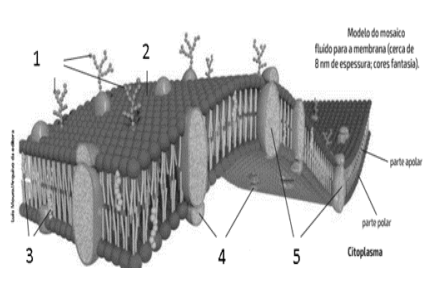
Com base na figura, proteínas integrais e
proteínas periféricas estão indicadas,
respectivamente, em
Q2054686
Biologia
Tecidos formadores de vegetais e de animais
são massas de células que exercem funções
específicas nos organismos. Em relação ao
tema, assinale a alternativa correta.
Q2054685
Biologia
O sucesso evolutivo das angiospermas se
deve, essencialmente, ao mecanismo de
transporte do grão de pólen e ao tipo de
fecundação. Esses dois mecanismos são,
respectivamente,
Q2054684
Biologia
Considerando as características, os aspectos
da hereditariedade e os conteúdos
relacionados ao tema, assinale a alternativa
correta.
Q2054683
Biologia
A Leishmaniose Tegumentar é uma infecção
que causa uma lesão na pele a qual, com o
tempo, progride e afeta a mucosa da boca, do
nariz e da faringe. Sobre as medidas
preventivas contra esse tipo de leishmaniose,
assinale a alternativa correta.
Q2054679
Química
Considere a seguinte reação reversível genérica:
A + B ⇌ C + D
O gráfico termoquímico para essa reação está demonstrado na figura a seguir.
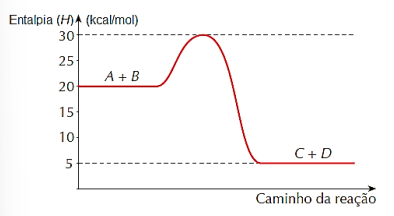
De acordo com os dados do gráfico, assinale
a alternativa correta.
Q2054676
Física
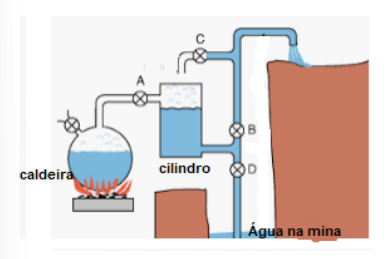
No desenvolvimento das máquinas térmicas,
especialmente durante a Revolução
Industrial, surgiram equipamentos para
retirar água das minas de carvão, como a
“máquina de Savery” (ver ilustração), e, mais
tarde, a máquina de Newcomen. Nesse
sentido, James Watt introduziu, anos depois,
um dispositivo que melhorou muito a
eficiência mecânica da máquina
termodinâmica. Que dispositivo era esse?
Q2054673
Física
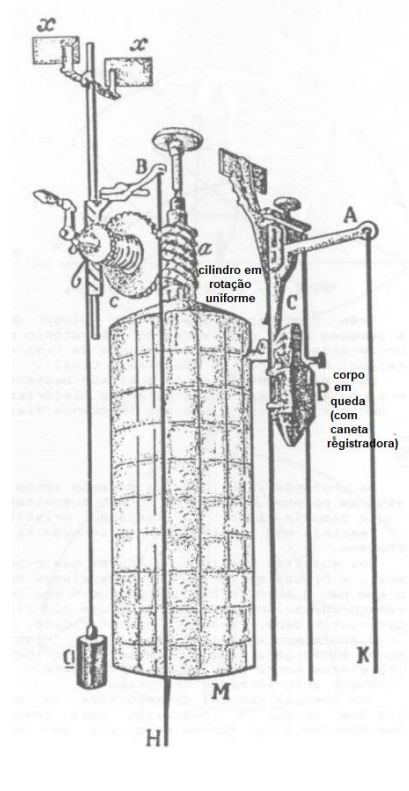
A seguinte figura ilustra o “aparelho de
Morin”, utilizado em laboratórios de Física no
século XIX para registrar o movimento de um
corpo em queda livre; no caso, um corpo
metálico cônico com uma caneta presa a si
para, durante a queda, registrar no papel
milimetrado colado no cilindro, que gira em
rotação uniforme, o traçado do movimento
desse corpo. Diante do exposto, qual será o
traçado registrado em um gráfico de espaço
d em função do tempo t, para esse corpo em
queda livre?
Q2054671
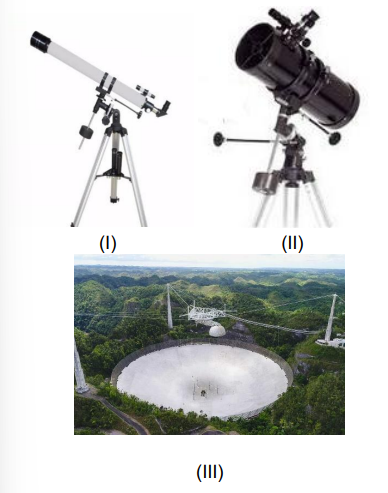
Física
Considere os seguintes instrumentos de
observação e registro astronômico,
identifique-os de acordo com a sequência
apresentada e assinale a alternativa correta.
Q2054670
Inglês
Texto associado
Don’t Look Up: four climate experts on the
polarising disaster film
Critics haven’t been kind to Adam
McKay’s eco-satire, but many climate experts are
lauding it. Here four give their views
Rarely has a film been as divisive as
Adam McKay’s climate satire Don’t Look Up.
Although it has been watched by millions, and is
already Netflix’s third most watched film ever, the
response from critics was largely negative. Many
found its story of scientists who discover an
asteroid heading for Earth a clumsy allegory for
the climate crisis, while others just found it
boring. But many in the climate movement
have praised the film, and audience reviews have
been generally positive.
We asked four climate experts to give
their views on the film. Warning: spoilers ahead.
Ketan Joshi: ‘The main character of
the climate crisis is absent’
[…]
Fiona Harvey: ‘The role of the technoloon, played by Mark Rylance, struck a chord’
[…]
After 17 years of reporting on the climate
crisis, I doubted at first that the film had much to
tell me about the frustrations of communicating a
hypothetical catastrophe. As the film’s scientists
first struggled to clothe their data in sober,
measured terms, then broke into swearing, armwaving shrieks about provable imminent
apocalypse, I nodded along. Yes, that’s what it
feels like, and no, no one listens, not until it is too
late.
Yet it was illuminating in unexpected ways
– something I’ve always struggled with is how
rational people can fail to grasp the scale of
climate breakdown, how we could leave it so late.
As the film shows, it’s partly because vested
interests keep it that way, but it’s also just
because we’re human. Believing in disaster
before it strikes is fundamentally not how we
work.
The role of the techno-loon, played by
Mark Rylance, struck another chord. Cop26 was
not a failure, though on the surface that was the
obvious conclusion – it was more nuanced than
that. Soon after the Cop26 circus left Glasgow,
the danger of painting the outcome in such blackand-white terms became apparent, as wellmeaning experts concluded – in all seriousness –
as talking didn’t work, our best hope would be for
billionaires to bypass the UN and geoengineer
the climate from space. Because obviously the
answer to a vast uncontrolled experiment on the
atmosphere is to conduct a vast uncontrolled
experiment on the atmosphere.
[…]
Nina Lakhani: ‘Jennifer Lawrence’s
character will resonate with many female
climate scientists’
[…]
How Kate Dibiasky, the postgraduate
student played by Jennifer Lawrence who
discovered the comet, is portrayed as an
unhinged hysterical woman, will resonate with
many female climate scientists and activists
whose crucial knowledge has been sidelined.
The scene where her parents declare that they’re
in favour of the jobs the comet will provide will
resonate with millions of people, including me,
trying to deal with relatives who have bought into
political lies.
[…]
Damian Carrington: ‘It highlights the
absurdity of staring disaster in the face, then
looking away’
I loved Don’t Look Up, both as an
entertainment and as a climate crisis parable. But
the movie has been panned by many critics, with
the main charge being that it is heavy-handed,
blunt and too obvious. But that is exactly the
point.
Scientists have been issuing blunt
warnings about obvious dangers of global
heating for years and have been ignored –
carbon emissions are still rising. The film
perfectly skewers the key ways in which they
have been ignored: for short-term political
expediency and short-term corporate profit.
In particular, the movie beautifully
portrays the incredulity of scientists that their
carefully constructed evidence can be dismissed
with bluster such as “we’ll sit tight and assess” by
leaders more concerned about today’s political
weather and a media more interested in the
minutiae of celebrities’ lives.
[…]
The point of the film is savagely
highlighting the absurdity of staring disaster in
the face, then looking away rather than acting. In
that respect, it is a triumph.
Source: https://www.theguardian.com/film/2022/jan/08/dont-look-upfour-climate-experts-on-the-polarising-disaster-film. Access:
08/01/2022.
Considering Damian Carrington’s opinion on
the movie Don’t look up, mark the
INCORRECT option.
Q2054669
Inglês
Texto associado
Don’t Look Up: four climate experts on the
polarising disaster film
Critics haven’t been kind to Adam
McKay’s eco-satire, but many climate experts are
lauding it. Here four give their views
Rarely has a film been as divisive as
Adam McKay’s climate satire Don’t Look Up.
Although it has been watched by millions, and is
already Netflix’s third most watched film ever, the
response from critics was largely negative. Many
found its story of scientists who discover an
asteroid heading for Earth a clumsy allegory for
the climate crisis, while others just found it
boring. But many in the climate movement
have praised the film, and audience reviews have
been generally positive.
We asked four climate experts to give
their views on the film. Warning: spoilers ahead.
Ketan Joshi: ‘The main character of
the climate crisis is absent’
[…]
Fiona Harvey: ‘The role of the technoloon, played by Mark Rylance, struck a chord’
[…]
After 17 years of reporting on the climate
crisis, I doubted at first that the film had much to
tell me about the frustrations of communicating a
hypothetical catastrophe. As the film’s scientists
first struggled to clothe their data in sober,
measured terms, then broke into swearing, armwaving shrieks about provable imminent
apocalypse, I nodded along. Yes, that’s what it
feels like, and no, no one listens, not until it is too
late.
Yet it was illuminating in unexpected ways
– something I’ve always struggled with is how
rational people can fail to grasp the scale of
climate breakdown, how we could leave it so late.
As the film shows, it’s partly because vested
interests keep it that way, but it’s also just
because we’re human. Believing in disaster
before it strikes is fundamentally not how we
work.
The role of the techno-loon, played by
Mark Rylance, struck another chord. Cop26 was
not a failure, though on the surface that was the
obvious conclusion – it was more nuanced than
that. Soon after the Cop26 circus left Glasgow,
the danger of painting the outcome in such blackand-white terms became apparent, as wellmeaning experts concluded – in all seriousness –
as talking didn’t work, our best hope would be for
billionaires to bypass the UN and geoengineer
the climate from space. Because obviously the
answer to a vast uncontrolled experiment on the
atmosphere is to conduct a vast uncontrolled
experiment on the atmosphere.
[…]
Nina Lakhani: ‘Jennifer Lawrence’s
character will resonate with many female
climate scientists’
[…]
How Kate Dibiasky, the postgraduate
student played by Jennifer Lawrence who
discovered the comet, is portrayed as an
unhinged hysterical woman, will resonate with
many female climate scientists and activists
whose crucial knowledge has been sidelined.
The scene where her parents declare that they’re
in favour of the jobs the comet will provide will
resonate with millions of people, including me,
trying to deal with relatives who have bought into
political lies.
[…]
Damian Carrington: ‘It highlights the
absurdity of staring disaster in the face, then
looking away’
I loved Don’t Look Up, both as an
entertainment and as a climate crisis parable. But
the movie has been panned by many critics, with
the main charge being that it is heavy-handed,
blunt and too obvious. But that is exactly the
point.
Scientists have been issuing blunt
warnings about obvious dangers of global
heating for years and have been ignored –
carbon emissions are still rising. The film
perfectly skewers the key ways in which they
have been ignored: for short-term political
expediency and short-term corporate profit.
In particular, the movie beautifully
portrays the incredulity of scientists that their
carefully constructed evidence can be dismissed
with bluster such as “we’ll sit tight and assess” by
leaders more concerned about today’s political
weather and a media more interested in the
minutiae of celebrities’ lives.
[…]
The point of the film is savagely
highlighting the absurdity of staring disaster in
the face, then looking away rather than acting. In
that respect, it is a triumph.
Source: https://www.theguardian.com/film/2022/jan/08/dont-look-upfour-climate-experts-on-the-polarising-disaster-film. Access:
08/01/2022.
The climate expert Nina Lakhani thinks that
“Jennifer Lawrence’s character will resonate
with many female climate scientists”. Mark
the option which best describes the meaning
of Nina’s statement.
Q2054668
Inglês
Texto associado
Don’t Look Up: four climate experts on the
polarising disaster film
Critics haven’t been kind to Adam
McKay’s eco-satire, but many climate experts are
lauding it. Here four give their views
Rarely has a film been as divisive as
Adam McKay’s climate satire Don’t Look Up.
Although it has been watched by millions, and is
already Netflix’s third most watched film ever, the
response from critics was largely negative. Many
found its story of scientists who discover an
asteroid heading for Earth a clumsy allegory for
the climate crisis, while others just found it
boring. But many in the climate movement
have praised the film, and audience reviews have
been generally positive.
We asked four climate experts to give
their views on the film. Warning: spoilers ahead.
Ketan Joshi: ‘The main character of
the climate crisis is absent’
[…]
Fiona Harvey: ‘The role of the technoloon, played by Mark Rylance, struck a chord’
[…]
After 17 years of reporting on the climate
crisis, I doubted at first that the film had much to
tell me about the frustrations of communicating a
hypothetical catastrophe. As the film’s scientists
first struggled to clothe their data in sober,
measured terms, then broke into swearing, armwaving shrieks about provable imminent
apocalypse, I nodded along. Yes, that’s what it
feels like, and no, no one listens, not until it is too
late.
Yet it was illuminating in unexpected ways
– something I’ve always struggled with is how
rational people can fail to grasp the scale of
climate breakdown, how we could leave it so late.
As the film shows, it’s partly because vested
interests keep it that way, but it’s also just
because we’re human. Believing in disaster
before it strikes is fundamentally not how we
work.
The role of the techno-loon, played by
Mark Rylance, struck another chord. Cop26 was
not a failure, though on the surface that was the
obvious conclusion – it was more nuanced than
that. Soon after the Cop26 circus left Glasgow,
the danger of painting the outcome in such blackand-white terms became apparent, as wellmeaning experts concluded – in all seriousness –
as talking didn’t work, our best hope would be for
billionaires to bypass the UN and geoengineer
the climate from space. Because obviously the
answer to a vast uncontrolled experiment on the
atmosphere is to conduct a vast uncontrolled
experiment on the atmosphere.
[…]
Nina Lakhani: ‘Jennifer Lawrence’s
character will resonate with many female
climate scientists’
[…]
How Kate Dibiasky, the postgraduate
student played by Jennifer Lawrence who
discovered the comet, is portrayed as an
unhinged hysterical woman, will resonate with
many female climate scientists and activists
whose crucial knowledge has been sidelined.
The scene where her parents declare that they’re
in favour of the jobs the comet will provide will
resonate with millions of people, including me,
trying to deal with relatives who have bought into
political lies.
[…]
Damian Carrington: ‘It highlights the
absurdity of staring disaster in the face, then
looking away’
I loved Don’t Look Up, both as an
entertainment and as a climate crisis parable. But
the movie has been panned by many critics, with
the main charge being that it is heavy-handed,
blunt and too obvious. But that is exactly the
point.
Scientists have been issuing blunt
warnings about obvious dangers of global
heating for years and have been ignored –
carbon emissions are still rising. The film
perfectly skewers the key ways in which they
have been ignored: for short-term political
expediency and short-term corporate profit.
In particular, the movie beautifully
portrays the incredulity of scientists that their
carefully constructed evidence can be dismissed
with bluster such as “we’ll sit tight and assess” by
leaders more concerned about today’s political
weather and a media more interested in the
minutiae of celebrities’ lives.
[…]
The point of the film is savagely
highlighting the absurdity of staring disaster in
the face, then looking away rather than acting. In
that respect, it is a triumph.
Source: https://www.theguardian.com/film/2022/jan/08/dont-look-upfour-climate-experts-on-the-polarising-disaster-film. Access:
08/01/2022.
Consider the following excerpt: “The role of
the techno-loon, played by Mark Rylance,
struck another chord”. Taking into account
the context the excerpt was taken from, mark
the option which best defines the expression
“to strike a chord”.
Q2054667
Inglês
Texto associado
Don’t Look Up: four climate experts on the
polarising disaster film
Critics haven’t been kind to Adam
McKay’s eco-satire, but many climate experts are
lauding it. Here four give their views
Rarely has a film been as divisive as
Adam McKay’s climate satire Don’t Look Up.
Although it has been watched by millions, and is
already Netflix’s third most watched film ever, the
response from critics was largely negative. Many
found its story of scientists who discover an
asteroid heading for Earth a clumsy allegory for
the climate crisis, while others just found it
boring. But many in the climate movement
have praised the film, and audience reviews have
been generally positive.
We asked four climate experts to give
their views on the film. Warning: spoilers ahead.
Ketan Joshi: ‘The main character of
the climate crisis is absent’
[…]
Fiona Harvey: ‘The role of the technoloon, played by Mark Rylance, struck a chord’
[…]
After 17 years of reporting on the climate
crisis, I doubted at first that the film had much to
tell me about the frustrations of communicating a
hypothetical catastrophe. As the film’s scientists
first struggled to clothe their data in sober,
measured terms, then broke into swearing, armwaving shrieks about provable imminent
apocalypse, I nodded along. Yes, that’s what it
feels like, and no, no one listens, not until it is too
late.
Yet it was illuminating in unexpected ways
– something I’ve always struggled with is how
rational people can fail to grasp the scale of
climate breakdown, how we could leave it so late.
As the film shows, it’s partly because vested
interests keep it that way, but it’s also just
because we’re human. Believing in disaster
before it strikes is fundamentally not how we
work.
The role of the techno-loon, played by
Mark Rylance, struck another chord. Cop26 was
not a failure, though on the surface that was the
obvious conclusion – it was more nuanced than
that. Soon after the Cop26 circus left Glasgow,
the danger of painting the outcome in such blackand-white terms became apparent, as wellmeaning experts concluded – in all seriousness –
as talking didn’t work, our best hope would be for
billionaires to bypass the UN and geoengineer
the climate from space. Because obviously the
answer to a vast uncontrolled experiment on the
atmosphere is to conduct a vast uncontrolled
experiment on the atmosphere.
[…]
Nina Lakhani: ‘Jennifer Lawrence’s
character will resonate with many female
climate scientists’
[…]
How Kate Dibiasky, the postgraduate
student played by Jennifer Lawrence who
discovered the comet, is portrayed as an
unhinged hysterical woman, will resonate with
many female climate scientists and activists
whose crucial knowledge has been sidelined.
The scene where her parents declare that they’re
in favour of the jobs the comet will provide will
resonate with millions of people, including me,
trying to deal with relatives who have bought into
political lies.
[…]
Damian Carrington: ‘It highlights the
absurdity of staring disaster in the face, then
looking away’
I loved Don’t Look Up, both as an
entertainment and as a climate crisis parable. But
the movie has been panned by many critics, with
the main charge being that it is heavy-handed,
blunt and too obvious. But that is exactly the
point.
Scientists have been issuing blunt
warnings about obvious dangers of global
heating for years and have been ignored –
carbon emissions are still rising. The film
perfectly skewers the key ways in which they
have been ignored: for short-term political
expediency and short-term corporate profit.
In particular, the movie beautifully
portrays the incredulity of scientists that their
carefully constructed evidence can be dismissed
with bluster such as “we’ll sit tight and assess” by
leaders more concerned about today’s political
weather and a media more interested in the
minutiae of celebrities’ lives.
[…]
The point of the film is savagely
highlighting the absurdity of staring disaster in
the face, then looking away rather than acting. In
that respect, it is a triumph.
Source: https://www.theguardian.com/film/2022/jan/08/dont-look-upfour-climate-experts-on-the-polarising-disaster-film. Access:
08/01/2022.
Consider the following excerpts taken from
the text and mark the option which presents a
verb form in the passive voice.
Q2054666
Inglês
Texto associado
Don’t Look Up: four climate experts on the
polarising disaster film
Critics haven’t been kind to Adam
McKay’s eco-satire, but many climate experts are
lauding it. Here four give their views
Rarely has a film been as divisive as
Adam McKay’s climate satire Don’t Look Up.
Although it has been watched by millions, and is
already Netflix’s third most watched film ever, the
response from critics was largely negative. Many
found its story of scientists who discover an
asteroid heading for Earth a clumsy allegory for
the climate crisis, while others just found it
boring. But many in the climate movement
have praised the film, and audience reviews have
been generally positive.
We asked four climate experts to give
their views on the film. Warning: spoilers ahead.
Ketan Joshi: ‘The main character of
the climate crisis is absent’
[…]
Fiona Harvey: ‘The role of the technoloon, played by Mark Rylance, struck a chord’
[…]
After 17 years of reporting on the climate
crisis, I doubted at first that the film had much to
tell me about the frustrations of communicating a
hypothetical catastrophe. As the film’s scientists
first struggled to clothe their data in sober,
measured terms, then broke into swearing, armwaving shrieks about provable imminent
apocalypse, I nodded along. Yes, that’s what it
feels like, and no, no one listens, not until it is too
late.
Yet it was illuminating in unexpected ways
– something I’ve always struggled with is how
rational people can fail to grasp the scale of
climate breakdown, how we could leave it so late.
As the film shows, it’s partly because vested
interests keep it that way, but it’s also just
because we’re human. Believing in disaster
before it strikes is fundamentally not how we
work.
The role of the techno-loon, played by
Mark Rylance, struck another chord. Cop26 was
not a failure, though on the surface that was the
obvious conclusion – it was more nuanced than
that. Soon after the Cop26 circus left Glasgow,
the danger of painting the outcome in such blackand-white terms became apparent, as wellmeaning experts concluded – in all seriousness –
as talking didn’t work, our best hope would be for
billionaires to bypass the UN and geoengineer
the climate from space. Because obviously the
answer to a vast uncontrolled experiment on the
atmosphere is to conduct a vast uncontrolled
experiment on the atmosphere.
[…]
Nina Lakhani: ‘Jennifer Lawrence’s
character will resonate with many female
climate scientists’
[…]
How Kate Dibiasky, the postgraduate
student played by Jennifer Lawrence who
discovered the comet, is portrayed as an
unhinged hysterical woman, will resonate with
many female climate scientists and activists
whose crucial knowledge has been sidelined.
The scene where her parents declare that they’re
in favour of the jobs the comet will provide will
resonate with millions of people, including me,
trying to deal with relatives who have bought into
political lies.
[…]
Damian Carrington: ‘It highlights the
absurdity of staring disaster in the face, then
looking away’
I loved Don’t Look Up, both as an
entertainment and as a climate crisis parable. But
the movie has been panned by many critics, with
the main charge being that it is heavy-handed,
blunt and too obvious. But that is exactly the
point.
Scientists have been issuing blunt
warnings about obvious dangers of global
heating for years and have been ignored –
carbon emissions are still rising. The film
perfectly skewers the key ways in which they
have been ignored: for short-term political
expediency and short-term corporate profit.
In particular, the movie beautifully
portrays the incredulity of scientists that their
carefully constructed evidence can be dismissed
with bluster such as “we’ll sit tight and assess” by
leaders more concerned about today’s political
weather and a media more interested in the
minutiae of celebrities’ lives.
[…]
The point of the film is savagely
highlighting the absurdity of staring disaster in
the face, then looking away rather than acting. In
that respect, it is a triumph.
Source: https://www.theguardian.com/film/2022/jan/08/dont-look-upfour-climate-experts-on-the-polarising-disaster-film. Access:
08/01/2022.
Concerning the excerpt: “Critics haven’t been
kind to Adam McKay’s eco-satire, but many
climate experts are lauding it”, and the
context it was taken from, mark the correct
option regarding the usage of the pronoun
“it”.
Q2054665
Inglês
Texto associado
Don’t Look Up: four climate experts on the
polarising disaster film
Critics haven’t been kind to Adam
McKay’s eco-satire, but many climate experts are
lauding it. Here four give their views
Rarely has a film been as divisive as
Adam McKay’s climate satire Don’t Look Up.
Although it has been watched by millions, and is
already Netflix’s third most watched film ever, the
response from critics was largely negative. Many
found its story of scientists who discover an
asteroid heading for Earth a clumsy allegory for
the climate crisis, while others just found it
boring. But many in the climate movement
have praised the film, and audience reviews have
been generally positive.
We asked four climate experts to give
their views on the film. Warning: spoilers ahead.
Ketan Joshi: ‘The main character of
the climate crisis is absent’
[…]
Fiona Harvey: ‘The role of the technoloon, played by Mark Rylance, struck a chord’
[…]
After 17 years of reporting on the climate
crisis, I doubted at first that the film had much to
tell me about the frustrations of communicating a
hypothetical catastrophe. As the film’s scientists
first struggled to clothe their data in sober,
measured terms, then broke into swearing, armwaving shrieks about provable imminent
apocalypse, I nodded along. Yes, that’s what it
feels like, and no, no one listens, not until it is too
late.
Yet it was illuminating in unexpected ways
– something I’ve always struggled with is how
rational people can fail to grasp the scale of
climate breakdown, how we could leave it so late.
As the film shows, it’s partly because vested
interests keep it that way, but it’s also just
because we’re human. Believing in disaster
before it strikes is fundamentally not how we
work.
The role of the techno-loon, played by
Mark Rylance, struck another chord. Cop26 was
not a failure, though on the surface that was the
obvious conclusion – it was more nuanced than
that. Soon after the Cop26 circus left Glasgow,
the danger of painting the outcome in such blackand-white terms became apparent, as wellmeaning experts concluded – in all seriousness –
as talking didn’t work, our best hope would be for
billionaires to bypass the UN and geoengineer
the climate from space. Because obviously the
answer to a vast uncontrolled experiment on the
atmosphere is to conduct a vast uncontrolled
experiment on the atmosphere.
[…]
Nina Lakhani: ‘Jennifer Lawrence’s
character will resonate with many female
climate scientists’
[…]
How Kate Dibiasky, the postgraduate
student played by Jennifer Lawrence who
discovered the comet, is portrayed as an
unhinged hysterical woman, will resonate with
many female climate scientists and activists
whose crucial knowledge has been sidelined.
The scene where her parents declare that they’re
in favour of the jobs the comet will provide will
resonate with millions of people, including me,
trying to deal with relatives who have bought into
political lies.
[…]
Damian Carrington: ‘It highlights the
absurdity of staring disaster in the face, then
looking away’
I loved Don’t Look Up, both as an
entertainment and as a climate crisis parable. But
the movie has been panned by many critics, with
the main charge being that it is heavy-handed,
blunt and too obvious. But that is exactly the
point.
Scientists have been issuing blunt
warnings about obvious dangers of global
heating for years and have been ignored –
carbon emissions are still rising. The film
perfectly skewers the key ways in which they
have been ignored: for short-term political
expediency and short-term corporate profit.
In particular, the movie beautifully
portrays the incredulity of scientists that their
carefully constructed evidence can be dismissed
with bluster such as “we’ll sit tight and assess” by
leaders more concerned about today’s political
weather and a media more interested in the
minutiae of celebrities’ lives.
[…]
The point of the film is savagely
highlighting the absurdity of staring disaster in
the face, then looking away rather than acting. In
that respect, it is a triumph.
Source: https://www.theguardian.com/film/2022/jan/08/dont-look-upfour-climate-experts-on-the-polarising-disaster-film. Access:
08/01/2022.
The text talks about Netflix climate satire
Don’t look up. Mark the correct option
concerning how the movie was received by
critics.
 Conheça nossos planos