Questões de Vestibular
Para cecierj e cederj
Foram encontradas 1.177 questões
Resolva questões gratuitamente!
Junte-se a mais de 4 milhões de concurseiros!


Ano: 2016
Banca:
CECIERJ
Órgão:
CEDERJ
Prova:
CECIERJ - 2016 - CEDERJ - Vestibular - Segundo Semestre |
Q648389
Português
Texto associado

Texto 2
Aparências
Antonio Cícero
Observe:
“eu viveria tantas mortes morreria tantas vidas jamais me queixaria jamais”. (linhas 9-12)
A figura de linguagem empregada na estrofe em destaque é a
“eu viveria tantas mortes morreria tantas vidas jamais me queixaria jamais”. (linhas 9-12)
A figura de linguagem empregada na estrofe em destaque é a
Ano: 2016
Banca:
CECIERJ
Órgão:
CEDERJ
Prova:
CECIERJ - 2016 - CEDERJ - Vestibular - Segundo Semestre |
Q648388
Português
Texto associado
Texto 2
Aparências
Antonio Cícero
A poeticidade de um texto depende, quase sempre,
de um refinado aproveitamento de recursos linguísticos.
No poema em tela, os vocábulos “desenganassem”;
“desaparecessem”; “desvelassem”, formados,
respetivamente, a partir de “enganassem”; aparecessem”;
“velassem” exemplificam o processo de
Ano: 2016
Banca:
CECIERJ
Órgão:
CEDERJ
Prova:
CECIERJ - 2016 - CEDERJ - Vestibular - Segundo Semestre |
Q648387
Português
Texto associado
Texto 1
Línguas que não sabemos que sabíamos
(fragmento)1
Mia Couto
1
Foi mantido o texto original. Mia Couto é um renomado escritor moçambicano,
com obra literária extensa e diversificada, incluindo poesia, contos, romance e crônicas.
No enunciado: “Na primeira reunião com a
população surgiram curiosos mal-entendidos que revelam
a dificuldade de tradução não de palavras, mas de
pensamento”. (linhas 28-30), a conjunção sublinhada dá
ideia de
Ano: 2016
Banca:
CECIERJ
Órgão:
CEDERJ
Prova:
CECIERJ - 2016 - CEDERJ - Vestibular - Segundo Semestre |
Q648386
Português
Texto associado
Texto 1
Línguas que não sabemos que sabíamos
(fragmento)1
Mia Couto
1
Foi mantido o texto original. Mia Couto é um renomado escritor moçambicano,
com obra literária extensa e diversificada, incluindo poesia, contos, romance e crônicas.
Para obter efeitos de sentido, os autores costumam
valer-se de diferentes recursos semânticos, como a
metáfora em:
Ano: 2016
Banca:
CECIERJ
Órgão:
CEDERJ
Prova:
CECIERJ - 2016 - CEDERJ - Vestibular - Segundo Semestre |
Q648385
Português
Texto associado
Texto 1
Línguas que não sabemos que sabíamos
(fragmento)1
Mia Couto
1
Foi mantido o texto original. Mia Couto é um renomado escritor moçambicano,
com obra literária extensa e diversificada, incluindo poesia, contos, romance e crônicas.
Ao falar da relação entre linguagem e mundo, o
professor José Carlos Azeredo (2007) ressalta que a
linguagem não é uma simples ferramenta ou instrumento,
tampouco o espelho de um mundo de objetos e fenômenos,
porque o que nossos textos significam resulta da filtragem
e modelação de nossas experiências; em outras palavras,
a transformação de nossas experiências de mundo em
matéria textual envolve fatores socioculturais de
propriedade coletiva. Indique o fragmento de texto que melhor exemplifica o
enunciado acima:
Q594205
Inglês
Texto associado
Why don’t we take our own advice?
Oliver Burkeman
“Why is it so hard to take your own advice?” the psychology writer Melissa Dahl asked in a New York magazine essay some months ago, and the question’s been bugging me ever since. I have the arrogance to imagine that if you followed some of the suggestions made each week in this column, you might be a little happier or more productive, with a little less relationship drama, a little more inner calm. (From my email inbox, I know this happens at least occasionally.) But were you to infer from this that I follow such advice flawlessly myself, you’d be mistaken. When friends mention their difficulties with partners or bosses, Dahl wrote, she always tells them to talk to the person involved. Just say something! “And probably, this is good advice,” she mused. “I wouldn’t know, as it’s something I rarely do myself.” I can understand. I suspect most of us can. As the old wisecrack has it: “Take my advice – I’m not using it.”
The cynical take on this is that we ignore our own advice because it’s rubbish: we give it to seem wise, when in fact it’s nonsense. (All advice to “try harder” or “snap out of it” or “look on the bright side” fall into this category: if the recipient could do so, he or she already would have, without your so-called help.)
But a more interesting notion is that the advice is often good – yet something prevents us applying it to ourselves. One such obstacle is simply too much information: inside our own heads, we have access to all manner of details, making us believe that this relationship problem, this job dilemma, is special, so the advice doesn’t apply. Dahl cites work by the psychologist Dan Ariely, showing that when a friend gets a serious medical diagnosis, most people would urge them to get a second opinion. But were it to happen to themselves, they’d be more likely not to do so, for fear of offending their doctor. The fear of offence is something you’d think of only in your own case – and it’s totally unhelpful.
But there’s another big reason I don’t follow my own advice: the huge gulf between grasping something intellectually and really feeling it in your bones. For example, it was years ago that I first encountered the insight that anxiety and insecurity aren’t reduced by trying to exert more control over the world; in fact, that usually makes them worse. I know this. But apparently I have to keep learning it, over and over. Its correctness isn’t sufficient for it to get into my brain once and for all; that takes repeated experience. As a result, I continue to “suddenly realise” things I already wrote an entire book about.
If nothing else, this should be a caution against getting too frustrated with that one friend of yours who keeps getting into the same kind of pickle, time and again, deaf to the obviously good advice that everyone keeps offering. You know the type. We’ve all got a friend like that. The scary thought is that, for some of your friends, it’s probably you.
Adapted from http://www.theguardian.com/lifeandstyle/2015/sep/11/ taking-your-own-advice-oliver-burkeman. Accessed on: 22 out. 2015.
Glossary
Oliver Burkeman
“Why is it so hard to take your own advice?” the psychology writer Melissa Dahl asked in a New York magazine essay some months ago, and the question’s been bugging me ever since. I have the arrogance to imagine that if you followed some of the suggestions made each week in this column, you might be a little happier or more productive, with a little less relationship drama, a little more inner calm. (From my email inbox, I know this happens at least occasionally.) But were you to infer from this that I follow such advice flawlessly myself, you’d be mistaken. When friends mention their difficulties with partners or bosses, Dahl wrote, she always tells them to talk to the person involved. Just say something! “And probably, this is good advice,” she mused. “I wouldn’t know, as it’s something I rarely do myself.” I can understand. I suspect most of us can. As the old wisecrack has it: “Take my advice – I’m not using it.”
The cynical take on this is that we ignore our own advice because it’s rubbish: we give it to seem wise, when in fact it’s nonsense. (All advice to “try harder” or “snap out of it” or “look on the bright side” fall into this category: if the recipient could do so, he or she already would have, without your so-called help.)
But a more interesting notion is that the advice is often good – yet something prevents us applying it to ourselves. One such obstacle is simply too much information: inside our own heads, we have access to all manner of details, making us believe that this relationship problem, this job dilemma, is special, so the advice doesn’t apply. Dahl cites work by the psychologist Dan Ariely, showing that when a friend gets a serious medical diagnosis, most people would urge them to get a second opinion. But were it to happen to themselves, they’d be more likely not to do so, for fear of offending their doctor. The fear of offence is something you’d think of only in your own case – and it’s totally unhelpful.
But there’s another big reason I don’t follow my own advice: the huge gulf between grasping something intellectually and really feeling it in your bones. For example, it was years ago that I first encountered the insight that anxiety and insecurity aren’t reduced by trying to exert more control over the world; in fact, that usually makes them worse. I know this. But apparently I have to keep learning it, over and over. Its correctness isn’t sufficient for it to get into my brain once and for all; that takes repeated experience. As a result, I continue to “suddenly realise” things I already wrote an entire book about.
If nothing else, this should be a caution against getting too frustrated with that one friend of yours who keeps getting into the same kind of pickle, time and again, deaf to the obviously good advice that everyone keeps offering. You know the type. We’ve all got a friend like that. The scary thought is that, for some of your friends, it’s probably you.
Adapted from http://www.theguardian.com/lifeandstyle/2015/sep/11/ taking-your-own-advice-oliver-burkeman. Accessed on: 22 out. 2015.
Glossary
advice: conselho; to bug: incomodar; to infer: concluir;
flawlessly: perfeitamente; to muse: meditar; wisecrack:
espertinho; cynical: cínico, pessimista; rubbish:
besteira; to urge: insistir; gulf: distância; exert: exercer;
pickle: encrenca
According to the text, friends who are always in
trouble because they do not follow our advice should be
treated with
Q594204
Inglês
Texto associado
Why don’t we take our own advice?
Oliver Burkeman
“Why is it so hard to take your own advice?” the psychology writer Melissa Dahl asked in a New York magazine essay some months ago, and the question’s been bugging me ever since. I have the arrogance to imagine that if you followed some of the suggestions made each week in this column, you might be a little happier or more productive, with a little less relationship drama, a little more inner calm. (From my email inbox, I know this happens at least occasionally.) But were you to infer from this that I follow such advice flawlessly myself, you’d be mistaken. When friends mention their difficulties with partners or bosses, Dahl wrote, she always tells them to talk to the person involved. Just say something! “And probably, this is good advice,” she mused. “I wouldn’t know, as it’s something I rarely do myself.” I can understand. I suspect most of us can. As the old wisecrack has it: “Take my advice – I’m not using it.”
The cynical take on this is that we ignore our own advice because it’s rubbish: we give it to seem wise, when in fact it’s nonsense. (All advice to “try harder” or “snap out of it” or “look on the bright side” fall into this category: if the recipient could do so, he or she already would have, without your so-called help.)
But a more interesting notion is that the advice is often good – yet something prevents us applying it to ourselves. One such obstacle is simply too much information: inside our own heads, we have access to all manner of details, making us believe that this relationship problem, this job dilemma, is special, so the advice doesn’t apply. Dahl cites work by the psychologist Dan Ariely, showing that when a friend gets a serious medical diagnosis, most people would urge them to get a second opinion. But were it to happen to themselves, they’d be more likely not to do so, for fear of offending their doctor. The fear of offence is something you’d think of only in your own case – and it’s totally unhelpful.
But there’s another big reason I don’t follow my own advice: the huge gulf between grasping something intellectually and really feeling it in your bones. For example, it was years ago that I first encountered the insight that anxiety and insecurity aren’t reduced by trying to exert more control over the world; in fact, that usually makes them worse. I know this. But apparently I have to keep learning it, over and over. Its correctness isn’t sufficient for it to get into my brain once and for all; that takes repeated experience. As a result, I continue to “suddenly realise” things I already wrote an entire book about.
If nothing else, this should be a caution against getting too frustrated with that one friend of yours who keeps getting into the same kind of pickle, time and again, deaf to the obviously good advice that everyone keeps offering. You know the type. We’ve all got a friend like that. The scary thought is that, for some of your friends, it’s probably you.
Adapted from http://www.theguardian.com/lifeandstyle/2015/sep/11/ taking-your-own-advice-oliver-burkeman. Accessed on: 22 out. 2015.
Glossary
Oliver Burkeman
“Why is it so hard to take your own advice?” the psychology writer Melissa Dahl asked in a New York magazine essay some months ago, and the question’s been bugging me ever since. I have the arrogance to imagine that if you followed some of the suggestions made each week in this column, you might be a little happier or more productive, with a little less relationship drama, a little more inner calm. (From my email inbox, I know this happens at least occasionally.) But were you to infer from this that I follow such advice flawlessly myself, you’d be mistaken. When friends mention their difficulties with partners or bosses, Dahl wrote, she always tells them to talk to the person involved. Just say something! “And probably, this is good advice,” she mused. “I wouldn’t know, as it’s something I rarely do myself.” I can understand. I suspect most of us can. As the old wisecrack has it: “Take my advice – I’m not using it.”
The cynical take on this is that we ignore our own advice because it’s rubbish: we give it to seem wise, when in fact it’s nonsense. (All advice to “try harder” or “snap out of it” or “look on the bright side” fall into this category: if the recipient could do so, he or she already would have, without your so-called help.)
But a more interesting notion is that the advice is often good – yet something prevents us applying it to ourselves. One such obstacle is simply too much information: inside our own heads, we have access to all manner of details, making us believe that this relationship problem, this job dilemma, is special, so the advice doesn’t apply. Dahl cites work by the psychologist Dan Ariely, showing that when a friend gets a serious medical diagnosis, most people would urge them to get a second opinion. But were it to happen to themselves, they’d be more likely not to do so, for fear of offending their doctor. The fear of offence is something you’d think of only in your own case – and it’s totally unhelpful.
But there’s another big reason I don’t follow my own advice: the huge gulf between grasping something intellectually and really feeling it in your bones. For example, it was years ago that I first encountered the insight that anxiety and insecurity aren’t reduced by trying to exert more control over the world; in fact, that usually makes them worse. I know this. But apparently I have to keep learning it, over and over. Its correctness isn’t sufficient for it to get into my brain once and for all; that takes repeated experience. As a result, I continue to “suddenly realise” things I already wrote an entire book about.
If nothing else, this should be a caution against getting too frustrated with that one friend of yours who keeps getting into the same kind of pickle, time and again, deaf to the obviously good advice that everyone keeps offering. You know the type. We’ve all got a friend like that. The scary thought is that, for some of your friends, it’s probably you.
Adapted from http://www.theguardian.com/lifeandstyle/2015/sep/11/ taking-your-own-advice-oliver-burkeman. Accessed on: 22 out. 2015.
Glossary
advice: conselho; to bug: incomodar; to infer: concluir;
flawlessly: perfeitamente; to muse: meditar; wisecrack:
espertinho; cynical: cínico, pessimista; rubbish:
besteira; to urge: insistir; gulf: distância; exert: exercer;
pickle: encrenca
In the second paragraph, in the sentence “we give it
to seem wise, when in fact it's nonsense", the conjunction
“when" introduces an idea of
Q594203
Inglês
Texto associado
Why don’t we take our own advice?
Oliver Burkeman
“Why is it so hard to take your own advice?” the psychology writer Melissa Dahl asked in a New York magazine essay some months ago, and the question’s been bugging me ever since. I have the arrogance to imagine that if you followed some of the suggestions made each week in this column, you might be a little happier or more productive, with a little less relationship drama, a little more inner calm. (From my email inbox, I know this happens at least occasionally.) But were you to infer from this that I follow such advice flawlessly myself, you’d be mistaken. When friends mention their difficulties with partners or bosses, Dahl wrote, she always tells them to talk to the person involved. Just say something! “And probably, this is good advice,” she mused. “I wouldn’t know, as it’s something I rarely do myself.” I can understand. I suspect most of us can. As the old wisecrack has it: “Take my advice – I’m not using it.”
The cynical take on this is that we ignore our own advice because it’s rubbish: we give it to seem wise, when in fact it’s nonsense. (All advice to “try harder” or “snap out of it” or “look on the bright side” fall into this category: if the recipient could do so, he or she already would have, without your so-called help.)
But a more interesting notion is that the advice is often good – yet something prevents us applying it to ourselves. One such obstacle is simply too much information: inside our own heads, we have access to all manner of details, making us believe that this relationship problem, this job dilemma, is special, so the advice doesn’t apply. Dahl cites work by the psychologist Dan Ariely, showing that when a friend gets a serious medical diagnosis, most people would urge them to get a second opinion. But were it to happen to themselves, they’d be more likely not to do so, for fear of offending their doctor. The fear of offence is something you’d think of only in your own case – and it’s totally unhelpful.
But there’s another big reason I don’t follow my own advice: the huge gulf between grasping something intellectually and really feeling it in your bones. For example, it was years ago that I first encountered the insight that anxiety and insecurity aren’t reduced by trying to exert more control over the world; in fact, that usually makes them worse. I know this. But apparently I have to keep learning it, over and over. Its correctness isn’t sufficient for it to get into my brain once and for all; that takes repeated experience. As a result, I continue to “suddenly realise” things I already wrote an entire book about.
If nothing else, this should be a caution against getting too frustrated with that one friend of yours who keeps getting into the same kind of pickle, time and again, deaf to the obviously good advice that everyone keeps offering. You know the type. We’ve all got a friend like that. The scary thought is that, for some of your friends, it’s probably you.
Adapted from http://www.theguardian.com/lifeandstyle/2015/sep/11/ taking-your-own-advice-oliver-burkeman. Accessed on: 22 out. 2015.
Glossary
Oliver Burkeman
“Why is it so hard to take your own advice?” the psychology writer Melissa Dahl asked in a New York magazine essay some months ago, and the question’s been bugging me ever since. I have the arrogance to imagine that if you followed some of the suggestions made each week in this column, you might be a little happier or more productive, with a little less relationship drama, a little more inner calm. (From my email inbox, I know this happens at least occasionally.) But were you to infer from this that I follow such advice flawlessly myself, you’d be mistaken. When friends mention their difficulties with partners or bosses, Dahl wrote, she always tells them to talk to the person involved. Just say something! “And probably, this is good advice,” she mused. “I wouldn’t know, as it’s something I rarely do myself.” I can understand. I suspect most of us can. As the old wisecrack has it: “Take my advice – I’m not using it.”
The cynical take on this is that we ignore our own advice because it’s rubbish: we give it to seem wise, when in fact it’s nonsense. (All advice to “try harder” or “snap out of it” or “look on the bright side” fall into this category: if the recipient could do so, he or she already would have, without your so-called help.)
But a more interesting notion is that the advice is often good – yet something prevents us applying it to ourselves. One such obstacle is simply too much information: inside our own heads, we have access to all manner of details, making us believe that this relationship problem, this job dilemma, is special, so the advice doesn’t apply. Dahl cites work by the psychologist Dan Ariely, showing that when a friend gets a serious medical diagnosis, most people would urge them to get a second opinion. But were it to happen to themselves, they’d be more likely not to do so, for fear of offending their doctor. The fear of offence is something you’d think of only in your own case – and it’s totally unhelpful.
But there’s another big reason I don’t follow my own advice: the huge gulf between grasping something intellectually and really feeling it in your bones. For example, it was years ago that I first encountered the insight that anxiety and insecurity aren’t reduced by trying to exert more control over the world; in fact, that usually makes them worse. I know this. But apparently I have to keep learning it, over and over. Its correctness isn’t sufficient for it to get into my brain once and for all; that takes repeated experience. As a result, I continue to “suddenly realise” things I already wrote an entire book about.
If nothing else, this should be a caution against getting too frustrated with that one friend of yours who keeps getting into the same kind of pickle, time and again, deaf to the obviously good advice that everyone keeps offering. You know the type. We’ve all got a friend like that. The scary thought is that, for some of your friends, it’s probably you.
Adapted from http://www.theguardian.com/lifeandstyle/2015/sep/11/ taking-your-own-advice-oliver-burkeman. Accessed on: 22 out. 2015.
Glossary
advice: conselho; to bug: incomodar; to infer: concluir;
flawlessly: perfeitamente; to muse: meditar; wisecrack:
espertinho; cynical: cínico, pessimista; rubbish:
besteira; to urge: insistir; gulf: distância; exert: exercer;
pickle: encrenca
De acordo com o que autor afirma no quarto
parágrafo do texto, a tentativa de controlar o mundo
Q594202
Inglês
Texto associado
Why don’t we take our own advice?
Oliver Burkeman
“Why is it so hard to take your own advice?” the psychology writer Melissa Dahl asked in a New York magazine essay some months ago, and the question’s been bugging me ever since. I have the arrogance to imagine that if you followed some of the suggestions made each week in this column, you might be a little happier or more productive, with a little less relationship drama, a little more inner calm. (From my email inbox, I know this happens at least occasionally.) But were you to infer from this that I follow such advice flawlessly myself, you’d be mistaken. When friends mention their difficulties with partners or bosses, Dahl wrote, she always tells them to talk to the person involved. Just say something! “And probably, this is good advice,” she mused. “I wouldn’t know, as it’s something I rarely do myself.” I can understand. I suspect most of us can. As the old wisecrack has it: “Take my advice – I’m not using it.”
The cynical take on this is that we ignore our own advice because it’s rubbish: we give it to seem wise, when in fact it’s nonsense. (All advice to “try harder” or “snap out of it” or “look on the bright side” fall into this category: if the recipient could do so, he or she already would have, without your so-called help.)
But a more interesting notion is that the advice is often good – yet something prevents us applying it to ourselves. One such obstacle is simply too much information: inside our own heads, we have access to all manner of details, making us believe that this relationship problem, this job dilemma, is special, so the advice doesn’t apply. Dahl cites work by the psychologist Dan Ariely, showing that when a friend gets a serious medical diagnosis, most people would urge them to get a second opinion. But were it to happen to themselves, they’d be more likely not to do so, for fear of offending their doctor. The fear of offence is something you’d think of only in your own case – and it’s totally unhelpful.
But there’s another big reason I don’t follow my own advice: the huge gulf between grasping something intellectually and really feeling it in your bones. For example, it was years ago that I first encountered the insight that anxiety and insecurity aren’t reduced by trying to exert more control over the world; in fact, that usually makes them worse. I know this. But apparently I have to keep learning it, over and over. Its correctness isn’t sufficient for it to get into my brain once and for all; that takes repeated experience. As a result, I continue to “suddenly realise” things I already wrote an entire book about.
If nothing else, this should be a caution against getting too frustrated with that one friend of yours who keeps getting into the same kind of pickle, time and again, deaf to the obviously good advice that everyone keeps offering. You know the type. We’ve all got a friend like that. The scary thought is that, for some of your friends, it’s probably you.
Adapted from http://www.theguardian.com/lifeandstyle/2015/sep/11/ taking-your-own-advice-oliver-burkeman. Accessed on: 22 out. 2015.
Glossary
Oliver Burkeman
“Why is it so hard to take your own advice?” the psychology writer Melissa Dahl asked in a New York magazine essay some months ago, and the question’s been bugging me ever since. I have the arrogance to imagine that if you followed some of the suggestions made each week in this column, you might be a little happier or more productive, with a little less relationship drama, a little more inner calm. (From my email inbox, I know this happens at least occasionally.) But were you to infer from this that I follow such advice flawlessly myself, you’d be mistaken. When friends mention their difficulties with partners or bosses, Dahl wrote, she always tells them to talk to the person involved. Just say something! “And probably, this is good advice,” she mused. “I wouldn’t know, as it’s something I rarely do myself.” I can understand. I suspect most of us can. As the old wisecrack has it: “Take my advice – I’m not using it.”
The cynical take on this is that we ignore our own advice because it’s rubbish: we give it to seem wise, when in fact it’s nonsense. (All advice to “try harder” or “snap out of it” or “look on the bright side” fall into this category: if the recipient could do so, he or she already would have, without your so-called help.)
But a more interesting notion is that the advice is often good – yet something prevents us applying it to ourselves. One such obstacle is simply too much information: inside our own heads, we have access to all manner of details, making us believe that this relationship problem, this job dilemma, is special, so the advice doesn’t apply. Dahl cites work by the psychologist Dan Ariely, showing that when a friend gets a serious medical diagnosis, most people would urge them to get a second opinion. But were it to happen to themselves, they’d be more likely not to do so, for fear of offending their doctor. The fear of offence is something you’d think of only in your own case – and it’s totally unhelpful.
But there’s another big reason I don’t follow my own advice: the huge gulf between grasping something intellectually and really feeling it in your bones. For example, it was years ago that I first encountered the insight that anxiety and insecurity aren’t reduced by trying to exert more control over the world; in fact, that usually makes them worse. I know this. But apparently I have to keep learning it, over and over. Its correctness isn’t sufficient for it to get into my brain once and for all; that takes repeated experience. As a result, I continue to “suddenly realise” things I already wrote an entire book about.
If nothing else, this should be a caution against getting too frustrated with that one friend of yours who keeps getting into the same kind of pickle, time and again, deaf to the obviously good advice that everyone keeps offering. You know the type. We’ve all got a friend like that. The scary thought is that, for some of your friends, it’s probably you.
Adapted from http://www.theguardian.com/lifeandstyle/2015/sep/11/ taking-your-own-advice-oliver-burkeman. Accessed on: 22 out. 2015.
Glossary
advice: conselho; to bug: incomodar; to infer: concluir;
flawlessly: perfeitamente; to muse: meditar; wisecrack:
espertinho; cynical: cínico, pessimista; rubbish:
besteira; to urge: insistir; gulf: distância; exert: exercer;
pickle: encrenca
Segundo o autor do texto, no terceiro parágrafo,
muitas vezes não seguimos o nosso próprio conselho
porque
Q594201
Inglês
Texto associado
Why don’t we take our own advice?
Oliver Burkeman
“Why is it so hard to take your own advice?” the psychology writer Melissa Dahl asked in a New York magazine essay some months ago, and the question’s been bugging me ever since. I have the arrogance to imagine that if you followed some of the suggestions made each week in this column, you might be a little happier or more productive, with a little less relationship drama, a little more inner calm. (From my email inbox, I know this happens at least occasionally.) But were you to infer from this that I follow such advice flawlessly myself, you’d be mistaken. When friends mention their difficulties with partners or bosses, Dahl wrote, she always tells them to talk to the person involved. Just say something! “And probably, this is good advice,” she mused. “I wouldn’t know, as it’s something I rarely do myself.” I can understand. I suspect most of us can. As the old wisecrack has it: “Take my advice – I’m not using it.”
The cynical take on this is that we ignore our own advice because it’s rubbish: we give it to seem wise, when in fact it’s nonsense. (All advice to “try harder” or “snap out of it” or “look on the bright side” fall into this category: if the recipient could do so, he or she already would have, without your so-called help.)
But a more interesting notion is that the advice is often good – yet something prevents us applying it to ourselves. One such obstacle is simply too much information: inside our own heads, we have access to all manner of details, making us believe that this relationship problem, this job dilemma, is special, so the advice doesn’t apply. Dahl cites work by the psychologist Dan Ariely, showing that when a friend gets a serious medical diagnosis, most people would urge them to get a second opinion. But were it to happen to themselves, they’d be more likely not to do so, for fear of offending their doctor. The fear of offence is something you’d think of only in your own case – and it’s totally unhelpful.
But there’s another big reason I don’t follow my own advice: the huge gulf between grasping something intellectually and really feeling it in your bones. For example, it was years ago that I first encountered the insight that anxiety and insecurity aren’t reduced by trying to exert more control over the world; in fact, that usually makes them worse. I know this. But apparently I have to keep learning it, over and over. Its correctness isn’t sufficient for it to get into my brain once and for all; that takes repeated experience. As a result, I continue to “suddenly realise” things I already wrote an entire book about.
If nothing else, this should be a caution against getting too frustrated with that one friend of yours who keeps getting into the same kind of pickle, time and again, deaf to the obviously good advice that everyone keeps offering. You know the type. We’ve all got a friend like that. The scary thought is that, for some of your friends, it’s probably you.
Adapted from http://www.theguardian.com/lifeandstyle/2015/sep/11/ taking-your-own-advice-oliver-burkeman. Accessed on: 22 out. 2015.
Glossary
Oliver Burkeman
“Why is it so hard to take your own advice?” the psychology writer Melissa Dahl asked in a New York magazine essay some months ago, and the question’s been bugging me ever since. I have the arrogance to imagine that if you followed some of the suggestions made each week in this column, you might be a little happier or more productive, with a little less relationship drama, a little more inner calm. (From my email inbox, I know this happens at least occasionally.) But were you to infer from this that I follow such advice flawlessly myself, you’d be mistaken. When friends mention their difficulties with partners or bosses, Dahl wrote, she always tells them to talk to the person involved. Just say something! “And probably, this is good advice,” she mused. “I wouldn’t know, as it’s something I rarely do myself.” I can understand. I suspect most of us can. As the old wisecrack has it: “Take my advice – I’m not using it.”
The cynical take on this is that we ignore our own advice because it’s rubbish: we give it to seem wise, when in fact it’s nonsense. (All advice to “try harder” or “snap out of it” or “look on the bright side” fall into this category: if the recipient could do so, he or she already would have, without your so-called help.)
But a more interesting notion is that the advice is often good – yet something prevents us applying it to ourselves. One such obstacle is simply too much information: inside our own heads, we have access to all manner of details, making us believe that this relationship problem, this job dilemma, is special, so the advice doesn’t apply. Dahl cites work by the psychologist Dan Ariely, showing that when a friend gets a serious medical diagnosis, most people would urge them to get a second opinion. But were it to happen to themselves, they’d be more likely not to do so, for fear of offending their doctor. The fear of offence is something you’d think of only in your own case – and it’s totally unhelpful.
But there’s another big reason I don’t follow my own advice: the huge gulf between grasping something intellectually and really feeling it in your bones. For example, it was years ago that I first encountered the insight that anxiety and insecurity aren’t reduced by trying to exert more control over the world; in fact, that usually makes them worse. I know this. But apparently I have to keep learning it, over and over. Its correctness isn’t sufficient for it to get into my brain once and for all; that takes repeated experience. As a result, I continue to “suddenly realise” things I already wrote an entire book about.
If nothing else, this should be a caution against getting too frustrated with that one friend of yours who keeps getting into the same kind of pickle, time and again, deaf to the obviously good advice that everyone keeps offering. You know the type. We’ve all got a friend like that. The scary thought is that, for some of your friends, it’s probably you.
Adapted from http://www.theguardian.com/lifeandstyle/2015/sep/11/ taking-your-own-advice-oliver-burkeman. Accessed on: 22 out. 2015.
Glossary
advice: conselho; to bug: incomodar; to infer: concluir;
flawlessly: perfeitamente; to muse: meditar; wisecrack:
espertinho; cynical: cínico, pessimista; rubbish:
besteira; to urge: insistir; gulf: distância; exert: exercer;
pickle: encrenca
Diante da confissão da especialista em psicologia
Melissa Dahl de que ela própria raramente segue os seus
próprios conselhos, o autor do texto, Oliver Burkeman,
reage com
Q594200
Química
Para evitar bolor em armários, utilizam-se produtos
denominados “sais secantes", como o CaCl2
anidro, que
é higroscópico, isto é, capaz de absorver moléculas de
água. Por essa razão, o frasco contendo este secante
acaba por acumular líquido no fundo, que nada mais é do
que solução aquosa de cloreto de cálcio. Com base nessa
informação e utilizando – caso necessário – a tabela
periódica, analise as afirmativas a seguir:
I O cloreto de cálcio é um sólido iônico.
II O cloreto de cálcio sólido é um bom condutor de eletricidade.
III Para ser usado como “secante de armário", o sal deve ser higroscópico.
São verdadeiras:
I O cloreto de cálcio é um sólido iônico.
II O cloreto de cálcio sólido é um bom condutor de eletricidade.
III Para ser usado como “secante de armário", o sal deve ser higroscópico.
São verdadeiras:
Q594199
Química
O efeito íon comum decorre da diminuição da
solubilidade de um sal ao se agregar um dos íons. O
aumento da concentração de um dos íons que formam o
precipitado deve corresponder à diminuição da do outro,
para que o Kps permaneça constante, a uma temperatura
determinada. Esse efeito é o que permite reduzir a
solubilidade de muitos precipitados ou precipitar,
quantitativamente, um íon, usando excesso de agente
precipitante. O valor do Kps do hidróxido de magnésio é
8.9 x 10⁻¹², a 25.0°C.
A solubilidade desse composto a 25.0°C, em água pura e em uma solução de pH igual a 13.00, será, respectivamente, em molL-1 :
A solubilidade desse composto a 25.0°C, em água pura e em uma solução de pH igual a 13.00, será, respectivamente, em molL-1 :
Q594198
Química
Segundo a teoria eletrolítica de Arrhenius, que
considera o comportamento das substâncias quando
dissolvidas em água, a função inorgânica dos sais pode
ser definida da seguinte forma: Sal é toda substância
que, em solução aquosa, sofre dissociação, liberando
pelo menos um cátion diferente do H+
ou H3O+
e um aníon
diferente do OH- .
O sal formado entre o ácido bórico e o hidróxido de magnésio apresenta a seguinte composição centesimal:
O sal formado entre o ácido bórico e o hidróxido de magnésio apresenta a seguinte composição centesimal:
Q594197
Química
Considere as condições de remoção de Cl2
, adição
de PCl3
e diminuição do volume do recipiente que estão
relacionadas com a reação
PCl3(g) + Cl2(g) PCl5(g)
Sob essas condições, o efeito causado sobre a referida reação é:
PCl3(g) + Cl2(g) PCl5(g)
Sob essas condições, o efeito causado sobre a referida reação é:
Q594196
Química
Define-se por eletrólise o processo no qual se induz
no sistema, artificial e forçadamente, uma corrente – seja
ela elétrica ou química – a fim de se obter uma reação
química, convertendo energia elétrica em energia química
ou vice-versa. Em resumo, quando dois compostos
entram em contato químico, seus elementos são
separados, de modo forçado, através da corrente elétrica
de energia química.
Em relação à eletrólise,
Em relação à eletrólise,
Q594195
Matemática
Em um triângulo retângulo, a altura relativa à
hipotenusa mede 12 cm, e o menor dos segmentos que
ela determina sobre a hipotenusa mede 9 cm. A medida
do menor cateto é:
Q594194
Matemática
A alternativa que apresenta uma sentença
verdadeira é:
Q594193
Matemática
Considere as sentenças:
I O produto das matrizes A =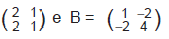 é a matriz nula de ordem 2.
II O número x = 250.320.530.710 é divisível por 310.
III Sendo x e y números reais não nulos, então . É correto afirmar que:
I O produto das matrizes A =
é a matriz nula de ordem 2.II O número x = 250.320.530.710 é divisível por 310.
III Sendo x e y números reais não nulos, então
. É correto afirmar que:
Q594192
Matemática

Q594191
Matemática
A soma de todos os números inteiros entre 50 e
350 que terminam em 3 é:
 Conheça nossos planos