Questões de Vestibular
Para fuvest
Foram encontradas 1.619 questões
Resolva questões gratuitamente!
Junte-se a mais de 4 milhões de concurseiros!


TEXTO PARA A QUESTÃO
Nasceu o dia e expirou.
Já brilha na cabana de Araquém o fogo, companheiro da noite. Correm lentas e silenciosas no azul do céu, as estrelas, filhas da lua, que esperam a volta da mãe ausente.
Martim se embala docemente; e como a alva rede que vai e vem, sua vontade oscila de um a outro pensamento. Lá o espera a virgem loura dos castos afetos; aqui lhe sorri a virgem morena dos ardentes amores.
Iracema recosta-se langue ao punho da rede; seus olhos negros e fúlgidos, ternos olhos de sabiá, buscam o estrangeiro, e lhe entram n’alma. O cristão sorri; a virgem palpita; como o saí, fascinado pela serpente, vai declinando o lascivo talhe, que se debruça enfim sobre o peito do guerreiro.
José de Alencar, Iracema.
TEXTO PARA A QUESTÃO
Nasceu o dia e expirou.
Já brilha na cabana de Araquém o fogo, companheiro da noite. Correm lentas e silenciosas no azul do céu, as estrelas, filhas da lua, que esperam a volta da mãe ausente.
Martim se embala docemente; e como a alva rede que vai e vem, sua vontade oscila de um a outro pensamento. Lá o espera a virgem loura dos castos afetos; aqui lhe sorri a virgem morena dos ardentes amores.
Iracema recosta-se langue ao punho da rede; seus olhos negros e fúlgidos, ternos olhos de sabiá, buscam o estrangeiro, e lhe entram n’alma. O cristão sorri; a virgem palpita; como o saí, fascinado pela serpente, vai declinando o lascivo talhe, que se debruça enfim sobre o peito do guerreiro.
José de Alencar, Iracema.
TEXTO PARA A QUESTÃO
A adoção do cardápio indígena introduziu nas cozinhas e zonas de serviço das moradas brasileiras equipamentos desconhecidos no Reino. Instalou nos alpendres roceiros a prensa de espremer mandioca ralada para farinha. Nos inventários paulistas é comum a menção de tal fato. No inventário de Pedro Nunes, por exemplo, efetuado em 1623, fala-se num sítio nas bandas do Ipiranga “com seu alpendre e duas camarinhas no dito alpendre com a prensa no dito sítio” que deveria comprimir nos tipitis toda a massa proveniente do mandiocal também inventariado. Mas a farinha não exigia somente a prensa – pedia, também, raladores, cochos de lavagem e forno ou fogão. Era normal, então, a casa de fazer farinha, no quintal, ao lado dos telheiros e próxima à cozinha.
Carlos A. C. Lemos, Cozinhas, etc.
TEXTO PARA A QUESTÃO
A adoção do cardápio indígena introduziu nas cozinhas e zonas de serviço das moradas brasileiras equipamentos desconhecidos no Reino. Instalou nos alpendres roceiros a prensa de espremer mandioca ralada para farinha. Nos inventários paulistas é comum a menção de tal fato. No inventário de Pedro Nunes, por exemplo, efetuado em 1623, fala-se num sítio nas bandas do Ipiranga “com seu alpendre e duas camarinhas no dito alpendre com a prensa no dito sítio” que deveria comprimir nos tipitis toda a massa proveniente do mandiocal também inventariado. Mas a farinha não exigia somente a prensa – pedia, também, raladores, cochos de lavagem e forno ou fogão. Era normal, então, a casa de fazer farinha, no quintal, ao lado dos telheiros e próxima à cozinha.
Carlos A. C. Lemos, Cozinhas, etc.
Examine este cartaz, cuja finalidade é divulgar uma exposição de obras de Pablo Picasso.

Nas expressões “Mão erudita” e “Olho selvagem”, que
compõem o texto do anúncio, os adjetivos “erudita” e
“selvagem” sugerem que as obras do referido artista
conjugam, respectivamente,
Working for on demand startups like Uber and TaskRabbit is supposed to offer flexible hours and higher wages, but many workers have found the pay lower and the hours less flexible than they expected. Even more surprising: 8 percent of those chauffeuring passengers and 16 percent of those making deliveries said they lack personal autoinsurance.
Those are among the findings from a survey about the work life of independent contractors for on-demand startups, a booming sector of the tech industry, being released Wednesday.
"We want to shed light on the industry as a whole," said Isaac Madan, a Stanford master's candidate in bioinformatics who worked with two other Stanford students and a recent alumnus on the survey of 1,330 workers. "People need to understand how this space will change and evolve and help the economy."
On-demand, often called the sharing economy, refers to companies that let users summon workers via smartphone apps to handle all manner of services: rides, cleaning, chores, deliveries, car parking, waiting in lines. Almost uniformly, those workers are independent contractors rather than salaried employees.
That status is the main point of contention in a recent rash of lawsuits in which workers are filing for employee status. While the survey did not directly ask
contractors if they would prefer to be employees, it found that their top workplace desires were to have paid health insurance, retirement benefits and paid time off for holidays, vacation and sick days - all perks of full time workers. Respondents also expressed interest in having more chances for advancement, education sponsorship, disability insurance and human relations support. Because respondents were recruited rather than randomly selected, the survey does not claim to be representational but a conclusion one may come to is that flexibility ofnew jobs comes with a cost. Not all workers are prepared for that!
SFChronicle.com and SFGate.com, May 20, 2015. Adaptado
Working for on demand startups like Uber and TaskRabbit is supposed to offer flexible hours and higher wages, but many workers have found the pay lower and the hours less flexible than they expected. Even more surprising: 8 percent of those chauffeuring passengers and 16 percent of those making deliveries said they lack personal autoinsurance.
Those are among the findings from a survey about the work life of independent contractors for on-demand startups, a booming sector of the tech industry, being released Wednesday.
"We want to shed light on the industry as a whole," said Isaac Madan, a Stanford master's candidate in bioinformatics who worked with two other Stanford students and a recent alumnus on the survey of 1,330 workers. "People need to understand how this space will change and evolve and help the economy."
On-demand, often called the sharing economy, refers to companies that let users summon workers via smartphone apps to handle all manner of services: rides, cleaning, chores, deliveries, car parking, waiting in lines. Almost uniformly, those workers are independent contractors rather than salaried employees.
That status is the main point of contention in a recent rash of lawsuits in which workers are filing for employee status. While the survey did not directly ask
contractors if they would prefer to be employees, it found that their top workplace desires were to have paid health insurance, retirement benefits and paid time off for holidays, vacation and sick days - all perks of full time workers. Respondents also expressed interest in having more chances for advancement, education sponsorship, disability insurance and human relations support. Because respondents were recruited rather than randomly selected, the survey does not claim to be representational but a conclusion one may come to is that flexibility ofnew jobs comes with a cost. Not all workers are prepared for that!
SFChronicle.com and SFGate.com, May 20, 2015. Adaptado
Working for on demand startups like Uber and TaskRabbit is supposed to offer flexible hours and higher wages, but many workers have found the pay lower and the hours less flexible than they expected. Even more surprising: 8 percent of those chauffeuring passengers and 16 percent of those making deliveries said they lack personal autoinsurance.
Those are among the findings from a survey about the work life of independent contractors for on-demand startups, a booming sector of the tech industry, being released Wednesday.
"We want to shed light on the industry as a whole," said Isaac Madan, a Stanford master's candidate in bioinformatics who worked with two other Stanford students and a recent alumnus on the survey of 1,330 workers. "People need to understand how this space will change and evolve and help the economy."
On-demand, often called the sharing economy, refers to companies that let users summon workers via smartphone apps to handle all manner of services: rides, cleaning, chores, deliveries, car parking, waiting in lines. Almost uniformly, those workers are independent contractors rather than salaried employees.
That status is the main point of contention in a recent rash of lawsuits in which workers are filing for employee status. While the survey did not directly ask
contractors if they would prefer to be employees, it found that their top workplace desires were to have paid health insurance, retirement benefits and paid time off for holidays, vacation and sick days - all perks of full time workers. Respondents also expressed interest in having more chances for advancement, education sponsorship, disability insurance and human relations support. Because respondents were recruited rather than randomly selected, the survey does not claim to be representational but a conclusion one may come to is that flexibility ofnew jobs comes with a cost. Not all workers are prepared for that!
SFChronicle.com and SFGate.com, May 20, 2015. Adaptado
Examine o gráfico.

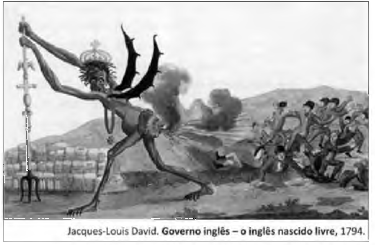
A imagem pode ser corretamente lida como uma
 Conheça nossos planos