Questões de Vestibular UNESP 2021 para Vestibular - Cursos das Áreas de Biológicas
Foram encontradas 90 questões


Ano: 2021
Banca:
VUNESP
Órgão:
UNESP
Prova:
VUNESP - 2021 - UNESP - Vestibular - Cursos das Áreas de Biológicas |
Q4204428
Inglês
Texto associado
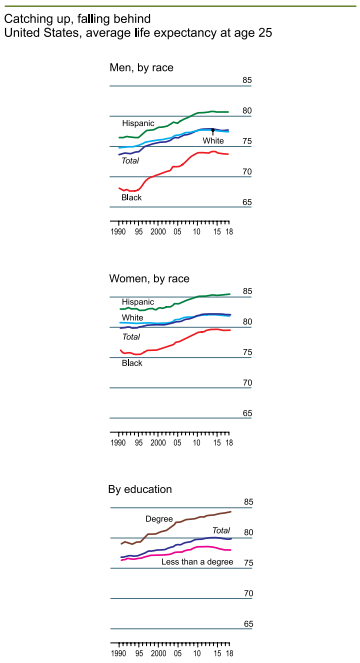
Examine os gráficos e leia o texto para responder à questão.
Educated Americans live longer, as others die younger
(Anne Case and Angus Deaton. “Life expectancy in adulthood is falling for
those without a BA degree, but as educational gaps have widened, racial
gaps have narrowed”. PNAS, 2021. Adaptado.)
A 25-year-old American with a university degree can
expect to live almost a decade longer than a contemporary who
dropped out of high school. Although researchers have long
known that the rich live longer than the poor, this education
gap is less well documented — and is especially marked in
rich countries. And whereas the average American’s expected
span has been flat in recent years — and, strikingly, even
fell between 2015 and 2017 — that of the one-third with a
bachelor’s degree has continued to lengthen.
This disparity in life expectancy is growing, according to
new research published in the Proceedings of the National
Academy of Sciences. Using data from nearly 50m death
certificates filed between 1990 and 2018, Anne Case and
Angus Deaton of Princeton University analysed differences
in life expectancy by sex, race, ethnicity and education. They
found that the lifespans of those with and without a bachelor’s
degree started to diverge in the 1990s and 2000s. This gap grew even wider in the 2010s as the life expectancy of
degree-holders continued to rise while that of other Americans
got shorter.
What is the link between schooling and longevity? Some
argue that better-educated people develop healthier lifestyles:
each additional year of study reduces the chances of being a
smoker and of being overweight. The better-educated earn
more, which in turn is associated with greater health. Ms
Case and Mr Deaton argue that changes in labour markets,
including the rise of automation and increased demand for
highly-educated workers, coupled with the rising costs of
employer-provided health care, have depressed the supply
of well-paid jobs for those without a degree. This may be
contributing to higher rates of alcohol and drug use, suicide
and other “deaths of despair”.
(www.economist.com,17.03.2021. Adaptado.)
The research the text and the graph are based on, concluded
that
Ano: 2021
Banca:
VUNESP
Órgão:
UNESP
Prova:
VUNESP - 2021 - UNESP - Vestibular - Cursos das Áreas de Biológicas |
Q4204429
Inglês
Texto associado
Examine os gráficos e leia o texto para responder à questão.
Educated Americans live longer, as others die younger
(Anne Case and Angus Deaton. “Life expectancy in adulthood is falling for
those without a BA degree, but as educational gaps have widened, racial
gaps have narrowed”. PNAS, 2021. Adaptado.)
A 25-year-old American with a university degree can
expect to live almost a decade longer than a contemporary who
dropped out of high school. Although researchers have long
known that the rich live longer than the poor, this education
gap is less well documented — and is especially marked in
rich countries. And whereas the average American’s expected
span has been flat in recent years — and, strikingly, even
fell between 2015 and 2017 — that of the one-third with a
bachelor’s degree has continued to lengthen.
This disparity in life expectancy is growing, according to
new research published in the Proceedings of the National
Academy of Sciences. Using data from nearly 50m death
certificates filed between 1990 and 2018, Anne Case and
Angus Deaton of Princeton University analysed differences
in life expectancy by sex, race, ethnicity and education. They
found that the lifespans of those with and without a bachelor’s
degree started to diverge in the 1990s and 2000s. This gap grew even wider in the 2010s as the life expectancy of
degree-holders continued to rise while that of other Americans
got shorter.
What is the link between schooling and longevity? Some
argue that better-educated people develop healthier lifestyles:
each additional year of study reduces the chances of being a
smoker and of being overweight. The better-educated earn
more, which in turn is associated with greater health. Ms
Case and Mr Deaton argue that changes in labour markets,
including the rise of automation and increased demand for
highly-educated workers, coupled with the rising costs of
employer-provided health care, have depressed the supply
of well-paid jobs for those without a degree. This may be
contributing to higher rates of alcohol and drug use, suicide
and other “deaths of despair”.
(www.economist.com,17.03.2021. Adaptado.)
As informações apresentadas no primeiro parágrafo sobre
a relação entre longevidade e educação estão mais bem
representadas
Ano: 2021
Banca:
VUNESP
Órgão:
UNESP
Prova:
VUNESP - 2021 - UNESP - Vestibular - Cursos das Áreas de Biológicas |
Q4204430
Inglês
Texto associado
Examine os gráficos e leia o texto para responder à questão.
Educated Americans live longer, as others die younger
(Anne Case and Angus Deaton. “Life expectancy in adulthood is falling for
those without a BA degree, but as educational gaps have widened, racial
gaps have narrowed”. PNAS, 2021. Adaptado.)
A 25-year-old American with a university degree can
expect to live almost a decade longer than a contemporary who
dropped out of high school. Although researchers have long
known that the rich live longer than the poor, this education
gap is less well documented — and is especially marked in
rich countries. And whereas the average American’s expected
span has been flat in recent years — and, strikingly, even
fell between 2015 and 2017 — that of the one-third with a
bachelor’s degree has continued to lengthen.
This disparity in life expectancy is growing, according to
new research published in the Proceedings of the National
Academy of Sciences. Using data from nearly 50m death
certificates filed between 1990 and 2018, Anne Case and
Angus Deaton of Princeton University analysed differences
in life expectancy by sex, race, ethnicity and education. They
found that the lifespans of those with and without a bachelor’s
degree started to diverge in the 1990s and 2000s. This gap grew even wider in the 2010s as the life expectancy of
degree-holders continued to rise while that of other Americans
got shorter.
What is the link between schooling and longevity? Some
argue that better-educated people develop healthier lifestyles:
each additional year of study reduces the chances of being a
smoker and of being overweight. The better-educated earn
more, which in turn is associated with greater health. Ms
Case and Mr Deaton argue that changes in labour markets,
including the rise of automation and increased demand for
highly-educated workers, coupled with the rising costs of
employer-provided health care, have depressed the supply
of well-paid jobs for those without a degree. This may be
contributing to higher rates of alcohol and drug use, suicide
and other “deaths of despair”.
(www.economist.com,17.03.2021. Adaptado.)
No trecho do primeiro parágrafo “And whereas the average
American’s expected span has been flat in recent years”, o
termo sublinhado pode ser substituído, sem alteração de
sentido, por
Ano: 2021
Banca:
VUNESP
Órgão:
UNESP
Prova:
VUNESP - 2021 - UNESP - Vestibular - Cursos das Áreas de Biológicas |
Q4204431
Inglês
Texto associado
Examine os gráficos e leia o texto para responder à questão.
Educated Americans live longer, as others die younger
(Anne Case and Angus Deaton. “Life expectancy in adulthood is falling for
those without a BA degree, but as educational gaps have widened, racial
gaps have narrowed”. PNAS, 2021. Adaptado.)
A 25-year-old American with a university degree can
expect to live almost a decade longer than a contemporary who
dropped out of high school. Although researchers have long
known that the rich live longer than the poor, this education
gap is less well documented — and is especially marked in
rich countries. And whereas the average American’s expected
span has been flat in recent years — and, strikingly, even
fell between 2015 and 2017 — that of the one-third with a
bachelor’s degree has continued to lengthen.
This disparity in life expectancy is growing, according to
new research published in the Proceedings of the National
Academy of Sciences. Using data from nearly 50m death
certificates filed between 1990 and 2018, Anne Case and
Angus Deaton of Princeton University analysed differences
in life expectancy by sex, race, ethnicity and education. They
found that the lifespans of those with and without a bachelor’s
degree started to diverge in the 1990s and 2000s. This gap grew even wider in the 2010s as the life expectancy of
degree-holders continued to rise while that of other Americans
got shorter.
What is the link between schooling and longevity? Some
argue that better-educated people develop healthier lifestyles:
each additional year of study reduces the chances of being a
smoker and of being overweight. The better-educated earn
more, which in turn is associated with greater health. Ms
Case and Mr Deaton argue that changes in labour markets,
including the rise of automation and increased demand for
highly-educated workers, coupled with the rising costs of
employer-provided health care, have depressed the supply
of well-paid jobs for those without a degree. This may be
contributing to higher rates of alcohol and drug use, suicide
and other “deaths of despair”.
(www.economist.com,17.03.2021. Adaptado.)
In the excerpt from the first paragraph “and, strikingly, even
fell between 2015 and 2017”, the underlined word means
Ano: 2021
Banca:
VUNESP
Órgão:
UNESP
Prova:
VUNESP - 2021 - UNESP - Vestibular - Cursos das Áreas de Biológicas |
Q4204432
Inglês
Texto associado
Examine os gráficos e leia o texto para responder à questão.
Educated Americans live longer, as others die younger
(Anne Case and Angus Deaton. “Life expectancy in adulthood is falling for
those without a BA degree, but as educational gaps have widened, racial
gaps have narrowed”. PNAS, 2021. Adaptado.)
A 25-year-old American with a university degree can
expect to live almost a decade longer than a contemporary who
dropped out of high school. Although researchers have long
known that the rich live longer than the poor, this education
gap is less well documented — and is especially marked in
rich countries. And whereas the average American’s expected
span has been flat in recent years — and, strikingly, even
fell between 2015 and 2017 — that of the one-third with a
bachelor’s degree has continued to lengthen.
This disparity in life expectancy is growing, according to
new research published in the Proceedings of the National
Academy of Sciences. Using data from nearly 50m death
certificates filed between 1990 and 2018, Anne Case and
Angus Deaton of Princeton University analysed differences
in life expectancy by sex, race, ethnicity and education. They
found that the lifespans of those with and without a bachelor’s
degree started to diverge in the 1990s and 2000s. This gap grew even wider in the 2010s as the life expectancy of
degree-holders continued to rise while that of other Americans
got shorter.
What is the link between schooling and longevity? Some
argue that better-educated people develop healthier lifestyles:
each additional year of study reduces the chances of being a
smoker and of being overweight. The better-educated earn
more, which in turn is associated with greater health. Ms
Case and Mr Deaton argue that changes in labour markets,
including the rise of automation and increased demand for
highly-educated workers, coupled with the rising costs of
employer-provided health care, have depressed the supply
of well-paid jobs for those without a degree. This may be
contributing to higher rates of alcohol and drug use, suicide
and other “deaths of despair”.
(www.economist.com,17.03.2021. Adaptado.)
No trecho do segundo parágrafo “while that of other
Americans got shorter”, o termo sublinhado refere-se a
Ano: 2021
Banca:
VUNESP
Órgão:
UNESP
Prova:
VUNESP - 2021 - UNESP - Vestibular - Cursos das Áreas de Biológicas |
Q4204433
Inglês
Texto associado
Examine os gráficos e leia o texto para responder à questão.
Educated Americans live longer, as others die younger
(Anne Case and Angus Deaton. “Life expectancy in adulthood is falling for
those without a BA degree, but as educational gaps have widened, racial
gaps have narrowed”. PNAS, 2021. Adaptado.)
A 25-year-old American with a university degree can
expect to live almost a decade longer than a contemporary who
dropped out of high school. Although researchers have long
known that the rich live longer than the poor, this education
gap is less well documented — and is especially marked in
rich countries. And whereas the average American’s expected
span has been flat in recent years — and, strikingly, even
fell between 2015 and 2017 — that of the one-third with a
bachelor’s degree has continued to lengthen.
This disparity in life expectancy is growing, according to
new research published in the Proceedings of the National
Academy of Sciences. Using data from nearly 50m death
certificates filed between 1990 and 2018, Anne Case and
Angus Deaton of Princeton University analysed differences
in life expectancy by sex, race, ethnicity and education. They
found that the lifespans of those with and without a bachelor’s
degree started to diverge in the 1990s and 2000s. This gap grew even wider in the 2010s as the life expectancy of
degree-holders continued to rise while that of other Americans
got shorter.
What is the link between schooling and longevity? Some
argue that better-educated people develop healthier lifestyles:
each additional year of study reduces the chances of being a
smoker and of being overweight. The better-educated earn
more, which in turn is associated with greater health. Ms
Case and Mr Deaton argue that changes in labour markets,
including the rise of automation and increased demand for
highly-educated workers, coupled with the rising costs of
employer-provided health care, have depressed the supply
of well-paid jobs for those without a degree. This may be
contributing to higher rates of alcohol and drug use, suicide
and other “deaths of despair”.
(www.economist.com,17.03.2021. Adaptado.)
According to the third paragraph, better-educated people
Ano: 2021
Banca:
VUNESP
Órgão:
UNESP
Prova:
VUNESP - 2021 - UNESP - Vestibular - Cursos das Áreas de Biológicas |
Q4204434
Inglês
Texto associado
Examine os gráficos e leia o texto para responder à questão.
Educated Americans live longer, as others die younger
(Anne Case and Angus Deaton. “Life expectancy in adulthood is falling for
those without a BA degree, but as educational gaps have widened, racial
gaps have narrowed”. PNAS, 2021. Adaptado.)
A 25-year-old American with a university degree can
expect to live almost a decade longer than a contemporary who
dropped out of high school. Although researchers have long
known that the rich live longer than the poor, this education
gap is less well documented — and is especially marked in
rich countries. And whereas the average American’s expected
span has been flat in recent years — and, strikingly, even
fell between 2015 and 2017 — that of the one-third with a
bachelor’s degree has continued to lengthen.
This disparity in life expectancy is growing, according to
new research published in the Proceedings of the National
Academy of Sciences. Using data from nearly 50m death
certificates filed between 1990 and 2018, Anne Case and
Angus Deaton of Princeton University analysed differences
in life expectancy by sex, race, ethnicity and education. They
found that the lifespans of those with and without a bachelor’s
degree started to diverge in the 1990s and 2000s. This gap grew even wider in the 2010s as the life expectancy of
degree-holders continued to rise while that of other Americans
got shorter.
What is the link between schooling and longevity? Some
argue that better-educated people develop healthier lifestyles:
each additional year of study reduces the chances of being a
smoker and of being overweight. The better-educated earn
more, which in turn is associated with greater health. Ms
Case and Mr Deaton argue that changes in labour markets,
including the rise of automation and increased demand for
highly-educated workers, coupled with the rising costs of
employer-provided health care, have depressed the supply
of well-paid jobs for those without a degree. This may be
contributing to higher rates of alcohol and drug use, suicide
and other “deaths of despair”.
(www.economist.com,17.03.2021. Adaptado.)
No trecho do terceiro parágrafo “The better-educated
earn more, which in turn is associated with”, a expressão
sublinhada equivale, em português, a
Ano: 2021
Banca:
VUNESP
Órgão:
UNESP
Prova:
VUNESP - 2021 - UNESP - Vestibular - Cursos das Áreas de Biológicas |
Q4204435
Inglês
Texto associado
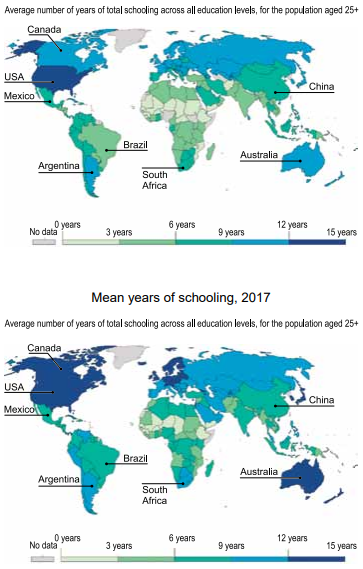
Examine os mapas que apresentam a média de anos de
escolaridade para a população de 25 anos ou mais, do ano
2000 e do ano 2017, para responder à questão.
Mean years of schooling, 2000
(https://ourworldindata.org. Adapted.)
After comparing both maps, one can say that:
Ano: 2021
Banca:
VUNESP
Órgão:
UNESP
Prova:
VUNESP - 2021 - UNESP - Vestibular - Cursos das Áreas de Biológicas |
Q4204436
Inglês
Texto associado
Leia a tira para responder à questão.
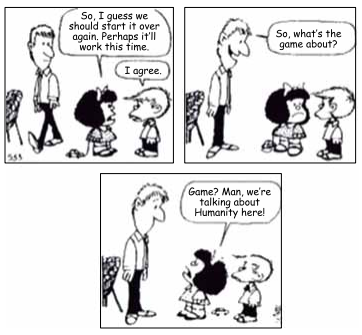
(https://thebrickinthesky.wordpress.com)
From the comic strip, one can say that
Ano: 2021
Banca:
VUNESP
Órgão:
UNESP
Prova:
VUNESP - 2021 - UNESP - Vestibular - Cursos das Áreas de Biológicas |
Q4204437
Inglês
Texto associado
Leia a tira para responder à questão.
(https://thebrickinthesky.wordpress.com)
No trecho do primeiro quadrinho “I guess we should start it
over again”, o termo sublinhado pode ser substituído, sem
alteração de sentido, por
Ano: 2021
Banca:
VUNESP
Órgão:
UNESP
Prova:
VUNESP - 2021 - UNESP - Vestibular - Cursos das Áreas de Biológicas |
Q4204438
História
Roma não era apenas o parente mais violento da Grécia
Clássica, não estava apenas comprometida com engenharia,
eficiência militar e absolutismo, enquanto os gregos haviam
preferido a especulação intelectual, o teatro e a democracia.
(Mary Beard. SPQR: uma história da Roma antiga. São Paulo, 2017. Adaptado.)
O excerto critica os estereótipos de Roma e Grécia antigas. Essa crítica justifica-se, pois
(Mary Beard. SPQR: uma história da Roma antiga. São Paulo, 2017. Adaptado.)
O excerto critica os estereótipos de Roma e Grécia antigas. Essa crítica justifica-se, pois
Ano: 2021
Banca:
VUNESP
Órgão:
UNESP
Prova:
VUNESP - 2021 - UNESP - Vestibular - Cursos das Áreas de Biológicas |
Q4204439
História
A migração de Maomé e seus seguidores para Medina, em
622, marca a
Ano: 2021
Banca:
VUNESP
Órgão:
UNESP
Prova:
VUNESP - 2021 - UNESP - Vestibular - Cursos das Áreas de Biológicas |
Q4204440
História
Depois do estabelecimento do caminho marítimo para as
Índias por Vasco da Gama em 1499, a Coroa portuguesa logo
preparou nova expedição, tendo como base as informações
recolhidas pelo navegante. E essa era mesmo a melhor saída
para o pequenino reino português, que ficava justamente na
boca do Atlântico.
(Lilia M. Schwarcz e Heloisa M. Starling. Brasil: uma biografia, 2018.)
Além do motivo apresentado no excerto, contribuíram para que Portugal se lançasse à expansão marítima
(Lilia M. Schwarcz e Heloisa M. Starling. Brasil: uma biografia, 2018.)
Além do motivo apresentado no excerto, contribuíram para que Portugal se lançasse à expansão marítima
Ano: 2021
Banca:
VUNESP
Órgão:
UNESP
Prova:
VUNESP - 2021 - UNESP - Vestibular - Cursos das Áreas de Biológicas |
Q4204441
História
Os povos que viviam nas terras conquistadas pelos portugueses na América
Ano: 2021
Banca:
VUNESP
Órgão:
UNESP
Prova:
VUNESP - 2021 - UNESP - Vestibular - Cursos das Áreas de Biológicas |
Q4204442
História
[...] as irmandades de negros eram espaços permitidos
dentro da legalidade, nos quais o escravo podia manifestar-
-se fora de suas relações de trabalho. [...] Em certo sentido,
era através da religião católica que o escravo encontrava algum lenitivo para sua situação. Tudo indica que a permissão
para a criação das irmandades de negros tenha sido dada
com o intuito de obter melhores resultados na cristianização
dos escravos [...].
Paradoxalmente, os negros utilizaram as irmandades para resguardar valores culturais, em especial suas crenças religiosas. [...] Tudo leva a crer que, a partir da realidade vivida naquela época, bem como considerando as dificuldades, o negro recriou e reinterpretou a cultura dominante, adequando-a à sua maneira de ser.
(Ana Lúcia Valente. “As irmandades de negros: resistência e repressão”. In: Horizonte, v. 9, no 21, 2011.)
Segundo o excerto, as irmandades religiosas de negros, no Brasil colonial, eram
Paradoxalmente, os negros utilizaram as irmandades para resguardar valores culturais, em especial suas crenças religiosas. [...] Tudo leva a crer que, a partir da realidade vivida naquela época, bem como considerando as dificuldades, o negro recriou e reinterpretou a cultura dominante, adequando-a à sua maneira de ser.
(Ana Lúcia Valente. “As irmandades de negros: resistência e repressão”. In: Horizonte, v. 9, no 21, 2011.)
Segundo o excerto, as irmandades religiosas de negros, no Brasil colonial, eram
Ano: 2021
Banca:
VUNESP
Órgão:
UNESP
Prova:
VUNESP - 2021 - UNESP - Vestibular - Cursos das Áreas de Biológicas |
Q4204443
História
Observe a imagem, que é uma parte da gravura “Luís XIV
como imperador romano”, de Charles Perrault, 1670.
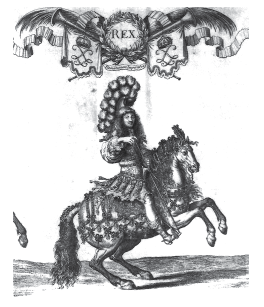
(Apud: Peter Burke. A fabricação do rei: a construção da imagem pública de Luís XIV, 2009.)
A imagem associa a França do século XVII à Roma Antiga,
(Apud: Peter Burke. A fabricação do rei: a construção da imagem pública de Luís XIV, 2009.)
A imagem associa a França do século XVII à Roma Antiga,
Ano: 2021
Banca:
VUNESP
Órgão:
UNESP
Prova:
VUNESP - 2021 - UNESP - Vestibular - Cursos das Áreas de Biológicas |
Q4204444
História
O luxo e a corrupção nasceram entre nós antes da civilização e da indústria. E qual será a causa principal de um
fenômeno tão espantoso? A escravidão, senhores, a escravidão. Porque o homem que conta com os trabalhos diários de
seus escravos vive na indolência, e a indolência traz todos os
vícios após si.
(José Bonifácio de Andrada e Silva, 1825. Apud: Ynaê Lopes dos Santos. História da África e do Brasil afrodescendente, 2017. Adaptado.)
A manifestação de uma das principais lideranças do país, logo após a independência política, revela a
(José Bonifácio de Andrada e Silva, 1825. Apud: Ynaê Lopes dos Santos. História da África e do Brasil afrodescendente, 2017. Adaptado.)
A manifestação de uma das principais lideranças do país, logo após a independência política, revela a
Ano: 2021
Banca:
VUNESP
Órgão:
UNESP
Prova:
VUNESP - 2021 - UNESP - Vestibular - Cursos das Áreas de Biológicas |
Q4204445
História
Os únicos países africanos não colonizados por potências
europeias no século XIX foram
Ano: 2021
Banca:
VUNESP
Órgão:
UNESP
Prova:
VUNESP - 2021 - UNESP - Vestibular - Cursos das Áreas de Biológicas |
Q4204446
História
O crescimento urbano, ao criar um mercado potencial
mais amplo, estimulou igualmente o crescimento das indústrias artesanais e de algumas fábricas que empregavam uma
força de trabalho concentrada [...].
Deixando de lado as características peculiares dessa sociedade urbana em expansão, a razão para a crescente debilidade de qualquer expressão política especificamente urbana era a posição peculiar da cidade no sistema econômico e fiscal, consolidado pelo contínuo progresso do setor com base na exportação de produtos agrícolas e pecuários.
(Tulio Halperín Donghi. “A economia e a sociedade na América espanhola do pós-independência”. In: Leslie Bethell (org.). História da América Latina, v. 3, 2004.)
O excerto apresenta uma experiência histórica vivida por alguns países hispano-americanos, e também pelo Brasil, entre as últimas décadas do século XIX e as primeiras do XX. Tal situação
Deixando de lado as características peculiares dessa sociedade urbana em expansão, a razão para a crescente debilidade de qualquer expressão política especificamente urbana era a posição peculiar da cidade no sistema econômico e fiscal, consolidado pelo contínuo progresso do setor com base na exportação de produtos agrícolas e pecuários.
(Tulio Halperín Donghi. “A economia e a sociedade na América espanhola do pós-independência”. In: Leslie Bethell (org.). História da América Latina, v. 3, 2004.)
O excerto apresenta uma experiência histórica vivida por alguns países hispano-americanos, e também pelo Brasil, entre as últimas décadas do século XIX e as primeiras do XX. Tal situação
Ano: 2021
Banca:
VUNESP
Órgão:
UNESP
Prova:
VUNESP - 2021 - UNESP - Vestibular - Cursos das Áreas de Biológicas |
Q4204447
História
Gerações inteiras criaram-se à sombra de batalhas nucleares globais que, acreditava-se firmemente, podiam estourar a qualquer momento, e devastar a humanidade. [...]
A peculiaridade da Guerra Fria era a de que, em termos objetivos, não existia perigo iminente de guerra mundial.
(Eric Hobsbawm. Era dos extremos: o breve século XX: 1914-1991, 1995.)
A contradição entre os dois parágrafos do excerto justifica-se, pois havia
A peculiaridade da Guerra Fria era a de que, em termos objetivos, não existia perigo iminente de guerra mundial.
(Eric Hobsbawm. Era dos extremos: o breve século XX: 1914-1991, 1995.)
A contradição entre os dois parágrafos do excerto justifica-se, pois havia

 Conheça nossos planos