Questões de Vestibular UFU-MG 2010 para Vestibular, Prova 002
Foram encontradas 50 questões


Q1261377
Inglês
Texto associado
School Sports Injuries: 9 Prevention Tips
Reduce the risk of sports injuries with these essential guidelines.
Sports medicine doctors offer these tips to help reduce the number of youth sports injuries:
1. Warm-up and cool down properly. Warm-up exercises, such as stretching and light jogging, can help minimize the chance of muscle strain or other soft tissue injury and make the body’s tissues warmer and more flexible. Cooling down exercises loosen the body’s muscles that have tightened during exercise. Make warm-ups and cool downs part of your kids’ routine before and after sports participation.
2. Know and abide by the rules of the sport. Kids should also be instructed in how to use the sport’s athletic equipment properly.
3. Avoid playing when very tired or in pain. Children should take a break immediately if in pain.
4. Be in proper physical condition to play the sport. Before starting a sport, have your child work out to prepare.
5. Keep kids hydrated. Make sure there is adequate water or other liquids to maintain proper hydration. Kids need to drink 8 ounces of fluid every 20 minutes, plus more after playing.
6. Wear appropriate protective gear, such as shin guards for soccer, a hard-shell helmet when facing a baseball or softball pitcher, a helmet and body padding for ice hockey. Make sure your child uses the proper protective gear for a particular sport. This may lessen the chances of being injured.
7. Make sure the coach is certified. Enroll your child in organized sports through schools, community clubs, and recreation areas where there may be adults who are certified coaches. Ask about the coach’s background and training.
8. Get a preseason physical examination. Kids should have a thorough exam from a physician before participating in sports, including a cardiovascular workup to make sure there are no pre-existing conditions.
9. Insist on a team emergency plan. What happens if a child is injured? Where’s the first-aid kit? Who drives to the hospital? Make sure any injured child sees a doctor right away.
Extracted from The Reader’s Digest, 2010.
Com base no texto, pode-se afirmar que:
I - If kids warm up before exercising, they will never have any problems like muscle strain or other tissue injury. II - Wearing protective gear will eliminate the possibility of muscle strain. III - Providing children with proper hydration is crucial to avoid problems during and after sport practice. IV - Kids should undergo a health check-up before sport practice.
Assinale a alternativa que contém somente afirmativas corretas.
I - If kids warm up before exercising, they will never have any problems like muscle strain or other tissue injury. II - Wearing protective gear will eliminate the possibility of muscle strain. III - Providing children with proper hydration is crucial to avoid problems during and after sport practice. IV - Kids should undergo a health check-up before sport practice.
Assinale a alternativa que contém somente afirmativas corretas.
Q1261378
Inglês
Texto associado
School Sports Injuries: 9 Prevention Tips
Reduce the risk of sports injuries with these essential guidelines.
Sports medicine doctors offer these tips to help reduce the number of youth sports injuries:
1. Warm-up and cool down properly. Warm-up exercises, such as stretching and light jogging, can help minimize the chance of muscle strain or other soft tissue injury and make the body’s tissues warmer and more flexible. Cooling down exercises loosen the body’s muscles that have tightened during exercise. Make warm-ups and cool downs part of your kids’ routine before and after sports participation.
2. Know and abide by the rules of the sport. Kids should also be instructed in how to use the sport’s athletic equipment properly.
3. Avoid playing when very tired or in pain. Children should take a break immediately if in pain.
4. Be in proper physical condition to play the sport. Before starting a sport, have your child work out to prepare.
5. Keep kids hydrated. Make sure there is adequate water or other liquids to maintain proper hydration. Kids need to drink 8 ounces of fluid every 20 minutes, plus more after playing.
6. Wear appropriate protective gear, such as shin guards for soccer, a hard-shell helmet when facing a baseball or softball pitcher, a helmet and body padding for ice hockey. Make sure your child uses the proper protective gear for a particular sport. This may lessen the chances of being injured.
7. Make sure the coach is certified. Enroll your child in organized sports through schools, community clubs, and recreation areas where there may be adults who are certified coaches. Ask about the coach’s background and training.
8. Get a preseason physical examination. Kids should have a thorough exam from a physician before participating in sports, including a cardiovascular workup to make sure there are no pre-existing conditions.
9. Insist on a team emergency plan. What happens if a child is injured? Where’s the first-aid kit? Who drives to the hospital? Make sure any injured child sees a doctor right away.
Extracted from The Reader’s Digest, 2010.
De acordo com o texto, todas as alternativas abaixo são verdadeiras, EXCETO:
Q1261379
Inglês
Texto associado
School Sports Injuries: 9 Prevention Tips
Reduce the risk of sports injuries with these essential guidelines.
Sports medicine doctors offer these tips to help reduce the number of youth sports injuries:
1. Warm-up and cool down properly. Warm-up exercises, such as stretching and light jogging, can help minimize the chance of muscle strain or other soft tissue injury and make the body’s tissues warmer and more flexible. Cooling down exercises loosen the body’s muscles that have tightened during exercise. Make warm-ups and cool downs part of your kids’ routine before and after sports participation.
2. Know and abide by the rules of the sport. Kids should also be instructed in how to use the sport’s athletic equipment properly.
3. Avoid playing when very tired or in pain. Children should take a break immediately if in pain.
4. Be in proper physical condition to play the sport. Before starting a sport, have your child work out to prepare.
5. Keep kids hydrated. Make sure there is adequate water or other liquids to maintain proper hydration. Kids need to drink 8 ounces of fluid every 20 minutes, plus more after playing.
6. Wear appropriate protective gear, such as shin guards for soccer, a hard-shell helmet when facing a baseball or softball pitcher, a helmet and body padding for ice hockey. Make sure your child uses the proper protective gear for a particular sport. This may lessen the chances of being injured.
7. Make sure the coach is certified. Enroll your child in organized sports through schools, community clubs, and recreation areas where there may be adults who are certified coaches. Ask about the coach’s background and training.
8. Get a preseason physical examination. Kids should have a thorough exam from a physician before participating in sports, including a cardiovascular workup to make sure there are no pre-existing conditions.
9. Insist on a team emergency plan. What happens if a child is injured? Where’s the first-aid kit? Who drives to the hospital? Make sure any injured child sees a doctor right away.
Extracted from The Reader’s Digest, 2010.
A frase “Make sure the coach is certified” poderia ser melhor substituída, neste contexto, por:
Q1261380
Inglês
Texto associado
School Sports Injuries: 9 Prevention Tips
Reduce the risk of sports injuries with these essential guidelines.
Sports medicine doctors offer these tips to help reduce the number of youth sports injuries:
1. Warm-up and cool down properly. Warm-up exercises, such as stretching and light jogging, can help minimize the chance of muscle strain or other soft tissue injury and make the body’s tissues warmer and more flexible. Cooling down exercises loosen the body’s muscles that have tightened during exercise. Make warm-ups and cool downs part of your kids’ routine before and after sports participation.
2. Know and abide by the rules of the sport. Kids should also be instructed in how to use the sport’s athletic equipment properly.
3. Avoid playing when very tired or in pain. Children should take a break immediately if in pain.
4. Be in proper physical condition to play the sport. Before starting a sport, have your child work out to prepare.
5. Keep kids hydrated. Make sure there is adequate water or other liquids to maintain proper hydration. Kids need to drink 8 ounces of fluid every 20 minutes, plus more after playing.
6. Wear appropriate protective gear, such as shin guards for soccer, a hard-shell helmet when facing a baseball or softball pitcher, a helmet and body padding for ice hockey. Make sure your child uses the proper protective gear for a particular sport. This may lessen the chances of being injured.
7. Make sure the coach is certified. Enroll your child in organized sports through schools, community clubs, and recreation areas where there may be adults who are certified coaches. Ask about the coach’s background and training.
8. Get a preseason physical examination. Kids should have a thorough exam from a physician before participating in sports, including a cardiovascular workup to make sure there are no pre-existing conditions.
9. Insist on a team emergency plan. What happens if a child is injured? Where’s the first-aid kit? Who drives to the hospital? Make sure any injured child sees a doctor right away.
Extracted from The Reader’s Digest, 2010.
Todas as alternativas abaixo estão corretas, EXCETO:
Q1261381
Inglês
Texto associado
School Sports Injuries: 9 Prevention Tips
Reduce the risk of sports injuries with these essential guidelines.
Sports medicine doctors offer these tips to help reduce the number of youth sports injuries:
1. Warm-up and cool down properly. Warm-up exercises, such as stretching and light jogging, can help minimize the chance of muscle strain or other soft tissue injury and make the body’s tissues warmer and more flexible. Cooling down exercises loosen the body’s muscles that have tightened during exercise. Make warm-ups and cool downs part of your kids’ routine before and after sports participation.
2. Know and abide by the rules of the sport. Kids should also be instructed in how to use the sport’s athletic equipment properly.
3. Avoid playing when very tired or in pain. Children should take a break immediately if in pain.
4. Be in proper physical condition to play the sport. Before starting a sport, have your child work out to prepare.
5. Keep kids hydrated. Make sure there is adequate water or other liquids to maintain proper hydration. Kids need to drink 8 ounces of fluid every 20 minutes, plus more after playing.
6. Wear appropriate protective gear, such as shin guards for soccer, a hard-shell helmet when facing a baseball or softball pitcher, a helmet and body padding for ice hockey. Make sure your child uses the proper protective gear for a particular sport. This may lessen the chances of being injured.
7. Make sure the coach is certified. Enroll your child in organized sports through schools, community clubs, and recreation areas where there may be adults who are certified coaches. Ask about the coach’s background and training.
8. Get a preseason physical examination. Kids should have a thorough exam from a physician before participating in sports, including a cardiovascular workup to make sure there are no pre-existing conditions.
9. Insist on a team emergency plan. What happens if a child is injured? Where’s the first-aid kit? Who drives to the hospital? Make sure any injured child sees a doctor right away.
Extracted from The Reader’s Digest, 2010.
Todas as ações abaixo contribuem para a ocorrência de ferimentos e contusões relacionadas à prática esportiva,
EXCETO:
Q1261382
Inglês
Com base no texto, pode-se afirmar que:
I - The Olympic games today are much more important than they were in the past. II - Athletes were admired by people who came to see them from all over Greece. III - Ancient Greek men preferred to watch The Olympic games at Delphi and Nemea. IV - People could travel to Olympia to watch the Olympic sports even at war times.
Assinale a alternativa que contém somente afirmativas corretas.
I - The Olympic games today are much more important than they were in the past. II - Athletes were admired by people who came to see them from all over Greece. III - Ancient Greek men preferred to watch The Olympic games at Delphi and Nemea. IV - People could travel to Olympia to watch the Olympic sports even at war times.
Assinale a alternativa que contém somente afirmativas corretas.
Q1261383
Inglês
Com base no texto, pode-se afirmar que
I - although the trip to the Olympic games was not long, it was considerably dangerous. II - only unmarried women could attend the Olympic games if they were sponsored by an individual. III - the origins of the Olympic games are related to the honoring of ancient Greek Gods. IV - similarly to modern Athletes, ancient Olympic competitors had to arrive earlier in Olympia to train for the Olympic games.
Assinale a alternativa que contém somente afirmativas corretas.
I - although the trip to the Olympic games was not long, it was considerably dangerous. II - only unmarried women could attend the Olympic games if they were sponsored by an individual. III - the origins of the Olympic games are related to the honoring of ancient Greek Gods. IV - similarly to modern Athletes, ancient Olympic competitors had to arrive earlier in Olympia to train for the Olympic games.
Assinale a alternativa que contém somente afirmativas corretas.
Q1261384
Inglês
Assinale a alternativa correta.
Q1261385
Português
De acordo com o texto, todos os itens abaixo eram possíveis premiações dos vencedores dos jogos olímpicos,
EXCETO:
Q1261386
História
Pode-se afirmar que a prática dos esportes na Grécia Antiga
I - fazia parte do cotidiano de muitas pessoas. II - contribuía para a saúde física e mental dos gregos. III - estimulava a participação de atletas nas guerras. IV - constituía evento cultural importante a cada quatro anos.
Assinale a alternativa correta.
I - fazia parte do cotidiano de muitas pessoas. II - contribuía para a saúde física e mental dos gregos. III - estimulava a participação de atletas nas guerras. IV - constituía evento cultural importante a cada quatro anos.
Assinale a alternativa correta.
Q1261387
Matemática
Um time de voleibol possui um plantel formado por jovens atletas, contendo x pessoas cuja média aritmética das
idades é de 20 anos. O presidente do time resolveu contratar um técnico e um preparador físico experientes,
coincidentemente, ambos com 50 anos. Sabendo que, com a entrada destas duas novas pessoas no plantel, a nova
média das idades passou para 24 anos, pode-se afirmar que
Q1261388
Matemática
Existem alguns esportes em que a sensação de liberdade e perigo convivem lado a lado. Este é o caso do esqui na
neve. Suponha que um esquiador, ao descer uma montanha, seja surpreendido por uma avalanche que o soterra totalmente.
A partir do instante em que ocorreu o soterramento, a temperatura de seu corpo decresce ao longo do tempo t (em horas),
segundo a função T(t) dada por
T(t) = 3t + 36/3t ( T em graus Celsius), com t > 0.
Quando a equipe de salvamento o encontra, já sem vida, a temperatura de seu corpo é de 12 graus Celsius. De acordo com as condições dadas, pode-se afirmar que ele ficou soterrado por, aproximadamente,
(Utilize a aproximação log3 2 = 6 )
T(t) = 3t + 36/3t ( T em graus Celsius), com t > 0.
Quando a equipe de salvamento o encontra, já sem vida, a temperatura de seu corpo é de 12 graus Celsius. De acordo com as condições dadas, pode-se afirmar que ele ficou soterrado por, aproximadamente,
(Utilize a aproximação log3 2 = 6 )
Q1261389
Matemática
Considere o polinômio de variável real p (x)= (x-1). (x2 -2). (x3-4). (x4-8). (x5-16) ... (x15 -16384).
Então, o grau de p e o valor de p(2) são, respectivamente
Então, o grau de p e o valor de p(2) são, respectivamente
Q1261390
Matemática
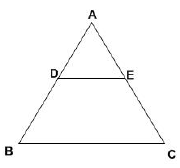
No triângulo ABC abaixo, o segmento DE é paralelo ao segmento BC. Sabe-se que BC mede 4 cm,  e que
a medida do ângulo
e que
a medida do ângulo  é igual a 30º. Nestas condições, a distância (em cm) do segmento DE ao vértice A, para que o
triângulo ADE e o trapézio DBCE tenham a mesma área, é igual a:
é igual a 30º. Nestas condições, a distância (em cm) do segmento DE ao vértice A, para que o
triângulo ADE e o trapézio DBCE tenham a mesma área, é igual a:
e que
a medida do ângulo é igual a 30º. Nestas condições, a distância (em cm) do segmento DE ao vértice A, para que o
triângulo ADE e o trapézio DBCE tenham a mesma área, é igual a:
Q1261391
Matemática
Uma agência de viagens decidiu presentear cada pessoa que comprou uma passagem, no mês de março, para
assistir aos jogos da Copa do Mundo de 2010. O brinde oferecido consistia de uma minibola de futebol, pintada com as
cores da bandeira da África do Sul e embalada em uma caixa de presente. Assuma que a caixa (com tampa) tenha o
formato de um cubo, a minibola tenha o formato de uma esfera e que esteja perfeitamente inscrita na caixa.
Sabe-se que:
1 - A agência vendeu 50 passagens em março, destinadas a pessoas que fossem assistir aos jogos; 2 - A fábrica que produziu a minibola e a caixa estimou seus custos na produção de cada unidade. Desta forma, cobrou de cada caixa o valor equivalente a R$ 0,01 por cm2 de sua área e, de cada minibola, o valor equivalente a R$ 0,02 por cm2 de sua área.
Se a diagonal da caixa mede √300 cm, utilizando a aproximação π = 3,1, pode-se afirmar que o gasto aproximado da agência com todos os brindes ofertados em março foi de:
Sabe-se que:
1 - A agência vendeu 50 passagens em março, destinadas a pessoas que fossem assistir aos jogos; 2 - A fábrica que produziu a minibola e a caixa estimou seus custos na produção de cada unidade. Desta forma, cobrou de cada caixa o valor equivalente a R$ 0,01 por cm2 de sua área e, de cada minibola, o valor equivalente a R$ 0,02 por cm2 de sua área.
Se a diagonal da caixa mede √300 cm, utilizando a aproximação π = 3,1, pode-se afirmar que o gasto aproximado da agência com todos os brindes ofertados em março foi de:
Q1261392
Matemática
Considere as duas afirmações a seguir:
I - A soma das soluções da equação , sen(x) = cos(x), com x e [0, 3π] é igual a 9π/4.
II - Se α e β são ângulos tais que 180°< α < 270° e -90°< β < 90° , então sen (β).tg(β). cos(α) < 0.
Com base nestas afirmações, assinale a alternativa correta.
I - A soma das soluções da equação , sen(x) = cos(x), com x e [0, 3π] é igual a 9π/4.
II - Se α e β são ângulos tais que 180°< α < 270° e -90°< β < 90° , então sen (β).tg(β). cos(α) < 0.
Com base nestas afirmações, assinale a alternativa correta.
Q1261393
Matemática
Uma equipe de natação, composta por 8 atletas (6 homens e 2 mulheres), ficará hospedada no sexto andar de um
hotel durante a realização de um torneio de natação. Este andar possui oito quartos numerados e dispostos de forma
circular, conforme a figura abaixo. Sabendo que os atletas ficarão em quartos individuais e que as mulheres não ficarão em
quartos adjacentes, então o número de maneiras distintas de alocar estes atletas nestes oito quartos é igual a:

Q1261394
Matemática
Considere as funções f : IR = {2} → IR e g : IR → IR e dadas por f (x) = x - 2 / [x-2] e g(x) = |x-3| .
O valor numérico da área da região delimitada pelas retas x = -1, x = 1, y = 5 e pelo gráfico da função composta gof é igual a:
O valor numérico da área da região delimitada pelas retas x = -1, x = 1, y = 5 e pelo gráfico da função composta gof é igual a:
Q1261395
Matemática
Considere o sistema linear S, descrito abaixo em termos matriciais, onde x e y são variáveis reais:
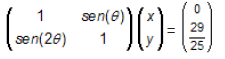
Sabendo que (x, y) = (- 4, 5) é uma solução de S, pode-se afirmar que tg(θ) é igual a:
Sabendo que (x, y) = (- 4, 5) é uma solução de S, pode-se afirmar que tg(θ) é igual a:
Q1261396
Matemática
O “bocha” é um esporte trazido ao Brasil pelos imigrantes italianos. Ele consiste no lançamento de “bochas” (bolas),
a partir de uma região delimitada, para situá-las o mais próximo possível de um “bolim” (bola pequena) previamente
lançado. A “cancha”, local onde o jogo é praticado, é uma espécie de raia e pode ser interpretada como uma porção de um
plano, o qual assumiremos estar munido de um sistema de coordenadas cartesianas xOy.
Sabe-se que:
1 - O bolim está localizado no ponto A = ( 2, - 4 ).
2 - Uma bocha já arremessada está localizada no ponto B = ( -1, 1 ).
Um jogador deseja arremessar uma nova bocha que deverá colidir com a bocha em B, empurrando-a para próximo do bolim em A. Para facilitar o seu arremesso, ele busca posicionar-se na cancha em um ponto C, de maneira que A, B e C estejam alinhados. Se C = ( h, 2 ), então, de acordo com as condições dadas, pode-se afirmar que:
Sabe-se que:
1 - O bolim está localizado no ponto A = ( 2, - 4 ).
2 - Uma bocha já arremessada está localizada no ponto B = ( -1, 1 ).
Um jogador deseja arremessar uma nova bocha que deverá colidir com a bocha em B, empurrando-a para próximo do bolim em A. Para facilitar o seu arremesso, ele busca posicionar-se na cancha em um ponto C, de maneira que A, B e C estejam alinhados. Se C = ( h, 2 ), então, de acordo com as condições dadas, pode-se afirmar que:

 Conheça nossos planos