Questões de Vestibular Comentadas sobre inglês
Foram encontradas 2.807 questões


Considere o cartoon a seguir para responder à questão:

(https://latuffcartoons.wordpress.com/page/2/ acesso em 19/03/2015)
Segundo o contexto da charge, o presidente estadunidense, representado pelo personagem de terno,
Every year, Doctors Without Borders/Médecins Sans Frontières (MSF) provides emergency medical care to millions of people caught in crises in some 70 countries around the world. MSF provides assistance when catastrophic events—such as armed conflict, epidemics, malnutrition, or natural disasters—overwhelm local health systems. MSF also assists people who face discrimination or neglect from their local health systems or when populations are otherwise excluded from health care.
MSF is a neutral and impartial humanitarian organization that aims first and foremost to provide high-quality medical care to the people who need it the most. It does not promote the agenda of any country, political party, or religious faith, and, as such, endeavors to communicate its history, background, and capabilities to all parties in a given situation so that it may gain the necessary access to populations in need.
On any given day, more than 30,000 doctors, nurses, logisticians, water-and-sanitation experts, administrators, and other qualified professionals working with MSF can be found providing medical care around the world.
At its core, the purpose of humanitarian action is to save the lives and ease the suffering of people caught in acute crises, thereby restoring their ability to rebuild their lives and communities.
In the countries where MSF works, one or more of the following crises is usually occurring or has occurred: armed conflict, epidemics, malnutrition, natural disasters, or exclusion from health care.
Every year, Doctors Without Borders/Médecins Sans Frontières (MSF) provides emergency medical care to millions of people caught in crises in some 70 countries around the world. MSF provides assistance when catastrophic events—such as armed conflict, epidemics, malnutrition, or natural disasters—overwhelm local health systems. MSF also assists people who face discrimination or neglect from their local health systems or when populations are otherwise excluded from health care.
MSF is a neutral and impartial humanitarian organization that aims first and foremost to provide high-quality medical care to the people who need it the most. It does not promote the agenda of any country, political party, or religious faith, and, as such, endeavors to communicate its history, background, and capabilities to all parties in a given situation so that it may gain the necessary access to populations in need.
On any given day, more than 30,000 doctors, nurses, logisticians, water-and-sanitation experts, administrators, and other qualified professionals working with MSF can be found providing medical care around the world.
At its core, the purpose of humanitarian action is to save the lives and ease the suffering of people caught in acute crises, thereby restoring their ability to rebuild their lives and communities.
In the countries where MSF works, one or more of the following crises is usually occurring or has occurred: armed conflict, epidemics, malnutrition, natural disasters, or exclusion from health care.
Every year, Doctors Without Borders/Médecins Sans Frontières (MSF) provides emergency medical care to millions of people caught in crises in some 70 countries around the world. MSF provides assistance when catastrophic events—such as armed conflict, epidemics, malnutrition, or natural disasters—overwhelm local health systems. MSF also assists people who face discrimination or neglect from their local health systems or when populations are otherwise excluded from health care.
MSF is a neutral and impartial humanitarian organization that aims first and foremost to provide high-quality medical care to the people who need it the most. It does not promote the agenda of any country, political party, or religious faith, and, as such, endeavors to communicate its history, background, and capabilities to all parties in a given situation so that it may gain the necessary access to populations in need.
On any given day, more than 30,000 doctors, nurses, logisticians, water-and-sanitation experts, administrators, and other qualified professionals working with MSF can be found providing medical care around the world.
At its core, the purpose of humanitarian action is to save the lives and ease the suffering of people caught in acute crises, thereby restoring their ability to rebuild their lives and communities.
In the countries where MSF works, one or more of the following crises is usually occurring or has occurred: armed conflict, epidemics, malnutrition, natural disasters, or exclusion from health care.
SPEAKING two languages rather than just one has obvious practical benefits in an increasingly globalized world. But in recent years, scientists have begun to show that the advantages of bilingualism are even more fundamental than being able to converse with a wider range of people. Being bilingual, it turns out, makes you smarter. It can have a profound effect on your brain, improving cognitive skills not related to language and even shielding against dementia in old age.
This view of bilingualism is remarkably different from the understanding of bilingualism through much of the 20th century. Researchers, educators and policy makers long considered a second language to be an interference, cognitively speaking, that hindered a child’s academic and intellectual development.
They were not wrong about the interference: there is ample evidence that in a bilingual’s brain both language systems are active even when he is using only one language, thus creating situations in which one system obstructs the other. But this interference, researchers are finding out, isn’t so much a handicap as a blessing in disguise. It forces the brain to resolve internal conflict, giving the mind a workout that strengthens its cognitive muscles.
The collective evidence from a number of such studies suggests that the bilingual experience improves the brain’s so-called executive function — a command system that directs the attention processes that we use for planning, solving problems and performing various other mentally demanding tasks. These processes include ignoring distractions to stay focused, switching attention willfully from one thing to another and holding information in mind — like remembering a sequence of directions while driving.
The bilingual experience appears to influence the brain from infancy to old age. Nobody ever doubted the power of language. But who would have imagined that the words we hear and the sentences we speak might be leaving such a deep imprint?
SPEAKING two languages rather than just one has obvious practical benefits in an increasingly globalized world. But in recent years, scientists have begun to show that the advantages of bilingualism are even more fundamental than being able to converse with a wider range of people. Being bilingual, it turns out, makes you smarter. It can have a profound effect on your brain, improving cognitive skills not related to language and even shielding against dementia in old age.
This view of bilingualism is remarkably different from the understanding of bilingualism through much of the 20th century. Researchers, educators and policy makers long considered a second language to be an interference, cognitively speaking, that hindered a child’s academic and intellectual development.
They were not wrong about the interference: there is ample evidence that in a bilingual’s brain both language systems are active even when he is using only one language, thus creating situations in which one system obstructs the other. But this interference, researchers are finding out, isn’t so much a handicap as a blessing in disguise. It forces the brain to resolve internal conflict, giving the mind a workout that strengthens its cognitive muscles.
The collective evidence from a number of such studies suggests that the bilingual experience improves the brain’s so-called executive function — a command system that directs the attention processes that we use for planning, solving problems and performing various other mentally demanding tasks. These processes include ignoring distractions to stay focused, switching attention willfully from one thing to another and holding information in mind — like remembering a sequence of directions while driving.
The bilingual experience appears to influence the brain from infancy to old age. Nobody ever doubted the power of language. But who would have imagined that the words we hear and the sentences we speak might be leaving such a deep imprint?
SPEAKING two languages rather than just one has obvious practical benefits in an increasingly globalized world. But in recent years, scientists have begun to show that the advantages of bilingualism are even more fundamental than being able to converse with a wider range of people. Being bilingual, it turns out, makes you smarter. It can have a profound effect on your brain, improving cognitive skills not related to language and even shielding against dementia in old age.
This view of bilingualism is remarkably different from the understanding of bilingualism through much of the 20th century. Researchers, educators and policy makers long considered a second language to be an interference, cognitively speaking, that hindered a child’s academic and intellectual development.
They were not wrong about the interference: there is ample evidence that in a bilingual’s brain both language systems are active even when he is using only one language, thus creating situations in which one system obstructs the other. But this interference, researchers are finding out, isn’t so much a handicap as a blessing in disguise. It forces the brain to resolve internal conflict, giving the mind a workout that strengthens its cognitive muscles.
The collective evidence from a number of such studies suggests that the bilingual experience improves the brain’s so-called executive function — a command system that directs the attention processes that we use for planning, solving problems and performing various other mentally demanding tasks. These processes include ignoring distractions to stay focused, switching attention willfully from one thing to another and holding information in mind — like remembering a sequence of directions while driving.
The bilingual experience appears to influence the brain from infancy to old age. Nobody ever doubted the power of language. But who would have imagined that the words we hear and the sentences we speak might be leaving such a deep imprint?
SPEAKING two languages rather than just one has obvious practical benefits in an increasingly globalized world. But in recent years, scientists have begun to show that the advantages of bilingualism are even more fundamental than being able to converse with a wider range of people. Being bilingual, it turns out, makes you smarter. It can have a profound effect on your brain, improving cognitive skills not related to language and even shielding against dementia in old age.
This view of bilingualism is remarkably different from the understanding of bilingualism through much of the 20th century. Researchers, educators and policy makers long considered a second language to be an interference, cognitively speaking, that hindered a child’s academic and intellectual development.
They were not wrong about the interference: there is ample evidence that in a bilingual’s brain both language systems are active even when he is using only one language, thus creating situations in which one system obstructs the other. But this interference, researchers are finding out, isn’t so much a handicap as a blessing in disguise. It forces the brain to resolve internal conflict, giving the mind a workout that strengthens its cognitive muscles.
The collective evidence from a number of such studies suggests that the bilingual experience improves the brain’s so-called executive function — a command system that directs the attention processes that we use for planning, solving problems and performing various other mentally demanding tasks. These processes include ignoring distractions to stay focused, switching attention willfully from one thing to another and holding information in mind — like remembering a sequence of directions while driving.
The bilingual experience appears to influence the brain from infancy to old age. Nobody ever doubted the power of language. But who would have imagined that the words we hear and the sentences we speak might be leaving such a deep imprint?
Towards the end of his eventful life, Jean Monnet, a remarkable figure of the twentieth century, reasoned that, had he been able to start all over again, he would have begun with culture. A founding father of what was later to become the European Union, he expressed that belated belief in the pre-eminent role of culture as a part of greater civilization after he had tried for several decades to build a prosperous Europe in economic terms in the aftermath of a devastating war.
Towards the end of his eventful life, Jean Monnet, a remarkable figure of the twentieth century, reasoned that, had he been able to start all over again, he would have begun with culture. A founding father of what was later to become the European Union, he expressed that belated belief in the pre-eminent role of culture as a part of greater civilization after he had tried for several decades to build a prosperous Europe in economic terms in the aftermath of a devastating war.
Towards the end of his eventful life, Jean Monnet, a remarkable figure of the twentieth century, reasoned that, had he been able to start all over again, he would have begun with culture. A founding father of what was later to become the European Union, he expressed that belated belief in the pre-eminent role of culture as a part of greater civilization after he had tried for several decades to build a prosperous Europe in economic terms in the aftermath of a devastating war.
II. Today technology isn’t as beneficial as it used to be.
III. Poetry and love have been disregarded lately.
IV. Quantity isn’t as relevant as quality nowadays.
V. Progress has also been threatened by the world crisis.
De acordo com as afirmações a respeito do texto acima, podemos dizer que
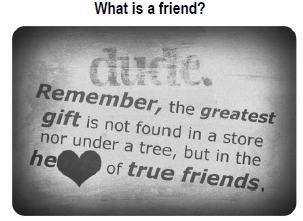
A friend is someone who brings out the best in you;
Good friends are always happy to help when you run into a
problem;
A friend is someone who cheers you up when you’re feeling
bad;
True friends don’t drift apart even after many years of
separation;
A real friend will always stand up for you when others
are putting you down;
Never be afraid to open up and ask a friend for advice. A true
friend will never turn you down;
Make new friends but hang on to the old ones;
Good friends are hard to come by, harder to leave, and
impossible to do without.
file:///j:/top%2010%20reasons%20why%20learning%20english
É extremamente comum em inglês combinações de verbos
com partículas adverbiais ou preposicionais. Essas
combinações são geralmente chamadas de verbos frasais
(phrasal verbs), preposicionados ou de duas palavras. No
texto, encontram-se vários exemplos de verbos frasais
negritados. A correlação correta entre o verbo e seu sentido
está contemplada em

About one hundred years ago many educated people learned and spoke French when they met people from other countries. Today most people speak English when they meet foreigners. It has become the new international language. There are more people who speak English as a second language than people who speak English as a first language. Why is this? There are many reasons why English has become so popular. One of them is that English has become the language of business. Another important reason is that popular American culture (like movies, music, and McDonald's) has quickly spread throughout the world. It has brought its language with it.
file:///J:/English%20as%20an%20International%20Language%20- %20Level%20A %20-%20Teacher%20Len.html
According to the text, it is correct to say that

Muitos verbos em inglês consistem em duas partes: um verbo
“base” (tais como bring, take, go, come) acompanhados de uma
preposição ou de uma partícula adverbial (tais como up, down,
out, in, off). No segundo quadro da tirinha, foi retirada a palavra
que acompanha o verbo GO. A preposição que completa o
sentido do verbo na fala do personagem é
Text 3
Al Capone
Born in 1899 in Brooklyn, New York, to poor immigrant parents, Al Capone went on to become the most infamous gangster in American history. In 1920 during the height of Prohibition, Capone’s multi-million dollar Chicago operation in bootlegging, prostitution and gambling dominated the organized crime scene. Capone was responsible for many brutal acts of violence, mainly against other gangsters. The most famous of these was the St. Valentine’s Day Massacre in 1929, in which he ordered the assassination of seven rivals. Capone was never indicted for his racketeering but was finally brought to justice for income-tax evasion in 1931. After serving six-and-a-half years, Capone was released. He died in 1947 in Miami. Capone’s life captured the public imagination, and his gangster persona has been immortalized in the many movies and books inspired by his exploits.
(Excerpt from the site: http://www.history.com/topics/alcapone. Researched on: October 2015)
Text 3
Al Capone
Born in 1899 in Brooklyn, New York, to poor immigrant parents, Al Capone went on to become the most infamous gangster in American history. In 1920 during the height of Prohibition, Capone’s multi-million dollar Chicago operation in bootlegging, prostitution and gambling dominated the organized crime scene. Capone was responsible for many brutal acts of violence, mainly against other gangsters. The most famous of these was the St. Valentine’s Day Massacre in 1929, in which he ordered the assassination of seven rivals. Capone was never indicted for his racketeering but was finally brought to justice for income-tax evasion in 1931. After serving six-and-a-half years, Capone was released. He died in 1947 in Miami. Capone’s life captured the public imagination, and his gangster persona has been immortalized in the many movies and books inspired by his exploits.
(Excerpt from the site: http://www.history.com/topics/alcapone. Researched on: October 2015)
Text 3
Al Capone
Born in 1899 in Brooklyn, New York, to poor immigrant parents, Al Capone went on to become the most infamous gangster in American history. In 1920 during the height of Prohibition, Capone’s multi-million dollar Chicago operation in bootlegging, prostitution and gambling dominated the organized crime scene. Capone was responsible for many brutal acts of violence, mainly against other gangsters. The most famous of these was the St. Valentine’s Day Massacre in 1929, in which he ordered the assassination of seven rivals. Capone was never indicted for his racketeering but was finally brought to justice for income-tax evasion in 1931. After serving six-and-a-half years, Capone was released. He died in 1947 in Miami. Capone’s life captured the public imagination, and his gangster persona has been immortalized in the many movies and books inspired by his exploits.
(Excerpt from the site: http://www.history.com/topics/alcapone. Researched on: October 2015)
Text 2
Green sea turtle
Green sea turtles spend most of their lives underwater, where they can rest for up to five hours at a time before coming up for air. When active, they typically alternate between being underwater for a few minutes and coming up to the surface to breathe air for a few seconds. Green sea turtles are also known to sunbathe on land.Unlike most other sea turtles, adult green sea turtles eat a primarily plant-based diet consisting of seaweed and sea grass. Scientists believe these green foods give the sea turtle’s fat its green color. The shell of the green sea turtle is usually shades of a brown or olive color.
(Excerpt from the site: http://kids.nationalgeographic.com/animals/green-seaturtle/#green-sea-turtle-closeup-underwater.jpg. Researched on: October 2015)
Text 2
Green sea turtle
Green sea turtles spend most of their lives underwater, where they can rest for up to five hours at a time before coming up for air. When active, they typically alternate between being underwater for a few minutes and coming up to the surface to breathe air for a few seconds. Green sea turtles are also known to sunbathe on land.Unlike most other sea turtles, adult green sea turtles eat a primarily plant-based diet consisting of seaweed and sea grass. Scientists believe these green foods give the sea turtle’s fat its green color. The shell of the green sea turtle is usually shades of a brown or olive color.
(Excerpt from the site: http://kids.nationalgeographic.com/animals/green-seaturtle/#green-sea-turtle-closeup-underwater.jpg. Researched on: October 2015)

 Conheça nossos planos