Questões de Vestibular Comentadas sobre inglês
Foram encontradas 2.807 questões


According to the text, it is CORRECT to state that
Improving with age? How city design is adapting to older populations
There is no denying it: like it or not we are all getting older. According to the UN World Population Prospects
report, the global population of older people is growing at an unprecedented rate. By 2050, for the
first time in human history, there will be more over-65s than children under 15. The number of people over
100 will increase by 1,000%. And as by then 70% of the world’s population will likely live in cites, this will
present huge challenges, and cities will need to adapt. “Small innovations can make a difference,” Recalcati
adds. “Older people are less likely to drive, favouring public transport and walking. The average person
over 65 manages a walking speed of 3km/hour. At 80 that goes down to 2km/hour, compared with the
average for a working age person of 4.8km/hour. Reducing the distance between transport stops, shops,
benches, trees for shade, public toilets and improving pavements and allowing more time to cross the
road all encourage older people to go out.” In the UK, the government has just announced the building
of 10 new towns designed to address ageing and health issues such as obesity. As well as encouraging
more active lifestyles, the designs could include wider pavements, few trip hazards and moving LCD
signs, making the streets easier to navigate for people with dementia and other age-related conditions.
London-based charity Living Streets has also been working alongside communities carrying out street
audits with older residents to see what improvements could be made, as well as campaigning at a strategic
level to influence positive legislative and infrastructure changes. Their project Time to Cross campaigned
to increase pedestrian crossing times which resulted in Transport for London (TfL) agreeing to a
review.
www.thegardian.com/cities/2016/ap/25/improving-with-age-how-city-design-is-adapting-to-older-populations.
I. Old people walk slowly, so they prefer driving.
II. The adaptions mentioned refer not only to elderly but also to obese people.
III. Population is helping to make improvements.
IV. US Policy makers think elderly people should move to smaller cities.
V. There will be more adults than children by 2050.
According to the strip the expression ‘I stand corrected’ means:

What does the title of the text mean?
Dreaming brain rhythms lock in memories
It is the clearest evidence to date that REM sleep is critical for memory. By switching off certain brain cells, the researchers silenced a particular, rhythmic type of brain function - without waking the mice. If they did this during REM sleep, the mice failed subsequent memory tests. The research is reported in the journal Science.
REM sleep is the phase during which, at least in humans, dreams take place - but the question of whether it is important for settling new memories has been difficult to answer. Recent studies have tended to focus on deep, non-REM sleep instead, during which brain cells fire in various patterns that reflect memory consolidation and "re-play" of the day's experiences. During REM sleep, while our eyes flicker and our muscles relax, exactly what the brain is doing is something of a mystery. But it is a type of sleep seen across the animal kingdom, in mammals and birds and even lizards.Read the text.
Amazon keeps expanding its empire
Elizabeth Weise
Amazon has doubled the number of air freight cargo planes it is leasing, a further build out of its internal delivery system.
Atlas Air Worldwide on Thursday said it had signed an agreement with the Seattle internet retailer to operate 20 Boeing 767 for the company for ten years.
Operations under the agreements are expected to begin in the second half of 2016 and ramp up to full service through 2018, Atlas said.
In addition, Amazon will acquire as much as 20% of Atlas.
The planes will be used to move packages between Amazon’s fulfillment centers, which package goods, to its sortation centers, which sort them into local delivery pallets that can be taken to the Post Office for bulk delivery, the company said.
The planes will also be used by Amazon to move goods between its fulfillment centers across the country to other centers where they are needed for one- and two-day delivery, as no one Amazon center can stock the 20 million items Amazon typically has available for two-day delivery.
The deal isn't surprising, said John Haber, CEO of Spend Management Experts, a supply chain management consulting firm.
“This is just the most recent step in Amazon building out a massive logistics network designed to move more of their transportation and distribution under their direct control," he said.
Available in:<http://www.usatoday.com/story/tech/2016/05/06/amazon-further-builds-out-air-freight-network/84035574/>
.
Read the text and choose the CORRECT option.
Portable devices
Buddy, can you spare a watt?
Trading power could free users from dead-battery tyranny
ONE of the most annoying features of smartphones is that they run out of power just when you need it most. After a day of e-mailing, streaming music, downloading podcasts, watching cat videos and snapping selfies, a device can easily be left without enough charge to make an emergency call. What would help, reckons Paul Worgan of the University of Bristol, in England, is to give portable devices the ability to share some of their power.
Mr Worgan and his colleagues have come up with a wireless-charging system which they call PowerShake. To use it someone holds a phone with an expiring battery against another device—a phone, or even a smartwatch or a fitness band—and this initiates a power transfer from one to the other. Some 12 seconds of contact provides enough juice to make a one-minute telephone call. One minute of contact would allow, say, a four minute music video to be watched. The researchers will present their idea to CHI2016, a conference on computer-human interaction, in San Jose, California, in May.
Available in:<http://www.economist.com/news/science-and-technology/21697800-trading-power-could-free-users-dead-batterytyranny-buddy-can-you-spare>
I. New smartphones will have power to spare.
II. PowerShake wireless-charging system will help you to charge your out of power smartphone.
III. You have to plug in both phones for 12 seconds.
IV. This new feature will allow you to make a short phone call.
V. The researchers will present this new idea at their university, in San Jose, California.
Leia o texto a seguir.
WHAT MAKES US HELP OTHERS? WHAT MAKES US SELFISH?
Kitty (Catherine) Genovese was a 28-year-old New York City woman stabbed to death near her home in the Kew Gardens section of Queens, New York, in 1964. It took her about a half-hour to die, as she crawled on the streets shouting for help. At the time, newspapers reported that over three dozen people saw or heard her crying for help after she was stabbed, but they did nothing. Instead of calling the police, they closed their windows. They did not want to get involved. No one called until the final assault, each of them perhaps thinking that someone else would do it. Eventually, someone did call, but it was too late. Later reports cast doubt on the complete accuracy of the original New York Times story about the incident. That story was based on the initial police report. The number of witnesses who heard the screams may have been closer to a dozen, and the number who actually saw something may be a half-dozen. Still, a half-dozen did not respond, and the incident became a symbol of the alienation of the big city. Sadly, news reports are filled with stories about ordinary humans acting inhumanely as apathetic bystanders. Search for “people ignore man dying on street” in Google, and you will get thousands of results.
www.newswekk.com/can-459362
Leia o texto a seguir.
CAN ADDICTION TO SMARTPHONES TRIGGER ADHD?
We measured inattentiveness and hyperactivity by asking participants to identify how frequently they had experienced 18 symptoms of ADHD over each of the two weeks. These items were based on the criteria for diagnosing ADHD in adults as specified by the American Psychiatric Association’s Diagnostic and Statistical Manual of Mental Disorders. The results were clear: More frequent phone interruptions made people less attentive and more hyperactive. These findings should concern us. Smartphones are the fastest-selling electronic gadget in history—in the 22 seconds it took to type this sentence, 1,000 smartphones were shipped to their new owners. Even if one of those 1,000 users became more likely to make a careless mistake, ignore a friend in the middle of a conversation or space out during a meeting, smartphones could be harming the productivity, relationships and well-being of millions.
As with all disorders, symptoms of ADHD form a continuum, from the normal to the pathological. Our findings suggest that our incessant digital stimulation is contributing to an increasingly problematic deficit of attention in modern society.
So consider silencing your phone, even when you are not in the movie theater. Your brain will thank you.
www.newswekk.com/can-459362
Leia o texto a seguir.
LEARNING FROM THE LAZARUS EFFECT
Most clinical trials for cancer drugs are failures. But for a handful of patients, a drug proves to be nearly a cure. What can science learn from these “exceptional responders”?
For years, Grace Silva had experienced odd episodes with her throat — bouts of swelling and radiating pain that seemed to resolve with antibiotics — but her doctors couldn’t explain what was wrong. Finally, after a flare-up in the summer of 2010, Grace was referred to a specialist, an ear doctor who felt something amiss on the left side of her throat: a lump. The Silva family agreed that it was time to get Grace, then 54, to a thyroid specialist. Grace’s daughter Melanie tracked down the name of one at Brigham and Women’s Hospital, a 90-minute drive from Grace’s brown clapboard split-level near New Bedford, Mass. In September 2010, the specialist delivered the diagnosis: anaplastic thyroid cancer. It was bad, he warned her, and she would need surgery. Grace’s other daughter, Karrie, was marrying in a few weeks. “Can’t it wait?” Grace asked. It could not. “And whatever you do,” the specialist said, “please don’t look it up on the Internet.”
www.nytimes.com/2016/05/15/magazine/exceptional-responders-cancer-the-lazures-effect.html
Assinale a alternativa CORRETA de acordo com o texto.
I. O título do texto sintetiza o caso de morte súbita relatado no texto.
II. Muitos medicamentos utilizados para combater o câncer não funcionam.
III. A busca de informações sobre doenças na internet é indicada.
IV. O câncer mencionado no texto apareceu na região da garganta da paciente.
V. O subtítulo do texto visa chamar a atenção para o uso de um medicamento que tem demonstrado proporcionar resultados promissores.
Leia o texto a seguir.
Scientists invent silk food wrap that's biodegradable and could replace plastic cling film
Bananas and strawberries kept at room temperature for more than a week did not go off after they were coated with a near-invisible film made from silk
Ian Johnston
Scientists have invented a cling film-like food wrap made from silk that can preserve fruit for more than a week, as a natural, biodegradable alternative to plastic.
International concern has been growing about plastic waste, particularly the amount that gets into the sea. One estimate is that by 2050 there will be more plastic than fish in the world's oceans.
Doctors have also warned that containers made from certain kinds of plastic could be harmful to health.
Now a team of biomedical engineers at Tufts University in the US have developed a technique that enables food to be coated with an almost invisible layer of fibroin, a protein found in silk, which helps make it one of nature's toughest materials.
The lead researcher, Professor Fiorenzo Omenetto, told The Independent that the world should probably move "towards processes that are more efficient and more naturally derived" and develop materials that "are closer to the things that surround us, rather than having more man-made, processed materials ... for the general well-being of our planet".
"It's a wise way of thinking about how we manage the resources of our planet, to maybe use renewable systems as opposed to non-renewable systems," he said.
"The pervasiveness of plastic and all the inorganic chemicals that leach out, albeit at very slow rates, can affect us in many ways."
When asked what the chances were that silk-derived products would replace plastics, Professor Omenetto said: "That's our dream."
However he said the use of plastic was widespread and "incredibly cost effective" so it might take some time to convince people to change.
The same team previously made a silk cup that could be used, at least once, for coffee as a possible replacement for plasticlined cardboard cups.
In a paper in the journal Scientific Reports, they described how strawberries and bananas could be preserved for a week or more.
The fruit is coated by dipping it in a liquid containing a tiny amount of fibroin, but the wrap could also be applied with a spray. The silk is produced naturally by worms of moths.
Strawberries left for seven days at room temperature became discoloured and went soft, but those coated with the silk protein stayed juicy and firm.
Available in: http://www.independent.co.uk/news/science/silk-plastic-cling-film-food-wrap-marine-pollution-food-fruit-vegetables-tufts-universityfiorenzo-a7017401.html. Access on: May 2016.
I. Embalagens feitas de seda, podem conservar frutas como bananas e morangos por mais de uma semana. II. Em mais ou menos 30 anos, poderá haver menos peixes do que plásticos nos nossos oceanos. III. Plásticos e químicos podem desaparer do planeta no futuro. IV. Os copos feitos de seda serão usados no futuro. V. As lagartas das mariposas produzem a seda de maneira natural.
São características da subespécie de borboleta descrita: I. Tem asas multicoloridas e vibrantes. II. Locomove-se com velocidade. III. Parece com uma traça comum. IV. Tem corpo alongado e asas grandes. Assinale a alternativa que apresenta apenas afirmativas corretas.
De acordo com o texto, é correto afirmar que as borboletas-monarca, em seu processo migratório,
Sobre o comportamento das borboletas de sangue frio durante o inverno, é INCORRETO afirmar que elas
De acordo com o texto, infere-se que os cursos de graduação de Princeton têm como diferencial característico
Based on Cardinal Collins' position, it is correct to state that
Este texto indica que
Com base no texto, é correto afirmar que:
Teen Texting: Girls versus Boys
By Victoria Stern
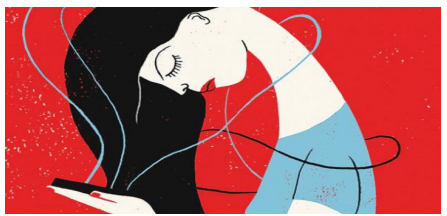
A new study from the American Psychological Association evaluated how 211 girls and 192 boys communicated via text and found notable gender differences in overall behavior and compulsive use:
• Teenage girls use texting for social connection, whereas boys mostly use it to convey information.
• Boys and girls send about the same number of texts every day, but girls are more likely to become compulsive texters.
• Teenage girls who compulsively text see a steeper decline in their grades than their compulsive male counterparts. The researchers suggest the social content of girls' messages may be more likely to distract them from their academic tasks.
• Compulsive texting also appears to affect girls' mental health more than boys', perhaps because girls are more prone to text about negative feelings and to ruminate on those feelings.
Disponível em: : <http://www.scientificamerican.com/article/teen-texting-girls-versus-boys/> .Acesso em: jan. 2016 (fragmento).
Assinale a alternativa que apresenta apenas afirmativas corretas
Normal-looking earrings will track your heart rate, body temperature and blood oxygen levels, providing you with vital health statistics. If you thought Bluetooth headsets made businessmen talking to themselves in public look strange, these earrings will take that to the next level. Shoes will convert movement into energy, powering internal sensors and other wearable devices. The sensors will help the shoes cool and heat your feet as necessary, as well as track your exercise and any weight changes. Buttons haven‘t changed in decades, but they‘re about to get a big overhaul. Soon, they‘ll have embedded GPS, tracking your movements and learning your habits. That will let all your wearables react in real-time to your location, predicting where you‘re about to go or making suggestions on what‘s next. Getting lost will be a challenge, but if you somehow manage to end up in an unknown or dangerous place, your buttons will be able to contact your family or call 911 for help.
Disponível em: <http://time.com/see-the-wearable-tech-of-the-future/>.. Acesso em: dez. 2015 (fragmento).
De acordo com o texto, considere as afirmativas a seguir.
I. Brincos poderão ser usados para monitorar a saúde de seus usuários.
II. Brincos terão função semelhante aos fones com technologia Bluetooth.
III. Calçados servirão como geradores de energia.
IV. Botões funcionarão como sensores de temperatura corporal.
V. Botões terão influência sobre outras tecnologias portáteis.
Assinale a alternativa que apresenta apenas afirmativas corretas.

 Conheça nossos planos