Questões de Vestibular Comentadas sobre inglês
Foram encontradas 2.807 questões


Genetic Fortune-Telling

One day, babies will get DNA report cards at birth. These
reports will offer predictions about their chances of suffering
a heart attack or cancer, of
getting hooked on tobacco,
and of being smarter than
average.
Though the new DNA tests offer probabilities, not diagnoses, they could greatly benefit medicine. For example, if women at high risk for breast cancer got more mammograms and those at low risk got fewer, those exams might catch more real cancers and set off fewer false alarms. The trouble is, the predictions are far from perfect. What if someone with a low risk score for cancer puts off being screened, and then develops cancer anyway? Polygenic scores are also controversial because they can predict any trait, not only diseases. For instance, they can now forecast about 10 percent of a person’s performance on IQ tests. But how will parents and educators use that information?
(Adaptado de Derek Brahney, Genetic Fortune-Telling. MIT Technology Review, Março/Abril 2018)
De acordo com o texto, um dos riscos do prognóstico
genético dos indivíduos desde o nascimento seria o de
By Edna St. Vincent Millay
Love is not all: It is not meat nor drink Nor slumber nor a roof against the rain; Nor yet a floating spar to men that sink And rise and sink and rise and sink again; Love cannot fill the thickened lung with breath, Nor clean the blood, nor set the fractured bone; Yet many a man is making friends with death Even as I speak, for lack of love alone. It well may be that in a difficult hour, Pinned down by need and moaning for release, Or nagged by want past resolution's power, I might be driven to sell your love for peace, Or trade the memory of this night for food. It may well be. I do not think I would.
(Disponível em https://www.poemhunter.com/. Acessado em 28/05/2018.)
De acordo com o poema
Ancient dreams of intelligent machines: 3,000 years of robots
The French philosopher René Descartes was reputedly fond of automata: they inspired his view that living things were biological machines that function like clockwork. Less known is a strange story that began to circulate after the philosopher’s death in 1650. This centred on Descartes’s daughter Francine, who died of scarlet fever at the age of five.
According to the tale, a distraught Descartes had a clockwork Francine made: a walking, talking simulacrum. When Queen Christina invited the philosopher to Sweden in 1649, he sailed with the automaton concealed in a casket. Suspicious sailors forced the trunk open; when the mechanical child sat up to greet them, the horrified crew threw it overboard.
The story is probably apocryphal. But it sums up the hopes and fears that have been associated with human-like machines for nearly three millennia. Those who build such devices do so in the hope that they will overcome natural limits – in Descartes’s case, death itself. But this very unnaturalness terrifies and repulses others. In our era of advanced robotics and artificial intelligence (AI), those polarized responses persist, with pundits and the public applauding or warning against each advance. Digging into the deep history of intelligent machines, both real and imagined, we see how these attitudes evolved: from fantasies of trusty mechanical helpers to fears that runaway advances in technology might lead to creatures that supersede humanity itself.
(Disponível em: <https://www.nature.com/articles/d41586-018-05773-y)
A partir das informações apresentadas no texto, considere as seguintes afirmativas:
1. Descartes viajou para a Suécia com um robô escondido.
2. Os marinheiros abriram à força um baú que continha o simulacro de uma criança.
3. A tripulação fez uma apresentação do robô para os passageiros do navio.
4. Chocados com o que viram, os marinheiros jogaram o humanoide ao mar.
Assinale a alternativa correta.
More than 100 South African gold miners
treated for smoke inhalation
JOHANNESBURG (Reuters) – Hundreds of South African gold mine workers were rescued and over 100 treated for smoke inhalation after an underground fire, the National Union of Mineworkers (NUM) said on Thursday.
Safety is a huge issue in South Africa’s dangerous deep-level mines and a focus for investors. A spate of deaths at SibanyeStillwater’s gold operations, including a seismic event that killed seven miners in early May, has highlighted the risks.
In the latest incident, more than 600 miners were initially trapped after a fire broke out at a mine east of Johannesburg operated by unlisted Gold One, NUM said.
This comes almost two weeks after five miners died in an underground fire at a South African copper mine operated by unlisted Palabora Mining Company in Limpopo.
Company officials could not immediately be reached for comment.
“As the NUM, we vehemently condemn this kind of incident as it is becoming a trend”, the union said in a statement.
(Disponível em:<https://www.reuters.com/article/us-safrica-mining-fire/more-than-100-south-african-gold-miners-treated-for-smoke-inhalation-idUSKBN1KG294
More than 100 South African gold miners
treated for smoke inhalation
JOHANNESBURG (Reuters) – Hundreds of South African gold mine workers were rescued and over 100 treated for smoke inhalation after an underground fire, the National Union of Mineworkers (NUM) said on Thursday.
Safety is a huge issue in South Africa’s dangerous deep-level mines and a focus for investors. A spate of deaths at SibanyeStillwater’s gold operations, including a seismic event that killed seven miners in early May, has highlighted the risks.
In the latest incident, more than 600 miners were initially trapped after a fire broke out at a mine east of Johannesburg operated by unlisted Gold One, NUM said.
This comes almost two weeks after five miners died in an underground fire at a South African copper mine operated by unlisted Palabora Mining Company in Limpopo.
Company officials could not immediately be reached for comment.
“As the NUM, we vehemently condemn this kind of incident as it is becoming a trend”, the union said in a statement.
(Disponível em:<https://www.reuters.com/article/us-safrica-mining-fire/more-than-100-south-african-gold-miners-treated-for-smoke-inhalation-idUSKBN1KG294
More than 100 South African gold miners
treated for smoke inhalation
JOHANNESBURG (Reuters) – Hundreds of South African gold mine workers were rescued and over 100 treated for smoke inhalation after an underground fire, the National Union of Mineworkers (NUM) said on Thursday.
Safety is a huge issue in South Africa’s dangerous deep-level mines and a focus for investors. A spate of deaths at SibanyeStillwater’s gold operations, including a seismic event that killed seven miners in early May, has highlighted the risks.
In the latest incident, more than 600 miners were initially trapped after a fire broke out at a mine east of Johannesburg operated by unlisted Gold One, NUM said.
This comes almost two weeks after five miners died in an underground fire at a South African copper mine operated by unlisted Palabora Mining Company in Limpopo.
Company officials could not immediately be reached for comment.
“As the NUM, we vehemently condemn this kind of incident as it is becoming a trend”, the union said in a statement.
(Disponível em:<https://www.reuters.com/article/us-safrica-mining-fire/more-than-100-south-african-gold-miners-treated-for-smoke-inhalation-idUSKBN1KG294
I) Joby Rohrer II) Kanehoalani III) Kaunolû IV) Ho’ohila V) Lanai VI) Kapua Kawelo VII) Jon Sprague
Who is Ho’ohila’s brother? _____ Who is a wildlife control manager? _____ Who has experience as a free driver? _____ Who is fifteen years old? _____ Which of them is an island? _____
Mark the correct alternative
TEXTO 3:
THIS SIMPLE MIND TRICK CAN INSTANTLY BOOST
YOUR WILLPOWER BY
ELISA ROLAND
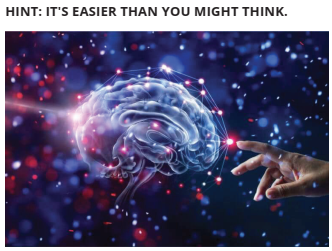
A good dose of willpower is often necessary to see any task through, whether it’s sticking to a spending plan or finishing that great American novel.
And if you want to increase that willpower, you just simply have to believe you have it, suggests a new study supported by the Swiss National Science Foundation.
“What matters most is what we think about our willpower,” leader study author Christopher Napolitano, educational psychology professor at the University of Illinois told the University of Illinois News Bureau. “When we view our willpower as limited, it’s similar to a muscle that gets tired and needs rest. If we believe it is a finite resource, we act that way, feeling exhausted and needing breaks between demanding mental tasks, while people who view their willpower as a limitless resource get energized instead.”
Napolitano and study co-author Veronika Job of the University of Zurich tested the validity of the Implicit Theory of Willpower for Strenuous Mental Activities Scale, a psychological assessment tool. They asked 1,100 Americans and 1,600 Europeans to weigh in on statements such as “After a strenuous mental activity, your energy is depleted, and you must rest to get it refueled again.”
Although there was little difference between men and women overall, Americans were more likely to admit to needing breaks after completing mentally challenging tasks, while European participants became more invigorated to keep going.
Based on the findings, Napolitano suggests that the key to amp up your willpower is to believe that you have an abundant supply of it.
“Your feelings about your willpower affect the way you behave—but these feelings are changeable,” he said. “Changing your beliefs about the nature of your self-control can have positive effects on development, leading to healthier behaviors and perceptions of others.”
Now that you have the drive, make sure you have the other winning attributes all successful people have in common.
Available at: <https://www.rd.com/advice/work-career/trick-boost-willpower/>.
Verifique se as sentenças abaixo são verdadeiras ou falsas de acordo com o texto:
( ) Um novo estudo sugere que a chave para aumentar sua força de vontade é acreditar que você tem uma oferta abundante dela.
( ) Pessoas que acreditam que sua força de vontade é finita não conseguem realizar tarefas mentais mais exigentes.
( ) O estudo revelou que os Americanos eram propensos a admitir a necessidade de pausas após a conclusão de tarefas mentalmente desafiadoras.
( ) Segundo Napolitano, os sentimentos sobre a força de vontade afetam a maneira como um indivíduo se comporta, porém esses sentimentos não são mutáveis.
Assinale a sequência correta:
TEXTO 1:
YOUTUBE TO BAN VIDEOS PROMOTING GUN SALES
By NIRAJ CHOKSHI MARCH 22, 2018
YouTube said this week that it would tighten restrictions on some firearm videos, its latest policy announcement since coming under scrutiny after last month’s mass shooting at a high school in Parkland, Fla.
The video-streaming service, which is owned by Google, said it would ban videos that promote either the construction or sale of firearms and their accessories. The new policy, developed with expert advice over the last four months, will go into effect next month, it said.
“While we’ve long prohibited the sale of firearms, we recently notified creators of updates we will be making
around content promoting the sale or manufacture of firearms and their accessories, specifically, items like
ammunition, gatling triggers, and drop-in auto sears,” YouTube said in a statement.
YouTube, which described the move as part of “regular changes” to policy, notified users in a Monday forum post. The company had previously banned videos showing how to make firearms discharge faster, a technique used by the gunman who killed 58 people in Las Vegas last fall.
The announcement comes days before planned student-led protests against gun violence on Saturday. It was met with frustration from gun rights advocates.
“Much like Facebook, YouTube now acts as a virtual public square,” the National Shooting Sports Foundation, a private group representing gun makers, said in a statement. “The exercise of what amounts to censorship, then, can legitimately be viewed as the stifling of commercial free speech, which has constitutional protection. Such actions also impinge on the Second Amendment.”
The policy shift comes as YouTube and other technology platforms face increased scrutiny after the Parkland shooting, in which 17 people were killed at Marjory Stoneman Douglas High School.
Days after that massacre, a video promoting a baseless conspiracy about a shooting survivor became the top-trending video on YouTube, prompting a crackdown on such videos. YouTube’s chief executive also said that the platform planned to fight misinformation by working in partnership with Wikipedia, the nonprofit userrun online encyclopedia. But Wikipedia said it knew nothing about that plan.
Other businesses have also made changes amid growing pressure following the Parkland attack.
Dick’s Sporting Goods, Walmart and Kroger all raised the age limit for firearm purchases to 21. The retail chains REI and Mountain Equipment Co-op suspended orders of some popular products because the company that owns those brands, Vista Outdoor, also manufactures assault-style rifles.
In 2016, Facebook announced a ban on private gun sales on its flagship website as well as on Instagram, the photo-sharing social network it owns. Anti-gun activists have complained that sellers still found ways around Facebook’s ban.
Available at:<https://www.nytimes.com/2018/03/22/business/youtube-gun-ban.h...m_unit&version=latest&contentPlacement=5&pgtype=sectionfront>
TEXTO 1:
YOUTUBE TO BAN VIDEOS PROMOTING GUN SALES
By NIRAJ CHOKSHI MARCH 22, 2018
YouTube said this week that it would tighten restrictions on some firearm videos, its latest policy announcement since coming under scrutiny after last month’s mass shooting at a high school in Parkland, Fla.
The video-streaming service, which is owned by Google, said it would ban videos that promote either the construction or sale of firearms and their accessories. The new policy, developed with expert advice over the last four months, will go into effect next month, it said.
“While we’ve long prohibited the sale of firearms, we recently notified creators of updates we will be making
around content promoting the sale or manufacture of firearms and their accessories, specifically, items like
ammunition, gatling triggers, and drop-in auto sears,” YouTube said in a statement.
YouTube, which described the move as part of “regular changes” to policy, notified users in a Monday forum post. The company had previously banned videos showing how to make firearms discharge faster, a technique used by the gunman who killed 58 people in Las Vegas last fall.
The announcement comes days before planned student-led protests against gun violence on Saturday. It was met with frustration from gun rights advocates.
“Much like Facebook, YouTube now acts as a virtual public square,” the National Shooting Sports Foundation, a private group representing gun makers, said in a statement. “The exercise of what amounts to censorship, then, can legitimately be viewed as the stifling of commercial free speech, which has constitutional protection. Such actions also impinge on the Second Amendment.”
The policy shift comes as YouTube and other technology platforms face increased scrutiny after the Parkland shooting, in which 17 people were killed at Marjory Stoneman Douglas High School.
Days after that massacre, a video promoting a baseless conspiracy about a shooting survivor became the top-trending video on YouTube, prompting a crackdown on such videos. YouTube’s chief executive also said that the platform planned to fight misinformation by working in partnership with Wikipedia, the nonprofit userrun online encyclopedia. But Wikipedia said it knew nothing about that plan.
Other businesses have also made changes amid growing pressure following the Parkland attack.
Dick’s Sporting Goods, Walmart and Kroger all raised the age limit for firearm purchases to 21. The retail chains REI and Mountain Equipment Co-op suspended orders of some popular products because the company that owns those brands, Vista Outdoor, also manufactures assault-style rifles.
In 2016, Facebook announced a ban on private gun sales on its flagship website as well as on Instagram, the photo-sharing social network it owns. Anti-gun activists have complained that sellers still found ways around Facebook’s ban.
Available at:<https://www.nytimes.com/2018/03/22/business/youtube-gun-ban.h...m_unit&version=latest&contentPlacement=5&pgtype=sectionfront>
TEXT 2
The first step in establishing a cyber ethical culture is to ask the really tough questions, the answer to which may be politically incorrect. HR (Human resources), legal, security and top management need to work together to set the tone they wish to flow through gaming; other times off-site meetings will work.
The second step is to include cyber ethical components in corporate security awareness campaigns to keep employees clued in.
The last but most important step is to be ready to make changes rapidly when cyber ethics becomes a component of information security efforts. We cannot predict how they will change tomorrow or next year – but we need to be prepared.
(MARINOTTO, Demóstene. Reading on Info Tech (Inglês para Informática). São Paulo, Novatec, 2007.)
TEXT 2
The first step in establishing a cyber ethical culture is to ask the really tough questions, the answer to which may be politically incorrect. HR (Human resources), legal, security and top management need to work together to set the tone they wish to flow through gaming; other times off-site meetings will work.
The second step is to include cyber ethical components in corporate security awareness campaigns to keep employees clued in.
The last but most important step is to be ready to make changes rapidly when cyber ethics becomes a component of information security efforts. We cannot predict how they will change tomorrow or next year – but we need to be prepared.
(MARINOTTO, Demóstene. Reading on Info Tech (Inglês para Informática). São Paulo, Novatec, 2007.)
TEXT 1
These days, when our slow recovery from recession seems like a full-employment program for pessimistic pundits, it’s great to have a new book from Chris Anderson, an indefatigable cheerleader for the unlimited potential of the digital economy. Anderson, the departing editor in chief of Wired magazine, has already written two important books exploring the impact of the Web on commerce. In “The Long Tail,” he argued that companies like Amazon that faced distribution challenges arising from having large quantities of the same kind of product would thrive by “selling less of more.” Corporations didn’t have to chase blockbusters if they had a mass of small sales. In “Free: The Future of a Radical Price,” he argued that giving stuff away to attract a multitude of users might be the best way eventually to make money from loyal customers. Anderson has also helped found a Web site, Geekdad, and an aerial robotics company. From his vantage point, in the future more and more people can get involved in making things they really enjoy and can connect with others who share their passions and their products. These connections, he claims, are creating a new Industrial Revolution.
In a 2010 Wired article entitled “In the Next Industrial Revolution, Atoms Are the New Bits,” Anderson described how the massive changes in our relations with information have altered how we relate to things. Now that the power of information-sharing has been unleashed through technology and social networks, makers are able to collaborate on design and production in ways that facilitate the connection of producers to markets. By sharing information “bits” in a creative commons, entrepreneurs are making new things (reshaping “atoms”) more cheaply and quickly. The new manufacturing is a powerful economic force not because any one business becomes gigantic, but because technology makes it possible for tens of thousands of businesses to find their customers, to form their communities.
Anderson begins his new book, “Makers,” with the story of his grandfather Fred Hauser, who invented a sprinkler system. He licensed his invention to a company that turned ideas into things that could be built and sold. Although Hauser loved translating ideas into things, he needed a company with resources to make enough of his sprinklers to turn a profit. Inventing and making were separate. With the advent of the personal computer and of sophisticated but user-friendly design tools, that separation has become increasingly irrelevant. As a child, Anderson loved making things with his grandfather, and he still loves creating new stuff and getting it into the marketplace. “Makers” describes how today technology has liberated the inventor from a dependence on the big manufacturer. “The beauty of the Web is that it democratized the tools both of invention and production,” Anderson writes. “We are all designers now. It’s time to get good at it.”
(Fragment from “Makers: The New Industrial Revolution by
Chris Anderson”, by Michael S. Roth. Online since 24
November 2012.
URL:https://www.washingtonpost.com/opinions/makers-thenew-industrial-revolution)
TEXT 1
These days, when our slow recovery from recession seems like a full-employment program for pessimistic pundits, it’s great to have a new book from Chris Anderson, an indefatigable cheerleader for the unlimited potential of the digital economy. Anderson, the departing editor in chief of Wired magazine, has already written two important books exploring the impact of the Web on commerce. In “The Long Tail,” he argued that companies like Amazon that faced distribution challenges arising from having large quantities of the same kind of product would thrive by “selling less of more.” Corporations didn’t have to chase blockbusters if they had a mass of small sales. In “Free: The Future of a Radical Price,” he argued that giving stuff away to attract a multitude of users might be the best way eventually to make money from loyal customers. Anderson has also helped found a Web site, Geekdad, and an aerial robotics company. From his vantage point, in the future more and more people can get involved in making things they really enjoy and can connect with others who share their passions and their products. These connections, he claims, are creating a new Industrial Revolution.
In a 2010 Wired article entitled “In the Next Industrial Revolution, Atoms Are the New Bits,” Anderson described how the massive changes in our relations with information have altered how we relate to things. Now that the power of information-sharing has been unleashed through technology and social networks, makers are able to collaborate on design and production in ways that facilitate the connection of producers to markets. By sharing information “bits” in a creative commons, entrepreneurs are making new things (reshaping “atoms”) more cheaply and quickly. The new manufacturing is a powerful economic force not because any one business becomes gigantic, but because technology makes it possible for tens of thousands of businesses to find their customers, to form their communities.
Anderson begins his new book, “Makers,” with the story of his grandfather Fred Hauser, who invented a sprinkler system. He licensed his invention to a company that turned ideas into things that could be built and sold. Although Hauser loved translating ideas into things, he needed a company with resources to make enough of his sprinklers to turn a profit. Inventing and making were separate. With the advent of the personal computer and of sophisticated but user-friendly design tools, that separation has become increasingly irrelevant. As a child, Anderson loved making things with his grandfather, and he still loves creating new stuff and getting it into the marketplace. “Makers” describes how today technology has liberated the inventor from a dependence on the big manufacturer. “The beauty of the Web is that it democratized the tools both of invention and production,” Anderson writes. “We are all designers now. It’s time to get good at it.”
(Fragment from “Makers: The New Industrial Revolution by
Chris Anderson”, by Michael S. Roth. Online since 24
November 2012.
URL:https://www.washingtonpost.com/opinions/makers-thenew-industrial-revolution)
TEXT 1
These days, when our slow recovery from recession seems like a full-employment program for pessimistic pundits, it’s great to have a new book from Chris Anderson, an indefatigable cheerleader for the unlimited potential of the digital economy. Anderson, the departing editor in chief of Wired magazine, has already written two important books exploring the impact of the Web on commerce. In “The Long Tail,” he argued that companies like Amazon that faced distribution challenges arising from having large quantities of the same kind of product would thrive by “selling less of more.” Corporations didn’t have to chase blockbusters if they had a mass of small sales. In “Free: The Future of a Radical Price,” he argued that giving stuff away to attract a multitude of users might be the best way eventually to make money from loyal customers. Anderson has also helped found a Web site, Geekdad, and an aerial robotics company. From his vantage point, in the future more and more people can get involved in making things they really enjoy and can connect with others who share their passions and their products. These connections, he claims, are creating a new Industrial Revolution.
In a 2010 Wired article entitled “In the Next Industrial Revolution, Atoms Are the New Bits,” Anderson described how the massive changes in our relations with information have altered how we relate to things. Now that the power of information-sharing has been unleashed through technology and social networks, makers are able to collaborate on design and production in ways that facilitate the connection of producers to markets. By sharing information “bits” in a creative commons, entrepreneurs are making new things (reshaping “atoms”) more cheaply and quickly. The new manufacturing is a powerful economic force not because any one business becomes gigantic, but because technology makes it possible for tens of thousands of businesses to find their customers, to form their communities.
Anderson begins his new book, “Makers,” with the story of his grandfather Fred Hauser, who invented a sprinkler system. He licensed his invention to a company that turned ideas into things that could be built and sold. Although Hauser loved translating ideas into things, he needed a company with resources to make enough of his sprinklers to turn a profit. Inventing and making were separate. With the advent of the personal computer and of sophisticated but user-friendly design tools, that separation has become increasingly irrelevant. As a child, Anderson loved making things with his grandfather, and he still loves creating new stuff and getting it into the marketplace. “Makers” describes how today technology has liberated the inventor from a dependence on the big manufacturer. “The beauty of the Web is that it democratized the tools both of invention and production,” Anderson writes. “We are all designers now. It’s time to get good at it.”
(Fragment from “Makers: The New Industrial Revolution by
Chris Anderson”, by Michael S. Roth. Online since 24
November 2012.
URL:https://www.washingtonpost.com/opinions/makers-thenew-industrial-revolution)
TEXT 1
These days, when our slow recovery from recession seems like a full-employment program for pessimistic pundits, it’s great to have a new book from Chris Anderson, an indefatigable cheerleader for the unlimited potential of the digital economy. Anderson, the departing editor in chief of Wired magazine, has already written two important books exploring the impact of the Web on commerce. In “The Long Tail,” he argued that companies like Amazon that faced distribution challenges arising from having large quantities of the same kind of product would thrive by “selling less of more.” Corporations didn’t have to chase blockbusters if they had a mass of small sales. In “Free: The Future of a Radical Price,” he argued that giving stuff away to attract a multitude of users might be the best way eventually to make money from loyal customers. Anderson has also helped found a Web site, Geekdad, and an aerial robotics company. From his vantage point, in the future more and more people can get involved in making things they really enjoy and can connect with others who share their passions and their products. These connections, he claims, are creating a new Industrial Revolution.
In a 2010 Wired article entitled “In the Next Industrial Revolution, Atoms Are the New Bits,” Anderson described how the massive changes in our relations with information have altered how we relate to things. Now that the power of information-sharing has been unleashed through technology and social networks, makers are able to collaborate on design and production in ways that facilitate the connection of producers to markets. By sharing information “bits” in a creative commons, entrepreneurs are making new things (reshaping “atoms”) more cheaply and quickly. The new manufacturing is a powerful economic force not because any one business becomes gigantic, but because technology makes it possible for tens of thousands of businesses to find their customers, to form their communities.
Anderson begins his new book, “Makers,” with the story of his grandfather Fred Hauser, who invented a sprinkler system. He licensed his invention to a company that turned ideas into things that could be built and sold. Although Hauser loved translating ideas into things, he needed a company with resources to make enough of his sprinklers to turn a profit. Inventing and making were separate. With the advent of the personal computer and of sophisticated but user-friendly design tools, that separation has become increasingly irrelevant. As a child, Anderson loved making things with his grandfather, and he still loves creating new stuff and getting it into the marketplace. “Makers” describes how today technology has liberated the inventor from a dependence on the big manufacturer. “The beauty of the Web is that it democratized the tools both of invention and production,” Anderson writes. “We are all designers now. It’s time to get good at it.”
(Fragment from “Makers: The New Industrial Revolution by
Chris Anderson”, by Michael S. Roth. Online since 24
November 2012.
URL:https://www.washingtonpost.com/opinions/makers-thenew-industrial-revolution)

 Conheça nossos planos