Questões de Vestibular Comentadas sobre inglês
Foram encontradas 2.807 questões


Methods: Using data from the Survey of Lifestyle Attitudes and Nutrition (SLÁN) 2007 (), a protective lifestyle behaviour (PLB) score was constructed for 10 364 men and women (>18 years), and representative of the Republic of Ireland adult population (response rate 62%). Respondents scored a maximum of four points, one point each for being physically active, consuming five or more fruit and vegetable servings daily, a non-smoker and a moderate drinker.
Results: One-fifth of respondents (20%) adopted four PLBs, 35% adopted three, 29% two, 13% one and 2% adopted none. Compared to those with zero PLBs, those with four were seven times more likely to rate their general health as excellent/very good [OR 6.8 95% Cl (3.64- 12.82)] and four times more likely to have better mental health [OR 4.4 95% Cl (2.34-8.22)].
Conclusions: Adoption of core protective lifestyle factors known to increase life expectancy is associated with positive self-rated health, healthier weight and better mental health. These lifestyles have the potential to add quality and quantity to life.
Key words: lifestyle behaviours, self-rated, health, obesity, depression, protective factors.
Topic: ethanol, obesity, physical activity, smoking, depressive disorders, fruit, Ireland, life style, mental health, vegetables, overweight, feelings. Issue Section: Lifestyle and living conditions
Match the columns to have the right meaning from the Text.
I. Survey
II. Likely
III. Behavior
IV. Intake
V. Data
( ) conduct
( ) feasible
( ) scrutinity
( ) information in visible form
( ) consumption
Mark the alternative which shows de correct order, fron top to bottom.
Methods: Using data from the Survey of Lifestyle Attitudes and Nutrition (SLÁN) 2007 (), a protective lifestyle behaviour (PLB) score was constructed for 10 364 men and women (>18 years), and representative of the Republic of Ireland adult population (response rate 62%). Respondents scored a maximum of four points, one point each for being physically active, consuming five or more fruit and vegetable servings daily, a non-smoker and a moderate drinker.
Results: One-fifth of respondents (20%) adopted four PLBs, 35% adopted three, 29% two, 13% one and 2% adopted none. Compared to those with zero PLBs, those with four were seven times more likely to rate their general health as excellent/very good [OR 6.8 95% Cl (3.64- 12.82)] and four times more likely to have better mental health [OR 4.4 95% Cl (2.34-8.22)].
Conclusions: Adoption of core protective lifestyle factors known to increase life expectancy is associated with positive self-rated health, healthier weight and better mental health. These lifestyles have the potential to add quality and quantity to life.
Key words: lifestyle behaviours, self-rated, health, obesity, depression, protective factors.
Topic: ethanol, obesity, physical activity, smoking, depressive disorders, fruit, Ireland, life style, mental health, vegetables, overweight, feelings. Issue Section: Lifestyle and living conditions
Methods: Using data from the Survey of Lifestyle Attitudes and Nutrition (SLÁN) 2007 (), a protective lifestyle behaviour (PLB) score was constructed for 10 364 men and women (>18 years), and representative of the Republic of Ireland adult population (response rate 62%). Respondents scored a maximum of four points, one point each for being physically active, consuming five or more fruit and vegetable servings daily, a non-smoker and a moderate drinker.
Results: One-fifth of respondents (20%) adopted four PLBs, 35% adopted three, 29% two, 13% one and 2% adopted none. Compared to those with zero PLBs, those with four were seven times more likely to rate their general health as excellent/very good [OR 6.8 95% Cl (3.64- 12.82)] and four times more likely to have better mental health [OR 4.4 95% Cl (2.34-8.22)].
Conclusions: Adoption of core protective lifestyle factors known to increase life expectancy is associated with positive self-rated health, healthier weight and better mental health. These lifestyles have the potential to add quality and quantity to life.
Key words: lifestyle behaviours, self-rated, health, obesity, depression, protective factors.
Topic: ethanol, obesity, physical activity, smoking, depressive disorders, fruit, Ireland, life style, mental health, vegetables, overweight, feelings. Issue Section: Lifestyle and living conditions
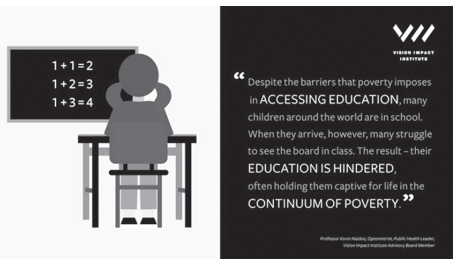
NAIDOO, Kovin, Disponível em: . Acesso em: 15 nov. 2018.
Fill in the parentheses with T (True) or F (False).
According to this quote by Professor Kovin Naidoo, it’s correct to say:
( ) Eye disability plays a minor role on an individual’s poverty status.
( ) Poor vision puts students at a disadvantage in the classroom.
( ) Poor eye health can lead to or worsen poverty.
( ) Vision impairment and poverty are linked to each other.
The correct sequence, from top to bottom, is
Leia o texto para responder à questão.
Dying to defend the planet: why Latin America
is the deadliest place for environmentalists

February 11, 2017
Defending nature is a dangerous occupation, especially in Latin America. According to a recent report by Global Witness, an NGO, 185 environmental activists were murdered worldwide in 2015, an increase of 59% from the year before. More than half the killings were in Latin America. In Brazil 50 green campaigners died in 2015. Honduras is especially dangerous: 123 activists have died there since 2010, the highest number of any country relative to its population. Berta Cáceres, an indigenous leader who was a prominent campaigner against dams and plantations, was murdered there.
Why is Latin America so deadly? One reason is its abundant natural resources, which attract enterprises of all sorts, from multinationals to mafias. When prices are low, as they are now, the most rapacious do not go away; to maintain their profits they become more aggressive, says David Kaimowitz of the Ford Foundation, which gives money to good causes. New technologies open up new battlefronts. Soya beans bred to grow in tropical conditions have encouraged farmers to displace cattle ranchers, who in turn have advanced into the rainforest. Small prospectors can now extract gold from soil rather than just hunting around. That opens up new areas for exploitation, such as San Rafael de Flores in south-eastern Guatemala, where activists have been murdered.
The odds of finding the criminals are greater if the victim is foreign. Dorothy Stang, an American nun who fought to protect the Amazon rainforest, was killed in Brazil 12 years ago. Both the gunman and a rancher who had hired him eventually went to jail. But that is an exception.
(https://www.economist.com/the-americas/2017/02/11/
why-latin-america-is-the-deadliest-place-for-environmentalists. Adaptado)
Leia o texto para responder à questão.
Dying to defend the planet: why Latin America
is the deadliest place for environmentalists
February 11, 2017
Defending nature is a dangerous occupation, especially in Latin America. According to a recent report by Global Witness, an NGO, 185 environmental activists were murdered worldwide in 2015, an increase of 59% from the year before. More than half the killings were in Latin America. In Brazil 50 green campaigners died in 2015. Honduras is especially dangerous: 123 activists have died there since 2010, the highest number of any country relative to its population. Berta Cáceres, an indigenous leader who was a prominent campaigner against dams and plantations, was murdered there.
Why is Latin America so deadly? One reason is its abundant natural resources, which attract enterprises of all sorts, from multinationals to mafias. When prices are low, as they are now, the most rapacious do not go away; to maintain their profits they become more aggressive, says David Kaimowitz of the Ford Foundation, which gives money to good causes. New technologies open up new battlefronts. Soya beans bred to grow in tropical conditions have encouraged farmers to displace cattle ranchers, who in turn have advanced into the rainforest. Small prospectors can now extract gold from soil rather than just hunting around. That opens up new areas for exploitation, such as San Rafael de Flores in south-eastern Guatemala, where activists have been murdered.
The odds of finding the criminals are greater if the victim is foreign. Dorothy Stang, an American nun who fought to protect the Amazon rainforest, was killed in Brazil 12 years ago. Both the gunman and a rancher who had hired him eventually went to jail. But that is an exception.
(https://www.economist.com/the-americas/2017/02/11/
why-latin-america-is-the-deadliest-place-for-environmentalists. Adaptado)
Leia o texto para responder à questão.
Dying to defend the planet: why Latin America
is the deadliest place for environmentalists
February 11, 2017
Defending nature is a dangerous occupation, especially in Latin America. According to a recent report by Global Witness, an NGO, 185 environmental activists were murdered worldwide in 2015, an increase of 59% from the year before. More than half the killings were in Latin America. In Brazil 50 green campaigners died in 2015. Honduras is especially dangerous: 123 activists have died there since 2010, the highest number of any country relative to its population. Berta Cáceres, an indigenous leader who was a prominent campaigner against dams and plantations, was murdered there.
Why is Latin America so deadly? One reason is its abundant natural resources, which attract enterprises of all sorts, from multinationals to mafias. When prices are low, as they are now, the most rapacious do not go away; to maintain their profits they become more aggressive, says David Kaimowitz of the Ford Foundation, which gives money to good causes. New technologies open up new battlefronts. Soya beans bred to grow in tropical conditions have encouraged farmers to displace cattle ranchers, who in turn have advanced into the rainforest. Small prospectors can now extract gold from soil rather than just hunting around. That opens up new areas for exploitation, such as San Rafael de Flores in south-eastern Guatemala, where activists have been murdered.
The odds of finding the criminals are greater if the victim is foreign. Dorothy Stang, an American nun who fought to protect the Amazon rainforest, was killed in Brazil 12 years ago. Both the gunman and a rancher who had hired him eventually went to jail. But that is an exception.
(https://www.economist.com/the-americas/2017/02/11/
why-latin-america-is-the-deadliest-place-for-environmentalists. Adaptado)
Leia o texto para responder à questão.
Dying to defend the planet: why Latin America
is the deadliest place for environmentalists
February 11, 2017
Defending nature is a dangerous occupation, especially in Latin America. According to a recent report by Global Witness, an NGO, 185 environmental activists were murdered worldwide in 2015, an increase of 59% from the year before. More than half the killings were in Latin America. In Brazil 50 green campaigners died in 2015. Honduras is especially dangerous: 123 activists have died there since 2010, the highest number of any country relative to its population. Berta Cáceres, an indigenous leader who was a prominent campaigner against dams and plantations, was murdered there.
Why is Latin America so deadly? One reason is its abundant natural resources, which attract enterprises of all sorts, from multinationals to mafias. When prices are low, as they are now, the most rapacious do not go away; to maintain their profits they become more aggressive, says David Kaimowitz of the Ford Foundation, which gives money to good causes. New technologies open up new battlefronts. Soya beans bred to grow in tropical conditions have encouraged farmers to displace cattle ranchers, who in turn have advanced into the rainforest. Small prospectors can now extract gold from soil rather than just hunting around. That opens up new areas for exploitation, such as San Rafael de Flores in south-eastern Guatemala, where activists have been murdered.
The odds of finding the criminals are greater if the victim is foreign. Dorothy Stang, an American nun who fought to protect the Amazon rainforest, was killed in Brazil 12 years ago. Both the gunman and a rancher who had hired him eventually went to jail. But that is an exception.
(https://www.economist.com/the-americas/2017/02/11/
why-latin-america-is-the-deadliest-place-for-environmentalists. Adaptado)
Leia o texto para responder à questão.
Dying to defend the planet: why Latin America
is the deadliest place for environmentalists
February 11, 2017
Defending nature is a dangerous occupation, especially in Latin America. According to a recent report by Global Witness, an NGO, 185 environmental activists were murdered worldwide in 2015, an increase of 59% from the year before. More than half the killings were in Latin America. In Brazil 50 green campaigners died in 2015. Honduras is especially dangerous: 123 activists have died there since 2010, the highest number of any country relative to its population. Berta Cáceres, an indigenous leader who was a prominent campaigner against dams and plantations, was murdered there.
Why is Latin America so deadly? One reason is its abundant natural resources, which attract enterprises of all sorts, from multinationals to mafias. When prices are low, as they are now, the most rapacious do not go away; to maintain their profits they become more aggressive, says David Kaimowitz of the Ford Foundation, which gives money to good causes. New technologies open up new battlefronts. Soya beans bred to grow in tropical conditions have encouraged farmers to displace cattle ranchers, who in turn have advanced into the rainforest. Small prospectors can now extract gold from soil rather than just hunting around. That opens up new areas for exploitation, such as San Rafael de Flores in south-eastern Guatemala, where activists have been murdered.
The odds of finding the criminals are greater if the victim is foreign. Dorothy Stang, an American nun who fought to protect the Amazon rainforest, was killed in Brazil 12 years ago. Both the gunman and a rancher who had hired him eventually went to jail. But that is an exception.
(https://www.economist.com/the-americas/2017/02/11/
why-latin-america-is-the-deadliest-place-for-environmentalists. Adaptado)
Leia o texto para responder à questão.
Dying to defend the planet: why Latin America
is the deadliest place for environmentalists
February 11, 2017
Defending nature is a dangerous occupation, especially in Latin America. According to a recent report by Global Witness, an NGO, 185 environmental activists were murdered worldwide in 2015, an increase of 59% from the year before. More than half the killings were in Latin America. In Brazil 50 green campaigners died in 2015. Honduras is especially dangerous: 123 activists have died there since 2010, the highest number of any country relative to its population. Berta Cáceres, an indigenous leader who was a prominent campaigner against dams and plantations, was murdered there.
Why is Latin America so deadly? One reason is its abundant natural resources, which attract enterprises of all sorts, from multinationals to mafias. When prices are low, as they are now, the most rapacious do not go away; to maintain their profits they become more aggressive, says David Kaimowitz of the Ford Foundation, which gives money to good causes. New technologies open up new battlefronts. Soya beans bred to grow in tropical conditions have encouraged farmers to displace cattle ranchers, who in turn have advanced into the rainforest. Small prospectors can now extract gold from soil rather than just hunting around. That opens up new areas for exploitation, such as San Rafael de Flores in south-eastern Guatemala, where activists have been murdered.
The odds of finding the criminals are greater if the victim is foreign. Dorothy Stang, an American nun who fought to protect the Amazon rainforest, was killed in Brazil 12 years ago. Both the gunman and a rancher who had hired him eventually went to jail. But that is an exception.
(https://www.economist.com/the-americas/2017/02/11/
why-latin-america-is-the-deadliest-place-for-environmentalists. Adaptado)
ASSINALE a alternativa que NÃO contém verbos no modo imperativo:
To answer question, read the following text.
The movies that rose from the gave
It may disappear for a while, stay out of sight, out of mind, but sooner or later it will rise again, and no matter what we do, or how hard we try, it will never, ever die. A zombie? Hardly, rather our own fascination with what popular culture now refers to as “the living dead”.
Zombies have dominated mainstream horror for more than half a decade. They’re everywhere: movies, books, videogames, comics, even a new Broadway musical adaptation of Sam Raimi’s The Evil Dead. Not only have they replaced previous alpha-monsters such as vampires and werewolves, (1) ___________ are continuing to generate more interest (and revenue) than almost all other creatures put together. Given that several years ago the living dead were considered an obscure and largely underground sub-genre, it would not be an exaggeration to state that they have enjoyed a spectacular rebirth (2) ___________ anything in the history of modern horror.
Where did these creatures come from? Why are they so popular now? And when, if ever, will their reign of terror cease?
(3) ___________ many cultures have their own myths concerning the raising of the dead (one going as far back as the epic of Gilgamesh), the word “zombie” can trace its origins back to west Africa. The legend involves a “houngan” (wizard) using a magical elixir to transform a living human into a mobile, docile and obedient corpse. The fact that this legend is deeply rooted in reality (Haitian zombie powder was discovered to contain a powerful neuro-toxin that caused a live victim to behave like a resurrected corpse) may explain why, when African slaves were brought to the Americas, European colonists also embraced the notion of the living dead.
For several centuries the voodoo zombie remained the staple of tall tales, stage productions, and even early Hollywood movies (4) ___________White Zombie (1932) and I Walked With a Zombie (1943). It wasn’t until 1968 that up-and-coming film maker George A Romero gave us a whole new reason to be afraid. Night of the Living Dead replaced the image of a harmless voodoo-created zombie with a hostile, flesh-eating ghoul that swelled its numbers to pandemic proportions. This new ghoul was the result of science, not magic, specifically radiation from a returning space probe. This new ghoul could, likewise, only be dispatched by a scientific solution: destroying the brain or severing it from the rest of the body. This new ghoul obeyed no one, (5) ___________its own insatiable craving for living, human flesh. In fact, this new ghoul was only referred to throughout the movie as a ghoul. The word zombie was never mentioned.
Available at :< https://www.theguardian.com/film/2006/nov/10/1>. Acess on: 23 mar. 2018.
Check the alternative that shows the sequence of words that CORRECTLY fill in the spaces 1-5.
Read the article “The Olympic Games”, to answer question.
The Olympic Games
The ancient Olympic Games were originally a festival, or celebration of and for Zeus; later, events such as a footrace, a javelin contest, and wrestling matches were added. The Olympic Games were a series of athletic competitions among representatives of city-states and one of the Panhellenic Games of ancient Greece. They were held in honor of Zeus, and the Greeks gave them a mythological origin. The first Olympics is traditionally dated to 776 BC. They continued to be celebrated when Greece came under Roman rule, until the emperor Theodosius I suppressed them in AD 393 as part of the campaign to impose Christianity as the State religion of Rome. The games were held every four years, or olympiad, which became a unit of time in historical chronologies.
During the celebration of the games, an Olympic Truce was enacted so that athletes could travel from their cities to the games in safety. The prizes for the victors were olive leaf wreaths or crowns. The games became a political tool used by city-states to assert dominance over their rivals. Politicians would announce political alliances at the games, and in times of war, priests would offer sacrifices to the gods for victory. The games were also used to help spread Hellenistic culture throughout the Mediterranean. The Olympics also featured religious celebrations. The statue of Zeus at Olympia was counted as one of the seven wonders of the ancient world. Sculptors and poets would congregate each olympiad to display their works of art to would-be patrons.
The ancient Olympics had fewer events than the modern games, and only freeborn Greek men were allowed to participate, although there were victorious women chariot owners. As long as they met the entrance criteria, athletes from any Greek citystate and kingdom were allowed to participate, although the Hellanodikai, the officials in charge, allowed king Alexander I of Macedon to participate in the games only after he had proven his Greek ancestry. The games were always held at Olympia rather than moving between different locations as is the practice with the modern Olympic Games. Victors at the Olympics were honored, and their feats chronicled for future generations.
Available at:<https://en.wikipedia.org/wiki/Ancient_Olympic_Games> . Access on: 23 mar. 2018.
Read the following text to answer question.
The nature of intelligence
For many years, scientists (1) ___________ define the nature of human intelligence.
However, they (2) ___________unable to agree on whether there is one kind of
intelligence, or several kinds. In the early 20th century, psychologist Charles
Spearman came up with the concept of 'g' or 'general intelligence'. He (3)
___________ subjects a variety of different tests and (4) ___________ that the people
who performed well in the tests used one part of the brain, which he called 'g', for all
the tests. More recently, research (5)___________ that this idea may well be true, as
one part of the brain (the lateral prefrontal cortex) shows increased blood flow during
testing. However, some scientists believe that intelligence is a matter of how much
people (6) ___________rather than some ability they are born with. They believe that
environment also matters.
VINCE, M. Macmillan English grammar in context. Macmillan, London. 2008. p. 22. Adapted.
Check the alternative that shows the sequence of words that CORRECTLY fill in the spaces (1-6).
Leia o TEXTO 02 para responder à questão:

(Disponível em:.m:<http://www.incredibleteam.com/incredible-marketing-news/social-media-does-advertising-pay/> Acesso em: 10/09/2018)
Text II:
APPLE PIE RECIPE
6 cups thinly sliced apples
3/4 cup white sugar
1 tablespoon butter
1 teaspoon ground cinnamon
1 recipe pastry for a 9-inch double-crust pie
Prepare your pastry for a two crust pie. Wipe, quarter, core, peel, and slice apples; measure to 6 cups.
Combine sugar and cinnamon. The amount of sugar used depends on how tart your apples are. Arrange
apples in layers in pastry lined pie plate. Sprinkle each layer with sugar and cinnamon. Dot top layer with
small pieces of butter or margarine. Cover with top crust. Place on lowest rack in oven preheated to 450
degrees F (230 degrees C). Bake for 10 minutes, then reduce oven temperature to 350 degrees F (175
degrees C). Bake for 30 to 35 minutes longer. Serve warm or cold.
Source: < https://goo.gl/N6rWtZ > Date of retrieval: June 13th, 2018.
The Laziest Countries
Disponível em: <https://allthatsinteresting.com/worlds-laziest-countries> Acesso em 10 set. 2018
The Laziest Countries
Disponível em: <https://allthatsinteresting.com/worlds-laziest-countries> Acesso em 10 set. 2018
Assinale a sequência correta:
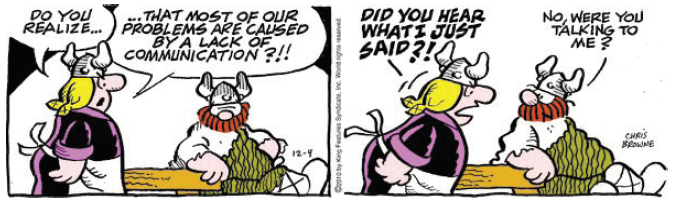
Leia a tirinha:
Fonte: http://englishteachermargarita.blogspot.com
A construção “... most of our problems are caused by a lack of communication” está na voz passiva.
Assinale a opção que a transforma em voz ativa.

 Conheça nossos planos