Questões de Vestibular Comentadas sobre inglês
Foram encontradas 2.807 questões


Ano: 2013
Banca:
CESPE / CEBRASPE
Órgão:
UNB
Prova:
CESPE - 2013 - UNB - Vestibular - Língua Inglesa |
Q335090
Inglês

Based on the text above, judge the items below.
The culinary festival with the region’s production happens twice a year
The culinary festival with the region’s production happens twice a year
Ano: 2013
Banca:
CESPE / CEBRASPE
Órgão:
UNB
Prova:
CESPE - 2013 - UNB - Vestibular - Língua Inglesa |
Q335089
Inglês
Based on the text above, judge the items below.
It is possible for tourists to visit farms and collect the fruits they want directly from the trees.
It is possible for tourists to visit farms and collect the fruits they want directly from the trees.
Ano: 2013
Banca:
CESPE / CEBRASPE
Órgão:
UNB
Prova:
CESPE - 2013 - UNB - Vestibular - Língua Inglesa |
Q335088
Inglês
Based on the text above, judge the items below.
Durham Region has the most important producer of apples in Canada.
Durham Region has the most important producer of apples in Canada.
Ano: 2013
Banca:
CESPE / CEBRASPE
Órgão:
UNB
Prova:
CESPE - 2013 - UNB - Vestibular - Língua Inglesa |
Q335087
Inglês
Based on the text above, judge the items below.
Durham Region includes only rural businesses
Durham Region includes only rural businesses
Ano: 2013
Banca:
CESPE / CEBRASPE
Órgão:
UNB
Prova:
CESPE - 2013 - UNB - Vestibular - Língua Inglesa |
Q335086
Inglês

Based on the article above, judge the items from 11 through 19.
The first theater of New York City was built in Times Square
The first theater of New York City was built in Times Square
Ano: 2013
Banca:
CESPE / CEBRASPE
Órgão:
UNB
Prova:
CESPE - 2013 - UNB - Vestibular - Língua Inglesa |
Q335085
Inglês
Based on the article above, judge the items from 11 through 19.
Because of the superior quality of its classic plays, Broadway was not much harmed by the Great Depression period.
Because of the superior quality of its classic plays, Broadway was not much harmed by the Great Depression period.
Ano: 2013
Banca:
CESPE / CEBRASPE
Órgão:
UNB
Prova:
CESPE - 2013 - UNB - Vestibular - Língua Inglesa |
Q335084
Inglês
Based on the article above, judge the items from 11 through 19.
The theater district was called “The Great White Way” because of the bright lights which promoted the shows.
The theater district was called “The Great White Way” because of the bright lights which promoted the shows.
Ano: 2013
Banca:
CESPE / CEBRASPE
Órgão:
UNB
Prova:
CESPE - 2013 - UNB - Vestibular - Língua Inglesa |
Q335083
Inglês
Based on the article above, judge the items from 11 through 19.
At the turn of the 20th century, the rise in prices of transportation increased the poverty in the USA, and the Broadway entertainment industry was significantly affected.
At the turn of the 20th century, the rise in prices of transportation increased the poverty in the USA, and the Broadway entertainment industry was significantly affected.
Ano: 2013
Banca:
CESPE / CEBRASPE
Órgão:
UNB
Prova:
CESPE - 2013 - UNB - Vestibular - Língua Inglesa |
Q335082
Inglês
Based on the article above, judge the items from 11 through 19.
After the American Civil War, land in Downtown Manhattan was more expensive than in Midtown.
After the American Civil War, land in Downtown Manhattan was more expensive than in Midtown.
Ano: 2013
Banca:
CESPE / CEBRASPE
Órgão:
UNB
Prova:
CESPE - 2013 - UNB - Vestibular - Língua Inglesa |
Q335081
Inglês
Based on the article above, judge the items from 11 through 19.
The first theater built in New York City was quite small, in terms of today’s Broadway.
The first theater built in New York City was quite small, in terms of today’s Broadway.
Ano: 2013
Banca:
CESPE / CEBRASPE
Órgão:
UNB
Prova:
CESPE - 2013 - UNB - Vestibular - Língua Inglesa |
Q335080
Inglês
Based on the article above, judge the items from 11 through 19.
Shakespeare performed in the first NYC theater.
Shakespeare performed in the first NYC theater.
Ano: 2013
Banca:
CESPE / CEBRASPE
Órgão:
UNB
Prova:
CESPE - 2013 - UNB - Vestibular - Língua Inglesa |
Q335079
Inglês
Based on the article above, judge the items from 11 through 19.
The author believes that tourists should never miss the opportunity to watch a Broadway play
The author believes that tourists should never miss the opportunity to watch a Broadway play
Ano: 2013
Banca:
CESPE / CEBRASPE
Órgão:
UNB
Prova:
CESPE - 2013 - UNB - Vestibular - Língua Inglesa |
Q335078
Inglês
Based on the article above, judge the items from 11 through 19.
It is surprising that Broadway theater still attracts attention nowadays.
It is surprising that Broadway theater still attracts attention nowadays.
Ano: 2013
Banca:
CESPE / CEBRASPE
Órgão:
UNB
Prova:
CESPE - 2013 - UNB - Vestibular - Língua Inglesa |
Q335077
Inglês
Texto associado
Besides the Oscar-winning 1939 film, The Wizard of Oz, starring Judy Garland, there has been The Wiz – starring Diana Ross and Michael Jackson –, the unofficial Disney sequel Return to Oz and even a Muppet version.
On stage, the tale has also undergone many incarnations, including the recent Andrew Lloyd Webber West End production and the Tony award-winning musical Wicked — told from the perspective of the witches —, which continues to be a hit both in London and on Broadway.
For his new take on the tale, director Sam Raimi's plan from the outset was to make a film that serves as a prequel to Baum's book.
His 3D version, Oz, The Great and Powerful, tells the untold story of how a charming man, Oscar Diggs, became the wizard of Oz.
The film stars James Franco as Diggs, who finds himself in Oz after being caught up in a tornado.
He then meets the witch sisters Theodora, Evanora and Glinda, played by Mila Kunis, Rachel Weisz and Michelle Williams respectively, who show him the good and the bad in the mystical land. Academy Award-winner Weisz says the chance to play a “good old-fashioned villainess" drew her to the role of Evanora.
“I thought it would be really fun to play someone really bad and evil... the more evil they are, the more fun they have.", she says. The actress remembers going to see the 1939 MGM film as one of her first trips to the cinema.
“What makes that film very charming is the sweetness," she says. “You can see the make-up and the special effects are at the beginning of what special effects can do." The fact that now they can make me look like I'm flying, when I'm on wires, is impressive.
Reviews for the film in the US have been mixed. The Hollywood Reporter claims the “unimaginative" film is pitched at children under the age of six, but other reviewers praise the colourful “feast for the eyes" and immersive 3D experience.
Sam Raimi re-builds Oz for a 3D audience
L. Frank Baum's children classic The Wonderful Wizard of Oz has inspired countless adaptations since it was written in 1900.
Besides the Oscar-winning 1939 film, The Wizard of Oz, starring Judy Garland, there has been The Wiz – starring Diana Ross and Michael Jackson –, the unofficial Disney sequel Return to Oz and even a Muppet version.
On stage, the tale has also undergone many incarnations, including the recent Andrew Lloyd Webber West End production and the Tony award-winning musical Wicked — told from the perspective of the witches —, which continues to be a hit both in London and on Broadway.
For his new take on the tale, director Sam Raimi's plan from the outset was to make a film that serves as a prequel to Baum's book.
His 3D version, Oz, The Great and Powerful, tells the untold story of how a charming man, Oscar Diggs, became the wizard of Oz.
The film stars James Franco as Diggs, who finds himself in Oz after being caught up in a tornado.
He then meets the witch sisters Theodora, Evanora and Glinda, played by Mila Kunis, Rachel Weisz and Michelle Williams respectively, who show him the good and the bad in the mystical land. Academy Award-winner Weisz says the chance to play a “good old-fashioned villainess" drew her to the role of Evanora.
“I thought it would be really fun to play someone really bad and evil... the more evil they are, the more fun they have.", she says. The actress remembers going to see the 1939 MGM film as one of her first trips to the cinema.
“What makes that film very charming is the sweetness," she says. “You can see the make-up and the special effects are at the beginning of what special effects can do." The fact that now they can make me look like I'm flying, when I'm on wires, is impressive.
Reviews for the film in the US have been mixed. The Hollywood Reporter claims the “unimaginative" film is pitched at children under the age of six, but other reviewers praise the colourful “feast for the eyes" and immersive 3D experience.
Internet: <
http://www.bbc.co.uk > (adapted).
Based on the text above, judge the items below
Since the beginning, it was Sam Raimi’s plan to tell a story preceding the original tale by L. Frank Baum.
Since the beginning, it was Sam Raimi’s plan to tell a story preceding the original tale by L. Frank Baum.
Ano: 2013
Banca:
CESPE / CEBRASPE
Órgão:
UNB
Prova:
CESPE - 2013 - UNB - Vestibular - Língua Inglesa |
Q335075
Inglês
Texto associado
Besides the Oscar-winning 1939 film, The Wizard of Oz, starring Judy Garland, there has been The Wiz – starring Diana Ross and Michael Jackson –, the unofficial Disney sequel Return to Oz and even a Muppet version.
On stage, the tale has also undergone many incarnations, including the recent Andrew Lloyd Webber West End production and the Tony award-winning musical Wicked — told from the perspective of the witches —, which continues to be a hit both in London and on Broadway.
For his new take on the tale, director Sam Raimi's plan from the outset was to make a film that serves as a prequel to Baum's book.
His 3D version, Oz, The Great and Powerful, tells the untold story of how a charming man, Oscar Diggs, became the wizard of Oz.
The film stars James Franco as Diggs, who finds himself in Oz after being caught up in a tornado.
He then meets the witch sisters Theodora, Evanora and Glinda, played by Mila Kunis, Rachel Weisz and Michelle Williams respectively, who show him the good and the bad in the mystical land. Academy Award-winner Weisz says the chance to play a “good old-fashioned villainess" drew her to the role of Evanora.
“I thought it would be really fun to play someone really bad and evil... the more evil they are, the more fun they have.", she says. The actress remembers going to see the 1939 MGM film as one of her first trips to the cinema.
“What makes that film very charming is the sweetness," she says. “You can see the make-up and the special effects are at the beginning of what special effects can do." The fact that now they can make me look like I'm flying, when I'm on wires, is impressive.
Reviews for the film in the US have been mixed. The Hollywood Reporter claims the “unimaginative" film is pitched at children under the age of six, but other reviewers praise the colourful “feast for the eyes" and immersive 3D experience.
Sam Raimi re-builds Oz for a 3D audience
L. Frank Baum's children classic The Wonderful Wizard of Oz has inspired countless adaptations since it was written in 1900.
Besides the Oscar-winning 1939 film, The Wizard of Oz, starring Judy Garland, there has been The Wiz – starring Diana Ross and Michael Jackson –, the unofficial Disney sequel Return to Oz and even a Muppet version.
On stage, the tale has also undergone many incarnations, including the recent Andrew Lloyd Webber West End production and the Tony award-winning musical Wicked — told from the perspective of the witches —, which continues to be a hit both in London and on Broadway.
For his new take on the tale, director Sam Raimi's plan from the outset was to make a film that serves as a prequel to Baum's book.
His 3D version, Oz, The Great and Powerful, tells the untold story of how a charming man, Oscar Diggs, became the wizard of Oz.
The film stars James Franco as Diggs, who finds himself in Oz after being caught up in a tornado.
He then meets the witch sisters Theodora, Evanora and Glinda, played by Mila Kunis, Rachel Weisz and Michelle Williams respectively, who show him the good and the bad in the mystical land. Academy Award-winner Weisz says the chance to play a “good old-fashioned villainess" drew her to the role of Evanora.
“I thought it would be really fun to play someone really bad and evil... the more evil they are, the more fun they have.", she says. The actress remembers going to see the 1939 MGM film as one of her first trips to the cinema.
“What makes that film very charming is the sweetness," she says. “You can see the make-up and the special effects are at the beginning of what special effects can do." The fact that now they can make me look like I'm flying, when I'm on wires, is impressive.
Reviews for the film in the US have been mixed. The Hollywood Reporter claims the “unimaginative" film is pitched at children under the age of six, but other reviewers praise the colourful “feast for the eyes" and immersive 3D experience.
Internet: <
http://www.bbc.co.uk > (adapted).
Based on the text above, judge the items below
Michael Jackson and Diana Ross were the stars of one of the adaptations of The Wizard of Oz.
Michael Jackson and Diana Ross were the stars of one of the adaptations of The Wizard of Oz.
Ano: 2013
Banca:
CESPE / CEBRASPE
Órgão:
UNB
Prova:
CESPE - 2013 - UNB - Vestibular - Língua Inglesa |
Q335072
Inglês
Texto associado
Besides the Oscar-winning 1939 film, The Wizard of Oz, starring Judy Garland, there has been The Wiz – starring Diana Ross and Michael Jackson –, the unofficial Disney sequel Return to Oz and even a Muppet version.
On stage, the tale has also undergone many incarnations, including the recent Andrew Lloyd Webber West End production and the Tony award-winning musical Wicked — told from the perspective of the witches —, which continues to be a hit both in London and on Broadway.
For his new take on the tale, director Sam Raimi's plan from the outset was to make a film that serves as a prequel to Baum's book.
His 3D version, Oz, The Great and Powerful, tells the untold story of how a charming man, Oscar Diggs, became the wizard of Oz.
The film stars James Franco as Diggs, who finds himself in Oz after being caught up in a tornado.
He then meets the witch sisters Theodora, Evanora and Glinda, played by Mila Kunis, Rachel Weisz and Michelle Williams respectively, who show him the good and the bad in the mystical land. Academy Award-winner Weisz says the chance to play a “good old-fashioned villainess" drew her to the role of Evanora.
“I thought it would be really fun to play someone really bad and evil... the more evil they are, the more fun they have.", she says. The actress remembers going to see the 1939 MGM film as one of her first trips to the cinema.
“What makes that film very charming is the sweetness," she says. “You can see the make-up and the special effects are at the beginning of what special effects can do." The fact that now they can make me look like I'm flying, when I'm on wires, is impressive.
Reviews for the film in the US have been mixed. The Hollywood Reporter claims the “unimaginative" film is pitched at children under the age of six, but other reviewers praise the colourful “feast for the eyes" and immersive 3D experience.
Sam Raimi re-builds Oz for a 3D audience
L. Frank Baum's children classic The Wonderful Wizard of Oz has inspired countless adaptations since it was written in 1900.
Besides the Oscar-winning 1939 film, The Wizard of Oz, starring Judy Garland, there has been The Wiz – starring Diana Ross and Michael Jackson –, the unofficial Disney sequel Return to Oz and even a Muppet version.
On stage, the tale has also undergone many incarnations, including the recent Andrew Lloyd Webber West End production and the Tony award-winning musical Wicked — told from the perspective of the witches —, which continues to be a hit both in London and on Broadway.
For his new take on the tale, director Sam Raimi's plan from the outset was to make a film that serves as a prequel to Baum's book.
His 3D version, Oz, The Great and Powerful, tells the untold story of how a charming man, Oscar Diggs, became the wizard of Oz.
The film stars James Franco as Diggs, who finds himself in Oz after being caught up in a tornado.
He then meets the witch sisters Theodora, Evanora and Glinda, played by Mila Kunis, Rachel Weisz and Michelle Williams respectively, who show him the good and the bad in the mystical land. Academy Award-winner Weisz says the chance to play a “good old-fashioned villainess" drew her to the role of Evanora.
“I thought it would be really fun to play someone really bad and evil... the more evil they are, the more fun they have.", she says. The actress remembers going to see the 1939 MGM film as one of her first trips to the cinema.
“What makes that film very charming is the sweetness," she says. “You can see the make-up and the special effects are at the beginning of what special effects can do." The fact that now they can make me look like I'm flying, when I'm on wires, is impressive.
Reviews for the film in the US have been mixed. The Hollywood Reporter claims the “unimaginative" film is pitched at children under the age of six, but other reviewers praise the colourful “feast for the eyes" and immersive 3D experience.
Internet: <
http://www.bbc.co.uk > (adapted).
Based on the text above, judge the items below
The movie The Wizard of Oz has been widely acclaimed.
The movie The Wizard of Oz has been widely acclaimed.
Ano: 2013
Banca:
CESPE / CEBRASPE
Órgão:
UNB
Prova:
CESPE - 2013 - UNB - Vestibular - Língua Inglesa |
Q335070
Inglês
Texto associado
Besides the Oscar-winning 1939 film, The Wizard of Oz, starring Judy Garland, there has been The Wiz – starring Diana Ross and Michael Jackson –, the unofficial Disney sequel Return to Oz and even a Muppet version.
On stage, the tale has also undergone many incarnations, including the recent Andrew Lloyd Webber West End production and the Tony award-winning musical Wicked — told from the perspective of the witches —, which continues to be a hit both in London and on Broadway.
For his new take on the tale, director Sam Raimi's plan from the outset was to make a film that serves as a prequel to Baum's book.
His 3D version, Oz, The Great and Powerful, tells the untold story of how a charming man, Oscar Diggs, became the wizard of Oz.
The film stars James Franco as Diggs, who finds himself in Oz after being caught up in a tornado.
He then meets the witch sisters Theodora, Evanora and Glinda, played by Mila Kunis, Rachel Weisz and Michelle Williams respectively, who show him the good and the bad in the mystical land. Academy Award-winner Weisz says the chance to play a “good old-fashioned villainess" drew her to the role of Evanora.
“I thought it would be really fun to play someone really bad and evil... the more evil they are, the more fun they have.", she says. The actress remembers going to see the 1939 MGM film as one of her first trips to the cinema.
“What makes that film very charming is the sweetness," she says. “You can see the make-up and the special effects are at the beginning of what special effects can do." The fact that now they can make me look like I'm flying, when I'm on wires, is impressive.
Reviews for the film in the US have been mixed. The Hollywood Reporter claims the “unimaginative" film is pitched at children under the age of six, but other reviewers praise the colourful “feast for the eyes" and immersive 3D experience.
Sam Raimi re-builds Oz for a 3D audience
L. Frank Baum's children classic The Wonderful Wizard of Oz has inspired countless adaptations since it was written in 1900.
Besides the Oscar-winning 1939 film, The Wizard of Oz, starring Judy Garland, there has been The Wiz – starring Diana Ross and Michael Jackson –, the unofficial Disney sequel Return to Oz and even a Muppet version.
On stage, the tale has also undergone many incarnations, including the recent Andrew Lloyd Webber West End production and the Tony award-winning musical Wicked — told from the perspective of the witches —, which continues to be a hit both in London and on Broadway.
For his new take on the tale, director Sam Raimi's plan from the outset was to make a film that serves as a prequel to Baum's book.
His 3D version, Oz, The Great and Powerful, tells the untold story of how a charming man, Oscar Diggs, became the wizard of Oz.
The film stars James Franco as Diggs, who finds himself in Oz after being caught up in a tornado.
He then meets the witch sisters Theodora, Evanora and Glinda, played by Mila Kunis, Rachel Weisz and Michelle Williams respectively, who show him the good and the bad in the mystical land. Academy Award-winner Weisz says the chance to play a “good old-fashioned villainess" drew her to the role of Evanora.
“I thought it would be really fun to play someone really bad and evil... the more evil they are, the more fun they have.", she says. The actress remembers going to see the 1939 MGM film as one of her first trips to the cinema.
“What makes that film very charming is the sweetness," she says. “You can see the make-up and the special effects are at the beginning of what special effects can do." The fact that now they can make me look like I'm flying, when I'm on wires, is impressive.
Reviews for the film in the US have been mixed. The Hollywood Reporter claims the “unimaginative" film is pitched at children under the age of six, but other reviewers praise the colourful “feast for the eyes" and immersive 3D experience.
Internet: <
http://www.bbc.co.uk > (adapted).
Based on the text above, judge the items below
The 1939 The Wizard of Oz was part of Rachel Weisz’s introduction to the world of the cinema.
The 1939 The Wizard of Oz was part of Rachel Weisz’s introduction to the world of the cinema.
Ano: 2013
Banca:
COPEVE-UFAL
Órgão:
UNEAL
Prova:
COPEVE-UFAL - 2013 - UNEAL - Vestibular - Prova 1 |
Q291770
Inglês
A figura seguinte serve para responder a questão 36.
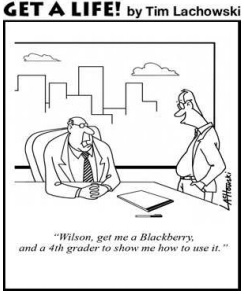
A sátira apresentada na tira acima esta relacionada com
A sátira apresentada na tira acima esta relacionada com
Ano: 2013
Banca:
COPEVE-UFAL
Órgão:
UNEAL
Prova:
COPEVE-UFAL - 2013 - UNEAL - Vestibular - Prova 1 |
Q291769
Inglês
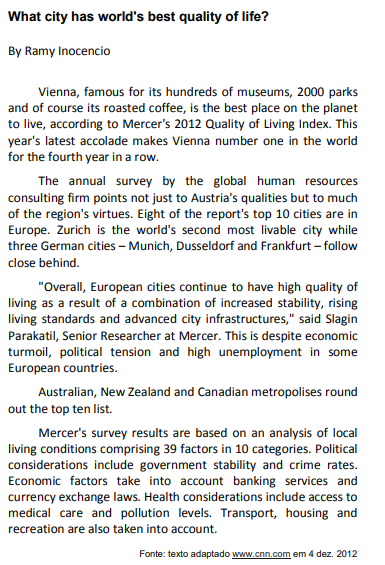
De acordo com o texto, apesar dos problemas enfrentados pelos países da Europa, as suas cidades foram consideradas as melhores do mundo para se viver devido
Ano: 2013
Banca:
COPEVE-UFAL
Órgão:
UNEAL
Prova:
COPEVE-UFAL - 2013 - UNEAL - Vestibular - Prova 1 |
Q291768
Inglês
Em recente pesquisa, Viena foi escolhida como sendo o melhor lugar do planeta para morar, alguns fatores foram levados em consideração para esta escolha, qual destes fatores não é mencionado no texto?

 Conheça nossos planos