Questões de Vestibular Sobre inglês
Foram encontradas 6.365 questões


PROJECT DETAILS
* PRINCIPAL SCIENTIST: Peter Kohler, founder and director of The Plastic Tide
* SCIENTIST AFFILIATION: The Scientific Exploration Society and the Royal Geographical Society
* DATES: Ongoing
* PROJECT TYPE: Data Processing
* COST: Free
* GRADE LEVEL: All Ages
* TIME COMMITMENT: variable
* HOW TO JOIN:
REGISTER AT THE ZOONIVERSE WEB SITE. THEN USE YOUR COMPUTER OR MOBILE DEVICE TO ANALYZE IMAGES IN THE PLASTIC TIDE’S DATABASE FOR PLASTICS AND LITTER. TAG EACH PIECE OF PLASTIC YOU SPOT BY DRAWING A RECTANGLE AROUND IT ON YOUR SCREEN AND IDENTIFY IT AS FRAGMENTS, FISHING LINE, DRINK BOTTLES OR SOME OTHER TYPE OF PLASTIC WASTE.
Estimates are currently at trillions of pieces and counting, with over 60 percent of the oceans being heavily contaminated with plastics. With each piece of plastic taking over 400 years to degrade, our oceans, all marine life, and even our own health and livelihoods are in real danger of drowning. Despite this and the 8 million tons of plastics entering our ocean each year, researchers can account for only one percent of that ends up: our ocean surface. Where is the missing 99 percent?
The answer can be found on the seafloor, in marine life, and on our coastlines. The Zooniverse Plastic Tide citizen science project harnesses drone imagery from a series of beaches and the power of computer programs, or machine learning algorithms for the more technically minded, to eventually create a program that can autodetect, measure and monitor the levels of plastics and marine litter washing up on our beaches. Eventually helping us to track where plastics and litter go in our oceans, revealing where the missing 99 percent is in our ocean goes.
By tagging plastics and litter in the images we take with our drone, citizen scientists directly teach our computer program to autodetect, measure and monitor plastics to help researchers answer how much of the missing 99 percent ends up on our beaches. The more you tag, the better the computer program gets at identifying plastics!
GREENEMEIER, L. The Plastic Tide. In: Scientific American (online) Citizen Science. 28 abr. 2018. Disponível em www.scientificamerican.com
Com relação à pesquisa, atribua V (verdadeiro) ou F (falso) às afirmativas a seguir.
( ) O objetivo geral da pesquisa é descobrir o paradeiro dos rejeitos plásticos despejados nos oceanos.
( ) Com o auxílio do banco de dados gerado pela pesquisa, cientistas já conseguem identificar o paradeiro de 1% dos rejeitos plásticos.
( ) Os resíduos plásticos que representam uma ameaça urgente são as linhas de pesca e as garrafas plásticas.
( ) O trabalho dos voluntários com as fotografias auxilia o computador a identificar diferentes tipos de resíduos plásticos.
( ) Segundo estimativas, os resíduoas plásticos contaminam mais da metade dos oceanos.
Assinale a alternativa que contém, de cima para baixo, a sequência correta.
PROJECT DETAILS
* PRINCIPAL SCIENTIST: Peter Kohler, founder and director of The Plastic Tide
* SCIENTIST AFFILIATION: The Scientific Exploration Society and the Royal Geographical Society
* DATES: Ongoing
* PROJECT TYPE: Data Processing
* COST: Free
* GRADE LEVEL: All Ages
* TIME COMMITMENT: variable
* HOW TO JOIN:
REGISTER AT THE ZOONIVERSE WEB SITE. THEN USE YOUR COMPUTER OR MOBILE DEVICE TO ANALYZE IMAGES IN THE PLASTIC TIDE’S DATABASE FOR PLASTICS AND LITTER. TAG EACH PIECE OF PLASTIC YOU SPOT BY DRAWING A RECTANGLE AROUND IT ON YOUR SCREEN AND IDENTIFY IT AS FRAGMENTS, FISHING LINE, DRINK BOTTLES OR SOME OTHER TYPE OF PLASTIC WASTE.
Estimates are currently at trillions of pieces and counting, with over 60 percent of the oceans being heavily contaminated with plastics. With each piece of plastic taking over 400 years to degrade, our oceans, all marine life, and even our own health and livelihoods are in real danger of drowning. Despite this and the 8 million tons of plastics entering our ocean each year, researchers can account for only one percent of that ends up: our ocean surface. Where is the missing 99 percent?
The answer can be found on the seafloor, in marine life, and on our coastlines. The Zooniverse Plastic Tide citizen science project harnesses drone imagery from a series of beaches and the power of computer programs, or machine learning algorithms for the more technically minded, to eventually create a program that can autodetect, measure and monitor the levels of plastics and marine litter washing up on our beaches. Eventually helping us to track where plastics and litter go in our oceans, revealing where the missing 99 percent is in our ocean goes.
By tagging plastics and litter in the images we take with our drone, citizen scientists directly teach our computer program to autodetect, measure and monitor plastics to help researchers answer how much of the missing 99 percent ends up on our beaches. The more you tag, the better the computer program gets at identifying plastics!
GREENEMEIER, L. The Plastic Tide. In: Scientific American (online) Citizen Science. 28 abr. 2018. Disponível em www.scientificamerican.com
De acordo com o texto, considere as afirmativas a seguir.
I. A coleta de dados para a pesquisa está em progresso e a participação é isenta de restrições.
II. As fotografias tiradas pelos drones alimentam o banco de dados da pesquisa.
III. Os participantes do projeto auxiliam na catalogação dos resíduos plásticos fotografados, presentes no banco de dados.
IV. Por meio de um aplicativo nos telefones celulares, os participantes enviam fotos de rejeitos plásticos encontrados nas praias.
Assinale a alternativa correta.
PROJECT DETAILS
* PRINCIPAL SCIENTIST: Peter Kohler, founder and director of The Plastic Tide
* SCIENTIST AFFILIATION: The Scientific Exploration Society and the Royal Geographical Society
* DATES: Ongoing
* PROJECT TYPE: Data Processing
* COST: Free
* GRADE LEVEL: All Ages
* TIME COMMITMENT: variable
* HOW TO JOIN:
REGISTER AT THE ZOONIVERSE WEB SITE. THEN USE YOUR COMPUTER OR MOBILE DEVICE TO ANALYZE IMAGES IN THE PLASTIC TIDE’S DATABASE FOR PLASTICS AND LITTER. TAG EACH PIECE OF PLASTIC YOU SPOT BY DRAWING A RECTANGLE AROUND IT ON YOUR SCREEN AND IDENTIFY IT AS FRAGMENTS, FISHING LINE, DRINK BOTTLES OR SOME OTHER TYPE OF PLASTIC WASTE.
Estimates are currently at trillions of pieces and counting, with over 60 percent of the oceans being heavily contaminated with plastics. With each piece of plastic taking over 400 years to degrade, our oceans, all marine life, and even our own health and livelihoods are in real danger of drowning. Despite this and the 8 million tons of plastics entering our ocean each year, researchers can account for only one percent of that ends up: our ocean surface. Where is the missing 99 percent?
The answer can be found on the seafloor, in marine life, and on our coastlines. The Zooniverse Plastic Tide citizen science project harnesses drone imagery from a series of beaches and the power of computer programs, or machine learning algorithms for the more technically minded, to eventually create a program that can autodetect, measure and monitor the levels of plastics and marine litter washing up on our beaches. Eventually helping us to track where plastics and litter go in our oceans, revealing where the missing 99 percent is in our ocean goes.
By tagging plastics and litter in the images we take with our drone, citizen scientists directly teach our computer program to autodetect, measure and monitor plastics to help researchers answer how much of the missing 99 percent ends up on our beaches. The more you tag, the better the computer program gets at identifying plastics!
GREENEMEIER, L. The Plastic Tide. In: Scientific American (online) Citizen Science. 28 abr. 2018. Disponível em www.scientificamerican.com

Mafalda, personagem famosa por seu pensamento crítico, discute um tema de grande importância para o mundo.
Aponte a alternativa que melhor explica o contido na tirinha lida.
Texto 4:
Venezuelan official suggests migrant crisis is staged to undermine government
Diosdado Cabello implied that photos and news of refugees fleeing through South America on foot are fake as the UN warns the situation is nearing a ‘crisis moment’
Tom Phillips Latin America correspondent
Venezuela’s number two official has suggested his country’s escalating migration crisis – described by the United Nations as one of the worst in Latin American history – is being staged as part of a rightwing ruse to undermine his government.
Speaking at a congress of the ruling United Social party this week, Diosdado Cabello implied that images of Venezuelans fleeing through South America on foot had been manufactured. “It’s as if it was: ‘Lights, camera, action!’ It is a campaign against our country – a campaign of extraordinary dimensions,” Cabello added.
The UN estimates 2.3 million Venezuelans have fled since
2015 with Colombia expecting 2 million more to follow by
2020. That would mean 4.3 million people – 14% of
Venezuela’s population – had left. Last week, the UN’s
migration agency warned the mass migration is nearing a
“crisis moment” comparable to events involving refugees in
the Mediterranean. Many of those now heading into
neighbouring countries such as Brazil and Colombia are so
impoverished they do so on foot.
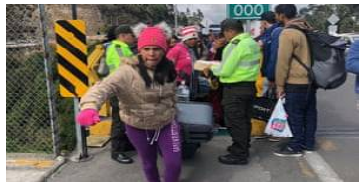
The UN estimates 2.3 million Venezuelans have fled since 2015 with Colombia expecting 2 million more to follow by 2020. Photograph: Evelin Rosas/EPA
On Tuesday, Venezuelan state media trumpeted the “repatriation” of 89 migrants who had reportedly been flown home from Peru free of charge after suffering exploitation abroad.
Disponível em https://www.theguardian.com/world/2018/aug/28/venezuela-diosdado-cabello-refugee-footage-fake. Acessado em 22/10/2018
O jornal The Guardian retrata um problema social vivido, sobretudo, em 2018, pelos venezuelanos. Com base no texto
lido, aponte a alternativa que retrata mais adequadamente a posição do governo da Venezuela sobre o assunto:
Texto 3:
Born Too Soon in a Country at War. Their Only Hope? This Clinic. By Kassie Bracken and Megan Special August 27, 2018
The baby girl has stopped breathing. She was born prematurely and is only 3 weeks old. Her mother, Restina Boniface, took her to the only public neonatal clinic in South Sudan. The country is one of the toughest places in the world for newborns with health problems to survive. Ten feet away sits a donated respiratory machine that could save the baby. But lacking a critical part, it goes unused. The doctor tries to resuscitate the baby for several minutes. Finally, she begins breathing on her own. One in 10 babies brought to this clinic will die, most from treatable conditions. But many mothers have nowhere else to go.
South Sudan, the world’s youngest nation, is in the midst of a humanitarian crisis. A brutal civil war has drained the economy. As hospitals closed, doctors were forced to flee. Inside the clinic, many babies remain nameless. Their mothers know they may not make it. “Our mothers here, they come for help,” said Rose Tongan, a pediatrician. “And you pity them. You can’t do anything.” Electricity cuts out for days at a time. There is no formula for the premature babies, no lab for blood tests, no facility for X-rays. There are no beds for breast-feeding mothers. They must sleep outside, where they are at risk of infection and vulnerable to assault. “I feel like: What can I do?” Dr. Tongan said.
Hellen Sitima’s 3-day-old daughter is sick. “When we get home, then that’s the time to name the baby,” she says. Dr. Tongan has no access to lab tests, but she determines that Ms. Sitima’s baby has a respiratory infection. The infection clears, and Ms. Sitima takes her daughter home. She names her Gift.
Disponível em https://www.nytimes.com/interactive/2018/08/28/multimedia/ south-sudan-babies.html. Acessado em 22/10/2018
O texto relata a situação crítica em que se encontram hospitais no Sudão do Sul e de alguns pacientes que deles precisam para sobreviver. Assim sendo, assinale a alternativa que corresponde ao lido:
Texto 2:
Are LED lights making us ill?
By Lucy Jones
Over the last decade, much of Europe and the US have changed the way they illuminate city and town streets. They have replaced high-energy sodium bulbs (the warmer, yellow ones) with energy-saving LED bulbs (with a blue light emitting diode, which can feel harsh in comparison). As well as street lights, most of us are exposed to blue light through smartphones, computers, TVs, and in the home.
The World Journal of Biological Psychiatry published a paper that warned of the potential effects of LED lighting on mental illness. It raised concerns about the influence of blue light on sleep, other circadian-mediated symptoms, use of digital healthcare apps and devices, and the higher sensitivity of teenagers to blue light. Specifically, the researchers are concerned about the relationship between light exposure and the occurrence of manic and mixed symptoms in bipolar disorder, having adverse effects on manic states and the sleep-wake cycle. For example, the use of smartphones or computers by those people before bed could have a bad effect on their sleep, circadian rhythms and health.
Studies of the impact of blue light on healthy adults show it inhibits melatonin secretion which disrupts sleep and can affect quality of life, physical and mental health and susceptibility to illness.
Previous studies of sleep disorders in children and adolescents show a clear and consistent relationship between sleep disorders and frequency of digital device usage.
Currently, the National Sleep Foundation guidelines suggest not using technology 30 minutes before bed and removing technology for the bedroom. However, there are currently no specific guidelines for people with an underlying mental illness or sensitivity to circadian disruption.
As LED technology has rapidly spread across the globe, the focus has been on the visual element and the energysaving element. Now, scientists, health professionals and the LED industry are working to minimise the blue light in LEDs and create customisable lights that won’t harm those suffering from psychiatric disorders.
Disponível em https://www.bbcearth.com/blog/?article=are-led-lights-making-us-ill Acessado em 22/10/2018
A rápida substituição de lâmpadas comuns por lâmpadas de LED em todos os setores e locais tiveram duas razões
principais: a visual e a economia de energia. Porém, importantes estudos estão investigando se há consequências
deste uso para a saúde. Assim, de acordo com o texto, é possível dizer que:
Texto 1:
Accountant Job Application Cover Letter
To,
Bonn, Joseph
Regional Director
All Digital
102, Lake avenue
Torres, Paulo
Dated: 5th of May 2018 Subject: Application for the position of an accountant
Respected Mr. Bonn
This letter is in regards to the job advertisement posted by your organization in MMO magazine concerning to the requirement of a candidate in the position of an accountant for which I am interested and I would like to apply for. I have worked in similar position for five years and my last job was with Aspen Group where I used to prepare accounting statements for the organization, ensuring that balance sheet was tallied, compiling financial information and implementing accounting control procedures. I also had to ensure that accuracy is maintained in all statements and documents and solve any existing accounting discrepancy. I have excellent calculative skills and an eye for detail besides being good at preparing reports and statements. I can assure that my previous work experience is going to benefit your organization.
It would be great if we could meet for an interview round. My resume is enclosed.
Regards, Nataniel Lucas Disponível em https://www.dayjob.com/content/ accountant-cover-letter-example-350.htm. Acessado em 22/10/2018 (adaptado)
O gênero Carta é ainda um meio de comunicação muito usado, sobretudo no mundo do trabalho. Assim, leia a carta de
Nataniel Lucas e identifique o tipo de carta e sua finalidade:

Analise as assertivas a seguir e marque a alternativa CORRETA.
I - A poluição do ar, da água e do solo ocorre separadamente. Por isso, os ecossistemas não são inteiramente impactados.
II - A maioria das fontes de poluição resulta da atividade humana.
III - Reduzir a poluição em uma área de um ecossistema também pode ajudar a proteger outra parte do ecossistema.
Leia o texto para responder às questões
Prescriptions for fighting epidemics

Epidemics have plagued humanity since the dawn of
settled life. Yet, success in conquering them remains patchy.
Experts predict that a global one that could kill more than 300
million people would come round in the next 20 to 40 years.
What pathogen would cause it is anybody’s guess. Chances
are that it will be a virus that lurks in birds or mammals, or
one that that has not yet hatched. The scariest are both highly
lethal and spread easily among humans. Thankfully, bugs that
excel at the first tend to be weak at the other. But mutations
– ordinary business for germs – can change that in a blink.
Moreover, when humans get too close to beasts, either
wild or packed in farms, an animal disease can become a
human one.
A front-runner for global pandemics is the seasonal
influenza virus, which mutates so much that a vaccine must
be custom-made every year. The Spanish flu pandemic of
1918, which killed 50 million to 100 million people, was a
potent version of the “swine flu” that emerged in 2009. The
H5N1 “avian flu” strain, deadly in 60% of cases, came about
in the 1990s when a virus that sickened birds made the jump
to a human. Ebola, HIV and Zika took a similar route.
(www.economist.com, 08.02.2018. Adaptado.)
Leia o texto para responder às questões
Prescriptions for fighting epidemics
Epidemics have plagued humanity since the dawn of
settled life. Yet, success in conquering them remains patchy.
Experts predict that a global one that could kill more than 300
million people would come round in the next 20 to 40 years.
What pathogen would cause it is anybody’s guess. Chances
are that it will be a virus that lurks in birds or mammals, or
one that that has not yet hatched. The scariest are both highly
lethal and spread easily among humans. Thankfully, bugs that
excel at the first tend to be weak at the other. But mutations
– ordinary business for germs – can change that in a blink.
Moreover, when humans get too close to beasts, either
wild or packed in farms, an animal disease can become a
human one.
A front-runner for global pandemics is the seasonal
influenza virus, which mutates so much that a vaccine must
be custom-made every year. The Spanish flu pandemic of
1918, which killed 50 million to 100 million people, was a
potent version of the “swine flu” that emerged in 2009. The
H5N1 “avian flu” strain, deadly in 60% of cases, came about
in the 1990s when a virus that sickened birds made the jump
to a human. Ebola, HIV and Zika took a similar route.
(www.economist.com, 08.02.2018. Adaptado.)
Leia o texto para responder às questões
Prescriptions for fighting epidemics
Epidemics have plagued humanity since the dawn of
settled life. Yet, success in conquering them remains patchy.
Experts predict that a global one that could kill more than 300
million people would come round in the next 20 to 40 years.
What pathogen would cause it is anybody’s guess. Chances
are that it will be a virus that lurks in birds or mammals, or
one that that has not yet hatched. The scariest are both highly
lethal and spread easily among humans. Thankfully, bugs that
excel at the first tend to be weak at the other. But mutations
– ordinary business for germs – can change that in a blink.
Moreover, when humans get too close to beasts, either
wild or packed in farms, an animal disease can become a
human one.
A front-runner for global pandemics is the seasonal
influenza virus, which mutates so much that a vaccine must
be custom-made every year. The Spanish flu pandemic of
1918, which killed 50 million to 100 million people, was a
potent version of the “swine flu” that emerged in 2009. The
H5N1 “avian flu” strain, deadly in 60% of cases, came about
in the 1990s when a virus that sickened birds made the jump
to a human. Ebola, HIV and Zika took a similar route.
(www.economist.com, 08.02.2018. Adaptado.)
Leia o texto para responder às questões
Prescriptions for fighting epidemics
Epidemics have plagued humanity since the dawn of
settled life. Yet, success in conquering them remains patchy.
Experts predict that a global one that could kill more than 300
million people would come round in the next 20 to 40 years.
What pathogen would cause it is anybody’s guess. Chances
are that it will be a virus that lurks in birds or mammals, or
one that that has not yet hatched. The scariest are both highly
lethal and spread easily among humans. Thankfully, bugs that
excel at the first tend to be weak at the other. But mutations
– ordinary business for germs – can change that in a blink.
Moreover, when humans get too close to beasts, either
wild or packed in farms, an animal disease can become a
human one.
A front-runner for global pandemics is the seasonal
influenza virus, which mutates so much that a vaccine must
be custom-made every year. The Spanish flu pandemic of
1918, which killed 50 million to 100 million people, was a
potent version of the “swine flu” that emerged in 2009. The
H5N1 “avian flu” strain, deadly in 60% of cases, came about
in the 1990s when a virus that sickened birds made the jump
to a human. Ebola, HIV and Zika took a similar route.
(www.economist.com, 08.02.2018. Adaptado.)
Leia o texto para responder às questões
Prescriptions for fighting epidemics
Epidemics have plagued humanity since the dawn of
settled life. Yet, success in conquering them remains patchy.
Experts predict that a global one that could kill more than 300
million people would come round in the next 20 to 40 years.
What pathogen would cause it is anybody’s guess. Chances
are that it will be a virus that lurks in birds or mammals, or
one that that has not yet hatched. The scariest are both highly
lethal and spread easily among humans. Thankfully, bugs that
excel at the first tend to be weak at the other. But mutations
– ordinary business for germs – can change that in a blink.
Moreover, when humans get too close to beasts, either
wild or packed in farms, an animal disease can become a
human one.
A front-runner for global pandemics is the seasonal
influenza virus, which mutates so much that a vaccine must
be custom-made every year. The Spanish flu pandemic of
1918, which killed 50 million to 100 million people, was a
potent version of the “swine flu” that emerged in 2009. The
H5N1 “avian flu” strain, deadly in 60% of cases, came about
in the 1990s when a virus that sickened birds made the jump
to a human. Ebola, HIV and Zika took a similar route.
(www.economist.com, 08.02.2018. Adaptado.)
Leia o texto para responder às questões
Prescriptions for fighting epidemics
Epidemics have plagued humanity since the dawn of
settled life. Yet, success in conquering them remains patchy.
Experts predict that a global one that could kill more than 300
million people would come round in the next 20 to 40 years.
What pathogen would cause it is anybody’s guess. Chances
are that it will be a virus that lurks in birds or mammals, or
one that that has not yet hatched. The scariest are both highly
lethal and spread easily among humans. Thankfully, bugs that
excel at the first tend to be weak at the other. But mutations
– ordinary business for germs – can change that in a blink.
Moreover, when humans get too close to beasts, either
wild or packed in farms, an animal disease can become a
human one.
A front-runner for global pandemics is the seasonal
influenza virus, which mutates so much that a vaccine must
be custom-made every year. The Spanish flu pandemic of
1918, which killed 50 million to 100 million people, was a
potent version of the “swine flu” that emerged in 2009. The
H5N1 “avian flu” strain, deadly in 60% of cases, came about
in the 1990s when a virus that sickened birds made the jump
to a human. Ebola, HIV and Zika took a similar route.
(www.economist.com, 08.02.2018. Adaptado.)
Leia o texto para responder às questões
Prescriptions for fighting epidemics
Epidemics have plagued humanity since the dawn of
settled life. Yet, success in conquering them remains patchy.
Experts predict that a global one that could kill more than 300
million people would come round in the next 20 to 40 years.
What pathogen would cause it is anybody’s guess. Chances
are that it will be a virus that lurks in birds or mammals, or
one that that has not yet hatched. The scariest are both highly
lethal and spread easily among humans. Thankfully, bugs that
excel at the first tend to be weak at the other. But mutations
– ordinary business for germs – can change that in a blink.
Moreover, when humans get too close to beasts, either
wild or packed in farms, an animal disease can become a
human one.
A front-runner for global pandemics is the seasonal
influenza virus, which mutates so much that a vaccine must
be custom-made every year. The Spanish flu pandemic of
1918, which killed 50 million to 100 million people, was a
potent version of the “swine flu” that emerged in 2009. The
H5N1 “avian flu” strain, deadly in 60% of cases, came about
in the 1990s when a virus that sickened birds made the jump
to a human. Ebola, HIV and Zika took a similar route.
(www.economist.com, 08.02.2018. Adaptado.)

 Conheça nossos planos