Questões de Vestibular Sobre inglês
Foram encontradas 6.365 questões


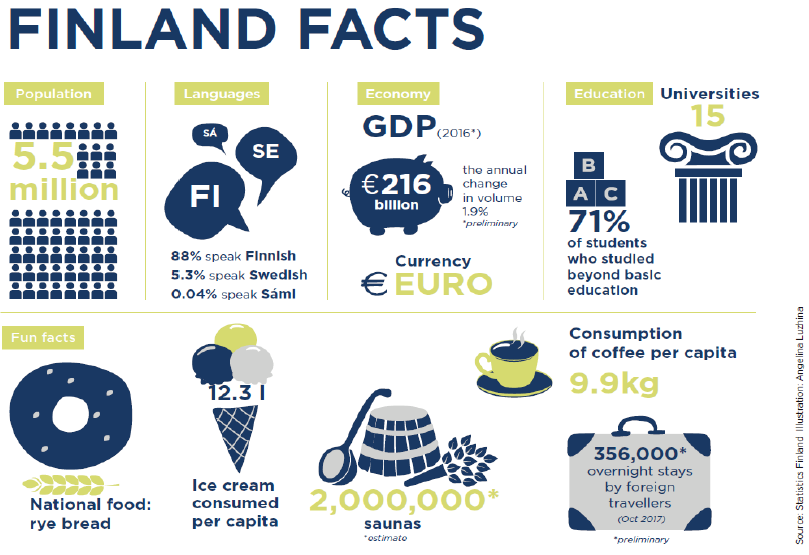
Disponível em: <https://issuu.com/finnair_bluewings/docs/bluewings_01_2018/98>. Acesso em: 07 jun. 2018.
According to the information expressed in the image and data
Leia o texto e responda à questão.
Keywords: human beings are not very good at keyword searches. There's a fallacy that human beings looking at documents is the gold standard which cannot be, because human may miss things.
Database: the explosion in the amount of electronic data generated today makes it hard for human workers to keep up. This so much more data nowadays need these technologies find relevant material for lawyers. Also the AI could not just look at the text of a document or email, it can look at the tone of the conversation, who sent it, to check if the item should be flagged for review in litigation.
Restless: computers don't get tired, they don't get hungry, they don't sleep in and all of the things that are biological problems that can happen to a human being can't happen to computers.
An example of this technology is ROSS - it is a legal research platform based on IBM's cognitive computing system Watson. This technology is being used by a number of law firms, which state that the legal sector has being changing along the years. Firms, particularly larger ones, begin to see the advantage of AI, and their legal future possibly will completely change, with lawyers working from office, home office and other possibilities.
Leia o texto e responda à questão.
Keywords: human beings are not very good at keyword searches. There's a fallacy that human beings looking at documents is the gold standard which cannot be, because human may miss things.
Database: the explosion in the amount of electronic data generated today makes it hard for human workers to keep up. This so much more data nowadays need these technologies find relevant material for lawyers. Also the AI could not just look at the text of a document or email, it can look at the tone of the conversation, who sent it, to check if the item should be flagged for review in litigation.
Restless: computers don't get tired, they don't get hungry, they don't sleep in and all of the things that are biological problems that can happen to a human being can't happen to computers.
An example of this technology is ROSS - it is a legal research platform based on IBM's cognitive computing system Watson. This technology is being used by a number of law firms, which state that the legal sector has being changing along the years. Firms, particularly larger ones, begin to see the advantage of AI, and their legal future possibly will completely change, with lawyers working from office, home office and other possibilities.
Leia o texto e responda à questão.
Keywords: human beings are not very good at keyword searches. There's a fallacy that human beings looking at documents is the gold standard which cannot be, because human may miss things.
Database: the explosion in the amount of electronic data generated today makes it hard for human workers to keep up. This so much more data nowadays need these technologies find relevant material for lawyers. Also the AI could not just look at the text of a document or email, it can look at the tone of the conversation, who sent it, to check if the item should be flagged for review in litigation.
Restless: computers don't get tired, they don't get hungry, they don't sleep in and all of the things that are biological problems that can happen to a human being can't happen to computers.
An example of this technology is ROSS - it is a legal research platform based on IBM's cognitive computing system Watson. This technology is being used by a number of law firms, which state that the legal sector has being changing along the years. Firms, particularly larger ones, begin to see the advantage of AI, and their legal future possibly will completely change, with lawyers working from office, home office and other possibilities.
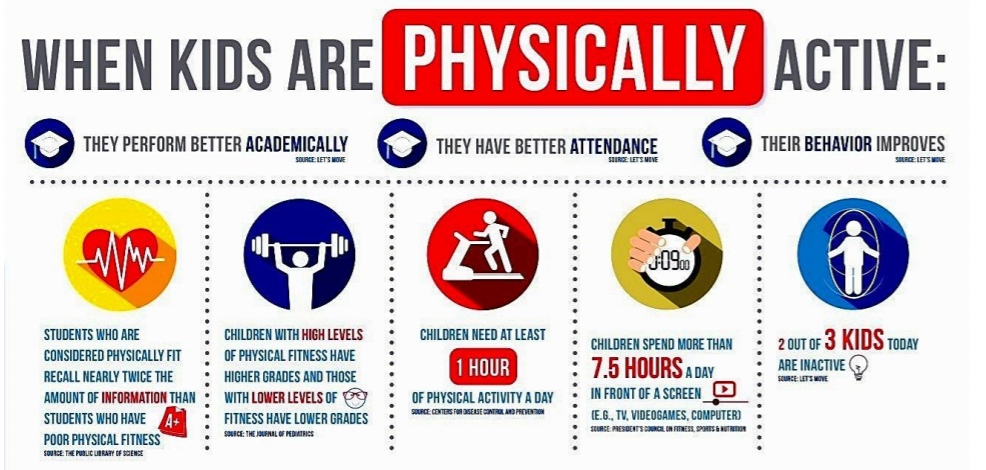 Disponível em: <https://www.paradigmsports.ca/a-healthy-mind-in-a-healthy-body/>. Acesso em: 09 out. 2018.
According to the information expressed in the image and data, when kids are physically active, we verify that

Leia o texto a seguir para responder a questão.
Global warming is intensifying El Niño weather
As humans put more and more heat-trapping gases into the atmosphere, the Earth warms. And the warming is causing changes that might surprise us. Not only is the warming causing long-term trends in heat, sea level rise, ice loss, etc.; it’s also making our weather more variable. It’s making otherwise natural cycles of weather more powerful.
Perhaps the most important natural fluctuation in the Earth’s climate is the El Niño process. El Niño refers to a short-term period of warm ocean surface temperatures in the tropical Pacific, basically stretching from South America towards Australia. When an El Niño happens, that region is warmer than usual. If the counterpart La Niña occurs, the region is colder than usual. Often times, neither an El Niño or La Niña is present and the waters are a normal temperature. This would be called a “neutral” state.
The ocean waters switch back and forth between El Niño and La Niña every few years. Not regularly, like a pendulum, but there is a pattern of oscillation. And regardless of which part of the cycle we are in (El Niño or La Niña), there are consequences for weather around the world. For instance, during an El Niño, we typically see cooler and wetter weather in the southern United States while it is hotter and drier in South America and Australia.
It’s really important to be able to predict El Niño/La Niña cycles in advance. It’s also important to be able to understand how these cycles will change in a warming planet.
El Niño cycles have been known for a long time. Their influence around the world has also been known for almost 100 years. Having observed the effects of El Niño for a century, scientists had the perspective to understand something might be changing.
The relationship between regional climate and the El Niño/La Niña status in climate model simulations of the past and future. It was found an intensification of El Niño/La Niña impacts in a warmer climate, especially for land regions in North America and Australia. Changes between El Niño/La Niña in other areas, like South America, were less clear. The intensification of weather was more prevalent over land regions.
And this conclusion can be extended to many other situations around the planet. Human pollution is making our Earth’s natural weather switch more strongly from one extreme to another. It’s a weather whiplash that will continue to get worse as we add pollution to the atmosphere.
Fortunately, every other country on the planet (with the exception of the US leadership) understands that climate change is an important issue and those countries are taking action. It isn’t too late to change our trajectory toward a better future for all of us. But the time is running out. The Earth is giving us a little nudge by showing us, via today’s intense weather, what tomorrow will be like if we don’t take action quickly.
Disponível em: <https://www.theguardian.com/environment/climate-consensus-97-per-cent/2018/aug/29/global-warming-is-intensifying-el-nino-weather>. Acesso
em: 19 set. 2018. (Adaptado)

Answer the question below according.
I. It ( line 10) II. They (line 08) III. Our(line18) IV. Them (line 16)
( ) students ( ) we ( ) English ( ) words
The right sequence from top to bottom is:
Answer the question below according.
Answer the question below according.
Answer the question below according.
Methods: Using data from the Survey of Lifestyle Attitudes and Nutrition (SLÁN) 2007 (), a protective lifestyle behaviour (PLB) score was constructed for 10 364 men and women (>18 years), and representative of the Republic of Ireland adult population (response rate 62%). Respondents scored a maximum of four points, one point each for being physically active, consuming five or more fruit and vegetable servings daily, a non-smoker and a moderate drinker.
Results: One-fifth of respondents (20%) adopted four PLBs, 35% adopted three, 29% two, 13% one and 2% adopted none. Compared to those with zero PLBs, those with four were seven times more likely to rate their general health as excellent/very good [OR 6.8 95% Cl (3.64- 12.82)] and four times more likely to have better mental health [OR 4.4 95% Cl (2.34-8.22)].
Conclusions: Adoption of core protective lifestyle factors known to increase life expectancy is associated with positive self-rated health, healthier weight and better mental health. These lifestyles have the potential to add quality and quantity to life.
Key words: lifestyle behaviours, self-rated, health, obesity, depression, protective factors.
Topic: ethanol, obesity, physical activity, smoking, depressive disorders, fruit, Ireland, life style, mental health, vegetables, overweight, feelings. Issue Section: Lifestyle and living conditions
Methods: Using data from the Survey of Lifestyle Attitudes and Nutrition (SLÁN) 2007 (), a protective lifestyle behaviour (PLB) score was constructed for 10 364 men and women (>18 years), and representative of the Republic of Ireland adult population (response rate 62%). Respondents scored a maximum of four points, one point each for being physically active, consuming five or more fruit and vegetable servings daily, a non-smoker and a moderate drinker.
Results: One-fifth of respondents (20%) adopted four PLBs, 35% adopted three, 29% two, 13% one and 2% adopted none. Compared to those with zero PLBs, those with four were seven times more likely to rate their general health as excellent/very good [OR 6.8 95% Cl (3.64- 12.82)] and four times more likely to have better mental health [OR 4.4 95% Cl (2.34-8.22)].
Conclusions: Adoption of core protective lifestyle factors known to increase life expectancy is associated with positive self-rated health, healthier weight and better mental health. These lifestyles have the potential to add quality and quantity to life.
Key words: lifestyle behaviours, self-rated, health, obesity, depression, protective factors.
Topic: ethanol, obesity, physical activity, smoking, depressive disorders, fruit, Ireland, life style, mental health, vegetables, overweight, feelings. Issue Section: Lifestyle and living conditions
Match the columns to have the right meaning from the Text.
I. Survey
II. Likely
III. Behavior
IV. Intake
V. Data
( ) conduct
( ) feasible
( ) scrutinity
( ) information in visible form
( ) consumption
Mark the alternative which shows de correct order, fron top to bottom.
Methods: Using data from the Survey of Lifestyle Attitudes and Nutrition (SLÁN) 2007 (), a protective lifestyle behaviour (PLB) score was constructed for 10 364 men and women (>18 years), and representative of the Republic of Ireland adult population (response rate 62%). Respondents scored a maximum of four points, one point each for being physically active, consuming five or more fruit and vegetable servings daily, a non-smoker and a moderate drinker.
Results: One-fifth of respondents (20%) adopted four PLBs, 35% adopted three, 29% two, 13% one and 2% adopted none. Compared to those with zero PLBs, those with four were seven times more likely to rate their general health as excellent/very good [OR 6.8 95% Cl (3.64- 12.82)] and four times more likely to have better mental health [OR 4.4 95% Cl (2.34-8.22)].
Conclusions: Adoption of core protective lifestyle factors known to increase life expectancy is associated with positive self-rated health, healthier weight and better mental health. These lifestyles have the potential to add quality and quantity to life.
Key words: lifestyle behaviours, self-rated, health, obesity, depression, protective factors.
Topic: ethanol, obesity, physical activity, smoking, depressive disorders, fruit, Ireland, life style, mental health, vegetables, overweight, feelings. Issue Section: Lifestyle and living conditions
Methods: Using data from the Survey of Lifestyle Attitudes and Nutrition (SLÁN) 2007 (), a protective lifestyle behaviour (PLB) score was constructed for 10 364 men and women (>18 years), and representative of the Republic of Ireland adult population (response rate 62%). Respondents scored a maximum of four points, one point each for being physically active, consuming five or more fruit and vegetable servings daily, a non-smoker and a moderate drinker.
Results: One-fifth of respondents (20%) adopted four PLBs, 35% adopted three, 29% two, 13% one and 2% adopted none. Compared to those with zero PLBs, those with four were seven times more likely to rate their general health as excellent/very good [OR 6.8 95% Cl (3.64- 12.82)] and four times more likely to have better mental health [OR 4.4 95% Cl (2.34-8.22)].
Conclusions: Adoption of core protective lifestyle factors known to increase life expectancy is associated with positive self-rated health, healthier weight and better mental health. These lifestyles have the potential to add quality and quantity to life.
Key words: lifestyle behaviours, self-rated, health, obesity, depression, protective factors.
Topic: ethanol, obesity, physical activity, smoking, depressive disorders, fruit, Ireland, life style, mental health, vegetables, overweight, feelings. Issue Section: Lifestyle and living conditions


Available at
Available at
Available at

 Conheça nossos planos