🎯 Saiba o que estudar

Avançado com Treinador a partir de R$ 0,76/dia

Questões de Vestibular Sobre inglês

Questões Discursivas

Foram encontradas 6.365 questões

Ano: 2016 Banca: FCM Órgão: UEMG Prova: FCM - 2016 - UEMG - Vestibular |
Q924614 Inglês
How a young student’s innovative idea hopes to boost response times for EMTs

By Woody Brown on June 1, 2015

    Drones have been at the forefront of the national conversation for years now. As the components needed to create them grow smaller and more affordable, many companies and organizations have started exploring the potential that drones could have to improve our daily lives. Whether by delivering a product with unprecedented speed or taking photographs and video from new heights, drones have many capabilities, most of which we have yet to discover. One young man, however, has envisioned a new way to use drones that could save thousands of lives.
    One of the greatest obstacles facing first responders and emergency medical technicians [EMTs] when it comes to the difficult business of saving lives is time. Think of your daily commute: people in the United States spend an average of 25.5 minutes traveling one-way to work every day. In bumperto-bumper traffic, blaring sirens and flashing lights are often not enough to clear a fast path for an ambulance to reach someone in need. During cardiac arrest, there are, at most, a few minutes to save a person’s life. After that, the mortality rate rises steeply. With stakes this high, every second counts.
    Alec Momont, a graduate student in engineering at Delft University of Technology in the Netherlands, recognized this problem and saw a way to significantly reduce deaths that result from delayed emergency care. What if ambulances could fly? Or rather, what if we could make a drone that functioned like a stripped-down, lightweight automatic external defibrillator [AED]? AEDs, which can be found in schools, sports arenas and many government buildings, are significantly more effective than cardiopulmonary resuscitation [CPR] at preventing fatalities resulting from cardiac arrest. CPR can be helpful, but an AED is better, and very few people have AEDs in their cars or homes.
    As his master’s degree project, Momont built a prototype of this lifesaving drone. It contained an AED, a microphone and speakers. The average travel time, according to him, could be cut by 90 percent. Here’s how it works: In the event of cardiac arrest, a paramedic would respond to a call by flying the drone at a speed of 60 mph to the scene of the emergency. The paramedic would then give instructions to someone near the victim, who would position the AED. Once in place, the AED would operate automatically. The paramedic would be able to see through the camera whether or not the pads on the AED have been correctly positioned, and how the victim responds.
    A dramatized video released by Momont’s university demonstrates all of this functionality. In it, a young woman calls emergency services in a panic because her father has had a heart attack. A calm-voiced EMT answers and guides her through the surprisingly simple process of finding and using the drone. Fewer than two minutes after she makes the call, her father sits up and hugs her.
    The ambulance drone can increase the chances of surviving cardiac arrest from eight percent to 80 percent, Momont says in the video. The drone’s ability to travel as the crow flies frees it from infrastructural limitations that currently impede road-bound ambulances. “Using advanced production techniques such as 3D printed microstructures and carbon fiber frame construction, we were able to achieve a very lightweight design,” Momont says. “The result is an integrated solution that is clear in its orientation and friendly in appearance.”
    Momont’s aim is to rapidly expand the existing framework of emergency services by constructing many of these drones over the next five years. Expenses are low: each drone is relatively cheap to make, about $18,600. By comparison, a typical ambulance costs more than $100,000, and a ride in one usually costs more than $1,000.
    The ambulance drones can even fly autonomously (though legislation in many countries does not permit this yet). Several emergency service providers have already expressed interest. If the technology continues to receive financial support from other parties in the healthcare industry, Momont’s dream could very easily become a reality.
    We live in a world where drones have, so far, been used mostly in armed conflict. Momont, however, has a different vision. In the near future that he describes, tens of thousands of needless deaths will be prevented with his ingenious invention. That is certainly welcome news, especially in the United States, which deals with skyrocketing numbers of heart-related ailments and disabilities. “Let’s use drones for a good purpose,” Momont says. “Let us use drones to save lives.”

Adapted from: <http://www.verizonwireless.com/news/article/2015/05/ambulance-dronescould-save-thousands-of-lives.html>. Access on: 03 Oct. 2016.
The main purpose of this text is to
Alternativas
Ano: 2016 Banca: FCM Órgão: UEMG Prova: FCM - 2016 - UEMG - Vestibular |
Q924613 Inglês
How a young student’s innovative idea hopes to boost response times for EMTs

By Woody Brown on June 1, 2015

    Drones have been at the forefront of the national conversation for years now. As the components needed to create them grow smaller and more affordable, many companies and organizations have started exploring the potential that drones could have to improve our daily lives. Whether by delivering a product with unprecedented speed or taking photographs and video from new heights, drones have many capabilities, most of which we have yet to discover. One young man, however, has envisioned a new way to use drones that could save thousands of lives.
    One of the greatest obstacles facing first responders and emergency medical technicians [EMTs] when it comes to the difficult business of saving lives is time. Think of your daily commute: people in the United States spend an average of 25.5 minutes traveling one-way to work every day. In bumperto-bumper traffic, blaring sirens and flashing lights are often not enough to clear a fast path for an ambulance to reach someone in need. During cardiac arrest, there are, at most, a few minutes to save a person’s life. After that, the mortality rate rises steeply. With stakes this high, every second counts.
    Alec Momont, a graduate student in engineering at Delft University of Technology in the Netherlands, recognized this problem and saw a way to significantly reduce deaths that result from delayed emergency care. What if ambulances could fly? Or rather, what if we could make a drone that functioned like a stripped-down, lightweight automatic external defibrillator [AED]? AEDs, which can be found in schools, sports arenas and many government buildings, are significantly more effective than cardiopulmonary resuscitation [CPR] at preventing fatalities resulting from cardiac arrest. CPR can be helpful, but an AED is better, and very few people have AEDs in their cars or homes.
    As his master’s degree project, Momont built a prototype of this lifesaving drone. It contained an AED, a microphone and speakers. The average travel time, according to him, could be cut by 90 percent. Here’s how it works: In the event of cardiac arrest, a paramedic would respond to a call by flying the drone at a speed of 60 mph to the scene of the emergency. The paramedic would then give instructions to someone near the victim, who would position the AED. Once in place, the AED would operate automatically. The paramedic would be able to see through the camera whether or not the pads on the AED have been correctly positioned, and how the victim responds.
    A dramatized video released by Momont’s university demonstrates all of this functionality. In it, a young woman calls emergency services in a panic because her father has had a heart attack. A calm-voiced EMT answers and guides her through the surprisingly simple process of finding and using the drone. Fewer than two minutes after she makes the call, her father sits up and hugs her.
    The ambulance drone can increase the chances of surviving cardiac arrest from eight percent to 80 percent, Momont says in the video. The drone’s ability to travel as the crow flies frees it from infrastructural limitations that currently impede road-bound ambulances. “Using advanced production techniques such as 3D printed microstructures and carbon fiber frame construction, we were able to achieve a very lightweight design,” Momont says. “The result is an integrated solution that is clear in its orientation and friendly in appearance.”
    Momont’s aim is to rapidly expand the existing framework of emergency services by constructing many of these drones over the next five years. Expenses are low: each drone is relatively cheap to make, about $18,600. By comparison, a typical ambulance costs more than $100,000, and a ride in one usually costs more than $1,000.
    The ambulance drones can even fly autonomously (though legislation in many countries does not permit this yet). Several emergency service providers have already expressed interest. If the technology continues to receive financial support from other parties in the healthcare industry, Momont’s dream could very easily become a reality.
    We live in a world where drones have, so far, been used mostly in armed conflict. Momont, however, has a different vision. In the near future that he describes, tens of thousands of needless deaths will be prevented with his ingenious invention. That is certainly welcome news, especially in the United States, which deals with skyrocketing numbers of heart-related ailments and disabilities. “Let’s use drones for a good purpose,” Momont says. “Let us use drones to save lives.”

Adapted from: <http://www.verizonwireless.com/news/article/2015/05/ambulance-dronescould-save-thousands-of-lives.html>. Access on: 03 Oct. 2016.
The use of CAN in paragraphs 3 and 6 reveals the idea o
Alternativas
Ano: 2016 Banca: FCM Órgão: UEMG Prova: FCM - 2016 - UEMG - Vestibular |
Q924612 Inglês
How a young student’s innovative idea hopes to boost response times for EMTs

By Woody Brown on June 1, 2015

    Drones have been at the forefront of the national conversation for years now. As the components needed to create them grow smaller and more affordable, many companies and organizations have started exploring the potential that drones could have to improve our daily lives. Whether by delivering a product with unprecedented speed or taking photographs and video from new heights, drones have many capabilities, most of which we have yet to discover. One young man, however, has envisioned a new way to use drones that could save thousands of lives.
    One of the greatest obstacles facing first responders and emergency medical technicians [EMTs] when it comes to the difficult business of saving lives is time. Think of your daily commute: people in the United States spend an average of 25.5 minutes traveling one-way to work every day. In bumperto-bumper traffic, blaring sirens and flashing lights are often not enough to clear a fast path for an ambulance to reach someone in need. During cardiac arrest, there are, at most, a few minutes to save a person’s life. After that, the mortality rate rises steeply. With stakes this high, every second counts.
    Alec Momont, a graduate student in engineering at Delft University of Technology in the Netherlands, recognized this problem and saw a way to significantly reduce deaths that result from delayed emergency care. What if ambulances could fly? Or rather, what if we could make a drone that functioned like a stripped-down, lightweight automatic external defibrillator [AED]? AEDs, which can be found in schools, sports arenas and many government buildings, are significantly more effective than cardiopulmonary resuscitation [CPR] at preventing fatalities resulting from cardiac arrest. CPR can be helpful, but an AED is better, and very few people have AEDs in their cars or homes.
    As his master’s degree project, Momont built a prototype of this lifesaving drone. It contained an AED, a microphone and speakers. The average travel time, according to him, could be cut by 90 percent. Here’s how it works: In the event of cardiac arrest, a paramedic would respond to a call by flying the drone at a speed of 60 mph to the scene of the emergency. The paramedic would then give instructions to someone near the victim, who would position the AED. Once in place, the AED would operate automatically. The paramedic would be able to see through the camera whether or not the pads on the AED have been correctly positioned, and how the victim responds.
    A dramatized video released by Momont’s university demonstrates all of this functionality. In it, a young woman calls emergency services in a panic because her father has had a heart attack. A calm-voiced EMT answers and guides her through the surprisingly simple process of finding and using the drone. Fewer than two minutes after she makes the call, her father sits up and hugs her.
    The ambulance drone can increase the chances of surviving cardiac arrest from eight percent to 80 percent, Momont says in the video. The drone’s ability to travel as the crow flies frees it from infrastructural limitations that currently impede road-bound ambulances. “Using advanced production techniques such as 3D printed microstructures and carbon fiber frame construction, we were able to achieve a very lightweight design,” Momont says. “The result is an integrated solution that is clear in its orientation and friendly in appearance.”
    Momont’s aim is to rapidly expand the existing framework of emergency services by constructing many of these drones over the next five years. Expenses are low: each drone is relatively cheap to make, about $18,600. By comparison, a typical ambulance costs more than $100,000, and a ride in one usually costs more than $1,000.
    The ambulance drones can even fly autonomously (though legislation in many countries does not permit this yet). Several emergency service providers have already expressed interest. If the technology continues to receive financial support from other parties in the healthcare industry, Momont’s dream could very easily become a reality.
    We live in a world where drones have, so far, been used mostly in armed conflict. Momont, however, has a different vision. In the near future that he describes, tens of thousands of needless deaths will be prevented with his ingenious invention. That is certainly welcome news, especially in the United States, which deals with skyrocketing numbers of heart-related ailments and disabilities. “Let’s use drones for a good purpose,” Momont says. “Let us use drones to save lives.”

Adapted from: <http://www.verizonwireless.com/news/article/2015/05/ambulance-dronescould-save-thousands-of-lives.html>. Access on: 03 Oct. 2016.
The word that functions as an adjective in the text is
Alternativas
Ano: 2016 Banca: FCM Órgão: UEMG Prova: FCM - 2016 - UEMG - Vestibular |
Q924611 Inglês
How a young student’s innovative idea hopes to boost response times for EMTs

By Woody Brown on June 1, 2015

    Drones have been at the forefront of the national conversation for years now. As the components needed to create them grow smaller and more affordable, many companies and organizations have started exploring the potential that drones could have to improve our daily lives. Whether by delivering a product with unprecedented speed or taking photographs and video from new heights, drones have many capabilities, most of which we have yet to discover. One young man, however, has envisioned a new way to use drones that could save thousands of lives.
    One of the greatest obstacles facing first responders and emergency medical technicians [EMTs] when it comes to the difficult business of saving lives is time. Think of your daily commute: people in the United States spend an average of 25.5 minutes traveling one-way to work every day. In bumperto-bumper traffic, blaring sirens and flashing lights are often not enough to clear a fast path for an ambulance to reach someone in need. During cardiac arrest, there are, at most, a few minutes to save a person’s life. After that, the mortality rate rises steeply. With stakes this high, every second counts.
    Alec Momont, a graduate student in engineering at Delft University of Technology in the Netherlands, recognized this problem and saw a way to significantly reduce deaths that result from delayed emergency care. What if ambulances could fly? Or rather, what if we could make a drone that functioned like a stripped-down, lightweight automatic external defibrillator [AED]? AEDs, which can be found in schools, sports arenas and many government buildings, are significantly more effective than cardiopulmonary resuscitation [CPR] at preventing fatalities resulting from cardiac arrest. CPR can be helpful, but an AED is better, and very few people have AEDs in their cars or homes.
    As his master’s degree project, Momont built a prototype of this lifesaving drone. It contained an AED, a microphone and speakers. The average travel time, according to him, could be cut by 90 percent. Here’s how it works: In the event of cardiac arrest, a paramedic would respond to a call by flying the drone at a speed of 60 mph to the scene of the emergency. The paramedic would then give instructions to someone near the victim, who would position the AED. Once in place, the AED would operate automatically. The paramedic would be able to see through the camera whether or not the pads on the AED have been correctly positioned, and how the victim responds.
    A dramatized video released by Momont’s university demonstrates all of this functionality. In it, a young woman calls emergency services in a panic because her father has had a heart attack. A calm-voiced EMT answers and guides her through the surprisingly simple process of finding and using the drone. Fewer than two minutes after she makes the call, her father sits up and hugs her.
    The ambulance drone can increase the chances of surviving cardiac arrest from eight percent to 80 percent, Momont says in the video. The drone’s ability to travel as the crow flies frees it from infrastructural limitations that currently impede road-bound ambulances. “Using advanced production techniques such as 3D printed microstructures and carbon fiber frame construction, we were able to achieve a very lightweight design,” Momont says. “The result is an integrated solution that is clear in its orientation and friendly in appearance.”
    Momont’s aim is to rapidly expand the existing framework of emergency services by constructing many of these drones over the next five years. Expenses are low: each drone is relatively cheap to make, about $18,600. By comparison, a typical ambulance costs more than $100,000, and a ride in one usually costs more than $1,000.
    The ambulance drones can even fly autonomously (though legislation in many countries does not permit this yet). Several emergency service providers have already expressed interest. If the technology continues to receive financial support from other parties in the healthcare industry, Momont’s dream could very easily become a reality.
    We live in a world where drones have, so far, been used mostly in armed conflict. Momont, however, has a different vision. In the near future that he describes, tens of thousands of needless deaths will be prevented with his ingenious invention. That is certainly welcome news, especially in the United States, which deals with skyrocketing numbers of heart-related ailments and disabilities. “Let’s use drones for a good purpose,” Momont says. “Let us use drones to save lives.”

Adapted from: <http://www.verizonwireless.com/news/article/2015/05/ambulance-dronescould-save-thousands-of-lives.html>. Access on: 03 Oct. 2016.
Mark T (true) and F (false) for the correlations between pronouns and their referents in the text.
a) ( ) it (paragraph 5) – video. b) ( ) who (paragraph 4) – victim. c) ( ) them (paragraph 1) – drones. d) ( ) which (paragraph 1) – capabilities.
The correct sequence is
Alternativas
Ano: 2016 Banca: FCM Órgão: UEMG Prova: FCM - 2016 - UEMG - Vestibular |
Q924610 Inglês
How a young student’s innovative idea hopes to boost response times for EMTs

By Woody Brown on June 1, 2015

    Drones have been at the forefront of the national conversation for years now. As the components needed to create them grow smaller and more affordable, many companies and organizations have started exploring the potential that drones could have to improve our daily lives. Whether by delivering a product with unprecedented speed or taking photographs and video from new heights, drones have many capabilities, most of which we have yet to discover. One young man, however, has envisioned a new way to use drones that could save thousands of lives.
    One of the greatest obstacles facing first responders and emergency medical technicians [EMTs] when it comes to the difficult business of saving lives is time. Think of your daily commute: people in the United States spend an average of 25.5 minutes traveling one-way to work every day. In bumperto-bumper traffic, blaring sirens and flashing lights are often not enough to clear a fast path for an ambulance to reach someone in need. During cardiac arrest, there are, at most, a few minutes to save a person’s life. After that, the mortality rate rises steeply. With stakes this high, every second counts.
    Alec Momont, a graduate student in engineering at Delft University of Technology in the Netherlands, recognized this problem and saw a way to significantly reduce deaths that result from delayed emergency care. What if ambulances could fly? Or rather, what if we could make a drone that functioned like a stripped-down, lightweight automatic external defibrillator [AED]? AEDs, which can be found in schools, sports arenas and many government buildings, are significantly more effective than cardiopulmonary resuscitation [CPR] at preventing fatalities resulting from cardiac arrest. CPR can be helpful, but an AED is better, and very few people have AEDs in their cars or homes.
    As his master’s degree project, Momont built a prototype of this lifesaving drone. It contained an AED, a microphone and speakers. The average travel time, according to him, could be cut by 90 percent. Here’s how it works: In the event of cardiac arrest, a paramedic would respond to a call by flying the drone at a speed of 60 mph to the scene of the emergency. The paramedic would then give instructions to someone near the victim, who would position the AED. Once in place, the AED would operate automatically. The paramedic would be able to see through the camera whether or not the pads on the AED have been correctly positioned, and how the victim responds.
    A dramatized video released by Momont’s university demonstrates all of this functionality. In it, a young woman calls emergency services in a panic because her father has had a heart attack. A calm-voiced EMT answers and guides her through the surprisingly simple process of finding and using the drone. Fewer than two minutes after she makes the call, her father sits up and hugs her.
    The ambulance drone can increase the chances of surviving cardiac arrest from eight percent to 80 percent, Momont says in the video. The drone’s ability to travel as the crow flies frees it from infrastructural limitations that currently impede road-bound ambulances. “Using advanced production techniques such as 3D printed microstructures and carbon fiber frame construction, we were able to achieve a very lightweight design,” Momont says. “The result is an integrated solution that is clear in its orientation and friendly in appearance.”
    Momont’s aim is to rapidly expand the existing framework of emergency services by constructing many of these drones over the next five years. Expenses are low: each drone is relatively cheap to make, about $18,600. By comparison, a typical ambulance costs more than $100,000, and a ride in one usually costs more than $1,000.
    The ambulance drones can even fly autonomously (though legislation in many countries does not permit this yet). Several emergency service providers have already expressed interest. If the technology continues to receive financial support from other parties in the healthcare industry, Momont’s dream could very easily become a reality.
    We live in a world where drones have, so far, been used mostly in armed conflict. Momont, however, has a different vision. In the near future that he describes, tens of thousands of needless deaths will be prevented with his ingenious invention. That is certainly welcome news, especially in the United States, which deals with skyrocketing numbers of heart-related ailments and disabilities. “Let’s use drones for a good purpose,” Momont says. “Let us use drones to save lives.”

Adapted from: <http://www.verizonwireless.com/news/article/2015/05/ambulance-dronescould-save-thousands-of-lives.html>. Access on: 03 Oct. 2016.
The word which is used as a modifier in the correspondent paragraphs is
Alternativas
Ano: 2016 Banca: FGV Órgão: FGV Prova: FGV - 2016 - FGV - Vestibular - Administração de Empresas |
Q818297 Inglês
According to the information in the article, which of the following is a strange aspect of what happened in Cologne on New Year’s Eve?
Alternativas
Ano: 2016 Banca: PUC - RS Órgão: PUC - RS Prova: PUC - RS - 2016 - PUC - RS - Vestibular - Segundo Semestre - 2º Dia |
Q809538 Inglês

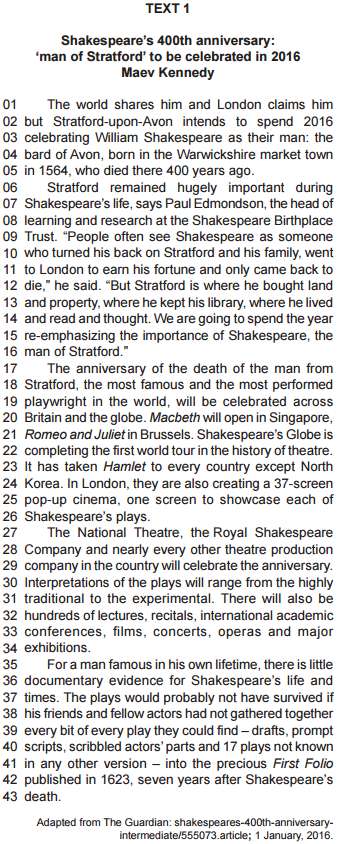
In picture 3, the pronoun “that” could have been omitted without a change in meaning. Mark the alternative in which “that” can NOT be omitted.
Alternativas
Ano: 2016 Banca: PUC - RS Órgão: PUC - RS Prova: PUC - RS - 2016 - PUC - RS - Vestibular - Segundo Semestre - 2º Dia |
Q809537 Inglês
Comparative forms, such as “better” and “brighter” (picture 2), can be used in different constructions to convey different ideas. In which alternative below is the comparative form being used to express parallel increase?
Alternativas
Ano: 2016 Banca: PUC - RS Órgão: PUC - RS Prova: PUC - RS - 2016 - PUC - RS - Vestibular - Segundo Semestre - 2º Dia |
Q809536 Inglês
De acordo com os quadrinhos 5, 6 e 8, Mafalda demonstra estar, respectivamente,
Alternativas
Ano: 2016 Banca: PUC - RS Órgão: PUC - RS Prova: PUC - RS - 2016 - PUC - RS - Vestibular - Segundo Semestre - 2º Dia |
Q809535 Inglês
In pictures 3, 5 and 6, the expressions that, respectively, fit in the blanks are
Alternativas
Ano: 2016 Banca: PUC - RS Órgão: PUC - RS Prova: PUC - RS - 2016 - PUC - RS - Vestibular - Segundo Semestre - 2º Dia |
Q809534 Inglês

After reading the text, one can conclude that Shakespeare’s works became evident due to his

Alternativas
Ano: 2016 Banca: PUC - RS Órgão: PUC - RS Prova: PUC - RS - 2016 - PUC - RS - Vestibular - Segundo Semestre - 2º Dia |
Q809533 Inglês

The pairs of phrases below belong to the same semantic field, EXCEPT for

Alternativas
Ano: 2016 Banca: PUC - RS Órgão: PUC - RS Prova: PUC - RS - 2016 - PUC - RS - Vestibular - Segundo Semestre - 2º Dia |
Q809532 Inglês

INSTRUCTION: To answer question, consider the passage below (lines 24-26).

In London, they are also creating a 37-screen pop-up cinema, one screen to showcase each of Shakespeare’s plays.

The correct alternative to demonstrate the passive voice structure for the sentence above is

Alternativas
Ano: 2016 Banca: PUC - RS Órgão: PUC - RS Prova: PUC - RS - 2016 - PUC - RS - Vestibular - Segundo Semestre - 2º Dia |
Q809531 Inglês
In the text, the word “scribbled” (line 40) is closest in meaning to
Alternativas
Ano: 2016 Banca: PUC - RS Órgão: PUC - RS Prova: PUC - RS - 2016 - PUC - RS - Vestibular - Segundo Semestre - 2º Dia |
Q809530 Inglês
The word “except” (line 23) could be replaced, without a change in its meaning, by
Alternativas
Ano: 2016 Banca: PUC - RS Órgão: PUC - RS Prova: PUC - RS - 2016 - PUC - RS - Vestibular - Segundo Semestre - 2º Dia |
Q809529 Inglês

INSTRUCTION: Read text 1 and the statements about it to solve question .

I. Shakespeare died in his early 50s.

II. Stratford is one of the places where Shakespeare dwelled in.

III. People from Stratford believe Shakespeare to have been loyal to the city.

IV. Every theater around Great Britain will be praising Shakespeare throughout 2016.

Alternativas
Ano: 2016 Banca: PUC - Campinas Órgão: PUC - Campinas Prova: PUC - Campinas - 2016 - PUC - Campinas - Vestibular - 2º Dia |
Q809432 Inglês

    Born on April 15, 1452, in Vinci, Italy, Leonardo da Vinci was the son of a prominent attorney notary and a young peasant girl. Born out of wedlock, he was raised by his father, Ser Piero, and several stepmothers. 

   His early years were spent living on his father’s family estate in Vinci. Beyond basic reading, writing and mathematical skills, da Vinci did not receive much of a formal education. Recognizing his potential as an artist, his father sent him at the age of 14 or 15 to apprentice with sculptor and painter Andrea del Verrocchio of Florence. 

   He spent six years honing his technical skills, including metalworking, leather arts, carpentry, drawing and sculpting, and became a member of the Guild of Saint Luke by the age of 20. He remained with Verrocchio until he became an independent master in 1478. Around that time, he took on his first commissioned work, The Adoration of the Magi, for Florence’s San Donato, a Scopeto monastery, but departed for Milan the following year, leaving the painting unfinished. It has been in the Uffizi Gallery in Florence since 1670. 

  Leonardo was, and is, renowned primarily as a painter. Among his works, the Mona Lisa is the most famous and most parodied portrait and The Last Supper the most reproduced religious painting of all time, with their fame approached only by Michelangelo's The Creation of Adam. Leonardo's drawing of The Vitruvian Man, based on the correlations of ideal human proportions with geometry described by the ancient Roman architect Vitruvius, is also regarded as a cultural icon, being reproduced on items as varied as the euro coin, textbooks, and T-shirts. 

  Leonardo is also revered for his technological ingenuity. In the early 1490s, he began chronicling his thoughts about painting, architecture, mechanics and human anatomy. These notebooks contained wide-ranging ideas, including plans for a “flying machine,” bicycle and drawings of a fetus in the womb and the human skeleton. 

   His interests and intellect traversed so many disciplines that he symbolized the term “Renaissance Man”. Unfortunately, these notebooks were not published and his ideas did not advance scientific understanding in the Renaissance period.

   Today, Leonardo is widely recognized as one of the most diversely talented individuals ever to have lived.

(Adapted form: http://www.livescience.com/39355-leonardo-da-vinci.html)
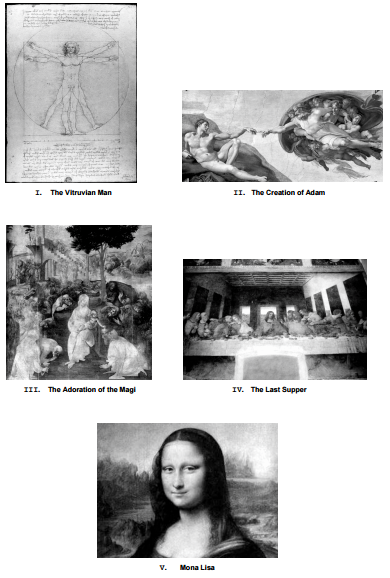
According to the text,
Alternativas
Ano: 2016 Banca: PUC - Campinas Órgão: PUC - Campinas Prova: PUC - Campinas - 2016 - PUC - Campinas - Vestibular - 2º Dia |
Q809431 Inglês

    Born on April 15, 1452, in Vinci, Italy, Leonardo da Vinci was the son of a prominent attorney notary and a young peasant girl. Born out of wedlock, he was raised by his father, Ser Piero, and several stepmothers. 

   His early years were spent living on his father’s family estate in Vinci. Beyond basic reading, writing and mathematical skills, da Vinci did not receive much of a formal education. Recognizing his potential as an artist, his father sent him at the age of 14 or 15 to apprentice with sculptor and painter Andrea del Verrocchio of Florence. 

   He spent six years honing his technical skills, including metalworking, leather arts, carpentry, drawing and sculpting, and became a member of the Guild of Saint Luke by the age of 20. He remained with Verrocchio until he became an independent master in 1478. Around that time, he took on his first commissioned work, The Adoration of the Magi, for Florence’s San Donato, a Scopeto monastery, but departed for Milan the following year, leaving the painting unfinished. It has been in the Uffizi Gallery in Florence since 1670. 

  Leonardo was, and is, renowned primarily as a painter. Among his works, the Mona Lisa is the most famous and most parodied portrait and The Last Supper the most reproduced religious painting of all time, with their fame approached only by Michelangelo's The Creation of Adam. Leonardo's drawing of The Vitruvian Man, based on the correlations of ideal human proportions with geometry described by the ancient Roman architect Vitruvius, is also regarded as a cultural icon, being reproduced on items as varied as the euro coin, textbooks, and T-shirts. 

  Leonardo is also revered for his technological ingenuity. In the early 1490s, he began chronicling his thoughts about painting, architecture, mechanics and human anatomy. These notebooks contained wide-ranging ideas, including plans for a “flying machine,” bicycle and drawings of a fetus in the womb and the human skeleton. 

   His interests and intellect traversed so many disciplines that he symbolized the term “Renaissance Man”. Unfortunately, these notebooks were not published and his ideas did not advance scientific understanding in the Renaissance period.

   Today, Leonardo is widely recognized as one of the most diversely talented individuals ever to have lived.

(Adapted form: http://www.livescience.com/39355-leonardo-da-vinci.html)

Which of the paintings below was NOT authored by Leonardo da Vinci? Imagem associada para resolução da questão
Alternativas
Ano: 2016 Banca: PUC - Campinas Órgão: PUC - Campinas Prova: PUC - Campinas - 2016 - PUC - Campinas - Vestibular - 2º Dia |
Q809430 Inglês

    Born on April 15, 1452, in Vinci, Italy, Leonardo da Vinci was the son of a prominent attorney notary and a young peasant girl. Born out of wedlock, he was raised by his father, Ser Piero, and several stepmothers. 

   His early years were spent living on his father’s family estate in Vinci. Beyond basic reading, writing and mathematical skills, da Vinci did not receive much of a formal education. Recognizing his potential as an artist, his father sent him at the age of 14 or 15 to apprentice with sculptor and painter Andrea del Verrocchio of Florence. 

   He spent six years honing his technical skills, including metalworking, leather arts, carpentry, drawing and sculpting, and became a member of the Guild of Saint Luke by the age of 20. He remained with Verrocchio until he became an independent master in 1478. Around that time, he took on his first commissioned work, The Adoration of the Magi, for Florence’s San Donato, a Scopeto monastery, but departed for Milan the following year, leaving the painting unfinished. It has been in the Uffizi Gallery in Florence since 1670. 

  Leonardo was, and is, renowned primarily as a painter. Among his works, the Mona Lisa is the most famous and most parodied portrait and The Last Supper the most reproduced religious painting of all time, with their fame approached only by Michelangelo's The Creation of Adam. Leonardo's drawing of The Vitruvian Man, based on the correlations of ideal human proportions with geometry described by the ancient Roman architect Vitruvius, is also regarded as a cultural icon, being reproduced on items as varied as the euro coin, textbooks, and T-shirts. 

  Leonardo is also revered for his technological ingenuity. In the early 1490s, he began chronicling his thoughts about painting, architecture, mechanics and human anatomy. These notebooks contained wide-ranging ideas, including plans for a “flying machine,” bicycle and drawings of a fetus in the womb and the human skeleton. 

   His interests and intellect traversed so many disciplines that he symbolized the term “Renaissance Man”. Unfortunately, these notebooks were not published and his ideas did not advance scientific understanding in the Renaissance period.

   Today, Leonardo is widely recognized as one of the most diversely talented individuals ever to have lived.

(Adapted form: http://www.livescience.com/39355-leonardo-da-vinci.html)

From the above text, one can infer that 

Alternativas
Ano: 2016 Banca: PUC - Campinas Órgão: PUC - Campinas Prova: PUC - Campinas - 2016 - PUC - Campinas - Vestibular - 2º Dia |
Q809428 Inglês
According to the text in Portuguese, História da pintura, história do mundo,
Alternativas
Respostas
3061: D
3062: C
3063: B
3064: C
3065: B
3066: B
3067: B
3068: B
3069: E
3070: C
3071: C
3072: B
3073: D
3074: C
3075: A
3076: A
3077: B
3078: D
3079: A
3080: A