🎯 Saiba o que estudar

Avançado com Treinador a partir de R$ 0,76/dia

Questões de Vestibular Sobre inglês

Questões Discursivas

Foram encontradas 6.365 questões

Ano: 2017 Banca: PUC - RJ Órgão: PUC - RJ Prova: PUC - RJ - 2017 - PUC - RJ - Vestibular - 1° Dia - Grupo 2 - Manhã |
Q1261075 Inglês

Available at: <http://www.bbc.com/future/story/20170124-how-to-be-wise>. Retrieved on: 24 Jan. 2017. Adapted. 

According to Robert Sternberg, wise people are those who can
Alternativas
Ano: 2017 Banca: PUC - RJ Órgão: PUC - RJ Prova: PUC - RJ - 2017 - PUC - RJ - Vestibular - 1° Dia - Grupo 2 - Manhã |
Q1261074 Inglês

Available at: <http://www.bbc.com/future/story/20170124-how-to-be-wise>. Retrieved on: 24 Jan. 2017. Adapted. 

After carrying out different research experiments on wise reasoning, Igor Grossman concludes that
Alternativas
Ano: 2017 Banca: PUC - RJ Órgão: PUC - RJ Prova: PUC - RJ - 2017 - PUC - RJ - Vestibular - 1° Dia - Grupo 2 - Manhã |
Q1261073 Inglês

Available at: <http://www.bbc.com/future/story/20170124-how-to-be-wise>. Retrieved on: 24 Jan. 2017. Adapted. 

In the fragment “And how did you work out what to do?” (lines 25-26), “work out” means to
Alternativas
Ano: 2017 Banca: PUC - RJ Órgão: PUC - RJ Prova: PUC - RJ - 2017 - PUC - RJ - Vestibular - 1° Dia - Grupo 2 - Manhã |
Q1261072 Inglês

Available at: <http://www.bbc.com/future/story/20170124-how-to-be-wise>. Retrieved on: 24 Jan. 2017. Adapted. 

When discussing the benefits associated with wise reasoning, the author mentions all items below, EXCEPT
Alternativas
Ano: 2017 Banca: PUC - RJ Órgão: PUC - RJ Prova: PUC - RJ - 2017 - PUC - RJ - Vestibular - 1° Dia - Grupo 2 - Manhã |
Q1261071 Inglês

Available at: <http://www.bbc.com/future/story/20170124-how-to-be-wise>. Retrieved on: 24 Jan. 2017. Adapted. 

The communicative intention of the text is to
Alternativas
Ano: 2017 Banca: IFN-MG Órgão: IFN-MG Prova: IFN-MG - 2017 - IFN-MG - Vestibular - Primeiro Semestre |
Q961055 Inglês

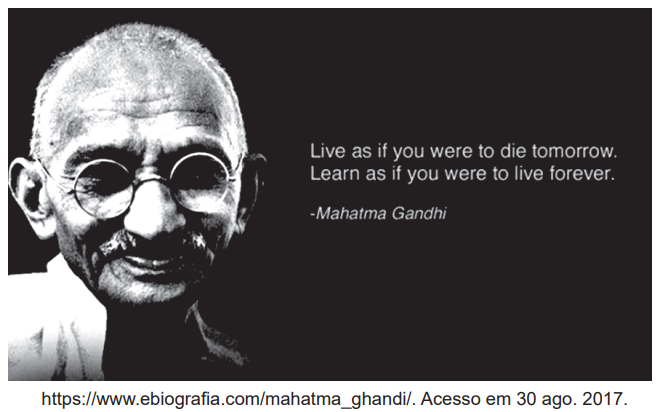
Imagem associada para resolução da questão


No TEXTO, Gandhi sugere que:

Alternativas
Ano: 2017 Banca: IFN-MG Órgão: IFN-MG Prova: IFN-MG - 2017 - IFN-MG - Vestibular - Primeiro Semestre |
Q961054 Inglês

https://www.consumerhealthdigest.com/health-awareness/national-depression-screening-day.html acessado em: 05 set. 2017.

De acordo com o TEXTO, todos os sinais descritos a seguir são considerados um alerta às pessoas que podem sofrer de depressão, EXCETO:
Alternativas
Ano: 2017 Banca: IFN-MG Órgão: IFN-MG Prova: IFN-MG - 2017 - IFN-MG - Vestibular - Primeiro Semestre |
Q961053 Inglês

https://www.consumerhealthdigest.com/health-awareness/national-depression-screening-day.html acessado em: 05 set. 2017.

De acordo com as informações apresentadas no TEXTO 04, é possível depreender que:

I. Uma a cada cinco pessoas poderá sofrer de depressão.

II. Se a doença não for tratada pode levar à dificuldade de concentração.

III. A depressão é uma das doenças mentais mais comuns entre os jovens australianos.


Está(ão) correta(s) :

Alternativas
Ano: 2017 Banca: IFN-MG Órgão: IFN-MG Prova: IFN-MG - 2017 - IFN-MG - Vestibular - Primeiro Semestre |
Q961052 Inglês

A depressão é um problema de saúde pública mundial. Ela se distingue da tristeza pela duração de seus sinais e pelo contexto em que ocorre. Trata-se de uma experiência cotidiana associada a várias sensações de sofrimento psíquico e físico. Leia o TEXTO e responda

Depression in Developing Countries

The National Institute of Mental Health defines depression as a serious but common illness characterized by prolonged periods of sadness. According to the fifth edition of the Diagnostic and Statistical Manual of Mental Disorders, a diagnosis for major depressive disorder requires either symptoms of a depressed mood or loss of interest and pleasure, along with other symptoms such as changes in weight, fatigue or feelings of suicidal thoughts. We can better understand the global impact of depression by measuring it in terms of disability. When analyzed by the disruption and dysfunction it causes in peoples’ lives, depression is the leading cause of disability worldwide. Fortunately, today, many therapies for depression are highly effective.

Disponível em: https://yaleglobalhealthreview.com/2015/05/16/depression-in-developing countries/ . Acessado em: 08 set. 2017. Adaptado.


Na frase “We can better understand the global impact of depression by measuring it in terms of disability”, o pronome it, em destaque, refere-se:
Alternativas
Ano: 2017 Banca: IFN-MG Órgão: IFN-MG Prova: IFN-MG - 2017 - IFN-MG - Vestibular - Primeiro Semestre |
Q961051 Inglês

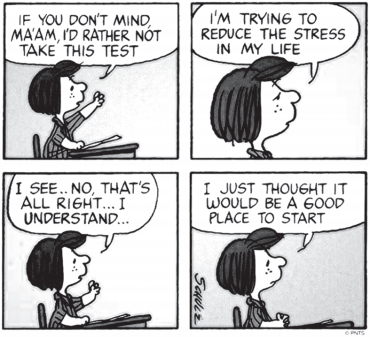
Imagem associada para resolução da questão

Disponível em: https://i.pinimg.com/736x/52/44/12/5244127bd1ca02b0bd30a8f8db96875a--peanuts-cartoon-peanuts-snoopy.jpg Acesso em: 30 de ago. 2017.


De acordo com o TEXTO, na frase “I’m trying to reduce the stress in my life ”, a palavra reduce só NÃO é sinônimo de:
Alternativas
Ano: 2017 Banca: IFN-MG Órgão: IFN-MG Prova: IFN-MG - 2017 - IFN-MG - Vestibular - Primeiro Semestre |
Q961050 Inglês

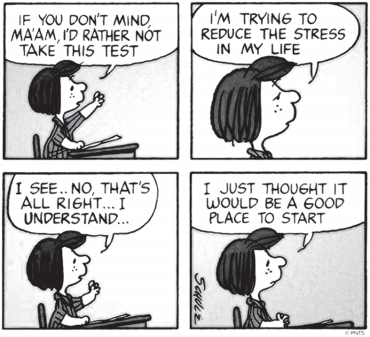
Imagem associada para resolução da questão

Disponível em: https://i.pinimg.com/736x/52/44/12/5244127bd1ca02b0bd30a8f8db96875a--peanuts-cartoon-peanuts-snoopy.jpg Acesso em: 30 de ago. 2017.


Pelo contexto, é possível compreender que:

Alternativas
Ano: 2017 Banca: IFN-MG Órgão: IFN-MG Prova: IFN-MG - 2017 - IFN-MG - Vestibular - Primeiro Semestre |
Q961049 Inglês

Nathalie, the swimmer who lost a leg

Nathalie du Toit, the South African swimmer, was only seventeen when she lost her leg in a road accident. She was going to a training session at the swimming pool on her motorbike when a car hit her. Her leg had to be amputated at the knee. At the time she was one of South Africa’s most promising young swimmers. Everybody thought that she would never be able to swim competitively again.

But Nathalie was determined to carry on. She went back into the pool only three months after the accident. And just one year later, at the Commonwalth Games in Manchester, she swam 800 meters in 9 minutes 11:38 seconds and qualified for the final – but not for disabled swimmers, for able-bodied ones! Althought she didn’t win a medal, she still made history.

‘I remember how thrilled I was the first time that I swam after recovering from the operation – it felt like my leg was there. It still does,’ says Nathalie. The water is the gift that gives me back my leg. I’m still the same person I was before the accident. I believe everything happens in life for a reason. You cant go back and change anything. Swimming was my life and still is. My dream is to swim faster than I did before the accident.’

Oxeden, C; KOENIG, C. New English File. Intermediate Student’s Book. OXFORD University Press. (3c-47).

No último parágrafo do TEXTO, na frase “Althought she didn’t win a medal, she still made history”, o termo destacado indica uma conjunção:
Alternativas
Ano: 2017 Banca: IFN-MG Órgão: IFN-MG Prova: IFN-MG - 2017 - IFN-MG - Vestibular - Primeiro Semestre |
Q961048 Inglês

Nathalie, the swimmer who lost a leg

Nathalie du Toit, the South African swimmer, was only seventeen when she lost her leg in a road accident. She was going to a training session at the swimming pool on her motorbike when a car hit her. Her leg had to be amputated at the knee. At the time she was one of South Africa’s most promising young swimmers. Everybody thought that she would never be able to swim competitively again.

But Nathalie was determined to carry on. She went back into the pool only three months after the accident. And just one year later, at the Commonwalth Games in Manchester, she swam 800 meters in 9 minutes 11:38 seconds and qualified for the final – but not for disabled swimmers, for able-bodied ones! Althought she didn’t win a medal, she still made history.

‘I remember how thrilled I was the first time that I swam after recovering from the operation – it felt like my leg was there. It still does,’ says Nathalie. The water is the gift that gives me back my leg. I’m still the same person I was before the accident. I believe everything happens in life for a reason. You cant go back and change anything. Swimming was my life and still is. My dream is to swim faster than I did before the accident.’

Oxeden, C; KOENIG, C. New English File. Intermediate Student’s Book. OXFORD University Press. (3c-47).

Os adjetivos possessivos (possessive adjectives) são palavras que têm a função de modificar um substantivo, indicando propriedade ou posse. Em todas as frases a seguir, retiradas do TEXTO 01, há um adjetivo possessivo, EXCETO:
Alternativas
Ano: 2017 Banca: IFN-MG Órgão: IFN-MG Prova: IFN-MG - 2017 - IFN-MG - Vestibular - Primeiro Semestre |
Q961047 Inglês

Nathalie, the swimmer who lost a leg

Nathalie du Toit, the South African swimmer, was only seventeen when she lost her leg in a road accident. She was going to a training session at the swimming pool on her motorbike when a car hit her. Her leg had to be amputated at the knee. At the time she was one of South Africa’s most promising young swimmers. Everybody thought that she would never be able to swim competitively again.

But Nathalie was determined to carry on. She went back into the pool only three months after the accident. And just one year later, at the Commonwalth Games in Manchester, she swam 800 meters in 9 minutes 11:38 seconds and qualified for the final – but not for disabled swimmers, for able-bodied ones! Althought she didn’t win a medal, she still made history.

‘I remember how thrilled I was the first time that I swam after recovering from the operation – it felt like my leg was there. It still does,’ says Nathalie. The water is the gift that gives me back my leg. I’m still the same person I was before the accident. I believe everything happens in life for a reason. You cant go back and change anything. Swimming was my life and still is. My dream is to swim faster than I did before the accident.’

Oxeden, C; KOENIG, C. New English File. Intermediate Student’s Book. OXFORD University Press. (3c-47).

No TEXTO, a nadadora Natalie menciona a seguinte frase “The water is the gift that gives me back my leg”. O jogo de palavras utilizado na sentença leva a depreender que:
Alternativas
Ano: 2017 Banca: IFN-MG Órgão: IFN-MG Prova: IFN-MG - 2017 - IFN-MG - Vestibular - Primeiro Semestre |
Q961046 Inglês

Nathalie, the swimmer who lost a leg

Nathalie du Toit, the South African swimmer, was only seventeen when she lost her leg in a road accident. She was going to a training session at the swimming pool on her motorbike when a car hit her. Her leg had to be amputated at the knee. At the time she was one of South Africa’s most promising young swimmers. Everybody thought that she would never be able to swim competitively again.

But Nathalie was determined to carry on. She went back into the pool only three months after the accident. And just one year later, at the Commonwalth Games in Manchester, she swam 800 meters in 9 minutes 11:38 seconds and qualified for the final – but not for disabled swimmers, for able-bodied ones! Althought she didn’t win a medal, she still made history.

‘I remember how thrilled I was the first time that I swam after recovering from the operation – it felt like my leg was there. It still does,’ says Nathalie. The water is the gift that gives me back my leg. I’m still the same person I was before the accident. I believe everything happens in life for a reason. You cant go back and change anything. Swimming was my life and still is. My dream is to swim faster than I did before the accident.’

Oxeden, C; KOENIG, C. New English File. Intermediate Student’s Book. OXFORD University Press. (3c-47).

Considerando o TEXTO, qual o vocábulo que melhor interpreta o contexto da história:
Alternativas
Ano: 2017 Banca: UFGD Órgão: UFGD Prova: UFGD - 2017 - UFGD - Vestibular |
Q944594 Inglês

Read the editorial cartoon below. Then answer the following question
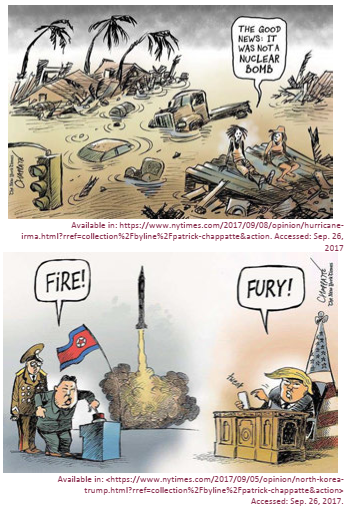

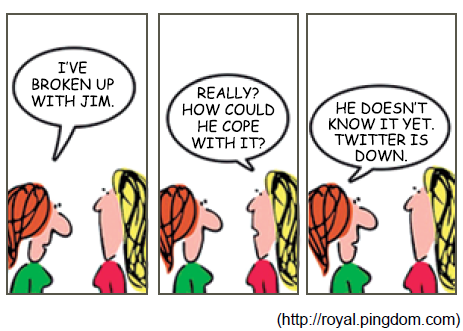
Imagem associada para resolução da questão

Alternativas
Ano: 2017 Banca: UFGD Órgão: UFGD Prova: UFGD - 2017 - UFGD - Vestibular |
Q944593 Inglês

Leia o texto a seguir.


Pornography is now only an internet search away, and is becoming ever more immersive. How is it changing people’s behaviour, relationships and desires?

By Jessica Brown


Few things are truly universal. But while people across the world speak different languages, eat different foods and even feel different emotions, millions across the world watch porn. Despite being so widely consumed, porn is maligned as the source of society’s ills. It’s even been labelled a public health hazard by politicians in Utah. Porn has transformed over the past few decades, due to the availability of the internet and faster web connections. It is also becoming more immersive than ever before. Take virtual reality. Earlier this year, researchers from Newcastle University in the UK pointed out that VR changes the experience of porn from detached observer to protagonist. They warned that this has the potential to blur the line between reality and fantasy, perhaps damaging relationships and encouraging harmful behaviour. […] So what does the more recent research say? One review of more than 80 studies in 2009 concluded that evidence of a causal link between porn use and violence is slim, and any findings proving a connection are often exaggerated by the media and politicians. “It is time to discard the hypothesis that pornography contributes to increased sexual assault behaviour”, wrote the authors.

Available in: http://www.bbc.com/future/story/20170926-is-porn-harmful-theevidence-the-myths-and-the-unknowns. Accessed: Sep. 25, 2017.


According to the text, which is the correct option.

Alternativas
Ano: 2017 Banca: VUNESP Órgão: UNIFESP Prova: VUNESP - 2017 - UNIFESP - Vestibular |
Q944487 Inglês

Examine a tira.


Imagem associada para resolução da questão


A tira evidencia que

Alternativas
Ano: 2017 Banca: VUNESP Órgão: UNIFESP Prova: VUNESP - 2017 - UNIFESP - Vestibular |
Q944486 Inglês
Mobile milestones: how your phone
became an essential part of your life


    Has any device changed our lives as much, and as quickly, as the mobile phone? There are people today for whom the world of address books, street atlases and phone boxes seems very far away, lost in the mists of time. Following, there are just some of the big milestones from the past 30 years that have made almost everything we do easier, more public and very, very fast.
• The first phones arrive – and become status symbols Few people got the chance to use the very early mobile phones. The first call was made in New York in 1973, but handsets with a network to use were not available until 1983 in the US, and 1985 in the UK. That first British mobile phone was essentially a heavy briefcase with a receiver attached by a wire. It cost £2,000 (£5,000 in today’s prices), and gave you half an hour’s chat on an overnight charge. Making a call was not something you could do subtly, but that wasn’t the point; the first handsets were there to be seen. They sent a message that you were bold and confident with new technology, that you were busy and important enough to need a mobile phone, and were rich enough to buy one.
• Text messages spawn a whole new language
    The first mobiles worked with analogue signals and could only make phone calls, but the digital ones that followed in the early 1990s could send SMS messages as well. After the first message was sent on 3 December 1992, texting took off like a rocket, even though it was still a pretty cumbersome procedure. Handsets with predictive text would make things easier, but in the 1990s you could save a lot of time by removing all excess letters from a message, often the vowels, and so txtspk ws brn. Today the average mobile phone sends more than 100 texts per month.
• Phones turn us all into photographers...
    There seemed to be no good reason for the first camera phones, which began to appear in 2002, with resolutions of about 0.3 megapixels. They took grainy, blurry pictures on postage stamp-sized screens, and even these filled the phone’s memory in no time. Gradually, though, as the quality improved, the uses followed. As well as the usual photos of friends and family, they were handy for “saving” pieces of paper, and in pubs you could take a picture of the specials board and take it back to your table. Modern camera phones have changed beyond recognition in the past 20 years. The new mobile phones boast the highest resolution dual camera on a smartphone: a 16-megapixel camera and a 20-megapixel camera side-by-side. The dual camera allows users to focus on their subjects, while blurring out the background, producing professional-looking portraits.
• …and we turn ourselves into celebrities
    Twenty years ago people would have thought you a little strange if you took flattering photos of yourself and your lifestyle and then distributed them to your friends – let alone to members of the public. If you used printed photographs rather than a smartphone app, they would still think so today. Yet sharing our lives on social media is now the norm, not the exception – and it was the camera phone that made it all possible. Now, some phones come with an enormous 64GB of memory, so you can capture, share and store an almost countless number of videos and pictures – well, certainly enough to keep up with the Kardashians.

(www.theguardian.com, 07.07.2017. Adaptado.)
No trecho do quinto parágrafo “they would still think so today”, o termo em destaque se refere ao fato de as pessoas considerarem que alguém 
Alternativas
Ano: 2017 Banca: VUNESP Órgão: UNIFESP Prova: VUNESP - 2017 - UNIFESP - Vestibular |
Q944485 Inglês
Mobile milestones: how your phone
became an essential part of your life


    Has any device changed our lives as much, and as quickly, as the mobile phone? There are people today for whom the world of address books, street atlases and phone boxes seems very far away, lost in the mists of time. Following, there are just some of the big milestones from the past 30 years that have made almost everything we do easier, more public and very, very fast.
• The first phones arrive – and become status symbols Few people got the chance to use the very early mobile phones. The first call was made in New York in 1973, but handsets with a network to use were not available until 1983 in the US, and 1985 in the UK. That first British mobile phone was essentially a heavy briefcase with a receiver attached by a wire. It cost £2,000 (£5,000 in today’s prices), and gave you half an hour’s chat on an overnight charge. Making a call was not something you could do subtly, but that wasn’t the point; the first handsets were there to be seen. They sent a message that you were bold and confident with new technology, that you were busy and important enough to need a mobile phone, and were rich enough to buy one.
• Text messages spawn a whole new language
    The first mobiles worked with analogue signals and could only make phone calls, but the digital ones that followed in the early 1990s could send SMS messages as well. After the first message was sent on 3 December 1992, texting took off like a rocket, even though it was still a pretty cumbersome procedure. Handsets with predictive text would make things easier, but in the 1990s you could save a lot of time by removing all excess letters from a message, often the vowels, and so txtspk ws brn. Today the average mobile phone sends more than 100 texts per month.
• Phones turn us all into photographers...
    There seemed to be no good reason for the first camera phones, which began to appear in 2002, with resolutions of about 0.3 megapixels. They took grainy, blurry pictures on postage stamp-sized screens, and even these filled the phone’s memory in no time. Gradually, though, as the quality improved, the uses followed. As well as the usual photos of friends and family, they were handy for “saving” pieces of paper, and in pubs you could take a picture of the specials board and take it back to your table. Modern camera phones have changed beyond recognition in the past 20 years. The new mobile phones boast the highest resolution dual camera on a smartphone: a 16-megapixel camera and a 20-megapixel camera side-by-side. The dual camera allows users to focus on their subjects, while blurring out the background, producing professional-looking portraits.
• …and we turn ourselves into celebrities
    Twenty years ago people would have thought you a little strange if you took flattering photos of yourself and your lifestyle and then distributed them to your friends – let alone to members of the public. If you used printed photographs rather than a smartphone app, they would still think so today. Yet sharing our lives on social media is now the norm, not the exception – and it was the camera phone that made it all possible. Now, some phones come with an enormous 64GB of memory, so you can capture, share and store an almost countless number of videos and pictures – well, certainly enough to keep up with the Kardashians.

(www.theguardian.com, 07.07.2017. Adaptado.)
De acordo com as informações do quinto parágrafo,
Alternativas
Respostas
2601: B
2602: D
2603: B
2604: D
2605: E
2606: D
2607: A
2608: B
2609: C
2610: A
2611: D
2612: B
2613: A
2614: A
2615: C
2616: C
2617: A
2618: E
2619: E
2620: E