Questões de Vestibular Sobre inglês
Foram encontradas 6.365 questões
Q1266899
Inglês
Texto associado


JACKSON, M. Disponível em: https://www.vagalume.com.br/. Acesso em:
07 ago. 2017.
Sentences in lines 13 and 14 contribute to the general
meaning of the song by indicating
Q1266898
Inglês
Texto associado
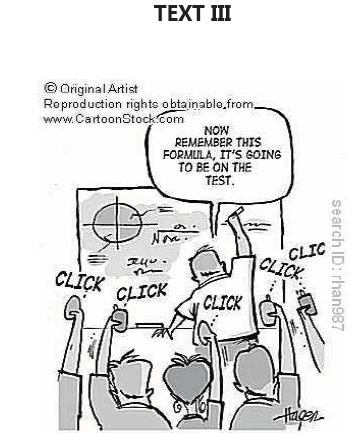
HAGEN, R. Cartoonstock. Disponível em:
https://www.cartoonstock.com/directory/m/memorize.asp.Acesso em: 07
ago. 2017.
Text III shows a teacher talking to students in a class. The
teacher‘s sentences express both:
Q1266897
Inglês
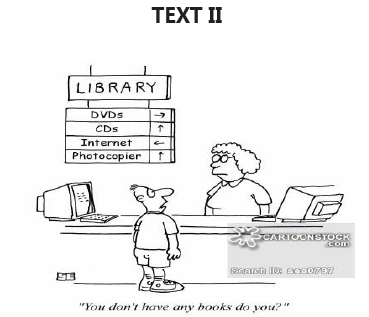
EALES, S. Cartoonstock. Disponível em:
https://www.cartoonstock.com/directory/l/library_books.asp.
Acesso em: 07 ago. 2017. Text II presents an interaction between a boy and a library attendant in which the boy asks her a question. The word which indicates the idea of quantity in the boy‘s sentence is:
Q1266896
Inglês
EALES, S. Cartoonstock. Disponível em:
https://www.cartoonstock.com/directory/l/library_books.asp.
Acesso em: 07 ago. 2017. A charge, no texto acima, caracterizada por utilizar linguagem verbal e não verbal, geralmente apresenta uma crítica com humor e ironia. Esse efeito na situação entre o menino e a atendente da biblioteca ocorre porque
Q1266895
Inglês
Texto associado
TEXT I
The Amazon Rainforest: The World's Largest
Rainforest
The Amazon River Basin is home to the largest
rainforest on Earth. The basin – roughly the size of the
forty-eight contiguous United States – covers some 40
percent of the South American continent and includes
parts of eight South American countries: Brazil, Bolivia,
Peru, Ecuador, Colombia, Venezuela, Guyana, and
Suriname, as well as French Guiana, a department of
France.
Reflecting environmental conditions as well as past
human influence, the Amazon is made up of a mosaic of
ecosystems and vegetation types including rainforests,
seasonal forests, deciduous forests, flooded forests,
and savannas. The basin is drained by the Amazon River,
the world's largest river in terms of discharge, and the
second longest river in the world after the Nile. The river is
made up of over 1,100 tributaries, 17 of which are longer
than 1000 miles, and two of which (the Negro and the
Madeira) are larger, in terms of volume, than the Congo
(formerly the Zaire) river. The river system is the lifeline of
the forest and its history plays an important part in the
development of its rainforests. […]
Disponível em: http://rainforests.mongabay.com/amazon/. Acesso em: 07
ago. 2017.
Descrita no texto como a maior do mundo, a floresta
tropical Amazônica está localizada em uma bacia
hidrográfica cujo tamanho pode ser comparado
Q1266706
Inglês
Texto associado


Disponível em: https://townhall.com/political-cartoons/2017/06/02/150775. Acesso em 01/06/2017. Adaptado.
Tone is the attitude a cartoonist takes towards a subject. Which pair of words best describes the tone of
this cartoon?
Q1266705
Inglês
Texto associado


Disponível em: https://townhall.com/political-cartoons/2017/06/02/150775. Acesso em 01/06/2017. Adaptado.
According to this cartoon,
Q1266704
Inglês
Texto associado
TEXT 7

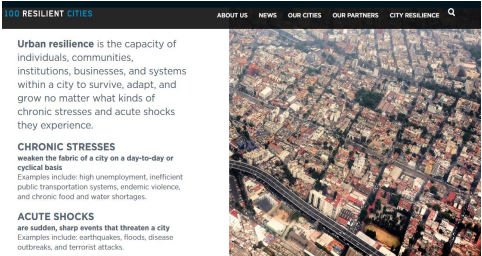
Disponível em: http://www.100resilientcities.org/#/-_/. Acesso em: 10/05/2017. Texto adaptado.
According to TEXT
Q1266703
Inglês
Texto associado
TEXT 7

Disponível em: http://www.100resilientcities.org/#/-_/. Acesso em: 10/05/2017. Texto adaptado.
According to TEXT, Urban Resilience refers to
Q1266702
Inglês
Texto associado
TEXT 7

Disponível em: http://www.100resilientcities.org/#/-_/. Acesso em: 10/05/2017. Texto adaptado.
Choose the only option that summarizes the purpose of TEXT.
Q1266170
Inglês
Texto associado
Leia o texto para responder a questão.
Here’s how long you can work before your brain 1shuts down
I’m having a hard time starting this article. According to research out of the University of Melbourne, that might
be because I’m middle-aged and work too much. Economists determined that burning the midnight oil makes you,
well, dumber.” Our study highlights that too much work can have adverse effects on cognitive functioning,” they
conclude.
Tell us something we didn’t know. Who hasn’t, at the end of a seemingly endless workweek, found themselves
staring blankly at their computer screen or into space unable to remember what they had for lunch, let alone form
a coherent thought about the task at hand?
For some employees, of course – the average resident 2 physician or, these days, that “3 gig economy” worker who
makes ends meet by banging away at multiple projects – long hours are a fact of modern working life. And there’s
a cost. Medical researchers have shown that working too much can affect employees’ physical and mental health.
So how much is too much? For people age 40 and older, working up to roughly 25 hours per week boosts
memory, the ability to quickly process information and other aspects of cognitive function, according to the study,
which drew on a longitudinal survey that tracks the well-being of 6,000 Australians. Beyond 25 hours a week, the
middle-aged brain doesn’t work as well, the study indicates, noting that the findings apply to both men and women.
<http://tinyurl.com/j4os8ck> Acesso em: 24.08.2016. Adaptado.
Glossário
1to shut down: parar de operar/funcionar.
2physician: médico.
3gig economy: ambiente de trabalho baseado em empregos temporários e contratos de curta duração.
O pronome relativo that, em “that tracks the well-being of 6,000 Australians”, pode ser corretamente substituído,
sem alteração do sentido original, por
Q1266169
Inglês
Texto associado
Leia o texto para responder a questão.
Here’s how long you can work before your brain 1shuts down
I’m having a hard time starting this article. According to research out of the University of Melbourne, that might
be because I’m middle-aged and work too much. Economists determined that burning the midnight oil makes you,
well, dumber.” Our study highlights that too much work can have adverse effects on cognitive functioning,” they
conclude.
Tell us something we didn’t know. Who hasn’t, at the end of a seemingly endless workweek, found themselves
staring blankly at their computer screen or into space unable to remember what they had for lunch, let alone form
a coherent thought about the task at hand?
For some employees, of course – the average resident 2 physician or, these days, that “3 gig economy” worker who
makes ends meet by banging away at multiple projects – long hours are a fact of modern working life. And there’s
a cost. Medical researchers have shown that working too much can affect employees’ physical and mental health.
So how much is too much? For people age 40 and older, working up to roughly 25 hours per week boosts
memory, the ability to quickly process information and other aspects of cognitive function, according to the study,
which drew on a longitudinal survey that tracks the well-being of 6,000 Australians. Beyond 25 hours a week, the
middle-aged brain doesn’t work as well, the study indicates, noting that the findings apply to both men and women.
<http://tinyurl.com/j4os8ck> Acesso em: 24.08.2016. Adaptado.
Glossário
1to shut down: parar de operar/funcionar.
2physician: médico.
3gig economy: ambiente de trabalho baseado em empregos temporários e contratos de curta duração.
Afirma-se, no terceiro parágrafo, que
Q1266168
Inglês
Texto associado
Leia o texto para responder a questão.
Here’s how long you can work before your brain 1shuts down
I’m having a hard time starting this article. According to research out of the University of Melbourne, that might
be because I’m middle-aged and work too much. Economists determined that burning the midnight oil makes you,
well, dumber.” Our study highlights that too much work can have adverse effects on cognitive functioning,” they
conclude.
Tell us something we didn’t know. Who hasn’t, at the end of a seemingly endless workweek, found themselves
staring blankly at their computer screen or into space unable to remember what they had for lunch, let alone form
a coherent thought about the task at hand?
For some employees, of course – the average resident 2 physician or, these days, that “3 gig economy” worker who
makes ends meet by banging away at multiple projects – long hours are a fact of modern working life. And there’s
a cost. Medical researchers have shown that working too much can affect employees’ physical and mental health.
So how much is too much? For people age 40 and older, working up to roughly 25 hours per week boosts
memory, the ability to quickly process information and other aspects of cognitive function, according to the study,
which drew on a longitudinal survey that tracks the well-being of 6,000 Australians. Beyond 25 hours a week, the
middle-aged brain doesn’t work as well, the study indicates, noting that the findings apply to both men and women.
<http://tinyurl.com/j4os8ck> Acesso em: 24.08.2016. Adaptado.
Glossário
1to shut down: parar de operar/funcionar.
2physician: médico.
3gig economy: ambiente de trabalho baseado em empregos temporários e contratos de curta duração.
Considere a afirmação: “Our study highlights that too much work can have adverse effects on cognitive functioning.”
Um dos efeitos adversos do trabalho excessivo apresentado pelo autor é
Q1266167
Inglês
Texto associado
Leia o texto para responder a questão.
Here’s how long you can work before your brain 1shuts down
I’m having a hard time starting this article. According to research out of the University of Melbourne, that might
be because I’m middle-aged and work too much. Economists determined that burning the midnight oil makes you,
well, dumber.” Our study highlights that too much work can have adverse effects on cognitive functioning,” they
conclude.
Tell us something we didn’t know. Who hasn’t, at the end of a seemingly endless workweek, found themselves
staring blankly at their computer screen or into space unable to remember what they had for lunch, let alone form
a coherent thought about the task at hand?
For some employees, of course – the average resident 2 physician or, these days, that “3 gig economy” worker who
makes ends meet by banging away at multiple projects – long hours are a fact of modern working life. And there’s
a cost. Medical researchers have shown that working too much can affect employees’ physical and mental health.
So how much is too much? For people age 40 and older, working up to roughly 25 hours per week boosts
memory, the ability to quickly process information and other aspects of cognitive function, according to the study,
which drew on a longitudinal survey that tracks the well-being of 6,000 Australians. Beyond 25 hours a week, the
middle-aged brain doesn’t work as well, the study indicates, noting that the findings apply to both men and women.
<http://tinyurl.com/j4os8ck> Acesso em: 24.08.2016. Adaptado.
Glossário
1to shut down: parar de operar/funcionar.
2physician: médico.
3gig economy: ambiente de trabalho baseado em empregos temporários e contratos de curta duração.
A respeito do autor, o primeiro parágrafo nos informa que ele
Q1266166
Inglês
Texto associado
Leia o texto para responder a questão.
Here’s how long you can work before your brain 1shuts down
I’m having a hard time starting this article. According to research out of the University of Melbourne, that might
be because I’m middle-aged and work too much. Economists determined that burning the midnight oil makes you,
well, dumber.” Our study highlights that too much work can have adverse effects on cognitive functioning,” they
conclude.
Tell us something we didn’t know. Who hasn’t, at the end of a seemingly endless workweek, found themselves
staring blankly at their computer screen or into space unable to remember what they had for lunch, let alone form
a coherent thought about the task at hand?
For some employees, of course – the average resident 2 physician or, these days, that “3 gig economy” worker who
makes ends meet by banging away at multiple projects – long hours are a fact of modern working life. And there’s
a cost. Medical researchers have shown that working too much can affect employees’ physical and mental health.
So how much is too much? For people age 40 and older, working up to roughly 25 hours per week boosts
memory, the ability to quickly process information and other aspects of cognitive function, according to the study,
which drew on a longitudinal survey that tracks the well-being of 6,000 Australians. Beyond 25 hours a week, the
middle-aged brain doesn’t work as well, the study indicates, noting that the findings apply to both men and women.
<http://tinyurl.com/j4os8ck> Acesso em: 24.08.2016. Adaptado.
Glossário
1to shut down: parar de operar/funcionar.
2physician: médico.
3gig economy: ambiente de trabalho baseado em empregos temporários e contratos de curta duração.
Ao escrever, no início do texto, “I’m having a hard time starting this article”, o autor
Q1266146
Inglês
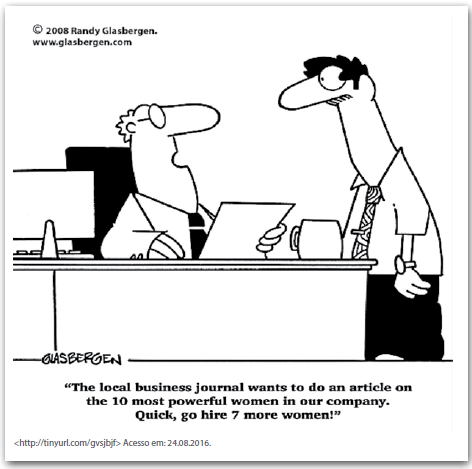
Considere o cartum.
De acordo com o texto do cartum,
Q1265882
Inglês
Texto associado
Eu, Robô (I, Robot) é uma coletânea de contos escritos por Isaac Asimov que procura descrever, sob o ponto de vista do autor, o hipotético aumento da presença e da atuação dos robôs na sociedade.
Leia o texto, que apresenta uma entrevista com a personagem Susan Calvin, uma “robopsicóloga”, e responda à questão.
Susan Calvin had been born in the year 1982, they said, which made her seventy five now. Everyone knew that. Appropriately enough, U. S. Robot and Mechanical Men, Inc. was seventy-five also, since it had been in the year of Dr. Calvin’s birth that Lawrence Robertson had first taken out incorporation papers for what eventually became the strangest industrial giant in man’s history. Well, everyone knew that, too. (…)
She went back to her desk and sat down. She didn’t need expression on her face to look sad, somehow.
“How old are you?” she wanted to know.
“Thirty-two,” I said.
“Then you don’t remember a world without robots. There was a time when humanity faced the universe alone and without a friend. Now he has creatures to help him; stronger creatures than himself, more faithful, more useful, and absolutely devoted to him. Mankind is no longer alone. Have you ever thought of it that way?”
“I’m afraid I haven’t. May I quote you?”
“You may. To you, a robot is a robot. Gears and metal; electricity and positrons. Mind and iron! Human-made! If necessary, human-destroyed! But you haven’t worked with them, so you don’t know them. They’re a cleaner, better breed than we are.”
(ASIMOV, I. I, Robot. Greenwich, Conn: Fawcett Publications,1950. p. 2-3.)
O termo may em May I quote you? expressa a ideia de
Q1265881
Inglês
Texto associado
Eu, Robô (I, Robot) é uma coletânea de contos escritos por Isaac Asimov que procura descrever, sob o ponto de vista do autor, o hipotético aumento da presença e da atuação dos robôs na sociedade.
Leia o texto, que apresenta uma entrevista com a personagem Susan Calvin, uma “robopsicóloga”, e responda à questão.
Susan Calvin had been born in the year 1982, they said, which made her seventy five now. Everyone knew that. Appropriately enough, U. S. Robot and Mechanical Men, Inc. was seventy-five also, since it had been in the year of Dr. Calvin’s birth that Lawrence Robertson had first taken out incorporation papers for what eventually became the strangest industrial giant in man’s history. Well, everyone knew that, too. (…)
She went back to her desk and sat down. She didn’t need expression on her face to look sad, somehow.
“How old are you?” she wanted to know.
“Thirty-two,” I said.
“Then you don’t remember a world without robots. There was a time when humanity faced the universe alone and without a friend. Now he has creatures to help him; stronger creatures than himself, more faithful, more useful, and absolutely devoted to him. Mankind is no longer alone. Have you ever thought of it that way?”
“I’m afraid I haven’t. May I quote you?”
“You may. To you, a robot is a robot. Gears and metal; electricity and positrons. Mind and iron! Human-made! If necessary, human-destroyed! But you haven’t worked with them, so you don’t know them. They’re a cleaner, better breed than we are.”
(ASIMOV, I. I, Robot. Greenwich, Conn: Fawcett Publications,1950. p. 2-3.)
Na visão de Susan Calvin, e segundo as informações
presentes no texto, os robôs
Q1265880
Inglês
Texto associado
Eu, Robô (I, Robot) é uma coletânea de contos escritos por Isaac Asimov que procura descrever, sob o ponto de vista do autor, o hipotético aumento da presença e da atuação dos robôs na sociedade.
Leia o texto, que apresenta uma entrevista com a personagem Susan Calvin, uma “robopsicóloga”, e responda à questão.
Susan Calvin had been born in the year 1982, they said, which made her seventy five now. Everyone knew that. Appropriately enough, U. S. Robot and Mechanical Men, Inc. was seventy-five also, since it had been in the year of Dr. Calvin’s birth that Lawrence Robertson had first taken out incorporation papers for what eventually became the strangest industrial giant in man’s history. Well, everyone knew that, too. (…)
She went back to her desk and sat down. She didn’t need expression on her face to look sad, somehow.
“How old are you?” she wanted to know.
“Thirty-two,” I said.
“Then you don’t remember a world without robots. There was a time when humanity faced the universe alone and without a friend. Now he has creatures to help him; stronger creatures than himself, more faithful, more useful, and absolutely devoted to him. Mankind is no longer alone. Have you ever thought of it that way?”
“I’m afraid I haven’t. May I quote you?”
“You may. To you, a robot is a robot. Gears and metal; electricity and positrons. Mind and iron! Human-made! If necessary, human-destroyed! But you haven’t worked with them, so you don’t know them. They’re a cleaner, better breed than we are.”
(ASIMOV, I. I, Robot. Greenwich, Conn: Fawcett Publications,1950. p. 2-3.)
Comparando o “mundo sem robôs” com o estágio
da história da humanidade em que a entrevista é
concedida, o texto afirma que
Q1265879
Inglês
Texto associado
Eu, Robô (I, Robot) é uma coletânea de contos escritos por Isaac Asimov que procura descrever, sob o ponto de vista do autor, o hipotético aumento da presença e da atuação dos robôs na sociedade.
Leia o texto, que apresenta uma entrevista com a personagem Susan Calvin, uma “robopsicóloga”, e responda à questão.
Susan Calvin had been born in the year 1982, they said, which made her seventy five now. Everyone knew that. Appropriately enough, U. S. Robot and Mechanical Men, Inc. was seventy-five also, since it had been in the year of Dr. Calvin’s birth that Lawrence Robertson had first taken out incorporation papers for what eventually became the strangest industrial giant in man’s history. Well, everyone knew that, too. (…)
She went back to her desk and sat down. She didn’t need expression on her face to look sad, somehow.
“How old are you?” she wanted to know.
“Thirty-two,” I said.
“Then you don’t remember a world without robots. There was a time when humanity faced the universe alone and without a friend. Now he has creatures to help him; stronger creatures than himself, more faithful, more useful, and absolutely devoted to him. Mankind is no longer alone. Have you ever thought of it that way?”
“I’m afraid I haven’t. May I quote you?”
“You may. To you, a robot is a robot. Gears and metal; electricity and positrons. Mind and iron! Human-made! If necessary, human-destroyed! But you haven’t worked with them, so you don’t know them. They’re a cleaner, better breed than we are.”
(ASIMOV, I. I, Robot. Greenwich, Conn: Fawcett Publications,1950. p. 2-3.)
A respeito da U. S. Robot and Mechanical Men, Inc.
é correto afirmar, de acordo com o texto, que essa
companhia