Questões de Vestibular Sobre inglês
Foram encontradas 6.365 questões


Drinking coffee could help you live longer Coffee not only helps you feel full of beans, it might add years to your life as well, two major studies have shown. Scientists in Europe and the US have uncovered the clearest evidence yet that drinking coffee reduces the risk of death.
One study of more than half a million people from 10 European countries found that men who downed at least three cups of coffee a day were 18% less likely to die from any cause than non-coffee drinkers. Women drinking the same amount benefited less, but still experienced an 8% reduction in mortality over the period measured.
Similar results were reported by American scientists who conducted a separate investigation, recruiting 185855 participants from different ethnic backgrounds. Irrespective of ethnicity, people who drank two to three cups of coffee daily had an 18% reduced risk of death.
Each of the studies, both published in the journal Annals of Internal Medicine, showed no advantage from drinking either caffeinated or decaffeinated coffee. Experts believe the antioxidant plant compounds in coffee rather than caffeine are responsible for the life-extending effect. Previous research has suggested that drinking coffee can reduce the risk of heart disease, diabetes, liver disease, and some cancers.
Dr Marc Gunter, from the International Agency for Research on Cancer, who led the European study with colleagues from Imperial College London, said: “We found that higher coffee consumption was associated with a lower risk of death from any cause and specifically for circulatory diseases and digestive diseases. Importantly, these results were similar across all of the 10 European countries, with variable coffee drinking habits and customs. Our study also offers important insights into the possible mechanisms for the beneficial health effects of coffee.”
(www.huffingtonpost.co.uk, 11.07.2017. Adaptado.)
Drinking coffee could help you live longer Coffee not only helps you feel full of beans, it might add years to your life as well, two major studies have shown. Scientists in Europe and the US have uncovered the clearest evidence yet that drinking coffee reduces the risk of death.
One study of more than half a million people from 10 European countries found that men who downed at least three cups of coffee a day were 18% less likely to die from any cause than non-coffee drinkers. Women drinking the same amount benefited less, but still experienced an 8% reduction in mortality over the period measured.
Similar results were reported by American scientists who conducted a separate investigation, recruiting 185855 participants from different ethnic backgrounds. Irrespective of ethnicity, people who drank two to three cups of coffee daily had an 18% reduced risk of death.
Each of the studies, both published in the journal Annals of Internal Medicine, showed no advantage from drinking either caffeinated or decaffeinated coffee. Experts believe the antioxidant plant compounds in coffee rather than caffeine are responsible for the life-extending effect. Previous research has suggested that drinking coffee can reduce the risk of heart disease, diabetes, liver disease, and some cancers.
Dr Marc Gunter, from the International Agency for Research on Cancer, who led the European study with colleagues from Imperial College London, said: “We found that higher coffee consumption was associated with a lower risk of death from any cause and specifically for circulatory diseases and digestive diseases. Importantly, these results were similar across all of the 10 European countries, with variable coffee drinking habits and customs. Our study also offers important insights into the possible mechanisms for the beneficial health effects of coffee.”
(www.huffingtonpost.co.uk, 11.07.2017. Adaptado.)

he new labeling system has been proposed because
( ) consumers have difficulty understanding the various now-existing labels.
( ) the nutritional information about foods will be immediately grasped by its color.
( ) people prefer to look at a package’s back or sides.
( ) colors are likely to give misleading information about foods.
The correct sequence, from top to bottom, is

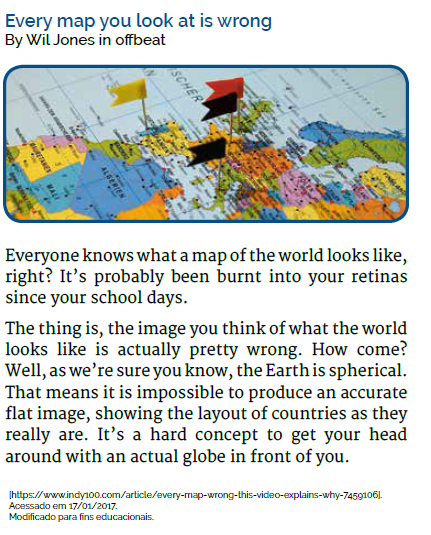
• A imagem permite inferir que:
• De acordo com o texto:

• Assinale a alternativa que corresponde à informação contida no texto

• O candidato não conseguiu colocar a foto no passaporte porque
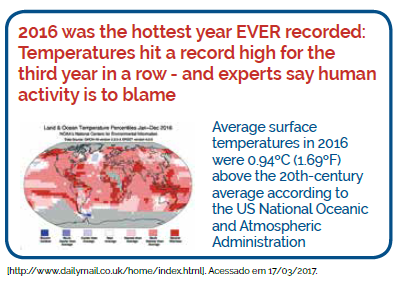
• Assinale a alternativa que corresponde à
informação NÃO contida no texto.
De acordo com o cartum abaixo, o dilema do consumidor é



A frase atribuída a Steve Jobs sugere que
The $900bn question: What is the Belt and Road initiative?
By Tom Phillips https://www.theguardian.com Acessado em 25/10/2017
It’s a confusing title but it could turn out to be the largest ever infrastructure project with close to a trillion dollars being invested across the globe
In concrete terms, the Belt and Road initiative is an immensely ambitious development campaign through which China wants to boost trade and stimulate economic growth across Asia and beyond. It hopes to do so by building massive amounts of infrastructure connecting it to countries around the globe. By some estimates, China plans to pump $150bn into such projects each year. In a report released at the start of this year, ratings agency Fitch said an extraordinary $900bn in projects were planned or underway.
The Belt and Road initiative has two main prongs: one is called the ‘Silk Road Economic Belt’ (the belt) and the other the ‘21st Century Maritime Silk Road’ (the road). Bewilderingly, the ‘road’ is not actually a road but rather a sea route linking China’s southern coast to east Africa and the Mediterranean. The ‘belt’ is a series of overland corridors connecting China with Europe, via Central Asia and the Middle East.

A iniciativa Belt and Road
What the World Needs Now
Lyrics by Hall David
What the world needs now is love,
sweet love It’s the only thing that there’s just too little of
What the world needs now is love,
sweet love, No not just for some but for everyone.
Lord, we don’t need another mountain,
There are mountains and hillsides enough to climb
There are oceans and rivers enough to cross,
Enough to last till the end of time.
Este trecho da letra da música sugere que
Utilize o infográfico para responder a questão.

Utilize o infográfico para responder a questão.
Pseudoscientific claims that music helps plants grow have been made for decades, despite evidence that is shaky at best. Yet new research suggests some flora may be capable of sensing sounds, such as the gurgle of water through a pipe or the buzzing of insects.
In a recent study, Monica Gagliano, an evolutionary biologist at the University of Western Australia, and her colleagues placed pea seedlings in pots shaped like an upside-down Y. One arm of each pot was placed in either a tray of water or a coiled plastic tube through which water flowed; the other arm had dry soil. The roots grew toward the arm of the pipe with the fluid, regardless of whether it was easily accessible or hidden inside the tubing. “They just knew the water was there, even if the only thing to detect was the sound of it flowing inside the pipe,” Gagliano says. Yet when the seedlings were given a choice between the water tube and some moistened soil, their roots favored the latter. She hypothesizes that these plants use sound waves to detect water at a distance but follow moisture gradients to home in on their target when it is closer.
The research, reported earlier this year in Oecologia, is not the first to suggest flora can detect and interpret sounds. A 2014 study showed the rock cress Arabidopsis can distinguish between caterpillar chewing sounds and wind vibrations – the plant produced more chemical toxins after “hearing” a recording of feeding insects. “We tend to underestimate plants because their responses are usually less visible to us. But leaves turn out to be extremely sensitive vibration detectors,” says lead study author Heidi M. Appel, an environmental scientist now at the University of Toledo.
Pseudoscientific claims that music helps plants grow have been made for decades, despite evidence that is shaky at best. Yet new research suggests some flora may be capable of sensing sounds, such as the gurgle of water through a pipe or the buzzing of insects.
In a recent study, Monica Gagliano, an evolutionary biologist at the University of Western Australia, and her colleagues placed pea seedlings in pots shaped like an upside-down Y. One arm of each pot was placed in either a tray of water or a coiled plastic tube through which water flowed; the other arm had dry soil. The roots grew toward the arm of the pipe with the fluid, regardless of whether it was easily accessible or hidden inside the tubing. “They just knew the water was there, even if the only thing to detect was the sound of it flowing inside the pipe,” Gagliano says. Yet when the seedlings were given a choice between the water tube and some moistened soil, their roots favored the latter. She hypothesizes that these plants use sound waves to detect water at a distance but follow moisture gradients to home in on their target when it is closer.
The research, reported earlier this year in Oecologia, is not the first to suggest flora can detect and interpret sounds. A 2014 study showed the rock cress Arabidopsis can distinguish between caterpillar chewing sounds and wind vibrations – the plant produced more chemical toxins after “hearing” a recording of feeding insects. “We tend to underestimate plants because their responses are usually less visible to us. But leaves turn out to be extremely sensitive vibration detectors,” says lead study author Heidi M. Appel, an environmental scientist now at the University of Toledo.
Pseudoscientific claims that music helps plants grow have been made for decades, despite evidence that is shaky at best. Yet new research suggests some flora may be capable of sensing sounds, such as the gurgle of water through a pipe or the buzzing of insects.
In a recent study, Monica Gagliano, an evolutionary biologist at the University of Western Australia, and her colleagues placed pea seedlings in pots shaped like an upside-down Y. One arm of each pot was placed in either a tray of water or a coiled plastic tube through which water flowed; the other arm had dry soil. The roots grew toward the arm of the pipe with the fluid, regardless of whether it was easily accessible or hidden inside the tubing. “They just knew the water was there, even if the only thing to detect was the sound of it flowing inside the pipe,” Gagliano says. Yet when the seedlings were given a choice between the water tube and some moistened soil, their roots favored the latter. She hypothesizes that these plants use sound waves to detect water at a distance but follow moisture gradients to home in on their target when it is closer.
The research, reported earlier this year in Oecologia, is not the first to suggest flora can detect and interpret sounds. A 2014 study showed the rock cress Arabidopsis can distinguish between caterpillar chewing sounds and wind vibrations – the plant produced more chemical toxins after “hearing” a recording of feeding insects. “We tend to underestimate plants because their responses are usually less visible to us. But leaves turn out to be extremely sensitive vibration detectors,” says lead study author Heidi M. Appel, an environmental scientist now at the University of Toledo.

 Conheça nossos planos