Questões de Vestibular Sobre inglês
Foram encontradas 6.365 questões


Text1
Autism's Drug Problem
Many people on the spectrum take multiple medications, which can lead to serious side effects and may not even be effective
Connor was diagnosed with autism early — when he was just 18 months old. His condition was already obvious by then. “He
was lining things up, switching lights on and off, on and off,” says his mother, Melissa. He was bright, but he didn’t speak much
until age 3, and he was easily frustrated. Once he started school, he couldn’t sit still in class, called out answers without raising
his hand and got visibly upset when he couldn’t master a math concept or a handwriting task quickly enough. “One time, he
rolled himself up into the carpet like a burrito and wouldn’t come out until I got there,” Melissa recalls. (All families in this story
are identified by first name only, to protect their privacy.)
Connor was prescribed his first psychiatric drug, methylphenidate (Ritalin), at age 6. That didn’t last long, but when he was 7,
his parents tried again. A psychiatrist suggested a low dose of amphetamine and dextroamphetamine (Adderall), a stimulant
commonly used to treat attention deficit hyperactivity disorder (ADHD). The drug seemed to improve his time at school: He was
able to sit still for longer periods of time and focus on what his teachers were saying. His chicken-scratch handwriting became
legible. Then, it became neat. Then perfect. And then it became something Connor began to obsess over.
“We were told that these are the gives and takes; if it’s helping him enough to get through school, you have to decide if it’s worth
it,” Melissa says. It was worth it — for a while.
But when the Adderall wore off each day, Connor had a tougher time than ever. He spent afternoons crying and refusing to do
much of anything. The stimulant made it difficult for him to fall asleep at night. So after a month or two, his psychiatrist added a
second medication — guanfacine (Intuniv), which is commonly prescribed for ADHD, anxiety and hypertension, but can also
help with insomnia. The psychiatrist hoped it might both ease Connor’s afternoons and help him sleep.
In some ways, it had the opposite effect. His afternoons did get slightly better, but Connor developed intense mood swings and
was so irritable that every evening was a struggle. Rather than simply tossing and turning in bed, he refused to even get under
the covers. “He wouldn’t go to bed because he was always angry about something,” Melissa says. “He was getting himself all
wound up, carrying on, getting upset at night and crying.”
wound up, carrying on, getting upset at night and crying.”
After seven months, his parents declared the combination unsustainable. They swapped guanfacine for over-the-counter
melatonin, which helped Connor fall asleep with no noticeable side effects. But within a year, he had acquired a tolerance for
Adderall. Connor’s psychiatrist increased his dosage and that, in turn, triggered tics: Connor began jerking his head and
snorting. Finally, at his 9-year physical, his doctor discovered that he’d only grown a few inches since age 7. He also hadn’t
gained any weight in two years; he’d dropped from the 50th percentile in weight to the 5th.
That was the end of all the experiments. His parents took him off all prescription drugs, and today, at almost 13 years old,
Connor is still medication-free. His tics have mostly disappeared. Although he has trouble maintaining focus in class, his mother
says that the risk-benefit ratio of trying another drug doesn’t seem worth it. “Right now we’re able to handle life without it, so we
do.”
(...)
For Connor, eliminating prescription drugs was difficult, but doable. For others, multiple medications may seem indispensable.
It’s not unusual for children with autism to take two, three, even four medications at once. Many adults with the condition do so,
too. Data are scant in both populations, but what little information there is suggests multiple prescriptions are even more
common among adults with autism than in children. Clinicians are particularly concerned about children with the condition
because psychiatric medications can have long-lasting effects on their developing brains, and yet are rarely tested in children.
In general, polypharmacy — most often defined as taking more than one prescription medication at once — is commonplace in
people with autism. In one study of more than 33,000 people under age 21 with the condition, at least 35 percent had taken two
psychotropic medications simultaneously; 15 percent had taken three.
“Psychotropic medications are used pretty extensively in people with autism because there aren’t a lot of treatments available,”
says Lisa Croen, director of the Autism Research Program at Kaiser Permanente in Oakland, California. “Is heavy drug use
bad? That’s the question. We don’t know; it hasn’t been studied.”
Disponível em: <https://www.scientificamerican.com/article/autisms-drug-problem/>. Texto adaptado.
Leia o texto publicitário abaixo e responda:
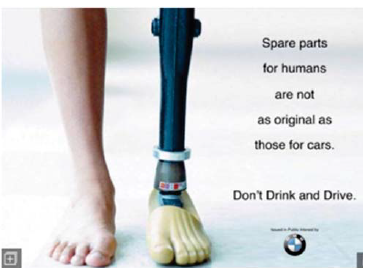
Esta campanha publicitária busca conscientizar as
pessoas acerca do perigo da associação entre bebida
alcoólica e condução de veículos automotores. Que
mensagem a campanha constrói para convencer as
pessoas em relação ao perigo dessa associação?
War Pigs
Generals gathered in their masses Just like witches at black masses Evil minds that plot destruction Sorcerers of death’s construction In the fields the bodies burning As the war machine keeps turning Death and hatred to mankind Poisoning their brainwashed minds Oh, Lord, yeah!
Politicians hide themselves away They only started the war Why should they go out to fight? They leave that role to the poor, yeah!
Time will tell on their power minds Making war just for fun Treating people just like pawns in chess Wait ‘till their judgement day comes, yeah!
Now in darkness, world stops turning Ashes where their bodies burning No more war pigs of the power Hand of God has stuck the hour Day of judgement, God is calling On their knees, the war pigs crawling Begging mercy for their sins Satan, laughing, spreads his wings Oh, Lord, yeah!
War Pigs, do grupo britânico de rock heavy metal Black Sabbath, critica as guerras, que causam morte e destruição. Com base na letra acima, responda quem são os “war pigs” referidos na música?
Leia o trecho do texto jornalístico abaixo e responda:
Drone Surveillance
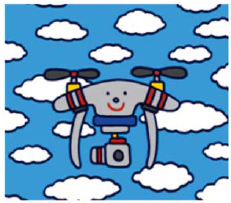
New rules from the U.S. Federal Aviation Administration (FAA) for the commercial use of unmanned aircraft lighter than 55 pounds have opened the door to what could be a massive industry. It’s much bigger than delivery drones, which are not yet practical or legal in the U.S. First we’ll see more drones doing things like surveying real estate and inspecting infrastructure such as roofs, high bridges, cell towers, power lines, and wind turbines.
But our new drone reality has privacy advocates spooked: low-cost vehicles and sensors are likely to spur widespread adoption of a technology that can be used for persistent aerial surveillance, and bad actors could exploit gaps in existing privacy laws. It’s also not clear which government entities, if any, are responsible for addressing drone-related privacy concerns. The FAA has declined to make rules. The Federal Trade Commission, the U.S. government’s primary consumer privacy cop, is still exploring the issue. A few state laws have emerged to fill the void, but the overall landscape is inconsistent and unclear.
Drone industry advocates argue that these aircraft are not all that different from other technologies that could be used to conduct surveillance, and that state voyeurism and nuisance laws already in place will protect consumers.
Adaptado de: www.technologyreview.com Acesso em: 13 nov. 2016
A indústria de veículos aéreos não tripulados tem
crescido e aprimorado-se nos Estados Unidos. Em
função disso, o texto levanta a seguinte questão:
A partir da leitura da tirinha abaixo, pode-se inferir que:
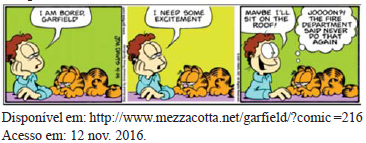
Texto
TRUMP-KIM SUMMIT: DONALD TRUMP VOWS TO 'END WAR GAMES' IN 'NEW HISTORY' WITH NORTH KOREA
By Ben Riley-Smith, US editor, in Singapore 13 JUNE 2018 • 8:10AM – The Telegraph

Donald Trump unexpectedly suspended "war games" on the Korean peninsula yesterday as he convinced Kim Jong-un to back "complete denuclearisation" in a written agreement. The US has been carrying out joint military exercises for years in the region as a signal of its military alliance with Seoul (South Korea), and as a show of strength against North Korean aggression.
The US president said in a press conference after the Singapore summit: "It is a very great day, it is a very great moment, in the history of the world." He predicted Kim would start denuclearise "very quickly" and revealed that the North Korean leader had already agreed to destroy a missile engine testing site.
The climax of Mr Trump‘s meeting with Kim — the first between a sitting North Korean and American leader — was the signing of a joint agreement. The 400-word statement followed more than four hours of talks, first between the leaders one-on-one and then with a wider group of advisers.
It read: "President Trump and Chairman Kim Jong-un conducted a comprehensive, in-depth, and sincere exchange of opinions on the issues related to the establishment of new United States - North Korea relations and the building of a lasting and robust peace regime on the Korean Peninsula.
The statement went on to list four specific pledges that both Mr Trump and Kim agreed to stand by: The first was that both countries would establish "new relations" in the pursuit of "peace and prosperity" — an attempt to draw a line under the insults and threats of last year. The second said that America and North Korea would "join their efforts to build a lasting and stable peace regime on the Korean Peninsula". The third said that Kim‘s regime "commits to work toward complete denuclearisation of the Korean Peninsula" — a key demand from the Americans. And the fourth promised that the remains of fallen US soldiers who died fighting in the Korean War would be repatriated to the United States.
Mr Trump said he "absolutely" would invite Kim to the White House and expressed enthusiasm for visiting North Korea, but said no dates had been set. Mr Trump also praised the leaders of Japan, South Korea and China as well as Kim himself for the progress made on the issue of denuclearisation.
Source: < https://goo.gl/dEim38> Date of retrieval: June 13th, 2018.
I. She would like me to speak to her mother.
II. We want he goes to England with us.
III. They asked that she study more.
IV. He would rather to traveling in winter.
V. I think people should avoid speaking too loud in public.

Strengths: Creative, passionate, generous, warm-hearted, cheerful, humorous
Weaknesses: Arrogant, stubborn, self-centered, lazy, inflexible
Leo likes: Theater, taking holidays, being admired, expensive things, bright colors, fun with friends
Leo dislikes: Being ignored, facing difficult reality, not being treated like a king or queen
People born under the sign of Leo are natural born leaders. They are dramatic, creative, self-confident, dominant and extremely difficult to resist, able to achieve anything they want to in any area of life they commit to. There is a specific strength to a Leo and their “king of the jungle” status. Leo often has many friends for they are generous and loyal. Selfconfident and attractive, this is a Sun sign capable of uniting different groups of people and leading them as one towards a shared cause, and their healthy sense of humor makes collaboration with other people even easier.


Updated 0212 GMT (1012 HKT) March 19, 2017
A post on the St. Charles County police Facebook page said officers responded to a medical emergency at the residence around 12:40 p.m. (1:40 p.m. ET) Saturday and found an unresponsive man inside. Resuscitation efforts failed.
“The St. Charles County Police Department sadly confirms the death of Charles Edward Anderson Berry Sr., better known as legendary musician Chuck Berry.”
A musical legend
Berry wrote and recorded “Johnny B. Goode” and “Sweet Little Sixteen” -- songs every garage band and fledgling guitarist had to learn if they wanted to enter the rock ‘n’ roll fellowship.
Berry took all-night hamburger stands, brown-eyed handsome men and V-8 Fords and turned them into the stuff of American poetry. By doing so, he gave rise to followers beyond number, bar-band disciples of the electric guitar, who carried his musical message to the far corners of the Earth.
Some of his most famous followers praised him on social media.
Bruce Springsteen tweeted: “Chuck Berry was rock’s greatest practitioner, guitarist, and the greatest pure rock ‘n’ roll writer who ever lived.”
Chuck Berry was rock’s greatest practitioner, guitarist, and the greatest pure rock ‘n’ roll writer who ever lived.
The Rolling Stones posted on their website: “The Rolling Stones are deeply saddened to hear of the passing of Chuck Berry. He was a true pioneer of rock ‘n’ roll and a massive influence on us. Chuck was not only a brilliant guitarist, singer and performer, but most importantly, he was a master craftsman as a songwriter. His songs will live forever. “
But it was perhaps John Lennon -- who died in 1980 -- who put it most succinctly. “If you tried to give rock and roll another name, you might call it ‘Chuck Berry.’”
The list of Berry’s classics is as well-known as his distinctive, chiming “Chuck Berry riff”: “Maybellene.” “Around and Around.” “Brown-Eyed Handsome Man.” “School Days.” “Memphis.” “Nadine.” “No Particular Place to Go.”
They were deceptively simple tunes, many constructed with simple chord progressions and classic verse-chorus-verse formats, but their hearts could be as big as teenage hopes on a Saturday night.
His music even went into outer space. When the two Voyager spacecrafts were launched in 1977, each was accompanied on its journey to the outer reaches of the solar system by a phonograph record that contained sounds of Earth -- including “Johnny B. Goode.”
Updated 0212 GMT (1012 HKT) March 19, 2017
A post on the St. Charles County police Facebook page said officers responded to a medical emergency at the residence around 12:40 p.m. (1:40 p.m. ET) Saturday and found an unresponsive man inside. Resuscitation efforts failed.
“The St. Charles County Police Department sadly confirms the death of Charles Edward Anderson Berry Sr., better known as legendary musician Chuck Berry.”
A musical legend
Berry wrote and recorded “Johnny B. Goode” and “Sweet Little Sixteen” -- songs every garage band and fledgling guitarist had to learn if they wanted to enter the rock ‘n’ roll fellowship.
Berry took all-night hamburger stands, brown-eyed handsome men and V-8 Fords and turned them into the stuff of American poetry. By doing so, he gave rise to followers beyond number, bar-band disciples of the electric guitar, who carried his musical message to the far corners of the Earth.
Some of his most famous followers praised him on social media.
Bruce Springsteen tweeted: “Chuck Berry was rock’s greatest practitioner, guitarist, and the greatest pure rock ‘n’ roll writer who ever lived.”
Chuck Berry was rock’s greatest practitioner, guitarist, and the greatest pure rock ‘n’ roll writer who ever lived.
The Rolling Stones posted on their website: “The Rolling Stones are deeply saddened to hear of the passing of Chuck Berry. He was a true pioneer of rock ‘n’ roll and a massive influence on us. Chuck was not only a brilliant guitarist, singer and performer, but most importantly, he was a master craftsman as a songwriter. His songs will live forever. “
But it was perhaps John Lennon -- who died in 1980 -- who put it most succinctly. “If you tried to give rock and roll another name, you might call it ‘Chuck Berry.’”
The list of Berry’s classics is as well-known as his distinctive, chiming “Chuck Berry riff”: “Maybellene.” “Around and Around.” “Brown-Eyed Handsome Man.” “School Days.” “Memphis.” “Nadine.” “No Particular Place to Go.”
They were deceptively simple tunes, many constructed with simple chord progressions and classic verse-chorus-verse formats, but their hearts could be as big as teenage hopes on a Saturday night.
His music even went into outer space. When the two Voyager spacecrafts were launched in 1977, each was accompanied on its journey to the outer reaches of the solar system by a phonograph record that contained sounds of Earth -- including “Johnny B. Goode.”
The alternative which lists only words used as adjectives in the text is
Drinking coffee could help you live longer Coffee not only helps you feel full of beans, it might add years to your life as well, two major studies have shown. Scientists in Europe and the US have uncovered the clearest evidence yet that drinking coffee reduces the risk of death.
One study of more than half a million people from 10 European countries found that men who downed at least three cups of coffee a day were 18% less likely to die from any cause than non-coffee drinkers. Women drinking the same amount benefited less, but still experienced an 8% reduction in mortality over the period measured.
Similar results were reported by American scientists who conducted a separate investigation, recruiting 185855 participants from different ethnic backgrounds. Irrespective of ethnicity, people who drank two to three cups of coffee daily had an 18% reduced risk of death.
Each of the studies, both published in the journal Annals of Internal Medicine, showed no advantage from drinking either caffeinated or decaffeinated coffee. Experts believe the antioxidant plant compounds in coffee rather than caffeine are responsible for the life-extending effect. Previous research has suggested that drinking coffee can reduce the risk of heart disease, diabetes, liver disease, and some cancers.
Dr Marc Gunter, from the International Agency for Research on Cancer, who led the European study with colleagues from Imperial College London, said: “We found that higher coffee consumption was associated with a lower risk of death from any cause and specifically for circulatory diseases and digestive diseases. Importantly, these results were similar across all of the 10 European countries, with variable coffee drinking habits and customs. Our study also offers important insights into the possible mechanisms for the beneficial health effects of coffee.”
(www.huffingtonpost.co.uk, 11.07.2017. Adaptado.)
Drinking coffee could help you live longer Coffee not only helps you feel full of beans, it might add years to your life as well, two major studies have shown. Scientists in Europe and the US have uncovered the clearest evidence yet that drinking coffee reduces the risk of death.
One study of more than half a million people from 10 European countries found that men who downed at least three cups of coffee a day were 18% less likely to die from any cause than non-coffee drinkers. Women drinking the same amount benefited less, but still experienced an 8% reduction in mortality over the period measured.
Similar results were reported by American scientists who conducted a separate investigation, recruiting 185855 participants from different ethnic backgrounds. Irrespective of ethnicity, people who drank two to three cups of coffee daily had an 18% reduced risk of death.
Each of the studies, both published in the journal Annals of Internal Medicine, showed no advantage from drinking either caffeinated or decaffeinated coffee. Experts believe the antioxidant plant compounds in coffee rather than caffeine are responsible for the life-extending effect. Previous research has suggested that drinking coffee can reduce the risk of heart disease, diabetes, liver disease, and some cancers.
Dr Marc Gunter, from the International Agency for Research on Cancer, who led the European study with colleagues from Imperial College London, said: “We found that higher coffee consumption was associated with a lower risk of death from any cause and specifically for circulatory diseases and digestive diseases. Importantly, these results were similar across all of the 10 European countries, with variable coffee drinking habits and customs. Our study also offers important insights into the possible mechanisms for the beneficial health effects of coffee.”
(www.huffingtonpost.co.uk, 11.07.2017. Adaptado.)
Drinking coffee could help you live longer Coffee not only helps you feel full of beans, it might add years to your life as well, two major studies have shown. Scientists in Europe and the US have uncovered the clearest evidence yet that drinking coffee reduces the risk of death.
One study of more than half a million people from 10 European countries found that men who downed at least three cups of coffee a day were 18% less likely to die from any cause than non-coffee drinkers. Women drinking the same amount benefited less, but still experienced an 8% reduction in mortality over the period measured.
Similar results were reported by American scientists who conducted a separate investigation, recruiting 185855 participants from different ethnic backgrounds. Irrespective of ethnicity, people who drank two to three cups of coffee daily had an 18% reduced risk of death.
Each of the studies, both published in the journal Annals of Internal Medicine, showed no advantage from drinking either caffeinated or decaffeinated coffee. Experts believe the antioxidant plant compounds in coffee rather than caffeine are responsible for the life-extending effect. Previous research has suggested that drinking coffee can reduce the risk of heart disease, diabetes, liver disease, and some cancers.
Dr Marc Gunter, from the International Agency for Research on Cancer, who led the European study with colleagues from Imperial College London, said: “We found that higher coffee consumption was associated with a lower risk of death from any cause and specifically for circulatory diseases and digestive diseases. Importantly, these results were similar across all of the 10 European countries, with variable coffee drinking habits and customs. Our study also offers important insights into the possible mechanisms for the beneficial health effects of coffee.”
(www.huffingtonpost.co.uk, 11.07.2017. Adaptado.)

 Conheça nossos planos