Questões de Vestibular Sobre inglês
Foram encontradas 6.380 questões


Your gut, your emotions
What controls our emotions? The same two people might see the same tragic newspaper headline, (1) __________ one is much more emotionally affected than the other. Why is that? According to an international team led by UCLA researchers, these emotions may be partially driven by an unlikely source: our gut bacteria. In fact, the bacteria that colonize our intestines may influence the architecture of the brain itself.
The experiment examining the relationship between brain development and the gut microbiome was conducted with mice. Specific strains of mice, one that lacked a complete gut microbiome and one that had a normal microbiome, were compared in terms of their brain development and behavior. The influence of microorganisms is not limited to brain development.
Interestingly, the mice with the ―normal‖ microbiome had more anxiety and moved less than the mice without the microbiome. (2) __________ exposed to a microbiome early in life, the active, calm mice began to act more anxious and reduced their movements. Microbiota evidently had this influence by affecting hormonal expression and building particular pathways in the brain associated with anxiety. The influence on brain development apparently occurred at a particular point early in the mouse‘s life, so it‘s possible early exposure to a proper microbiome is important for normal development. The researchers speculate that the microbiome helps the mice develop an appropriate sense of caution.
The influence of microorganisms is not limited to brain development. (3) __________ no conclusive link has been established, a few studies have detected abnormalities in the gut microbiomes of children with Autism Spectrum Disorders compared to non-affected children. Nor is microorganism influence limited to gut bacteria. A separate study in hyenas (also awaiting conclusive proof) suggests that individual hyenas use a specific cocktail of stinky bacteria in their scent markers left as a message to other hyenas.
(4) __________ some fungus can get in on the act, hijacking ants and forcing the unfortunate insects to relocate to a place favorable for a fungus to grow. The ant does not survive, but it makes great fungus food. (5) __________ a growing body of evidence from other animals, until the UCLA study there was not much direct research on how the microbiome affects humans. But given its potential importance, hopefully there will soon be more research along these lines. Going with your gut, indeed!
Disponível em:< https://daily.jstor.org/your-gut-youremotions/?utm_term=YOUR%20GUT%2C%20YOUR%20EMOTIONS&utm_campaign=jstordaily_08032017&utm_content=e mail&utm_source=Act-On+Software&utm_medium=email>. Acesso em: 15 Set. 2017.
Check the CORRECT alternative.
The true potential of technology to change behavior
Technology could successfully change behaviours where decades of campaigns and legislation have failed. With the quantified self already walking among us and the internet of things within easy reach, digital technology is creating unprecedented opportunities to encourage, enable and empower more sustainable behaviours.
If we are to unlock the power of technology we must be more ambitious than simply digitising analogue strategies or creating another communications channel.
The true potential of technology lies in its ability to do things that nothing else can do. In behaviour change terms, the potential to succeed where decades of education programmes, awareness campaigns and product innovation have failed; to make a difference where government policy and legislation has had limited impact.
Using behavioural insights, it is possible to highlight the bottlenecks, drop out points and achilles heels of traditional behaviour change efforts — the reasons why we have failed in the past — and apply the unique possibilities of technology to these specific challenges.
Overcoming our limitations
Luckily, the history of the human race is almost defined by its ability to invent stuff that bolsters its feeble capabilities. That stuff is, of course, what we generically refer to as 'technology'. And in the same way that the internal combustion engine and the light bulb allow us to overcome our relatively feeble powers of motion and perception, so digital technology can be directed to overcoming our relatively feeble powers of reasoning, selfcontrol, motivation, self-awareness and agency—the factors that make behaviour change so difficult.
Herein lies the true potential of technology: not in the laboratory or the workshop, but in an understanding of the behavioural dynamics that define the human condition, both generally and within the context of a specific user-group, market segment or community.
Fonte: JOHNSON, Steven. Recognising the true potential of technology to change behaviour. Disponível em:<https://www.theguardian.com/sustainablebusiness/behavioural-insights/true-potential-technology-change-behaviour>
A questão referem-se à tirinha abaixo

Disponível em: http://www.thecomicstrips.com/store/add.php?iid=87197. Acesso em:
09/12/2016.
A questão referem-se à tirinha abaixo
Disponível em: http://www.thecomicstrips.com/store/add.php?iid=87197. Acesso em:
09/12/2016.
O texto abaixo refere-se à questão.

Disponível em: http://www.motivateamazebegreat.
com/2016/04/30-friedrich-nietzsche-inspirational-quotes-
-about-life.html. Acesso em: 09/12/2016.
O texto abaixo refere-se à questão.
Disponível em: http://www.motivateamazebegreat.
com/2016/04/30-friedrich-nietzsche-inspirational-quotes-
-about-life.html. Acesso em: 09/12/2016.
Examine the following cartoon to answer question.
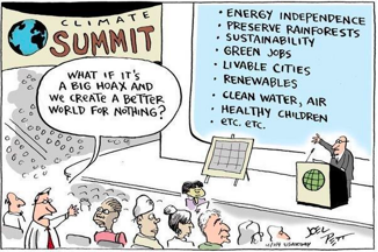
According to the cartoon, the creation of a better world only makes sense if
Fonte: New York Times. Publicado em 10/10/2017. Disponível em: https://www.nytimes.com/2017/10/10/ opinion/giving-capitalism-a-social-conscience.html . Acesso em 06/11/2017. [Excerpt]
Fonte: New York Times. Publicado em 10/10/2017. Disponível em: https://www.nytimes.com/2017/10/10/ opinion/giving-capitalism-a-social-conscience.html . Acesso em 06/11/2017. [Excerpt]
A questão referem-se ao quadrinho
abaixo.
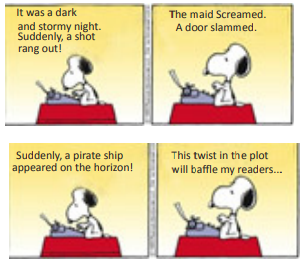
A questão referem-se ao quadrinho
abaixo.
A questao refere-se ao texto abaixo.

A questao refere-se ao texto abaixo.
A questao refere-se ao texto abaixo.
The Century Trilogy: An epic of Follett proportions
By Kevin Nance September 7, 2012
Well before blockbuster movies, there were blockbuster novels: big, juicy, page-turning epics, with dozens of characters, exotic settings and multiple plots playing out over several years, often against the backdrop of some extended historical conflict. Tolstoy largely invented the form in 1869 with “War and Peace,” and by the middle of the 20th century, its latter-day stalwarts — including James Jones, Herman Wouk and the tireless fiction factory known as James Michener — bestrode the bestseller lists like the titans they were. In recent years, however, the form has fallen somewhat out of favor with writers, if not with readers. Who wants to spend so much time, day in and day out, with the same set of protagonists? Who wants to do all that research? Who has the nerve, not to mention the patience, to keep all those narrative balls in the air over hundreds of pages?
Ken Follett, actually. At 63, the Welsh author is one of the last Mohicans of the form, having traded his highly successful thrillers (“Eye of the Needle,” “The Key to Rebecca”) for the multigenerational historical saga in 1989’s “The Pillars of the Earth” (adapted as a Starz miniseries in 2010) and its sequel, 2007’s “World Without End,” which premieres as a miniseries on Reelz next month.
Adaptado - Disponível em: https://www.washingtonpost.
com/entertainment/books/the-century-trilogy-an-epic-of-
-follett-proportions/2012/09/07.Acesso 22/9/16.

 Conheça nossos planos