Foram encontradas 155 questões
Resolva questões gratuitamente!
Junte-se a mais de 4 milhões de concurseiros!


Um empréstimo de R$ 132.000,00 deverá ser quitado em 12 prestações anuais e consecutivas, com a primeira vencendo em um ano após a tomada do empréstimo. A taxa de juros compostos da operação é de 5% ao ano. Parte da planilha de amortização, elaborada pelo sistema francês de amortização, é apresentada abaixo.
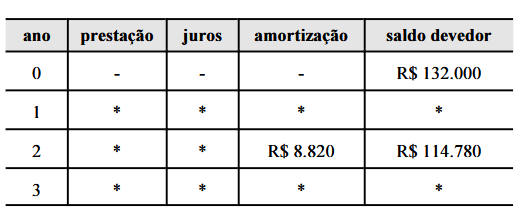
Com base nessas informações e supondo que 1,05-12 = 0,56, julgue os itens seguintes
O valor dos juros a serem pagos no ano 2 são superiores a R$ 6.000,00.
Julgue os itens que se seguem.
Uma casa, cujo preço à vista é de R$ 200.000,00, foi posta à venda, e o proprietário aceita as seguintes propostas:
I pagamento à vista com desconto de 3%;
II entrada de R$ 96.000,00 e mais duas prestações semestrais de R$ 72.000,00.
Supondo que 1,05 -6 = 0,75 e que 1,05 -12 = 0,56, é correto afirmar que a melhor proposta para o comprador é a I.
Suponha que, no planejamento estratégico da companhia, a produção de óleo cresça, a partir de 2006, à taxa de 5% ao ano. Suponha também que log 10 3 = 0,48, log 10 5 = 0,70 e que log 10 7 = 0,85. Nessa situação, em algum ano antes de 2014, a produção de óleo terá atingido 3.200 mbpd.
PETROBRAS is the world’s eighth most respected company
PETROBRAS has skyrocketed to the 8th place among the world’s most respected corporations, up from the 83rd position. The ranking was announced by the Reputation Institute (RI), a private advisory and research company headquartered in New York with representation in upwards of 20 countries.
The survey, carried out for the tenth year in a row, lists the world’s 600 biggest companies. The Reputation Institute created a research model to measure the perceptions of esteem, trust, respect, and admiration consumers have of companies. RI interviewed upwards of 60,000 people, from January to February 2007, in 29 countries. In the survey it announced in May, 2007, RI highlights PETROBRAS’ leap to 82.19 points in 2007, up from 73.99 in 2006, the biggest surge registered among the top 8. The company rose 75 positions to rank ahead of companies of the likes of Michelin, UPS, the Swatch Group, Honda, and Kraft Foods. PETROBRAS also leads the pack among energy companies. The segment’s runner-up was Russian Gazprom-neft, which was rated 28th.
The same international rating singles PETROBRAS out as the Brazilian leader. Twenty Brazilian companies participated in the survey, four of which rated among the top 50 led by PETROBRAS. In the 2006 survey, no Brazilian companies appeared amid the world’s 50 most respected corporations.
Internet: <www.petrobras.com.br> (adapted).
Based on the text above, judge the following items.
Brazilian companies have had a long time tradition of being among the world's 50 most respected corporations.
PETROBRAS is the world’s eighth most respected company
PETROBRAS has skyrocketed to the 8th place among the world’s most respected corporations, up from the 83rd position. The ranking was announced by the Reputation Institute (RI), a private advisory and research company headquartered in New York with representation in upwards of 20 countries.
The survey, carried out for the tenth year in a row, lists the world’s 600 biggest companies. The Reputation Institute created a research model to measure the perceptions of esteem, trust, respect, and admiration consumers have of companies. RI interviewed upwards of 60,000 people, from January to February 2007, in 29 countries. In the survey it announced in May, 2007, RI highlights PETROBRAS’ leap to 82.19 points in 2007, up from 73.99 in 2006, the biggest surge registered among the top 8. The company rose 75 positions to rank ahead of companies of the likes of Michelin, UPS, the Swatch Group, Honda, and Kraft Foods. PETROBRAS also leads the pack among energy companies. The segment’s runner-up was Russian Gazprom-neft, which was rated 28th.
The same international rating singles PETROBRAS out as the Brazilian leader. Twenty Brazilian companies participated in the survey, four of which rated among the top 50 led by PETROBRAS. In the 2006 survey, no Brazilian companies appeared amid the world’s 50 most respected corporations.
Internet: <www.petrobras.com.br> (adapted).
Based on the text above, judge the following items.
Besides PETROBRAS, three other Brazilian companies also made significant progress in relation to the 2006 survey.
PETROBRAS is the world’s eighth most respected company
PETROBRAS has skyrocketed to the 8th place among the world’s most respected corporations, up from the 83rd position. The ranking was announced by the Reputation Institute (RI), a private advisory and research company headquartered in New York with representation in upwards of 20 countries.
The survey, carried out for the tenth year in a row, lists the world’s 600 biggest companies. The Reputation Institute created a research model to measure the perceptions of esteem, trust, respect, and admiration consumers have of companies. RI interviewed upwards of 60,000 people, from January to February 2007, in 29 countries. In the survey it announced in May, 2007, RI highlights PETROBRAS’ leap to 82.19 points in 2007, up from 73.99 in 2006, the biggest surge registered among the top 8. The company rose 75 positions to rank ahead of companies of the likes of Michelin, UPS, the Swatch Group, Honda, and Kraft Foods. PETROBRAS also leads the pack among energy companies. The segment’s runner-up was Russian Gazprom-neft, which was rated 28th.
The same international rating singles PETROBRAS out as the Brazilian leader. Twenty Brazilian companies participated in the survey, four of which rated among the top 50 led by PETROBRAS. In the 2006 survey, no Brazilian companies appeared amid the world’s 50 most respected corporations.
Internet: <www.petrobras.com.br> (adapted).
Based on the text above, judge the following items.
According to the Reputation Institute, in 2007 PETROBRAS has become the most respected Brazilian company as well as the most respected energy company in the world.
This text refers to items 26 through 45.
Broken windows, broken business
1 ___ The book Broken Windows, Broken Business, by
Michael Levine, was inspired by an article entitled Broken
Windows, by criminologists James Q. Wilson and George L.
4 Kelling in the March, 1982 issue of Atlantic Monthly. Wilson
and Kelling suggested that when laws against minor crimes,
such as graffiti and turnstile1 jumping, are enforced, and broken
7 windows are promptly repaired, major crime rates will decline.
When Rudolph Giuliani became mayor of New York
City in 1994, he worked with police commissioner William
10 Bratton to implement a “zero tolerance” broken windows
policy. Graffiti was promptly cleaned up on subway cars.
Turnstile jumping wasn’t tolerated. Laws against petty crimes
13 were enforced. Those guys who’d take advantage of traffic jams
or red lights to jump in front of cars with a squeegee2, quickly
cleaning the windshield and begging for money were arrested
16 on the grounds of jaywalking3! A good many of them were
carrying weapons. Over the following few years, the number of
murders, assaults, robberies and other violent crimes went down
19 dramatically. It was made clear that the good guys would be in
charge there, not wrongdoers.
Levine says the same principle applies to businesses.
22 Business owners and their employees must become fanatics in
attending to the details of presenting outstanding customer
service and in the image presented by the business to inspire
25 customer confidence and loyalty. The broken windows theory
is all about the unmistakable power of perception, about what
people see and the conclusions they draw from it. In business,
28 perception is even more critical. The way a customer
(or potential customer) perceives your business is a crucial
element in your success or failure. Make one mistake, have one
31 rude employee, let that customer walk away with a negative
experience one time, and you are inviting disaster. Small things
make a huge difference in business. The messy condiment area
34 at a fast food restaurant may lead consumers to believe the
company as a whole doesn’t care about cleanliness,
and therefore the food itself might be in question. Indifferent
37 help at the counter in an upscale clothing store — even if just
one clerk — can signal to the consumer that perhaps standards
here aren’t as high as they might be (or used to be). An
40 employee at the gas station who wears a T-shirt with an
offensive slogan can certainly cause some customers to switch
brands of gasoline and lose an enormous company those
43 customers for life.
Mystery shoppers should be regularly employed to
learn whether customers are having a positive experience
46 dealing with a company. Candidates for mystery shoppers to
recruit include customers who already complain about their
experiences with the company.
49 ___ It is critical that the right kind of people (those who
enjoy dealing with people) be hired for customer contact
positions. Employees exhibiting an attitude of “a smile isn’t in
52 my job description” must be told that a smile certainly is
required, and to find other employment if they can’t fulfill the
required behavior.
55 ___ The worst business scenario is “broken window
hubris4”. Examples are Kmart and Enron. A company suffers
from broken window hubris when management thinks the
58 business is so successful that it’s no longer important to please
customers.
Internet: <www.profitadvisors.com> (adapted).
1turnstile – a narrow gate at the entrance of something, with metal bars that move in a circle so that only one person at a time can go through.
2squeegee – an object used for cleaning windows, consisting of a short handle with a rubber blade.
3jaywalking – a dangerous or illegal way of crossing a street at a place where cars do not usually stop.
4hubris – a very proud way of talking or behaving that offends people.
In the text,
the word "critical" (L.49) can be correctly replaced by extremely important.
This text refers to items 26 through 45.
Broken windows, broken business
1 ___ The book Broken Windows, Broken Business, by
Michael Levine, was inspired by an article entitled Broken
Windows, by criminologists James Q. Wilson and George L.
4 Kelling in the March, 1982 issue of Atlantic Monthly. Wilson
and Kelling suggested that when laws against minor crimes,
such as graffiti and turnstile1 jumping, are enforced, and broken
7 windows are promptly repaired, major crime rates will decline.
When Rudolph Giuliani became mayor of New York
City in 1994, he worked with police commissioner William
10 Bratton to implement a “zero tolerance” broken windows
policy. Graffiti was promptly cleaned up on subway cars.
Turnstile jumping wasn’t tolerated. Laws against petty crimes
13 were enforced. Those guys who’d take advantage of traffic jams
or red lights to jump in front of cars with a squeegee2, quickly
cleaning the windshield and begging for money were arrested
16 on the grounds of jaywalking3! A good many of them were
carrying weapons. Over the following few years, the number of
murders, assaults, robberies and other violent crimes went down
19 dramatically. It was made clear that the good guys would be in
charge there, not wrongdoers.
Levine says the same principle applies to businesses.
22 Business owners and their employees must become fanatics in
attending to the details of presenting outstanding customer
service and in the image presented by the business to inspire
25 customer confidence and loyalty. The broken windows theory
is all about the unmistakable power of perception, about what
people see and the conclusions they draw from it. In business,
28 perception is even more critical. The way a customer
(or potential customer) perceives your business is a crucial
element in your success or failure. Make one mistake, have one
31 rude employee, let that customer walk away with a negative
experience one time, and you are inviting disaster. Small things
make a huge difference in business. The messy condiment area
34 at a fast food restaurant may lead consumers to believe the
company as a whole doesn’t care about cleanliness,
and therefore the food itself might be in question. Indifferent
37 help at the counter in an upscale clothing store — even if just
one clerk — can signal to the consumer that perhaps standards
here aren’t as high as they might be (or used to be). An
40 employee at the gas station who wears a T-shirt with an
offensive slogan can certainly cause some customers to switch
brands of gasoline and lose an enormous company those
43 customers for life.
Mystery shoppers should be regularly employed to
learn whether customers are having a positive experience
46 dealing with a company. Candidates for mystery shoppers to
recruit include customers who already complain about their
experiences with the company.
49 ___ It is critical that the right kind of people (those who
enjoy dealing with people) be hired for customer contact
positions. Employees exhibiting an attitude of “a smile isn’t in
52 my job description” must be told that a smile certainly is
required, and to find other employment if they can’t fulfill the
required behavior.
55 ___ The worst business scenario is “broken window
hubris4”. Examples are Kmart and Enron. A company suffers
from broken window hubris when management thinks the
58 business is so successful that it’s no longer important to please
customers.
Internet: <www.profitadvisors.com> (adapted).
1turnstile – a narrow gate at the entrance of something, with metal bars that move in a circle so that only one person at a time can go through.
2squeegee – an object used for cleaning windows, consisting of a short handle with a rubber blade.
3jaywalking – a dangerous or illegal way of crossing a street at a place where cars do not usually stop.
4hubris – a very proud way of talking or behaving that offends people.
In the text,
"laws against minor crimes" (L.5) is the subject of "are enforced" (L.6).
This text refers to items 26 through 45.
Broken windows, broken business
1 ___ The book Broken Windows, Broken Business, by
Michael Levine, was inspired by an article entitled Broken
Windows, by criminologists James Q. Wilson and George L.
4 Kelling in the March, 1982 issue of Atlantic Monthly. Wilson
and Kelling suggested that when laws against minor crimes,
such as graffiti and turnstile1 jumping, are enforced, and broken
7 windows are promptly repaired, major crime rates will decline.
When Rudolph Giuliani became mayor of New York
City in 1994, he worked with police commissioner William
10 Bratton to implement a “zero tolerance” broken windows
policy. Graffiti was promptly cleaned up on subway cars.
Turnstile jumping wasn’t tolerated. Laws against petty crimes
13 were enforced. Those guys who’d take advantage of traffic jams
or red lights to jump in front of cars with a squeegee2, quickly
cleaning the windshield and begging for money were arrested
16 on the grounds of jaywalking3! A good many of them were
carrying weapons. Over the following few years, the number of
murders, assaults, robberies and other violent crimes went down
19 dramatically. It was made clear that the good guys would be in
charge there, not wrongdoers.
Levine says the same principle applies to businesses.
22 Business owners and their employees must become fanatics in
attending to the details of presenting outstanding customer
service and in the image presented by the business to inspire
25 customer confidence and loyalty. The broken windows theory
is all about the unmistakable power of perception, about what
people see and the conclusions they draw from it. In business,
28 perception is even more critical. The way a customer
(or potential customer) perceives your business is a crucial
element in your success or failure. Make one mistake, have one
31 rude employee, let that customer walk away with a negative
experience one time, and you are inviting disaster. Small things
make a huge difference in business. The messy condiment area
34 at a fast food restaurant may lead consumers to believe the
company as a whole doesn’t care about cleanliness,
and therefore the food itself might be in question. Indifferent
37 help at the counter in an upscale clothing store — even if just
one clerk — can signal to the consumer that perhaps standards
here aren’t as high as they might be (or used to be). An
40 employee at the gas station who wears a T-shirt with an
offensive slogan can certainly cause some customers to switch
brands of gasoline and lose an enormous company those
43 customers for life.
Mystery shoppers should be regularly employed to
learn whether customers are having a positive experience
46 dealing with a company. Candidates for mystery shoppers to
recruit include customers who already complain about their
experiences with the company.
49 ___ It is critical that the right kind of people (those who
enjoy dealing with people) be hired for customer contact
positions. Employees exhibiting an attitude of “a smile isn’t in
52 my job description” must be told that a smile certainly is
required, and to find other employment if they can’t fulfill the
required behavior.
55 ___ The worst business scenario is “broken window
hubris4”. Examples are Kmart and Enron. A company suffers
from broken window hubris when management thinks the
58 business is so successful that it’s no longer important to please
customers.
Internet: <www.profitadvisors.com> (adapted).
1turnstile – a narrow gate at the entrance of something, with metal bars that move in a circle so that only one person at a time can go through.
2squeegee – an object used for cleaning windows, consisting of a short handle with a rubber blade.
3jaywalking – a dangerous or illegal way of crossing a street at a place where cars do not usually stop.
4hubris – a very proud way of talking or behaving that offends people.
In the text,
the article "the", in the expression "in the March, 1982 issue of Atlantic Monthly" (L.4), is optional.
This text refers to items 26 through 45.
Broken windows, broken business
1 ___ The book Broken Windows, Broken Business, by
Michael Levine, was inspired by an article entitled Broken
Windows, by criminologists James Q. Wilson and George L.
4 Kelling in the March, 1982 issue of Atlantic Monthly. Wilson
and Kelling suggested that when laws against minor crimes,
such as graffiti and turnstile1 jumping, are enforced, and broken
7 windows are promptly repaired, major crime rates will decline.
When Rudolph Giuliani became mayor of New York
City in 1994, he worked with police commissioner William
10 Bratton to implement a “zero tolerance” broken windows
policy. Graffiti was promptly cleaned up on subway cars.
Turnstile jumping wasn’t tolerated. Laws against petty crimes
13 were enforced. Those guys who’d take advantage of traffic jams
or red lights to jump in front of cars with a squeegee2, quickly
cleaning the windshield and begging for money were arrested
16 on the grounds of jaywalking3! A good many of them were
carrying weapons. Over the following few years, the number of
murders, assaults, robberies and other violent crimes went down
19 dramatically. It was made clear that the good guys would be in
charge there, not wrongdoers.
Levine says the same principle applies to businesses.
22 Business owners and their employees must become fanatics in
attending to the details of presenting outstanding customer
service and in the image presented by the business to inspire
25 customer confidence and loyalty. The broken windows theory
is all about the unmistakable power of perception, about what
people see and the conclusions they draw from it. In business,
28 perception is even more critical. The way a customer
(or potential customer) perceives your business is a crucial
element in your success or failure. Make one mistake, have one
31 rude employee, let that customer walk away with a negative
experience one time, and you are inviting disaster. Small things
make a huge difference in business. The messy condiment area
34 at a fast food restaurant may lead consumers to believe the
company as a whole doesn’t care about cleanliness,
and therefore the food itself might be in question. Indifferent
37 help at the counter in an upscale clothing store — even if just
one clerk — can signal to the consumer that perhaps standards
here aren’t as high as they might be (or used to be). An
40 employee at the gas station who wears a T-shirt with an
offensive slogan can certainly cause some customers to switch
brands of gasoline and lose an enormous company those
43 customers for life.
Mystery shoppers should be regularly employed to
learn whether customers are having a positive experience
46 dealing with a company. Candidates for mystery shoppers to
recruit include customers who already complain about their
experiences with the company.
49 ___ It is critical that the right kind of people (those who
enjoy dealing with people) be hired for customer contact
positions. Employees exhibiting an attitude of “a smile isn’t in
52 my job description” must be told that a smile certainly is
required, and to find other employment if they can’t fulfill the
required behavior.
55 ___ The worst business scenario is “broken window
hubris4”. Examples are Kmart and Enron. A company suffers
from broken window hubris when management thinks the
58 business is so successful that it’s no longer important to please
customers.
Internet: <www.profitadvisors.com> (adapted).
1turnstile – a narrow gate at the entrance of something, with metal bars that move in a circle so that only one person at a time can go through.
2squeegee – an object used for cleaning windows, consisting of a short handle with a rubber blade.
3jaywalking – a dangerous or illegal way of crossing a street at a place where cars do not usually stop.
4hubris – a very proud way of talking or behaving that offends people.
According to the text,
some employees think they do not have to be nice with customers.
This text refers to items 26 through 45.
Broken windows, broken business
1 ___ The book Broken Windows, Broken Business, by
Michael Levine, was inspired by an article entitled Broken
Windows, by criminologists James Q. Wilson and George L.
4 Kelling in the March, 1982 issue of Atlantic Monthly. Wilson
and Kelling suggested that when laws against minor crimes,
such as graffiti and turnstile1 jumping, are enforced, and broken
7 windows are promptly repaired, major crime rates will decline.
When Rudolph Giuliani became mayor of New York
City in 1994, he worked with police commissioner William
10 Bratton to implement a “zero tolerance” broken windows
policy. Graffiti was promptly cleaned up on subway cars.
Turnstile jumping wasn’t tolerated. Laws against petty crimes
13 were enforced. Those guys who’d take advantage of traffic jams
or red lights to jump in front of cars with a squeegee2, quickly
cleaning the windshield and begging for money were arrested
16 on the grounds of jaywalking3! A good many of them were
carrying weapons. Over the following few years, the number of
murders, assaults, robberies and other violent crimes went down
19 dramatically. It was made clear that the good guys would be in
charge there, not wrongdoers.
Levine says the same principle applies to businesses.
22 Business owners and their employees must become fanatics in
attending to the details of presenting outstanding customer
service and in the image presented by the business to inspire
25 customer confidence and loyalty. The broken windows theory
is all about the unmistakable power of perception, about what
people see and the conclusions they draw from it. In business,
28 perception is even more critical. The way a customer
(or potential customer) perceives your business is a crucial
element in your success or failure. Make one mistake, have one
31 rude employee, let that customer walk away with a negative
experience one time, and you are inviting disaster. Small things
make a huge difference in business. The messy condiment area
34 at a fast food restaurant may lead consumers to believe the
company as a whole doesn’t care about cleanliness,
and therefore the food itself might be in question. Indifferent
37 help at the counter in an upscale clothing store — even if just
one clerk — can signal to the consumer that perhaps standards
here aren’t as high as they might be (or used to be). An
40 employee at the gas station who wears a T-shirt with an
offensive slogan can certainly cause some customers to switch
brands of gasoline and lose an enormous company those
43 customers for life.
Mystery shoppers should be regularly employed to
learn whether customers are having a positive experience
46 dealing with a company. Candidates for mystery shoppers to
recruit include customers who already complain about their
experiences with the company.
49 ___ It is critical that the right kind of people (those who
enjoy dealing with people) be hired for customer contact
positions. Employees exhibiting an attitude of “a smile isn’t in
52 my job description” must be told that a smile certainly is
required, and to find other employment if they can’t fulfill the
required behavior.
55 ___ The worst business scenario is “broken window
hubris4”. Examples are Kmart and Enron. A company suffers
from broken window hubris when management thinks the
58 business is so successful that it’s no longer important to please
customers.
Internet: <www.profitadvisors.com> (adapted).
1turnstile – a narrow gate at the entrance of something, with metal bars that move in a circle so that only one person at a time can go through.
2squeegee – an object used for cleaning windows, consisting of a short handle with a rubber blade.
3jaywalking – a dangerous or illegal way of crossing a street at a place where cars do not usually stop.
4hubris – a very proud way of talking or behaving that offends people.
According to the text,
customers who have complained about a certain company make good candidates for mystery shoppers.
This text refers to items 26 through 45.
Broken windows, broken business
1 ___ The book Broken Windows, Broken Business, by
Michael Levine, was inspired by an article entitled Broken
Windows, by criminologists James Q. Wilson and George L.
4 Kelling in the March, 1982 issue of Atlantic Monthly. Wilson
and Kelling suggested that when laws against minor crimes,
such as graffiti and turnstile1 jumping, are enforced, and broken
7 windows are promptly repaired, major crime rates will decline.
When Rudolph Giuliani became mayor of New York
City in 1994, he worked with police commissioner William
10 Bratton to implement a “zero tolerance” broken windows
policy. Graffiti was promptly cleaned up on subway cars.
Turnstile jumping wasn’t tolerated. Laws against petty crimes
13 were enforced. Those guys who’d take advantage of traffic jams
or red lights to jump in front of cars with a squeegee2, quickly
cleaning the windshield and begging for money were arrested
16 on the grounds of jaywalking3! A good many of them were
carrying weapons. Over the following few years, the number of
murders, assaults, robberies and other violent crimes went down
19 dramatically. It was made clear that the good guys would be in
charge there, not wrongdoers.
Levine says the same principle applies to businesses.
22 Business owners and their employees must become fanatics in
attending to the details of presenting outstanding customer
service and in the image presented by the business to inspire
25 customer confidence and loyalty. The broken windows theory
is all about the unmistakable power of perception, about what
people see and the conclusions they draw from it. In business,
28 perception is even more critical. The way a customer
(or potential customer) perceives your business is a crucial
element in your success or failure. Make one mistake, have one
31 rude employee, let that customer walk away with a negative
experience one time, and you are inviting disaster. Small things
make a huge difference in business. The messy condiment area
34 at a fast food restaurant may lead consumers to believe the
company as a whole doesn’t care about cleanliness,
and therefore the food itself might be in question. Indifferent
37 help at the counter in an upscale clothing store — even if just
one clerk — can signal to the consumer that perhaps standards
here aren’t as high as they might be (or used to be). An
40 employee at the gas station who wears a T-shirt with an
offensive slogan can certainly cause some customers to switch
brands of gasoline and lose an enormous company those
43 customers for life.
Mystery shoppers should be regularly employed to
learn whether customers are having a positive experience
46 dealing with a company. Candidates for mystery shoppers to
recruit include customers who already complain about their
experiences with the company.
49 ___ It is critical that the right kind of people (those who
enjoy dealing with people) be hired for customer contact
positions. Employees exhibiting an attitude of “a smile isn’t in
52 my job description” must be told that a smile certainly is
required, and to find other employment if they can’t fulfill the
required behavior.
55 ___ The worst business scenario is “broken window
hubris4”. Examples are Kmart and Enron. A company suffers
from broken window hubris when management thinks the
58 business is so successful that it’s no longer important to please
customers.
Internet: <www.profitadvisors.com> (adapted).
1turnstile – a narrow gate at the entrance of something, with metal bars that move in a circle so that only one person at a time can go through.
2squeegee – an object used for cleaning windows, consisting of a short handle with a rubber blade.
3jaywalking – a dangerous or illegal way of crossing a street at a place where cars do not usually stop.
4hubris – a very proud way of talking or behaving that offends people.
It can be inferred from the text that
some broken windows mentioned for New York do not differ much from those in Brazil.
This text refers to items 26 through 45.
Broken windows, broken business
1 ___ The book Broken Windows, Broken Business, by
Michael Levine, was inspired by an article entitled Broken
Windows, by criminologists James Q. Wilson and George L.
4 Kelling in the March, 1982 issue of Atlantic Monthly. Wilson
and Kelling suggested that when laws against minor crimes,
such as graffiti and turnstile1 jumping, are enforced, and broken
7 windows are promptly repaired, major crime rates will decline.
When Rudolph Giuliani became mayor of New York
City in 1994, he worked with police commissioner William
10 Bratton to implement a “zero tolerance” broken windows
policy. Graffiti was promptly cleaned up on subway cars.
Turnstile jumping wasn’t tolerated. Laws against petty crimes
13 were enforced. Those guys who’d take advantage of traffic jams
or red lights to jump in front of cars with a squeegee2, quickly
cleaning the windshield and begging for money were arrested
16 on the grounds of jaywalking3! A good many of them were
carrying weapons. Over the following few years, the number of
murders, assaults, robberies and other violent crimes went down
19 dramatically. It was made clear that the good guys would be in
charge there, not wrongdoers.
Levine says the same principle applies to businesses.
22 Business owners and their employees must become fanatics in
attending to the details of presenting outstanding customer
service and in the image presented by the business to inspire
25 customer confidence and loyalty. The broken windows theory
is all about the unmistakable power of perception, about what
people see and the conclusions they draw from it. In business,
28 perception is even more critical. The way a customer
(or potential customer) perceives your business is a crucial
element in your success or failure. Make one mistake, have one
31 rude employee, let that customer walk away with a negative
experience one time, and you are inviting disaster. Small things
make a huge difference in business. The messy condiment area
34 at a fast food restaurant may lead consumers to believe the
company as a whole doesn’t care about cleanliness,
and therefore the food itself might be in question. Indifferent
37 help at the counter in an upscale clothing store — even if just
one clerk — can signal to the consumer that perhaps standards
here aren’t as high as they might be (or used to be). An
40 employee at the gas station who wears a T-shirt with an
offensive slogan can certainly cause some customers to switch
brands of gasoline and lose an enormous company those
43 customers for life.
Mystery shoppers should be regularly employed to
learn whether customers are having a positive experience
46 dealing with a company. Candidates for mystery shoppers to
recruit include customers who already complain about their
experiences with the company.
49 ___ It is critical that the right kind of people (those who
enjoy dealing with people) be hired for customer contact
positions. Employees exhibiting an attitude of “a smile isn’t in
52 my job description” must be told that a smile certainly is
required, and to find other employment if they can’t fulfill the
required behavior.
55 ___ The worst business scenario is “broken window
hubris4”. Examples are Kmart and Enron. A company suffers
from broken window hubris when management thinks the
58 business is so successful that it’s no longer important to please
customers.
Internet: <www.profitadvisors.com> (adapted).
1turnstile – a narrow gate at the entrance of something, with metal bars that move in a circle so that only one person at a time can go through.
2squeegee – an object used for cleaning windows, consisting of a short handle with a rubber blade.
3jaywalking – a dangerous or illegal way of crossing a street at a place where cars do not usually stop.
4hubris – a very proud way of talking or behaving that offends people.
It can be inferred from the text that
an obvious lack of a dressing code can turn customers away from a business.
This text refers to items 26 through 45.
Broken windows, broken business
1 ___ The book Broken Windows, Broken Business, by
Michael Levine, was inspired by an article entitled Broken
Windows, by criminologists James Q. Wilson and George L.
4 Kelling in the March, 1982 issue of Atlantic Monthly. Wilson
and Kelling suggested that when laws against minor crimes,
such as graffiti and turnstile1 jumping, are enforced, and broken
7 windows are promptly repaired, major crime rates will decline.
When Rudolph Giuliani became mayor of New York
City in 1994, he worked with police commissioner William
10 Bratton to implement a “zero tolerance” broken windows
policy. Graffiti was promptly cleaned up on subway cars.
Turnstile jumping wasn’t tolerated. Laws against petty crimes
13 were enforced. Those guys who’d take advantage of traffic jams
or red lights to jump in front of cars with a squeegee2, quickly
cleaning the windshield and begging for money were arrested
16 on the grounds of jaywalking3! A good many of them were
carrying weapons. Over the following few years, the number of
murders, assaults, robberies and other violent crimes went down
19 dramatically. It was made clear that the good guys would be in
charge there, not wrongdoers.
Levine says the same principle applies to businesses.
22 Business owners and their employees must become fanatics in
attending to the details of presenting outstanding customer
service and in the image presented by the business to inspire
25 customer confidence and loyalty. The broken windows theory
is all about the unmistakable power of perception, about what
people see and the conclusions they draw from it. In business,
28 perception is even more critical. The way a customer
(or potential customer) perceives your business is a crucial
element in your success or failure. Make one mistake, have one
31 rude employee, let that customer walk away with a negative
experience one time, and you are inviting disaster. Small things
make a huge difference in business. The messy condiment area
34 at a fast food restaurant may lead consumers to believe the
company as a whole doesn’t care about cleanliness,
and therefore the food itself might be in question. Indifferent
37 help at the counter in an upscale clothing store — even if just
one clerk — can signal to the consumer that perhaps standards
here aren’t as high as they might be (or used to be). An
40 employee at the gas station who wears a T-shirt with an
offensive slogan can certainly cause some customers to switch
brands of gasoline and lose an enormous company those
43 customers for life.
Mystery shoppers should be regularly employed to
learn whether customers are having a positive experience
46 dealing with a company. Candidates for mystery shoppers to
recruit include customers who already complain about their
experiences with the company.
49 ___ It is critical that the right kind of people (those who
enjoy dealing with people) be hired for customer contact
positions. Employees exhibiting an attitude of “a smile isn’t in
52 my job description” must be told that a smile certainly is
required, and to find other employment if they can’t fulfill the
required behavior.
55 ___ The worst business scenario is “broken window
hubris4”. Examples are Kmart and Enron. A company suffers
from broken window hubris when management thinks the
58 business is so successful that it’s no longer important to please
customers.
Internet: <www.profitadvisors.com> (adapted).
1turnstile – a narrow gate at the entrance of something, with metal bars that move in a circle so that only one person at a time can go through.
2squeegee – an object used for cleaning windows, consisting of a short handle with a rubber blade.
3jaywalking – a dangerous or illegal way of crossing a street at a place where cars do not usually stop.
4hubris – a very proud way of talking or behaving that offends people.
It can be inferred from the text that
very expensive, fashionable stores do not face problems with customer service.
This text refers to items 26 through 45.
Broken windows, broken business
1 ___ The book Broken Windows, Broken Business, by
Michael Levine, was inspired by an article entitled Broken
Windows, by criminologists James Q. Wilson and George L.
4 Kelling in the March, 1982 issue of Atlantic Monthly. Wilson
and Kelling suggested that when laws against minor crimes,
such as graffiti and turnstile1 jumping, are enforced, and broken
7 windows are promptly repaired, major crime rates will decline.
When Rudolph Giuliani became mayor of New York
City in 1994, he worked with police commissioner William
10 Bratton to implement a “zero tolerance” broken windows
policy. Graffiti was promptly cleaned up on subway cars.
Turnstile jumping wasn’t tolerated. Laws against petty crimes
13 were enforced. Those guys who’d take advantage of traffic jams
or red lights to jump in front of cars with a squeegee2, quickly
cleaning the windshield and begging for money were arrested
16 on the grounds of jaywalking3! A good many of them were
carrying weapons. Over the following few years, the number of
murders, assaults, robberies and other violent crimes went down
19 dramatically. It was made clear that the good guys would be in
charge there, not wrongdoers.
Levine says the same principle applies to businesses.
22 Business owners and their employees must become fanatics in
attending to the details of presenting outstanding customer
service and in the image presented by the business to inspire
25 customer confidence and loyalty. The broken windows theory
is all about the unmistakable power of perception, about what
people see and the conclusions they draw from it. In business,
28 perception is even more critical. The way a customer
(or potential customer) perceives your business is a crucial
element in your success or failure. Make one mistake, have one
31 rude employee, let that customer walk away with a negative
experience one time, and you are inviting disaster. Small things
make a huge difference in business. The messy condiment area
34 at a fast food restaurant may lead consumers to believe the
company as a whole doesn’t care about cleanliness,
and therefore the food itself might be in question. Indifferent
37 help at the counter in an upscale clothing store — even if just
one clerk — can signal to the consumer that perhaps standards
here aren’t as high as they might be (or used to be). An
40 employee at the gas station who wears a T-shirt with an
offensive slogan can certainly cause some customers to switch
brands of gasoline and lose an enormous company those
43 customers for life.
Mystery shoppers should be regularly employed to
learn whether customers are having a positive experience
46 dealing with a company. Candidates for mystery shoppers to
recruit include customers who already complain about their
experiences with the company.
49 ___ It is critical that the right kind of people (those who
enjoy dealing with people) be hired for customer contact
positions. Employees exhibiting an attitude of “a smile isn’t in
52 my job description” must be told that a smile certainly is
required, and to find other employment if they can’t fulfill the
required behavior.
55 ___ The worst business scenario is “broken window
hubris4”. Examples are Kmart and Enron. A company suffers
from broken window hubris when management thinks the
58 business is so successful that it’s no longer important to please
customers.
Internet: <www.profitadvisors.com> (adapted).
1turnstile – a narrow gate at the entrance of something, with metal bars that move in a circle so that only one person at a time can go through.
2squeegee – an object used for cleaning windows, consisting of a short handle with a rubber blade.
3jaywalking – a dangerous or illegal way of crossing a street at a place where cars do not usually stop.
4hubris – a very proud way of talking or behaving that offends people.
It can be inferred from the text that
quality customer service seems to be the key to loyal and confident customers.
This text refers to items 26 through 45.
Broken windows, broken business
1 ___ The book Broken Windows, Broken Business, by
Michael Levine, was inspired by an article entitled Broken
Windows, by criminologists James Q. Wilson and George L.
4 Kelling in the March, 1982 issue of Atlantic Monthly. Wilson
and Kelling suggested that when laws against minor crimes,
such as graffiti and turnstile1 jumping, are enforced, and broken
7 windows are promptly repaired, major crime rates will decline.
When Rudolph Giuliani became mayor of New York
City in 1994, he worked with police commissioner William
10 Bratton to implement a “zero tolerance” broken windows
policy. Graffiti was promptly cleaned up on subway cars.
Turnstile jumping wasn’t tolerated. Laws against petty crimes
13 were enforced. Those guys who’d take advantage of traffic jams
or red lights to jump in front of cars with a squeegee2, quickly
cleaning the windshield and begging for money were arrested
16 on the grounds of jaywalking3! A good many of them were
carrying weapons. Over the following few years, the number of
murders, assaults, robberies and other violent crimes went down
19 dramatically. It was made clear that the good guys would be in
charge there, not wrongdoers.
Levine says the same principle applies to businesses.
22 Business owners and their employees must become fanatics in
attending to the details of presenting outstanding customer
service and in the image presented by the business to inspire
25 customer confidence and loyalty. The broken windows theory
is all about the unmistakable power of perception, about what
people see and the conclusions they draw from it. In business,
28 perception is even more critical. The way a customer
(or potential customer) perceives your business is a crucial
element in your success or failure. Make one mistake, have one
31 rude employee, let that customer walk away with a negative
experience one time, and you are inviting disaster. Small things
make a huge difference in business. The messy condiment area
34 at a fast food restaurant may lead consumers to believe the
company as a whole doesn’t care about cleanliness,
and therefore the food itself might be in question. Indifferent
37 help at the counter in an upscale clothing store — even if just
one clerk — can signal to the consumer that perhaps standards
here aren’t as high as they might be (or used to be). An
40 employee at the gas station who wears a T-shirt with an
offensive slogan can certainly cause some customers to switch
brands of gasoline and lose an enormous company those
43 customers for life.
Mystery shoppers should be regularly employed to
learn whether customers are having a positive experience
46 dealing with a company. Candidates for mystery shoppers to
recruit include customers who already complain about their
experiences with the company.
49 ___ It is critical that the right kind of people (those who
enjoy dealing with people) be hired for customer contact
positions. Employees exhibiting an attitude of “a smile isn’t in
52 my job description” must be told that a smile certainly is
required, and to find other employment if they can’t fulfill the
required behavior.
55 ___ The worst business scenario is “broken window
hubris4”. Examples are Kmart and Enron. A company suffers
from broken window hubris when management thinks the
58 business is so successful that it’s no longer important to please
customers.
Internet: <www.profitadvisors.com> (adapted).
1turnstile – a narrow gate at the entrance of something, with metal bars that move in a circle so that only one person at a time can go through.
2squeegee – an object used for cleaning windows, consisting of a short handle with a rubber blade.
3jaywalking – a dangerous or illegal way of crossing a street at a place where cars do not usually stop.
4hubris – a very proud way of talking or behaving that offends people.
It can be inferred from the text that
some people were used to riding free in subways in New York.
This text refers to items 26 through 45.
Broken windows, broken business
1 ___ The book Broken Windows, Broken Business, by
Michael Levine, was inspired by an article entitled Broken
Windows, by criminologists James Q. Wilson and George L.
4 Kelling in the March, 1982 issue of Atlantic Monthly. Wilson
and Kelling suggested that when laws against minor crimes,
such as graffiti and turnstile1 jumping, are enforced, and broken
7 windows are promptly repaired, major crime rates will decline.
When Rudolph Giuliani became mayor of New York
City in 1994, he worked with police commissioner William
10 Bratton to implement a “zero tolerance” broken windows
policy. Graffiti was promptly cleaned up on subway cars.
Turnstile jumping wasn’t tolerated. Laws against petty crimes
13 were enforced. Those guys who’d take advantage of traffic jams
or red lights to jump in front of cars with a squeegee2, quickly
cleaning the windshield and begging for money were arrested
16 on the grounds of jaywalking3! A good many of them were
carrying weapons. Over the following few years, the number of
murders, assaults, robberies and other violent crimes went down
19 dramatically. It was made clear that the good guys would be in
charge there, not wrongdoers.
Levine says the same principle applies to businesses.
22 Business owners and their employees must become fanatics in
attending to the details of presenting outstanding customer
service and in the image presented by the business to inspire
25 customer confidence and loyalty. The broken windows theory
is all about the unmistakable power of perception, about what
people see and the conclusions they draw from it. In business,
28 perception is even more critical. The way a customer
(or potential customer) perceives your business is a crucial
element in your success or failure. Make one mistake, have one
31 rude employee, let that customer walk away with a negative
experience one time, and you are inviting disaster. Small things
make a huge difference in business. The messy condiment area
34 at a fast food restaurant may lead consumers to believe the
company as a whole doesn’t care about cleanliness,
and therefore the food itself might be in question. Indifferent
37 help at the counter in an upscale clothing store — even if just
one clerk — can signal to the consumer that perhaps standards
here aren’t as high as they might be (or used to be). An
40 employee at the gas station who wears a T-shirt with an
offensive slogan can certainly cause some customers to switch
brands of gasoline and lose an enormous company those
43 customers for life.
Mystery shoppers should be regularly employed to
learn whether customers are having a positive experience
46 dealing with a company. Candidates for mystery shoppers to
recruit include customers who already complain about their
experiences with the company.
49 ___ It is critical that the right kind of people (those who
enjoy dealing with people) be hired for customer contact
positions. Employees exhibiting an attitude of “a smile isn’t in
52 my job description” must be told that a smile certainly is
required, and to find other employment if they can’t fulfill the
required behavior.
55 ___ The worst business scenario is “broken window
hubris4”. Examples are Kmart and Enron. A company suffers
from broken window hubris when management thinks the
58 business is so successful that it’s no longer important to please
customers.
Internet: <www.profitadvisors.com> (adapted).
1turnstile – a narrow gate at the entrance of something, with metal bars that move in a circle so that only one person at a time can go through.
2squeegee – an object used for cleaning windows, consisting of a short handle with a rubber blade.
3jaywalking – a dangerous or illegal way of crossing a street at a place where cars do not usually stop.
4hubris – a very proud way of talking or behaving that offends people.
It can be inferred from the text that
the sooner one fixes a broken window, the fatal consequences that could result from its being ignored are minimized or eliminated.
This text refers to items 26 through 45.
Broken windows, broken business
1 ___ The book Broken Windows, Broken Business, by
Michael Levine, was inspired by an article entitled Broken
Windows, by criminologists James Q. Wilson and George L.
4 Kelling in the March, 1982 issue of Atlantic Monthly. Wilson
and Kelling suggested that when laws against minor crimes,
such as graffiti and turnstile1 jumping, are enforced, and broken
7 windows are promptly repaired, major crime rates will decline.
When Rudolph Giuliani became mayor of New York
City in 1994, he worked with police commissioner William
10 Bratton to implement a “zero tolerance” broken windows
policy. Graffiti was promptly cleaned up on subway cars.
Turnstile jumping wasn’t tolerated. Laws against petty crimes
13 were enforced. Those guys who’d take advantage of traffic jams
or red lights to jump in front of cars with a squeegee2, quickly
cleaning the windshield and begging for money were arrested
16 on the grounds of jaywalking3! A good many of them were
carrying weapons. Over the following few years, the number of
murders, assaults, robberies and other violent crimes went down
19 dramatically. It was made clear that the good guys would be in
charge there, not wrongdoers.
Levine says the same principle applies to businesses.
22 Business owners and their employees must become fanatics in
attending to the details of presenting outstanding customer
service and in the image presented by the business to inspire
25 customer confidence and loyalty. The broken windows theory
is all about the unmistakable power of perception, about what
people see and the conclusions they draw from it. In business,
28 perception is even more critical. The way a customer
(or potential customer) perceives your business is a crucial
element in your success or failure. Make one mistake, have one
31 rude employee, let that customer walk away with a negative
experience one time, and you are inviting disaster. Small things
make a huge difference in business. The messy condiment area
34 at a fast food restaurant may lead consumers to believe the
company as a whole doesn’t care about cleanliness,
and therefore the food itself might be in question. Indifferent
37 help at the counter in an upscale clothing store — even if just
one clerk — can signal to the consumer that perhaps standards
here aren’t as high as they might be (or used to be). An
40 employee at the gas station who wears a T-shirt with an
offensive slogan can certainly cause some customers to switch
brands of gasoline and lose an enormous company those
43 customers for life.
Mystery shoppers should be regularly employed to
learn whether customers are having a positive experience
46 dealing with a company. Candidates for mystery shoppers to
recruit include customers who already complain about their
experiences with the company.
49 ___ It is critical that the right kind of people (those who
enjoy dealing with people) be hired for customer contact
positions. Employees exhibiting an attitude of “a smile isn’t in
52 my job description” must be told that a smile certainly is
required, and to find other employment if they can’t fulfill the
required behavior.
55 ___ The worst business scenario is “broken window
hubris4”. Examples are Kmart and Enron. A company suffers
from broken window hubris when management thinks the
58 business is so successful that it’s no longer important to please
customers.
Internet: <www.profitadvisors.com> (adapted).
1turnstile – a narrow gate at the entrance of something, with metal bars that move in a circle so that only one person at a time can go through.
2squeegee – an object used for cleaning windows, consisting of a short handle with a rubber blade.
3jaywalking – a dangerous or illegal way of crossing a street at a place where cars do not usually stop.
4hubris – a very proud way of talking or behaving that offends people.
It can be inferred from the text that
broken windows relate to negative aspects of a place or business.
1 ___ Escassez de petróleo e escassez de água —
problemas que vieram para ficar na agenda mundial.
O Brasil é ator importante nessa pauta. Possui, como
4 nenhum outro, condições para produzir energia de
origem vegetal e está situado sobre o maior reservatório
de água doce do mundo. Tamanhas benesses não estão
7 isentas de perigo. O maior deles é a invasão de capitais
estrangeiros. Em um mundo temeroso de ficar sedento
dentro de umas quantas décadas, a cobiça por essas
10 terras é grande e maior ainda o risco de que sejam
poluídas pela expansão de uma cultura dependente de
altas doses de agrotóxicos.
13 ___ Na metade dos anos 50 do século XX, o Brasil
cedeu ao capital estrangeiro o controle de sua indústria,
mas a propriedade do solo permaneceu
16 majoritariamente nas mãos do capital nacional.
A transferência desse patrimônio aos estrangeiros terá
conseqüências não apenas econômicas, mas
19 desdobramentos sociais e políticos certamente
gravíssimos do ponto de vista da soberania dos
brasileiros sobre o seu território.
Plínio de Arruda Sampaio. Energia, água e soberania.
In: Istoé, 11/7/2007, p. 44 (com adaptações).
A partir do texto acima, julgue os itens subseqüentes.
Na linha 10, o emprego da preposição antes de "que sejam" deve-se à presença do substantivo "risco".
1 ___ Escassez de petróleo e escassez de água —
problemas que vieram para ficar na agenda mundial.
O Brasil é ator importante nessa pauta. Possui, como
4 nenhum outro, condições para produzir energia de
origem vegetal e está situado sobre o maior reservatório
de água doce do mundo. Tamanhas benesses não estão
7 isentas de perigo. O maior deles é a invasão de capitais
estrangeiros. Em um mundo temeroso de ficar sedento
dentro de umas quantas décadas, a cobiça por essas
10 terras é grande e maior ainda o risco de que sejam
poluídas pela expansão de uma cultura dependente de
altas doses de agrotóxicos.
13 ___ Na metade dos anos 50 do século XX, o Brasil
cedeu ao capital estrangeiro o controle de sua indústria,
mas a propriedade do solo permaneceu
16 majoritariamente nas mãos do capital nacional.
A transferência desse patrimônio aos estrangeiros terá
conseqüências não apenas econômicas, mas
19 desdobramentos sociais e políticos certamente
gravíssimos do ponto de vista da soberania dos
brasileiros sobre o seu território.
Plínio de Arruda Sampaio. Energia, água e soberania.
In: Istoé, 11/7/2007, p. 44 (com adaptações).
A partir do texto acima, julgue os itens subseqüentes.
Na linha 1, a substituição do sinal de travessão por sinal de dois-pontos preservaria a correção e a coerência textuais; a substituição do travessão pela forma verbal são transformaria a frase em oração.

 Conheça nossos planos