Questões de Concurso
Para técnico de gestão - administração
Foram encontradas 253 questões
Resolva questões gratuitamente!
Junte-se a mais de 4 milhões de concurseiros!


(1) Retorno sobre o investimento (2) Giro do ativo (3) Margem operacional (4) Retorno sobre o patrimônio líquido (5) Alavancagem financeira
( ) Ocorre quando a empresa consegue recursos de terceiros com taxas inferiores aos resultados proporcionados pela aplicação desses recursos na empresa. ( ) Expressa os resultados alcançados pela administração da empresa na gestão de recursos próprios e de terceiros, em benefício dos acionistas. ( ) Indica o percentual das vendas convertidas em lucro. ( ) Esse índice compara as vendas da empresa com o seu investimento. ( ) Esse índice evidencia o quanto a empresa obteve de resultados em relação aos investimentos nela realizados.
A sequência CORRETA, de cima para baixo, é:
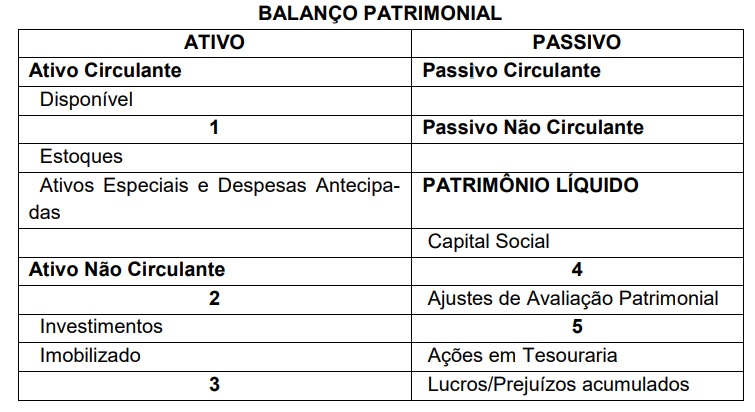
Os elementos que preenchem corretamente os espaços numerados são:
A expressão que preenche corretamente a lacuna do texto, tornando-o verdadeiro, é:
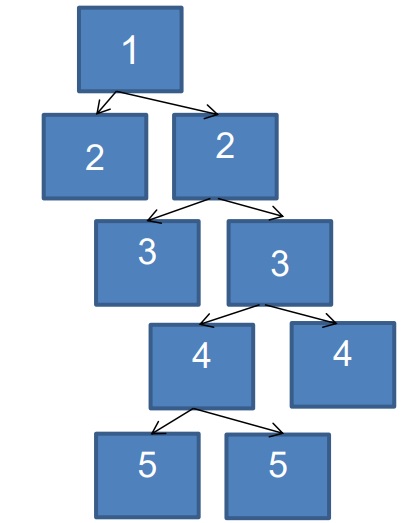
Abaixo apresentamos o primeiro e o último passos. Você deve preencher o restante dos passos por meio da escolha de um dos itens propostos. 1 – Definir o problema; 2 (?); 3 (?); 4 (?); 5 (?); 6 – Escolher a melhor alternativa.
( ) A cultura organizacional se refere à maneira pela qual os funcionários percebem as características da cultura da empresa, e não ao fato de eles gostarem ou não delas. ( ) A maioria das grandes organizações possui uma cultura dominante e diversas subculturas. ( ) Podemos considerar a cultura organizacional forte como sinônimo de formalização na organização. ( ) Foco na equipe significa o grau em que as atividades de trabalho são organizadas mais em torno de equipes do que de indivíduos. ( ) Estabilidade é o grau em que as atividades organizacionais enfatizam a desestabilização do status quo em vez do crescimento.
A sequência CORRETA, de cima para baixo, é:
I Caixas de papelão II Tambores III Fardos IV Recipientes plásticos
( ) Permitem a utilização de prensas. É muito suscetível à umidade, especialmente às chuvas. ( ) Facilidade de manipulação, armazenagem, transporte e absoluta proteção que oferece à mercadoria, como atrativos. Alta resistência.
( ) Podem ser armazenadas abertas, ocupando pouco espaço. Rápida selagem. ( ) Servem ao transporte de líquidos e materiais a granel. Têm substituído as embalagens convencionais de vidro e madeira, dentre outros.
A sequência CORRETA, de cima para baixo, é:
O quadro a seguir nos mostra as diferenças entre os conceitos de eficiência e
eficácia. Complete-o segundo os conceitos envolvidos em cada definição.
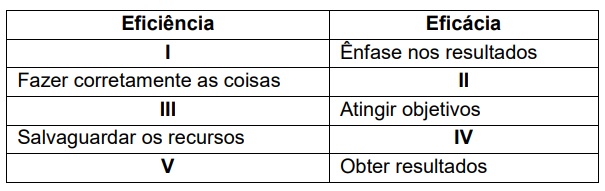
Os conceitos CORRETOS, segundo sua respectiva numeração, são:
A divisão do trabalho e especialização do operário surgiu como decorrência do
estudo de tempos e movimentos. Essa especialização – limitação de cada operário
à execução de uma única tarefa contínua repetitiva – encontrou como sua principal
base de aplicação a
O analista de sistemas, organização e métodos deve dividir o projeto de um sistema em fases, pois __________
READ THE FOLLOWING TEXT AND CHOOSE THE OPTION WHICH BEST COMPLETES EACH QUESTION ACCORDING TO IT:
Saving Energy
Just a century ago, humans used very little energy because we had less of the things that consume it. There were no computers, phones, TV, cars, lights, washing machines and all that. After the industrial revolution, people started using a lot more manufactured items such as electronics, automobiles, and home appliances. These items use a lot of energy, but if we all cut its use by half, that would be huge savings, and make a great difference.
Saving energy can be achieved in different ways: 1. Energy conservation, 2. Energy Efficiency, and 3. Recycling. These first two are not the same, even though people often use them to mean the same thing.
1- Energy Conservation: This is the practice that results in less energy being used. For instance, turning the taps, computers, lights, and TV off when not in use. It also includes running in the park or outside instead of running on the treadmill in the gym. Energy conservation is great because we can all do this everywhere and anytime. It is a fundamental behavior we must acquire.
2- Energy Efficiency: This is the use of manufacturing techniques and technology _______ produce things that use less energy for the same result. For example, if a heater is designed to warm your home with less energy than regular heaters, that would be an energy efficient heater. If your washing machine uses less energy to do the same job as other washers, that is an energy efficient washer. An interesting fact is that homes built in the U.S. after 2000 are about 30% bigger, but they use less energy than older homes.
3- Recycling: This involves the use of waste or old materials to make new ones, like collecting all old newspapers from the town at the end of every day and turning the papers into fresh paper for printing again. We can collect all plastic bottles and send them to be used for new plastic bottles or used for children plastic toys. Recycling saves energy __________ less energy is used to recycle than to turn new raw materials into new products.
This means that to save energy, we should use all these great ways. If we all try to do this, together we can save some money and use less natural resources too.
(Adapted from: https://goo.gl/AyZdzW. Access: 01/30/2018)
“Recycling saves energy __________ less energy is used to recycle than to turn new raw materials into new products.”
What is the best word to complete this sentence? (paragraph 5)

 Conheça nossos planos