Questões de Concurso
Para engenheiro de controle e automação
Foram encontradas 368 questões
Resolva questões gratuitamente!
Junte-se a mais de 4 milhões de concurseiros!


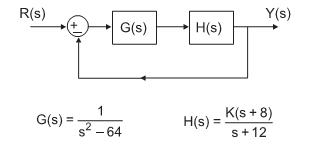
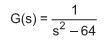
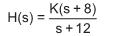
Considere o sistema de controle configurado na figura acima, onde a planta G(s) é INSTÁVEL, e deseja-se estabilizá-la e controlá-la com ajuda de um compensador do tipo H(s). Usa-se a técnica de cancelamento de polos da planta para reduzir a ordem do sistema. O engenheiro projetista achou, em seu cálculo, o ganho K = 125. Assim, os polos do sistema em malha fechada estarão posicionados em
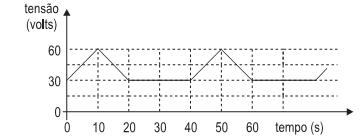
A figura acima mostra o gráfico que corresponde a um sinal periódico de tensão medido na tela de um osciloscópio. Aplicando-se esse sinal de tensão sobre um resistor de 100 Ω, a potência média, em W, dissipada no resistor é
questão.
O acelerômetro é um componente eletromecânico que
pode ser empregado em diferentes aplicações de enge-
nharia, entre elas, nos sistemas de controle em malha
fechada.
questão.
O acelerômetro é um componente eletromecânico que
pode ser empregado em diferentes aplicações de enge-
nharia, entre elas, nos sistemas de controle em malha
fechada.
A função de transferência no domínio de Laplace de um sistema linear é dada por onde Y(s) é a variável de saída e R(s), a variável de entrada. Nos três itens a seguir, considere as condições iniciais NULAS.
O valor inicial, em t = 0, do sinal de saída desse sistema, quando se aplica um impulso unitário na entrada, é
A função de transferência no domínio de Laplace de um sistema linear é dada por onde Y(s) é a variável de saída e R(s), a variável de entrada. Nos três itens a seguir, considere as condições iniciais NULAS.
Para uma entrada degrau unitário, a saída desse sistema atinge a condição de regime permanente num tempo aproximadamente igual a
A função de transferência no domínio de Laplace de um
sistema linear é dada por onde Y(s) é a variável de saída e R(s), a variável de entrada. Nos três itens a seguir, considere as condições iniciais NULAS.
O valor da resposta em regime permanente desse sistema,
para uma entrada tipo degrau unitário, é
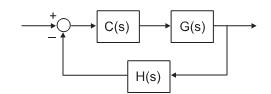
A Função de Transferência de Malha Aberta (FTMA) da estrutura de controle mostrada na figura acima é
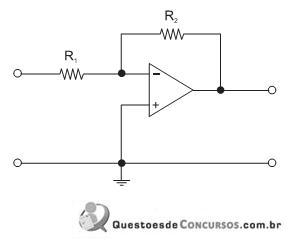
Quando instalado em um sistema de controle, o circuito analógico mostrado na figura acima, que utiliza um amplificador operacional considerado ideal, corresponde a um
Tal junção denomina-se
Nesse contexto, as entradas e saídas de sinal dos sensores e atuadores encontram-se no nível
Nesse sentido, NÃO corresponde a um padrão de transmissão de saída de sinal analógico
A esse respeito, analise as afirmativas abaixo.
I - A versão Profibus-DP é apropriada para conexões de periferia descentralizada.
II - A versão Profibus-PA é intrinsecamente segura.
III - A versão Profibus-FMS é apropriada para comunicação em células.
Estão corretas as afirmativas
Enquadra-se na rede AS Interface o sistema de
By Rachel Ehrenberg Science News, Web edition: Monday, February 21st, 2011
WASHINGTON — Getting blood or other perishable supplies to an area that’s been struck by an earthquake or hurricane isn’t as simple as asking what brown can do for you. But a new model quickly determines the best routes and means for delivering humanitarian aid, even in situations where bridges are out or airport tarmacs are clogged with planes.
The research, presented February 18 at the annual meeting of the American Association for the Advancement of Science, could help get supplies to areas which have experienced natural disasters or help prepare for efficient distribution of vaccines when the flu hits.
Efficient supply chains have long been a goal of manufacturers, but transport in fragile networks — where supply, demand and delivery routes may be in extremely rapid flux — requires a different approach, said Anna Nagurney of the University of Massachusetts Amherst, who presented the new work. Rather than considering the shortest path from one place to another to maximize profit, her system aims for the cleanest path at minimum cost, while capturing factors such as the perishability of the product and the uncertainty of supply routes. ‘You don’t know where demand is, so it’s tricky,’ said Nagurney. ‘It’s a multicriteria decision-making problem.’
By calculating the total cost associated with each link in a network, accounting for congestion and incorporating penalties for time and products that are lost, the computer model calculates the best supply chain in situations where standard routes may be disrupted.
‘Mathematical tools are essential to develop formal means to predict, and to respond to, such critical perturbations,’ said Iain Couzin of Princeton University, who uses similar computational tools to study collective animal behavior. ‘This is particularly important where response must be rapid and effective, such as during disaster scenarios … or during epidemics or breaches of national security.
’ The work can be applied to immediate, pressing situations, such as getting blood, food or medication to a disaster site, or to longer-term problems such as determining the best locations for manufacturing flu vaccines. . Retrieved April 7th, 2011.
By Rachel Ehrenberg Science News, Web edition: Monday, February 21st, 2011
WASHINGTON — Getting blood or other perishable supplies to an area that’s been struck by an earthquake or hurricane isn’t as simple as asking what brown can do for you. But a new model quickly determines the best routes and means for delivering humanitarian aid, even in situations where bridges are out or airport tarmacs are clogged with planes.
The research, presented February 18 at the annual meeting of the American Association for the Advancement of Science, could help get supplies to areas which have experienced natural disasters or help prepare for efficient distribution of vaccines when the flu hits.
Efficient supply chains have long been a goal of manufacturers, but transport in fragile networks — where supply, demand and delivery routes may be in extremely rapid flux — requires a different approach, said Anna Nagurney of the University of Massachusetts Amherst, who presented the new work. Rather than considering the shortest path from one place to another to maximize profit, her system aims for the cleanest path at minimum cost, while capturing factors such as the perishability of the product and the uncertainty of supply routes. ‘You don’t know where demand is, so it’s tricky,’ said Nagurney. ‘It’s a multicriteria decision-making problem.’
By calculating the total cost associated with each link in a network, accounting for congestion and incorporating penalties for time and products that are lost, the computer model calculates the best supply chain in situations where standard routes may be disrupted.
‘Mathematical tools are essential to develop formal means to predict, and to respond to, such critical perturbations,’ said Iain Couzin of Princeton University, who uses similar computational tools to study collective animal behavior. ‘This is particularly important where response must be rapid and effective, such as during disaster scenarios … or during epidemics or breaches of national security.
’ The work can be applied to immediate, pressing situations, such as getting blood, food or medication to a disaster site, or to longer-term problems such as determining the best locations for manufacturing flu vaccines. . Retrieved April 7th, 2011.
By Rachel Ehrenberg Science News, Web edition: Monday, February 21st, 2011
WASHINGTON — Getting blood or other perishable supplies to an area that’s been struck by an earthquake or hurricane isn’t as simple as asking what brown can do for you. But a new model quickly determines the best routes and means for delivering humanitarian aid, even in situations where bridges are out or airport tarmacs are clogged with planes.
The research, presented February 18 at the annual meeting of the American Association for the Advancement of Science, could help get supplies to areas which have experienced natural disasters or help prepare for efficient distribution of vaccines when the flu hits.
Efficient supply chains have long been a goal of manufacturers, but transport in fragile networks — where supply, demand and delivery routes may be in extremely rapid flux — requires a different approach, said Anna Nagurney of the University of Massachusetts Amherst, who presented the new work. Rather than considering the shortest path from one place to another to maximize profit, her system aims for the cleanest path at minimum cost, while capturing factors such as the perishability of the product and the uncertainty of supply routes. ‘You don’t know where demand is, so it’s tricky,’ said Nagurney. ‘It’s a multicriteria decision-making problem.’
By calculating the total cost associated with each link in a network, accounting for congestion and incorporating penalties for time and products that are lost, the computer model calculates the best supply chain in situations where standard routes may be disrupted.
‘Mathematical tools are essential to develop formal means to predict, and to respond to, such critical perturbations,’ said Iain Couzin of Princeton University, who uses similar computational tools to study collective animal behavior. ‘This is particularly important where response must be rapid and effective, such as during disaster scenarios … or during epidemics or breaches of national security.
’ The work can be applied to immediate, pressing situations, such as getting blood, food or medication to a disaster site, or to longer-term problems such as determining the best locations for manufacturing flu vaccines. . Retrieved April 7th, 2011.
By Rachel Ehrenberg Science News, Web edition: Monday, February 21st, 2011
WASHINGTON — Getting blood or other perishable supplies to an area that’s been struck by an earthquake or hurricane isn’t as simple as asking what brown can do for you. But a new model quickly determines the best routes and means for delivering humanitarian aid, even in situations where bridges are out or airport tarmacs are clogged with planes.
The research, presented February 18 at the annual meeting of the American Association for the Advancement of Science, could help get supplies to areas which have experienced natural disasters or help prepare for efficient distribution of vaccines when the flu hits.
Efficient supply chains have long been a goal of manufacturers, but transport in fragile networks — where supply, demand and delivery routes may be in extremely rapid flux — requires a different approach, said Anna Nagurney of the University of Massachusetts Amherst, who presented the new work. Rather than considering the shortest path from one place to another to maximize profit, her system aims for the cleanest path at minimum cost, while capturing factors such as the perishability of the product and the uncertainty of supply routes. ‘You don’t know where demand is, so it’s tricky,’ said Nagurney. ‘It’s a multicriteria decision-making problem.’
By calculating the total cost associated with each link in a network, accounting for congestion and incorporating penalties for time and products that are lost, the computer model calculates the best supply chain in situations where standard routes may be disrupted.
‘Mathematical tools are essential to develop formal means to predict, and to respond to, such critical perturbations,’ said Iain Couzin of Princeton University, who uses similar computational tools to study collective animal behavior. ‘This is particularly important where response must be rapid and effective, such as during disaster scenarios … or during epidemics or breaches of national security.
’ The work can be applied to immediate, pressing situations, such as getting blood, food or medication to a disaster site, or to longer-term problems such as determining the best locations for manufacturing flu vaccines. . Retrieved April 7th, 2011.

 Conheça nossos planos