Selecionar segmento
Estude com questões de diferentes segmentos
Atenção: Isso limpará todos os campos já preenchidos no filtro!
Foram encontradas 138 questões
Resolva questões gratuitamente!
Junte-se a mais de 4 milhões de concurseiros!


Ano: 2010
Banca:
ESAF
Órgão:
CVM
Provas:
ESAF - 2010 - CVM - Analista de TIC - Infraestrutura - prova 1
|
ESAF - 2010 - CVM - Analista de Mercado de Capitais - prova 1 |
ESAF - 2010 - CVM - Analista - Planejamento e Execução Financeira - Contador - prova 1 |
ESAF - 2010 - CVM - Analista - Normas Contábeis e de Auditoria - prova 1 |
ESAF - 2010 - CVM - Analista de Sistemas - prova 1 |
Q91972
Economia
A globalização dos mercados financeiros facilita:
Ano: 2010
Banca:
ESAF
Órgão:
CVM
Provas:
ESAF - 2010 - CVM - Analista de TIC - Infraestrutura - prova 1
|
ESAF - 2010 - CVM - Analista de Mercado de Capitais - prova 1 |
ESAF - 2010 - CVM - Analista - Planejamento e Execução Financeira - Contador - prova 1 |
ESAF - 2010 - CVM - Analista - Normas Contábeis e de Auditoria - prova 1 |
ESAF - 2010 - CVM - Analista de Sistemas - prova 1 |
Q91968
Conhecimentos Bancários
A autorregulação, no mercado financeiro, significa:
Ano: 2010
Banca:
ESAF
Órgão:
CVM
Provas:
ESAF - 2010 - CVM - Analista de TIC - Infraestrutura - prova 1
|
ESAF - 2010 - CVM - Analista de Mercado de Capitais - prova 1 |
ESAF - 2010 - CVM - Analista - Planejamento e Execução Financeira - Contador - prova 1 |
ESAF - 2010 - CVM - Analista - Normas Contábeis e de Auditoria - prova 1 |
ESAF - 2010 - CVM - Analista de Sistemas - prova 1 |
Q91965
Economia
O sistema financeiro nacional engloba instituições cujas operações sejam caracterizadas por:
Ano: 2010
Banca:
ESAF
Órgão:
CVM
Provas:
ESAF - 2010 - CVM - Analista de Mercado de Capitais - prova 1
|
ESAF - 2010 - CVM - Analista - Normas Contábeis e de Auditoria - prova 1 |
Q91964
Matemática Financeira
Uma pessoa tomou um empréstimo imobiliário no valor de R$ 240.000,00 para ser pago em 120 prestações mensais pelo Sistema de Amortizações Constantes - SAC, a uma taxa de 1,5% ao mês, sem carência, vencendo a primeira prestação ao fim do primeiro mês, a segunda ao fim do segundo mês, e assim sucessivamente. Marque o valor mais próximo da décima segunda prestação.
Ano: 2010
Banca:
ESAF
Órgão:
CVM
Provas:
ESAF - 2010 - CVM - Analista de Mercado de Capitais - prova 1
|
ESAF - 2010 - CVM - Analista - Normas Contábeis e de Auditoria - prova 1 |
Q91963
Matemática Financeira
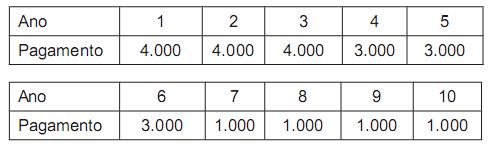
Calcule o valor mais próximo do valor atual, no início do primeiro ano, da série abaixo de pagamentos relativos ao fim de cada ano, à taxa de juros compostos de 12% ao ano.
Ano: 2010
Banca:
ESAF
Órgão:
CVM
Provas:
ESAF - 2010 - CVM - Analista de Mercado de Capitais - prova 1
|
ESAF - 2010 - CVM - Analista - Normas Contábeis e de Auditoria - prova 1 |
Q91962
Matemática Financeira
Um certo número de bônus de valor de face de 1.000 USD, e constituído por 12 cupons semestrais no valor de 50 USD cada um, é lançado por uma empresa no mercado internacional com o objetivo de levantar um empréstimo. A empresa se compromete a pagar o valor de cada cupom no fim de cada semestre e o valor de face do bônus ao fim de seis anos juntamente com o valor do último cupom. Caso cada bônus seja vendido hoje por 841,15 USD, já descontadas as despesas de lançamento, qual o valor mais próximo da taxa de juros paga pela empresa lançadora do bônus?
Ano: 2010
Banca:
ESAF
Órgão:
CVM
Provas:
ESAF - 2010 - CVM - Analista de Mercado de Capitais - prova 1
|
ESAF - 2010 - CVM - Analista - Normas Contábeis e de Auditoria - prova 1 |
ESAF - 2010 - CVM - Inspetor - prova 1 |
Q91961
Matemática Financeira
Um título é descontado quatro meses antes do seu vencimento a uma taxa de desconto de 5% ao mês, sendo o valor do desconto racional composto calculado em R$ 4.310,00. Marque o valor mais próximo do valor nominal do título.
Ano: 2010
Banca:
ESAF
Órgão:
CVM
Provas:
ESAF - 2010 - CVM - Analista de Mercado de Capitais - prova 1
|
ESAF - 2010 - CVM - Analista - Normas Contábeis e de Auditoria - prova 1 |
ESAF - 2010 - CVM - Inspetor - prova 1 |
Q91960
Matemática Financeira
Um financiamento no valor de R$ 100.000,00 possui uma carência de 18 meses, incidindo sobre o valor financiado, nesse prazo, uma taxa de juros compostos de 1% ao mês. Calcule o valor mais próximo do saldo devedor ao fim do prazo de carência.
Ano: 2010
Banca:
ESAF
Órgão:
CVM
Provas:
ESAF - 2010 - CVM - Analista de Mercado de Capitais - prova 1
|
ESAF - 2010 - CVM - Analista - Normas Contábeis e de Auditoria - prova 1 |
Q91959
Matemática Financeira
Um financiamento no valor de R$ 612.800,00 deve ser pago pelo Sistema Price em 18 prestações semestrais iguais, a uma taxa nominal de 30% ao ano, vencendo a primeira prestação ao fim do primeiro semestre, a segunda ao fim do segundo semestre, e assim sucessivamente. Obtenha o valor mais próximo da amortização do saldo devedor embutido na segunda prestação.
Ano: 2010
Banca:
ESAF
Órgão:
CVM
Provas:
ESAF - 2010 - CVM - Analista de Mercado de Capitais - prova 1
|
ESAF - 2010 - CVM - Analista - Normas Contábeis e de Auditoria - prova 1 |
Q91958
Matemática Financeira
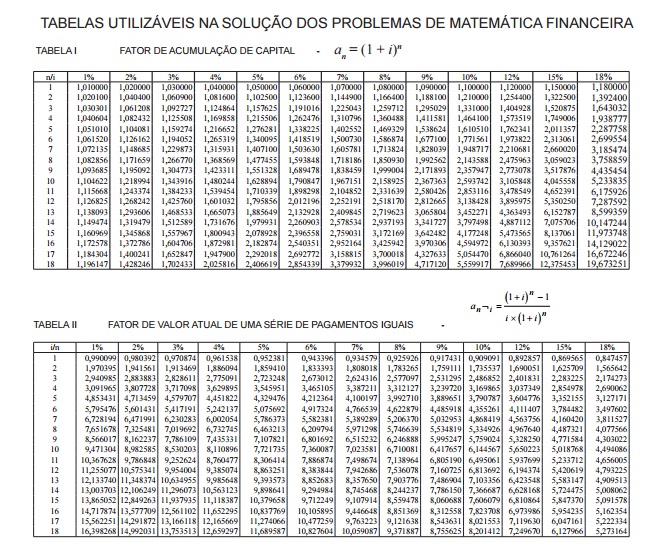
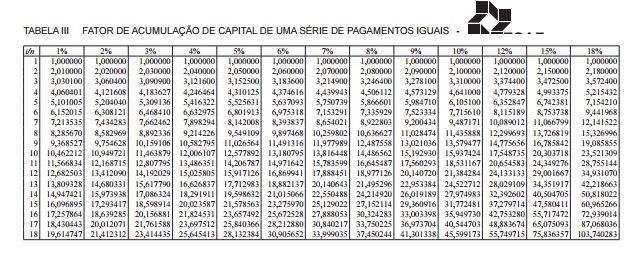
Pretende-se trocar uma série de oito pagamentos mensais iguais de R$ 1.000,00, vencendo o primeiro pagamento ao fim de um mês, por outra série equivalente de doze pagamentos iguais, vencendo o primeiro pagamento também ao fim de um mês. Calcule o valor mais próximo do pagamento da segunda série considerando a taxa de juros compostos de 2% ao mês.
Ano: 2010
Banca:
ESAF
Órgão:
CVM
Provas:
ESAF - 2010 - CVM - Analista de Mercado de Capitais - prova 1
|
ESAF - 2010 - CVM - Analista - Normas Contábeis e de Auditoria - prova 1 |
Q91957
Matemática Financeira
Qual o valor mais próximo da taxa equivalente à taxa nominal de 24% ao ano com capitalização mensal?
Ano: 2010
Banca:
ESAF
Órgão:
CVM
Provas:
ESAF - 2010 - CVM - Analista de Mercado de Capitais - prova 1
|
ESAF - 2010 - CVM - Analista - Normas Contábeis e de Auditoria - prova 1 |
Q91956
Matemática Financeira
Um investidor fez uma aplicação em um título com rentabilidade pós-fixada por um prazo de três meses a uma taxa de juros simples de 18% ao ano. O índice de correção a ser aplicado ao montante passou de 80, no início, a 83,2, no fim do prazo. Qual o valor mais próximo da rentabilidade total do título nesse prazo?
Ano: 2010
Banca:
ESAF
Órgão:
CVM
Provas:
ESAF - 2010 - CVM - Analista de Mercado de Capitais - prova 1
|
ESAF - 2010 - CVM - Analista - Normas Contábeis e de Auditoria - prova 1 |
ESAF - 2010 - CVM - Inspetor - prova 1 |
Q91955
Matemática Financeira
Qual o valor mais próximo do montante que atinge uma dívida de R$ 2.000,00, quatro meses e meio depois, a uma taxa de juros simples de 1,5% ao mês?
Ano: 2010
Banca:
ESAF
Órgão:
CVM
Provas:
ESAF - 2010 - CVM - Analista de TIC - Infraestrutura - prova 1
|
ESAF - 2010 - CVM - Analista de Mercado de Capitais - prova 1 |
ESAF - 2010 - CVM - Analista - Planejamento e Execução Financeira - Contador - prova 1 |
ESAF - 2010 - CVM - Analista - Normas Contábeis e de Auditoria - prova 1 |
Q91947
Português
Assinale a opção em que ocorre erro na transcrição e adaptação do texto de Conjuntura Econômica, de setembro de 2010 – vol. 64 – n. 9.
O mecanismo de câmbio flutuante, quando acompanhado de razoável mobilidade de capitais, provê um meio automático através do qual o equilíbrio se configura(a). Elevações de consumo ou investimento da parte de residentes geram pequenas elevações de juros que majoram a entrada de capitais externos, desta forma valorizando(b) a moeda doméstica. Tal valorização reduz as exportações e aumenta as importações, meio pelos quais(c) se compensa, liquidamente, a preços possivelmente constantes, o acréscimo inicial de procura por bens e serviços provocado por possíveis expansões de absorção interna. Tudo pode ocorrer muito bem até o ponto em que(d) os déficits na conta corrente do balanço de pagamentos passem(e) a gerar um montante do passivo externo líquido do país, que dá início a um processo de desconfiança dos provedores de crédito líquido em moeda estrangeira. Quando isso ocorre, há uma necessidade de reverter tais déficits, configurando, em última instância, que o sucesso no combate à inflação no período inicial pode ter significado, em boa parte, uma transferência de problemas para o futuro.
O mecanismo de câmbio flutuante, quando acompanhado de razoável mobilidade de capitais, provê um meio automático através do qual o equilíbrio se configura(a). Elevações de consumo ou investimento da parte de residentes geram pequenas elevações de juros que majoram a entrada de capitais externos, desta forma valorizando(b) a moeda doméstica. Tal valorização reduz as exportações e aumenta as importações, meio pelos quais(c) se compensa, liquidamente, a preços possivelmente constantes, o acréscimo inicial de procura por bens e serviços provocado por possíveis expansões de absorção interna. Tudo pode ocorrer muito bem até o ponto em que(d) os déficits na conta corrente do balanço de pagamentos passem(e) a gerar um montante do passivo externo líquido do país, que dá início a um processo de desconfiança dos provedores de crédito líquido em moeda estrangeira. Quando isso ocorre, há uma necessidade de reverter tais déficits, configurando, em última instância, que o sucesso no combate à inflação no período inicial pode ter significado, em boa parte, uma transferência de problemas para o futuro.
Ano: 2010
Banca:
ESAF
Órgão:
CVM
Provas:
ESAF - 2010 - CVM - Analista de TIC - Infraestrutura - prova 1
|
ESAF - 2010 - CVM - Analista de Mercado de Capitais - prova 1 |
ESAF - 2010 - CVM - Analista - Planejamento e Execução Financeira - Contador - prova 1 |
ESAF - 2010 - CVM - Analista - Normas Contábeis e de Auditoria - prova 1 |
ESAF - 2010 - CVM - Analista de Sistemas - prova 1 |
Q91946
Português

Assinale a opção correta a respeito do uso das estruturas linguísticas no texto.
Ano: 2010
Banca:
ESAF
Órgão:
CVM
Provas:
ESAF - 2010 - CVM - Analista de TIC - Infraestrutura - prova 1
|
ESAF - 2010 - CVM - Analista de Mercado de Capitais - prova 1 |
ESAF - 2010 - CVM - Analista - Planejamento e Execução Financeira - Contador - prova 1 |
ESAF - 2010 - CVM - Analista - Normas Contábeis e de Auditoria - prova 1 |
ESAF - 2010 - CVM - Analista de Sistemas - prova 1 |
ESAF - 2010 - CVM - Inspetor - prova 1 |
Q91880
Inglês

According to the author, usernames and passwords
Ano: 2010
Banca:
ESAF
Órgão:
CVM
Provas:
ESAF - 2010 - CVM - Analista de TIC - Infraestrutura - prova 1
|
ESAF - 2010 - CVM - Analista de Mercado de Capitais - prova 1 |
ESAF - 2010 - CVM - Analista - Planejamento e Execução Financeira - Contador - prova 1 |
ESAF - 2010 - CVM - Analista - Normas Contábeis e de Auditoria - prova 1 |
ESAF - 2010 - CVM - Analista de Sistemas - prova 1 |
ESAF - 2010 - CVM - Inspetor - prova 1 |
Q91877
Inglês

The text highlights Petrobras´ public-share offering which
Ano: 2010
Banca:
ESAF
Órgão:
CVM
Provas:
ESAF - 2010 - CVM - Analista de TIC - Infraestrutura - prova 1
|
ESAF - 2010 - CVM - Analista de Mercado de Capitais - prova 1 |
ESAF - 2010 - CVM - Analista - Planejamento e Execução Financeira - Contador - prova 1 |
ESAF - 2010 - CVM - Analista - Normas Contábeis e de Auditoria - prova 1 |
ESAF - 2010 - CVM - Analista de Sistemas - prova 1 |
ESAF - 2010 - CVM - Inspetor - prova 1 |
Q91876
Inglês
According to the text, Brazil´s growth pace is likely to
Ano: 2010
Banca:
ESAF
Órgão:
CVM
Provas:
ESAF - 2010 - CVM - Analista de TIC - Infraestrutura - prova 1
|
ESAF - 2010 - CVM - Analista de Mercado de Capitais - prova 1 |
ESAF - 2010 - CVM - Analista - Planejamento e Execução Financeira - Contador - prova 1 |
ESAF - 2010 - CVM - Analista - Normas Contábeis e de Auditoria - prova 1 |
ESAF - 2010 - CVM - Analista de Sistemas - prova 1 |
ESAF - 2010 - CVM - Inspetor - prova 1 |
Q91875
Inglês
The text refers to Brazil´s economy as booming, which means it is experiencing a period of economic
Ano: 2010
Banca:
ESAF
Órgão:
CVM
Provas:
ESAF - 2010 - CVM - Analista de TIC - Infraestrutura - prova 1
|
ESAF - 2010 - CVM - Analista de Mercado de Capitais - prova 1 |
ESAF - 2010 - CVM - Analista - Planejamento e Execução Financeira - Contador - prova 1 |
ESAF - 2010 - CVM - Analista - Normas Contábeis e de Auditoria - prova 1 |
ESAF - 2010 - CVM - Analista de Sistemas - prova 1 |
ESAF - 2010 - CVM - Inspetor - prova 1 |
Q91874
Inglês

According to the text, “there will be a seamless network of Latin American stock exchanges”, which means this network will

 Conheça nossos planos