Selecionar segmento
Estude com questões de diferentes segmentos
Atenção: Isso limpará todos os campos já preenchidos no filtro!
Foram encontradas 3.269 questões
Resolva questões gratuitamente!
Junte-se a mais de 4 milhões de concurseiros!


Ano: 2017
Banca:
FEPESE
Órgão:
ABEPRO
Prova:
FEPESE - 2017 - ABEPRO - Teste ABEPRO - Processo de Seleção |
Q1789585
Engenharia de Produção
O processo de planejamento e controle de projetos é auxiliado pelo uso de técnicas que auxiliam os
gerentes de projeto a lidar com a sua complexidade
e natureza temporal. Entre estas técnicas podem
ser mencionadas o Método do Caminho Crítico
(CPM • Critical Path Method) e o Técnica de Revisão e
Avaliação do Programa (PERT • Program Evaluation and
Review Technique).
Sobre estas técnicas, é incorreto afirmar:
Sobre estas técnicas, é incorreto afirmar:
Ano: 2017
Banca:
FEPESE
Órgão:
ABEPRO
Prova:
FEPESE - 2017 - ABEPRO - Teste ABEPRO - Processo de Seleção |
Q1789584
Engenharia de Produção
Na tomada de decisão de quanto comprar para
o suprimento de estoques os gerentes de produção
tendem a identificar os custos que serão afetados por
sua decisão.
Sobre os custos associados ao estoque, é correto afirmar:
1. Os custos de alocação do pedido se referem aos custos necessários para a realização das transações internas da empresa para realizar o pedido. 2. Custos de armazenagem são custos associados à armazenagem física dos bens, tais como locação, climatização e iluminação do armazém. 3. Os custos de obsolescência se referem ao risco de que os itens do estoque possam deteriorar- -se com o tempo.
Assinale a alternativa que indica todas as afirmativas corretas.
Sobre os custos associados ao estoque, é correto afirmar:
1. Os custos de alocação do pedido se referem aos custos necessários para a realização das transações internas da empresa para realizar o pedido. 2. Custos de armazenagem são custos associados à armazenagem física dos bens, tais como locação, climatização e iluminação do armazém. 3. Os custos de obsolescência se referem ao risco de que os itens do estoque possam deteriorar- -se com o tempo.
Assinale a alternativa que indica todas as afirmativas corretas.
Ano: 2017
Banca:
FEPESE
Órgão:
ABEPRO
Prova:
FEPESE - 2017 - ABEPRO - Teste ABEPRO - Processo de Seleção |
Q1789583
Engenharia de Produção
Sobre os tipos básicos de arranjo físico disponíveis, é correto afirmar:
1. O arranjo físico posicional tem por característica movimentar os recursos transformadores até os recursos transformados. 2. O arranjo físico por processo é assim denominado em razão de que os processos com necessidades similares são localizados juntos uns dos outros. 3. O arranjo físico celular é aquele em que os recursos transformados são pré-selecionados para movimentar-se para uma parte específica da operação onde se encontram todos os recursos transformadores necessários a atender às suas necessidades imediatas de processamento.
Assinale a alternativa que indica todas as afirmativas corretas.
1. O arranjo físico posicional tem por característica movimentar os recursos transformadores até os recursos transformados. 2. O arranjo físico por processo é assim denominado em razão de que os processos com necessidades similares são localizados juntos uns dos outros. 3. O arranjo físico celular é aquele em que os recursos transformados são pré-selecionados para movimentar-se para uma parte específica da operação onde se encontram todos os recursos transformadores necessários a atender às suas necessidades imediatas de processamento.
Assinale a alternativa que indica todas as afirmativas corretas.
Ano: 2017
Banca:
FEPESE
Órgão:
ABEPRO
Prova:
FEPESE - 2017 - ABEPRO - Teste ABEPRO - Processo de Seleção |
Q1789582
Engenharia de Produção
A escolha de um local para a localização de uma
operação consiste em uma atividade muito importante para o sucesso de uma operação produtiva. Uma
empresa que opera cinco diferentes lojas decidiu estabelecer um único armazém de abastecimento para
essas lojas.
As informações abaixo apresentam a coordenada de localização das lojas e a quantidade de vendas por semana em cada loja.
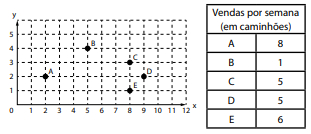
Ao utilizar o método de centro de gravidade para estabelecer a localização do armazém, o ponto mais próximo do indicado pelo método é:
As informações abaixo apresentam a coordenada de localização das lojas e a quantidade de vendas por semana em cada loja.
Ao utilizar o método de centro de gravidade para estabelecer a localização do armazém, o ponto mais próximo do indicado pelo método é:
Ano: 2017
Banca:
FEPESE
Órgão:
ABEPRO
Prova:
FEPESE - 2017 - ABEPRO - Teste ABEPRO - Processo de Seleção |
Q1789581
Engenharia de Produção
Entre as etapas sugeridas para o desenvolvimento
de um produto é mencionada a etapa de avaliação e
melhoria do projeto. Para a realização desta etapa são
sugeridas diversas técnicas.
Entre estas técnicas, é correto afirmar:
1. O desdobramento da função qualidade (QFD-Quality Function Deployment) tem por principal objetivo assegurar que o projeto do produto ou serviço atenda às necessidades dos clientes. 2. A Engenharia de Valor (VE-Value Engineering) tem por objetivo prevenir quaisquer custos desnecessários e aumentar o atendimento dos requisitos dos clientes antes de produzir o produto ou serviço. 3. O Método Taguchi tem por objetivo testar a robustez de um projeto por meio da investigação sobre a melhor combinação dos fatores nele envolvidos.
Assinale a alternativa que indica todas as afirmativas corretas.
Entre estas técnicas, é correto afirmar:
1. O desdobramento da função qualidade (QFD-Quality Function Deployment) tem por principal objetivo assegurar que o projeto do produto ou serviço atenda às necessidades dos clientes. 2. A Engenharia de Valor (VE-Value Engineering) tem por objetivo prevenir quaisquer custos desnecessários e aumentar o atendimento dos requisitos dos clientes antes de produzir o produto ou serviço. 3. O Método Taguchi tem por objetivo testar a robustez de um projeto por meio da investigação sobre a melhor combinação dos fatores nele envolvidos.
Assinale a alternativa que indica todas as afirmativas corretas.
Ano: 2017
Banca:
FEPESE
Órgão:
ABEPRO
Prova:
FEPESE - 2017 - ABEPRO - Teste ABEPRO - Processo de Seleção |
Q1789580
Engenharia de Produção
São verificados diversos avanços nas tecnologias
empregadas para o processamento de materiais.
Associe as tecnologias de manufatura, identificadas na coluna 1, com os as vantagens de sua aplicação, indicadas na coluna 2.
Coluna 1 Tecnologias de manufatura 1. Máquinas de controle numérico computadorizadas (CNC) 2. Veículo guiado automaticamente (AGV) 3. Sistema Flexível de Manufatura (FMS) 4. Robô Industrial
Coluna 2 Vantagens de aplicação ( ) Pode ser utilizado em situações perigosas ou desconfortáveis para o ser humano e altamente repetitivas. ( ) Movimento independente e flexibilidade de rota e de uso a longo prazo. ( ) Tempos de atravessamentos mais rápidos, maior utilização do equipamento de capital, menor estoque em processo. ( ) Precisão, uso otimizado de ferramentas e aumento da produtividade do trabalho.
Assinale a alternativa que indica a sequência correta, de cima para baixo.
Associe as tecnologias de manufatura, identificadas na coluna 1, com os as vantagens de sua aplicação, indicadas na coluna 2.
Coluna 1 Tecnologias de manufatura 1. Máquinas de controle numérico computadorizadas (CNC) 2. Veículo guiado automaticamente (AGV) 3. Sistema Flexível de Manufatura (FMS) 4. Robô Industrial
Coluna 2 Vantagens de aplicação ( ) Pode ser utilizado em situações perigosas ou desconfortáveis para o ser humano e altamente repetitivas. ( ) Movimento independente e flexibilidade de rota e de uso a longo prazo. ( ) Tempos de atravessamentos mais rápidos, maior utilização do equipamento de capital, menor estoque em processo. ( ) Precisão, uso otimizado de ferramentas e aumento da produtividade do trabalho.
Assinale a alternativa que indica a sequência correta, de cima para baixo.
Ano: 2017
Banca:
FEPESE
Órgão:
ABEPRO
Prova:
FEPESE - 2017 - ABEPRO - Teste ABEPRO - Processo de Seleção |
Q1789579
Engenharia de Produção
O OEE (Overall Equipment Effectiveness) consiste
em um método cada vez mais popular de mensurar a
eficácia de operações produtivas.
Dado um processo com capacidade projetada de 100 peças por turno de trabalho de 6 horas, foi verificado que durante este turno o processo apresenta 10 minutos de parada em razão de intervalos programados.
Durante o turno também foram registrados mais 8 minutos de paradas para a realização de manutenção corretiva e por falta de material. Não foram registradas perdas na taxa de atravessamento do processo.
Além disso, este processo apresenta uma taxa constante de produção de 10% de produtos fora dos padrões de qualidade.
O valor do OEE do referido processo é de:
Dado um processo com capacidade projetada de 100 peças por turno de trabalho de 6 horas, foi verificado que durante este turno o processo apresenta 10 minutos de parada em razão de intervalos programados.
Durante o turno também foram registrados mais 8 minutos de paradas para a realização de manutenção corretiva e por falta de material. Não foram registradas perdas na taxa de atravessamento do processo.
Além disso, este processo apresenta uma taxa constante de produção de 10% de produtos fora dos padrões de qualidade.
O valor do OEE do referido processo é de:
Ano: 2017
Banca:
FEPESE
Órgão:
ABEPRO
Prova:
FEPESE - 2017 - ABEPRO - Teste ABEPRO - Processo de Seleção |
Q1789578
Engenharia de Produção
Uma fábrica de televisores produz três modelos
diferentes: o de 32, 39 e 42 polegadas.
O modelo de 32 polegadas pode ser montado em 0,75 hora. O de 39 polegadas pode ser montado em 1 hora, enquanto o de 42 polegadas pode ser montado em 1,5 hora.
O processo de montagem da fábrica tem disponibilidade de 800 horas de pessoal de montagem por semana, sendo que todos os colaboradores apresentam capacidade e equipamentos para a montagem dos três modelos de televisores.
A proporção da demanda para as unidades de 32, 39 e 42 polegadas se apresenta na proporção de 4:3:2.
Caso o mix de produção siga a proporção da demanda, qual o número de unidades produzidas por semana?
O modelo de 32 polegadas pode ser montado em 0,75 hora. O de 39 polegadas pode ser montado em 1 hora, enquanto o de 42 polegadas pode ser montado em 1,5 hora.
O processo de montagem da fábrica tem disponibilidade de 800 horas de pessoal de montagem por semana, sendo que todos os colaboradores apresentam capacidade e equipamentos para a montagem dos três modelos de televisores.
A proporção da demanda para as unidades de 32, 39 e 42 polegadas se apresenta na proporção de 4:3:2.
Caso o mix de produção siga a proporção da demanda, qual o número de unidades produzidas por semana?
Ano: 2017
Banca:
FEPESE
Órgão:
ABEPRO
Prova:
FEPESE - 2017 - ABEPRO - Teste ABEPRO - Processo de Seleção |
Q1789577
Engenharia de Produção
As ideias e os conceitos relativos à teoria da motivação contribuem para a abordagem comportamental
do projeto do trabalho.
Sobre as abordagens comportamentais do projeto do trabalho, é correto afirmar:
1. Quando adequado, o revezamento do trabalho pode aumentar a flexibilidade de habilidades dos colaboradores e reduzir a monotonia. 2. O alargamento do trabalho consiste em melhorar a qualidade do trabalho, aumentando o tempo disponível para a realização de cada tarefa. 3. O enriquecimento do trabalho propõe aumentar o número de tarefas extras alocadas a cada trabalho, desde que estas tarefas envolvam maior autonomia e maior controle por parte do colaborador.
Assinale a alternativa que indica todas as afirmativas corretas.
Sobre as abordagens comportamentais do projeto do trabalho, é correto afirmar:
1. Quando adequado, o revezamento do trabalho pode aumentar a flexibilidade de habilidades dos colaboradores e reduzir a monotonia. 2. O alargamento do trabalho consiste em melhorar a qualidade do trabalho, aumentando o tempo disponível para a realização de cada tarefa. 3. O enriquecimento do trabalho propõe aumentar o número de tarefas extras alocadas a cada trabalho, desde que estas tarefas envolvam maior autonomia e maior controle por parte do colaborador.
Assinale a alternativa que indica todas as afirmativas corretas.
Ano: 2017
Banca:
FEPESE
Órgão:
ABEPRO
Prova:
FEPESE - 2017 - ABEPRO - Teste ABEPRO - Processo de Seleção |
Q1789576
Engenharia de Produção
Sobre a divisão do trabalho é incorreto afirmar:
Ano: 2017
Banca:
FEPESE
Órgão:
ABEPRO
Prova:
FEPESE - 2017 - ABEPRO - Teste ABEPRO - Processo de Seleção |
Q1789575
Engenharia de Produção
Sobre o projeto de produto e serviços, é incorreto afirmar:
Ano: 2017
Banca:
FEPESE
Órgão:
ABEPRO
Prova:
FEPESE - 2017 - ABEPRO - Teste ABEPRO - Processo de Seleção |
Q1789574
Engenharia de Produção
A redução do tempo de desenvolvimento de
novos produtos tem se apresentado como importante
fator competitivo. Estudos realizados na indústria
automobilística mundial indicam que o menor tempo
de desenvolvimento dos automóveis foi uma importante vantagem competitiva desenvolvida pelas montadoras japonesas em comparação com seus competidores ocidentais.
Assinale a alternativa que apresenta uma relação mais direta com a redução do tempo de desenvolvimento de novos produtos.
Assinale a alternativa que apresenta uma relação mais direta com a redução do tempo de desenvolvimento de novos produtos.
Ano: 2017
Banca:
FEPESE
Órgão:
ABEPRO
Prova:
FEPESE - 2017 - ABEPRO - Teste ABEPRO - Processo de Seleção |
Q1789573
Engenharia de Produção
Assim como as operações de manufatura, cada
tipo de serviço implica uma forma diferente de organização da operação.
Entre os tipos de processos em operações de serviços, é correto afirmar:
1. Os serviços profissionais são definidos como organizações de alto contato em que os clientes despendem tempo considerável no processo do serviço. 2. As lojas de serviço são caracterizadas por níveis de contato com o cliente, customização e volume de clientes com níveis intermediários. 3. Os serviços de massa compreendem muitas transações de clientes que envolvem tempo de contato limitado e pouca customização.
Assinale a alternativa que indica todas as afirmativas corretas.
Entre os tipos de processos em operações de serviços, é correto afirmar:
1. Os serviços profissionais são definidos como organizações de alto contato em que os clientes despendem tempo considerável no processo do serviço. 2. As lojas de serviço são caracterizadas por níveis de contato com o cliente, customização e volume de clientes com níveis intermediários. 3. Os serviços de massa compreendem muitas transações de clientes que envolvem tempo de contato limitado e pouca customização.
Assinale a alternativa que indica todas as afirmativas corretas.
Ano: 2017
Banca:
FEPESE
Órgão:
ABEPRO
Prova:
FEPESE - 2017 - ABEPRO - Teste ABEPRO - Processo de Seleção |
Q1789572
Engenharia de Produção
Entre os tipos de processos em operações de
manufatura, considere as seguintes afirmativas:
1. Um processo do tipo Projeto lida usualmente com produtos discretos e altamente customizados. 2. Em um processo do tipo jobbing cada produto tem por característica não compartilhar os recursos de operação com outros produtos. 3. Em processos em bateladas o tamanho do lote apresenta um número maior que um produto.
Assinale a alternativa que indica todas as afirmativas corretas.
1. Um processo do tipo Projeto lida usualmente com produtos discretos e altamente customizados. 2. Em um processo do tipo jobbing cada produto tem por característica não compartilhar os recursos de operação com outros produtos. 3. Em processos em bateladas o tamanho do lote apresenta um número maior que um produto.
Assinale a alternativa que indica todas as afirmativas corretas.
Ano: 2017
Banca:
FEPESE
Órgão:
ABEPRO
Prova:
FEPESE - 2017 - ABEPRO - Teste ABEPRO - Processo de Seleção |
Q1789571
Engenharia de Produção
A posição volume-variedade de uma produção
apresenta implicações para quase todos os aspectos
de atividades.
É correto afirmar que o impacto de uma posição de alto volume e baixa variedade sobre uma operação apresenta:
É correto afirmar que o impacto de uma posição de alto volume e baixa variedade sobre uma operação apresenta:
Ano: 2017
Banca:
FEPESE
Órgão:
ABEPRO
Prova:
FEPESE - 2017 - ABEPRO - Teste ABEPRO - Processo de Seleção |
Q1789570
Engenharia de Produção
A Figura abaixo apresenta possíveis estruturas
organizacionais para a realização de projetos.
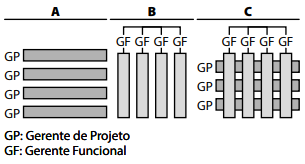
Entre as estruturas organizacionais apresentadas, é correto afirmar:
1. A estrutura A tende a apresentar um menor tempo de desenvolvimento em grandes projetos. 2. A estrutura do tipo B permite uma maior especialização dos participantes do projeto. 3. A estrutura do tipo C consiste em uma possibilidade de arranjo matricial mais orientada para a realização de projetos.
Assinale a alternativa que indica todas as afirmativas corretas.
Entre as estruturas organizacionais apresentadas, é correto afirmar:
1. A estrutura A tende a apresentar um menor tempo de desenvolvimento em grandes projetos. 2. A estrutura do tipo B permite uma maior especialização dos participantes do projeto. 3. A estrutura do tipo C consiste em uma possibilidade de arranjo matricial mais orientada para a realização de projetos.
Assinale a alternativa que indica todas as afirmativas corretas.
Ano: 2017
Banca:
FEPESE
Órgão:
ABEPRO
Prova:
FEPESE - 2017 - ABEPRO - Teste ABEPRO - Processo de Seleção |
Q1789569
Engenharia de Produção
A partir da análise sobre o volume de vendas e a
variedade de produto, é possível recomendar diferentes processos de manufatura.
A figura abaixo identifica três diferentes empresas, A, B e C.
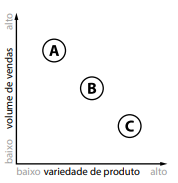
A partir da análise sobre a figura é possível realizar as seguintes afirmativas sobre recomendações de processos de operações de manufatura:
1. É recomendado um processo por projeto para a empresa A. 2. É recomendado um processo por batelada para a empresa B. 3. É recomendado um processo em fluxo contínuo para a empresa C.
Assinale a alternativa que indica todas as afirmativas corretas.
A figura abaixo identifica três diferentes empresas, A, B e C.
A partir da análise sobre a figura é possível realizar as seguintes afirmativas sobre recomendações de processos de operações de manufatura:
1. É recomendado um processo por projeto para a empresa A. 2. É recomendado um processo por batelada para a empresa B. 3. É recomendado um processo em fluxo contínuo para a empresa C.
Assinale a alternativa que indica todas as afirmativas corretas.
Ano: 2017
Banca:
FEPESE
Órgão:
ABEPRO
Prova:
FEPESE - 2017 - ABEPRO - Teste ABEPRO - Processo de Seleção |
Q1789567
Engenharia de Produção
Considere as afirmativas abaixo:
1. A Higiene e Segurança do Trabalho é o campo do conhecimento que lida com os acidentes e doenças do trabalho no intuito de prevenir suas ocorrências. 2. O campo da Segurança do Trabalho tem concentrado esforços nas áreas de prevenção de e mitigação de acidentes. 3. A gerência de riscos pode ser definida como a função que objetiva a redução e o controle dos efeitos adversos dos riscos aos quais uma organização é exposta. 4. O controle de risco é a função de gestão que implica a verificação de que as políticas, os objetivos e as metas estejam ou não sendo cumpridas. 5. No que se refere às técnicas de análise de riscos, podemos mencionar: análise preliminar de riscos, análise por árvore de eventos, análise de custos, análise da produtividade.
Assinale a alternativa que indica todas as afirmativas corretas.
1. A Higiene e Segurança do Trabalho é o campo do conhecimento que lida com os acidentes e doenças do trabalho no intuito de prevenir suas ocorrências. 2. O campo da Segurança do Trabalho tem concentrado esforços nas áreas de prevenção de e mitigação de acidentes. 3. A gerência de riscos pode ser definida como a função que objetiva a redução e o controle dos efeitos adversos dos riscos aos quais uma organização é exposta. 4. O controle de risco é a função de gestão que implica a verificação de que as políticas, os objetivos e as metas estejam ou não sendo cumpridas. 5. No que se refere às técnicas de análise de riscos, podemos mencionar: análise preliminar de riscos, análise por árvore de eventos, análise de custos, análise da produtividade.
Assinale a alternativa que indica todas as afirmativas corretas.
Ano: 2017
Banca:
FEPESE
Órgão:
ABEPRO
Prova:
FEPESE - 2017 - ABEPRO - Teste ABEPRO - Processo de Seleção |
Q1789566
Engenharia de Produção
Sobre o conceitos de responsabilidade social e
suas categorias, é incorreto afirmar:
Ano: 2017
Banca:
FEPESE
Órgão:
ABEPRO
Prova:
FEPESE - 2017 - ABEPRO - Teste ABEPRO - Processo de Seleção |
Q1789565
Meio Ambiente
Os conceitos de recurso natural e meio ambiente
são importantes bases para a compreensão do conceito de gestão ambiental.
Assinale a alternativa incorreta em relação ao assunto.
Assinale a alternativa incorreta em relação ao assunto.

 Conheça nossos planos